
How Fast Can a Nascar Race Car Go?

NASCAR race cars can reach speeds over 200 mph on superspeedways like Daytona and Talladega, thanks to powerful engines and aerodynamic design. However, actual race speeds vary by track type, rules, and safety regulations.
Key Takeaways
- Top speeds exceed 200 mph: On restrictor-plate tracks like Daytona, NASCAR cars have hit over 210 mph in practice sessions.
- Engine power drives performance: Modern NASCAR engines produce around 670–750 horsepower, enabling rapid acceleration and high top speeds.
- Aerodynamics play a critical role: Downforce and drag balance determine how fast a car can go while maintaining control at high speeds.
- Track type affects speed: Superspeedways allow the highest speeds, while short tracks and road courses limit velocity due to tight turns.
- Safety regulations limit speed: NASCAR uses restrictor plates and tapered spacers to cap engine output and reduce speeds for driver safety.
- Real race speeds are lower than top potential: During competition, average speeds range from 90 mph on short tracks to 190 mph on superspeedways.
- Technology continues to evolve: Innovations in fuel injection, tire design, and data analytics help teams optimize speed and performance.
📑 Table of Contents
How Fast Can a NASCAR Race Car Go?
If you’ve ever watched a NASCAR race, you’ve probably felt your heart race as cars scream down the straightaway, tires gripping the asphalt, engines roaring like thunder. These machines aren’t just fast—they’re engineering marvels built for speed, precision, and endurance. But just how fast can a NASCAR race car go? The answer isn’t as simple as a single number. It depends on the track, the rules, the weather, and even the driver’s strategy.
At their peak, NASCAR race cars can exceed 200 miles per hour (mph). On superspeedways like Daytona International Speedway and Talladega Superspeedway, drivers have pushed their cars beyond 210 mph during practice sessions. That’s faster than most production cars can legally travel on public roads—and these race cars do it while navigating tight packs of competitors at breakneck speeds. But during actual races, speeds are often lower due to drafting, traffic, and safety measures. Still, the raw potential of these vehicles is nothing short of astonishing.
Understanding how fast a NASCAR race car can go requires more than just looking at speedometers. It involves diving into the mechanics of the car, the physics of motion, and the regulations that keep the sport both thrilling and safe. From the roar of a 750-horsepower engine to the science of aerodynamics, every component plays a role in determining just how fast these cars can fly around the track.
The Power Behind the Speed: NASCAR Engines
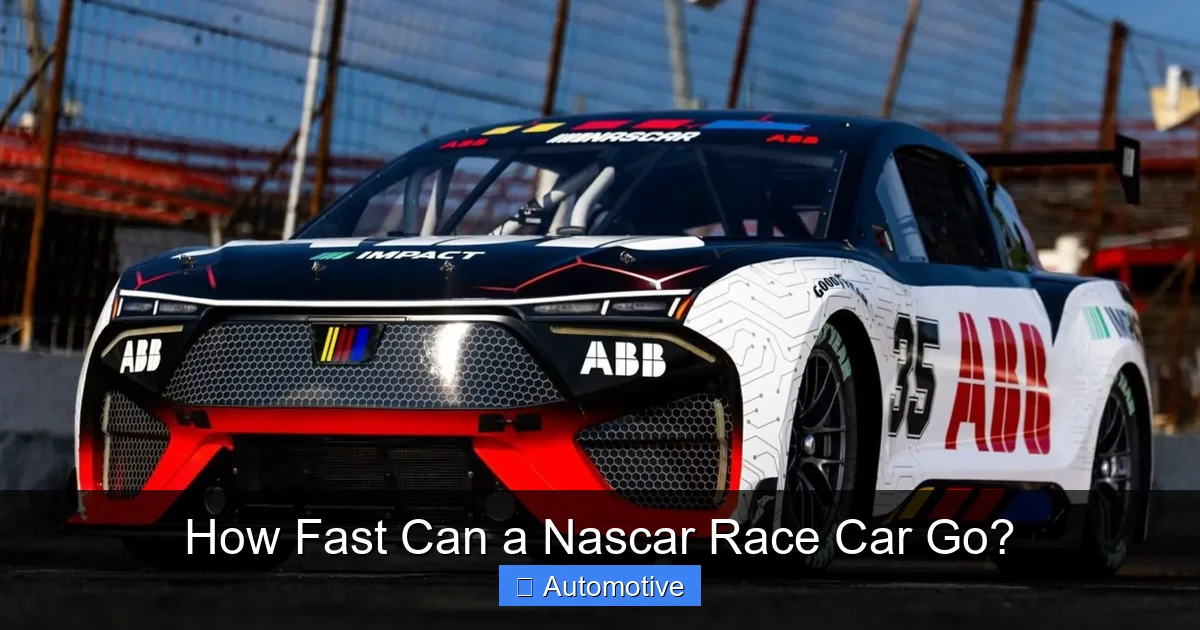
Visual guide about How Fast Can a Nascar Race Car Go?
Image source: thecooldown.com
At the heart of every NASCAR race car is a powerful V8 engine that delivers incredible performance. These aren’t your average car engines—they’re purpose-built racing machines designed for maximum output and reliability under extreme conditions.
Horsepower and Torque
Modern NASCAR engines, built to strict specifications by manufacturers like Toyota, Chevrolet, and Ford, produce between 670 and 750 horsepower. That’s more than double the power of a typical high-performance sports car. The engines are naturally aspirated, meaning they don’t use turbochargers or superchargers. Instead, they rely on precise engineering, high compression ratios, and advanced fuel delivery systems to squeeze every bit of power from the fuel.
Torque, the twisting force that gets the car moving, is equally impressive. These engines generate over 500 pound-feet of torque, allowing NASCAR cars to accelerate from 0 to 60 mph in under 3.5 seconds. That’s faster than many supercars, including the Lamborghini Huracán and the Porsche 911 Turbo.
Engine Regulations and Restrictions
Despite their power, NASCAR engines are not allowed to run at full unrestricted capacity during races. Safety is a top priority, and to prevent dangerously high speeds—especially on superspeedways—NASCAR uses devices like restrictor plates and tapered spacers.
On tracks like Daytona and Talladega, where speeds can become uncontrollable, NASCAR mandates the use of tapered spacers. These devices limit the amount of air and fuel entering the engine, effectively capping horsepower at around 510. This reduces top speeds and promotes closer, more competitive racing by increasing the effect of drafting.
In the past, NASCAR used restrictor plates, which were flat metal plates with small holes that restricted airflow. While effective, they created turbulent air and made passing difficult. The shift to tapered spacers in 2019 improved airflow and allowed for better racing while still maintaining safety.
Fuel Injection and Efficiency
Gone are the days of carburetors. Today’s NASCAR engines use electronic fuel injection (EFI), a system that delivers fuel more precisely and efficiently. EFI allows teams to fine-tune engine performance based on track conditions, temperature, and altitude. It also helps reduce fuel consumption, which is critical during long races where pit stops are limited.
Each race car carries about 18 gallons of Sunoco Green E15 fuel—a blend of 15% ethanol and 85% gasoline. Depending on the track and driving style, a car can burn through this fuel in 45 to 60 laps. Efficient fuel management is a key part of race strategy, and teams use real-time data to adjust engine settings on the fly.
Aerodynamics: The Science of Speed
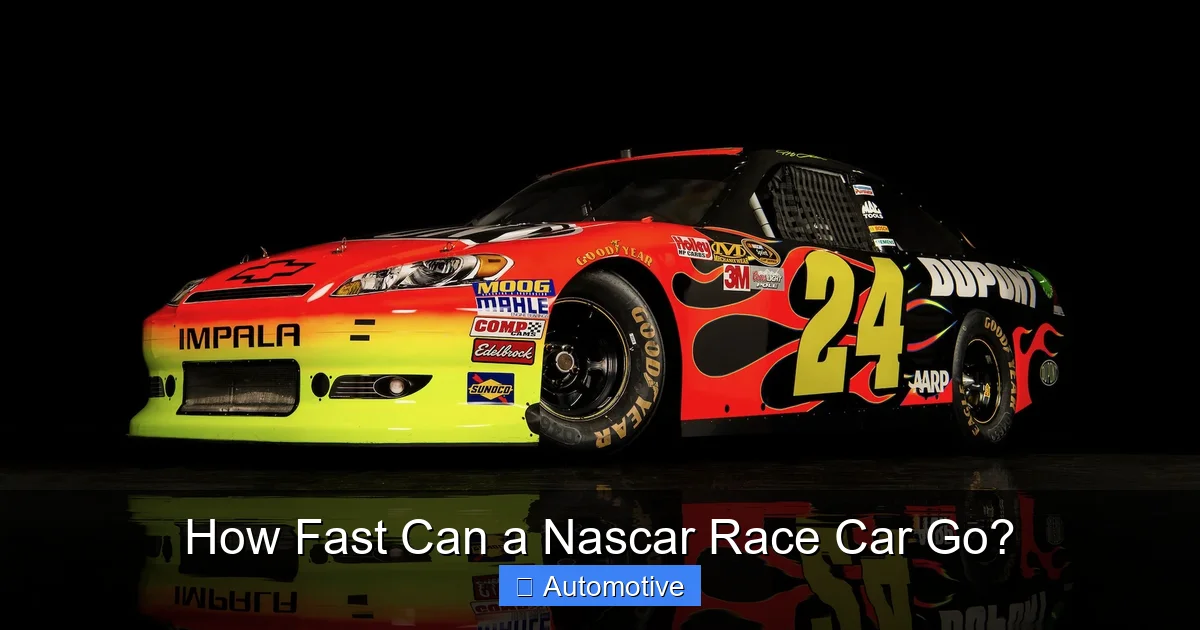
Visual guide about How Fast Can a Nascar Race Car Go?
Image source: images.hgmsites.net
While engine power gets the car moving, aerodynamics determines how fast it can go while staying stable. At high speeds, air resistance becomes a major factor—and in NASCAR, managing that resistance is crucial.
Downforce vs. Drag
Aerodynamics in racing is a balancing act between downforce and drag. Downforce pushes the car down onto the track, improving tire grip and allowing higher cornering speeds. Drag, on the other hand, slows the car down by resisting forward motion.
NASCAR cars are designed to generate significant downforce, especially on superspeedways. The front splitter, rear spoiler, and side skirts all work together to direct airflow in a way that increases downward pressure. However, too much downforce creates drag, which reduces top speed on straightaways.
Teams constantly adjust aerodynamic components to find the perfect balance. For example, on a short track with many turns, a driver might prefer more downforce for better handling. On a superspeedway, less downforce might be used to maximize straight-line speed—though this increases the risk of losing control.
The Role of Drafting
One of the most unique aspects of NASCAR aerodynamics is drafting. When one car follows closely behind another, it slips into the low-pressure wake created by the lead car. This reduces drag on the trailing car, allowing it to go faster with less engine power.
Drafting is especially important on superspeedways, where cars often race in tight packs. By working together, drivers can reach higher speeds and make strategic passes. However, drafting also increases the risk of multi-car accidents, as a single mistake can trigger a chain reaction.
NASCAR has implemented rules to manage drafting, such as limiting the size of spoilers and adjusting ride heights. These changes help maintain competitive racing while reducing the likelihood of dangerous “pack racing” scenarios.
Wind Tunnels and Simulation
To optimize aerodynamics, NASCAR teams use wind tunnels and computer simulations. Scale models of the cars are tested in wind tunnels to measure downforce, drag, and airflow patterns. Data from these tests is fed into computational fluid dynamics (CFD) software, which allows engineers to simulate how changes to the car’s shape will affect performance.
This technology has revolutionized race car design. Teams can now test hundreds of configurations virtually before making physical changes. It’s a far cry from the days when adjustments were made based on trial and error.
Track Types and Their Impact on Speed
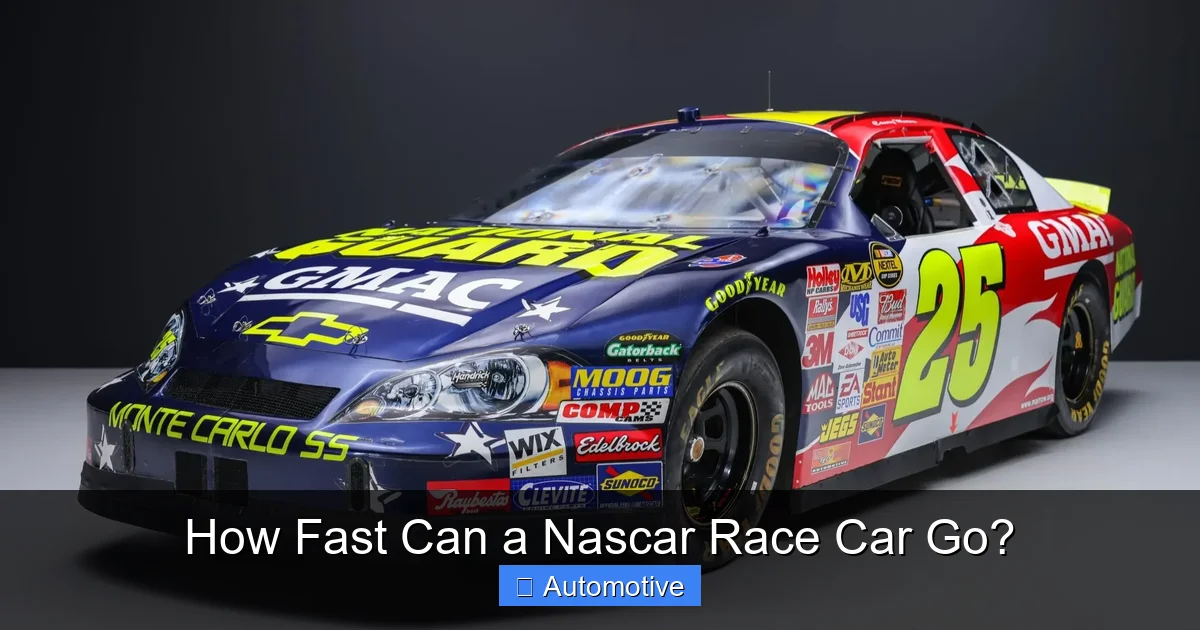
Visual guide about How Fast Can a Nascar Race Car Go?
Image source: bringatrailer.com
Not all NASCAR tracks are created equal—and the type of track has a huge impact on how fast a race car can go. From the high-banked ovals of Daytona to the tight turns of Bristol Motor Speedway, each venue presents unique challenges and opportunities.
Superspeedways: The Fastest Tracks
Superspeedways are the fastest tracks in NASCAR. These are large, high-banked ovals that allow cars to maintain high speeds for extended periods. The two most famous are Daytona International Speedway and Talladega Superspeedway, both over 2.5 miles long with banking up to 31 degrees.
On these tracks, NASCAR cars can reach top speeds of 200 mph or more. In 2014, during a practice session at Talladega, driver Jamie McMurray hit 210.5 mph—the fastest officially recorded speed in NASCAR history. However, during actual races, average speeds are lower due to drafting, traffic, and safety restrictions.
Superspeedway racing is all about strategy. Drivers must manage their speed, position, and fuel while navigating tight packs of cars. A single mistake can lead to a “Big One”—a massive multi-car crash that can end a race in seconds.
Intermediate Tracks: A Balance of Speed and Skill
Intermediate tracks, such as Charlotte Motor Speedway and Texas Motor Speedway, are 1.5 to 2 miles long with moderate banking. These tracks offer a mix of high-speed straights and challenging turns, requiring drivers to balance speed with handling.
Top speeds on intermediate tracks typically range from 180 to 190 mph. While not as fast as superspeedways, these tracks still demand precision and endurance. Aerodynamic setup is critical, as cars must generate enough downforce to corner quickly without sacrificing too much straight-line speed.
Short Tracks: Speed with a Side of Strategy
Short tracks, like Martinsville Speedway and Bristol Motor Speedway, are less than a mile long with tight turns and minimal banking. These tracks favor handling and braking over raw speed.
Top speeds on short tracks rarely exceed 100 mph. However, the action is intense, with frequent passing, bumping, and drafting. Drivers must be aggressive yet controlled, as there’s little room for error. The close quarters make for exciting racing, but also increase the risk of contact and crashes.
Road Courses: A Different Kind of Challenge
While most NASCAR races are held on ovals, some take place on road courses—tracks with both left and right turns, elevation changes, and varying surfaces. Examples include Sonoma Raceway and Watkins Glen International.
Road courses require a completely different driving style. Top speeds are lower—usually between 140 and 160 mph—but the technical demands are higher. Drivers must brake hard, shift gears, and navigate complex corners. Aerodynamics and suspension setup are crucial, as cars must handle well in all directions.
Safety Regulations and Speed Limits
Speed is thrilling, but in motorsports, safety always comes first. NASCAR has implemented a range of regulations to ensure that drivers can race at high speeds without undue risk.
Restrictor Plates and Tapered Spacers
As mentioned earlier, NASCAR uses tapered spacers on superspeedways to limit engine power and reduce top speeds. These devices are made of aluminum and fit between the intake manifold and the engine block. They restrict airflow, which in turn reduces horsepower.
Before 2019, NASCAR used restrictor plates, which were less effective at managing airflow. The switch to tapered spacers improved engine performance and made racing more competitive. However, both systems serve the same purpose: to keep speeds in check and prevent dangerous situations.
Crash Testing and Car Design
NASCAR race cars are built to withstand high-speed impacts. The chassis is made of a steel tube frame designed to absorb and disperse energy during a crash. The car also features a reinforced cockpit, energy-absorbing materials, and a halo-like device called the “Next Gen” roof flap, which helps prevent rollovers.
All cars undergo rigorous crash testing before they’re approved for competition. These tests simulate various impact scenarios, including head-on collisions, side impacts, and rollovers. The data collected helps engineers improve safety features and reduce the risk of injury.
Track Barriers and Safety Zones
In addition to car safety, NASCAR invests heavily in track infrastructure. Modern tracks are equipped with SAFER (Steel and Foam Energy Reduction) barriers, which absorb impact energy and reduce the force transmitted to the driver.
Pit road safety has also improved, with designated safety zones, fire suppression systems, and strict rules for crew members. Medical teams are stationed around the track, and helicopters are on standby for emergency evacuations.
The Future of NASCAR Speed
As technology advances, so does the potential for even faster NASCAR race cars. However, the sport is also focused on sustainability, cost control, and fan engagement.
Hybrid and Electric Powertrains
NASCAR has announced plans to introduce hybrid powertrains in the coming years. These systems will combine traditional internal combustion engines with electric motors, offering improved efficiency and reduced emissions.
While hybrid systems may not immediately increase top speeds, they could enhance acceleration and fuel economy. They also align with broader automotive trends toward electrification.
Data Analytics and AI
Teams are increasingly using data analytics and artificial intelligence to optimize performance. Sensors on the car collect real-time data on speed, tire pressure, engine temperature, and more. This information is analyzed to make strategic decisions during the race.
AI can also simulate race scenarios, helping teams predict outcomes and adjust strategies. As computing power grows, so will the role of technology in NASCAR.
Fan Experience and Broadcast Technology
Speed isn’t just about the cars—it’s also about how fans experience the race. NASCAR is investing in high-definition broadcasts, in-car cameras, and augmented reality to bring viewers closer to the action.
New technologies like 5G connectivity and virtual reality could allow fans to “ride along” with their favorite drivers, experiencing the speed and intensity firsthand.
Conclusion
So, how fast can a NASCAR race car go? The answer is both simple and complex. On the fastest tracks, with the right conditions, these machines can exceed 200 mph—pushing the limits of engineering and human skill. But speed in NASCAR isn’t just about raw velocity. It’s about balance, strategy, and safety.
From the roar of a 750-horsepower engine to the science of aerodynamics, every element of a NASCAR race car is designed to maximize performance while protecting the driver. And as the sport evolves, so will the ways we measure and experience speed.
Whether you’re watching from the stands or following along on TV, one thing is certain: NASCAR will continue to deliver heart-pounding action, mile after mile, lap after lap.
Frequently Asked Questions
What is the fastest speed ever recorded in NASCAR?
The fastest officially recorded speed in NASCAR history is 210.5 mph, set by Jamie McMurray during a practice session at Talladega Superspeedway in 2014. This speed was achieved under ideal conditions with minimal aerodynamic drag.
Why do NASCAR cars go slower during races than in practice?
During races, NASCAR cars often travel slower than in practice due to drafting, traffic, and strategic pacing. Drivers must manage fuel, tires, and position, which can limit top speeds. Safety regulations also cap engine power on certain tracks.
How do restrictor plates and tapered spacers work?
Restrictor plates and tapered spacers limit the amount of air and fuel entering the engine, reducing horsepower and top speed. Tapered spacers, used since 2019, improve airflow compared to older restrictor plates, allowing for better racing while maintaining safety.
Can NASCAR cars exceed 200 mph on all tracks?
No, NASCAR cars can only exceed 200 mph on superspeedways like Daytona and Talladega. On shorter tracks and road courses, top speeds are much lower due to tight turns and limited straightaways.
How does drafting help NASCAR cars go faster?
Drafting reduces aerodynamic drag by allowing a trailing car to slip into the low-pressure wake of the lead car. This enables the following car to go faster with less engine power, making it easier to pass and maintain high speeds.
Are NASCAR race cars faster than Formula 1 cars?
No, Formula 1 cars are generally faster in terms of top speed and acceleration due to advanced aerodynamics and hybrid powertrains. However, NASCAR cars are built for durability and close-quarters racing on ovals, which requires different design priorities.