
Should I Buy a Car with Moderate Damage on Carfax

Buying a car with moderate damage on Carfax isn’t automatically a dealbreaker—but it requires careful evaluation. You’ll need to assess the type of damage, repair quality, and long-term reliability before deciding. With the right inspection and negotiation, you might snag a solid ride at a lower price.
Key Takeaways
- Moderate damage doesn’t always mean unsafe: Many cars with moderate damage are repaired properly and remain reliable if inspected by a professional.
- Get a pre-purchase inspection (PPI): Always have a trusted mechanic inspect the vehicle to verify the extent of repairs and current condition.
- Check the Carfax report details: Look beyond the “moderate damage” label—review the description, repair history, and whether airbags deployed.
- Negotiate the price: Use the damage history as leverage to lower the purchase price, especially if repairs were cosmetic or incomplete.
- Consider resale value: Even well-repaired cars with damage history may sell for less later, affecting long-term ownership costs.
- Verify structural integrity: Ensure frame or unibody damage was professionally repaired—improper fixes can compromise safety and performance.
- Research the seller: Buying from a reputable dealer or private seller with transparency increases your confidence in the vehicle’s condition.
📑 Table of Contents
- Should I Buy a Car with Moderate Damage on Carfax?
- Understanding What “Moderate Damage” Really Means
- Pros and Cons of Buying a Car with Moderate Damage
- How to Evaluate a Car with Moderate Damage
- Negotiating the Price: Using Damage History to Your Advantage
- Long-Term Ownership: What to Expect
- When to Walk Away: Red Flags to Watch For
- Conclusion: Is It Worth It?
Should I Buy a Car with Moderate Damage on Carfax?
So, you’ve found a used car you really like—great mileage, solid features, and a price that fits your budget. But then you run the Carfax report… and there it is: “Moderate Damage Reported.” Your heart sinks. Should you walk away? Or is this still a smart buy?
The truth is, a “moderate damage” notation on Carfax doesn’t automatically mean the car is a lemon. In fact, many vehicles with this label are perfectly safe, reliable, and worth considering—especially if you do your homework. The key is understanding what “moderate damage” really means, how it was repaired, and whether the car has been properly maintained since.
Carfax defines moderate damage as damage that is more than cosmetic but doesn’t involve structural or frame damage. This could include things like a replaced bumper, repaired fender, or damage from a minor collision. It’s not as serious as “severe” or “total loss” damage, but it’s also not just a scratch or dent. The challenge is that Carfax reports can be vague—sometimes they don’t specify the exact nature of the damage or how well it was fixed. That’s why due diligence is essential.
In this guide, we’ll walk you through everything you need to know about buying a car with moderate damage on Carfax. We’ll cover how to interpret the report, what questions to ask, how to inspect the vehicle, and whether the potential savings are worth the risk. By the end, you’ll have the tools to make a confident, informed decision—without overpaying or ending up with a money pit.
Understanding What “Moderate Damage” Really Means
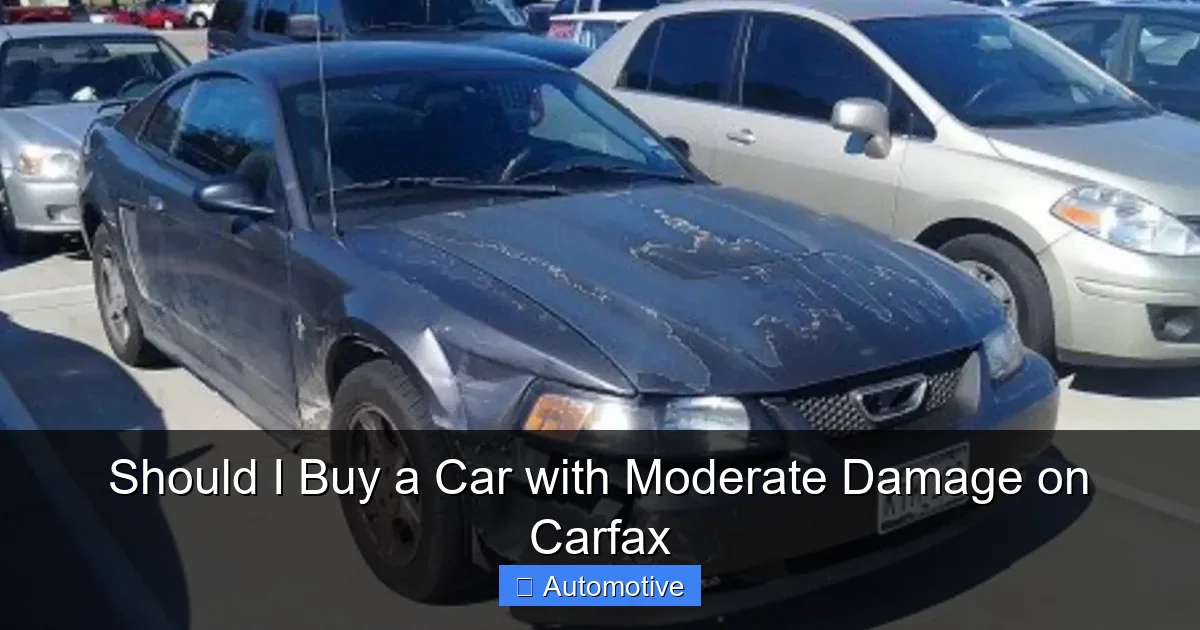
Visual guide about Should I Buy a Car with Moderate Damage on Carfax
Image source: autosdonation.com
When you see “moderate damage” on a Carfax report, it’s natural to feel cautious. But before you panic, it’s important to understand exactly what this term covers. Carfax uses a tiered system to classify vehicle damage:
– **Minor Damage:** Cosmetic issues like dents, scratches, or small bumper repairs.
– **Moderate Damage:** More significant bodywork, such as replaced panels, repaired quarter panels, or damage from a low-speed collision.
– **Severe Damage:** Structural or frame damage, flood damage, or vehicles declared total losses by insurance companies.
Moderate damage typically falls in the middle—serious enough to require professional repair, but not so severe that the car’s safety or structural integrity is compromised. For example, a car that was rear-ended and had its bumper and trunk lid replaced would likely be classified as having moderate damage.
However, the term “moderate” can be misleading. It doesn’t tell you:
– How the damage occurred (e.g., parking lot scrape vs. highway collision)
– Whether airbags deployed
– If the repair was done by a certified shop
– Whether the car passed a post-repair inspection
That’s why you can’t rely solely on the label. You need to dig deeper into the Carfax report and, more importantly, inspect the car in person.
Common Causes of Moderate Damage
Moderate damage can result from a variety of incidents, including:
– **Fender benders:** Low-speed collisions, often in traffic or parking lots, that damage bumpers, headlights, or fenders.
– **Side impacts:** Side-swipes or T-bone accidents that affect doors, quarter panels, or mirrors.
– **Hail damage:** Severe weather can dent roofs, hoods, and trunk lids—requiring extensive bodywork.
– **Animal strikes:** Hitting a deer or other large animal can cause significant front-end damage.
– **Vandalism or theft recovery:** Cars broken into or stolen and recovered may have damaged locks, windows, or interiors.
Each of these scenarios has different implications. For instance, hail damage is usually cosmetic and doesn’t affect mechanical components, while a side impact could compromise door integrity or airbag sensors.
How Carfax Collects Damage Data
Carfax compiles its reports from a variety of sources, including:
– Insurance companies
– Auto auctions
– Repair shops
– State motor vehicle agencies
– Police reports
However, not all damage is reported. If a car was repaired out-of-pocket without involving insurance, it might not appear on Carfax. Similarly, some repair shops don’t report to Carfax, so the report could be incomplete. This means a “clean” Carfax doesn’t guarantee no damage—and a “moderate damage” report doesn’t necessarily mean the car is unsafe.
Always treat the Carfax report as a starting point, not the final word.
Pros and Cons of Buying a Car with Moderate Damage

Visual guide about Should I Buy a Car with Moderate Damage on Carfax
Image source: tadvantagebetaprod-com.cdn-convertus.com
Like any major purchase, buying a car with moderate damage on Carfax comes with both advantages and risks. Let’s break them down so you can weigh your options.
The Pros: Why It Might Be Worth It
- Lower Purchase Price: Cars with damage history typically sell for 10% to 25% less than similar models with clean titles. This can mean significant savings, especially on higher-end vehicles.
- Better Value for Budget Buyers: If you’re shopping on a tight budget, a moderately damaged car could give you access to a nicer model, trim, or year than you’d otherwise afford.
- Well-Repaired Cars Can Be Reliable: Many moderate damage repairs are done professionally and don’t affect the car’s performance. If the work was high-quality, the car can run just as well as one with a clean history.
- Transparency Builds Trust: A seller who discloses damage upfront is often more trustworthy than one hiding issues. This honesty can extend to other aspects of the car’s condition.
- Warranty Options May Still Be Available: Some dealers offer limited warranties on cars with damage history, especially if they’ve been certified pre-owned (CPO).
The Cons: Risks to Consider
- Unknown Repair Quality: Not all body shops follow OEM (original equipment manufacturer) standards. Poor repairs can lead to rust, misalignment, or electrical issues.
- Reduced Resale Value: Even if the car is in great shape, future buyers may be hesitant. You could lose 15% to 30% of resale value compared to a clean-title vehicle.
- Potential Hidden Damage: Some damage—like water intrusion from a poorly sealed repair—might not show up immediately but could cause problems later.
- Insurance and Financing Challenges: Some lenders and insurers view damaged cars as higher risk. You might face higher interest rates or limited coverage options.
- Emotional Factor: Knowing your car was in an accident—even a minor one—can be a psychological burden for some buyers.
The key is balancing these pros and cons based on your priorities. If you value affordability and are willing to do your research, a moderately damaged car could be a smart buy. But if you’re planning to keep the car long-term or want maximum resale value, you might prefer a clean-title vehicle.
How to Evaluate a Car with Moderate Damage

Visual guide about Should I Buy a Car with Moderate Damage on Carfax
Image source: excvytcvz5z.exactdn.com
If you’re seriously considering a car with moderate damage on Carfax, your next step is a thorough evaluation. This isn’t just about kicking the tires—it’s about verifying the car’s condition, repair history, and long-term viability. Here’s how to do it right.
Step 1: Review the Full Carfax Report
Don’t stop at the “moderate damage” alert. Dive into the details:
– **When did the damage occur?** Recent damage may still have unresolved issues. Older damage that’s been driven for thousands of miles without problems is a better sign.
– **Where was the damage?** Front, rear, side, or roof? Each location has different implications.
– **Was the car declared a total loss?** If yes, it likely had severe damage—moderate damage shouldn’t lead to a total loss declaration.
– **Were airbags deployed?** Airbag deployment often indicates a more serious impact, even if classified as “moderate.”
– **How many owners since the damage?** Multiple owners might suggest ongoing issues.
Look for patterns. A car with one moderate damage event and consistent maintenance records is far more promising than one with multiple incidents.
Step 2: Get a Pre-Purchase Inspection (PPI)
This is non-negotiable. A PPI by a certified mechanic—preferably one familiar with the car’s make and model—can uncover hidden problems. The inspection should include:
– **Frame and structural check:** Using laser tools or measuring systems to ensure the chassis isn’t bent or misaligned.
– **Body panel alignment:** Checking for uneven gaps, paint overspray, or signs of repainting.
– **Mechanical systems:** Testing the engine, transmission, suspension, and brakes.
– **Electrical systems:** Ensuring sensors, lights, and infotainment work properly—damage can sometimes affect wiring.
– **Undercarriage inspection:** Looking for rust, leaks, or signs of poor repair.
A good PPI costs $100–$200 but can save you thousands in repairs. If the seller refuses to allow one, that’s a major red flag.
Step 3: Ask the Right Questions
Talk to the seller—whether it’s a dealer or private party—and ask:
– “Can you explain what happened in the accident?”
– “Who repaired the damage, and do you have receipts?”
– “Did the car pass a post-repair inspection?”
– “Have there been any issues since the repair?”
– “Why are you selling the car?”
Honest answers build trust. Vague or evasive responses should raise concerns.
Step 4: Test Drive the Car
During the test drive, pay attention to:
– **Steering and handling:** Does the car pull to one side? That could indicate alignment issues from the damage.
– **Noises:** Listen for rattles, squeaks, or unusual sounds from the suspension or body.
– **Braking:** Do the brakes feel smooth and responsive?
– **Visibility:** Are there blind spots caused by repaired mirrors or windows?
A smooth, quiet ride is a good sign. Any irregularities should be investigated further.
Step 5: Check for Recalls and Maintenance Records
Use the car’s VIN to check for open recalls on the NHTSA website. Also, ask for maintenance records. A well-maintained car with moderate damage is often a better bet than a neglected one with a clean title.
Negotiating the Price: Using Damage History to Your Advantage
One of the biggest benefits of buying a car with moderate damage is the opportunity to negotiate a lower price. Sellers know these cars are harder to sell, so they’re often willing to discount them. Here’s how to make the most of it.
Know the Market Value
Start by researching the car’s value using tools like Kelley Blue Book (KBB), Edmunds, or NADA Guides. Look up the price for:
– The same make, model, year, and mileage with a clean title
– The same car with a damage history
The difference is your bargaining power. For example, if a clean 2019 Honda Accord EX-L is worth $18,000, but one with moderate damage is listed at $16,500, you might negotiate it down to $15,000 or lower.
Use the Damage as Leverage
When negotiating, be polite but firm. Say something like:
> “I like the car, but the Carfax shows moderate damage. I’d need to factor in potential future issues and lower resale value. Can you come down to $15,000?”
Most sellers expect this. If they refuse, ask if they’ll cover the cost of a PPI or offer a warranty.
Consider the Cost of Repairs
Even if the damage was repaired, there might be lingering issues. Use this to justify a lower offer. For example:
– If the paint doesn’t match perfectly, you might need a touch-up ($200–$500).
– If the alignment is off, a wheel alignment could cost $100–$150.
– If there’s minor rust, treatment might run $300–$800.
Factor these potential costs into your offer.
Walk Away if Needed
Negotiation is a two-way street. If the seller won’t budge and the price doesn’t reflect the risk, don’t be afraid to walk away. There are plenty of other cars out there—don’t let FOMO (fear of missing out) push you into a bad deal.
Long-Term Ownership: What to Expect
Buying a car with moderate damage isn’t just about the purchase—it’s about what happens over the next 50,000 miles. Here’s what to expect in terms of reliability, maintenance, and resale.
Reliability and Performance
If the damage was properly repaired, the car should perform just as well as a clean-title counterpart. Many owners report no issues years after purchase. However, keep an eye out for:
– **Rust:** Especially around repaired panels or welds.
– **Electrical gremlins:** Damaged wiring might cause intermittent issues.
– **Suspension wear:** Misaligned frames can lead to premature tire wear or steering problems.
Regular maintenance is key. Follow the manufacturer’s schedule and address any issues promptly.
Insurance and Financing
Some insurers may charge higher premiums or limit coverage on cars with damage history. Shop around and compare quotes. Similarly, some lenders may hesitate to finance a damaged car—especially if it’s older or has high mileage. A larger down payment or co-signer might help.
Resale Value
This is the biggest long-term downside. When you sell, buyers will scrutinize the Carfax report. Even if the car is in great shape, you’ll likely get less than a clean-title equivalent. To maximize resale value:
– Keep detailed maintenance records
– Address any cosmetic flaws
– Be transparent about the damage history
Consider holding onto the car longer to offset the depreciation hit.
When to Walk Away: Red Flags to Watch For
Not every car with moderate damage is a good buy. Here are some red flags that should make you walk away:
– **Frame or structural damage:** Even if labeled “moderate,” this is a serious concern.
– **Airbag deployment:** Indicates a high-impact collision.
– **Flood or fire damage:** Often misclassified or hidden.
– **Poor repair quality:** Mismatched paint, uneven panels, or DIY fixes.
– **Multiple damage events:** Suggests a history of accidents or neglect.
– **Seller refuses inspection:** A major warning sign.
– **No repair documentation:** You can’t verify the quality of the work.
If you see any of these, it’s better to keep looking.
Conclusion: Is It Worth It?
So, should you buy a car with moderate damage on Carfax? The answer isn’t a simple yes or no—it depends on the specifics.
If the damage was properly repaired, the car passes a thorough inspection, and the price reflects the risk, then yes, it can be a smart, money-saving decision. Many buyers have purchased moderately damaged cars and enjoyed years of reliable service.
But if the repair quality is questionable, the price isn’t discounted enough, or you’re uncomfortable with the history, it’s better to walk away. Your peace of mind and long-term satisfaction matter just as much as the upfront cost.
The key is due diligence. Don’t let the Carfax label scare you off—but don’t ignore it either. Do your research, inspect the car, negotiate wisely, and make a decision based on facts, not fear.
With the right approach, a car with moderate damage could be the affordable, reliable ride you’ve been looking for.
Frequently Asked Questions
What does “moderate damage” on Carfax actually mean?
“Moderate damage” refers to vehicle damage that is more than cosmetic but doesn’t involve structural or frame damage. It typically includes things like replaced bumpers, repaired fenders, or damage from low-speed collisions. It’s less severe than “severe” or “total loss” damage.
Can a car with moderate damage be safe to drive?
Yes, if the damage was properly repaired by a certified shop and the car passes a pre-purchase inspection. Many moderately damaged cars are safe and reliable, but it’s essential to verify the repair quality and structural integrity.
Will a moderate damage history affect my insurance?
It might. Some insurers view cars with damage history as higher risk and may charge higher premiums or limit coverage. It’s best to shop around and compare quotes from multiple providers.
How much should I discount a car with moderate damage?
Typically, 10% to 25% off the clean-title value is reasonable, depending on the extent of damage, repair quality, and market demand. Use the damage history as leverage during negotiation.
Can I finance a car with moderate damage?
Yes, but some lenders may be hesitant, especially if the car is older or has high mileage. You might need a larger down payment or a co-signer. Check with multiple lenders to find the best terms.
Will a moderate damage car pass a state inspection?
In most cases, yes—if the repairs were done correctly and the car meets safety and emissions standards. However, some states have stricter rules, so check your local requirements before buying.