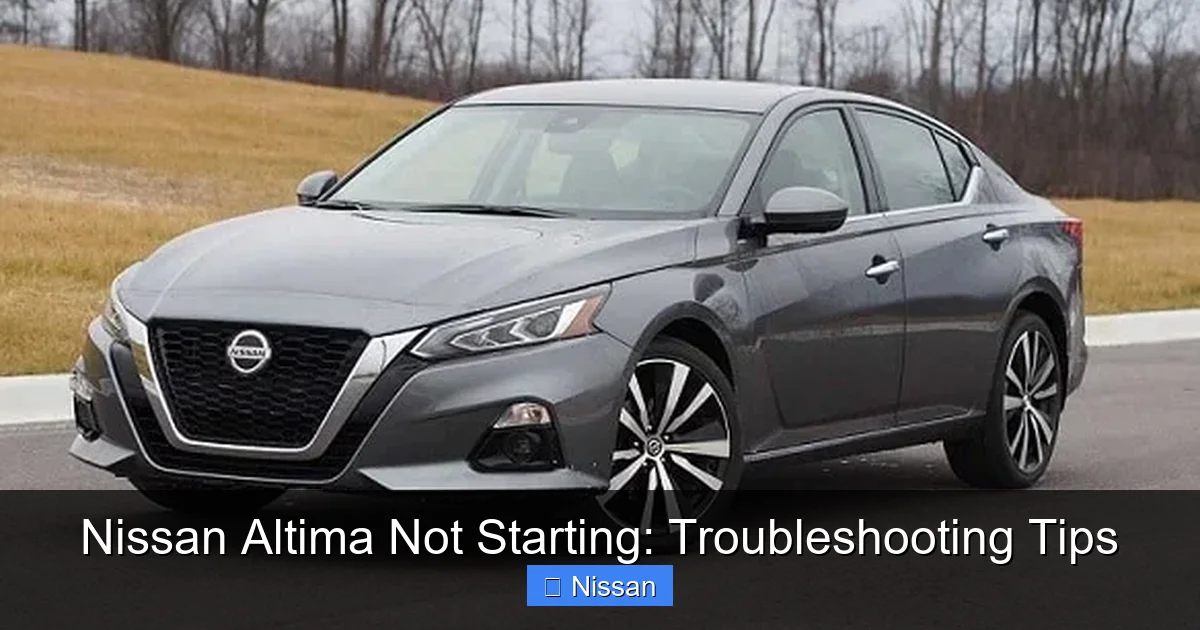
Nissan Altima Not Starting: Troubleshooting Tips

Contents
- 1 Key Takeaways
- 2 📑 Table of Contents
- 3 Why Won’t My Nissan Altima Start? Common Causes Explained
- 4 Step 1: Check the Battery and Electrical Connections
- 5 Step 2: Diagnose the Starter Motor
- 6 Step 3: Inspect the Ignition Switch and Key
- 7 Step 4: Check the Fuel System
- 8 Step 5: Understand the Engine Immobilizer System
- 9 Step 6: Scan for Diagnostic Trouble Codes (DTCs)
- 10 Preventative Maintenance Tips
- 11 Conclusion
- 12 Frequently Asked Questions



If your Nissan Altima won’t start, don’t panic—many causes are simple to fix. From a dead battery to faulty starters, this guide walks you through step-by-step solutions to get you back on the road safely and confidently.
Key Takeaways
- Check the battery first: A dead or weak battery is the most common reason a Nissan Altima won’t start—look for dim lights or clicking sounds.
- Inspect the starter motor: If you hear a single click but the engine doesn’t turn over, the starter may be faulty or receiving insufficient power.
- Test the ignition switch: A malfunctioning ignition switch can prevent power from reaching the starter, even with a good battery.
- Examine the fuel system: Low fuel pressure, a clogged fuel filter, or a failing fuel pump can stop your Altima from starting.
- Look at the engine immobilizer: If the security light flashes, the immobilizer may be blocking the engine from starting due to a key or sensor issue.
- Check fuses and relays: Blown fuses or bad relays in the starting circuit can interrupt power flow—always inspect the fuse box.
- Scan for trouble codes: Use an OBD2 scanner to read diagnostic trouble codes (DTCs) that can pinpoint electronic or sensor problems.
📑 Table of Contents
- Why Won’t My Nissan Altima Start? Common Causes Explained
- Step 1: Check the Battery and Electrical Connections
- Step 2: Diagnose the Starter Motor
- Step 3: Inspect the Ignition Switch and Key
- Step 4: Check the Fuel System
- Step 5: Understand the Engine Immobilizer System
- Step 6: Scan for Diagnostic Trouble Codes (DTCs)
- Preventative Maintenance Tips
- Conclusion
Why Won’t My Nissan Altima Start? Common Causes Explained
It’s 7 a.m., you’re running late for work, and you hop into your Nissan Altima—only to find it won’t start. The key turns, but nothing happens. Or maybe there’s a faint click, or the engine cranks slowly but refuses to fire. Sound familiar? You’re not alone. The “Nissan Altima not starting” issue is one of the most common problems reported by owners, and while it can be frustrating, it’s often fixable with some basic troubleshooting.
The good news? Most starting problems fall into a few predictable categories. Whether it’s an electrical issue, a fuel delivery problem, or something related to the ignition system, understanding the root cause can save you time, money, and a trip to the mechanic. In this guide, we’ll walk you through the most likely reasons your Altima won’t start—and how to fix them yourself.
We’ll cover everything from the simplest checks (like the battery) to more complex diagnostics (like the immobilizer system). By the end, you’ll know exactly what to look for and how to respond. And remember: safety first. Always disconnect the battery before working on electrical components, and never attempt repairs you’re not comfortable with.
Step 1: Check the Battery and Electrical Connections
The battery is the heart of your car’s electrical system—and when it’s weak or dead, your Altima simply won’t start. In fact, a dead battery is the number one culprit behind a Nissan Altima not starting.
Signs of a Weak or Dead Battery
If your dashboard lights are dim, the radio doesn’t turn on, or you hear a rapid clicking sound when you turn the key, your battery is likely the issue. A healthy battery should provide around 12.6 volts when the car is off. Anything below 12.2 volts may not be enough to start the engine.

Visual guide about Nissan Altima Not Starting: Troubleshooting Tips
Image source: nissannationpodcast.com
How to Test the Battery
Grab a multimeter and set it to DC voltage. Touch the red probe to the positive terminal and the black probe to the negative terminal. If the reading is below 12.4 volts, the battery may need charging or replacement. You can also visit an auto parts store—they’ll test it for free.
Inspect Battery Terminals and Cables
Corrosion on the battery terminals can block electrical flow. Look for a white, powdery buildup around the connections. If you see it, disconnect the cables (negative first, then positive), scrub the terminals with a wire brush, and reconnect them tightly. A loose or corroded connection can mimic a dead battery, even if the battery itself is fine.
Jump-Starting Your Altima
If the battery is dead, try jump-starting it using jumper cables and another vehicle. Connect the red cable to the positive terminals of both batteries, then the black cable to the negative terminal of the good battery and a grounded metal part on your Altima (not the negative terminal). Start the working car, let it run for a few minutes, then try starting your Altima. If it starts, drive it for at least 30 minutes to recharge the battery.
When to Replace the Battery
Car batteries typically last 3–5 years. If your Altima’s battery is older than that—or if it fails a load test—it’s time for a replacement. Look for a high-quality AGM or flooded lead-acid battery compatible with your Altima’s year and trim.
Step 2: Diagnose the Starter Motor
If your battery is good but the engine doesn’t turn over, the starter motor might be the problem. The starter is a small electric motor that cranks the engine when you turn the key.
Listen for the Click
A single, loud click when you turn the key usually means the starter solenoid is engaging, but the motor isn’t spinning. This could mean the starter is worn out or not receiving enough power.

Visual guide about Nissan Altima Not Starting: Troubleshooting Tips
Image source: bryansgarage.com
Test the Starter Circuit
Use a multimeter to check for voltage at the starter’s main power wire (usually a thick red cable). With the key in the “start” position, you should see battery voltage. If there’s no power, the issue might be in the ignition switch, starter relay, or wiring.
Tap the Starter (Temporary Fix)
Sometimes, a stuck starter can be freed by gently tapping it with a hammer while someone tries to start the car. This isn’t a permanent solution, but it can confirm the starter is the issue. If the car starts after tapping, plan to replace the starter soon.
Replacing the Starter
The starter is usually located under the engine, near the transmission. Replacing it requires lifting the car, disconnecting the battery, and removing the starter bolts. If you’re not experienced with this, consider hiring a mechanic. A rebuilt or new starter typically costs between $150 and $400, including labor.
Step 3: Inspect the Ignition Switch and Key
The ignition switch sends power to the starter when you turn the key. If it’s faulty, your Altima won’t start—even with a good battery and starter.
Symptoms of a Bad Ignition Switch
You might notice that accessories (like the radio or power windows) work, but the engine won’t crank. Or the key feels loose or wobbly in the ignition. In some cases, the car may start intermittently or not at all.

Visual guide about Nissan Altima Not Starting: Troubleshooting Tips
Image source: bryansgarage.com
Testing the Ignition Switch
Use a test light or multimeter to check for power at the starter relay when the key is turned to “start.” If there’s no power, the ignition switch may be faulty. You can also try jiggling the key while turning it—if the car starts, the switch is likely worn.
Replacing the Ignition Switch
The ignition switch is usually located behind the steering column. Replacing it involves removing the steering column covers and disconnecting electrical connectors. This job can be tricky, so consult a repair manual or consider professional help. A new ignition switch costs around $50–$150, plus labor.
Step 4: Check the Fuel System
Even if the engine cranks, your Altima won’t start without fuel. A problem in the fuel system can prevent the engine from getting the gasoline it needs.
Listen for the Fuel Pump
When you turn the key to “on” (without starting), you should hear a faint humming sound from the fuel tank for about 2–3 seconds. This is the fuel pump priming. If you don’t hear it, the pump may be dead or not receiving power.
Test Fuel Pressure
Use a fuel pressure gauge to check the pressure at the fuel rail. For most Nissan Altimas, the pressure should be between 45 and 60 psi. Low pressure could indicate a failing fuel pump, clogged fuel filter, or faulty fuel pressure regulator.
Inspect the Fuel Filter
The fuel filter removes dirt and debris from the fuel. A clogged filter can restrict flow and prevent the engine from starting. Most filters should be replaced every 30,000–60,000 miles. If yours is old or dirty, replace it.
Check the Fuel Pump Relay and Fuse
The fuel pump is controlled by a relay and protected by a fuse. Check the fuse box (usually under the dashboard or hood) for a blown fuse labeled “FUEL PUMP” or “FP.” Also, listen for the relay clicking when you turn the key. If it doesn’t click, the relay may be bad.
When to Replace the Fuel Pump
If the fuel pump is dead, you’ll need to replace it. This involves dropping the fuel tank or accessing it from the trunk (on some models). It’s a messy job, so many owners prefer a mechanic. A new fuel pump costs $200–$600, including parts and labor.
Step 5: Understand the Engine Immobilizer System
Modern Nissan Altimas come with an engine immobilizer system that prevents the car from starting unless the correct key is used. If the system malfunctions, your Altima won’t start—even with a good battery and fuel.
Security Light Flashing
If the security light (usually a key-shaped icon) flashes when you try to start the car, the immobilizer is likely blocking the engine. This can happen if the key’s transponder chip is damaged, the key is not programmed, or the immobilizer control module is faulty.
Try a Spare Key
If you have a spare key, try starting the car with it. If it works, the original key may be damaged or unprogrammed. You can have a new key cut and programmed at a Nissan dealer or a locksmith with the right equipment.
Reset the Immobilizer
Sometimes, the immobilizer can be reset by disconnecting the battery for 10–15 minutes. This clears the system’s memory and may resolve the issue. Reconnect the battery and try starting the car.
Professional Diagnosis
If the immobilizer system is faulty, you’ll need a professional scan tool to diagnose it. A mechanic or Nissan dealer can read immobilizer-specific codes and determine if the control module, antenna ring, or key needs replacement.
Step 6: Scan for Diagnostic Trouble Codes (DTCs)
Modern vehicles, including the Nissan Altima, store diagnostic trouble codes (DTCs) when something goes wrong. These codes can point you directly to the problem.
Use an OBD2 Scanner
Plug an OBD2 scanner into the port under the dashboard (usually near the steering wheel). Turn the key to “on” and read the codes. Common codes related to starting issues include P0335 (crankshaft position sensor), P0340 (camshaft position sensor), and P0615 (starter relay circuit).
Interpreting the Codes
Each code corresponds to a specific system or component. For example, a P0335 code means the crankshaft position sensor isn’t sending a signal, which prevents the engine from starting. Use a repair manual or online database to understand what each code means.
Clearing the Codes
After fixing the issue, use the scanner to clear the codes. Then, try starting the car. If the code returns, the problem wasn’t fully resolved.
When to Seek Professional Help
If you’re unable to diagnose or fix the issue after checking the battery, starter, fuel system, and immobilizer, it’s time to visit a mechanic. They have advanced tools and experience to tackle complex electrical or mechanical problems.
Preventative Maintenance Tips
Preventing a “Nissan Altima not starting” issue is easier than fixing one. Regular maintenance can keep your car reliable for years.
Maintain the Battery
Clean terminals regularly, check voltage, and replace the battery every 3–5 years. Consider a battery tender if you don’t drive often.
Replace the Fuel Filter
Follow the maintenance schedule and replace the fuel filter as recommended—usually every 30,000–60,000 miles.
Use Quality Fuel
Fill up at reputable gas stations to avoid contaminated fuel that can clog injectors or damage the fuel pump.
Keep Spare Keys in Good Condition
Protect your keys from damage and have a spare programmed in case the original fails.
Listen for Warning Signs
Slow cranking, intermittent starting, or unusual noises can signal an upcoming problem. Address them early to avoid being stranded.
Conclusion
A Nissan Altima not starting can be stressful, but with the right approach, you can often solve the problem yourself. Start with the basics—check the battery, listen for the fuel pump, and scan for trouble codes. From there, work your way through the starter, ignition switch, and immobilizer system.
Remember, most starting issues are electrical or fuel-related, and many have simple fixes. But if you’re unsure or uncomfortable with any step, don’t hesitate to call a professional. Your safety and peace of mind are worth it.
By following this guide, you’ll not only get your Altima running again but also gain confidence in handling future car troubles. Stay proactive with maintenance, and your Altima will keep you moving smoothly for years to come.
Frequently Asked Questions
Why won’t my Nissan Altima start even though the battery is new?
A new battery doesn’t guarantee a start if other components are faulty. Check the starter, ignition switch, or fuel pump. Also, ensure the battery terminals are clean and tight.
Can a bad alternator cause my Altima not to start?
Yes, a failing alternator can drain the battery over time, leading to a no-start condition. If the battery dies repeatedly, have the alternator tested.
What does it mean if my Altima clicks but won’t start?
A single click usually points to a starter issue or low battery voltage. Multiple rapid clicks suggest a weak battery. Test the battery and starter circuit.
How do I know if my fuel pump is bad?
If you don’t hear the fuel pump humming when you turn the key to “on,” or if fuel pressure is low, the pump may be failing. A mechanic can confirm with a pressure test.
Can a faulty key cause my Altima not to start?
Yes, if the key’s transponder chip is damaged or unprogrammed, the immobilizer system will block the engine from starting. Try a spare key or have it reprogrammed.
Is it safe to jump-start my Nissan Altima?
Yes, as long as you follow proper jump-starting procedures: connect cables in the correct order, avoid touching metal parts, and let the donor car run for a few minutes before starting.