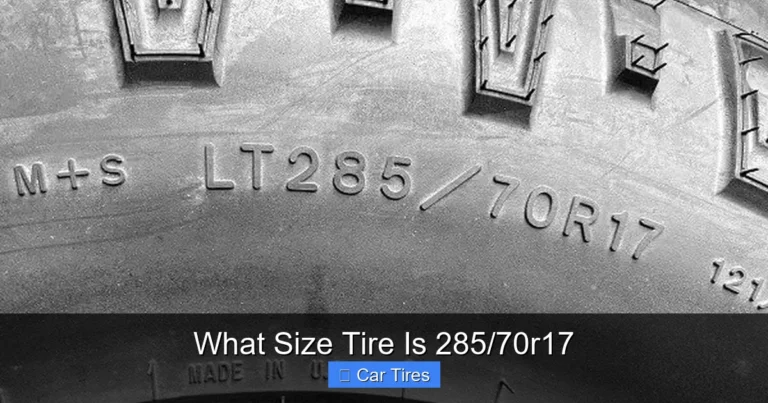
Max Speed with Spare Tire

Driving on a spare tire? Don’t push your luck—know the max speed with spare tire to stay safe. Most temporary spares are limited to 50 mph and 50 miles, but specifics vary by vehicle and tire type. Always check your owner’s manual and replace the spare ASAP.
In This Article
- 1 Key Takeaways
- 2 📑 Table of Contents
- 3 What Is a Spare Tire and Why Does Max Speed Matter?
- 4 Types of Spare Tires and Their Speed Limits
- 5 Why Speed Limits Exist for Spare Tires
- 6 How to Safely Drive on a Spare Tire
- 7 Common Myths About Spare Tires
- 8 When to Replace Your Spare Tire
- 9 Conclusion: Respect the Spare
- 10 Frequently Asked Questions
- 10.1 What is the max speed with spare tire?
- 10.2 Can I drive 70 mph on a spare tire?
- 10.3 How far can I drive on a spare tire?
- 10.4 Is it safe to drive on a spare tire in the rain?
- 10.5 Can I use a spare tire on an all-wheel-drive vehicle?
- 10.6 Do I need to replace my spare tire even if it’s never been used?
Key Takeaways
- Max speed with spare tire is typically 50 mph: Most compact temporary spares (donut tires) are designed for low-speed, short-distance use only.
- Distance limits apply: You should not drive more than 50–70 miles on a spare tire, even if it looks fine.
- Check your owner’s manual: Manufacturer guidelines override general advice—your vehicle may have unique restrictions.
- Spare types matter: Full-size spares allow normal driving, while donuts severely limit speed and handling.
- Safety first: Driving too fast on a spare can cause loss of control, overheating, or tire failure.
- Replace promptly: A spare is a temporary fix—schedule tire repair or replacement immediately after use.
- Modern cars may lack spares: Many newer vehicles use run-flat tires or tire sealant kits instead of traditional spares.
📑 Table of Contents
What Is a Spare Tire and Why Does Max Speed Matter?
We’ve all been there—you’re cruising down the highway, and suddenly, thump, thump, thump. A flat tire. Your heart sinks, but then you remember: you’ve got a spare in the trunk. Relief washes over… until you wonder, “How fast can I actually drive on this thing?”
The answer isn’t just about convenience—it’s about safety. Spare tires, especially the small “donut” types, aren’t built for long trips or high speeds. They’re emergency backups, designed to get you to the nearest repair shop, not to your weekend getaway. Understanding the max speed with spare tire isn’t just smart—it’s essential to avoiding accidents, damaging your vehicle, or worse.
Most drivers assume that if the spare looks okay, they can drive normally. But that’s a dangerous myth. Spare tires have strict limitations on speed, distance, and even how they handle corners or wet roads. Ignoring these limits can lead to blowouts, loss of steering control, or damage to your car’s differential—especially in all-wheel-drive vehicles.
Types of Spare Tires and Their Speed Limits
Not all spare tires are created equal. The type of spare you have directly affects how fast and how far you can drive. Let’s break down the most common types and their respective max speed with spare tire guidelines.

Visual guide about Max Speed with Spare Tire
Image source: i.ytimg.com
Compact Temporary Spare (Donut Tire)
This is the most common spare found in sedans, hatchbacks, and smaller SUVs. It’s lightweight, takes up minimal space, and is cheap to produce—but it comes with big trade-offs.
- Max speed: Typically 50 mph (80 km/h)
- Max distance: 50–70 miles (80–110 km)
- Size: Smaller diameter and narrower than regular tires
- Durability: Not designed for prolonged use or rough terrain
For example, if you’re driving a Honda Civic with a donut spare, the owner’s manual will clearly state: “Do not exceed 50 mph.” Going faster increases the risk of the tire overheating, losing tread, or even separating from the rim. And because the donut is smaller, it spins faster than your other wheels, which can confuse your car’s ABS and traction control systems.
Full-Size Spare Tire
If you drive a truck, large SUV, or performance car, you might have a full-size spare. These match your regular tires in size, tread, and load capacity—so they’re much more capable.
- Max speed: Usually matches your vehicle’s normal top speed
- Max distance: No strict limit, but inspect regularly
- Handling: Behaves like a standard tire
For instance, a Ford F-150 with a full-size spare can safely drive at highway speeds. However, even full-size spares should be checked for proper inflation and tread wear. And if it’s been sitting in the trunk for years, it might have dry rot or other issues that aren’t visible at first glance.
Run-Flat Tires (No Spare Needed)
Many modern vehicles—especially luxury brands like BMW, Mercedes, and Tesla—don’t come with spare tires at all. Instead, they use run-flat tires that can travel 50–100 miles at reduced speeds (usually 50 mph) after a puncture.
- Max speed after puncture: 50 mph
- Max distance: 50–100 miles, depending on model
- Trade-off: Stiffer ride, higher replacement cost
While convenient, run-flats aren’t perfect. They can’t handle large holes or sidewall damage, and once they’re used, they often can’t be repaired—only replaced. So even if you don’t have a spare, the max speed with spare tire concept still applies in spirit.
Tire Sealant and Inflator Kits
Some cars, especially compact models, come with a sealant canister and air compressor instead of a spare. These kits plug small punctures and reinflate the tire temporarily.
- Max speed: Usually 50 mph until repair
- Effectiveness: Only works on small holes (up to 1/4 inch)
- Limitations: Won’t fix sidewall damage or large tears
These are great for quick fixes, but they’re not a long-term solution. You still need to visit a tire shop ASAP. And again, speed and distance limits apply.
Why Speed Limits Exist for Spare Tires
You might be thinking, “It’s just a tire—why can’t I drive 70 mph if it feels stable?” The answer lies in engineering, physics, and safety testing.

Visual guide about Max Speed with Spare Tire
Image source: m.media-amazon.com
Structural Differences
Donut spares are built with lighter materials and less robust construction. They have thinner sidewalls, fewer steel belts, and less tread depth. This makes them prone to overheating at high speeds. When a tire spins fast, internal friction generates heat. Normal tires are designed to dissipate that heat. Spares? Not so much.
Imagine driving at 70 mph on a donut. Within minutes, the tire could reach temperatures that weaken the rubber, leading to tread separation or a blowout. That’s not just a flat—it’s a potential crash.
Handling and Stability Issues
Spare tires, especially donuts, alter your car’s balance. Because they’re smaller, they change the effective gear ratio and can cause uneven wear on your differential—especially in all-wheel-drive (AWD) or four-wheel-drive (4WD) vehicles.
For example, if you drive an AWD Subaru with a donut on one axle, the other wheels are turning at a different speed. This creates stress on the drivetrain, which can lead to expensive repairs. Most manufacturers explicitly warn against using temporary spares in AWD systems unless absolutely necessary.
Braking and Cornering Risks
Spare tires have different grip levels and response times. A donut may not stop as quickly as your regular tires, especially in wet or icy conditions. It can also understeer or oversteer in sharp turns, making your car harder to control.
Think of it like running a race in flip-flops instead of running shoes. You might make it, but you’re at a huge disadvantage. The same goes for your car on a spare.
Legal and Insurance Implications
Driving beyond the recommended max speed with spare tire could void your warranty or affect insurance claims. If an accident occurs and investigators find you were speeding on a temporary spare, your insurer might deny coverage, citing negligence.
It’s not just about safety—it’s about responsibility. Following the rules protects you, your passengers, and your wallet.
How to Safely Drive on a Spare Tire
So, you’ve got a flat, you’ve swapped in the spare, and now you’re ready to roll. Here’s how to do it safely and smartly.

Visual guide about Max Speed with Spare Tire
Image source: shopchevyparts.com
Step 1: Check the Owner’s Manual
This is non-negotiable. Every vehicle is different. Your Toyota Camry might allow 50 mph, while your Jeep Wrangler could permit 60 mph with a full-size spare. The manual will tell you the exact max speed with spare tire, distance limit, and any special instructions.
Pro tip: Keep a digital copy of your manual on your phone. You never know when you’ll need it on the side of the road.
Step 2: Inflate the Spare Properly
A underinflated spare is dangerous. Check the pressure with a tire gauge. Most spares require higher PSI than regular tires—often 60 psi for donuts. Overinflation is also risky, so don’t guess.
Example: If your spare calls for 60 psi and you only put in 40, the tire could overheat and fail. Always use a reliable gauge.
Step 3: Drive Smoothly and Cautiously
Aggressive driving is a no-go. Avoid hard braking, sharp turns, and sudden acceleration. Let other cars pass you. You’re not in a race—you’re in survival mode.
Tip: Use your hazard lights if you’re driving significantly slower than traffic, especially on highways.
Step 4: Monitor the Spare
Keep an eye (and ear) out for vibrations, unusual noises, or handling changes. If something feels off, pull over safely and inspect the tire.
Also, check the spare’s condition before you even need it. A spare that’s been sitting for years might have dry rot, cracks, or low pressure—rendering it useless in an emergency.
Step 5: Get to a Repair Shop ASAP
Don’t delay. The spare is a temporary fix. Schedule a tire repair or replacement within 24–48 hours. Most punctures can be patched if caught early, but driving on a damaged tire can ruin the internal structure.
And if your spare is a donut, don’t try to “make it last” by driving extra carefully. The clock starts the moment you install it.
Common Myths About Spare Tires
Misinformation spreads fast, especially when it comes to car maintenance. Let’s clear up some common myths about spare tires and speed.
Myth 1: “If it looks fine, I can drive normally.”
False. Appearance doesn’t equal performance. A spare might look intact but could have internal damage or wear that makes high-speed driving unsafe.
Myth 2: “I can drive 70 mph if I’m careful.”
No. The max speed with spare tire isn’t a suggestion—it’s a safety limit. Even cautious driving at 70 mph on a 50 mph spare increases risk exponentially.
Myth 3: “All spares are the same.”
Not even close. Donuts, full-size spares, run-flats, and sealant kits all have different capabilities. Assuming they’re interchangeable is dangerous.
Myth 4: “I can use the spare for weeks if needed.”
Only if it’s a full-size spare in good condition. Donuts are strictly short-term. Prolonged use can damage your car and compromise safety.
Myth 5: “My car doesn’t have a spare, so I don’t need to worry.”
Modern cars without spares often rely on run-flats or sealants—both of which have speed and distance limits. The rules still apply.
When to Replace Your Spare Tire
Spare tires don’t last forever—even when unused. Rubber degrades over time, and exposure to heat, cold, and UV light accelerates wear.
Check the Manufacturing Date
Look for the DOT code on the sidewall. The last four digits show the week and year of manufacture. For example, “2322” means the 23rd week of 2022.
Most experts recommend replacing a spare tire every 6–10 years, even if it looks new. Dry rot can develop inside the tire, making it brittle and prone to failure.
Inspect Regularly
At least once a year, check your spare for:
- Cracks or splits in the rubber
- Bulges or deformities
- Low pressure or slow leaks
- Corrosion on the wheel
If you spot any of these, replace the spare immediately. A failed spare in an emergency is worse than no spare at all.
Consider Upgrading
If you frequently drive long distances or in remote areas, consider upgrading to a full-size spare. It’s more expensive and takes up space, but it gives you peace of mind and eliminates speed restrictions.
Some off-road enthusiasts even carry two full-size spares. For most drivers, though, a well-maintained donut or run-flat system is sufficient—if used correctly.
Conclusion: Respect the Spare
The max speed with spare tire isn’t just a number—it’s a lifeline. It’s there to protect you, your passengers, and your vehicle from preventable harm. Whether you’re driving a compact car with a donut or a truck with a full-size spare, always follow the manufacturer’s guidelines.
Remember: a spare tire is not a permanent solution. It’s a bridge to safety. Drive slowly, drive carefully, and get your tire fixed as soon as possible. And next time you’re doing routine maintenance, take a moment to check that spare. You never know when it’ll save your day.
Stay safe, stay informed, and never underestimate the power of a well-maintained tire—even if it’s just a temporary one.
Frequently Asked Questions
What is the max speed with spare tire?
The max speed with spare tire is typically 50 mph for compact temporary spares (donuts). Full-size spares may allow normal speeds, but always check your owner’s manual for exact limits.
Can I drive 70 mph on a spare tire?
No, unless you have a full-size spare rated for highway speeds. Most donut spares are limited to 50 mph for safety reasons.
How far can I drive on a spare tire?
Most temporary spares allow 50–70 miles of driving. Full-size spares have no strict distance limit, but should be inspected regularly.
Is it safe to drive on a spare tire in the rain?
Yes, but with extra caution. Spare tires, especially donuts, have less grip and can hydroplane more easily. Reduce speed and avoid sudden maneuvers.
Can I use a spare tire on an all-wheel-drive vehicle?
Only if it’s a full-size spare or your manual explicitly allows it. Using a donut on AWD can damage the drivetrain due to speed differences between wheels.
Do I need to replace my spare tire even if it’s never been used?
Yes. Spare tires degrade over time due to age and environmental exposure. Replace them every 6–10 years, regardless of appearance.