Jeep Wrangler Won’t Start but Has Power

Contents
- 1 Key Takeaways
- 2 📑 Table of Contents
- 3 What “Has Power” Actually Means (And What It Doesn’t)
- 4 The Usual Suspects: Top Causes for a Cranking Wrangler That Won’t Fire
- 5 Systematic Troubleshooting: A Logical Path to the Problem
- 6 When to Call a Professional: Knowing Your Limits
- 7 Preventative Steps to Avoid Future No-Starts
- 8 Conclusion: Patience and Process Win the Day
- 9 Frequently Asked Questions



If your Jeep Wrangler won’t start but all the electronics (lights, radio) work, the battery is likely fine. The problem usually lies in the fuel delivery, ignition system, or a critical sensor preventing engine startup. This guide walks you through the most common culprits and a logical diagnostic process to get you back on the trail.
You turn the key in your trusty Jeep Wrangler. The dash lights illuminate brightly, the radio comes on, maybe even the HVAC fan blows. But instead of the satisfying roar of the Pentastar V6 or the rumble of the V8, you hear… nothing. Or worse, you hear the engine cranking over steadily but it just refuses to catch and run. That sinking feeling is all too familiar. The good news? Because you have power, your battery is probably okay. The bad news? The problem could be one of several things, ranging from a simple $20 fix to a more complex repair. Let’s pop the hood, figure out what’s happening, and get your Wrangler trail-ready again.
This “won’t start but has power” scenario is one of the most common automotive mysteries. It’s incredibly frustrating because it gives you just enough hope (the lights work!) before crushing it (the engine won’t run). For Jeep Wranglers, especially the popular JK/JKU (2007-2018) and JL/JLU (2018+) models, there are some well-known trouble spots. We’re going to break this down in plain English. No fancy mechanic jargon without explanation. We’ll think like detectives, following the path of what needs to happen for your engine to start: Fuel + Air + Spark + Compression = Running Engine. If one element is missing or mistimed, you get a no-start. Our job is to find which one.
Key Takeaways
- Power vs. Crank: “Has power” means the battery is good and accessories work, but the engine may not crank or may crank without starting. This points away from the battery and toward fuel, spark, or air.
- Fuel is Prime Suspect: A failed fuel pump, clogged filter, or bad fuel pressure regulator is the #1 cause for a Wrangler that cranks but won’t fire up.
- Ignition System Failure: Faulty spark plugs, ignition coils, or a bad crankshaft position sensor can kill the spark needed for combustion, even with a strong crank.
- Security System Glitch: The Wrangler’s SKIM (Sentry Key Immobilizer) module can disable the fuel pump or starter if it doesn’t recognize a valid key fob.
- Mechanical Issues Are Rare: While possible, major mechanical failures like a timing belt/chain jump or low compression are less common than electrical/sensor failures in this scenario.
- Start Simple: Always begin diagnostics by listening for the fuel pump hum and checking for spark. These two tests eliminate or confirm the most frequent problem areas.
- Don’t Ignore Codes: Even if the check engine light is off, scanning for stored or pending codes is the fastest way to point to a specific failed sensor or component.
📑 Table of Contents
- What “Has Power” Actually Means (And What It Doesn’t)
- The Usual Suspects: Top Causes for a Cranking Wrangler That Won’t Fire
- Systematic Troubleshooting: A Logical Path to the Problem
- When to Call a Professional: Knowing Your Limits
- Preventative Steps to Avoid Future No-Starts
- Conclusion: Patience and Process Win the Day
What “Has Power” Actually Means (And What It Doesn’t)
First, let’s define our terms precisely. When we say your Jeep Wrangler “has power,” we mean the 12-volt electrical system is functional. You’ll notice:
- All interior and exterior lights work normally (headlights, dome light, dash illumination).
- The radio, infotainment screen, and climate control fan operate.
- The power windows and door locks function.
- The starter motor might crank the engine vigorously, or it might do nothing at all.
This tells us the battery is charged, the main battery cables and grounds are likely connected, and major fuses are intact. It immediately rules out a dead battery, corroded battery terminals, or a completely blown main fuse as the sole cause. However, it does not rule out issues that affect power during cranking, like a bad battery connection that can’t handle the high current draw of the starter.
The Two Main “No-Start” Flavors
Within this “has power” symptom, there are two distinct experiences, and diagnosing them takes different initial paths:
- No Crank, No Start: You turn the key, and you hear absolutely nothing. No clicking, no turning over. The starter is dead silent. This points strongly to a starter circuit problem (starter motor, solenoid, ignition switch, neutral safety switch, or a control module like the TIPM – Totally Integrated Power Module in Jeeps).
- Crank But Won’t Start: You turn the key, and the engine turns over normally (sounds like a healthy “ruh-ruh-ruh”), but it never fires. This is a fuel or spark problem. The engine is mechanically fine enough to crank, but it’s missing one of the critical elements for combustion. This is by far the more common scenario for Wranglers with a good battery.
Your first diagnostic step is simply to listen. Put your phone away, turn off the radio, and turn the key to the “start” position. What do you hear? The answer dictates your next move.
The Usual Suspects: Top Causes for a Cranking Wrangler That Won’t Fire
Assuming your Wrangler is cranking normally (the most frequent complaint), we’re hunting for a lack of fuel or a lack of spark. Here are the top contenders, in rough order of probability.
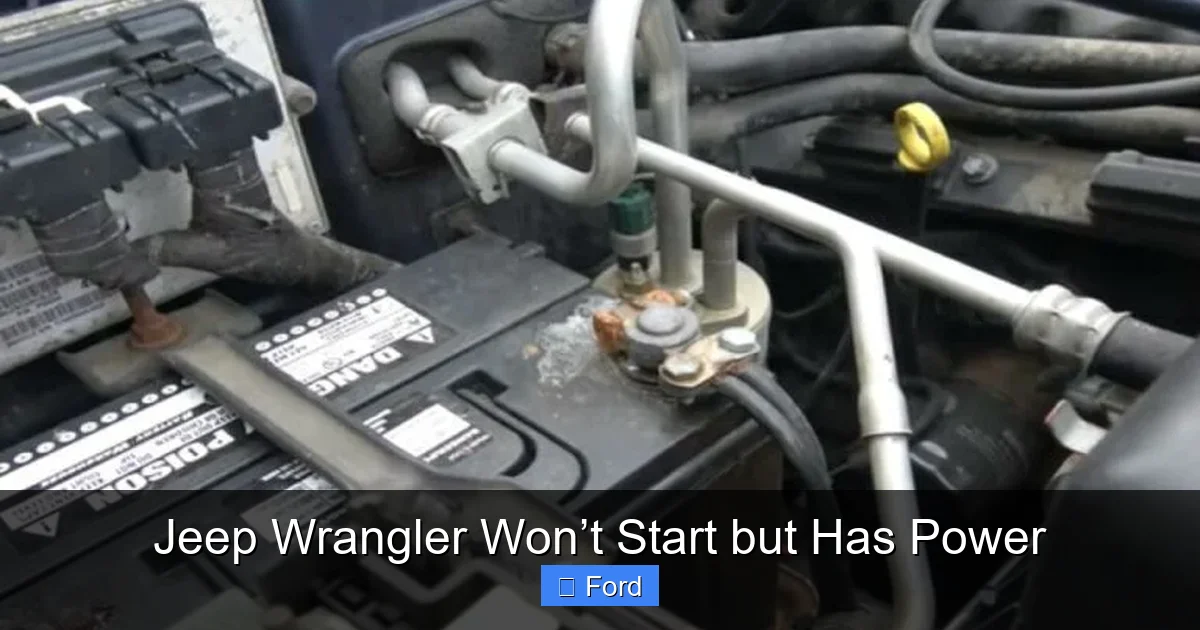
Visual guide about Jeep Wrangler Won’t Start but Has Power
Image source: 4wdlife.com
1. Fuel Delivery Failure (The #1 Suspect)
Modern Jeeps use electric fuel pumps mounted inside the fuel tank. If this pump fails, you have zero fuel pressure. No fuel, no start. It’s that simple. The pump itself can wear out, or its electrical circuit can fail.
- Symptom: You might hear a faint, two-second hum from the rear of the vehicle (the fuel tank) when you first turn the key to “ON” (before cranking). No hum often means no pump operation. However, don’t rely solely on sound; a weak pump might still hum but not build enough pressure.
- Common Fixes: Replace the fuel pump assembly (often sold as a unit with the fuel level sender). Check the fuel pump relay and its fuse in the Power Distribution Center (PDC) under the hood. A failed fuel pressure regulator can also cause low pressure.
- Pro Tip: You can perform a “stethoscope test” by carefully placing a long screwdriver against the fuel tank (mid-rear) and listening for the pump buzz. Better yet, use a fuel pressure test gauge on the test port on the fuel rail. For a JK/JLU with the 3.6L Pentastar, you should see 35-55 PSI with the key on, engine off.
2. Ignition System Woes: No Spark
The ignition system creates the high-voltage spark that ignites the air/fuel mixture in each cylinder. If any part of this chain fails, you get a crank-no-start.
- Crankshaft Position Sensor (CKP): This is arguably the second most common cause. The CKP sensor tells the engine computer (PCM) exactly where the crankshaft is and how fast it’s spinning. Without this signal, the PCM won’t fire the spark plugs or injectors. It’s a relatively inexpensive part but can be tricky to reach on some models. A failing CKP sensor often works intermittently, causing hard starts before a total failure.
- Ignition Coils & Spark Plugs: Wranglers use coil-on-plug (COP) ignition. Each cylinder has its own coil. A failed coil will kill spark to that cylinder, but usually, the engine would still run poorly on the remaining cylinders (misfire). A total loss of spark is rarer but can happen if the PCM’s ignition output circuit fails or a major wiring harness issue occurs. Worn-out spark plugs alone rarely cause a total no-start but are part of good maintenance.
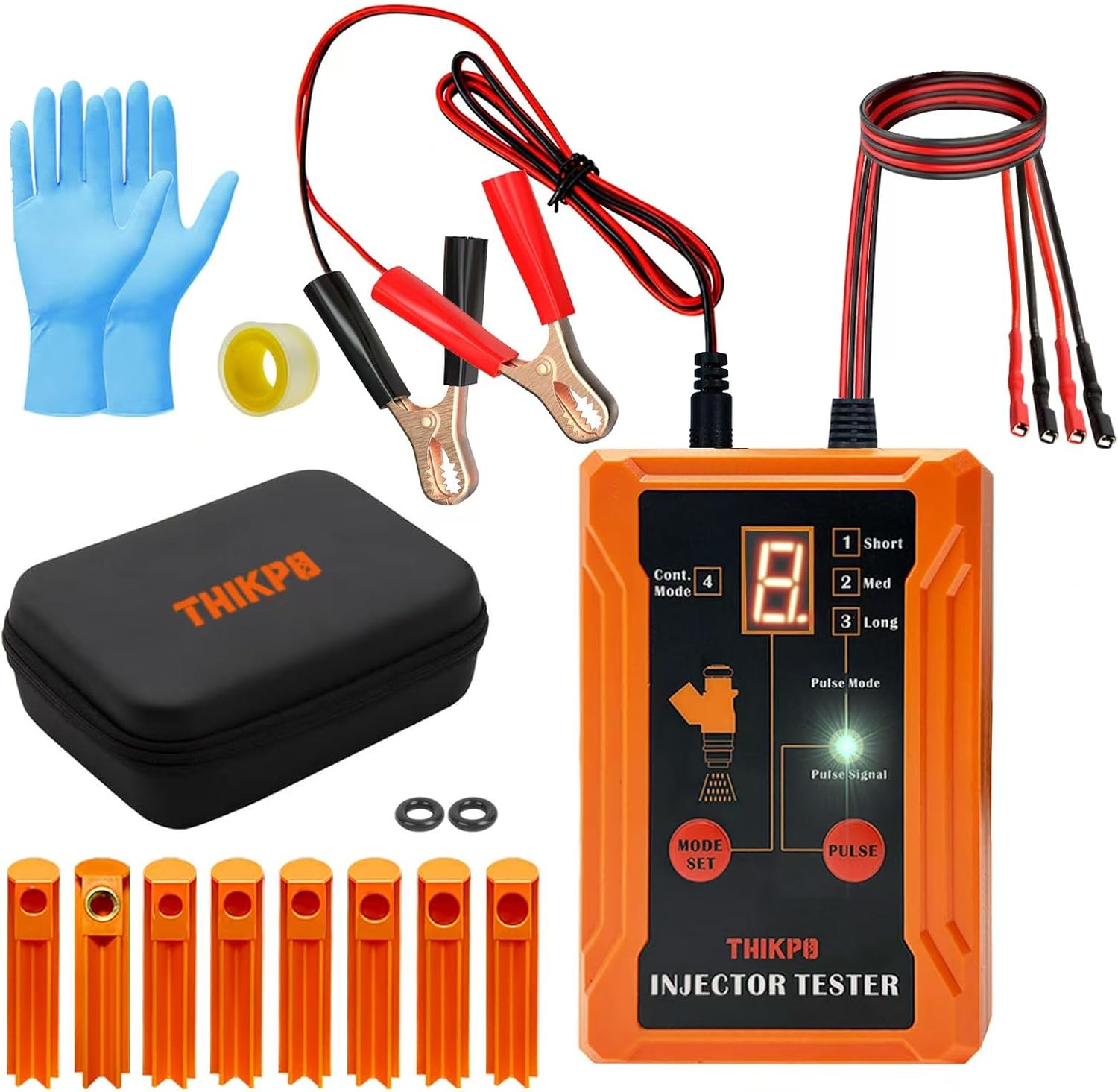
- Diagnosis: You need a spark tester. Pull a coil, plug in the tester, ground it to the engine, and have a helper crank the engine. A strong, blue spark indicates the ignition system is working. A weak or absent spark points to coils, wires (if equipped), or the CKP sensor.
3. The Sentry Key Immobilizer System (SKIM)
Jeep takes security seriously. The SKIM system uses a chip in your key fob to communicate with a receiver ring around the ignition cylinder. If the PCM doesn’t get the correct “OK to start” signal from the SKIM module, it will disable the fuel pump and/or starter after a couple of cranks.
- Symptom: The engine may crank a few times and then stop, or it may not crank at all. The security light (a small key icon) on the dash will usually blink rapidly or stay solid when you try to start. This is a classic sign.
- Causes: A dead battery in the key fob, a faulty SKIM module, a broken antenna ring around the ignition, or a lost key that wasn’t programmed to the vehicle.
- Fix: First, try your spare key. Replace the key fob battery. If that fails, you may need a dealer or locksmith with a DRB III or equivalent scan tool to reprogram the keys to the SKIM module. This is a security feature, not a bug!
- For more on key-related start issues, you can read about similar problems in other vehicles, like when a key fob unlocks but won’t start the car.
4. Air Intake Blockage
This is less common but possible. If the engine can’t breathe, it can’t run. A severely clogged air filter can restrict airflow. More rarely, a disconnected or collapsed intake hose between the air filter box and the throttle body will cause a massive air leak, throwing off the air/fuel ratio so badly the PCM can’t compensate.
- Check: Visually inspect the air filter. Is it black and solid? Replace it. Check all intake hoses for cracks, disconnections, or blockages (like a mouse nest).
5. Faulty Engine Sensors
The PCM relies on sensor data to calculate fuel and spark. While a single sensor failure often triggers a check engine light and a limp-home mode, some critical sensors can cause a complete no-start.
- Camshaft Position Sensor (CMP): Works with the CKP sensor. If the PCM loses both signals, it knows something is catastrophically wrong and will inhibit start.
- Mass Air Flow (MAF) Sensor: A severely failed MAF can send nonsense data. Some Jeeps will still start with a bad MAF, but others may not.
- Diagnosis: A simple OBD2 scan tool is invaluable here. Even if the check engine light is off, it may show a “pending” code. A code for P0335 (CKP Sensor) or P0340 (CMP Sensor) is a huge red flag.
Systematic Troubleshooting: A Logical Path to the Problem
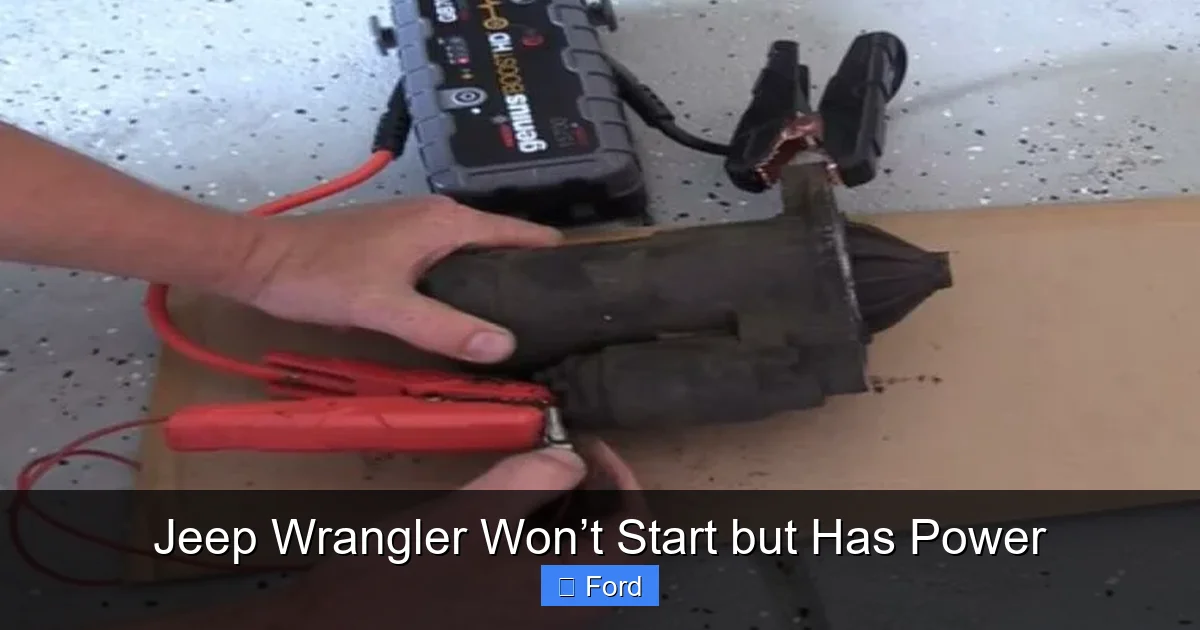
Don’t just start replacing parts randomly. Follow this flowchart to efficiently diagnose your Wrangler’s no-start condition. You’ll need basic tools: a multimeter, a good flashlight, and maybe a noid light or spark tester.
Visual guide about Jeep Wrangler Won’t Start but Has Power
Image source: 4wdlife.com
Step 1: Confirm the “Crank” Status
Turn the key to start. Listen carefully.
- If NO CRANK: Your focus shifts to the starter circuit. Check battery voltage at the starter motor solenoid terminal while cranking. If you have 12+ volts there but the starter doesn’t turn, the starter is bad. If you don’t have voltage, the problem is in the ignition switch, neutral safety switch (automatic), clutch pedal switch (manual), starter relay, or the TIPM. This is a different diagnostic tree.
- If CRANKING: Proceed to Step 2. We’re in the fuel/spark/air realm.
Step 2: The Fuel Pump Test
This is your first and most important test for a crank-no-start.
- Open the fuel filler door and remove the cap. Have a helper turn the key to the “ON” position (do not crank). Place your ear near the filler neck. You should hear a distinct electric hum or whirring from the fuel pump for about 2 seconds as it pressurizes the system. This is the pump priming.
- No sound? The pump isn’t getting power or the pump itself is dead. Check the fuel pump relay (in the PDC, usually #37 for Jeeps) and its associated fuse. Swap the relay with an identical one from another circuit (like the horn relay) to test. If the relay and fuse are good, you likely have a failed fuel pump or a break in its wiring.
- If you hear the hum, the pump circuit is at least partially working. You now need to verify fuel pressure with a gauge, as a weak pump can hum but not hold pressure.
Step 3: The Spark Test
If you have fuel pressure (or have ruled out fuel as the issue), check for spark.
- Remove a spark plug wire or ignition coil (on COP systems). Connect a spark tester light to the wire/coil boot and ground the tester’s alligator clip to a clean metal part of the engine.
- Have your helper crank the engine. The tester should flash brightly with each engine revolution. A weak or intermittent flash means an ignition problem.
- No flash? Your issue is likely the crankshaft position sensor, ignition control module (PCM), or a major wiring break. A code for P0335 would confirm a CKP issue.
Step 4: Scan for Codes & Monitor Data
Plug any OBD2 scan tool into the port under the dash (left side of the steering column). Even if the light is off:
- Check for any stored or pending codes. A code is your best friend.
- If you have a more advanced tool, watch the live data stream. Is the crankshaft position sensor showing a consistent RPM signal while cranking? Is the fuel pressure sensor reading correctly? Is the MAF sensor showing a reasonable value (around 1-5 g/s at idle, but it varies)?
Step 5: Check the Obvious: Security & Air
Look at the dash. Is the security (key) icon blinking? Try your spare key fob. Ensure the air filter isn’t clogged and all intake hoses are secure.
When to Call a Professional: Knowing Your Limits
DIY troubleshooting is empowering and saves money, but some issues require specialized tools and knowledge. Call a professional mechanic or Jeep specialist if:
Visual guide about Jeep Wrangler Won’t Start but Has Power
Image source: 4wdlife.com
- You’ve confirmed fuel pressure and strong spark, but the engine still won’t start. This points to a severe mechanical issue (timing jump, bent valves, low compression) or a deeply buried PCM/software problem.
- The issue is a SKIM/security system failure that requires dealer-level software for reprogramming.
- You suspect internal engine damage (e.g., from a broken timing chain, which can happen on higher-mileage JK 3.6Ls). Diagnosing this requires a compression test or leak-down test.
- You’re uncomfortable working with fuel systems or high-voltage ignition components. Safety first.
For complex electrical gremlins related to the TIPM (which controls many power distribution functions), a shop with a dedicated Jeep diagnostic computer like the wiTECH system will be far more efficient.
Preventative Steps to Avoid Future No-Starts
Once you’re back on the road, a little maintenance can prevent this headache.
- Fuel System: Consider replacing the fuel filter (if your model has an external one) and using a quality fuel system cleaner periodically to keep injectors and the pump clean.
- Ignition System: Follow the manual’s service interval for spark plugs. On a 3.6L Pentastar, this is often 100,000 miles, but many owners replace them sooner for peace of mind. Replace ignition coils if they show signs of cracks or carbon tracking.
- Sensors: The crankshaft position sensor is a known wear item. If your Wrangler has over 150,000 miles and starts showing occasional long cranking times, it’s wise to proactively replace the CKP sensor. They are relatively inexpensive.
- Security System: Ensure your key fob batteries are fresh. If you have only one key, get a second programmed. Losing your only programmed key is an expensive and time-consuming ordeal.
- General Electrical: Keep battery terminals clean and tight. A “good” battery can still fail to provide enough cranking amperage if the connections are corroded.
For a broader look at maintenance that prevents no-start conditions across all vehicles, general guides on common causes when a car won’t start but has power are very helpful.
Conclusion: Patience and Process Win the Day
A Jeep Wrangler that won’t start but has power is a puzzle, but it’s a solvable one. The key is to remain methodical. Start with the simplest, most likely tests: listen for the fuel pump, check for spark. Use an OBD2 scanner—it’s the single most valuable tool in your glovebox for this job. Remember the core principle: Fuel + Spark + Air. Isolate each variable. You’ll likely find that a faulty fuel pump, a dead crankshaft position sensor, or a security system hiccup is the culprit. These are all fixable with the right information and tools. By understanding your Wrangler’s systems, you save yourself time, money, and the frustration of a tow truck bill. Now, go turn that key and hear that glorious engine fire up. The trails are waiting.
Frequently Asked Questions
What’s the most common reason a Jeep Wrangler cranks but won’t start?
The most common cause is a failed fuel pump. Without fuel pressure, the engine can’t combust. Listen for the two-second pump hum when you turn the key to “ON.” No sound usually means a bad pump, relay, or fuse.
Can a bad battery cause a no-start even if the lights work?
Rarely. If the lights are bright, the battery has enough charge for accessories. However, a battery can have enough voltage for lights but fail to deliver the massive cranking amps needed to turn the engine. This would present as a slow, labored crank or no crank at all, not a fast crank with no start.
My Jeep Wrangler’s security light is blinking. Is that why it won’t start?
Almost certainly. A rapidly blinking security (key) icon means the Sentry Key Immobilizer System (SKIM) isn’t recognizing your key fob. Try your spare key first. If that fails, the key fob battery may be dead, or the SKIM module/antenna may need service, which often requires a dealer.
How do I check for spark on my Jeep Wrangler?
Use a spark tester light. Remove one ignition coil (on coil-on-plug engines), plug the tester into the coil boot, and ground the tester’s clip to the engine block. Have a helper crank the engine. The tester should flash brightly with each revolution. No flash indicates an ignition problem (coil, CKP sensor, wiring).
Could a clogged air filter really prevent my Wrangler from starting?
It’s possible but unlikely to cause a *complete* no-start. A severely clogged filter would cause extremely hard starting and very poor running once it did start. A more likely air-related issue is a disconnected or severely leaking intake hose, which creates a massive unmetered air leak the computer can’t compensate for.
I have fuel pressure and spark. What’s left?
If you’ve confirmed good fuel pressure and a strong spark at all cylinders, the problem is likely mechanical or a major sensor issue the PCM can’t reconcile. Possibilities include a jumped timing chain/belt (particularly on higher-mileage engines), severely low compression from worn rings or valves, or a failed camshaft position sensor that’s not setting a code. This scenario typically requires a professional with a compression test gauge.