Is Toyota Crown Bigger Than Camry

Contents
- 1 Key Takeaways
- 2 📑 Table of Contents
- 3 Size Comparison: Length, Width, and Height
- 4 Interior Space: Passenger Comfort and Cargo Capacity
- 5 Driving Dynamics: How Size Affects Performance
- 6 Design and Styling: Form Follows Function
- 7 Safety, Technology, and Ownership Experience
- 8 Which One Should You Choose?
- 9 Conclusion
- 10 Frequently Asked Questions

Car Scratch Remover

Parking Sensor Kit

Solar Car Battery Maintainer

Side Mirror Rain Guard
The Toyota Crown is noticeably larger than the Camry in nearly every dimension—length, width, wheelbase, and interior space. While both are premium sedans, the Crown offers a more spacious, elevated driving experience with standard all-wheel drive and a higher ride height, making it a true flagship upgrade over the more compact and sporty Camry.
When it comes to Toyota sedans, two names stand out: the Camry and the Crown. The Camry has long been America’s best-selling car, a reliable, comfortable, and efficient midsize sedan trusted by millions. But in 2023, Toyota brought back the Crown—a nameplate with a rich history—as a bold, modern flagship sedan designed to compete with luxury brands like Genesis, Acura, and even entry-level BMWs. With its futuristic design, elevated ride height, and standard all-wheel drive, the Crown immediately sparked curiosity. One of the most common questions? Is the Toyota Crown bigger than the Camry?
The short answer is yes—by a significant margin. But size isn’t just about numbers on a spec sheet. It affects how the car feels on the road, how much space your family has inside, and even how easy it is to park. Whether you’re choosing between these two for daily commuting, long road trips, or weekend adventures, understanding their differences in size, layout, and purpose is crucial.
In this detailed comparison, we’ll dive deep into the dimensions, interior space, driving dynamics, and overall positioning of the Toyota Crown and Camry. We’ll look at length, width, height, wheelbase, cargo capacity, and real-world usability. You’ll also learn how each car fits into Toyota’s lineup and which one might be the better choice for your lifestyle. So buckle up—let’s explore whether bigger really is better when it comes to the Crown vs. the Camry.
Key Takeaways
- The Toyota Crown is longer, wider, and taller than the Camry: With a wheelbase over 6 inches longer, the Crown provides significantly more legroom and passenger comfort.
- Interior space favors the Crown: Rear seat passengers enjoy more headroom, legroom, and shoulder room, especially important for families or frequent rear-seat riders.
- Crown offers a higher ride height and standard AWD: Unlike the Camry, which is lower and typically FWD, the Crown’s elevated stance improves visibility and traction.
- Camry is more agile and fuel-efficient: Its smaller size and lighter weight make it easier to maneuver in city traffic and more economical on fuel.
- Crown targets luxury and comfort, Camry leans toward sportiness: The Crown’s design and features cater to buyers seeking a premium, relaxed ride, while the Camry appeals to those who enjoy a more dynamic driving feel.
- Both share Toyota reliability, but differ in positioning: The Camry remains a midsize favorite, while the Crown re-enters the U.S. market as a bold, modern flagship sedan.
📑 Table of Contents
Size Comparison: Length, Width, and Height
When comparing the Toyota Crown and Camry, the first thing you’ll notice is the Crown’s larger footprint. The Crown measures approximately 197.8 inches in length, while the Camry comes in at 192.7 inches—a difference of over 5 inches. That might not sound like much, but on the road, it translates to a noticeably longer and more imposing presence.
In terms of width, the Crown is also wider at 72.4 inches compared to the Camry’s 72.0 inches. While this half-inch difference is subtle, it contributes to a broader stance and improved stability, especially at highway speeds. The real difference shows up in height: the Crown stands at 60.6 inches tall, making it nearly 3 inches taller than the Camry, which measures 57.7 inches. This elevated height is a defining feature of the Crown, giving it a crossover-like profile that blends sedan elegance with SUV practicality.
The Crown’s taller roofline not only improves headroom but also enhances outward visibility. Drivers report better sightlines over the hood and around corners, which is especially helpful in heavy traffic or tight parking situations. The Camry, by contrast, has a lower, sleeker roofline that gives it a sportier, more aerodynamic look—perfect for those who enjoy a connected, ground-hugging feel.
Wheelbase and Its Impact on Ride Quality
One of the most important dimensions for passenger comfort is the wheelbase—the distance between the front and rear wheels. The Toyota Crown boasts a wheelbase of 112.2 inches, while the Camry’s is 111.2 inches. At first glance, a one-inch difference might seem negligible, but in automotive design, even small changes can have a big impact.
A longer wheelbase generally means a smoother, more stable ride. It reduces the sensation of bouncing over bumps and helps absorb road imperfections more effectively. The Crown’s extended wheelbase contributes to a more composed and luxurious driving experience, especially on rough or uneven roads. Passengers in the back seat will notice less jostling and a more relaxed posture, making long drives more enjoyable.
The Camry’s slightly shorter wheelbase gives it a nimbler feel. It turns more quickly and feels more responsive in city driving, where quick lane changes and tight maneuvers are common. Enthusiasts often praise the Camry’s balanced handling, especially in the sport-tuned TRD or XSE trims. But for those prioritizing comfort over agility, the Crown’s longer wheelbase is a clear advantage.
Real-World Implications of Size Differences
So what does all this mean in everyday use? Let’s say you’re pulling into a crowded parking lot. The Camry’s compact dimensions make it easier to squeeze into tight spaces, while the Crown’s length might require an extra glance in the mirrors. But once you’re inside, the Crown’s extra space becomes a blessing.
Imagine loading groceries or luggage. The Crown’s larger trunk and wider opening make it easier to slide in bulky items. The Camry’s trunk is still generous for a midsize sedan, but the Crown’s added height and depth give it an edge in practicality.
And let’s not forget highway driving. On long trips, the Crown’s longer wheelbase and elevated seating position reduce driver fatigue. You sit higher, see more, and feel more in control. The Camry, while comfortable, feels more like a traditional sedan—lower to the ground and more engaged with the road.
Interior Space: Passenger Comfort and Cargo Capacity

Visual guide about Is Toyota Crown Bigger Than Camry
Image source: slashgear.com
Size isn’t just about exterior dimensions—it’s about how that space translates into usable interior room. When it comes to passenger comfort, the Toyota Crown pulls ahead of the Camry in nearly every category.
Front seat passengers in the Crown enjoy 40.2 inches of headroom and 42.7 inches of legroom. The Camry offers 38.8 inches of headroom and 42.1 inches of legroom. While the legroom difference is minor, the extra headroom in the Crown is noticeable, especially for taller drivers. The higher seating position also means your knees are bent at a more natural angle, reducing pressure on your thighs during long drives.
But the real advantage shows up in the back seat. The Crown provides 38.1 inches of rear headroom and 39.4 inches of legroom, compared to the Camry’s 37.6 inches of headroom and 38.0 inches of legroom. That extra inch and a half of legroom might not sound like much, but for adults over 6 feet tall, it can mean the difference between comfort and cramped knees.
Shoulder room is another win for the Crown: 57.1 inches in the rear versus the Camry’s 56.5 inches. This extra space allows three adults to sit comfortably across the back seat, something that can be a squeeze in the Camry, especially on longer trips.
Cargo Space and Practicality
Both sedans offer a traditional trunk layout, but the Crown’s larger dimensions give it an edge in cargo capacity. The Crown’s trunk holds 15.2 cubic feet of space, while the Camry offers 15.1 cubic feet. The difference is minimal, but the Crown’s wider opening and deeper well make it easier to load larger items like suitcases, golf bags, or strollers.
Additionally, the Crown’s higher liftover height (the distance from the ground to the trunk opening) means you don’t have to bend as far to lift items in and out. This is a small but meaningful convenience, especially for older drivers or those with back issues.
Both vehicles feature 60/40 split-folding rear seats, allowing you to extend cargo space when needed. However, the Crown’s rear seats fold flatter, creating a more seamless load floor—ideal for transporting long items like furniture or luggage.
Materials, Layout, and Cabin Experience
Beyond raw space, the Crown’s interior feels more premium. Higher-grade materials, softer-touch surfaces, and more refined finishes give it a luxury-car ambiance. The Camry’s cabin is well-designed and durable, but it leans more toward practicality than opulence.
The Crown also features a more upright dashboard layout with a 12.3-inch touchscreen standard across all trims. The Camry offers a 7- or 9-inch screen depending on the trim, with the larger screen reserved for higher-end models. The Crown’s digital instrument cluster is also larger and more customizable, adding to its modern, tech-forward feel.
Noise insulation is another area where the Crown excels. Its larger body and acoustic glass help reduce road and wind noise, creating a quieter cabin. The Camry is still quiet for its class, but the Crown’s serene interior makes it feel like a step up in refinement.
Driving Dynamics: How Size Affects Performance
Visual guide about Is Toyota Crown Bigger Than Camry
Image source: slashgear.com
Size impacts more than just space—it affects how a car drives. The Toyota Crown and Camry may share some mechanical DNA, but their differing dimensions lead to distinct driving experiences.
The Camry is lighter and lower, which translates to sharper handling and quicker responses. Whether you’re navigating tight city streets or carving through mountain roads, the Camry feels agile and connected to the pavement. Its sport-tuned suspension (especially in the XSE or TRD trims) delivers a fun, engaging drive that appeals to enthusiasts.
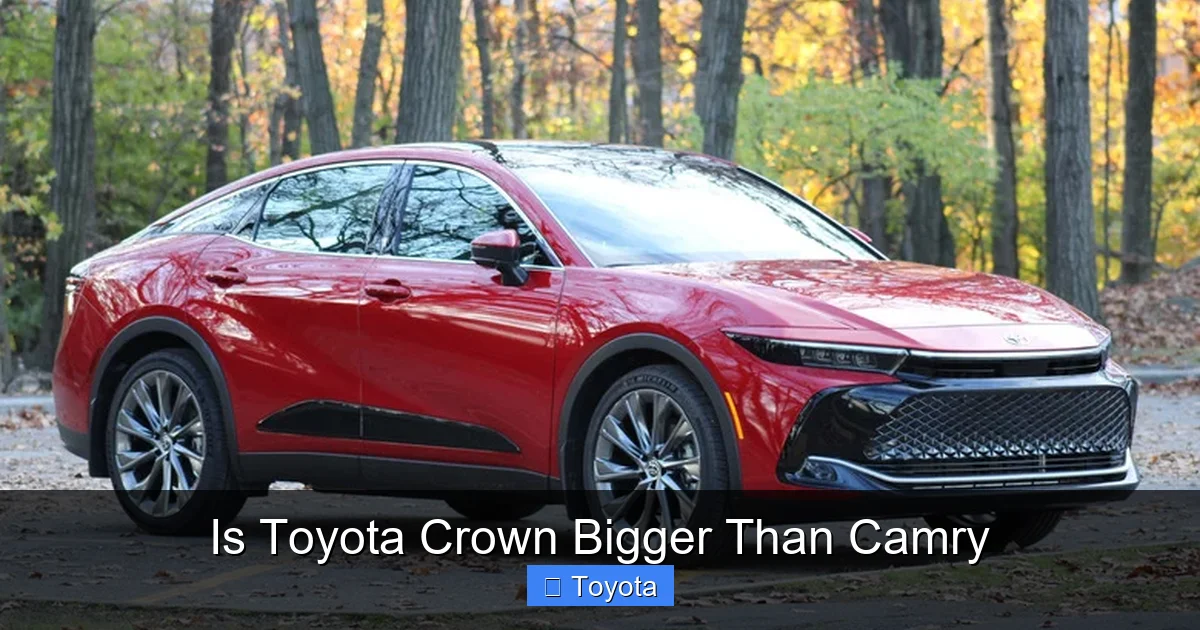
The Crown, on the other hand, prioritizes comfort and stability. Its longer wheelbase, higher center of gravity, and standard all-wheel drive give it a more planted, confident feel at speed. It’s not as nimble as the Camry, but it glides over bumps with ease and feels more composed on rough roads.
Powertrain and Fuel Efficiency
Both sedans offer hybrid powertrains, but the Crown’s standard setup is more powerful. The Crown comes with a 2.4-liter turbocharged hybrid engine producing 340 horsepower, paired with an electric motor and standard AWD. The Camry offers a 2.5-liter hybrid system with 208 horsepower, available in FWD or AWD.
The Crown’s extra power makes it quicker off the line and better suited for highway merging or passing. However, this comes at a cost: fuel economy. The Crown averages around 30 mpg combined, while the Camry hybrid can reach up to 52 mpg in the LE trim. If fuel efficiency is a top priority, the Camry is the clear winner.
But for many buyers, the Crown’s performance and all-weather capability outweigh the fuel savings. The standard AWD system provides better traction in rain, snow, or gravel—something the Camry only offers as an option.
Steering and Suspension Tuning
The Camry’s steering is more direct and responsive, with a sportier feel that encourages spirited driving. The Crown’s steering is lighter and more relaxed, designed for comfort over precision. This makes it easier to drive in traffic but less engaging on winding roads.
Suspension tuning also differs. The Camry uses a traditional MacPherson strut front and multi-link rear setup, tuned for balance between comfort and sportiness. The Crown features a more advanced suspension with adaptive dampers (on higher trims) that adjust to road conditions in real time, delivering a smoother, more adaptive ride.
In short, the Camry feels like a sport sedan with family-friendly traits. The Crown feels like a luxury cruiser with SUV-like versatility.
Design and Styling: Form Follows Function
Visual guide about Is Toyota Crown Bigger Than Camry
Image source: motorbiscuit.com
The Crown and Camry look nothing alike—and that’s by design. The Camry embraces a sleek, aerodynamic profile with sharp lines, a low hood, and aggressive front fascia. It’s meant to appeal to buyers who want a car that looks fast even when it’s parked.
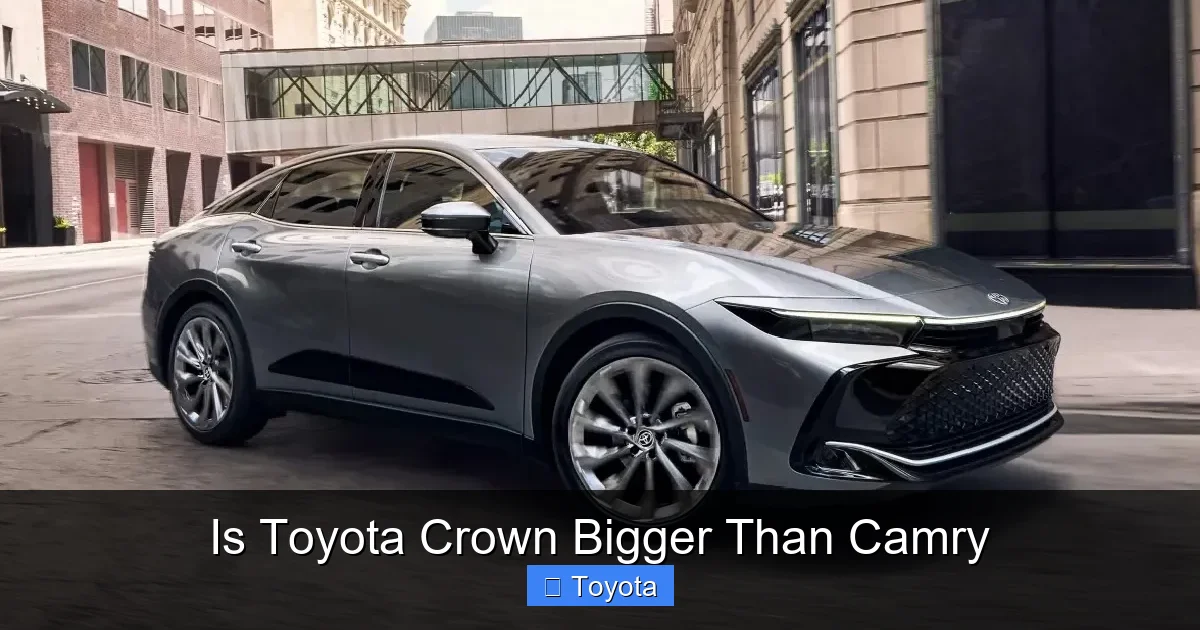
The Crown, by contrast, takes a bold, futuristic approach. Its high roofline, upright grille, and floating roof design give it a distinctive, almost crossover-like appearance. Some love its avant-garde style; others find it polarizing. But there’s no denying it stands out in a sea of traditional sedans.
Exterior Features and Practicality
The Crown’s elevated ride height isn’t just for show—it improves approach and departure angles, making it better suited for driveways, speed bumps, or light off-roading. The Camry’s lower stance looks great but can scrape on steep inclines.
Both cars offer LED lighting, power-folding mirrors, and available panoramic sunroofs. But the Crown adds features like adaptive LED headlights and a hands-free power trunk, enhancing convenience and safety.
Color and Trim Options
Toyota offers the Crown in unique colors like Heavy Metal (a dark gray with blue undertones) and Solar Octane (a vibrant orange), emphasizing its premium status. The Camry’s palette is more conservative, with classics like Super White, Midnight Black, and Celestial Silver.
Trim levels also reflect their positioning. The Camry ranges from the budget-friendly LE to the sporty TRD. The Crown starts at the well-equipped XLE and climbs to the luxurious Platinum, with features like heated and ventilated rear seats, a head-up display, and premium audio.
Safety, Technology, and Ownership Experience
Both sedans come standard with Toyota Safety Sense 3.0, including adaptive cruise control, lane departure warning, automatic emergency braking, and road sign assist. But the Crown’s larger size and higher seating position give it an edge in visibility and crash protection.
The Crown also offers more advanced driver aids, such as lane change assist and intersection turn detection, thanks to its more sophisticated sensor suite. The Camry’s system is robust but less comprehensive.
Infotainment and Connectivity
The Crown’s 12.3-inch touchscreen supports wireless Apple CarPlay and Android Auto, while the Camry requires a wired connection on most trims. The Crown also offers a premium JBL audio system standard on higher trims, compared to the Camry’s optional setup.
Both cars feature cloud-based navigation, voice recognition, and over-the-air updates. But the Crown’s larger screen and more intuitive interface make it easier to use while driving.
Warranty and Reliability
Toyota backs both models with a 3-year/36,000-mile basic warranty and 5-year/60,000-mile powertrain warranty. Hybrid components are covered for 8 years/100,000 miles. Both are known for exceptional reliability, but the Crown’s newer platform means fewer long-term data points.
Which One Should You Choose?
So, is the Toyota Crown bigger than the Camry? Absolutely. And in many ways, it’s better—if you value space, comfort, and a premium experience.
Choose the Toyota Crown if:
– You want more interior space for passengers and cargo.
– You prefer a higher driving position and better visibility.
– You need standard AWD for all-weather confidence.
– You’re looking for a more luxurious, tech-rich cabin.
– You don’t mind slightly lower fuel economy for more power and refinement.
Choose the Toyota Camry if:
– You prioritize fuel efficiency and lower running costs.
– You enjoy a sportier, more engaging driving experience.
– You frequently drive in tight urban environments.
– You want a proven, reliable sedan with a lower starting price.
– You prefer a traditional sedan look and feel.
Ultimately, the Crown is Toyota’s answer to the modern luxury sedan—bigger, bolder, and more capable. The Camry remains the champion of practicality and value. Both are excellent choices, but they serve different needs.
Conclusion
The Toyota Crown is undeniably bigger than the Camry in every meaningful way—length, width, height, wheelbase, and interior space. It’s not just a larger car; it’s a different kind of car. Designed to compete with premium brands, the Crown offers a more spacious, comfortable, and technologically advanced experience. Its elevated ride height, standard AWD, and powerful hybrid engine make it a versatile choice for families, commuters, and road-trippers alike.
The Camry, meanwhile, continues to excel as a midsize sedan that balances efficiency, agility, and affordability. It’s the go-to for buyers who want a reliable, fun-to-drive car without the premium price tag.
So, is bigger better? For many, the Crown’s extra space and luxury features justify its larger size and higher cost. But if you value efficiency and sportiness, the Camry still holds strong. The best choice depends on your priorities—space and comfort, or agility and economy. Either way, Toyota has you covered.
Frequently Asked Questions
Is the Toyota Crown bigger than the Camry in terms of interior space?
Yes, the Toyota Crown offers more interior space than the Camry, with greater headroom, legroom, and shoulder room in both the front and rear seats. Rear passengers especially benefit from the Crown’s longer wheelbase and taller roofline.
Which car has more cargo space, the Crown or the Camry?
The Toyota Crown has slightly more cargo space with 15.2 cubic feet compared to the Camry’s 15.1 cubic feet. The Crown’s wider trunk opening and deeper well also make it easier to load larger items.
Does the Toyota Crown come with all-wheel drive?
Yes, all-wheel drive is standard on every Toyota Crown trim. The Camry offers AWD as an option on most trims, but it’s not standard across the lineup.
Which sedan is more fuel-efficient, the Crown or the Camry?
The Toyota Camry is more fuel-efficient, especially in its hybrid LE trim, which can achieve up to 52 mpg combined. The Crown averages around 30 mpg due to its larger size and more powerful engine.
Is the Toyota Crown more expensive than the Camry?
Yes, the Toyota Crown starts at a higher price point than the Camry, reflecting its larger size, premium features, and standard AWD. The Crown is positioned as a flagship sedan, while the Camry remains a midsize value leader.
Which car is better for tall passengers, the Crown or the Camry?
The Toyota Crown is better for tall passengers, offering more headroom and legroom in both rows. Its higher seating position also provides a more comfortable posture for drivers and passengers over 6 feet tall.