Is the Lexus Nx or Rx the Better Choice?

Contents
- 1 Key Takeaways
- 2 📑 Table of Contents
- 3 Introduction: Choosing Between Two Lexus Icons
- 4 Size and Interior Space: Room to Grow
- 5 Performance and Driving Experience: Agility vs. Comfort
- 6 Technology and Infotainment: Modern vs. Traditional
- 7 Fuel Efficiency and Environmental Impact
- 8 Price, Value, and Long-Term Ownership
- 9 Conclusion: Which Lexus Is Right for You?
- 10 Frequently Asked Questions


Deciding between the Lexus NX and RX comes down to your priorities: the NX offers a sportier drive and modern tech in a compact package, while the RX delivers more space, comfort, and traditional luxury appeal. Both are reliable and refined, but the right choice depends on your needs—whether you value agility or roominess.
Key Takeaways
- Size and Space: The RX is larger, offering more passenger and cargo room, making it ideal for families or frequent travelers.
- Driving Dynamics: The NX feels more nimble and responsive, especially in urban settings, thanks to its lighter build and sport-tuned suspension.
- Technology and Infotainment: The NX features a more modern, user-friendly touchscreen interface, while the RX’s system, though capable, relies more on a touchpad controller.
- Fuel Efficiency: The NX Hybrid achieves better fuel economy, particularly in city driving, compared to the standard RX models.
- Towing and Utility: The RX has a higher towing capacity (up to 3,500 lbs) and more ground clearance, making it better suited for light off-roading or hauling.
- Price and Value: The NX starts at a lower price point, offering strong value for buyers seeking luxury in a smaller footprint.
- Resale and Reliability: Both models boast excellent long-term reliability and strong resale value, hallmarks of the Lexus brand.
📑 Table of Contents
- Introduction: Choosing Between Two Lexus Icons
- Size and Interior Space: Room to Grow
- Performance and Driving Experience: Agility vs. Comfort
- Technology and Infotainment: Modern vs. Traditional
- Fuel Efficiency and Environmental Impact
- Price, Value, and Long-Term Ownership
- Conclusion: Which Lexus Is Right for You?
Introduction: Choosing Between Two Lexus Icons
When it comes to luxury compact SUVs, few brands command the respect and admiration that Lexus does. Known for their reliability, refined interiors, and smooth ride quality, Lexus vehicles are a top choice for buyers who want premium features without the premium maintenance headaches. Among their most popular models are the Lexus NX and the Lexus RX—two SUVs that often find themselves in direct competition, especially for buyers shopping in the luxury crossover segment.
At first glance, the NX and RX might seem similar. Both offer all-wheel drive, upscale cabins, advanced safety tech, and the signature Lexus quietness that makes every drive feel like a retreat. But beneath the surface, they cater to different lifestyles and priorities. The NX is the younger, more tech-forward sibling—compact, agile, and packed with modern features. The RX, on the other hand, is the seasoned veteran—larger, more spacious, and built for comfort and practicality over long distances.
So, which one is the better choice? The answer isn’t one-size-fits-all. It depends on your daily routine, family size, driving preferences, and budget. In this comprehensive guide, we’ll break down every key aspect of the Lexus NX and RX—from performance and interior space to technology, fuel economy, and long-term value. By the end, you’ll have a clear understanding of which SUV aligns best with your needs.
Size and Interior Space: Room to Grow

Visual guide about Is the Lexus Nx or Rx the Better Choice?
Image source: futurefluxtech.com
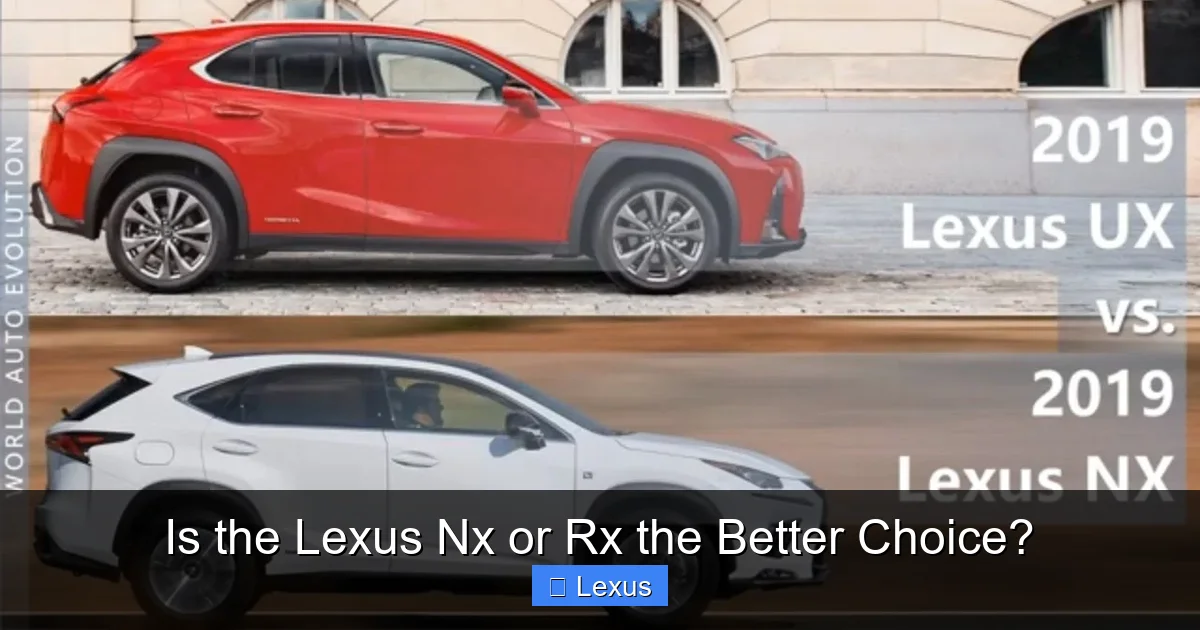
One of the most obvious differences between the NX and RX is size—and it’s a big one. The RX is classified as a midsize luxury SUV, while the NX sits firmly in the compact category. This distinction has a major impact on interior space, cargo capacity, and overall versatility.
Passenger Comfort and Seating
The RX offers three rows of seating in its optional configuration, though most buyers opt for the standard two-row setup. Even in the two-row layout, the RX provides significantly more legroom and headroom in both the front and rear seats. Rear passengers in the RX enjoy nearly 38 inches of legroom, compared to just under 33 inches in the NX. That extra five inches might not sound like much, but it makes a noticeable difference for taller adults or when carpooling with teens.
The NX, while comfortable for four adults, can feel a bit tight in the back, especially on longer trips. It’s best suited for couples or small families who don’t regularly transport multiple passengers. The front seats in both models are plush and supportive, but the RX’s wider cabin allows for more shoulder room and a more relaxed driving posture.
Cargo Capacity and Practicality
When it comes to hauling gear, the RX pulls ahead again. With the rear seats up, the RX offers 32.7 cubic feet of cargo space, compared to the NX’s 22.7 cubic feet. Fold down the rear seats, and the RX expands to a generous 72.5 cubic feet, while the NX maxes out at 54.6 cubic feet. That’s a difference of nearly 18 cubic feet—enough to fit a week’s worth of groceries, camping equipment, or luggage for a family road trip.
The RX also features a power liftgate with hands-free access (on higher trims), making loading and unloading easier when your hands are full. The NX offers a similar feature, but the smaller cargo area means you’ll need to pack more strategically.
Real-World Example: Family vs. Urban Lifestyle
Imagine two scenarios. First, a family of four planning a weekend getaway. The RX’s extra space means everyone can bring their own suitcase, plus room for coolers, strollers, or sports gear. The kids can stretch out in the back, and the parents won’t feel cramped.
Now picture a young professional living in the city. They use their SUV for daily commutes, weekend errands, and the occasional road trip. The NX’s compact size makes it easier to park in tight urban spaces, and its smaller cargo area is sufficient for groceries, gym bags, or a small weekend duffel.
In short, if space is a priority, the RX wins hands down. But if you value maneuverability and don’t need maximum cargo or passenger room, the NX is more than capable.
Performance and Driving Experience: Agility vs. Comfort
Visual guide about Is the Lexus Nx or Rx the Better Choice?
Image source: fmdt.info
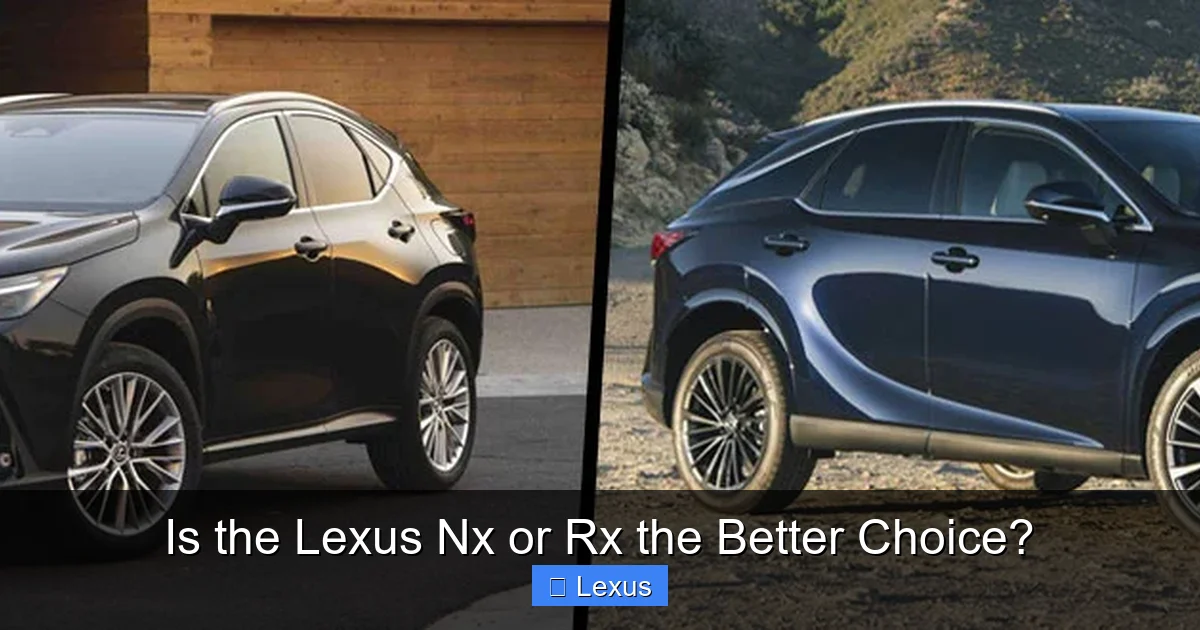
Performance is where the NX and RX begin to diverge in philosophy. While both offer smooth, quiet rides, they cater to different driving styles and environments.
Engine Options and Power
The NX comes with two main powertrains: a 2.4-liter turbocharged four-cylinder engine producing 275 horsepower, and a hybrid version combining a 2.5-liter four-cylinder with electric motors for a total of 240 horsepower. The turbo model delivers quick acceleration and a sportier feel, especially in city driving. The hybrid prioritizes efficiency, offering up to 37 mpg in the city.
The RX, meanwhile, offers a 2.4-liter turbocharged engine with 275 horsepower (same as the NX) or a hybrid system with a 3.5-liter V6 and electric motors, producing 308 horsepower. The V6 hybrid is noticeably more powerful, especially when merging onto highways or climbing hills. It also provides a more refined, effortless driving experience.
Handling and Ride Quality
The NX shines in agility. Its lighter weight and lower center of gravity make it feel more responsive around corners. The steering is precise, and the suspension is tuned for a sportier ride—great for drivers who enjoy a bit of enthusiasm behind the wheel. It’s particularly well-suited for city driving, where quick lane changes and tight turns are common.
The RX, by contrast, prioritizes comfort. It rides on a longer wheelbase and has a softer suspension setup, which absorbs bumps and road imperfections with ease. This makes it ideal for long highway drives or rough suburban roads. However, it doesn’t feel as nimble as the NX, especially in tight parking lots or winding mountain roads.
All-Wheel Drive and Off-Road Capability
Both models come standard with all-wheel drive, but the RX has a slight edge in off-road readiness. It offers a higher ground clearance (8.1 inches vs. 7.3 inches on the NX) and optional terrain management systems on higher trims. While neither is a true off-roader, the RX can handle light trails, gravel roads, or snowy conditions with more confidence.
The NX, while capable in most weather conditions, is better suited for paved roads and urban environments. Its lower stance and sportier tuning mean it’s less forgiving on uneven terrain.
Real-World Example: Commuter vs. Road Tripper
If you spend most of your time navigating city streets, the NX’s agility and compact size will feel like a natural fit. It zips through traffic, parks easily, and feels lively during daily drives.
But if you frequently take long road trips or live in an area with rough roads or harsh winters, the RX’s comfort, power, and higher clearance will make those journeys more pleasant and less stressful.
Technology and Infotainment: Modern vs. Traditional
Visual guide about Is the Lexus Nx or Rx the Better Choice?
Image source: mag.lexus.co.uk
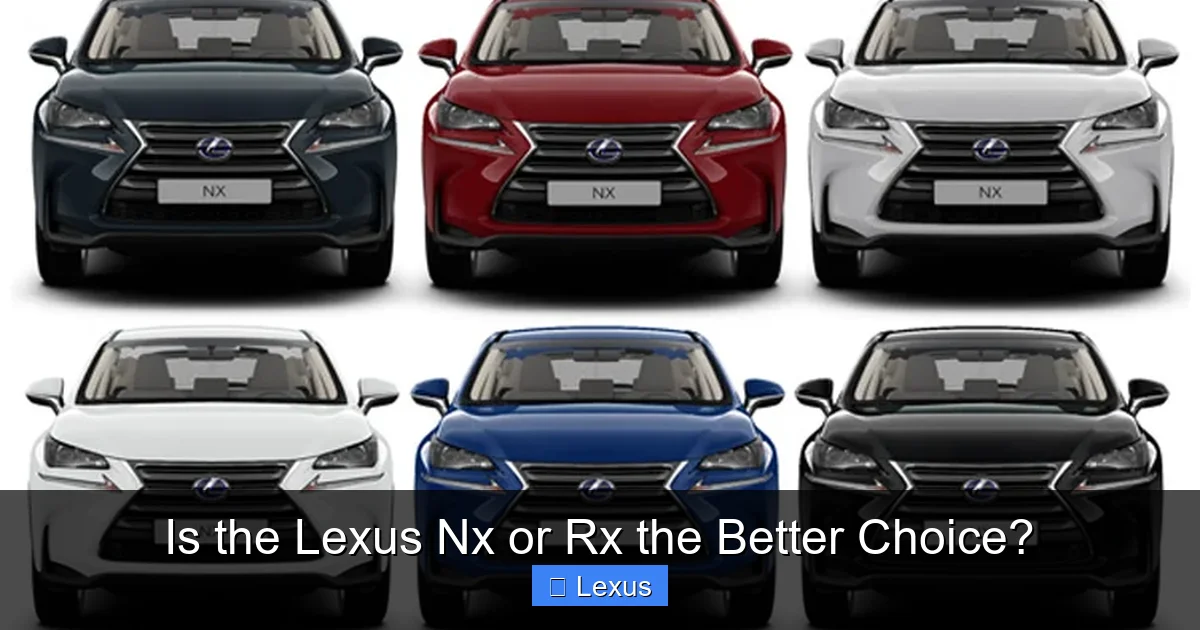
Technology is a key differentiator between the NX and RX, and it’s one area where the NX has a clear advantage.
Infotainment Systems
The NX features a 14-inch touchscreen that dominates the dashboard—a bold, modern design choice that puts controls at your fingertips. The system runs on Lexus’ latest interface, which is intuitive, responsive, and supports wireless Apple CarPlay and Android Auto. Navigation is fast, voice commands work well, and the graphics are sharp.
The RX, while still well-equipped, uses a smaller 9.9-inch touchscreen (on most trims) and relies heavily on a touchpad controller located near the gear shifter. While functional, the touchpad can be finicky—especially while driving—and takes time to get used to. The system supports Apple CarPlay and Android Auto, but wired connections are required on most models.
Digital Instrument Cluster and Driver Aids
Both models offer a digital instrument cluster, but the NX’s is larger (7-inch vs. 4.2-inch on base RX trims) and more customizable. It displays navigation maps, media info, and driver assistance alerts in a clean, easy-to-read format.
The RX’s cluster is functional but less visually impressive. Higher trims upgrade to a 12.3-inch screen, but it’s still not as seamless as the NX’s setup.
Safety and Driver Assistance
Both SUVs come standard with Lexus Safety System+ 3.0, which includes adaptive cruise control, lane departure warning, automatic emergency braking, and road sign recognition. However, the NX integrates these features more smoothly into the driving experience, with better alerts and more intuitive controls.
The RX’s system is equally capable, but the older interface can make it feel slightly less responsive. That said, both models earn top safety ratings from the IIHS and NHTSA, so you’re well-protected either way.
Real-World Example: Tech-Savvy vs. Traditionalist
If you love cutting-edge tech and want a car that feels like a smartphone on wheels, the NX is the clear winner. The large touchscreen, wireless connectivity, and modern interface make it a joy to use daily.
But if you prefer a more traditional setup—or don’t mind using a touchpad—the RX still delivers solid functionality. It’s just not as forward-thinking as the NX.
Fuel Efficiency and Environmental Impact
Fuel economy is a major consideration for many buyers, especially with rising gas prices and growing environmental awareness.
Gas vs. Hybrid Options
The NX Hybrid is one of the most efficient luxury SUVs in its class, achieving up to 37 mpg in the city and 31 mpg on the highway. The gas-only NX gets around 26 mpg combined, which is respectable for a turbocharged SUV.
The RX Hybrid delivers up to 31 mpg in the city and 28 mpg on the highway—still excellent for a midsize SUV, but not quite as efficient as the NX Hybrid. The gas-only RX gets about 24 mpg combined.
Environmental Considerations
Both hybrids reduce emissions and offer regenerative braking, but the NX Hybrid’s smaller size and lighter weight give it an edge in overall efficiency. If minimizing your carbon footprint is a priority, the NX Hybrid is the greener choice.
That said, the RX Hybrid’s larger battery and more powerful electric motor provide stronger electric-only driving at low speeds, which can be useful in stop-and-go traffic.
Real-World Example: City Dweller vs. Highway Cruiser
If you do a lot of city driving, the NX Hybrid’s superior city mileage will save you money at the pump and reduce emissions. But if you spend most of your time on highways, the RX Hybrid’s performance and comfort may outweigh the slight fuel economy difference.
Price, Value, and Long-Term Ownership
Price is often the deciding factor, and here the NX has a clear advantage.
Starting Prices and Trim Levels
The 2024 Lexus NX starts around $43,000 for the base NX 250, while the NX Hybrid begins at approximately $47,000. The RX starts at about $51,000 for the RX 350, with the RX Hybrid starting near $58,000.
That’s a difference of $8,000 to $11,000 at the base level—significant when budgeting for a luxury vehicle. The NX also offers more standard features at its price point, including the large touchscreen, wireless connectivity, and advanced safety tech.
Resale Value and Reliability
Both models are known for their exceptional reliability and strong resale value. According to Kelley Blue Book, Lexus consistently ranks among the top brands for retained value after five years. The RX has a slight edge in resale due to its popularity and larger size, but the NX is catching up quickly.
Maintenance costs are similar, though the NX’s smaller engine and simpler hybrid system may lead to slightly lower long-term expenses.
Real-World Example: Budget-Conscious Buyer
If you want luxury without breaking the bank, the NX offers more value for the money. You get a modern interior, great tech, and strong efficiency at a lower price.
But if you’re willing to spend more for extra space, power, and comfort, the RX justifies its higher cost with a more premium experience.
Conclusion: Which Lexus Is Right for You?
So, is the Lexus NX or RX the better choice? The answer depends on your lifestyle, priorities, and budget.
Choose the Lexus NX if you:
– Live in a city or drive mostly in urban areas
– Want a sportier, more agile driving experience
– Value modern technology and a user-friendly interface
– Prioritize fuel efficiency and lower upfront cost
– Don’t need maximum passenger or cargo space
Choose the Lexus RX if you:
– Need more room for passengers or gear
– Frequently take long road trips or drive on rough roads
– Prefer a smoother, more comfortable ride
– Want more power and towing capability
– Are willing to pay a premium for space and traditional luxury
Both SUVs deliver the reliability, refinement, and safety that Lexus is known for. The NX is the future-forward compact with tech and efficiency at its core. The RX is the proven midsize champion, offering space, comfort, and confidence for families and frequent travelers.
Ultimately, the better choice is the one that fits your life. Take both for a test drive, compare your must-have features, and let your daily needs guide your decision. Whichever you choose, you’re getting a luxury SUV built to last.
Frequently Asked Questions
Which is bigger, the Lexus NX or RX?
The Lexus RX is significantly larger than the NX. It offers more passenger and cargo space, making it better suited for families or those who need extra room for gear.
Is the Lexus NX or RX more fuel-efficient?
The NX Hybrid is more fuel-efficient, especially in city driving, achieving up to 37 mpg. The RX Hybrid is also efficient but slightly less so due to its larger size and weight.
Does the Lexus RX have a third row?
The RX offers an optional third row on some trims, though most buyers choose the standard two-row configuration for better comfort and cargo space.
Which has better technology, the NX or RX?
The NX has more advanced technology, including a larger touchscreen, wireless connectivity, and a more intuitive interface compared to the RX’s touchpad-controlled system.
Can the Lexus NX or RX tow?
Yes, both can tow. The RX has a higher towing capacity—up to 3,500 lbs—compared to the NX’s 2,000 lbs, making the RX better for light trailers or boats.
Which holds its value better, the NX or RX?
Both models have excellent resale value, but the RX traditionally holds its value slightly better due to its popularity and larger size, though the NX is closing the gap.