
Is Mercedes Better Than Lexus

Choosing between Mercedes-Benz and Lexus isn’t just about luxury—it’s about what you value most. While Mercedes leads in performance and bold design, Lexus wins in reliability and long-term ownership satisfaction. This guide breaks down the real differences so you can pick the right premium ride for your lifestyle.
Key Takeaways
- Performance: Mercedes typically offers more powerful engines, sportier handling, and advanced driving dynamics, making it ideal for driving enthusiasts.
- Reliability: Lexus consistently ranks higher in long-term dependability and lower maintenance costs, backed by strong J.D. Power and Consumer Reports ratings.
- Luxury & Comfort: Both brands deliver premium interiors, but Mercedes leans into cutting-edge tech and bold aesthetics, while Lexus focuses on quiet refinement and ergonomic comfort.
- Technology: Mercedes leads with innovative features like augmented reality navigation and MBUX infotainment, though Lexus offers intuitive, user-friendly systems with fewer glitches.
- Resale Value: Lexus models generally hold their value better over time, especially in the midsize and SUV categories.
- Ownership Experience: Lexus dealerships are known for exceptional customer service and hassle-free maintenance, while Mercedes offers a more performance-driven, high-status experience.
- Best for You? Choose Mercedes for driving excitement and status; choose Lexus for peace of mind, comfort, and long-term value.
📑 Table of Contents
- Introduction: The Ultimate Luxury Showdown
- Performance: Power, Precision, and Driving Thrills
- Reliability and Longevity: The Lexus Advantage
- Luxury and Comfort: Two Philosophies of Premium
- Technology and Infotainment: Innovation vs. Usability
- Ownership Experience: Service, Support, and Satisfaction
- Which Is Better for You? Making the Right Choice
- Conclusion: No Clear Winner, Just the Right Fit
Introduction: The Ultimate Luxury Showdown
When it comes to luxury cars, few debates stir as much passion as the one between Mercedes-Benz and Lexus. Both brands have built decades-long reputations for excellence, but they do it in very different ways. Mercedes, the German engineering icon, is synonymous with performance, innovation, and a bold, unmistakable presence on the road. Lexus, the Japanese luxury arm of Toyota, is celebrated for its near-perfect reliability, whisper-quiet cabins, and a philosophy of “anticipatory hospitality” that puts the driver first.
So, is Mercedes better than Lexus? The short answer: it depends. There’s no universal winner—only the right choice for your priorities. If you crave a thrilling drive, cutting-edge tech, and a badge that turns heads, Mercedes might be your match. But if you value peace of mind, low maintenance costs, and a car that just works year after year, Lexus could be the smarter long-term bet.
This isn’t just about comparing specs or horsepower. It’s about understanding what luxury means to you. Is it the roar of a twin-turbo V8? Or the serene silence of a hybrid powertrain gliding through city streets? Is it the latest AI-powered infotainment system? Or a dashboard that feels intuitive from day one? In this detailed comparison, we’ll dive deep into performance, comfort, technology, reliability, ownership costs, and real-world experiences to help you decide which brand truly delivers the better luxury experience.
Performance: Power, Precision, and Driving Thrills

Visual guide about Is Mercedes Better Than Lexus
Image source: autozonic.com
When it comes to raw performance, Mercedes-Benz has long been the benchmark in the luxury segment. From the sporty C-Class to the fire-breathing AMG GT, Mercedes offers a driving experience that’s hard to match. Their engines are tuned for responsiveness, their suspensions for agility, and their transmissions for seamless power delivery. Whether you’re accelerating on a highway on-ramp or carving through mountain curves, Mercedes vehicles often feel alive beneath your hands.
Engine Options and Power Output
Mercedes offers a wider range of high-performance engines, especially in their AMG lineup. For example, the Mercedes-AMG C 63 S packs a 4.0-liter twin-turbo V8 that delivers 503 horsepower—enough to rocket from 0 to 60 mph in just 3.8 seconds. Even non-AMG models like the E 450 come with turbocharged inline-6 engines producing over 360 horsepower, offering a balance of power and efficiency.
Lexus, by contrast, focuses more on smooth, refined power delivery. Their flagship V8 in the LS 500 produces 416 horsepower, which is impressive but not quite at the AMG level. However, Lexus excels in hybrid technology. The Lexus LS 500h combines a V6 with electric motors for a total of 354 horsepower, delivering instant torque and exceptional fuel economy—around 33 mpg combined, compared to the LS 500’s 22 mpg.
Handling and Driving Dynamics
Mercedes vehicles are engineered for dynamic driving. The C-Class, for instance, features adaptive suspension and rear-wheel steering (on higher trims), giving it a nimble, almost sports-car-like feel. The AMG models take it further with track-tuned setups, carbon-ceramic brakes, and active aerodynamics.
Lexus prioritizes comfort over sportiness. The LS sedan glides over bumps with a floaty, isolated sensation—perfect for long highway cruises. But push it hard into a corner, and it lacks the sharpness and feedback of a Mercedes. That said, the Lexus LC 500, with its naturally aspirated 5.0-liter V8 and rear-wheel drive, offers a more engaging drive than most Lexus models, though it still falls short of AMG-level excitement.
Real-World Driving Experience
Imagine driving both cars on a scenic coastal road. In the Mercedes, you’ll feel connected to the road, with precise steering and a chassis that responds instantly to your inputs. The engine note is throaty and thrilling, especially in Sport+ mode. In the Lexus, the ride is smoother, the cabin quieter, and the acceleration more linear. It’s relaxing, but less engaging.
For daily commuting, the Lexus might feel more effortless. For weekend drives or spirited highway runs, the Mercedes wins hands down. If driving pleasure is your top priority, Mercedes is the clear winner in performance.
Reliability and Longevity: The Lexus Advantage

Visual guide about Is Mercedes Better Than Lexus
Image source: i.imgflip.com
If there’s one area where Lexus consistently outperforms Mercedes, it’s reliability. Year after year, Lexus ranks at or near the top of reliability surveys from J.D. Power, Consumer Reports, and RepairPal. Mercedes, while improving, still lags behind, especially in long-term dependability.
Long-Term Dependability
Lexus vehicles are built with Toyota’s legendary quality control. The brand’s focus on simplicity, proven components, and rigorous testing results in cars that last. It’s not uncommon to see a 10-year-old Lexus with 150,000 miles still running smoothly with minimal repairs. The RX 350, for example, is often cited as one of the most reliable SUVs on the market.
Mercedes, on the other hand, uses more complex engineering—twin-turbo engines, air suspension, advanced electronics—which can lead to higher repair rates over time. A study by Consumer Reports found that Mercedes had a 25% chance of a major repair by 100,000 miles, compared to just 15% for Lexus.
Maintenance and Repair Costs
Owning a Mercedes can be expensive. Routine maintenance is pricier, and parts are often imported and labor-intensive to install. A simple brake job on a Mercedes E-Class can cost $800–$1,200, while the same service on a Lexus ES might run $400–$600. Major repairs—like replacing an air suspension compressor or fixing an electrical issue—can easily exceed $2,000.
Lexus offers a more predictable ownership cost. Their maintenance schedules are straightforward, and many services are covered under warranty for the first few years. Plus, Lexus dealerships often provide loaner cars and complimentary inspections, reducing downtime.
Warranty and Coverage
Both brands offer strong warranties, but Lexus edges ahead. Lexus provides a 4-year/50,000-mile basic warranty and a 6-year/70,000-mile powertrain warranty. Mercedes offers a similar 4-year/50,000-mile coverage, but their powertrain warranty is only 4 years/50,000 miles.
Lexus also includes complimentary maintenance for the first two years or 20,000 miles, while Mercedes charges for most services from day one. For buyers who want peace of mind and lower long-term costs, Lexus is the smarter choice.
Luxury and Comfort: Two Philosophies of Premium
Visual guide about Is Mercedes Better Than Lexus
Image source: s1.cdn.autoevolution.com
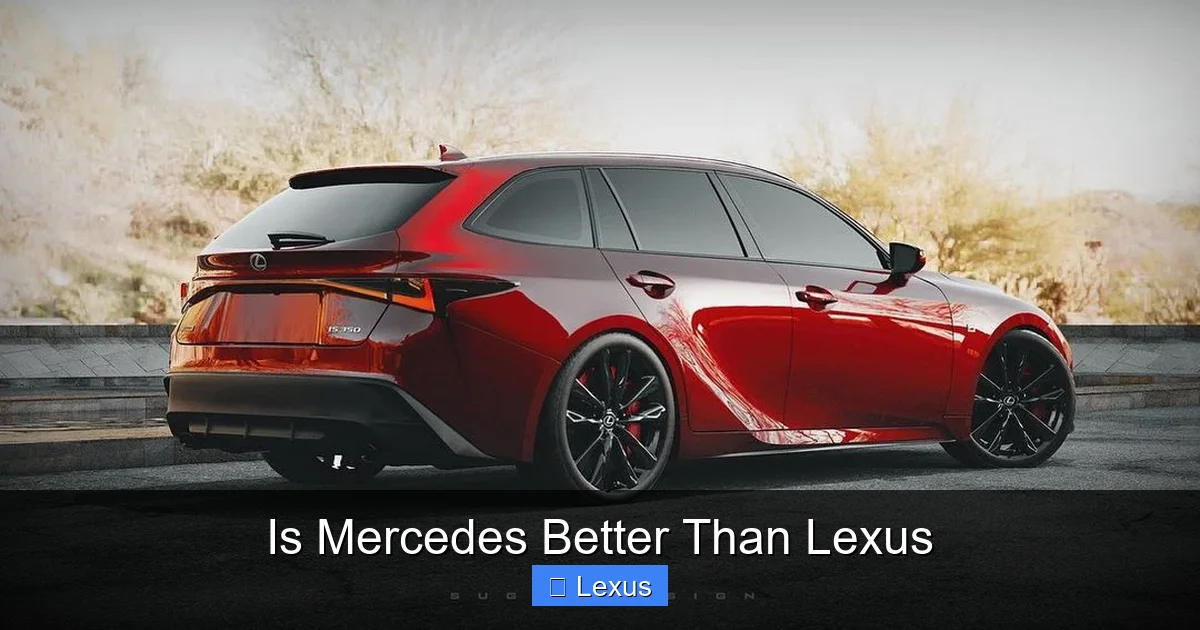
Luxury isn’t just about leather and wood trim—it’s about how a car makes you feel. Mercedes and Lexus approach this differently. Mercedes leans into bold design, high-tech features, and a sense of occasion. Lexus focuses on quiet refinement, ergonomic comfort, and a serene driving environment.
Interior Design and Materials
Mercedes interiors are stunning. The S-Class, for example, features a dashboard dominated by a massive 12.8-inch OLED touchscreen, ambient lighting in 64 colors, and seats that massage, heat, and cool. The materials are top-tier: Nappa leather, open-pore wood, and brushed metal accents. It feels like a futuristic lounge on wheels.
Lexus interiors are more understated but equally luxurious. The LS features hand-stitched leather, real wood trim, and a driver-focused layout. The seats are among the most comfortable in the industry, with multiple adjustments and excellent lumbar support. While it lacks the flash of Mercedes, the Lexus cabin feels cohesive and thoughtfully designed.
Noise, Vibration, and Harshness (NVH)
Lexus is the king of quiet. The LS 500h uses active noise cancellation and extensive sound insulation to create a library-like cabin. Road and wind noise are virtually eliminated, even at highway speeds. This makes long drives feel effortless and relaxing.
Mercedes has improved significantly in this area, especially in the S-Class, which uses double-glazed windows and acoustic glass. But even the best Mercedes can’t match Lexus’s near-silent operation. If you value a peaceful ride, Lexus wins.
Seating and Space
Both brands offer spacious interiors, but Lexus often provides more rear legroom and headroom, especially in SUVs like the RX and GX. The Lexus ES also has one of the most comfortable rear seats in its class, with ample cushioning and recline.
Mercedes focuses more on front-seat luxury, with features like massaging seats and heated armrests. Rear seats are comfortable but not always as generous in space. For families or frequent rear passengers, Lexus may offer a better overall experience.
Technology and Infotainment: Innovation vs. Usability
Technology is where Mercedes shines—but also where it can frustrate. Lexus, meanwhile, prioritizes simplicity and reliability.
Infotainment Systems
Mercedes’ MBUX (Mercedes-Benz User Experience) is one of the most advanced systems on the market. It features voice control (“Hey Mercedes”), augmented reality navigation, and a learning AI that adapts to your habits. The interface is sleek and responsive, especially on the large touchscreens.
However, MBUX can be overwhelming. Menus are deep, and some functions require multiple taps. The learning curve is steep, and occasional software glitches have been reported.
Lexus uses the Lexus Interface, which is simpler and more intuitive. It supports Apple CarPlay and Android Auto (finally, as of 2022), and the touchscreen is responsive. While it lacks the wow factor of MBUX, it’s easier to use daily. The system rarely crashes, and updates are smooth.
Safety and Driver Assistance
Both brands offer comprehensive safety suites. Mercedes’ Driver Assistance Package includes adaptive cruise control, lane-keeping assist, automatic emergency braking, and evasive steering assist. The S-Class even offers Level 2 semi-autonomous driving in certain conditions.
Lexus Safety System+ 3.0 includes similar features: pre-collision braking, lane departure alert, and dynamic radar cruise control. It’s slightly less advanced than Mercedes’ system but equally effective in real-world use.
In crash tests, both brands earn top marks from the IIHS and NHTSA. The Lexus ES and Mercedes E-Class are both Top Safety Pick+ winners.
Connectivity and Over-the-Air Updates
Mercedes leads in connectivity. Many models support over-the-air (OTA) updates, allowing the car to receive software improvements without a dealership visit. This keeps features fresh and can even add new capabilities over time.
Lexus is catching up but still lags. OTA updates are limited, and some features require a trip to the dealer. For tech enthusiasts who want the latest and greatest, Mercedes has the edge.
Ownership Experience: Service, Support, and Satisfaction
Luxury isn’t just about the car—it’s about the experience. How the brand treats you matters as much as how the car drives.
Dealership Experience
Lexus dealerships are renowned for their customer service. Staff are often more knowledgeable, less pushy, and focused on long-term relationships. Many offer complimentary car washes, loaner vehicles, and even home delivery for service appointments.
Mercedes dealerships vary widely. Some offer a high-end, boutique experience with espresso bars and lounges. Others feel more transactional. Service advisors can be less accommodating, and wait times for appointments are often longer.
Resale Value
Lexus models hold their value better. According to Kelley Blue Book, a 3-year-old Lexus RX retains about 60% of its value, compared to 50% for a Mercedes GLE. This is due to lower depreciation, higher demand, and better reliability reputation.
If you plan to sell or trade in your car after a few years, Lexus is the safer financial bet.
Community and Brand Loyalty
Both brands have loyal followings, but Lexus owners often cite satisfaction and trust as key reasons for staying. Mercedes owners appreciate the performance and prestige but are more likely to switch brands due to reliability concerns.
In owner surveys, Lexus consistently ranks higher in customer satisfaction. Mercedes scores well in performance and design but lower in dependability and service.
Which Is Better for You? Making the Right Choice
So, is Mercedes better than Lexus? The answer depends on your lifestyle, priorities, and expectations.
Choose Mercedes if:
– You love driving and want a car that excites you.
– You value cutting-edge technology and bold design.
– You’re willing to pay more for maintenance and repairs.
– You want a car that makes a statement.
Choose Lexus if:
– You prioritize reliability and long-term value.
– You want a quiet, comfortable, and stress-free ride.
– You prefer intuitive tech and hassle-free ownership.
– You plan to keep the car for many years.
For many buyers, the decision comes down to emotion versus practicality. Mercedes appeals to the heart—Lexus to the head. And that’s okay. The best luxury car is the one that fits your life.
Conclusion: No Clear Winner, Just the Right Fit
The debate between Mercedes and Lexus isn’t about which brand is objectively better—it’s about which one aligns with your values. Mercedes delivers performance, innovation, and a sense of occasion that few rivals can match. Lexus offers reliability, comfort, and an ownership experience that feels effortless.
If you’re a driving enthusiast who loves the thrill of the open road, Mercedes will reward you with every mile. If you’re a practical-minded buyer who wants a car that just works, year after year, Lexus is the smarter choice.
Ultimately, both brands represent the pinnacle of automotive luxury—just in different ways. Test drive both. Talk to owners. Consider your budget and lifestyle. And remember: the best car isn’t the one with the most horsepower or the fanciest screen. It’s the one that makes you smile every time you get behind the wheel.
Frequently Asked Questions
Is Mercedes more reliable than Lexus?
No, Lexus is generally more reliable than Mercedes. Lexus consistently ranks higher in long-term dependability surveys, while Mercedes has a higher rate of major repairs over time.
Which brand has better resale value?
Lexus typically holds its value better than Mercedes. Models like the RX and ES retain more of their original price after three to five years.
Are Mercedes cars more fun to drive?
Yes, Mercedes vehicles, especially AMG models, offer more engaging handling, stronger acceleration, and a sportier driving experience compared to most Lexus models.
Which is more comfortable: Mercedes or Lexus?
Lexus is often considered more comfortable due to its quieter cabin, smoother ride, and ergonomic seating. Mercedes focuses more on performance and tech.
Do Lexus cars have better fuel economy?
Lexus hybrids, like the ES 300h and RX 450h, offer excellent fuel economy. Mercedes has efficient models too, but Lexus leads in hybrid technology and real-world mpg.
Which brand offers better customer service?
Lexus is widely praised for its exceptional customer service, including complimentary maintenance, loaner cars, and a more personalized dealership experience.
