Is Car Battery Under Warranty
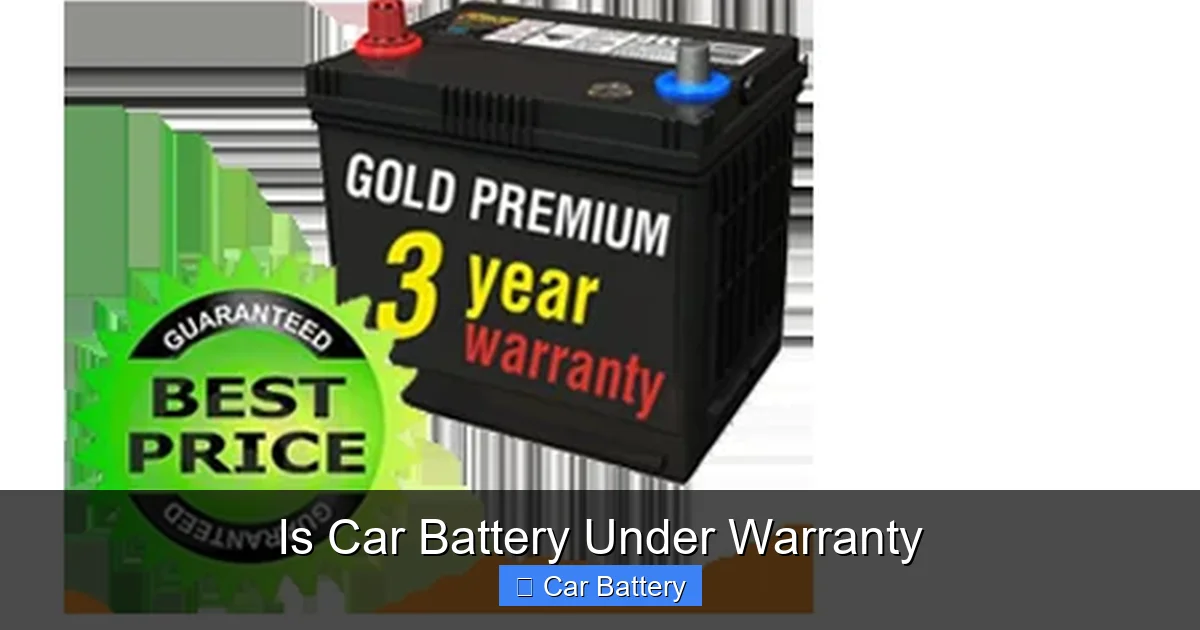
Yes, your car battery may be under warranty, but coverage varies by manufacturer, age, and usage. Most new vehicles include a battery warranty ranging from 12 to 36 months, while some premium brands offer longer protection. Always check your owner’s manual or contact your dealer to confirm your specific coverage.
In This Article
- 1 Key Takeaways
- 2 📑 Table of Contents
- 3 Is Car Battery Under Warranty? Everything You Need to Know
- 4 Understanding Car Battery Warranties: What’s Covered and What’s Not
- 5 How to Check If Your Car Battery Is Under Warranty
- 6 New Car vs. Replacement Battery Warranties: What’s the Difference?
- 7 Common Reasons Car Battery Warranties Are Denied
- 8 Tips to Maximize Your Car Battery Warranty
- 9 When to Replace Your Battery—Even If It’s Under Warranty
- 9.1 Diminished Performance
- 9.2 Frequent Jump-Starts
- 9.3 Age Matters Most batteries last 3–5 years. If yours is nearing the end of its expected life, consider replacing it proactively to avoid being stranded. Remember: a warranty replacement is free, but the inconvenience of a dead battery isn’t. It’s often smarter to act early. Conclusion: Stay Informed, Stay Protected So, is your car battery under warranty? The answer is likely yes—but only if you know where to look and what to look for. Most new vehicles come with at least 12–24 months of coverage, and replacement batteries often offer even longer protection. By checking your owner’s manual, inspecting the battery label, and keeping good records, you can ensure you’re making the most of your warranty. Don’t let a dead battery catch you off guard. Take a few minutes today to verify your coverage, clean your terminals, and schedule a battery test. A little prevention goes a long way—and when it comes to warranties, knowledge truly is power. Frequently Asked Questions How long is a typical car battery warranty?
- 9.4 Can I claim a warranty if my battery dies in cold weather?
- 9.5 Do I need to go to the dealer for a warranty replacement?
- 9.6 What happens if my battery warranty expires next month?
- 9.7 Are aftermarket batteries covered under the car manufacturer’s warranty?
- 9.8 Can I transfer my battery warranty if I sell my car?
Key Takeaways
- Most new car batteries come with a warranty: Typically lasting 12 to 36 months, depending on the vehicle and manufacturer.
- Warranty terms vary widely: Some cover only defects, while others include free replacement if the battery fails within the period.
- Check your owner’s manual: This is the best source for exact warranty details, including what’s covered and excluded.
- Hybrid and electric vehicles often have longer battery warranties: Up to 8–10 years for high-voltage traction batteries, but 12V auxiliary batteries may have shorter coverage.
- Improper maintenance can void your warranty: Failing to keep terminals clean or allowing deep discharges may disqualify claims.
- Replacement batteries may have their own warranty: Even if your original battery warranty expired, a new replacement might come with a fresh 2–3 year guarantee.
- Document everything: Keep receipts, service records, and photos to support any warranty claim.
📑 Table of Contents
- Is Car Battery Under Warranty? Everything You Need to Know
- Understanding Car Battery Warranties: What’s Covered and What’s Not
- How to Check If Your Car Battery Is Under Warranty
- New Car vs. Replacement Battery Warranties: What’s the Difference?
- Common Reasons Car Battery Warranties Are Denied
- Tips to Maximize Your Car Battery Warranty
- When to Replace Your Battery—Even If It’s Under Warranty
- Conclusion: Stay Informed, Stay Protected
Is Car Battery Under Warranty? Everything You Need to Know
You’re driving home from work, and suddenly your car won’t start. The dashboard lights flicker, the engine cranks slowly—or not at all. Your first thought? “Is my car battery under warranty?” It’s a common concern, especially when faced with an unexpected repair bill. The good news is that many car batteries do come with some form of warranty, but understanding the specifics can save you time, money, and frustration.
Unlike major components like engines or transmissions, car batteries are considered wear-and-tear items. That means they naturally degrade over time due to usage, weather, and charging cycles. However, manufacturers still provide warranties to protect against premature failure caused by defects in materials or workmanship. These warranties aren’t one-size-fits-all—they vary by brand, model, and even where you bought the vehicle. In this guide, we’ll walk you through how to determine if your car battery is under warranty, what’s typically covered, and how to make the most of your protection.
Understanding Car Battery Warranties: What’s Covered and What’s Not
A car battery warranty is essentially a promise from the manufacturer or retailer that the battery will perform as expected for a certain period. If it fails prematurely due to a defect, you may be eligible for a free replacement or prorated credit. But not all failures qualify—understanding the fine print is crucial.
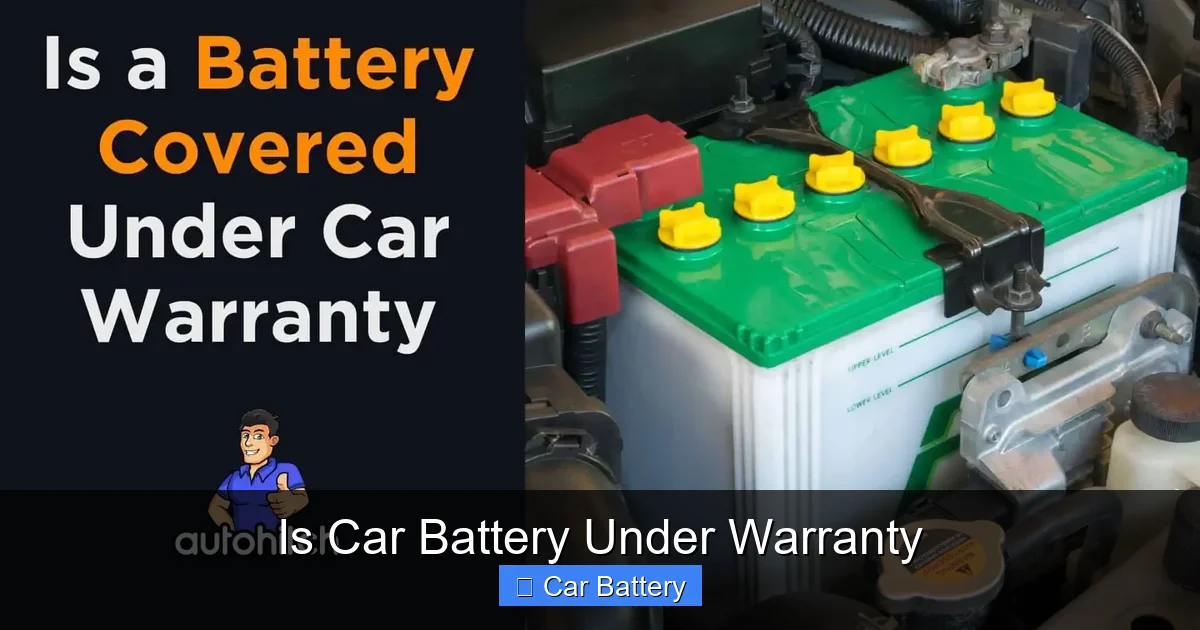
Visual guide about Is Car Battery Under Warranty
Image source: autohitch.com
Types of Battery Warranties
There are generally two types of warranties you’ll encounter:
- Full Replacement Warranty: Covers 100% of the cost if the battery fails within a set time (e.g., 24 months). After that, you may get a prorated refund based on remaining life.
- Prorated Warranty: You pay a portion of the replacement cost based on how long the battery lasted. For example, if a 36-month warranty battery fails at 30 months, you might pay 80% of the new price.
Some manufacturers offer a “free replacement period” (e.g., 12–24 months) followed by a prorated period. Always check your specific terms—don’t assume all warranties work the same way.
What’s Typically Covered
Warranties usually cover defects such as:
- Internal short circuits
- Failed cells due to manufacturing flaws
- Premature capacity loss (e.g., battery can’t hold a charge after 6 months)
- Leaking or cracked casings from production errors
These issues are beyond normal wear and indicate a problem with how the battery was made.
What’s Usually Excluded
Warranties do not cover damage caused by:
- Leaving lights on or parasitic drain
- Extreme temperatures (though some brands account for climate)
- Improper installation or maintenance
- Corrosion from environmental exposure
- Accidents or physical damage
- Using the wrong battery type for your vehicle
For example, if you accidentally leave your headlights on overnight and drain the battery, that’s considered user error—not a defect. Similarly, if corrosion builds up on the terminals because you never cleaned them, the warranty likely won’t apply.
How to Check If Your Car Battery Is Under Warranty
Wondering whether your battery is still covered? Here’s a step-by-step guide to finding out.
Visual guide about Is Car Battery Under Warranty
Image source: imgv2-2-f.scribdassets.com
Step 1: Check Your Owner’s Manual
The owner’s manual is your best friend when it comes to warranty information. Most manufacturers include a section on battery coverage, including duration and conditions. For instance, Honda typically offers a 36-month battery warranty on new vehicles, while Ford often provides 36 months or 36,000 miles—whichever comes first.
If you no longer have the physical manual, don’t worry. Almost all automakers provide digital copies on their websites. Just search “[Your Car Make] [Model] [Year] owner’s manual PDF” to find it.
Step 2: Look at the Battery Label
The battery itself often has a label with the installation date and warranty code. This is especially common on OEM (original equipment manufacturer) batteries installed at the factory. The code might look like “A123” or “B456,” where the first letter indicates the month (A=January, B=February, etc.) and the number is the year.
For example, a label reading “C23” means the battery was installed in March 2023. If your car was purchased new in April 2023 and has a 24-month warranty, you’re still covered until April 2025.
Step 3: Contact Your Dealer or Manufacturer
If you’re unsure, call your local dealership or the manufacturer’s customer service line. Have your VIN (Vehicle Identification Number) ready—they can look up your vehicle’s original equipment and warranty status. Many dealers also have access to service records, so they can confirm if the battery was ever replaced under warranty.
Step 4: Review Your Purchase or Service Receipt
If you replaced the battery yourself or had it done at an independent shop, check the receipt. Most auto parts stores (like AutoZone, O’Reilly, or Advance Auto Parts) offer their own battery warranties, often ranging from 2 to 5 years. These are separate from the vehicle manufacturer’s warranty but still valuable.
For example, an AutoZone Duralast Gold battery comes with a 3-year free replacement warranty. That means if it fails within three years, you can swap it out at no cost—no questions asked (as long as it’s not due to misuse).
New Car vs. Replacement Battery Warranties: What’s the Difference?
It’s important to distinguish between the warranty on your original factory-installed battery and one you buy later. They’re not the same—and understanding the difference can prevent confusion.
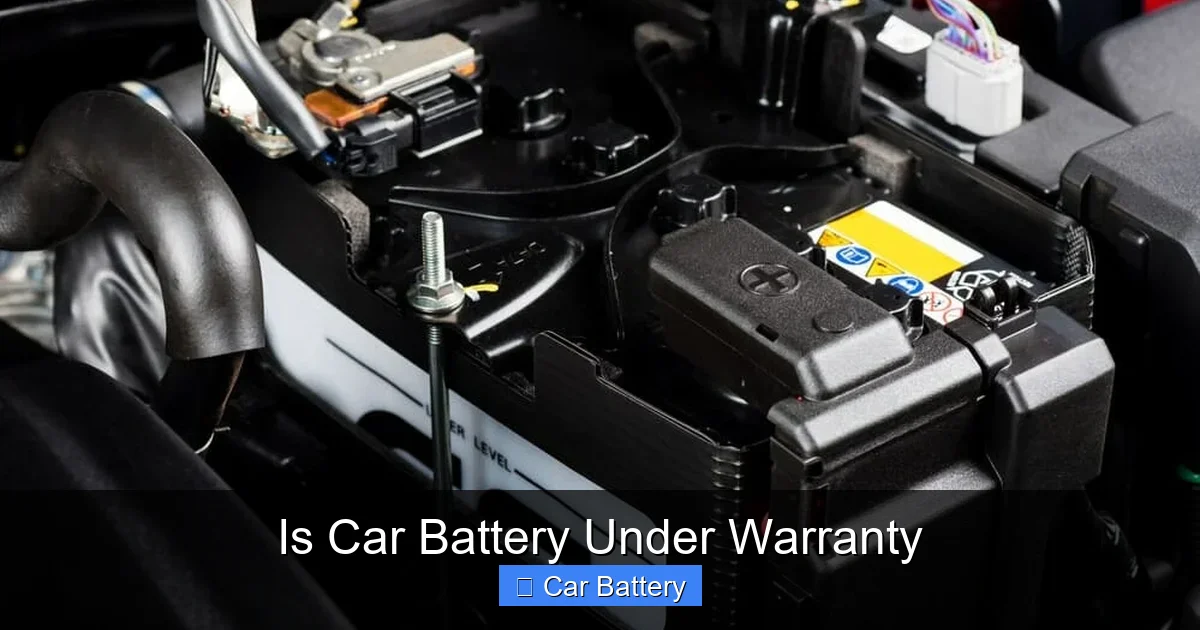
Visual guide about Is Car Battery Under Warranty
Image source: vehiclefreak.com
Original Equipment (OE) Battery Warranties
When you buy a new car, the battery installed at the factory is covered under the vehicle’s comprehensive warranty. This is usually part of the bumper-to-bumper coverage, which lasts 3 years or 36,000 miles (varies by brand). Some luxury brands, like BMW or Mercedes-Benz, may offer longer battery-specific coverage.
For example, Tesla includes an 8-year warranty on its 12V auxiliary battery in most models, though this is less common. Most mainstream brands stick to 2–3 years.
Aftermarket and Replacement Battery Warranties
If your original battery dies and you replace it, the new one comes with its own warranty—typically from the retailer or battery brand, not the car manufacturer. These warranties are often more generous than OE coverage.
Popular brands and their typical warranties include:
- Interstate: 3–5 years, depending on series (e.g., MTG series has 5-year free replacement)
- Optima: 2–3 years, with some RedTop models offering 3-year free replacement
- DieHard: 3–4 years, with Gold series offering 4-year free replacement
- Duralast (AutoZone): 2–3 years, Gold series has 3-year free replacement
These warranties are usually hassle-free—just bring in the old battery and proof of purchase, and they’ll swap it out.
Hybrid and Electric Vehicle Batteries
Here’s where things get interesting. While the 12V auxiliary battery in hybrids and EVs typically has a standard 12–36 month warranty, the high-voltage traction battery (the big one that powers the electric motor) is covered much longer.
For example:
- Toyota Prius: 8 years or 100,000 miles on the hybrid battery
- Tesla Model 3: 8 years or 100,000–120,000 miles (depending on battery size)
- Chevrolet Bolt: 8 years or 100,000 miles
These warranties protect against capacity loss below a certain threshold (e.g., 70% of original capacity). However, they don’t cover the 12V battery, which still follows standard rules.
Common Reasons Car Battery Warranties Are Denied
Even if your battery is technically under warranty, claims can be denied if certain conditions aren’t met. Knowing these pitfalls can help you avoid disappointment.
Poor Maintenance
Manufacturers expect you to maintain your battery properly. This includes:
- Keeping terminals clean and free of corrosion
- Ensuring the battery is securely mounted
- Avoiding deep discharges (e.g., letting the battery sit dead for weeks)
If a technician finds heavy corrosion or loose connections, they may deny the claim, arguing that neglect caused the failure—not a defect.
Parasitic Drain or User Error
Leaving accessories on (like interior lights, phone chargers, or aftermarket electronics) can drain the battery over time. If the battery fails due to this, it’s not covered. Similarly, jump-starting incorrectly or using the wrong charger can void the warranty.
Environmental Damage
Extreme heat or cold can accelerate battery aging. While some manufacturers account for climate in their testing, they won’t cover failure solely due to weather. For example, a battery dying after two winters in Minnesota might not qualify if the warranty assumes moderate climates.
Non-OEM or Improper Installation
If you install a battery that doesn’t meet your vehicle’s specifications (e.g., wrong size, voltage, or cold cranking amps), the warranty may be void. Always use a battery recommended by your owner’s manual or dealer.
Lack of Documentation
Without proof of purchase or installation date, it’s hard to prove when the battery was installed. Keep your receipt, and if possible, take a photo of the battery label showing the date code.
Tips to Maximize Your Car Battery Warranty
Want to get the most out of your battery warranty? Follow these practical tips.
Keep Your Battery Clean
Corrosion on terminals can interfere with charging and cause premature failure. Clean them every 6 months with a mixture of baking soda and water, followed by a wire brush. Apply dielectric grease to prevent future buildup.
Avoid Deep Discharges
Letting your battery drain completely (e.g., by leaving lights on) reduces its lifespan. If your car sits unused for more than a week, consider using a trickle charger or battery maintainer.
Get Regular Inspections
Many dealerships and repair shops offer free battery testing. Have yours checked annually, especially before winter. A weak battery can fail suddenly in cold weather.
Use the Right Charger
If you need to charge your battery, use a smart charger designed for your battery type (e.g., AGM, lithium, or flooded lead-acid). Avoid cheap, unregulated chargers that can overcharge or undercharge.
Document Everything
Save receipts, take photos of the battery label, and keep records of any maintenance. If you need to file a claim, this documentation will speed up the process.
Know Your Rights
If a claim is denied unfairly, don’t hesitate to escalate. Contact the manufacturer’s customer service or file a complaint with your state’s consumer protection agency. In some cases, lemon laws or Magnuson-Moss Warranty Act protections may apply.
When to Replace Your Battery—Even If It’s Under Warranty
Sometimes, it makes sense to replace your battery before it completely fails—even if it’s still under warranty. Here’s why.
Diminished Performance
If your car cranks slowly, especially in cold weather, the battery may be losing capacity. A warranty replacement can give you a fresh start without cost.
Frequent Jump-Starts
Needing multiple jump-starts in a short period is a red flag. Don’t wait for a complete failure—get it checked and replaced under warranty.