Is a Dodge Charger a Good First Car

Contents
- 1 Key Takeaways
- 2 📑 Table of Contents
- 3 Performance and Power: Is It Too Much for a New Driver?
- 4 Safety Features: How Safe Is the Dodge Charger?
- 5 Cost of Ownership: Can You Afford a Charger as a First Car?
- 6 Interior Space and Practicality: Is the Charger Family-Friendly?
- 7 Reliability and Maintenance: What to Expect Long-Term
- 8 Resale Value and Long-Term Value
- 9 Final Verdict: Should You Choose a Dodge Charger as Your First Car?
- 10 Frequently Asked Questions



Choosing your first car is a big decision, and the Dodge Charger might surprise you. While it’s known for power and style, it can be a solid first car—if you plan wisely and drive responsibly.
So, you’re thinking about buying your first car—congratulations! That moment when you finally get behind the wheel of your own vehicle is exciting, nerve-wracking, and full of possibilities. You’ve probably scrolled through dozens of options: compact hatchbacks, reliable sedans, maybe even a rugged SUV. But then you see it—the bold, muscular silhouette of a Dodge Charger. It turns heads. It growls. It looks like it belongs on a movie set. And now you’re wondering: could this beast actually be a good first car?
Let’s be honest—the Dodge Charger isn’t the typical choice for a new driver. It’s not small, it’s not subtle, and it definitely doesn’t whisper “beginner-friendly.” But that doesn’t mean it’s off-limits. In fact, with the right mindset, budgeting, and driving habits, the Charger can be a surprisingly capable first car. It offers modern tech, solid safety features, and a comfortable ride—all wrapped in a package that feels premium and powerful.
Of course, there are trade-offs. High horsepower, fuel thirst, and insurance costs can add up quickly. But if you’re drawn to the Charger’s style and performance, and you’re willing to plan ahead, it might just be the right fit. This guide will walk you through everything you need to know—from performance and safety to cost of ownership and real-world usability—so you can make an informed decision. Whether you’re eyeing a used 2018 model or a brand-new 2024 R/T, we’ve got you covered.
Key Takeaways
- Powerful Performance: The Charger offers strong engine options, but high horsepower may be challenging for new drivers.
- Safety Features: Modern models come with advanced safety tech like blind-spot monitoring and automatic emergency braking.
- Fuel Efficiency Concerns: V8 models consume more gas, increasing long-term costs for budget-conscious drivers.
- Insurance Costs: Insurance premiums are typically higher due to the car’s performance reputation and repair costs.
- Spacious and Comfortable: The Charger provides ample interior space, making it practical for daily use and passengers.
- Reliability and Maintenance: Regular maintenance is key; some models have had recalls, so research specific years carefully.
- Resale Value: Chargers hold value well, especially well-maintained V8 trims, which can benefit future resale.
📑 Table of Contents
- Performance and Power: Is It Too Much for a New Driver?
- Safety Features: How Safe Is the Dodge Charger?
- Cost of Ownership: Can You Afford a Charger as a First Car?
- Interior Space and Practicality: Is the Charger Family-Friendly?
- Reliability and Maintenance: What to Expect Long-Term
- Resale Value and Long-Term Value
- Final Verdict: Should You Choose a Dodge Charger as Your First Car?
Performance and Power: Is It Too Much for a New Driver?
One of the first things that comes to mind when people think of the Dodge Charger is power. And rightfully so. Depending on the trim, the Charger can range from a modest 292 horsepower in the base V6 model all the way up to a jaw-dropping 797 horsepower in the limited-edition SRT Hellcat Redeye. That kind of output is thrilling—but is it appropriate for someone who’s still learning the ropes?
Let’s start with the basics. The standard Charger comes with a 3.6-liter Pentastar V6 engine. It’s smooth, responsive, and more than capable of handling daily commutes, highway merges, and weekend trips. For a new driver, this engine offers a good balance of performance and control. It’s powerful enough to feel confident on the road but not so aggressive that it tempts reckless behavior.
Now, if you step up to the R/T trim, you get a 5.7-liter HEMI V8. That bumps the power to around 370 horsepower. It’s a noticeable jump—especially when you hit the gas—and it delivers that classic muscle car rumble. This is where things start to get tricky for new drivers. While 370 hp is manageable with discipline, it’s easy to underestimate how quickly the Charger can accelerate. One moment you’re cruising at 40 mph, and the next you’re pushing 70 without realizing it.
Then there’s the SRT and Hellcat models. These are performance machines built for speed enthusiasts. The Hellcat, for example, can go from 0 to 60 mph in under 4 seconds. That’s supercar territory. For a first-time driver, that level of power can be overwhelming—and potentially dangerous if not handled responsibly. Insurance companies know this, which is why premiums skyrocket for these trims.
So, is the Charger’s performance a dealbreaker? Not necessarily. But it does mean you need to be extra cautious. If you’re set on a Charger as your first car, consider starting with the V6 or R/T model. These offer plenty of fun without crossing into “too much, too soon” territory. And no matter which engine you choose, take a defensive driving course. It’s one of the best investments you can make as a new driver.
Safety Features: How Safe Is the Dodge Charger?

Visual guide about Is a Dodge Charger a Good First Car
Image source: thedailyautomotive.com
When it comes to choosing a first car, safety should be at the top of your list. After all, you’re not just protecting yourself—you’re also setting an example for responsible driving. So, how does the Dodge Charger stack up in terms of safety?
The good news is that modern Chargers (2015 and newer) come with a solid suite of safety features. Depending on the trim and options, you can get advanced driver-assistance systems (ADAS) like forward collision warning, automatic emergency braking, blind-spot monitoring, rear cross-traffic alert, and adaptive cruise control. These features are especially helpful for new drivers who are still getting comfortable with judging distances, changing lanes, and maintaining speed in traffic.
For example, blind-spot monitoring uses sensors to detect vehicles in your blind zones and alerts you with a light on the side mirror. This is a huge help when merging onto highways or switching lanes in busy traffic. Similarly, rear cross-traffic alert warns you if a car is approaching from the side when you’re backing out of a parking spot—something that’s easy to miss, especially in a large sedan like the Charger.
The Charger also performs well in crash tests. The National Highway Traffic Safety Administration (NHTSA) has given recent models a 4- or 5-star overall safety rating, depending on the year and configuration. The Insurance Institute for Highway Safety (IIHS) has also rated the Charger as “Good” in several categories, including moderate overlap front and side impact tests.
That said, the Charger’s size can be both a pro and a con. On one hand, its larger frame and weight can provide better protection in a collision compared to smaller cars. On the other hand, its size makes it harder to maneuver in tight spaces, like crowded parking lots or narrow city streets. New drivers might find it a bit intimidating at first, especially when parallel parking or navigating tight turns.
Another thing to consider is visibility. The Charger has a long hood and a sloping rear window, which can create blind spots. This is where those safety tech features really come in handy. If you’re looking at a used model, try to find one with the available safety package—it’s worth the extra cost.
Ultimately, the Charger is a safe car—especially if you opt for a newer model with updated safety tech. Just remember that no amount of technology can replace good driving habits. Always stay alert, avoid distractions, and respect the car’s power.
Cost of Ownership: Can You Afford a Charger as a First Car?

Visual guide about Is a Dodge Charger a Good First Car
Image source: wallpapercave.com
Let’s talk money—because let’s face it, your first car needs to fit your budget, not just your dreams. The Dodge Charger might look like a luxury ride, but it’s actually priced fairly competitively for a full-size sedan. However, the real cost isn’t just the sticker price—it’s everything that comes after.
First, consider the purchase price. A new base-model Charger starts around $35,000. That’s not cheap, but it’s reasonable for a well-equipped sedan with modern features. If you’re buying used, you can find good deals—especially on 2015–2019 models—ranging from $18,000 to $28,000 depending on mileage, condition, and trim. Just be sure to get a pre-purchase inspection from a trusted mechanic.
Now, let’s talk fuel economy. This is where the Charger can get expensive. The V6 model gets around 19 mpg in the city and 30 mpg on the highway—decent for a car this size. But the V8 models? They average about 16 mpg city and 25 mpg highway. And the Hellcat? Expect closer to 12 mpg in the city. If you drive a lot or live in an area with high gas prices, this can add up fast. For example, driving 15,000 miles a year in a V8 Charger could cost you over $3,000 in fuel alone.
Insurance is another major expense. Because the Charger is classified as a performance vehicle, insurance premiums are typically higher than for compact cars or sedans. Young drivers, especially males under 25, will see the biggest jump. It’s not uncommon for a new driver to pay $200–$400 per month for full coverage on a Charger. Compare that to $100–$150 for a Honda Civic, and the difference is clear.
Maintenance and repairs also factor in. The Charger is generally reliable, but like any car, it needs regular upkeep. Oil changes, tire rotations, brake pads, and fluid checks are standard. However, if something goes wrong—especially with the V8 or supercharged engines—repairs can be costly. Parts and labor for performance vehicles often come at a premium.
Then there’s depreciation. While the Charger holds its value better than many sports cars, it still loses value over time. A new Charger might depreciate 20–30% in the first three years. But if you take good care of it and keep mileage low, you can minimize the loss.
So, can you afford a Charger as a first car? It depends on your financial situation. If you have a steady income, a good credit score, and can comfortably afford the monthly payments, insurance, and fuel, then yes—it’s possible. But if you’re on a tight budget, you might want to consider a more economical option first, then upgrade to a Charger later.
Interior Space and Practicality: Is the Charger Family-Friendly?
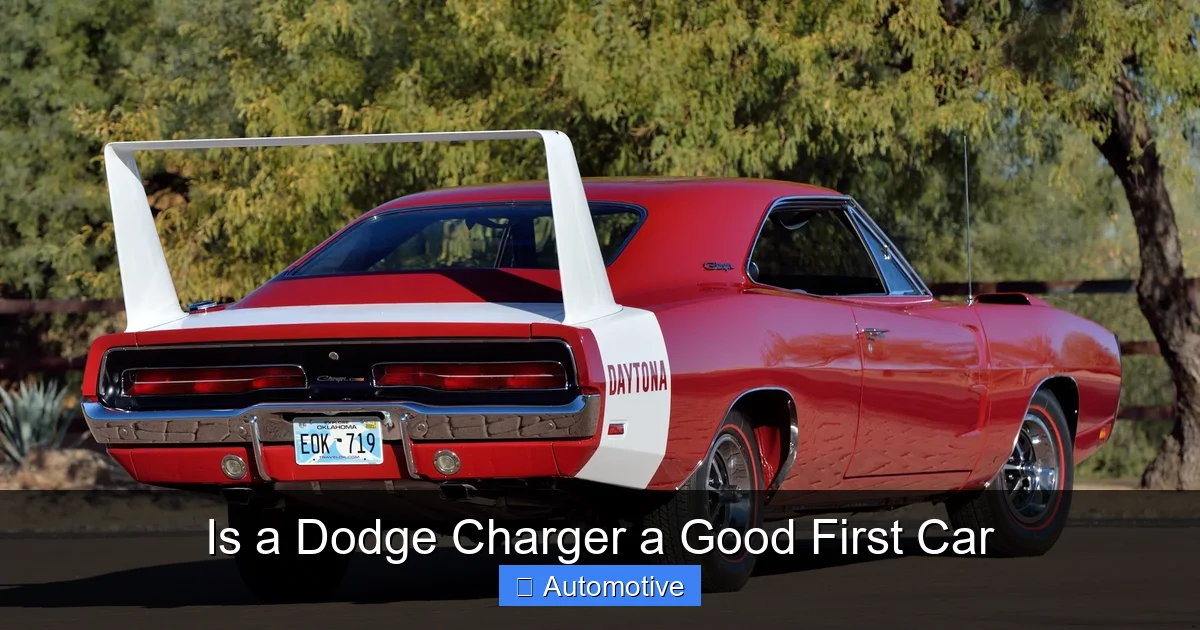
Visual guide about Is a Dodge Charger a Good First Car
Image source: silodrome.com
One of the biggest surprises about the Dodge Charger is how practical it is. Despite its aggressive styling and performance pedigree, it’s actually a very usable daily driver—especially if you need space.
Let’s start with seating. The Charger comfortably fits five passengers, with plenty of legroom and headroom in both the front and back. Tall passengers won’t feel cramped, and the rear seats are surprisingly spacious for a sedan. This makes it a great option if you plan to carpool, take friends on road trips, or even start a family down the line.
The trunk is another strong point. With 16.5 cubic feet of cargo space, the Charger offers more room than many midsize sedans. That’s enough for groceries, luggage, sports gear, or even a weekend’s worth of camping supplies. The wide opening and low load floor make it easy to pack and unpack.
Inside, the cabin is well-designed with quality materials and a driver-focused layout. The standard 8.4-inch Uconnect infotainment system is intuitive and responsive, with Apple CarPlay and Android Auto compatibility. Higher trims add features like a premium sound system, heated and ventilated seats, and a sunroof—making long drives more comfortable.
For a first car, this level of comfort and convenience is a big plus. You’re not sacrificing usability for style. Whether you’re driving to school, work, or a weekend getaway, the Charger can handle it all.
That said, there are a few practical considerations. The Charger’s large size means it takes up more space in parking spots and garages. If you live in a city with narrow streets or limited parking, this could be a challenge. Also, the rear visibility isn’t the best, so you’ll want to rely on the backup camera and parking sensors.
But overall, the Charger strikes a great balance between performance and practicality. It’s not a sports coupe—it’s a full-size sedan that happens to be fast. And for a new driver who wants space, comfort, and a touch of excitement, that’s a winning combination.
Reliability and Maintenance: What to Expect Long-Term
No one wants to spend their weekends at the mechanic. So, how reliable is the Dodge Charger, and what kind of maintenance should you expect?
In general, the Charger has a decent reputation for reliability—especially the V6 models. According to sources like J.D. Power and Consumer Reports, the Charger scores average to above average in dependability. The 3.6-liter V6 engine is known for being durable and long-lasting with proper care.
However, there have been some recalls and common issues over the years. For example, certain 2015–2017 models had problems with the transmission, electrical system, and suspension components. The 2019 model also had a recall related to the fuel pump. This doesn’t mean the Charger is unreliable—it just means you need to do your homework.
If you’re buying used, always check the vehicle history report (like Carfax or AutoCheck) and look for any open recalls. Better yet, have a trusted mechanic inspect the car before you buy. They can spot potential issues like worn brakes, leaking fluids, or suspension wear.
Maintenance-wise, the Charger follows a typical schedule: oil changes every 6,000–7,500 miles, tire rotations every 7,500 miles, and brake inspections every 15,000 miles. The V8 models may need more frequent oil changes and premium fuel, which adds to the cost.
One thing to keep in mind is that performance parts can be more expensive to replace. For example, a set of performance brake pads or a new set of high-performance tires will cost more than standard ones. But if you stick to regular maintenance and avoid aggressive driving, the Charger should serve you well for many years.
Resale Value and Long-Term Value
When you buy your first car, you’re not just thinking about today—you’re also thinking about the future. How much will the car be worth when you’re ready to sell or trade it in?
The good news is that the Dodge Charger tends to hold its value better than many other sedans. This is especially true for higher-performance trims like the R/T and SRT models. Muscle cars and performance vehicles often have a dedicated fan base, which helps maintain demand in the used market.
For example, a well-maintained 2018 Charger R/T with low mileage might still fetch $22,000–$26,000 after five years—much better than the average sedan. The Hellcat models, in particular, can even appreciate in value if they’re rare or in excellent condition.
Of course, resale value depends on several factors: mileage, condition, service history, and market trends. Keeping detailed maintenance records, avoiding accidents, and storing the car properly (like in a garage) can all help preserve its value.
If you plan to keep the Charger for several years, this strong resale potential is a big advantage. It means you’re not just buying a car—you’re making a smart long-term investment.
Final Verdict: Should You Choose a Dodge Charger as Your First Car?
So, is a Dodge Charger a good first car? The answer isn’t a simple yes or no—it depends on you.
If you’re a responsible driver who values performance, space, and style, and you’re willing to budget for higher insurance, fuel, and maintenance costs, then yes—the Charger can be a great first car. The V6 or R/T models offer a balanced mix of power and practicality, and the modern safety features provide peace of mind.
But if you’re on a tight budget, live in a city with limited parking, or tend to drive aggressively, you might want to start with something smaller and more economical. There’s no shame in choosing a Honda Civic or Toyota Corolla for your first ride—they’re reliable, affordable, and easy to drive.
Ultimately, the Charger is more than just a car. It’s a statement. And if you’re ready to make that statement with maturity and responsibility, it could be the perfect first car for you.
Frequently Asked Questions
Is a Dodge Charger expensive to insure for a new driver?
Yes, insurance for a Dodge Charger is typically higher than for compact cars due to its performance classification and higher repair costs. Young drivers, especially males under 25, may pay $200–$400 per month for full coverage.
Can a first-time driver handle a Charger’s power?
It depends on the model and the driver’s experience. The V6 and R/T trims are manageable with discipline, but high-horsepower models like the Hellcat require maturity and responsible driving habits.
How good is the fuel economy in a Dodge Charger?
The V6 model gets around 19 mpg city and 30 mpg highway, which is decent for a full-size sedan. V8 models drop to about 16 mpg city and 25 mpg highway, making them less fuel-efficient.
Is the Dodge Charger safe for new drivers?
Yes, especially newer models with advanced safety features like automatic emergency braking, blind-spot monitoring, and rear cross-traffic alert. It also earns high crash test ratings from NHTSA and IIHS.
What’s the best year of Dodge Charger to buy used?
Models from 2015–2020 offer a good balance of modern features, reliability, and value. Avoid early 2010s models if possible, as they may lack updated safety tech.
Can the Charger fit a family or carpool?
Absolutely. With seating for five and a spacious trunk, the Charger is practical for daily use, road trips, and transporting passengers comfortably.