
Can a Subaru Jump Start Another Car

Yes, a Subaru can safely jump start another car—as long as you follow proper procedures and safety precautions. Whether you’re helping a friend with a dead battery or assisting a stranger, understanding your Subaru’s electrical system and using the right technique ensures a successful jump without damaging either vehicle.
Key Takeaways
- Subarus are fully capable of jump starting other vehicles: Most Subaru models, including Outbacks, Foresters, and Imprezas, have 12-volt batteries compatible with standard jump-starting procedures.
- Always use proper jumper cables and follow the correct sequence: Connecting cables in the wrong order can cause sparks, damage electronics, or even injury.
- Check your Subaru’s battery and alternator health first: A weak or failing battery in your Subaru may not provide enough power to jump another car.
- Avoid jump starting if you suspect electrical issues: If the dead car shows signs of short circuits or damaged wiring, it’s safer to call a professional.
- Modern Subarus have sensitive electronics: Take extra care to prevent voltage spikes that could harm the vehicle’s computer systems.
- Keep a portable jump starter as a backup: For added safety and convenience, especially in remote areas, a portable jump pack is a smart investment.
- Know when not to attempt a jump: If the dead battery is cracked, leaking, or frozen, do not attempt to jump start—call roadside assistance instead.
📑 Table of Contents
- Can a Subaru Jump Start Another Car? The Short Answer
- Why Jump Starting Matters: Real-Life Scenarios
- How Jump Starting Works: The Science Behind the Spark
- Step-by-Step Guide: How to Jump Start Another Car with Your Subaru
- Safety Tips and Common Mistakes to Avoid
- When to Use a Portable Jump Starter Instead
- Subaru-Specific Considerations
- What to Do If the Jump Doesn’t Work
- Conclusion: Be Prepared, Be Safe, Be Helpful
Can a Subaru Jump Start Another Car? The Short Answer
Yes—your Subaru can absolutely jump start another car. Whether you drive a rugged Outback, a compact Crosstrek, or a sporty WRX, your vehicle is equipped with a standard 12-volt lead-acid battery, just like most other gasoline-powered cars on the road. This means it has the power and compatibility needed to give a dead battery a jump.
But while the answer is straightforward, the process requires attention to detail. Jump starting isn’t just about connecting cables and hoping for the best. It involves understanding your Subaru’s electrical system, using the right equipment, and following a safe sequence to avoid damage or injury. In this guide, we’ll walk you through everything you need to know—from preparation to execution—so you can confidently help someone in need without risking your own vehicle.
Why Jump Starting Matters: Real-Life Scenarios
Picture this: It’s a cold winter morning, and your neighbor’s car won’t start. The engine cranks slowly, or worse—it doesn’t turn over at all. You’ve got your trusty Subaru parked nearby, and you’re wondering if you can help. Or maybe you’re on a road trip, and a fellow traveler’s battery has died at a remote rest stop. In both cases, knowing how to safely jump start another car can be a lifesaver—literally and figuratively.

Visual guide about Can a Subaru Jump Start Another Car
Image source: cardeeply.com
Jump starting is one of those essential car skills that every driver should have in their toolkit. It’s not just about being helpful; it’s about being prepared. Dead batteries are one of the most common reasons for roadside breakdowns, and they can happen to anyone—even with regular maintenance. Whether it’s due to leaving lights on, extreme temperatures, or an aging battery, a simple jump can get someone back on the road in minutes.
Common Causes of Dead Batteries
- Leaving lights or accessories on: Interior lights, headlights, or phone chargers can drain a battery overnight.
- Extreme weather: Cold temperatures reduce battery efficiency, while heat accelerates internal corrosion.
- Old age: Most car batteries last 3–5 years. After that, they become unreliable.
- Parasitic drain: Faulty electronics or wiring can slowly drain the battery even when the car is off.
- Alternator failure: If the alternator isn’t charging the battery while driving, it will eventually die.
Understanding these causes helps you assess whether a jump start is the right solution. For example, if a car starts after a jump but dies again shortly after, the problem likely isn’t the battery—it’s the alternator or another electrical issue.
How Jump Starting Works: The Science Behind the Spark
At its core, jump starting is about transferring electrical energy from a healthy battery to a dead one. Your Subaru’s battery stores chemical energy and converts it into electrical energy when you turn the key. This energy powers the starter motor, which cranks the engine to life. When a battery is dead, it doesn’t have enough charge to do this—but a jump start gives it the boost it needs.
Visual guide about Can a Subaru Jump Start Another Car
Image source: multimeterworld.com
Here’s how it works: When you connect jumper cables between your Subaru’s battery and the dead car’s battery, you’re creating a circuit. The healthy battery sends current through the cables to the dead battery, recharging it just enough to start the engine. Once the dead car is running, its alternator takes over, recharging the battery as you drive.
The Role of the Alternator
The alternator is a small but mighty component that generates electricity while the engine runs. It powers the car’s electrical systems and recharges the battery. Without a functioning alternator, even a jump start won’t help—the battery will drain again once the engine stops. That’s why it’s important to drive the jumped car for at least 20–30 minutes after starting to allow the alternator to recharge the battery.
Why Polarity Matters
Batteries have positive (+) and negative (-) terminals. Connecting the cables incorrectly—such as attaching positive to negative—can cause a short circuit, sparks, or even an explosion. That’s why the sequence matters: always connect positive to positive and negative to negative (or to a grounded metal part on the dead car).
Modern cars, including Subarus, have sensitive electronics like engine control units (ECUs), infotainment systems, and sensors. A power surge during a jump can damage these components, leading to costly repairs. That’s why it’s crucial to follow the correct procedure and, when possible, use surge-protected jumper cables or a portable jump starter.
Step-by-Step Guide: How to Jump Start Another Car with Your Subaru
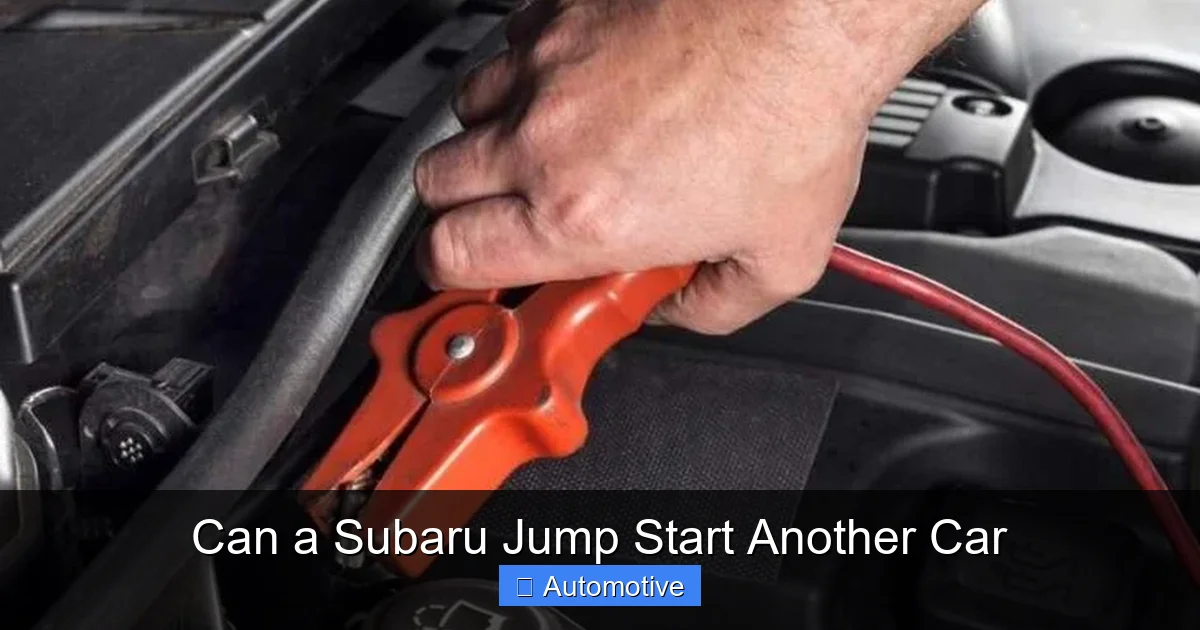
Now that you understand the basics, let’s walk through the actual process. Follow these steps carefully to ensure a safe and successful jump start.
Visual guide about Can a Subaru Jump Start Another Car
Image source: trucksauthority.com
Step 1: Prepare Both Vehicles
Park your Subaru close to the dead car—close enough for the jumper cables to reach, but not so close that the bumpers touch. Turn off both engines, remove the keys, and engage the parking brakes. Make sure both cars are in Park (or Neutral for manual transmissions).
Step 2: Locate the Batteries
Open the hoods of both vehicles and locate the batteries. In most Subarus, the battery is in the engine bay on the driver’s side. Look for the positive (+) and negative (-) terminals—they’re usually marked with red and black covers or labels.
Step 3: Inspect the Batteries
Before connecting anything, check both batteries for signs of damage. Look for cracks, leaks, bulging, or corrosion (a white or blue powdery substance around the terminals). If you see any of these, do not attempt a jump start—call a professional. A damaged battery can explode when current is applied.
Step 4: Connect the Jumper Cables
Follow this exact sequence:
- Connect the red (positive) clamp to the positive terminal of the dead battery.
- Connect the other red clamp to the positive terminal of your Subaru’s battery.
- Connect the black (negative) clamp to the negative terminal of your Subaru’s battery.
- Connect the other black clamp to an unpainted metal surface on the dead car’s engine block or frame—not the battery terminal. This reduces the risk of sparks near the battery, which could ignite hydrogen gas.
Step 5: Start Your Subaru
Start your Subaru and let it run for 2–3 minutes. This allows the alternator to build up charge and stabilize the electrical system. Avoid revving the engine—just let it idle.
Step 6: Attempt to Start the Dead Car
Try starting the dead car. If it doesn’t start within 10–15 seconds, wait a minute and try again. Do not crank the engine for more than 15 seconds at a time—this can overheat the starter.
Step 7: Disconnect the Cables
Once the dead car starts, disconnect the cables in reverse order:
- Remove the black clamp from the grounded metal on the dead car.
- Remove the black clamp from your Subaru’s negative terminal.
- Remove the red clamp from your Subaru’s positive terminal.
- Remove the red clamp from the dead car’s positive terminal.
Step 8: Let the Jumped Car Run
Keep the jumped car running for at least 20–30 minutes to allow the alternator to recharge the battery. Avoid turning off the engine during this time. If the car dies shortly after being jumped, the battery may need replacement or the alternator could be faulty.
Safety Tips and Common Mistakes to Avoid
Jump starting is generally safe when done correctly, but there are risks. A single mistake can lead to injury, vehicle damage, or even fire. Here are some essential safety tips and common pitfalls to avoid.
Use Quality Jumper Cables
Not all jumper cables are created equal. Cheap cables may have thin wires that can’t handle the current, leading to overheating or failure. Look for cables with at least 4-gauge wire and insulated, heavy-duty clamps. Store them in your Subaru’s trunk so they’re always available.
Never Connect Negative to Negative
One of the most dangerous mistakes is connecting the negative clamp to the dead battery’s negative terminal. This can cause sparks near the battery, which may ignite hydrogen gas and cause an explosion. Always ground the negative clamp on the dead car to a metal part of the engine or frame.
Avoid Jump Starting in the Rain
Water and electricity don’t mix. Jump starting in wet conditions increases the risk of shock or short circuits. If you must do it, wear rubber gloves and avoid touching metal parts with wet hands. Better yet, wait for the rain to stop or seek shelter.
Don’t Jump a Frozen Battery
A frozen battery can explode when current is applied. If the dead car has been sitting in sub-zero temperatures and you suspect the battery is frozen, do not attempt a jump. Let the car warm up first, or call a tow truck.
Be Mindful of Modern Electronics
Subarus, especially newer models, have advanced electronics that can be sensitive to voltage spikes. To protect your vehicle, consider using a portable jump starter with built-in surge protection. These devices connect directly to the dead battery and eliminate the need for another vehicle.
When to Use a Portable Jump Starter Instead
While using your Subaru to jump another car is effective, it’s not always the best option. A portable jump starter—also called a jump pack or battery booster—offers several advantages.
Convenience and Independence
With a portable jump starter, you don’t need another vehicle. This is especially useful if you’re alone or in a remote area. Many models are compact, lightweight, and can fit in a glove compartment or trunk.
Safety and Surge Protection
High-quality jump starters come with safety features like reverse polarity alarms, short-circuit protection, and overload protection. These reduce the risk of damage to both vehicles and give you peace of mind.
Multi-Functionality
Many portable jump starters double as power banks, USB chargers, and even flashlights. Some even have air compressors for inflating tires. This makes them a versatile tool for any driver.
Recommended Models
- NOCO Boost Plus GB40: Reliable, compact, and capable of jumping cars up to 6.0L gasoline engines.
- DBPower 2000A Jump Starter: High-capacity model with USB ports and LED flashlight.
- Schumacher DSR120: Heavy-duty option with a built-in air compressor.
Investing in a portable jump starter is a smart move for any Subaru owner. It’s like having a roadside assistant in a box.
Subaru-Specific Considerations
While Subarus are built to the same electrical standards as other vehicles, there are a few model-specific things to keep in mind.
Boxer Engine Layout
Subarus use a horizontally opposed (boxer) engine design, which can make accessing the battery slightly different than in other cars. In most models, the battery is tucked behind the air intake or near the firewall. Take a moment to familiarize yourself with your Subaru’s layout before you need to jump start.
All-Wheel Drive and Electrical Load
Subarus come standard with all-wheel drive (AWD), which adds some electrical load to the system. However, this doesn’t affect jump starting—your battery and alternator are still designed to handle the demand. Just ensure your Subaru’s battery is in good condition before attempting a jump.
Hybrid and Electric Models
If you drive a Subaru Crosstrek Hybrid, note that it has both a 12-volt battery and a high-voltage hybrid battery. The 12-volt battery is used for starting and electronics, so you can still use it to jump another car. However, avoid connecting cables to the high-voltage system—stick to the standard 12-volt terminals under the hood.
EyeSight and Driver-Assist Systems
Subarus equipped with EyeSight (adaptive cruise control, lane keep assist, etc.) rely on cameras and sensors. A power surge during a jump could theoretically affect these systems. To minimize risk, use surge-protected cables or a portable jump starter, and avoid turning on electronics in the jumped car until it’s fully running.
What to Do If the Jump Doesn’t Work
Sometimes, despite your best efforts, the dead car won’t start. Here’s what to check:
- Battery terminals are corroded: Clean them with a wire brush and baking soda solution.
- Jumper cables are loose or damaged: Ensure clamps are tight and wires aren’t frayed.
- Your Subaru’s battery is weak: If your own battery is old or low, it may not have enough power to jump another car.
- The dead car has a bad starter or alternator: A jump start won’t fix mechanical issues.
- Fuses are blown: Check the main fuse box for any blown fuses related to the ignition or starter.
If none of these solve the problem, it’s time to call a professional. Continuing to try may damage the electrical system or drain your Subaru’s battery.
Conclusion: Be Prepared, Be Safe, Be Helpful
So, can a Subaru jump start another car? Absolutely. With the right knowledge, tools, and caution, your Subaru can be a reliable helper on the road. Whether you’re assisting a friend, a family member, or a stranger, knowing how to safely perform a jump start is a valuable skill that can save time, money, and stress.
Remember: safety comes first. Always inspect batteries, use quality cables, follow the correct sequence, and avoid risky conditions like rain or damaged batteries. And consider investing in a portable jump starter for added convenience and protection. Your Subaru is more than just a vehicle—it’s a tool for connection and care. Use it wisely, and you’ll be ready for whatever the road throws your way.
Frequently Asked Questions
Can a Subaru Outback jump start another car?
Yes, the Subaru Outback can safely jump start another car. It has a standard 12-volt battery and electrical system compatible with most vehicles. Just follow proper jump-starting procedures to avoid damage.
Is it safe to jump start a modern car with a Subaru?
Yes, but take extra care with modern electronics. Use surge-protected cables or a portable jump starter to prevent voltage spikes that could harm sensitive systems like infotainment or driver-assist features.
Can I jump start a Subaru with another car?
Absolutely. Any car with a healthy 12-volt battery can jump start a Subaru. Just ensure both vehicles are off, use proper cable connections, and follow the correct sequence.
What if my Subaru’s battery is also weak?
If your Subaru’s battery is old or low, it may not have enough power to jump another car. Test your battery first, or use a portable jump starter instead.
Can I jump start a hybrid Subaru?
Yes, but only use the 12-volt battery under the hood. Do not connect cables to the high-voltage hybrid battery. The 12-volt system is designed for jump starting and electronics.
How long should I drive after jump starting a car?
Drive the jumped car for at least 20–30 minutes to allow the alternator to recharge the battery. Avoid turning it off during this time to prevent it from dying again.