How Wide Is a 245 Tire in Inches
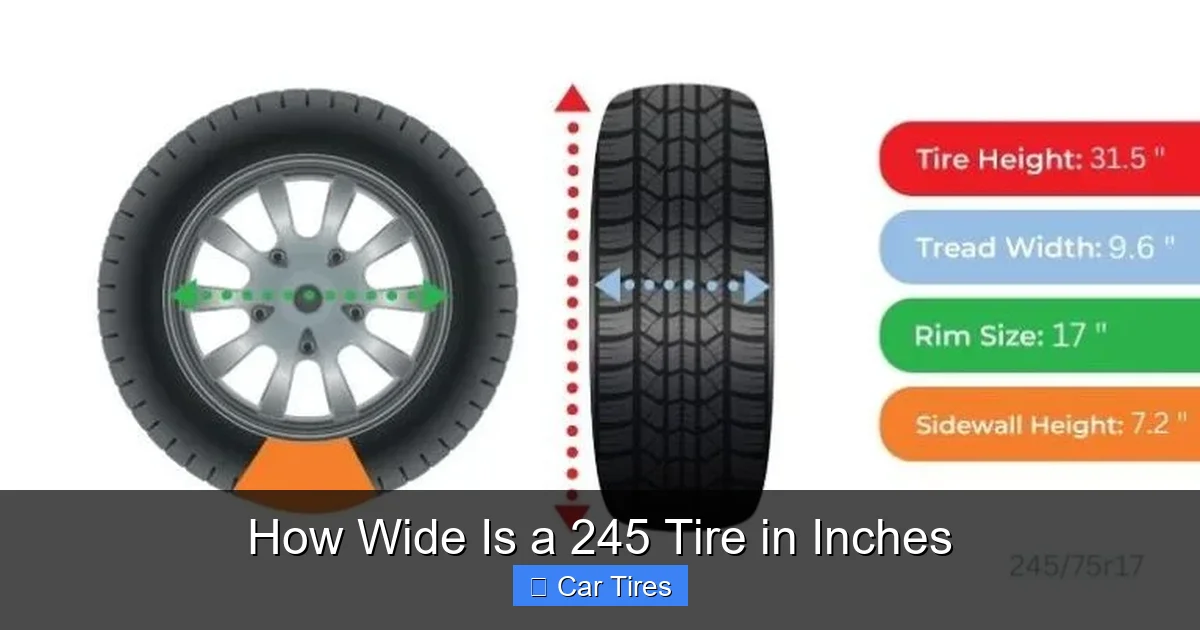
A 245 tire is approximately 9.65 inches wide, making it a popular choice for trucks, SUVs, and performance cars. This width offers a balance of stability, grip, and fuel efficiency, ideal for both daily driving and off-road adventures.
In This Article
- 1 Key Takeaways
- 2 📑 Table of Contents
- 3 Understanding Tire Sizes: What Does “245” Really Mean?
- 4 How to Convert 245 mm to Inches: A Simple Guide
- 5 Why Tire Width Matters: Performance, Safety, and Comfort
- 6 Common Vehicles That Use 245 Tires
- 7 How to Choose the Right 245 Tire for Your Vehicle
- 8 Installation and Maintenance Tips for 245 Tires
- 9 Upgrading to 245 Tires: What to Expect
- 10 Conclusion
- 11 Frequently Asked Questions
Key Takeaways
- A 245 tire measures about 9.65 inches in width: This is the actual tread width when mounted on the correct rim size.
- 245 refers to the tire’s width in millimeters: The number 245 in the tire size (e.g., 245/75R16) indicates 245 millimeters from sidewall to sidewall.
- Proper rim width is essential: A 245 tire typically fits rims between 7.0 and 8.5 inches wide for optimal performance.
- Wider tires improve traction and handling: The extra width enhances grip on dry roads and improves cornering stability.
- Fuel economy may be slightly reduced: Wider tires create more rolling resistance, which can lower gas mileage by 1–3%.
- Common on SUVs, trucks, and crossovers: The 245 tire size is widely used due to its versatility and strong load capacity.
- Always check your vehicle’s manual: Confirm compatibility before upgrading to a 245 tire to avoid clearance or speedometer issues.
📑 Table of Contents
- Understanding Tire Sizes: What Does “245” Really Mean?
- How to Convert 245 mm to Inches: A Simple Guide
- Why Tire Width Matters: Performance, Safety, and Comfort
- Common Vehicles That Use 245 Tires
- How to Choose the Right 245 Tire for Your Vehicle
- Installation and Maintenance Tips for 245 Tires
- Upgrading to 245 Tires: What to Expect
- Conclusion
Understanding Tire Sizes: What Does “245” Really Mean?
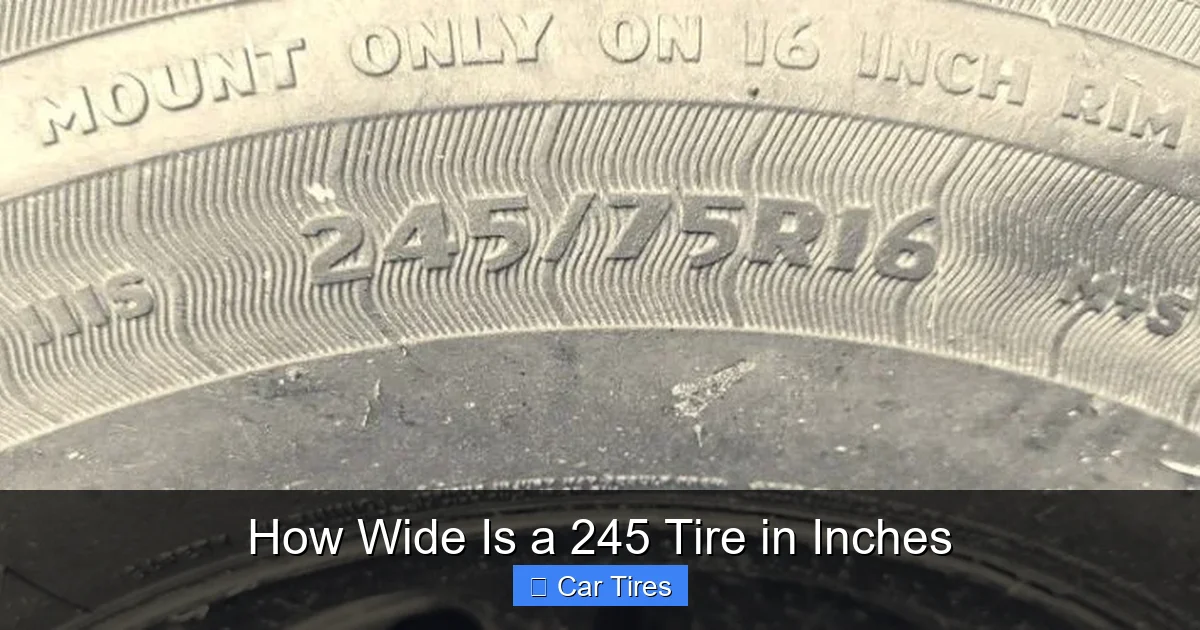
When you look at a tire sidewall, you’ll see a string of numbers like “245/75R16” or “245/50R18.” At first glance, it might look like a secret code, but it’s actually a standardized way of describing the tire’s dimensions. The first number—245—is the one we’re focusing on. It represents the tire’s width in millimeters, measured from sidewall to sidewall when the tire is mounted on the correct rim and inflated to the recommended pressure.
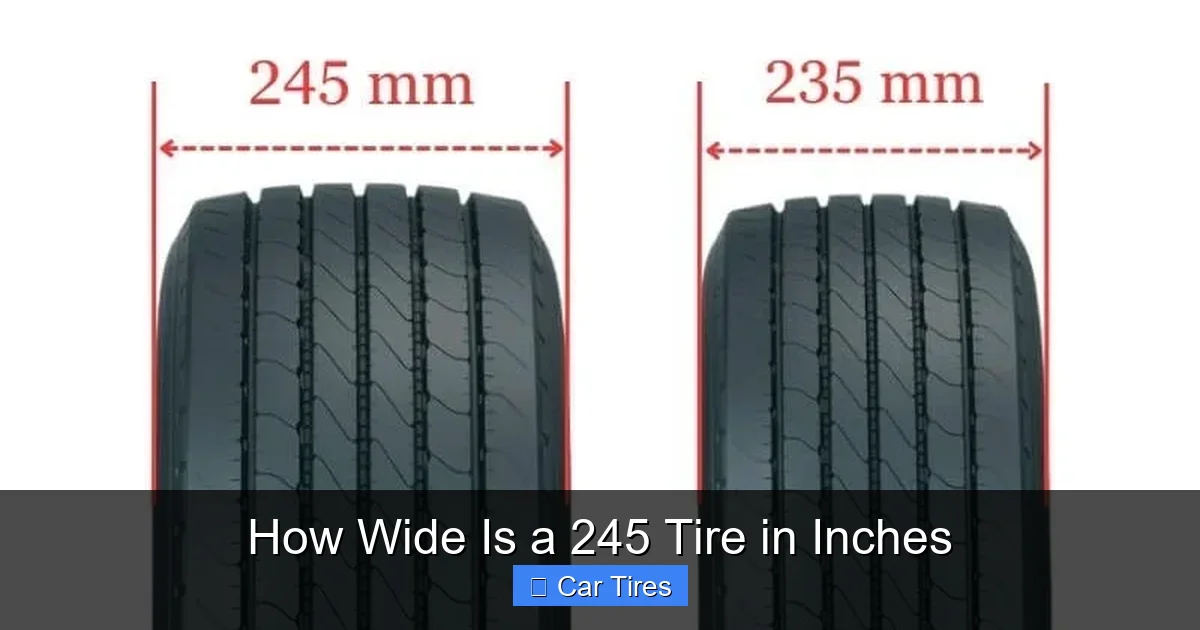
So, how wide is a 245 tire in inches? To convert millimeters to inches, you divide by 25.4 (since there are 25.4 millimeters in an inch). That gives us 245 ÷ 25.4 = 9.645 inches, which rounds to about 9.65 inches. That’s the actual width of the tire’s tread section. This measurement is crucial because it affects everything from handling and comfort to fuel economy and tire wear.
But here’s the catch: the actual width can vary slightly depending on the rim it’s mounted on. A tire mounted on a narrower rim might appear slightly pinched, while one on a wider rim could bulge a bit. That’s why manufacturers recommend specific rim widths for each tire size. For a 245 tire, the ideal rim width usually falls between 7.0 and 8.5 inches. Staying within this range ensures the tire performs as designed—offering the right balance of grip, durability, and ride quality.
How to Convert 245 mm to Inches: A Simple Guide
Converting tire width from millimeters to inches is easier than you might think. All you need is basic math or a quick online converter. Let’s break it down step by step so you can do it yourself anytime.
Visual guide about How Wide Is a 245 Tire in Inches
Image source: tireblogger.com
The Conversion Formula
The formula is straightforward: inches = millimeters ÷ 25.4. So for a 245 tire, you take 245 and divide it by 25.4. That gives you 9.645 inches. Most people round this to 9.65 inches for simplicity. That’s the width of the tire from one sidewall to the other.
Why This Conversion Matters
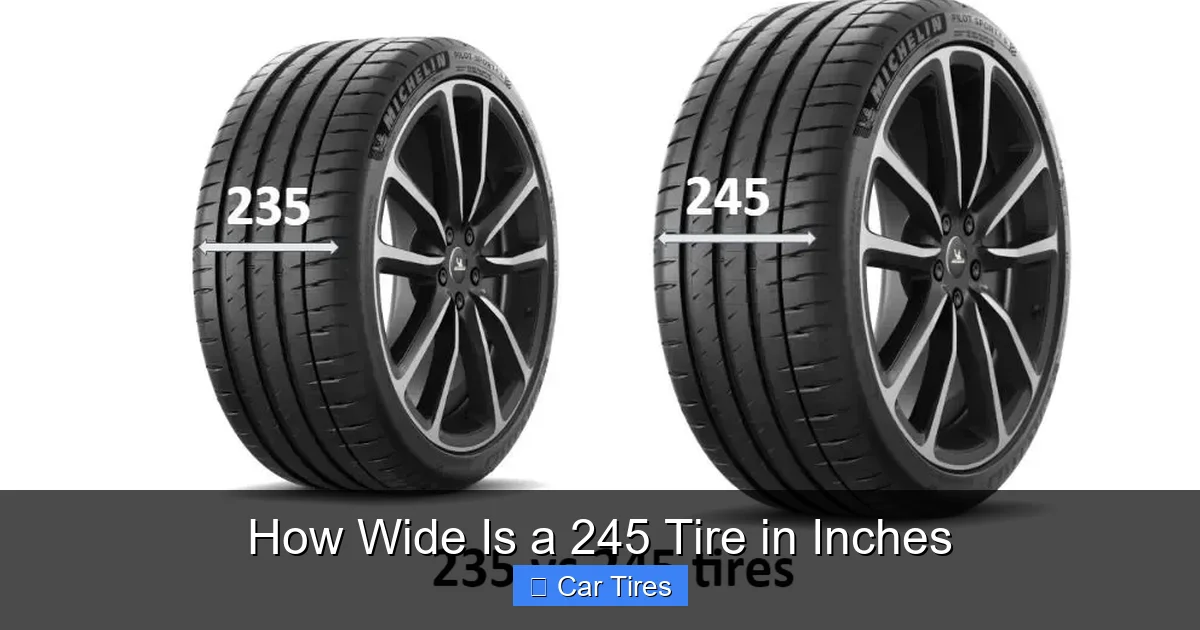
Knowing the width in inches helps you understand how the tire will fit on your vehicle. For example, if your wheel well is only 9 inches wide, a 9.65-inch tire might rub against the fender or suspension components. On the other hand, if you’re upgrading from a narrower tire (like a 225), going to a 245 gives you more contact with the road, which can improve braking and cornering.
Practical Example
Let’s say you drive a Ford F-150 and you’re considering upgrading from a 265/70R17 to a 245/75R17. At first glance, the 245 seems smaller, but it’s actually very close in overall diameter. However, the width drops from about 10.4 inches (265 mm) to 9.65 inches. That’s a noticeable difference in grip and stability, especially when towing or driving on loose terrain.
Using Online Tools
If you don’t want to do the math, there are plenty of free tire size calculators online. Just enter “245 mm to inches” and you’ll get an instant result. Some tools even show you a side-by-side comparison of different tire sizes, including width, diameter, and revolutions per mile. These are great for visual learners or anyone planning a tire upgrade.
Why Tire Width Matters: Performance, Safety, and Comfort
Tire width isn’t just a number—it plays a big role in how your vehicle behaves on the road. A wider tire like the 245 offers several advantages, but it also comes with trade-offs. Let’s explore how width impacts performance, safety, and comfort.
Visual guide about How Wide Is a 245 Tire in Inches
Image source: tireblogger.com
Improved Traction and Grip
One of the biggest benefits of a wider tire is increased traction. With more rubber touching the road, your vehicle can grip the pavement better, especially during acceleration, braking, and cornering. This is why performance cars and sports sedans often come with wide tires. A 245 tire, with its 9.65-inch width, provides a solid footprint that enhances stability, particularly on dry roads.
Better Handling and Cornering
Wider tires reduce sidewall flex, which means your steering response is sharper and more precise. When you turn the wheel, the car reacts more quickly because the tire doesn’t bend as much. This is especially helpful on winding roads or during emergency maneuvers. For SUVs and trucks, a 245 tire can make the vehicle feel more planted and less top-heavy.
Enhanced Load Capacity
Wider tires often have higher load ratings, meaning they can carry more weight. This is important for trucks, vans, and SUVs that frequently haul cargo or tow trailers. A 245 tire is commonly used on vehicles that need extra strength without going to an oversized tire like a 275 or 285.
Impact on Ride Comfort
While wider tires improve grip, they can also make the ride feel firmer. That’s because there’s less air cushion between the road and the vehicle. If your car came with narrower tires, switching to a 245 might result in a slightly harsher ride, especially on rough pavement. However, many modern 245 tires are designed with comfort in mind, using advanced rubber compounds and tread patterns to absorb shocks.
Fuel Economy Considerations
Here’s the downside: wider tires create more rolling resistance. That means your engine has to work harder to move the vehicle, which can reduce fuel efficiency. Studies show that increasing tire width by just 10 mm can lower gas mileage by 1–3%. So while a 245 tire offers great performance, it might cost you a few extra dollars at the pump each month.
Common Vehicles That Use 245 Tires
The 245 tire size is incredibly versatile, which is why it’s found on a wide range of vehicles. From rugged trucks to sleek crossovers, this width strikes a balance between capability and efficiency. Let’s look at some popular models that commonly use 245 tires.
Visual guide about How Wide Is a 245 Tire in Inches
Image source: i0.wp.com
SUVs and Crossovers
Many mid-size and full-size SUVs use 245 tires because they offer strong load capacity and good off-road performance. Examples include the Toyota 4Runner, Jeep Grand Cherokee, and Ford Explorer. These vehicles often come with 245/70R16 or 245/65R17 tires, depending on the trim level and intended use.
Pickup Trucks
Light-duty trucks like the Chevrolet Silverado 1500, Ram 1500, and GMC Sierra frequently use 245 tires, especially in base or mid-level trims. These tires provide enough grip for towing and hauling without being overly wide or heavy. They’re also a popular choice for truck owners who want a slightly wider tire than stock but don’t want to go full-size.
Performance Cars and Sedans
Believe it or not, some performance sedans and coupes use 245 tires on the rear axle for better traction. For example, the rear tires on a BMW 3 Series or Audi A4 might be 245/40R18, paired with narrower front tires for balanced handling. This setup helps transfer power to the ground more effectively, especially in rear-wheel-drive vehicles.
Off-Road and Overlanding Vehicles
Adventure seekers often choose 245 tires for their durability and versatility. Tires like the BFGoodrich All-Terrain T/A KO2 in 245/75R16 are favorites among overlanders because they offer excellent grip on dirt, mud, and rocks, while still being quiet and comfortable on highways.
Commercial and Fleet Vehicles
Some vans and light commercial vehicles also use 245 tires due to their reliability and load-bearing capacity. Vehicles like the Ford Transit Connect or Mercedes-Benz Sprinter may come equipped with 245/65R16 tires to handle daily delivery routes with ease.
How to Choose the Right 245 Tire for Your Vehicle
Not all 245 tires are created equal. Choosing the right one depends on your driving needs, climate, and vehicle type. Here’s how to pick the best 245 tire for your ride.
Consider Your Driving Conditions
If you live in an area with heavy rain or snow, look for a 245 tire with deep tread and siping for better wet and icy traction. All-season tires like the Michelin Defender LTX or Goodyear Wrangler Duratrac are great all-around choices. For off-roading, consider all-terrain or mud-terrain tires with aggressive tread patterns.
Check the Load and Speed Ratings
Every tire has a load index and speed rating. For example, a 245/75R16 tire might have a load index of 120 (3,086 lbs per tire) and a speed rating of R (up to 106 mph). Make sure the tire you choose meets or exceeds your vehicle’s requirements. You can find this info in your owner’s manual or on the tire placard inside the driver’s door.
Match the Rim Width
As mentioned earlier, a 245 tire works best on rims between 7.0 and 8.5 inches wide. If your rims are too narrow or too wide, the tire may not seat properly, leading to poor handling or even a blowout. Always check the manufacturer’s recommendations before mounting.
Think About Tread Life and Warranty
Some 245 tires are built for long mileage, with warranties up to 80,000 miles. Others prioritize performance or off-road capability and may wear out faster. If you drive a lot, look for tires with high treadwear ratings (400 or above) and strong warranties.
Don’t Forget About Noise and Comfort
Wider tires can be noisier, especially on rough roads. If you value a quiet cabin, choose a tire with noise-reducing technology, like Continental’s ContiSilent or Pirelli’s Noise Cancelling System. These features use foam inserts or special tread designs to dampen sound.
Installation and Maintenance Tips for 245 Tires
Once you’ve chosen the right 245 tire, proper installation and maintenance are key to getting the most out of it. Here’s what you need to know.
Professional Mounting and Balancing
Always have your tires mounted and balanced by a professional. Improper installation can lead to vibration, uneven wear, or even tire failure. A good shop will also check for proper alignment and make sure the tire is seated correctly on the rim.
Regular Pressure Checks
Underinflated tires wear out faster and reduce fuel economy. Overinflated tires can lead to a harsh ride and increased risk of blowouts. Check your tire pressure at least once a month, and always before long trips. Use the pressure listed on the tire placard, not the max pressure on the sidewall.
Rotate Your Tires
Tire rotation helps ensure even wear. Most manufacturers recommend rotating every 5,000 to 7,500 miles. For front-wheel-drive vehicles, move the front tires to the rear and cross the rear tires to the front. For rear-wheel or all-wheel drive, follow the pattern recommended in your manual.
Inspect for Damage
Regularly inspect your tires for cuts, bulges, cracks, or embedded objects. These can weaken the tire and lead to failure. If you notice any damage, have it checked by a professional immediately.
Store Spare Tires Properly
If you have a full-size spare 245 tire, store it in a cool, dry place away from direct sunlight. Keep it inflated to the recommended pressure and check it periodically. A neglected spare can fail when you need it most.
Upgrading to 245 Tires: What to Expect
Thinking about upgrading to 245 tires? Here’s what you should know before making the switch.
Improved Stability and Grip
You’ll likely notice better handling, especially during cornering and braking. The wider footprint gives your vehicle more confidence on the road.
Possible Speedometer Inaccuracy
If you change the overall diameter of your tires, your speedometer may read incorrectly. For example, a 245/75R16 tire has a slightly different diameter than a 265/70R17. Use a tire size calculator to check compatibility and consider recalibrating your speedometer if needed.
Clearance Issues
Make sure your wheel wells and suspension have enough room for the wider tire. Some vehicles may require minor modifications, like trimming fender liners or upgrading suspension components.
Insurance and Registration
In most cases, upgrading to a 245 tire within the manufacturer’s recommended range won’t affect your insurance or registration. However, if you make significant changes (like lifting the vehicle), check with your insurer and local DMV.
Cost Considerations
245 tires are generally affordable, with prices ranging from $120 to $300 per tire depending on brand and type. Factor in installation, balancing, and alignment when budgeting.
Conclusion
So, how wide is a 245 tire in inches? The answer is approximately 9.65 inches—a width that strikes a perfect balance between performance, comfort, and capability. Whether you drive a truck, SUV, or performance car, a 245 tire offers enhanced grip, better handling, and strong load capacity without being overly aggressive or inefficient.
Understanding tire sizes empowers you to make smarter decisions about your vehicle. From converting millimeters to inches to choosing the right tread pattern, every detail matters. Remember to check your owner’s manual, match the tire to your rim width, and maintain proper inflation and rotation. With the right 245 tire, you’ll enjoy a safer, smoother, and more confident driving experience—no matter where the road takes you.
Frequently Asked Questions
How wide is a 245 tire in inches?
A 245 tire is approximately 9.65 inches wide when measured from sidewall to sidewall. This measurement is based on the tire’s width in millimeters (245 mm) converted to inches by dividing by 25.4.
Can I put a 245 tire on a 7-inch rim?
Yes, a 245 tire can be mounted on a 7-inch rim, as long as it’s within the recommended range of 7.0 to 8.5 inches. However, a 7.5 or 8-inch rim will provide better performance and tire shape.
Will a 245 tire fit on my vehicle?
It depends on your vehicle’s specifications and available space. Check your owner’s manual or tire placard for recommended sizes. Also, ensure there’s enough clearance in the wheel well to avoid rubbing.
Are 245 tires good for off-roading?
Yes, many 245 tires are designed for off-road use, especially all-terrain and mud-terrain models. They offer excellent grip on dirt, rocks, and mud while still being durable and reliable.
Do wider tires like 245s reduce fuel economy?
Yes, wider tires can slightly reduce fuel economy due to increased rolling resistance. The drop is typically 1–3%, but the improved handling and safety may outweigh the cost for many drivers.
How often should I rotate my 245 tires?
Most manufacturers recommend rotating your tires every 5,000 to 7,500 miles. Regular rotation helps ensure even wear and extends the life of your 245 tires.