
How to Turn on Fog Lights on a Jeep Wrangler

Turning on the fog lights on a Jeep Wrangler is a simple but crucial skill for safe driving in fog, rain, or snow. The process varies slightly depending on your Wrangler’s model year and trim, typically involving a dashboard knob, steering column stalk, or a dedicated button. This guide covers every generation—from the classic TJ to the modern JL—with clear instructions, troubleshooting tips, and essential safety advice to ensure your auxiliary lights work perfectly when you need them most.
So, you’re sitting in your trusty Jeep Wrangler, the world outside is wrapped in a thick, ghostly blanket of fog, and you know you have the tools to cut through it. Fog lights. But where is that switch? It feels like it should be obvious, but those little auxiliary lights can be surprisingly elusive. You’re not alone. Many Wrangler owners, from TJ veterans to fresh JL owners, have found themselves peering at the dash, wondering which mysterious knob or button activates that extra punch of visibility. Getting it right isn’t just about convenience; it’s a fundamental part of safe off-road and on-road driving in poor weather. This guide will walk you through everything, from finding the control to understanding exactly when and how to use them, ensuring your Wrangler is ready for whatever the elements throw your way.
Key Takeaways
- Location is Key: Fog light controls are commonly found on the dashboard to the left of the steering wheel, on the turn signal stalk, or as a button on the center console, depending on your Wrangler’s year and trim.
- Model Year Matters: TJ (1997-2006), JK (2007-2018), and JL (2018+) Wranglers have different control systems, so identifying your generation is the first step.
- Legal Use Only: Fog lights are designed for low-visibility conditions. Using them in clear weather can blind other drivers and is illegal in many areas.
- Troubleshooting is Simple: If your fog lights don’t turn on, check the fuse first, then the bulbs, and finally the switch or wiring.
- Maintenance is Essential: Regularly clean the lenses and check for moisture inside the housing to maintain brightness and prevent damage.
- They Complement, Not Replace: Fog lights work with your low beams, not instead of them. Never use them alone at night.
- Aftermarket Options Exist: If your Wrangler didn’t come with factory fog lights, universal kits are available, but professional installation is recommended for proper wiring and mounting.
📑 Table of Contents
- Understanding Your Wrangler’s Fog Lights: More Than Just a Switch
- Finding the Fog Light Switch: A Model Year Guide
- Step-by-Step Activation for Each Generation
- Troubleshooting: Why Your Fog Lights Won’t Turn On
- Maintenance and Care: Keeping Your Fog Lights Bright
- Safety First: Best Practices for Fog Light Use
- Conclusion: Master Your Machine
Understanding Your Wrangler’s Fog Lights: More Than Just a Switch
Before we hunt for the button, let’s appreciate what we’re dealing with. Fog lights are not just brighter headlights. They are specifically engineered with a unique beam pattern. They emit a wide, flat, low-to-the-ground beam of light—often described as a “wall of light”—that illuminates the road immediately in front of you without reflecting back off the fog, rain, or snow. This cuts through the particulate matter in the air, allowing you to see the lane markings and road edge that your high beams would just turn into a blinding white wall.
Factory vs. Aftermarket: What’s Under Your Hood?
Most Wranglers, especially from the JK and JL generations, came with factory-installed fog lights as either standard or optional equipment. They’re typically integrated into the front bumper. If your Wrangler has them, they’re hardwired and controlled through the vehicle’s computer system. Aftermarket fog lights, which you might add later, often have their own separate switch and wiring harness. This guide focuses on the factory system, as that’s what most people are trying to operate. If you have an aftermarket kit, the switch will be wherever you or the installer mounted it—often on the dash or console.
The Golden Rule: When to Use (and Not Use) Fog Lights
This is non-negotiable. Fog lights are for fog, heavy rain, snow, dust storms, or any condition where visibility is severely reduced. Their low, wide beam is perfect for this. However, using them in clear conditions is dangerous and inconsiderate. Their bright, unfocused light can blind oncoming drivers, especially at night, and create glare that reflects off wet pavement back into your own eyes. In many states and countries, it’s illegal to use fog lights without corresponding reduced visibility. Think of them as a specialized tool, not your everyday headlight.
Finding the Fog Light Switch: A Model Year Guide
Here is the core of your mission. Strap in, because the location changed a few times over the Wrangler’s long production run. We’ll break it down by generation.
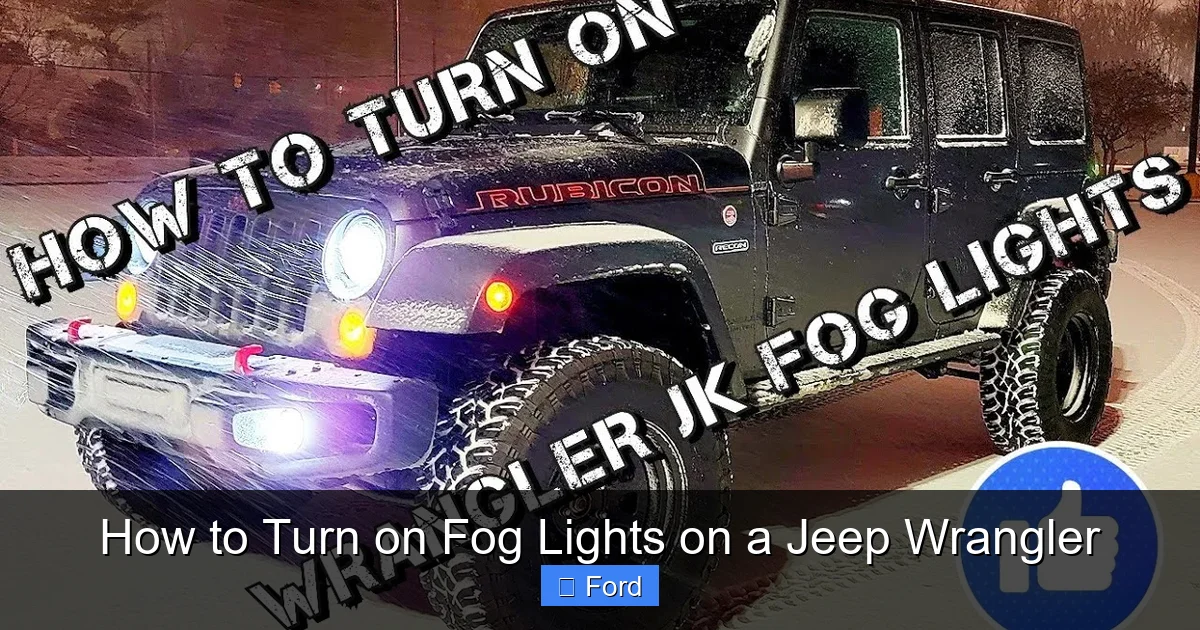
Visual guide about How to Turn on Fog Lights on a Jeep Wrangler
Image source: i.ytimg.com
The Classic TJ Wrangler (1997-2006)
If you’re driving a TJ, your fog light control is wonderfully analog and straightforward. Look for a single, large rotary knob on the dashboard, just to the left of the steering column. It’s usually labeled with a fog light icon (a headlight with wavy lines radiating downward). Turn this knob clockwise to activate the fog lights. They will only turn on if your headlights are already on (either low or high beams). This knob also controls the brightness of your instrument panel, so you might be familiar with it already. To turn them off, simply rotate the knob back to its starting position.
The Popular JK Wrangler (2007-2018)
The JK introduced a more modern, stalk-based system for many trims. There are two common setups:
- Stalk-Mounted (Most Common): On the turn signal lever (the stalk behind the steering wheel), you’ll find a rotating ring or a small push-button near the end. Rotate the ring forward (away from you) or press the button in to activate the fog lights. Again, they require your headlights to be on first. The switch on the stalk usually has a faint fog light icon.
- Dashboard Button: Some JK models, particularly certain special editions or earlier years, may have a dedicated button on the dashboard panel to the left of the steering wheel. It will be clearly marked with the fog light symbol. A simple press turns them on and off.
If you’re unsure, turn your headlights on and start gently probing these areas. A quick click or rotation and a dash indicator light (usually a green or amber icon) will confirm you’ve got it.
The Modern JL Wrangler (2018-Present)
The JL continued the stalk design for most models but refined it. The control is almost always on the turn signal stalk. Look for a small ring or button near where the stalk meets the steering column. Push the ring in towards the steering wheel or press the button to toggle the fog lights. The JL’s digital dashboard will clearly show the fog light icon when active. Some higher-trim JL models (like the Sahara or Rubicon) might also have a secondary, programmable button on the steering wheel or center console for additional lighting accessories, but the factory fog light control remains on the stalk.
Step-by-Step Activation for Each Generation
Let’s make it idiot-proof. Follow these steps for your specific Wrangler.
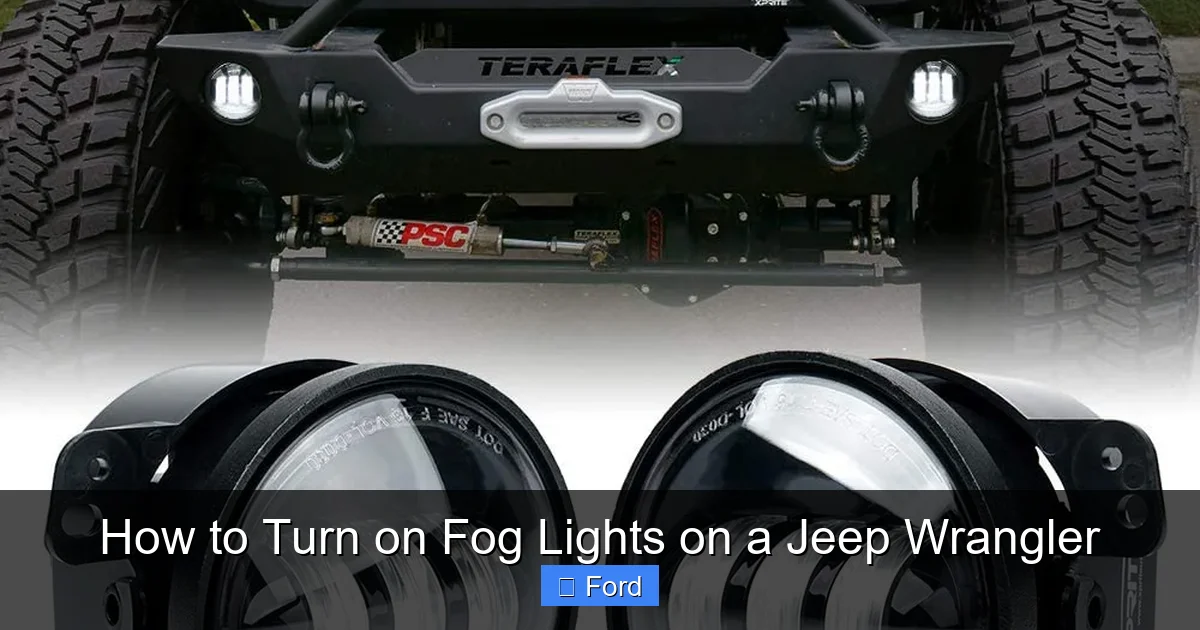
Visual guide about How to Turn on Fog Lights on a Jeep Wrangler
Image source: cdn.shopify.com
For Your TJ Wrangler (1997-2006)
- Ensure your ignition is in the “ON” position (engine running or not, but battery on).
- Turn your headlights to the “ON” position. You can use either low beams or high beams.
- Locate the dashboard rotary knob to the left of the steering wheel. It controls dash brightness and fog lights.
- Rotate the knob clockwise. You should feel a detent (a click) and see the fog light icon illuminate on your dash.
- To turn off, rotate the knob counter-clockwise back to its original position.
For Your JK Wrangler (2007-2018)
- Turn your ignition to “ON” and your headlights to “ON.”
- Find the fog light control on your turn signal stalk. It’s a small ring or button near the base.
- For the ring: Gently push the ring forward (away from you) until it clicks. You’ll see the dash indicator light up.
- For the button: Simply press the button in. It should toggle on and off with each press.
- If you cannot find it on the stalk, search the dash panel immediately to the left of the steering wheel for a small, round button with the fog light symbol. Press it.
- To deactivate, push/press the control again.
For Your JL Wrangler (2018-Present)
- Start with the ignition “ON” and headlights “ON.”
- Grip your turn signal stalk. Look at the very base, where it connects to the steering column housing.
- You’ll see a small, ridged ring or a button. Press the ring inward (towards the steering wheel) until it clicks. The dash display will light up with the fog light icon.
- Press it again to turn them off.
- Note: On some JL models, if you have the headlights set to “AUTO,” you may need to manually turn the headlight switch to the “ON” position first for the fog lights to become available.
Troubleshooting: Why Your Fog Lights Won’t Turn On
So you followed the steps, but nothing happens. Don’t panic. This is usually a simple fix. Here’s your diagnostic checklist, from easiest to hardest.
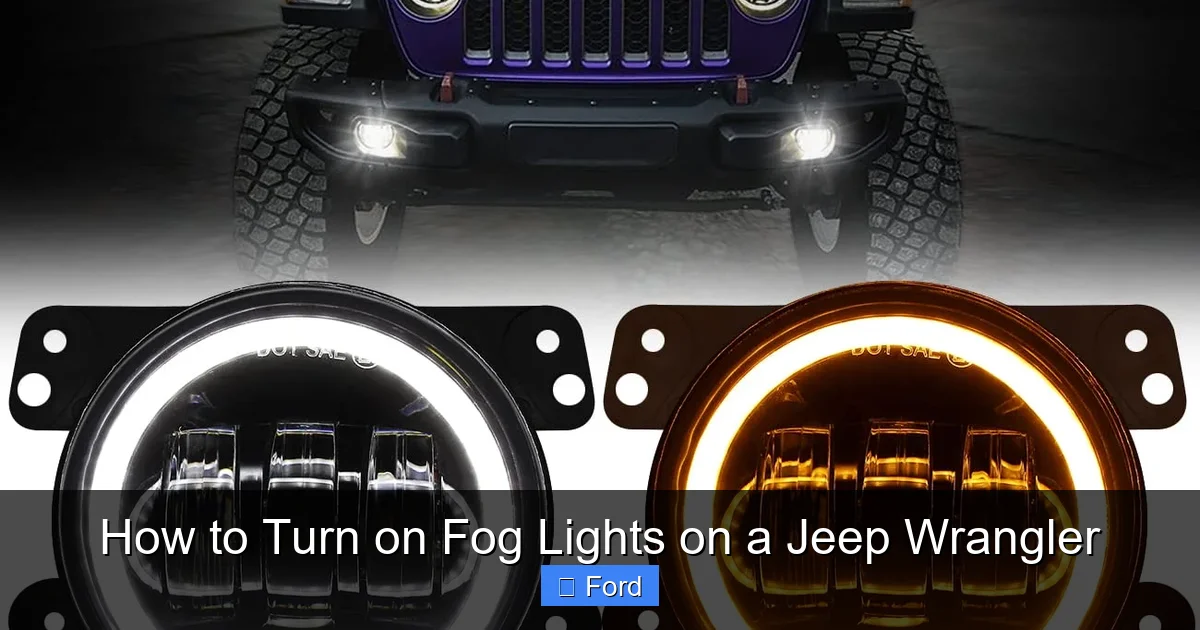
Visual guide about How to Turn on Fog Lights on a Jeep Wrangler
Image source: m.media-amazon.com
1. The Obvious: Are the Headlights On?
This is the #1 mistake. In virtually all Wranglers, the fog lights are wired to only operate when the headlights are on. Check your headlight switch. If your headlights are off, the fog lights are dead. Turn them on and try again.
2. Check the Fuse
Fuses are the sacrificial lambs of your electrical system. A blown fuse is a very common cause. Consult your owner’s manual for the exact fuse location and rating (it will be labeled “Fog Lamp” or “Fog Light”). The fuse box is usually under the hood and/or inside the cabin on the lower left side of the dashboard. Pull the fuse with a fuse puller or needle-nose pliers. If the metal strip inside is broken, replace it with a new fuse of the exact same amperage (e.g., 10A, 15A).
3. Inspect the Bulbs
If the fuse is good, the bulb might be dead. Fog light bulbs burn out. Accessing them varies: on most JK and JL models, you can reach them from behind the bumper after removing a few plastic covers. On a TJ, it’s usually easier from underneath. If you’re not comfortable, a quick look at the bulb will show a broken filament. Replacement bulbs are inexpensive and readily available at auto parts stores. Always handle halogen bulbs with a cloth; oil from your skin can cause them to overheat and fail prematurely.
4. The Switch Itself
If the fuse and bulbs are good, the control switch might be faulty. This is more common in older TJs with the rotary dash knob. The switch can wear out. Diagnosis requires a multimeter and some electrical knowledge, or you can try gently wiggling the switch while the lights are supposed to be on—if they flicker, the switch is bad. Replacement is the fix.
5. Wiring and Connections
This is less common but possible, especially if you’ve been off-roading. Check the wiring harness that runs from the front bumper back to the firewall. Look for any frayed, pinched, or disconnected wires, especially near the bumper where it flexes. Also, unplug the connector at the back of the fog light housing and check for corrosion or bent pins.
Maintenance and Care: Keeping Your Fog Lights Bright
Fog lights live a tough life. They’re exposed to rocks, mud, salt, and constant vibration. A little care goes a long way.
Regular Cleaning is Crucial
The plastic lenses on fog lights are softer than glass and easily scratched. Use a dedicated plastic lens cleaner or a mild soap and water solution with a soft microfiber cloth. Avoid abrasive cleaners or window wipers on dry lenses. For baked-on mud or bug guts, let the cleaner soak for a minute before wiping. Clean lenses ensure maximum light output.
Watch for Moisture
A little condensation inside the housing after washing or in high humidity is normal and should burn off. However, if you see persistent water droplets, a large pool of water, or if the lens is visibly wet on the inside, you have a seal failure. This is usually caused by a cracked housing or a degraded rubber seal around the bulb socket. You’ll need to dry it out (remove the bulb) and replace the seal or the entire housing to prevent corrosion and bulb failure.
Bulb Replacement Best Practices
When replacing a bulb, always wear gloves or use a clean cloth. Never touch the glass part of a halogen bulb. The oils from your fingerprints will create a hot spot on the bulb when it operates, causing it to shatter prematurely. Also, consider upgrading to a higher-quality OEM or premium aftermarket bulb for better brightness and longevity, but ensure it’s DOT/SAE compliant for street use.
Safety First: Best Practices for Fog Light Use
Knowing how to turn them on is only half the battle. Using them correctly is vital for your safety and the safety of others.
The Proper Beam Pattern
Your factory fog lights are aimed low and wide. Never attempt to adjust their aim. They are set at the factory for optimal performance. If you suspect they are misaligned (e.g., one is pointing up or down), take your Wrangler to a professional. Incorrectly aimed fog lights are a hazard.
In Concert with Low Beams
The correct protocol is: Headlights (low beams) ON + Fog Lights ON. The low beams provide general forward illumination, while the fog lights fill in the dark space immediately in front of the bumper and along the road edges. Never use fog lights with high beams in fog—the high beams will reflect off the fog and create a wall of white light, making it impossible to see.
Be a Considerate Driver
As soon as you emerge from the fog bank or the rain subsides and visibility improves, turn your fog lights OFF. Leaving them on in clear conditions is a nuisance and a danger to other motorists. Their bright, low-angle light can shine directly into the eyes of drivers in front of you or oncoming traffic, causing temporary blindness. It’s also just plain rude. Get in the habit of checking your dash icons before you hit the road in good weather.
Conclusion: Master Your Machine
Your Jeep Wrangler is a tool for adventure, and part of mastering that tool is knowing all its functions—especially the ones that keep you safe. Turning on your fog lights is a simple, 10-second action, but it makes a world of difference when the weather turns sour. Take a moment right now, with your Wrangler parked and safe, to locate the switch for your specific model year. Practice the motion until it’s second nature. Then, when you’re navigating a mountain pass in a sudden squall or crawling through a dusty trail, you won’t have to fumble. You’ll simply reach, click, and command that wall of light to cut through the uncertainty. That’s the confidence a true Wrangler owner has. Now, get out there, use your lights wisely, and enjoy the journey, no matter what the sky decides to do.
Frequently Asked Questions
Do fog lights work without the headlights being on?
No. In all Jeep Wrangler models, the fog lights are designed to only operate when the headlights are turned on. This is a safety feature to prevent accidental use and ensure they are always used in conjunction with proper forward illumination.
My fog light switch has an indicator light, but the lights themselves don’t come on. What’s wrong?
This usually points to a problem after the switch. The most common culprits are a blown fuse (check your owner’s manual), a burned-out bulb, or a faulty wiring connection at the back of the fog light housing. Start with the fuse and bulb inspection.
Can I use my fog lights as my main driving lights at night?
Absolutely not. Fog lights have a very short, wide, and low beam pattern. They are useless for illuminating the road far ahead at normal driving speeds and would leave you completely blind. They are a supplement to low beams in poor weather only.
Is it illegal to have fog lights on if it’s not foggy?
Yes, in most jurisdictions. Fog lights are considered auxiliary lights for low-visibility conditions. Using them when visibility is good can result in a traffic stop and citation for creating a hazardous glare for other drivers. Always turn them off when conditions improve.
Why do my fog lights seem dimmer than my headlights?
This is normal and by design. Fog light bulbs are typically lower wattage (e.g., 55W) than main headlight bulbs to reduce heat and power draw. Their purpose is not to throw light far down the road, but to create a broad, low-intensity “sheet” of light close to the vehicle to illuminate road edges and lane markers without reflecting back.
Can I replace my factory fog lights with brighter LED units?
Yes, but with caution. Direct plug-and-play LED replacements are available for many Wrangler models. Ensure they are DOT/SAE compliant for street use. Be aware that extremely bright, poorly aimed aftermarket LEDs can actually reduce visibility for you and others by creating excessive glare. Quality and proper aim are critical. If you’re unsure, consult a professional installer.
