How to Tell If My Kia Has an Immobilizer

Contents
- 1 Key Takeaways
- 2 📑 Table of Contents
- 3 What Is a Car Immobilizer and Why Does It Matter?
- 4 How to Tell If Your Kia Has an Immobilizer
- 5 Models and Years: Which Kias Have Immobilizers?
- 6 What to Do If Your Kia Has an Immobilizer
- 7 Common Myths About Kia Immobilizers
- 8 Conclusion: Stay Informed, Stay Protected
- 9 Frequently Asked Questions

Multipurpose Lubricant Spray

Digital Tire Pressure Gauge

Portable Work Light
Side Window Sunshade
Most modern Kia vehicles come equipped with an immobilizer system for enhanced security. This anti-theft feature prevents the engine from starting without the correct key, but not all models or trims include it. Knowing whether your Kia has one can save you time, money, and stress during repairs or key replacements.
Key Takeaways
- Immobilizers are standard on most Kias made after 2000: If your Kia was manufactured in the last two decades, it likely has an immobilizer system.
- Check your owner’s manual: The manual often lists security features, including whether your vehicle has an immobilizer.
- Look for a flashing key or security light: A blinking light on your dashboard when the key is inserted usually indicates an active immobilizer.
- Use a diagnostic tool or visit a Kia dealer: Professionals can quickly confirm if your car has an immobilizer using specialized equipment.
- Aftermarket immobilizers are available: If your older Kia lacks a factory immobilizer, you can install one for added protection.
- Immobilizer issues can prevent starting: If your Kia won’t start and the key is correct, the immobilizer may be malfunctioning.
- Always use OEM or programmed keys: Non-programmed or generic keys won’t work with an immobilizer-equipped Kia.
📑 Table of Contents
What Is a Car Immobilizer and Why Does It Matter?
Imagine this: You’re running late for work, you hop into your Kia, turn the key—and nothing happens. No engine cranking, no dashboard lights, just silence. Before you panic, consider this: your car might have an immobilizer, and it could be doing its job a little too well.
An immobilizer is an electronic security device built into many modern vehicles, including most Kia models. Its main job is to prevent the engine from starting unless the correct key—equipped with a special transponder chip—is used. Think of it as a digital handshake between your key and your car’s computer. If the handshake fails, the engine stays off. This simple yet powerful system has drastically reduced vehicle thefts since its widespread adoption in the late 1990s and early 2000s.
For Kia owners, understanding whether your vehicle has an immobilizer isn’t just about curiosity—it’s about convenience, safety, and cost. If you need a new key, for example, knowing your car has an immobilizer means you’ll need a programmed key, which can cost more than a standard cut key. On the flip side, if your car won’t start and you suspect the immobilizer is the culprit, diagnosing it early can save you from unnecessary repairs.
How Immobilizers Work in Kia Vehicles
In Kia cars with an immobilizer, the system works through a combination of hardware and software. The key contains a small microchip—often invisible to the naked eye—that emits a unique code when it’s near the ignition. When you insert the key, a coil antenna around the ignition barrel reads this code and sends it to the Engine Control Unit (ECU) or the immobilizer control module.
If the code matches the one stored in the car’s memory, the ECU allows fuel injection and ignition to proceed. If not, the engine won’t start, even if the key physically turns the ignition. This process happens in milliseconds, so you usually don’t notice it—unless something goes wrong.
Some Kia models also integrate the immobilizer with other systems, like the alarm or central locking. This means that if someone tries to hot-wire the car or use a non-programmed key, not only will the engine not start, but the alarm might also go off.
Why Kia Uses Immobilizers
Kia, like most global automakers, adopted immobilizer technology to meet evolving safety standards and combat rising vehicle theft rates. In many countries, including the U.S. and members of the European Union, immobilizers became mandatory for new vehicles in the early 2000s. Kia began equipping most of its models with immobilizers around this time, though the exact year varies by region and model.
The benefits are clear: immobilizers make it much harder for thieves to steal a car using traditional methods like hot-wiring or bump-starting. Even if a thief manages to get inside your Kia, they can’t start the engine without the correct key. This has made Kia vehicles significantly more secure and less attractive to opportunistic criminals.
Beyond theft prevention, immobilizers also help protect your investment. A stolen car is not only a financial loss but also a major inconvenience. Knowing your Kia has this layer of protection can give you peace of mind, especially if you park in high-risk areas or live in a city with higher crime rates.
How to Tell If Your Kia Has an Immobilizer
Now that you know what an immobilizer is and why it’s important, let’s get practical. How can you tell if your Kia has one? There are several reliable methods, ranging from simple visual checks to professional diagnostics. Here’s how to find out—without guessing.
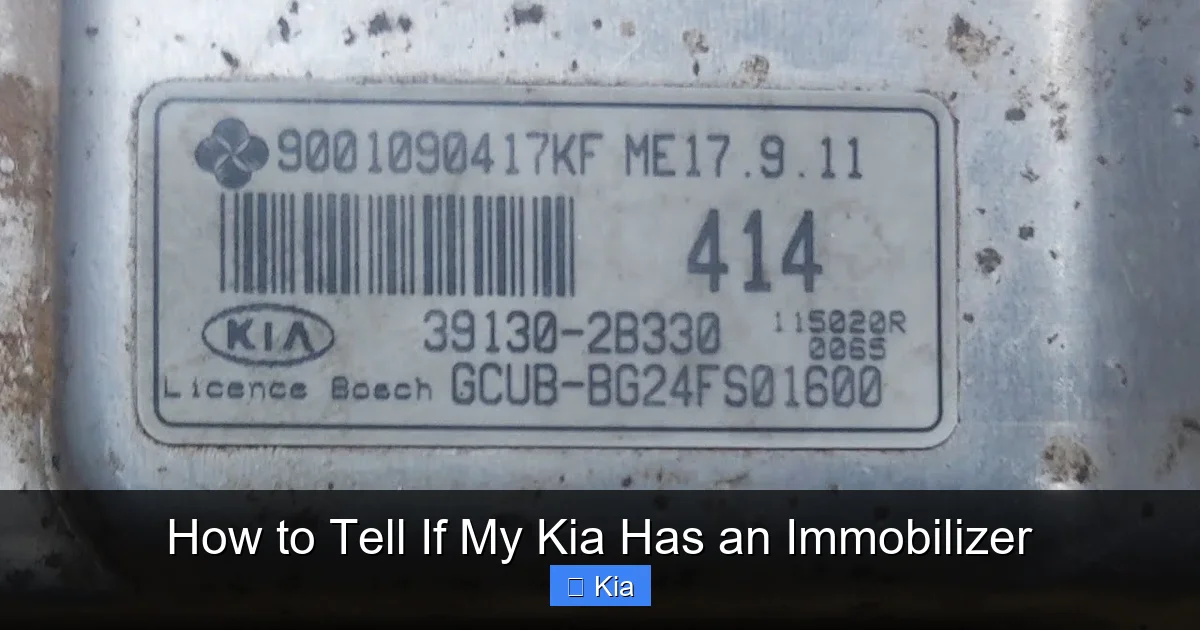
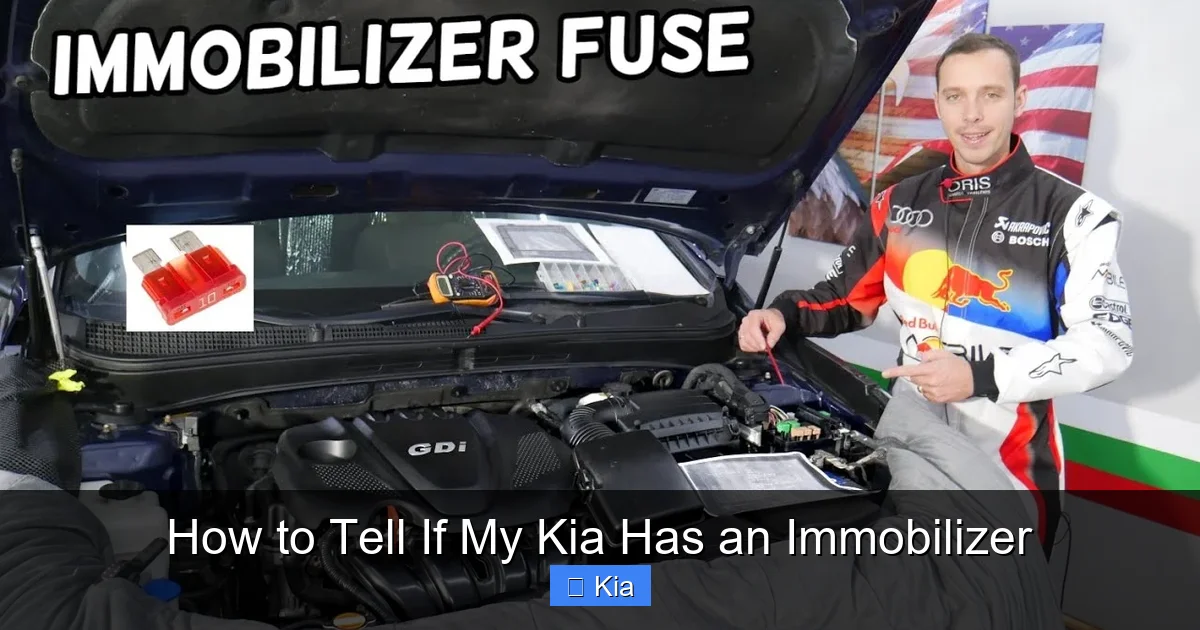
Visual guide about How to Tell If My Kia Has an Immobilizer
Image source: i.ytimg.com
Check the Owner’s Manual
The easiest and most reliable way to confirm if your Kia has an immobilizer is to consult the owner’s manual. Kia typically lists security features, including the immobilizer, in the “Safety” or “Security” section. Look for terms like “immobilizer system,” “anti-theft system,” or “electronic engine immobilizer.”
For example, if you own a 2015 Kia Sportage, the manual might state: “Your vehicle is equipped with an advanced immobilizer system that prevents unauthorized starting of the engine.” This is a clear confirmation. If you no longer have the physical manual, you can usually download a digital copy from Kia’s official website by entering your vehicle’s VIN or model details.
Pro tip: If the manual mentions a “transponder key” or “chip key,” that’s another strong indicator. These terms are often used interchangeably with immobilizer systems.
Look for a Security or Key Light on the Dashboard
When you turn the key to the “ON” position (but don’t start the engine), watch your dashboard. Most Kia models with an immobilizer will display a small icon that looks like a key inside a car or a padlock. This light usually flashes for a few seconds and then turns off if the system recognizes the key.
For instance, in a Kia Sorento or Kia Optima, you might see a yellow or red key symbol near the speedometer. If it blinks rapidly or stays on, it could mean the immobilizer isn’t recognizing the key—possibly due to a dead key battery, a damaged chip, or a system malfunction.
This light is your first clue. If you see it, your Kia almost certainly has an immobilizer. If you don’t see any such light, especially in a newer model, it’s worth investigating further—your car might still have one, but the indicator could be integrated into a different display or hidden in a menu.
Examine the Key Itself
Take a close look at your Kia key. Does it have a thick head with a plastic casing, or is it a slim, all-metal key? Immobilizer-equipped Kias usually come with keys that have a visible plastic head containing the transponder chip. These keys often feel heavier and may have buttons for remote locking.
For example, a 2020 Kia Soul key typically has a rounded plastic head with buttons for lock, unlock, and trunk release. Inside that head is a tiny RFID chip that communicates with the car. In contrast, older or base-trim models might have simple metal keys without chips—especially if they were manufactured before the mid-2000s.
If your key looks basic and metal, it doesn’t necessarily mean there’s no immobilizer. Some Kia models use hidden chips embedded in the key shaft. But if your key has a plastic head and remote functions, chances are high that your car has an immobilizer.
Check the Vehicle Identification Number (VIN)
Your VIN is a 17-character code unique to your vehicle, usually found on the driver’s side dashboard (visible through the windshield) or on the door jamb. You can use this number to decode your Kia’s factory specifications, including whether it came with an immobilizer.
Several online VIN decoders—some free, some paid—can tell you about your car’s original equipment. Websites like kia.com, edmunds.com, or nicb.org (National Insurance Crime Bureau) offer tools that break down your VIN into model, year, trim, and features. Look for terms like “Immobilizer” or “Anti-Theft System” in the results.
For example, a VIN lookup for a 2018 Kia Forte LX might show “Standard: Engine Immobilizer.” This confirms the feature is present. If the decoder doesn’t mention it, your trim level or model year might not include it—especially if it’s an older or base model.
Visit a Kia Dealer or Use an OBD2 Scanner
If you’re still unsure, the most accurate way to confirm is to visit a Kia dealership or use an OBD2 (On-Board Diagnostics) scanner with immobilizer capabilities. Dealerships have access to Kia’s proprietary diagnostic tools, which can read the vehicle’s computer and confirm whether an immobilizer system is installed and active.
Many modern OBD2 scanners—especially those designed for advanced diagnostics—can also detect immobilizer systems. These devices plug into the OBD2 port (usually under the dashboard near the steering wheel) and communicate with the car’s ECU. If the scanner shows “Immobilizer: Active” or similar, you’ve got your answer.
While basic code readers might not show this info, investing in a mid-range scanner (like those from Foxwell or Autel) can give you detailed insights. Some even allow you to program new keys—though this is best left to professionals unless you’re experienced.
Models and Years: Which Kias Have Immobilizers?
Not all Kia vehicles come with immobilizers, and the presence of the system depends on the model, trim level, and manufacturing year. Here’s a general guide to help you understand which Kias are likely equipped.
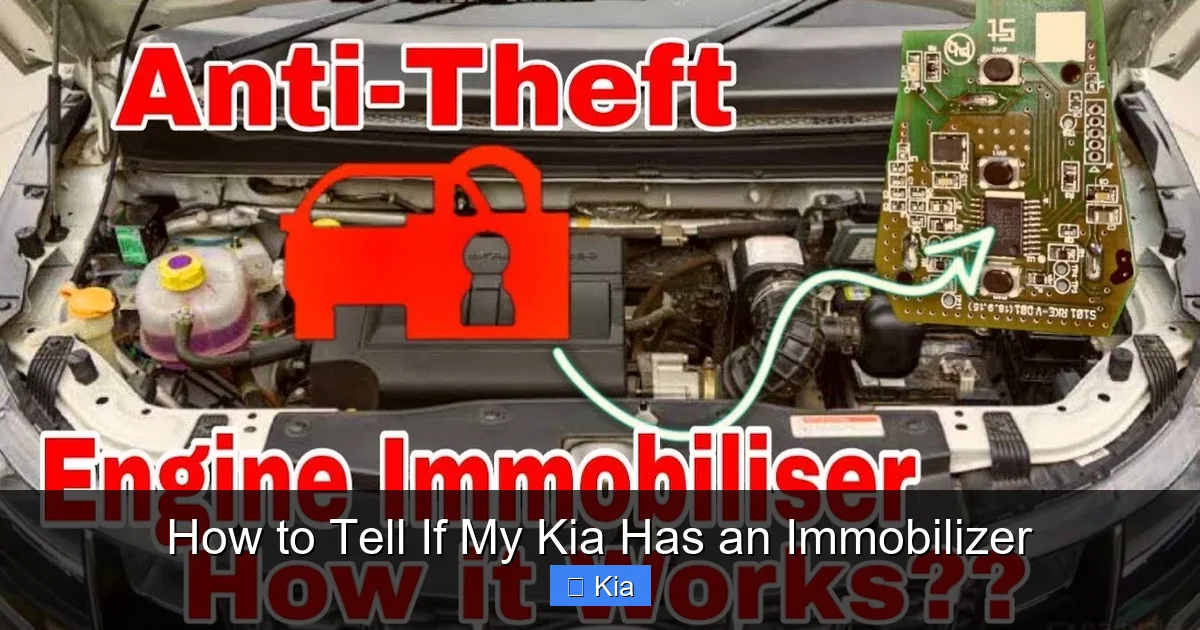
Visual guide about How to Tell If My Kia Has an Immobilizer
Image source: i.ytimg.com
Kia Models with Standard Immobilizers (2000s–Present)
Most Kia models produced from the early 2000s onward include an immobilizer as standard or optional equipment. This includes popular vehicles like:
- Kia Sportage: Immobilizer standard from 2005 onward; earlier models may vary by region.
- Kia Sorento: Standard on all trims from 2003 onward.
- Kia Optima: Immobilizer included from 2001 onward, especially in higher trims.
- Kia Forte: Standard on all models since its 2010 debut.
- Kia Soul: Immobilizer standard from 2010 onward.
- Kia Rio: Standard on most trims from 2006 onward.
- Kia Telluride: Standard on all trims since 2020.
In general, if your Kia was made after 2005, especially in North America or Europe, it almost certainly has an immobilizer. Earlier models—particularly base trims or those sold in regions with less strict regulations—might not.
Older Kias and Base Trims: Exceptions to the Rule
Some older Kia models, especially those from the 1990s or early 2000s, may not have immobilizers. For example, the first-generation Kia Sportage (1995–2002) often lacked this feature unless it was a higher trim or sold in certain markets.
Similarly, base trims of older models—like the Kia Spectra LX or Kia Rio BX—might not include an immobilizer to keep costs down. If you own a 2003 Kia Spectra with a simple metal key and no dashboard security light, it’s possible your car doesn’t have one.
That said, even if your Kia doesn’t have a factory immobilizer, you can still add one. Aftermarket systems are available and can be installed by a professional locksmith or auto electrician. These systems often include remote start, GPS tracking, and smartphone alerts—giving your older Kia modern security features.
What to Do If Your Kia Has an Immobilizer
Knowing your Kia has an immobilizer is just the first step. Now, you need to understand how it affects your daily use, maintenance, and potential repairs.
Visual guide about How to Tell If My Kia Has an Immobilizer
Image source: m.media-amazon.com
Replacing or Duplicating Keys
If you lose your key or need a spare, you’ll need a programmed key—not just a cut one. Generic keys won’t work because they lack the correct transponder code. This means you can’t just go to a hardware store and get a copy.
Instead, you’ll need to visit a Kia dealer or a locksmith with immobilizer programming tools. Dealers can program new keys using your VIN and proof of ownership, but this can cost $100–$300 per key. Independent locksmiths are often cheaper and can do the job on-site, sometimes in under an hour.
Pro tip: Always keep at least one spare key in a safe place. If you lose all your keys, reprogramming can be expensive and time-consuming.
Dealing with Immobilizer Malfunctions
Sometimes, the immobilizer system can fail. Common signs include:
- The engine won’t start, even with the correct key.
- The security light stays on or flashes rapidly.
- The key feels “recognized” but the car still won’t start.
This could be due to a dead key battery (yes, even chip keys have tiny batteries), a damaged transponder, or a fault in the immobilizer module. In some cases, water damage or electrical issues can disrupt communication between the key and the ECU.
If you suspect a malfunction, try using a spare key. If that works, the issue is likely with the original key. If neither key works, have the system diagnosed by a professional. Ignoring the problem could leave you stranded.
Upgrading Security with Aftermarket Systems
Even if your Kia has a factory immobilizer, you might want extra protection. Aftermarket systems like Viper or Compustar offer advanced features such as:
- Remote start via smartphone app
- GPS tracking and geofencing
- Two-way confirmation (you get a signal when the car starts)
- Shock sensors and glass break detection
These systems can be installed alongside your existing immobilizer and provide an extra layer of security. They’re especially useful if you live in an area with high vehicle theft rates or own a high-value Kia model.
Common Myths About Kia Immobilizers
There’s a lot of misinformation about car immobilizers, and Kia owners aren’t immune to confusion. Let’s clear up some common myths.
Myth 1: “If My Key Turns, the Immobilizer Isn’t Working”
False. The immobilizer doesn’t prevent the key from turning the ignition. It prevents the engine from starting by blocking fuel or ignition signals. You can turn the key all you want—the car just won’t fire up.
Myth 2: “All Kia Keys Are the Same”
Not true. Keys vary by model, year, and trim. A 2010 Kia Rio key won’t work in a 2022 Kia Telluride, even if they look similar. Each key is programmed to a specific vehicle.
Myth 3: “I Can Program a Key Myself with Online Tutorials”
While some basic programming is possible with the right tools, most Kia immobilizer systems require professional equipment. Attempting DIY programming without experience can lock you out of your own car.
Myth 4: “Immobilizers Are Foolproof”
No system is 100% secure. Sophisticated thieves can use relay attacks or signal boosters to trick the system. However, immobilizers still make theft much harder and are a major deterrent.
Conclusion: Stay Informed, Stay Protected
Knowing whether your Kia has an immobilizer is more than a technical detail—it’s a key part of owning and maintaining your vehicle. From preventing theft to avoiding costly key replacements, this small system plays a big role in your car’s security and functionality.
By checking your owner’s manual, watching for dashboard lights, examining your key, or using a VIN decoder, you can quickly determine if your Kia is equipped. And if it’s not, aftermarket options are available to bring your older model up to modern standards.
Whether you’re troubleshooting a no-start issue or planning to buy a used Kia, understanding the immobilizer system empowers you to make smarter decisions. So take a few minutes today to check—your peace of mind (and your car) will thank you.
Frequently Asked Questions
How do I know if my Kia key has a chip?
If your key has a plastic head with buttons or feels heavier than a standard metal key, it likely contains a transponder chip. You can also test it by trying to start the car—if it doesn’t start with a generic key but does with yours, a chip is present.
Can I start my Kia without the immobilizer working?
No, if your Kia has an immobilizer and it’s not recognizing the key, the engine won’t start. You’ll need to diagnose the issue—check the key battery, try a spare key, or visit a professional for help.
Do all Kia models have immobilizers?
Most Kia models made after 2005 do, especially in North America and Europe. Older models or base trims may not, depending on the year and region.
How much does it cost to replace a Kia key with an immobilizer?
Replacing a programmed key typically costs $100–$300 at a dealership. Independent locksmiths may charge less, especially if they can program the key on-site.
Can I install an immobilizer on an older Kia?
Yes, aftermarket immobilizer systems are available and can be installed by a professional. They offer modern security features and can be integrated with alarms and remote start systems.
What should I do if my Kia immobilizer light stays on?
A constantly lit or flashing immobilizer light usually means the system isn’t recognizing the key. Try using a spare key, check the key battery, or have the system diagnosed by a Kia technician.