How to Start a Jeep Cherokee with an Emergency Key

Contents
- 1 Key Takeaways
- 2 📑 Table of Contents
- 3 Introduction: When Technology Fails, the Emergency Key Saves the Day
- 4 Understanding Your Jeep Cherokee’s Emergency Key System
- 5 Step 1: Locating and Extracting Your Emergency Key
- 6 Step 2: Unlocking the Driver’s Door
- 7 Step 3: Accessing the Ignition and Starting the Engine
- 8 Troubleshooting: What If It Doesn’t Work?
- 9 Maintaining Your Emergency Key System
- 10 Conclusion: Knowledge is Your Best Breakdown Insurance
- 11 Frequently Asked Questions



If your Jeep Cherokee’s key fob battery dies or the system fails, the built-in emergency key is your backup. This physical key, hidden inside the fob, unlocks the driver’s door and starts the engine when used correctly with the ignition cylinder. The process involves locating the key, unlocking the door, inserting it into the hidden ignition slot, and turning it to start. Common issues like a locked steering wheel or security system errors can often be resolved with simple techniques.
Key Takeaways
- The emergency key is a physical metal key hidden inside your key fob, not a separate item. It’s designed for backup when the electronic fob fails due to a dead battery or system malfunction.
- You must first unlock the driver’s door manually with the emergency key before you can access the ignition slot, which is often hidden behind a trim cover on the steering column.
- The ignition slot is not always obvious. On most modern Cherokees (KL model 2014-2023), you must remove a small rectangular cover on the lower steering column to reveal the key slot.
- A steering wheel lock is a common barrier. If the wheel is locked, gently wiggle it left and right while turning the key to disengage the lock mechanism.
- The vehicle’s security system must recognize the key’s transponder chip. If the security light flashes rapidly after inserting the key, the system may not recognize it, requiring a tow or professional programming.
- Practice the process before you need it. Locate your emergency key and ignition slot in a safe, well-lit area so you’re prepared for an actual emergency.
- Emergency key use is a temporary solution. Once started, drive to a service center to diagnose the primary fob issue (often a simple battery replacement) and ensure the emergency key system is fully functional.
📑 Table of Contents
- Introduction: When Technology Fails, the Emergency Key Saves the Day
- Understanding Your Jeep Cherokee’s Emergency Key System
- Step 1: Locating and Extracting Your Emergency Key
- Step 2: Unlocking the Driver’s Door
- Step 3: Accessing the Ignition and Starting the Engine
- Troubleshooting: What If It Doesn’t Work?
- Maintaining Your Emergency Key System
- Conclusion: Knowledge is Your Best Breakdown Insurance
Introduction: When Technology Fails, the Emergency Key Saves the Day
You’re standing next to your trusty Jeep Cherokee, groceries in hand, ready to head home. You press the unlock button on your key fob… nothing. You press it again, maybe even the panic button by accident. The lights don’t flash, the doors don’t click. That sinking feeling hits: the key fob battery is dead, or worse, the electronic system has failed. For the modern driver used to keyless entry and push-button starts, this can feel like a major crisis. But here’s the secret every Cherokee owner should know: your vehicle has a robust, old-school backup plan built right into that sleek fob. It’s called the emergency key, and knowing how to use it is a critical skill.
This guide will walk you through everything you need to know, from finding that tiny metal key to successfully firing up your engine. We’ll cover all Jeep Cherokee generations, including the popular KL model (2014-2023) and the previous KK model (2008-2013). No more panic, no more calling for a tow truck for a simple dead battery. Let’s get you back on the road.
Understanding Your Jeep Cherokee’s Emergency Key System
Before we get to the “how,” let’s clarify the “what.” The emergency key is not a spare key you keep in your glovebox. It’s a physical, metal blade key that is meticulously folded and stored *inside* your primary key fob. Its sole purpose is to provide mechanical access to your vehicle when the electronic systems are offline.

Visual guide about How to Start a Jeep Cherokee with an Emergency Key
Image source: carandtruckremotes.com
What Exactly Is an Emergency Key?
It’s a simple metal key cut to match the mechanical tumblers in your driver’s door lock cylinder and, crucially, the hidden ignition lock cylinder. It has a small transponder chip embedded in its plastic head, just like your main fob. This chip is essential; it talks to the Cherokee’s security immobilizer system (called Sentry Key® in Jeeps). Without this chip being recognized, the engine will not start, even if the key turns in the ignition. This is a critical anti-theft feature.
How It Differs from Your Primary Key Fob
Your main key fob is a sophisticated electronic device. It uses a radio signal to communicate with the car for locking, unlocking, and remote start. For the Cherokee with push-button start (the most common), the fob’s presence inside the vehicle is detected by antennas, allowing you to press the start button. The emergency key bypasses all this radio communication. It provides a direct, physical connection to the lock and ignition, relying solely on the transponder chip’s direct contact with the ignition ring reader. Think of it as a hardwired, fail-safe communication method.
Step 1: Locating and Extracting Your Emergency Key
This is often the trickiest part because manufacturers hide these keys well to maintain the fob’s sleek design. Here’s how to find yours on any Cherokee model.
Visual guide about How to Start a Jeep Cherokee with an Emergency Key
Image source: i.ytimg.com
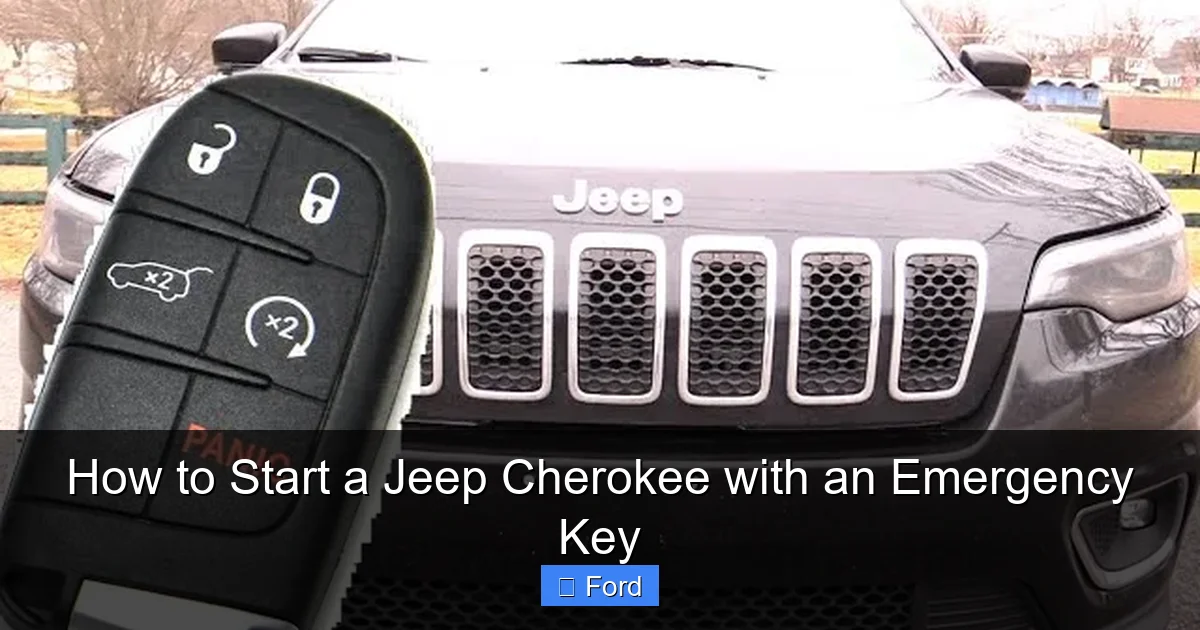
For Jeep Cherokee KL Models (2014-2023) and Most Modern Jeeps
Your key fob likely looks like a small, rectangular plastic slab with buttons. On one of the shorter sides, there is a small, often discrete, release button or slider. This is usually on the side opposite the key ring attachment. Firmly press this button (or slide the mechanism) and a small, metal key blade will pop out from the end of the fob. It’s typically about 2 inches long and folds flat against the fob. Gently pull it out to its full length. If you have a key fob with a built-in key that flips out (like some older models), simply flip it open.
For Jeep Cherokee KK Models (2008-2013) and Older
These models often have a more traditional fob with a separate, non-folding emergency key stored inside. There’s usually a small plastic door or slider on the back or side of the fob. Pry this open carefully with your fingernail or a small flat tool. Inside, you’ll find a small, standalone metal key. Simply remove it.
Pro Tip: Do this in good light. The release mechanism can be tiny and stiff. If you’re unsure, consult your owner’s manual—it has exact diagrams for your specific key fob. You can also find visual guides online by searching for your model year and “Jeep Cherokee emergency key location.” Many owners find it helpful to practice extracting the key once at home so they’re not fumbling in a dark parking lot during an actual emergency.
Step 2: Unlocking the Driver’s Door
With the emergency key in hand, your first task is to get inside the vehicle. You cannot access the ignition from the outside.
Visual guide about How to Start a Jeep Cherokee with an Emergency Key
Image source: lihpao.com
Finding the Door Lock Cylinder
On the driver’s door handle, look for a small, circular or oval-shaped plug on the back side (the side facing the rear of the car). This is a cosmetic cover hiding the traditional keyhole. It might have a tiny seam around it. Use the tip of the emergency key blade or a fingernail to carefully pry this plastic cover off. It should pop off with gentle pressure. Underneath, you’ll see the familiar keyhole.
Inserting and Turning
Insert the emergency key into the door lock cylinder. Turn it clockwise (to the right) to lock the door, or counter-clockwise (to the left) to unlock it. You should feel a solid click and see the door handle pop out slightly. Turn it fully to unlock the door. Pull the handle to open. Important: Do not force the key. If it doesn’t turn easily, ensure you’ve fully inserted it and that you’re turning it in the correct direction. The mechanism may be stiff if it hasn’t been used in years.
Step 3: Accessing the Ignition and Starting the Engine
Now you’re inside. The final and most crucial step is to start the engine. This process is different from simply turning a key in an old ignition cylinder.
Finding the Hidden Ignition Slot
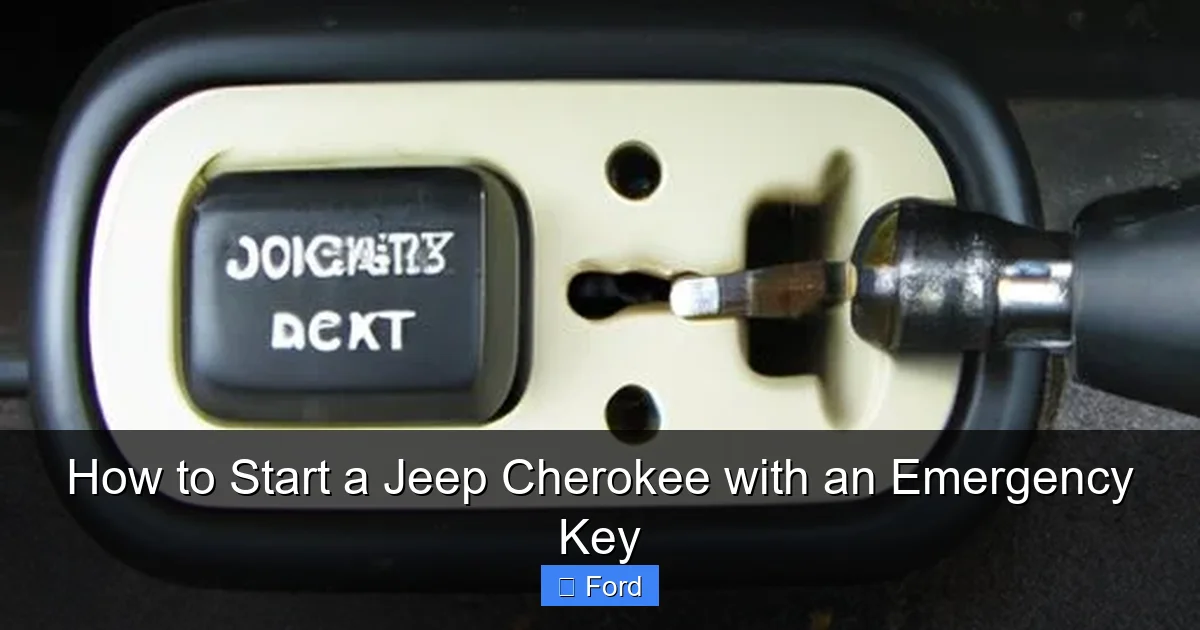
Sit in the driver’s seat and look at the lower part of the steering column, just behind the steering wheel. On KL Cherokees with push-button start, there is no traditional keyhole on the column. Instead, there is a small, rectangular plastic cover, often with a seam or a tiny “key” symbol etched on it. This cover conceals the emergency key ignition slot. Carefully pry this cover off using your fingernail, the emergency key blade itself, or a small flat-head screwdriver (be gentle to avoid scratching). The cover should snap off, revealing a keyhole.
For KK models (2008-2013) with a traditional key ignition: The keyhole will be on the steering column in the usual place, likely already exposed without a cover.
The Starting Sequence
- Insert the Key: Place the emergency key fully into the now-exposed ignition slot.
- Turn to “ON” (First Click): Gently turn the key clockwise from the “LOCK” position. You will feel a slight resistance and then a click. This is the “ON” or “RUN” position. This powers up the vehicle’s electronics. You should see the dashboard lights come on, including the security indicator light (a small red car or key icon). The light will illuminate solidly for a few seconds and then should go out. This indicates the transponder chip is being read and accepted by the Sentry Key® system.
- Check the Security Light: If the security light flashes rapidly or stays on solid after a few seconds, the system does not recognize the key’s chip. Do not try to start the engine. This could mean the key is damaged, the chip is faulty, or there’s a system issue. You will need professional assistance.
- Turn to “START”: If the security light goes out (or stays solid for 1-2 seconds and then goes out), continue turning the key smoothly to the next position. This is the “START” position. You will feel more resistance. Hold it there for a second until the engine cranks and starts. Once the engine is running, release the key. It will automatically spring back to the “ON” position.
Note: On some models, you may need to press the key fob against the start button while inserting the emergency key. The manual will specify. If your Cherokee has a traditional key ignition (no push-button), the process is identical but without the hidden cover—just insert and turn the key through the LOCK-ON-START positions.
Troubleshooting: What If It Doesn’t Work?
Even with the correct procedure, things can go wrong. Here’s how to diagnose the most common problems.
Problem: The Key Won’t Turn in the Ignition
Cause 1: Steering Wheel Lock. This is the #1 culprit. When you park, the steering column lock engages. If the wheel is turned even slightly against this lock, it exerts mechanical pressure on the ignition cylinder, making the key impossible to turn.
Solution: Place your hand on the steering wheel. Gently and firmly wiggle it back and forth (left and right) while attempting to turn the key. You’ll feel a slight give as the lock disengages. You must relieve this pressure to turn the key. This can take a few tries. Be patient, don’t force it.
Cause 2: Incorrect Key or Worn Key. Ensure you are using the correct emergency key for that specific Cherokee. Keys are not universal. Also, if the key blade is worn down from years of use, it may not engage the tumblers properly.
Solution: Try the other emergency key if you have a second fob. If the key is visibly worn or bent, you will need a replacement key cut and programmed by a dealer or locksmith.
Problem: Security Light Flashes, Engine Won’t Start
Cause: The Sentry Key® immobilizer system is not receiving a valid signal from the transponder chip in the emergency key. This could be due to a damaged chip, a dead battery in the key fob affecting the chip (unlikely but possible), or a fault in the vehicle’s receiver module.
Solution: This is not a DIY fix. You will need to have the key’s transponder checked and possibly reprogrammed to the vehicle’s system by a Jeep dealership or a certified automotive locksmith. They have the diagnostic tools to communicate with the vehicle’s computer (PCM). In a pinch, if you have a second, working key fob, you might try using its emergency key if it’s the same cut. If the problem is with the vehicle’s receiver, that requires professional diagnosis.
Problem: The Ignition Slot Cover is Missing or Broken
On older Cherokees, this plastic cover can crack, fall off, or get lost.
Solution: You can still start the car. Simply insert the emergency key directly into the exposed ignition cylinder. The cover is purely cosmetic. However, get a replacement cover from a dealership or online to protect the slot from dust and debris. This is a common issue, and you can find many owner forums discussing it. For other vehicles with similar systems, like certain Dodge Charger models, the process is nearly identical, highlighting the shared Stellantis platform technology.
Maintaining Your Emergency Key System
An emergency key you can’t use is no good at all. A little maintenance goes a long way.
Caring for the Key and Locks
The door lock cylinder and ignition slot are mechanical parts that can get dirty or stiff over time, especially if rarely used. Every 6-12 months, extract your emergency key and:
- Lubricate the locks: Use a dry graphite lubricant (not oil or WD-40, which attract dust) sprayed lightly into the door lock cylinder and the ignition slot. Insert and remove the key several times to work it in.
- Clean the key blade: Wipe the metal key with a dry cloth. Ensure it’s not bent.
- Test the system: Go through the full process of unlocking the door and starting the car (you can do this in your driveway without driving) to ensure everything moves freely and the security light behaves correctly.
When to Replace the Emergency Key
The emergency key itself can wear out or get lost. Signs you need a new one:
- The key blade is worn, rounded, or bent.
- The plastic head is cracked, and the transponder chip inside is exposed or damaged.
- You’ve lost the key inside the fob (it can sometimes fall out).
Getting a Replacement: You cannot just cut a new key at any hardware store. The new key must be cut to match your Cherokee’s locks AND have a transponder chip programmed to your vehicle’s VIN. This requires specialized equipment. The best source is a Jeep dealership. A locksmith can also do it, often for less money. Always have your vehicle’s registration and proof of ownership. The cost typically ranges from $100 to $250 for a new emergency key and programming. For those who prefer a more traditional approach, understanding how to start a car with a key fob in general can provide useful context for modern systems.
Conclusion: Knowledge is Your Best Breakdown Insurance
Being stranded with a dead key fob is a frustrating but entirely solvable problem. The emergency key in your Jeep Cherokee is your direct line to mechanical, reliable access. By taking 15 minutes today to locate that hidden key, find the ignition slot cover, and understand the turn sequence, you transform a potential 2-hour tow truck wait into a 2-minute self-rescue. Remember the golden rules: always check for a steering wheel lock, watch the security light for acceptance, and never force a stuck key. Practice the process in your driveway. This small investment of time and knowledge pays off in peace of mind and real-world convenience. Keep this guide bookmarked, share it with family members who drive the Cherokee, and drive on with confidence, knowing you’re prepared for any electronic hiccup your vehicle might throw at you.
Frequently Asked Questions
What if my emergency key doesn’t turn in the door or ignition?
First, ensure you are using the correct key for your Cherokee. Then, check for a steering wheel lock—gently wiggle the wheel left and right while turning the key. If it still won’t budge, the lock cylinder or key may be worn or damaged, requiring a locksmith or dealer.
My security light flashes rapidly after inserting the emergency key. What does that mean?
A rapidly flashing security light means the vehicle’s immobilizer system does not recognize the transponder chip in your key. This could be due to a damaged chip, an incorrect key, or a faulty receiver module. The engine will not start, and you’ll need professional diagnostics and key reprogramming.
Can I just use the emergency key all the time instead of my key fob?
Technically yes, but it’s highly impractical. You would have to manually unlock the door and use the ignition slot every time. The emergency key system is designed only for backup situations when the primary fob fails.
Where can I get a replacement emergency key if I lose it?
You must go to a Jeep dealership or a certified automotive locksmith. They will cut a new key to match your locks and, most importantly, program its transponder chip to your vehicle’s unique security system using your VIN and proof of ownership.
My Cherokee doesn’t have a push-button start. Is the process different?
The process is simpler. There is no hidden ignition slot cover—the traditional keyhole is on the steering column. Simply insert the emergency key and turn it from LOCK to ON to START, just like in older vehicles. The security system still uses the transponder chip.
Will using the emergency key damage my car or its security system?
No. It is a manufacturer-installed, intended-use backup system. Using it correctly will not cause any damage. The only risk is forcing a key that won’t turn, which could break the key or the lock cylinder. Always wiggle the steering wheel if you meet resistance.