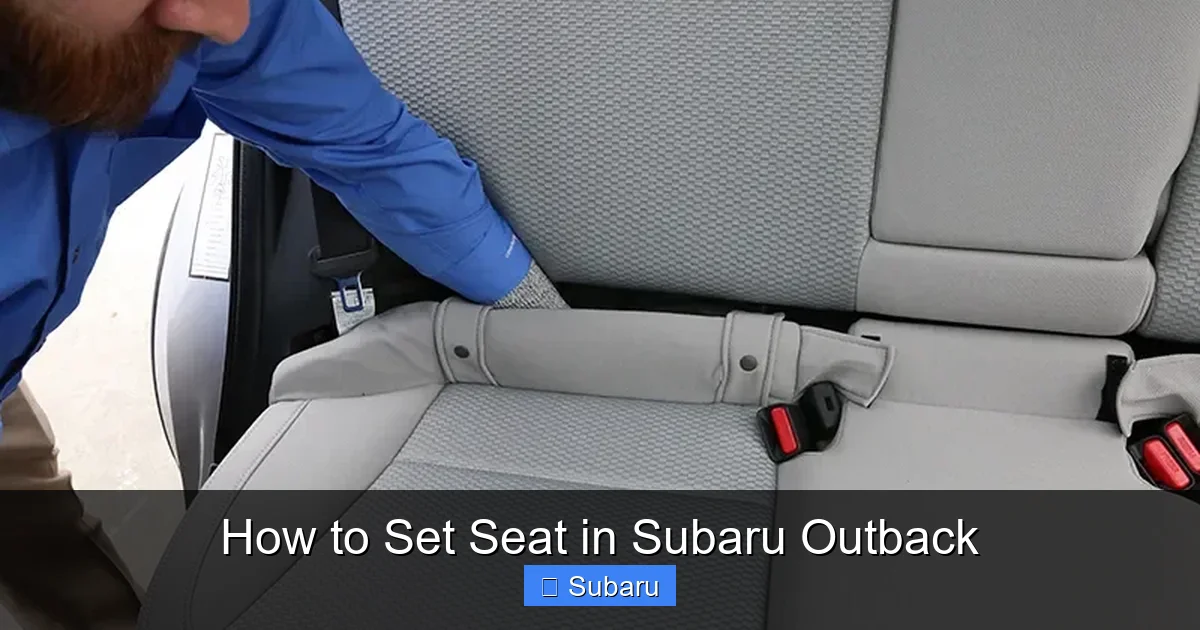
How to Set Seat in Subaru Outback

Contents
- 1 Key Takeaways
- 2 Why Proper Seat Adjustment Matters in Your Subaru Outback
- 3 Understanding Your Subaru Outback Seat Controls
- 4 Step-by-Step Guide to Setting Your Seat Position
- 5 Fine-Tuning for Comfort and Safety
- 6 Common Mistakes to Avoid
- 7 Tips for Passengers and Long-Distance Driving
- 8 Conclusion
- 9 Frequently Asked Questions



Setting the seat in your Subaru Outback correctly is essential for comfort, control, and safety on every drive. This guide walks you through adjusting seat position, lumbar support, recline, and more to fit your body perfectly.
This is a comprehensive guide about How to Set Seat in Subaru Outback.
Key Takeaways
- Proper seat position improves driving posture and reduces fatigue. Adjusting the seat correctly helps maintain a natural spine alignment and supports long drives.
- Seat height affects visibility and pedal reach. Setting the right height ensures you can see over the dashboard and reach pedals comfortably.
- Lumbar support prevents back pain. Use the adjustable lumbar feature to support the natural curve of your lower back.
- Seat recline angle impacts control and comfort. A slightly reclined position (around 100–110 degrees) offers the best balance of comfort and steering control.
- Headrest positioning is crucial for safety. The top of the headrest should align with the top of your head to protect against whiplash.
- Memory settings save time and improve convenience. Use seat memory presets if your Outback has this feature for quick adjustments.
- Regularly check and readjust your seat. Your ideal position may change over time due to posture, clothing, or driving conditions.
[FEATURED_IMAGE_PLACEHOLDER]
Why Proper Seat Adjustment Matters in Your Subaru Outback
When you slide into the driver’s seat of your Subaru Outback, you might be eager to hit the road—especially if you’re heading out on a scenic drive through the mountains or a long commute. But before you start the engine, take a moment to set your seat properly. It might seem like a small detail, but getting your seat position right can make a big difference in how comfortable, safe, and in control you feel behind the wheel.
The Subaru Outback is known for its spacious interior, comfortable ride, and excellent visibility—but those benefits only shine when you’re seated correctly. A poorly adjusted seat can lead to back pain, numb legs, shoulder tension, and even reduced reaction time in emergencies. On the other hand, a well-positioned seat supports your body, keeps you alert, and helps you maintain proper control of the vehicle. Whether you’re driving solo or with passengers, taking five minutes to set your seat can improve your entire driving experience.
Understanding Your Subaru Outback Seat Controls
Before diving into adjustments, it’s helpful to know what controls your Outback offers. Most modern Subaru Outbacks come with a range of manual and power-adjustable seat features, depending on the trim level. Even base models typically include essential adjustments, while higher trims add luxury options like heated seats, memory settings, and power lumbar support.
Manual vs. Power Seat Adjustments
In lower trims of the Outback, you’ll find manual seat controls. These usually include a lever or handle under the front of the seat for forward/backward movement, a knob or lever on the side for height adjustment, and a reclining lever near the seatback. While manual controls require a bit more effort, they’re reliable and straightforward once you get the hang of them.
Higher trims, such as the Limited, Touring, and Wilderness models, come with power-adjustable seats. These use electric motors and buttons on the side of the seat to move the seat in multiple directions. You can adjust the seat forward/back, raise/lower the front and rear, tilt the seat cushion, and recline the backrest—all with the push of a button. Some models even include a memory function that stores your preferred seat position and recalls it with one touch.
Additional Seat Features
Beyond basic positioning, your Outback may offer extra comfort features. Heated and ventilated seats are common in colder or warmer climates, helping regulate temperature and reduce discomfort on long trips. Power lumbar support allows you to inflate or deflate a cushion behind your lower back, offering customizable support. And if you have the optional driver’s seat memory, you can save up to three different seat positions—perfect for households with multiple drivers.
Knowing where these controls are and how they work is the first step to setting your seat correctly. Take a moment to familiarize yourself with your specific model’s setup before making adjustments.
Step-by-Step Guide to Setting Your Seat Position
Now that you understand the controls, let’s walk through the process of setting your seat in the Subaru Outback. Follow these steps in order for the best results. Remember, the goal is to find a position that supports your body, keeps you comfortable, and allows full control of the vehicle.
Step 1: Adjust Seat Distance from Pedals
Start by sliding the seat forward or backward. Sit in the seat and press the brake pedal all the way down. Your right leg should be slightly bent—not fully extended or overly compressed. If your leg is straight, you’re too far back. If it’s bent too much, you’re too close. A slight bend (about 120–135 degrees) ensures you can press the pedal fully without straining.
Tip: Use your left foot to test the clutch (if manual) or rest it comfortably on the floor. Your left leg should also have a natural bend, not be stretched or cramped.
Step 2: Set Seat Height for Visibility and Comfort
Next, adjust the seat height. In most Outbacks, you can raise or lower the entire seat using a lever or power button. The ideal height allows you to see clearly over the dashboard and steering wheel. You should have a clear view of the road ahead, including traffic lights and signs, without leaning forward.
At the same time, your thighs should rest comfortably on the seat cushion without pressing too hard against the back of your knees. If the seat is too high, your head might hit the roof. If it’s too low, you may feel cramped or have reduced visibility. Aim for a balanced position where you feel grounded and in control.
Step 3: Tilt the Seat Cushion (If Available)
Some Outback models allow you to tilt the front or rear of the seat cushion. This feature helps reduce pressure on your thighs and improves blood flow. If your seat has this option, tilt the front slightly upward to support your thighs without lifting your hips. Avoid tilting too much, as it can cause you to slide forward.
For drivers with shorter legs, a slight forward tilt can help reach the pedals more comfortably. Taller drivers may prefer a flatter or slightly rear-tilted cushion to prevent their knees from hitting the steering column.
Step 4: Adjust the Seatback Recline
Now it’s time to set the recline angle. The seatback should be slightly reclined—typically between 100 and 110 degrees from vertical. This position supports your spine’s natural curve and reduces strain on your lower back. Avoid sitting bolt upright (90 degrees), as it can cause fatigue over time. Also, don’t recline too far back, as it reduces your ability to reach the steering wheel and react quickly.
Test the recline by sitting back and reaching for the steering wheel. Your arms should be slightly bent when your hands are at the 9 and 3 o’clock positions. If you have to stretch or lean forward, the seat is too far back. If your arms are locked, it’s too upright.
Step 5: Set Lumbar Support
If your Outback has adjustable lumbar support, use it to fill the gap between your lower back and the seatback. This support helps maintain the spine’s natural inward curve (lordosis) and prevents slouching. Turn the lumbar knob or use the power button to inflate the cushion until it feels firm but comfortable.
Start with minimal support and increase gradually. Too much lumbar pressure can cause discomfort or even pain. Adjust it while driving on a quiet road to find the sweet spot. If your seat doesn’t have lumbar adjustment, consider using a small cushion or rolled-up towel behind your lower back.
Step 6: Position the Headrest Correctly
The headrest is a critical safety feature, not just a comfort add-on. It protects your neck in the event of a rear-end collision by reducing whiplash. To set it correctly, adjust the height so the top of the headrest aligns with the top of your head. The back of your head should be close to the headrest—no more than 2–3 inches away.
If your headrest tilts forward, adjust it so it gently supports the curve of your neck. Avoid pushing it too far forward, as it can cause discomfort. Remember: the headrest should be level with your head, not your neck or shoulders.
Fine-Tuning for Comfort and Safety
Once you’ve completed the basic adjustments, take a short test drive to see how the seat feels. You might need to make small tweaks based on real-world driving conditions. Here are some tips to fine-tune your setup.
Check Arm and Hand Position on the Wheel
Your arms should rest comfortably on the steering wheel with a slight bend at the elbows. If you have to reach forward or hunch your shoulders, your seat is too far back. If your arms are cramped, move the seat forward slightly. Keep your hands at 9 and 3 o’clock for optimal control and airbag safety.
Ensure Clear Visibility
Adjust your mirrors after setting your seat. Your rearview and side mirrors should give you a clear view of the road behind and beside you without requiring you to move your head excessively. If you have to lean to see, your seat position may need tweaking.
Test Pedal Reach and Comfort
Press the accelerator, brake, and (if applicable) clutch pedals several times. Your feet should move smoothly without twisting your ankles or lifting your hips. If you feel strain, adjust the seat distance or height slightly.
Use Memory Settings (If Available)
If your Outback has seat memory, save your ideal position. Press the “Set” button, then press and hold one of the memory buttons (usually 1, 2, or 3) until you hear a chime. Now, whenever you enter the car, press the corresponding button to return to your preferred setup. This is especially helpful if multiple people drive the vehicle.
Common Mistakes to Avoid
Even experienced drivers can make seat adjustment errors. Here are some common mistakes and how to fix them.
Sitting Too Close to the Wheel
Some drivers slide the seat too far forward to feel “in control.” But this can be dangerous—especially in a crash, where the airbag deploys with significant force. You should be at least 10 inches away from the steering wheel. Use a ruler or your hand to measure if needed.
Ignoring Lumbar Support
Many people skip lumbar adjustment, thinking it’s unnecessary. But poor lower back support leads to fatigue and pain, especially on long drives. Take the time to adjust it properly—it’s one of the most important comfort features.
Over-Reclining the Seat
A reclined seat might feel cozy, but it reduces your ability to steer and react quickly. It also increases the risk of submarining (sliding under the seatbelt) in a crash. Keep the recline moderate for safety and control.
Forgetting the Headrest
Some drivers lower the headrest for comfort, but this defeats its purpose. Always keep it at the correct height and distance from your head. It’s not just about comfort—it’s about survival in a collision.
Tips for Passengers and Long-Distance Driving
Setting your seat isn’t just for the driver. Passengers should also adjust their seats for comfort and safety. Encourage front-seat passengers to set their seatbacks upright (around 90–100 degrees) to reduce the risk of injury in a crash. Rear passengers should use headrests and avoid reclining too far.
On long drives, consider taking breaks every 1–2 hours to stretch and readjust your posture. Even with a perfect seat setup, staying in one position for too long can cause stiffness. Use cruise control on highways to give your right leg a rest, and shift your weight slightly in the seat to improve circulation.
If you frequently drive long distances, consider investing in a seat cushion or back support designed for cars. These can enhance comfort, especially if your Outback’s seats aren’t fully adjustable.
Conclusion
Setting the seat in your Subaru Outback might seem like a minor task, but it’s one of the most important things you can do for your comfort, safety, and driving performance. By following the step-by-step guide above, you’ll find a position that supports your body, keeps you alert, and helps you enjoy every mile.
Remember, the perfect seat setup is personal. What works for one driver might not work for another. Take the time to experiment, adjust, and fine-tune until you find what feels right. And don’t forget to use memory settings, check your headrest, and avoid common mistakes. With a properly set seat, your Subaru Outback becomes not just a vehicle—but a comfortable, safe, and enjoyable extension of your daily life.
Frequently Asked Questions
How do I adjust the seat height in a Subaru Outback?
Use the lever or power button on the side of the seat to raise or lower the entire seat. Adjust until you have clear visibility over the dashboard and your thighs rest comfortably on the cushion.
Can I save my seat position in a Subaru Outback?
Yes, if your Outback has seat memory, press the “Set” button and then hold one of the memory buttons (1, 2, or 3) to save your preferred position. Press the button later to recall it.
What is the ideal seat recline angle for driving?
The ideal recline is between 100 and 110 degrees from vertical. This supports your spine and allows comfortable reach to the steering wheel and pedals.
How far should my head be from the headrest?
Your head should be no more than 2–3 inches from the headrest. The top of the headrest should align with the top of your head for optimal safety.
Why is lumbar support important?
Lumbar support maintains the natural curve of your lower back, reducing fatigue and preventing back pain, especially on long drives.
Should passengers adjust their seats too?
Yes, passengers should set their seats upright (90–100 degrees) and use headrests for safety. Proper seating reduces injury risk in a collision.