
How to Sell a Car in Oregon

Selling a car in Oregon doesn’t have to be complicated. With the right preparation, clear documentation, and knowledge of state-specific rules, you can complete the process quickly and legally. This guide walks you through every step—from pricing your vehicle to transferring ownership—so you can sell with confidence.
Thinking about selling your car in Oregon? Whether you’re upgrading to a newer model, downsizing, or simply ready to part ways with your current ride, knowing the right steps can save you time, stress, and even money. Selling a vehicle isn’t just about posting an ad and waiting for calls—it involves understanding state regulations, preparing your car properly, and navigating the legal side of ownership transfer.
Oregon has specific rules that differ slightly from other states, especially when it comes to titling, liability protection, and emissions requirements. For example, unlike some states, Oregon doesn’t require a bill of sale for private transactions—but having one is still highly recommended for your own protection. Also, if your car is registered in certain counties, you may need to pass an emissions test before you can legally sell it. These nuances matter, and skipping them could lead to fines, delays, or even legal trouble down the road.
The good news? The process is straightforward once you know what to do. In this guide, we’ll walk you through every step—from evaluating your car’s worth to finalizing the sale and notifying the DMV. We’ll cover practical tips, common pitfalls to avoid, and insider advice to help you sell your car quickly, safely, and for the best possible price. So grab a notebook, and let’s get started!
Key Takeaways
- Know Oregon’s title transfer rules: You must sign over the title and provide a completed Release of Interest form to avoid liability after the sale.
- Price your car accurately: Use tools like Kelley Blue Book or Edmunds to research fair market value based on condition, mileage, and local demand.
- Prepare necessary paperwork: Have the title, vehicle history report, and odometer disclosure ready before meeting buyers.
- Advertise effectively: Use high-quality photos, honest descriptions, and popular platforms like Craigslist, Facebook Marketplace, or Autotrader.
- Meet safely and legally: Conduct transactions in public places, accept secure payment methods, and avoid cash-only deals when possible.
- Notify the DMV promptly: File a Notice of Sale online within 10 days to protect yourself from future fines or registration issues.
- Consider emissions testing: Required in certain counties—check if your vehicle needs a test before listing it for sale.
📑 Table of Contents
Step 1: Determine Your Car’s Market Value
Before you list your car, you need to know how much it’s actually worth. Pricing too high can scare off buyers; pricing too low means leaving money on the table. The key is finding that sweet spot where your car is competitively priced but still reflects its true value.
Start by researching similar vehicles in your area. Websites like Kelley Blue Book (KBB), Edmunds, and NADA Guides allow you to input your car’s make, model, year, mileage, condition, and ZIP code to get a realistic estimate. Pay attention to listings on local platforms like Craigslist, Facebook Marketplace, and Autotrader—these show what real buyers are willing to pay right now.
Don’t forget to factor in your car’s condition. A well-maintained vehicle with service records, new tires, and minimal wear will command a higher price than one with mechanical issues or cosmetic damage. Be honest with yourself: if your car needs repairs, consider whether fixing them is worth the investment. Sometimes, a small fix like replacing brake pads or detailing the interior can significantly boost resale value.
For example, a 2018 Honda Civic with 60,000 miles in excellent condition might be valued at $16,500 according to KBB. But if it has a dent in the door and the check engine light is on, that value could drop to $14,000 or less. Adjust your asking price accordingly—and always leave a little room for negotiation. Most buyers expect to haggle, so pricing slightly above your target gives you flexibility.
Step 2: Gather All Required Documents
Visual guide about How to Sell a Car in Oregon
Image source: oregon.gov
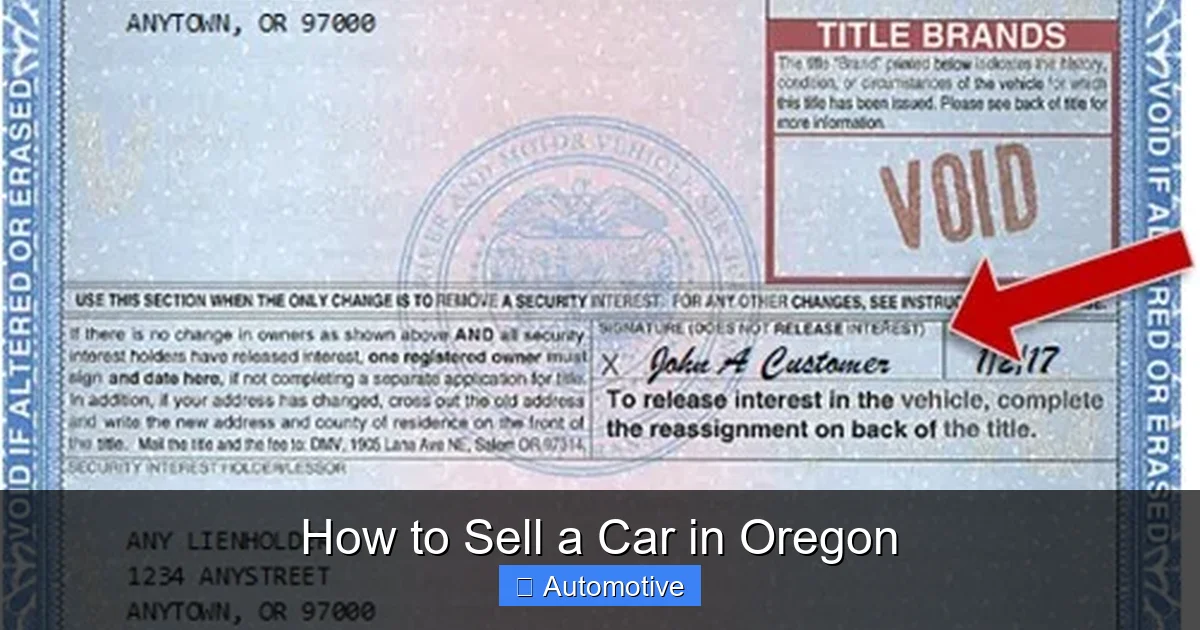
Having the right paperwork ready makes the sale process smoother and builds trust with potential buyers. In Oregon, the most important document is the vehicle title. If you own the car outright, the title should be in your name with no liens. If there’s still a loan on the vehicle, you’ll need to pay it off before selling—or work with the lender to handle the payoff during the sale.
Make sure the title is clean and legible. If it’s damaged or missing, you’ll need to apply for a duplicate from the Oregon DMV before proceeding. You can do this online, by mail, or in person at a DMV office. There’s a small fee (usually around $20), and processing can take a few days, so plan ahead.
In addition to the title, prepare an odometer disclosure statement. Federal law requires you to report the vehicle’s mileage at the time of sale if it’s under 10 years old. This is typically done on the back of the title form. If your car is older than 10 years, you can write “exempt” in the mileage field—but double-check Oregon’s current rules, as they can change.
While Oregon doesn’t legally require a bill of sale for private transactions, it’s a smart move to create one. A bill of sale acts as a receipt and proof of transaction, protecting both you and the buyer. Include details like the sale date, vehicle identification number (VIN), sale price, and both parties’ names and addresses. You can find free templates online or use the DMV’s official form.
Also, consider getting a vehicle history report from services like Carfax or AutoCheck. This shows past accidents, ownership history, and maintenance records—information that reassures buyers and can justify a higher price. Offering this report upfront shows transparency and can speed up the sale.
Step 3: Prepare Your Vehicle for Sale
Visual guide about How to Sell a Car in Oregon
Image source: c8.alamy.com
First impressions matter—especially when selling a car. A clean, well-maintained vehicle looks more valuable and trustworthy. Take the time to detail your car inside and out. Wash and wax the exterior, vacuum the interior, clean the windows, and remove any personal items. Consider using a fabric cleaner on seats and carpets to eliminate odors.
If your car has minor cosmetic issues—like scratches, dents, or worn upholstery—decide whether to fix them. Small repairs often pay for themselves in a higher sale price. For example, fixing a cracked windshield or repainting a bumper can add hundreds to your final offer. However, major mechanical problems (like transmission issues) are usually not worth fixing unless you’re aiming for a premium price.
Gather all maintenance records and owner’s manuals. Buyers appreciate knowing the car has been well cared for. If you’ve recently replaced parts like brakes, tires, or the battery, mention that in your listing—it adds value.
Take high-quality photos from multiple angles: front, back, sides, interior, engine bay, and trunk. Use natural light and avoid cluttered backgrounds. Good photos can make your listing stand out and attract more serious buyers.
Finally, be ready to take the car for a test drive—but only with a licensed driver and in a safe, public area. Never hand over your keys without verifying the buyer’s license and insurance.
Step 4: Advertise Your Car Effectively
Visual guide about How to Sell a Car in Oregon
Image source: thumbs.dreamstime.com
Once your car is ready, it’s time to list it for sale. Choose platforms that are popular in Oregon, such as Craigslist, Facebook Marketplace, Autotrader, or Cars.com. Each has its pros and cons: Craigslist is free and local, but attracts scammers; Facebook Marketplace is user-friendly and integrates with social networks; Autotrader reaches serious buyers but may charge a fee.
Write a clear, honest, and engaging description. Highlight key features like low mileage, recent maintenance, fuel efficiency, or special options (e.g., sunroof, navigation system). Mention any upgrades or extras, like new tires or a premium sound system. Avoid exaggerations—buyers will notice discrepancies during inspection.
Use keywords naturally in your title and description, such as “2019 Toyota Camry for sale in Portland, OR” or “Reliable Honda Accord with clean title.” This helps your listing appear in search results.
Set a fair price and include your contact information. Be responsive to inquiries—quick replies increase your chances of closing the sale. If possible, offer to meet during daylight hours in a safe, public location like a police station parking lot or busy shopping center.
Be cautious of scams. Avoid buyers who offer to pay with a cashier’s check or wire transfer and ask you to ship the car. Never accept overpayments or send money back. Stick to in-person meetings and secure payment methods like cash, cashier’s check, or bank transfer.
Step 5: Complete the Sale and Transfer Ownership
When you find a serious buyer, it’s time to finalize the sale. Meet in a safe, public place and bring all necessary documents: title, bill of sale, odometer disclosure, and vehicle history report if available.
Have the buyer inspect the car thoroughly. Allow a test drive, but stay in the passenger seat and verify their driver’s license first. If the buyer wants a mechanic’s inspection, that’s perfectly reasonable—many smart buyers do this before purchasing.
Once both parties agree on the price, complete the transaction. Accept payment in a secure form. Cash is common for private sales, but carry a receipt and meet in a bank if dealing with large amounts. Cashier’s checks are safer than personal checks but can still be fraudulent—verify them at the issuing bank if possible.
After payment, sign the title over to the buyer. Make sure to fill out all required sections, including the odometer reading and sale price. The buyer will need this to register the car in their name.
Provide the buyer with a copy of the bill of sale and any maintenance records. Keep a copy for your records.
Step 6: Notify the DMV and Protect Yourself
After the sale, your responsibility isn’t over. Oregon law requires sellers to file a Notice of Sale with the DMV within 10 days of the transaction. This protects you from future liability, such as parking tickets, toll violations, or accidents involving the new owner.
You can file the Notice of Sale online through the Oregon DMV website. It’s free and takes just a few minutes. You’ll need the buyer’s name, address, and the date of sale. Once submitted, the DMV will update their records, and you’ll no longer be responsible for the vehicle.
Also, remove your license plates before handing over the car. In Oregon, plates stay with the seller—not the vehicle. You can reuse them on another car or return them to the DMV.
If you had a lien on the vehicle, notify your lender that the car has been sold. They’ll release the lien and update the title accordingly.
Finally, cancel your insurance policy once the sale is complete. Most insurers allow you to do this online or by phone. Don’t wait—driving uninsured, even for a day, can lead to fines or penalties.
Bonus Tips for a Smooth Sale
Selling a car in Oregon can be stress-free if you follow a few extra tips. First, be patient. The right buyer may take a week or two to find, especially if your car is niche or priced higher. Don’t rush into a lowball offer just to make a quick sale.
Second, be transparent. Disclose any known issues upfront. Hiding problems can lead to disputes, negative reviews, or even legal action. Honesty builds trust and often results in a faster, smoother transaction.
Third, consider selling to a dealership or online car-buying service like CarMax, Carvana, or Vroom. These options are convenient and eliminate the hassle of private sales, but they typically offer less money. Use them as a fallback if your car isn’t selling after a few weeks.
Finally, keep records of everything: communications with buyers, payment receipts, and DMV filings. These documents can protect you if any issues arise later.
Selling a car in Oregon doesn’t have to be overwhelming. With preparation, honesty, and attention to detail, you can complete the process efficiently and walk away satisfied. Whether you’re upgrading, downsizing, or just ready for a change, this guide gives you the tools to sell your car with confidence.
Frequently Asked Questions
Do I need a bill of sale to sell a car in Oregon?
No, Oregon law does not require a bill of sale for private vehicle transactions. However, it’s highly recommended to create one for your protection. A bill of sale serves as proof of the sale and includes important details like the sale price, date, and both parties’ information.
How long do I have to notify the DMV after selling my car?
You must file a Notice of Sale with the Oregon DMV within 10 days of the sale. This protects you from future liability related to the vehicle, such as parking tickets or registration fees. You can submit it online for free.
Do I need to provide a vehicle history report when selling my car?
It’s not legally required, but providing a vehicle history report (like Carfax) builds trust with buyers and can help justify your asking price. Many buyers expect it, and offering one upfront can speed up the sale process.
Can I sell my car if it still has a loan on it?
Yes, but you must pay off the loan before transferring ownership. Contact your lender to arrange a payoff amount and coordinate the title release. Some lenders allow the buyer to assume the loan, but this is rare and requires lender approval.
Are emissions tests required to sell a car in Oregon?
Emissions testing is required in certain counties, including Clackamas, Multnomah, and Washington. If your vehicle is registered in one of these areas, it must pass a DEQ test before it can be sold. Check the Oregon DEQ website to confirm if your car needs testing.
What payment methods are safest when selling a car?
Cash is the most common and secure method for private sales. Cashier’s checks are also acceptable but should be verified at the issuing bank. Avoid personal checks, wire transfers, or online payments from unknown sources, as they can be fraudulent.