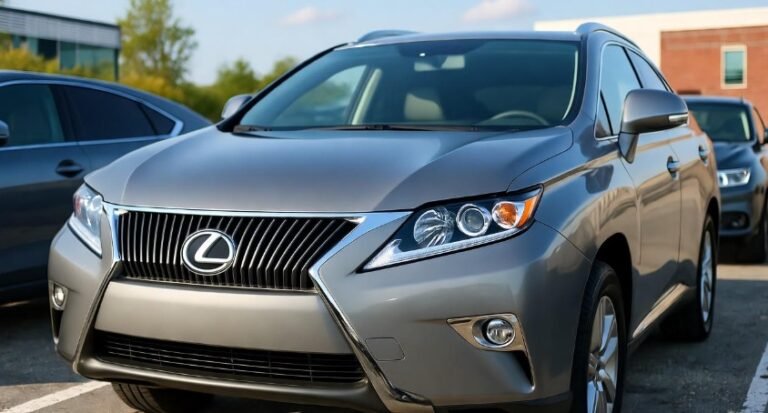
How to Sell a Car in Kansas
Selling a car in Kansas doesn’t have to be complicated. With the right preparation, pricing, and paperwork, you can complete the process quickly and legally. This guide walks you through every step to help you sell your car safely and efficiently.
In This Article
- 1 Key Takeaways
- 2 📑 Table of Contents
- 3 How to Sell a Car in Kansas: A Complete Step-by-Step Guide
- 4 Step 1: Prepare Your Vehicle for Sale
- 5 Step 2: Determine the Right Price
- 6 Step 3: Advertise Your Car Effectively
- 7 Step 4: Handle Inquiries and Test Drives Safely
- 8 Step 5: Complete the Sale Legally
- 9 Step 6: Understand Taxes and Fees
- 10 Tips for a Smooth and Successful Sale
- 11 Conclusion
- 12 Frequently Asked Questions
- 12.1 Do I need a bill of sale to sell a car in Kansas?
- 12.2 Can I sell a car in Kansas without a title?
- 12.3 Who pays sales tax when selling a car in Kansas?
- 12.4 How long does a buyer have to register a car in Kansas?
- 12.5 Can I sell a car with a lien in Kansas?
- 12.6 Is it safe to sell a car online in Kansas?
Key Takeaways
- Know Kansas title and registration laws: You must have a clear title to sell your car, and the buyer needs to register it within 30 days of purchase.
- Set a fair price: Use tools like Kelley Blue Book or Edmunds to research your car’s value based on condition, mileage, and market trends.
- Prepare your vehicle: Clean it inside and out, fix minor issues, and gather maintenance records to increase buyer confidence.
- Advertise effectively: Use online platforms like Facebook Marketplace, Craigslist, or Autotrader, and include clear photos and a detailed description.
- Complete the sale legally: Sign over the title correctly, provide a bill of sale, and notify the Kansas DMV of the transfer.
- Protect yourself during test drives: Always meet in public, verify the buyer’s license, and consider going with a friend for safety.
- Understand tax and fee responsibilities: In Kansas, the buyer typically pays sales tax and registration fees, but clarify this before finalizing the deal.
📑 Table of Contents
- How to Sell a Car in Kansas: A Complete Step-by-Step Guide
- Step 1: Prepare Your Vehicle for Sale
- Step 2: Determine the Right Price
- Step 3: Advertise Your Car Effectively
- Step 4: Handle Inquiries and Test Drives Safely
- Step 5: Complete the Sale Legally
- Step 6: Understand Taxes and Fees
- Tips for a Smooth and Successful Sale
- Conclusion
How to Sell a Car in Kansas: A Complete Step-by-Step Guide
So, you’ve decided it’s time to sell your car. Maybe you’re upgrading to something newer, downsizing, or just ready for a change. Whatever the reason, selling a car in Kansas can be straightforward—if you know what you’re doing. The process involves more than just putting up a “For Sale” sign and waiting for a buyer. From pricing your vehicle correctly to handling the legal paperwork, there are several important steps to follow.
Kansas has specific rules and requirements for selling a car, and skipping even one can lead to delays, fines, or even legal trouble. But don’t worry—this guide will walk you through everything you need to know. Whether you’re selling a used sedan, a pickup truck, or an older model, we’ll cover the essentials: how to prepare your car, where to advertise, how to negotiate with buyers, and how to complete the sale legally and safely.
By the end of this article, you’ll feel confident and ready to sell your car in Kansas the right way. We’ll keep things simple, practical, and easy to follow—no confusing jargon or legal fluff. Let’s get started.
Step 1: Prepare Your Vehicle for Sale
Visual guide about How to Sell a Car in Kansas
Image source: cashforcars.com
Before you even think about listing your car, take the time to get it ready. A well-prepared vehicle not only sells faster but also commands a higher price. Think of it this way: would you buy a car that looks dirty and unkempt? Probably not. The same goes for your potential buyers.
Clean It Inside and Out
Start with a thorough cleaning. Wash the exterior, wax it if possible, and clean the windows inside and out. Don’t forget the tires—cleaning them gives the car a polished look. Inside, vacuum the carpets, wipe down surfaces, and remove any personal items. Consider using an odor eliminator if there are lingering smells from pets, smoke, or food. A fresh-smelling, spotless interior makes a strong first impression.
Address Minor Repairs and Maintenance
You don’t need to spend thousands on repairs, but fixing small issues can make a big difference. Replace burnt-out light bulbs, fix cracked windshields, and top off fluids like oil, coolant, and windshield washer fluid. If your tires are worn, consider replacing them—safety is a top concern for buyers. Also, check the brakes, battery, and belts. If you’ve kept up with regular maintenance, gather your service records. These show buyers that the car has been well cared for and can justify a higher asking price.
Gather Important Documents
Make sure you have all the necessary paperwork ready. This includes:
– The car’s title (must be in your name and free of liens)
– Maintenance and repair records
– Owner’s manual
– Any warranty information
– A recent emissions test (if required in your area)
Having these documents organized shows buyers you’re serious and trustworthy. It also speeds up the sale process.
Step 2: Determine the Right Price
Visual guide about How to Sell a Car in Kansas
Image source: cartintlaw.com
Pricing your car correctly is one of the most important steps in the selling process. If you ask too much, buyers will pass it by. If you ask too little, you lose money. The goal is to find that sweet spot—fair market value.
Research Your Car’s Value
Use trusted online tools to get an accurate estimate. Websites like Kelley Blue Book (KBB), Edmunds, and NADA Guides let you input your car’s make, model, year, mileage, condition, and features to get a price range. Be honest about the condition—selecting “excellent” when your car is only “good” will skew the results.
For example, a 2018 Honda Civic with 60,000 miles in good condition might be valued at $16,000–$18,000 in Kansas. But if it has high mileage or needs repairs, the value drops. Compare similar listings in your area on sites like Autotrader or Cars.com to see what others are asking.
Consider Market Conditions
The used car market can fluctuate. In recent years, demand for used vehicles has been high due to new car shortages, which can drive up prices. However, in slower markets, you may need to be more competitive. Also, consider the season—convertibles sell better in spring and summer, while SUVs and trucks may move faster in fall and winter.
Set a Competitive Asking Price
Once you have your research, set a price slightly above what you’re willing to accept. This gives you room to negotiate. For instance, if your car is worth $17,000, list it at $17,500. Buyers often expect to negotiate, so starting a little high can help you land closer to your target price.
Avoid pricing too low just to sell quickly—unless you’re in a hurry. A low price might raise red flags about the car’s condition. Be transparent and confident in your pricing.
Step 3: Advertise Your Car Effectively
Visual guide about How to Sell a Car in Kansas
Image source: printablebillofsale.org
Now that your car is clean, priced, and ready to go, it’s time to find a buyer. The way you advertise can make or break your sale. You want to reach as many potential buyers as possible while presenting your car in the best light.
Choose the Right Platforms
There are several great places to list your car in Kansas:
– **Facebook Marketplace:** Free, easy to use, and popular with local buyers. You can target people in your city or region.
– **Craigslist:** Still widely used, especially for private sales. Be cautious of scams and always meet in public.
– **Autotrader and Cars.com:** These sites attract serious buyers but may charge a listing fee.
– **Local classifieds:** Check newspapers or community boards, especially in smaller towns.
Each platform has its pros and cons. Facebook Marketplace is great for quick local sales, while Autotrader may bring in more qualified buyers willing to travel.
Write a Clear and Honest Description
Your ad should be detailed but easy to read. Include:
– Make, model, year, and trim
– Mileage
– Condition (be honest—mention any flaws)
– Key features (e.g., backup camera, heated seats, tow package)
– Reason for selling
– Whether the title is clean and in your name
Example:
“2018 Honda Civic EX – 62,000 miles – Clean title – Excellent condition – One owner – Regular maintenance – Backup camera, Apple CarPlay, sunroof – Non-smoker – Selling due to upgrade. Asking $17,500 OBO.”
Avoid vague terms like “runs great” without backing it up. Buyers appreciate transparency.
Take High-Quality Photos
Photos are the first thing buyers see. Take pictures in good lighting—ideally during the day. Capture:
– Exterior shots from all angles
– Close-ups of the wheels, grille, and badges
– Interior photos (dashboard, seats, trunk)
– Engine bay (if clean)
– Any damage or wear (to build trust)
Avoid cluttered backgrounds. A clean, well-lit photo of your car in a driveway or empty parking lot works best. Use a smartphone with a good camera—no need for professional gear.
Step 4: Handle Inquiries and Test Drives Safely
Once your ad is live, you’ll start getting messages and calls. How you handle these interactions can determine whether a sale happens—or falls through.
Respond Promptly and Professionally
Reply to inquiries quickly, even if it’s just to say you’ll get back to them. Be polite and provide clear answers. If someone asks about mileage or features, give them the facts. Avoid overselling or making promises you can’t keep.
Screen Potential Buyers
Not everyone who contacts you is serious. Ask questions like:
– “Are you looking to buy soon?”
– “Do you have financing ready?”
– “Have you seen similar cars in this price range?”
This helps filter out tire-kickers. If someone seems unsure or keeps asking the same questions, they may not be ready to buy.
Arrange Safe Test Drives
Test drives are essential—but they come with risks. To stay safe:
– **Meet in a public place:** A busy parking lot, police station, or shopping center is ideal.
– **Verify the buyer’s license:** Ask to see a valid driver’s license and make a copy or take a photo.
– **Go with a friend:** Never go alone. Bring someone with you for safety.
– **Limit the drive:** Keep it under 15–20 minutes and stick to familiar roads.
– **Don’t leave your car unattended:** Stay with the vehicle at all times.
Some sellers ask for a deposit or hold the buyer’s license during the test drive, but this can be risky. A better option is to ride along and let the buyer drive while you observe.
Be Honest About the Car’s Condition
During the test drive, be upfront about any issues. If the AC takes time to cool or the radio has a glitch, mention it. Honesty builds trust and prevents disputes later.
Step 5: Complete the Sale Legally
Once you’ve found a buyer and agreed on a price, it’s time to finalize the sale. This step is crucial—completing the paperwork correctly protects both you and the buyer.
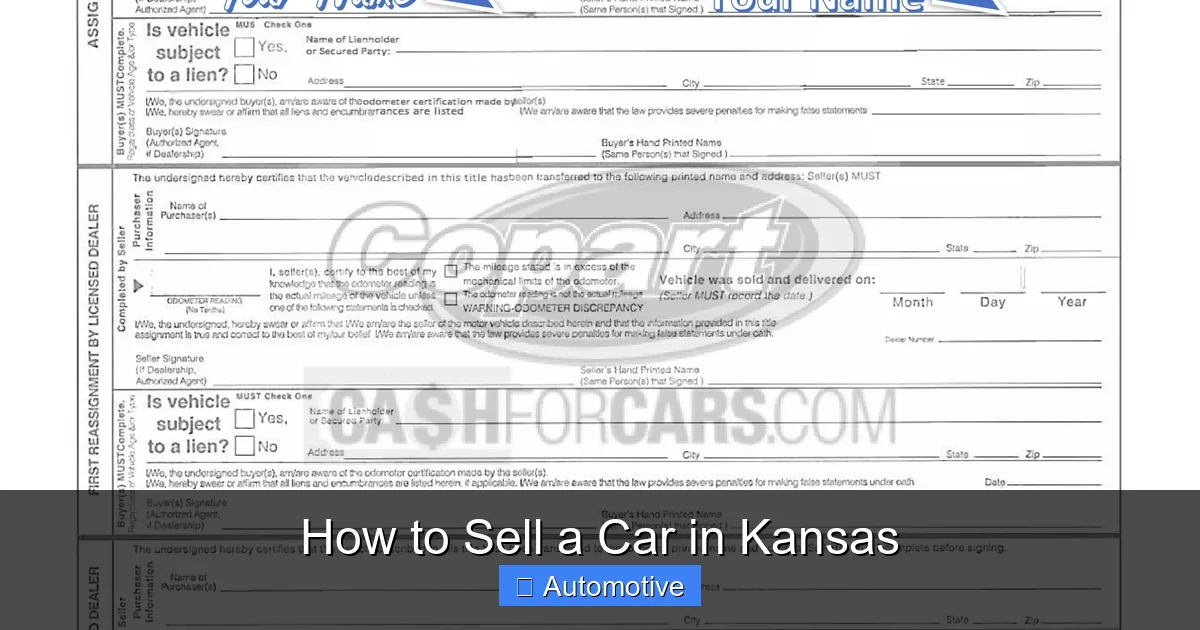
Sign Over the Title
The title is the most important document. In Kansas, you must sign the back of the title over to the buyer. Make sure:
– Your signature matches the name on the title
– The buyer’s name and address are filled in correctly
– The sale price and date are recorded
– There are no liens on the title (if there are, they must be released first)
If you’ve lost the title, you’ll need to apply for a duplicate from the Kansas Department of Revenue (DOR) before selling.
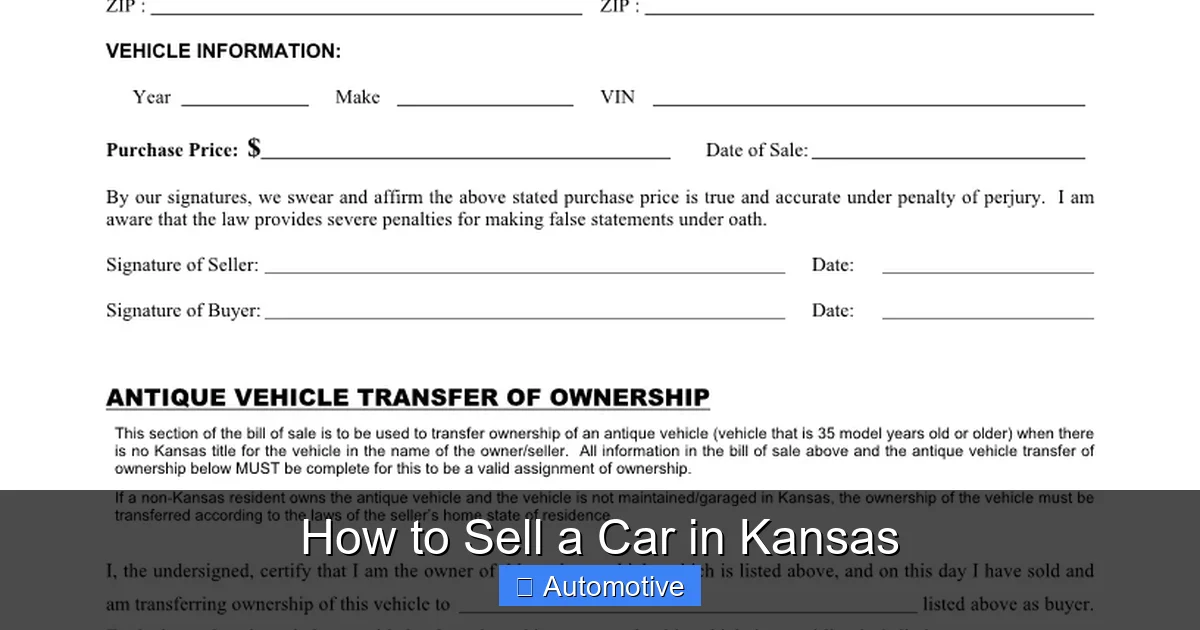
Provide a Bill of Sale
While not always required, a bill of sale is highly recommended. It serves as proof of the transaction and includes:
– Seller and buyer names and addresses
– Vehicle details (VIN, make, model, year)
– Sale price and date
– Odometer reading
– Signatures of both parties
You can find free bill of sale templates online or use the Kansas DOR form. Keep a copy for your records.
Remove License Plates and Cancel Insurance
In Kansas, license plates stay with the vehicle—they are not transferred to the buyer. However, you should remove any personalized or specialty plates if you plan to reuse them.
Cancel your insurance as soon as the sale is complete. You don’t want to keep paying for a car you no longer own. Contact your insurer to end coverage effective the sale date.
Notify the Kansas DMV
Kansas law requires sellers to notify the DMV when a vehicle is sold. You can do this online through the Kansas DOR website or by submitting a Notice of Sale form. This protects you from liability if the buyer gets a ticket or is involved in an accident before registering the car.
The buyer has 30 days to register the vehicle in their name and pay the required taxes and fees. Make sure they understand this responsibility.
Step 6: Understand Taxes and Fees
When selling a car in Kansas, it’s important to understand who pays what. In most cases, the buyer handles the majority of the costs, but there are a few things you should know.
Sales Tax
In Kansas, the buyer pays sales tax when they register the vehicle. The current rate is 6.5%, but local taxes may apply, bringing the total to around 8–9%. The tax is based on the sale price or the vehicle’s fair market value, whichever is higher.
As the seller, you don’t pay sales tax on the sale. However, if you’re trading in your car at a dealership, the trade-in value may reduce the taxable amount on your new purchase.
Registration and Title Fees
The buyer is responsible for:
– Title fee: $15
– Registration fee: Based on vehicle weight and type (typically $30–$100)
– Plate transfer fee (if applicable)
These fees are paid when the buyer registers the car at their local DMV office.
Emissions Testing
Kansas does not require emissions testing for most vehicles, but some areas (like Johnson County) may have local requirements. If your car is in a testing area, make sure it passes before selling. A failed test can scare off buyers.
Tips for a Smooth and Successful Sale
Selling a car doesn’t have to be stressful. With the right approach, you can make the process smooth, safe, and profitable. Here are a few final tips to keep in mind:
– **Be patient:** The right buyer may take time to find. Don’t rush into a low offer just to sell quickly.
– **Stay safe:** Always meet in public, verify identities, and trust your instincts. If something feels off, walk away.
– **Be flexible:** Be open to reasonable offers, but know your bottom line.
– **Keep records:** Save copies of the title, bill of sale, and DMV notification for at least a year.
– **Consider a pre-sale inspection:** Some buyers may request one. Offering it upfront can speed up the sale and build trust.
Conclusion
Selling a car in Kansas is entirely doable—even if you’ve never done it before. By following these steps, you’ll be well-prepared to handle every part of the process, from cleaning and pricing to paperwork and safety. Remember, the key to a successful sale is preparation, honesty, and attention to detail.
Take your time, do your research, and don’t skip the legal steps. A little effort upfront can save you headaches later. And when the sale is complete, you’ll have peace of mind knowing you did it the right way.
Whether you’re selling a compact car in Wichita, a truck in Topeka, or an SUV in Lawrence, this guide has you covered. Now go ahead—list that car, find a great buyer, and enjoy the next chapter.
Frequently Asked Questions
Do I need a bill of sale to sell a car in Kansas?
While not legally required, a bill of sale is highly recommended. It protects both you and the buyer by documenting the sale details, including price, date, and vehicle information.
Can I sell a car in Kansas without a title?
No, you must have a valid title in your name to sell a car in Kansas. If you’ve lost the title, apply for a duplicate from the Kansas Department of Revenue before listing the vehicle.
Who pays sales tax when selling a car in Kansas?
The buyer pays sales tax when they register the vehicle. The tax is based on the sale price or the vehicle’s fair market value, whichever is higher.
How long does a buyer have to register a car in Kansas?
The buyer must register the vehicle within 30 days of purchase. Failure to do so may result in penalties or fines.
Can I sell a car with a lien in Kansas?
No, the title must be clear of liens before you can sell the car. You’ll need to pay off the loan and obtain a lien release from the lender.
Is it safe to sell a car online in Kansas?
Yes, as long as you take precautions. Meet in public places, verify the buyer’s identity, and avoid sharing personal information. Using trusted platforms like Facebook Marketplace or Autotrader also helps.