How to Reset Tpms on a Subaru Outback

Contents

Reflective Stickers

Engine Flush Cleaner

Car Vacuum Cleaner (Portable)

Car Cup Holder Expander
Resetting the TPMS on your Subaru Outback is easier than you think—and essential for safety and fuel efficiency. Whether you’ve just inflated your tires, rotated them, or replaced a sensor, knowing how to properly reset the system ensures accurate readings and prevents warning lights from staying on unnecessarily.
Key Takeaways
- TPMS monitors tire pressure in real time: The Tire Pressure Monitoring System alerts you when tire pressure is too low, helping prevent blowouts and improve fuel economy.
- Reset is needed after tire service: Any time you inflate, deflate, rotate, or replace tires, the TPMS should be reset to ensure accurate readings.
- Subaru Outback uses a relearn procedure: Unlike some vehicles that use a reset button, the Outback requires a specific sequence using the TPMS tool or OBD2 scanner.
- You can do it yourself with the right tools: While dealerships can reset TPMS, many owners successfully perform the reset at home using affordable diagnostic tools.
- Always check tire pressure before resetting: Ensure all tires are properly inflated to the recommended PSI (found on the driver’s door jamb) before starting the reset process.
- Winter driving increases TPMS alerts: Cold weather causes tire pressure to drop, so expect more frequent resets during winter months.
- Ignoring TPMS warnings can be dangerous: Driving with underinflated tires increases wear, reduces handling, and raises the risk of a tire failure.
📑 Table of Contents
Why TPMS Matters in Your Subaru Outback
Your Subaru Outback is built for adventure—whether that’s a weekend camping trip, a cross-country road trip, or daily commuting through city streets. One feature that helps keep you safe on all those journeys is the Tire Pressure Monitoring System, or TPMS. This system constantly checks the air pressure in each of your tires and alerts you if one or more drops below the recommended level.
But here’s the thing: TPMS isn’t just a “set it and forget it” feature. It needs occasional attention, especially after routine maintenance like tire rotations, seasonal tire changes, or simply topping off air. When the system isn’t properly reset, it can give false warnings or fail to alert you when there’s a real problem. That’s why knowing how to reset TPMS on a Subaru Outback isn’t just helpful—it’s essential for safe, efficient driving.
How TPMS Works in the Subaru Outback
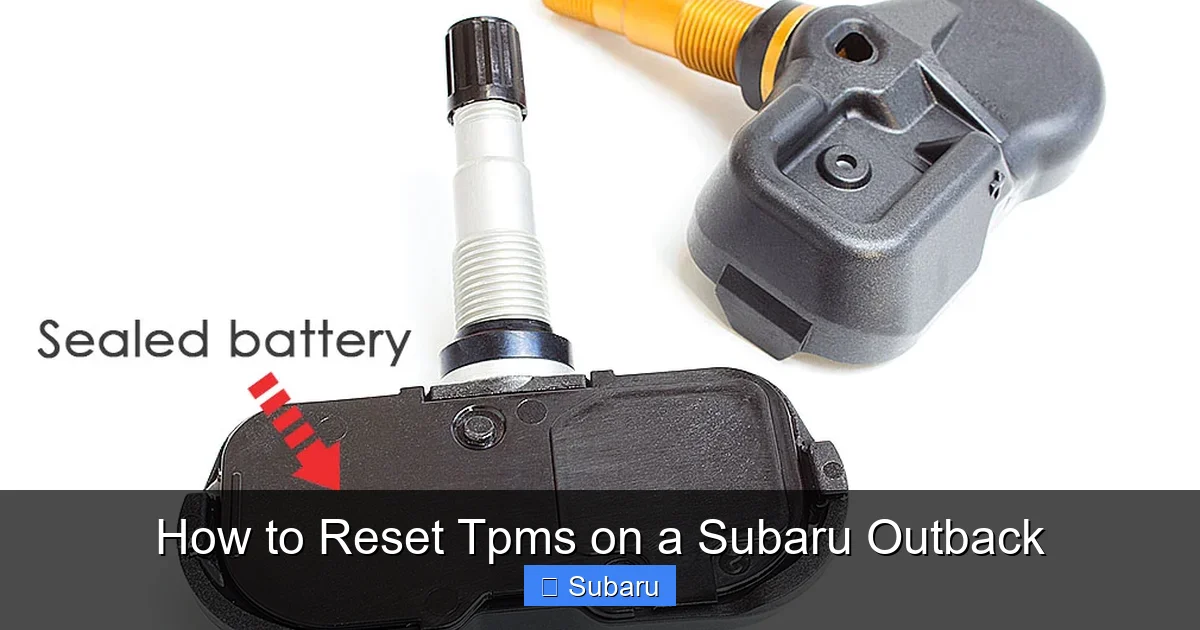
The Subaru Outback uses a direct TPMS system, which means each wheel has a sensor mounted inside the tire (usually attached to the valve stem). These sensors measure the actual air pressure and temperature and transmit that data wirelessly to the vehicle’s onboard computer. When pressure drops below about 25% of the recommended level, the dashboard warning light—a yellow tire symbol—illuminates.
Unlike older systems that relied on wheel speed sensors (indirect TPMS), the direct system in the Outback is more accurate and responsive. However, it also means that after any change to the tires or sensors, the system needs to “relearn” the positions of each sensor. This is where the reset process comes in.
When You Need to Reset TPMS
You don’t need to reset TPMS every time you drive. But there are several common situations when a reset is necessary:
- After inflating or deflating tires to the correct pressure
- After rotating tires (front to back or side to side)
- After replacing a tire or wheel
- After installing new TPMS sensors
- After a seasonal tire change (e.g., switching from all-season to winter tires)
- When the TPMS warning light stays on even though tires are properly inflated
Ignoring these situations can lead to confusion. For example, if you rotate your tires but don’t reset the system, the TPMS might still show the old sensor positions, causing inaccurate alerts. Worse, it could miss a real pressure issue in a tire that’s now in a different location.
Tools You’ll Need to Reset TPMS

Visual guide about How to Reset Tpms on a Subaru Outback
Image source: i.ytimg.com
Before diving into the reset process, it’s important to know what tools are required. Unlike some vehicles that have a simple reset button under the dashboard, the Subaru Outback requires a bit more effort—but it’s still doable at home with the right equipment.
TPMS Reset Tool (Recommended)
The most reliable way to reset TPMS on a Subaru Outback is by using a dedicated TPMS reset tool. These handheld devices communicate directly with the vehicle’s TPMS system and guide you through the relearn process. Popular models include the Autel MaxiTPMS TS508, OTC 3845, or the cheaper but effective ATEQ VT56.
These tools are especially helpful because they can activate each sensor individually, ensuring the system recognizes the correct tire position. They also work with a wide range of vehicles, making them a smart investment if you own multiple cars or plan to keep your Outback for years.
OBD2 Scanner with TPMS Function
If you already own an OBD2 scanner, check if it supports TPMS reset functionality. Many modern scanners—like the BlueDriver, Foxwell NT510, or Launch CRP129—can perform TPMS resets on Subarus. This is a great option if you’re already using the scanner for other diagnostics.
Manual Reset (Limited Use)
Some older Subaru Outback models (typically 2008–2014) allow a basic reset using the vehicle’s dashboard controls. However, this method only works if the sensors are still functioning and haven’t been moved. It won’t work after tire rotations or sensor replacements. We’ll cover this method later, but for most situations, a tool is required.
Air Compressor and Tire Pressure Gauge
Regardless of the reset method, you’ll need to ensure your tires are properly inflated before starting. Use a reliable tire pressure gauge to check each tire and an air compressor (portable or at a gas station) to adjust pressure as needed. The correct PSI for your Outback is listed on a sticker inside the driver’s door jamb—don’t rely on the number printed on the tire sidewall, as that’s the maximum pressure, not the recommended level.
Step-by-Step Guide: How to Reset TPMS on a Subaru Outback
Visual guide about How to Reset Tpms on a Subaru Outback
Image source: wheelsjoint.com
Now that you understand why and when to reset TPMS, let’s walk through the actual process. We’ll cover both the tool-based method (recommended) and the manual method (for older models).
Method 1: Using a TPMS Reset Tool (Best for Most Outbacks)
This method works for Subaru Outback models from 2015 to 2024 and is the most reliable way to ensure a successful reset. Follow these steps carefully:
Step 1: Park and Prepare
Park your Outback on a flat surface, turn off the engine, and engage the parking brake. Make sure all doors are closed and the key is out of the ignition. This prevents interference during the reset process.
Step 2: Inflate All Tires
Use your tire pressure gauge to check each tire. Inflate or deflate as needed to match the recommended PSI (usually 32–35 PSI for most Outback trims). Don’t forget the spare tire if your model has a TPMS sensor in it.
Step 3: Turn Ignition to “ON” (Do Not Start Engine)
Insert the key and turn it to the “ON” position—this powers up the electrical system without starting the engine. On push-button models, press the start button twice without pressing the brake.
Step 4: Connect the TPMS Tool
Plug the TPMS reset tool into the OBD2 port, which is usually located under the dashboard on the driver’s side. Wait for the tool to power on and detect your vehicle.
Step 5: Select TPMS Reset or Relearn
Follow the on-screen prompts to select “TPMS Reset” or “Sensor Relearn.” The tool will guide you through the process, often asking you to confirm the vehicle make, model, and year.
Step 6: Activate Each Sensor
The tool will instruct you to activate each TPMS sensor in a specific order—usually starting with the front left tire and moving clockwise. To activate a sensor, hold the tool near the valve stem and press the activation button. You’ll hear a beep or see a confirmation on the tool’s screen.
Step 7: Confirm Completion
Once all four (or five, including spare) sensors are activated, the tool will confirm the reset is complete. Turn off the ignition, remove the tool, and start the engine. The TPMS warning light should turn off within a few minutes of driving.
Method 2: Manual Reset (For Older Outbacks, 2008–2014)
If you have an older Outback and don’t have a TPMS tool, you can try the manual reset method. Note: This only works if the sensors are still in their original positions and functioning properly.
Step 1: Inflate Tires
Ensure all tires are inflated to the correct PSI.
Step 2: Turn Ignition to “ON”
Turn the key to the “ON” position without starting the engine.
Step 3: Press and Hold the TPMS Reset Button
Locate the TPMS reset button—it’s usually under the dashboard near the steering column or behind the glove box. Press and hold it for about 3–5 seconds until the TPMS light blinks three times.
Step 4: Drive the Vehicle
Start the engine and drive at speeds above 20 mph for at least 10 minutes. The system will recalibrate during this drive.
If the light remains off, the reset was successful. If it comes back on, you may need a tool-based reset or professional assistance.
Common Issues and Troubleshooting

Visual guide about How to Reset Tpms on a Subaru Outback
Image source: tireandwheelco.com
Even with careful steps, TPMS resets don’t always go smoothly. Here are some common problems and how to fix them.
TPMS Light Won’t Turn Off
If the warning light stays on after a reset, double-check tire pressures. Cold weather can cause pressure to drop overnight—recheck in the morning when tires are cold. If pressures are correct, the issue may be a faulty sensor or weak battery in one of the sensors (most last 5–10 years).
Tool Can’t Detect Sensors
If your TPMS tool can’t activate a sensor, it may be damaged or have a dead battery. Try replacing the sensor or visiting a tire shop for testing.
Incorrect Sensor Order
Always follow the tool’s instructions for sensor activation order. Activating sensors out of sequence can confuse the system and prevent a successful reset.
Spare Tire Not Recognized
Some Outbacks have a TPMS sensor in the spare tire. If your reset tool doesn’t mention the spare, check your owner’s manual. You may need to activate it separately.
Professional vs. DIY Reset: Which Is Better?
You have two main options for resetting TPMS: do it yourself or visit a professional. Let’s compare the pros and cons.
DIY Reset
- Pros: Saves money, convenient, builds knowledge about your vehicle
- Cons: Requires purchasing a tool (one-time cost), learning curve for first-time users
Professional Reset
- Pros: Fast, guaranteed success, no tools needed
- Cons: Costs $20–$50, requires scheduling and travel
- Pros: Fast, guaranteed success, no tools needed
- Cons: Costs $20–$50, requires scheduling and travel
For most owners, investing in a basic TPMS tool pays off quickly—especially if you rotate tires seasonally or live in a cold climate.
Maintaining Your TPMS for Long-Term Reliability
Resetting TPMS is important, but so is ongoing maintenance. Here’s how to keep your system working smoothly:
- Check tire pressure monthly—use a quality gauge, not the gas station pump
- Rotate tires every 6,000–8,000 miles to ensure even wear
- Replace TPMS sensors when replacing tires (most last 7–10 years)
- Avoid driving on underinflated tires—even short trips can damage sensors
- Keep your TPMS tool charged and stored in the glove box for emergencies
Conclusion
Resetting the TPMS on your Subaru Outback might seem like a small task, but it plays a big role in your safety, fuel efficiency, and overall driving experience. Whether you’re a weekend warrior or a daily commuter, taking a few minutes to reset the system after tire service ensures your Outback performs at its best.
With the right tools and a little know-how, you can handle TPMS resets confidently at home. And when in doubt, don’t hesitate to consult your owner’s manual or visit a trusted Subaru service center. Your tires—and your peace of mind—will thank you.
Frequently Asked Questions
How often should I reset the TPMS on my Subaru Outback?
You only need to reset the TPMS after tire service—such as inflation, rotation, or replacement. There’s no need to reset it regularly unless the warning light comes on incorrectly.
Can I reset TPMS without a tool?
On older Outback models (2008–2014), you may be able to use a manual reset button. However, for most modern Outbacks, a TPMS tool or OBD2 scanner is required for accurate results.
Why does my TPMS light keep coming on in cold weather?
Cold temperatures cause air to contract, lowering tire pressure. Check and adjust tire pressure when tires are cold, and reset the TPMS if needed.
How much does it cost to reset TPMS at a dealership?
Dealerships typically charge $20–$50 for a TPMS reset. Buying a basic TPMS tool for $50–$100 can save money in the long run.
What if my TPMS sensor is broken?
A damaged or dead sensor will need replacement. Most tire shops can test and replace sensors for $50–$100 each, including installation.
Will resetting TPMS affect my tire warranty?
No, resetting TPMS is a standard maintenance procedure and won’t void your tire or vehicle warranty. Always keep records of service for reference.