
How to Reset Tire Pressure Light on Toyota Rav4 2015

That annoying tire pressure light on your 2015 Toyota RAV4 doesn’t have to be a mystery. It’s your car’s Tire Pressure Monitoring System (TPMS) alerting you to a potential issue. Often, after inflating your tires to the correct PSI, the light will reset itself after a short drive. If it doesn’t, you can manually reset it using the button inside your vehicle. This guide walks you through both the automatic and manual reset processes clearly and safely.
Key Takeaways
- TPMS is a Safety System: The tire pressure light is a critical safety feature, not just an annoyance. It warns of underinflation, which affects handling, tire wear, and fuel economy.
- Check Pressure First: Always manually check and adjust all four tires to the manufacturer’s recommended PSI (found on the driver’s door jamb sticker) before attempting any reset.
- Two Main Reset Methods: The 2015 RAV4 typically uses either a manual reset button process or an automatic “drive cycle” reset after proper inflation. The manual method is often faster.
- Drive Cycle May Be Required: Even after a manual reset, the system may need you to drive at speeds above 25 mph for several minutes to re-calibrate the sensors.
- Light May Indicate a Problem: If the light flashes then stays on, or returns immediately after a reset, it could signal a faulty TPMS sensor or a dead sensor battery, requiring professional diagnosis.
- Seasonal Changes Affect TPMS: Cold weather can cause a temporary drop in tire pressure, triggering the light. Re-inflating tires in the morning (when cold) often solves this.
- Don’t Ignore the Light: Driving with significantly underinflated tires is dangerous and can lead to blowouts, poor braking, and uneven tire wear.
📑 Table of Contents
- Understanding Your 2015 Toyota RAV4’s Tire Pressure Monitoring System (TPMS)
- Essential First Steps Before You Even Touch the Reset Button
- The Manual Reset Procedure: Using the TPMS Button
- The “Drive Cycle” or Automatic Reset Method
- When the Light Won’t Turn Off: Troubleshooting Persistent TPMS Warnings
- Proactive Maintenance: Keeping Your TPMS Happy
- Conclusion: Knowledge is Power (and a Safe Ride)
Understanding Your 2015 Toyota RAV4’s Tire Pressure Monitoring System (TPMS)
That little yellow exclamation point inside a tire cross-section on your dashboard isn’t just being nosy. It’s the indicator for your RAV4’s Tire Pressure Monitoring System, or TPMS. This is a federally mandated safety system designed to warn you when your tire pressure is significantly low. For your 2015 model, Toyota uses a direct TPMS. This means each wheel has a small sensor mounted inside the valve stem that actively measures the air pressure and temperature, then wirelessly transmits that data to your car’s computer.
When the system detects that one or more tires has fallen 25% or more below the recommended pressure, it triggers that warning light. It’s a crucial alert because proper tire inflation is fundamental to your safety. Underinflated tires have more flex in the sidewall, generating excessive heat that can lead to a blowout. They also wear out faster on the edges, reduce your fuel efficiency, and make your RAV4 handle sluggishly, especially in emergency maneuvers. So, seeing that light means it’s time to take action, not just hit the reset button and forget about it.
How the 2015 RAV4 TPMS Works
Your 2015 RAV4’s system is pretty smart. After you inflate the tires, the sensors continue to send data. The car’s computer compares the readings from all four tires. Once all sensors report a pressure within the acceptable range (usually within 3-5 PSI of the target), and the system has confirmed stable readings for a set period or distance, the light should turn off on its own. This is the “automatic” reset. However, sometimes the system’s memory needs a little manual help, especially after tire rotation, replacement, or if the system got “confused.” That’s where the manual reset procedure comes in.
Essential First Steps Before You Even Touch the Reset Button
Rushing to reset the light without addressing the root cause is the most common mistake. It’s like turning off a smoke alarm without checking for fire. Here is your mandatory pre-reset checklist. Skipping this will almost certainly lead to the light coming back on, sometimes within minutes.
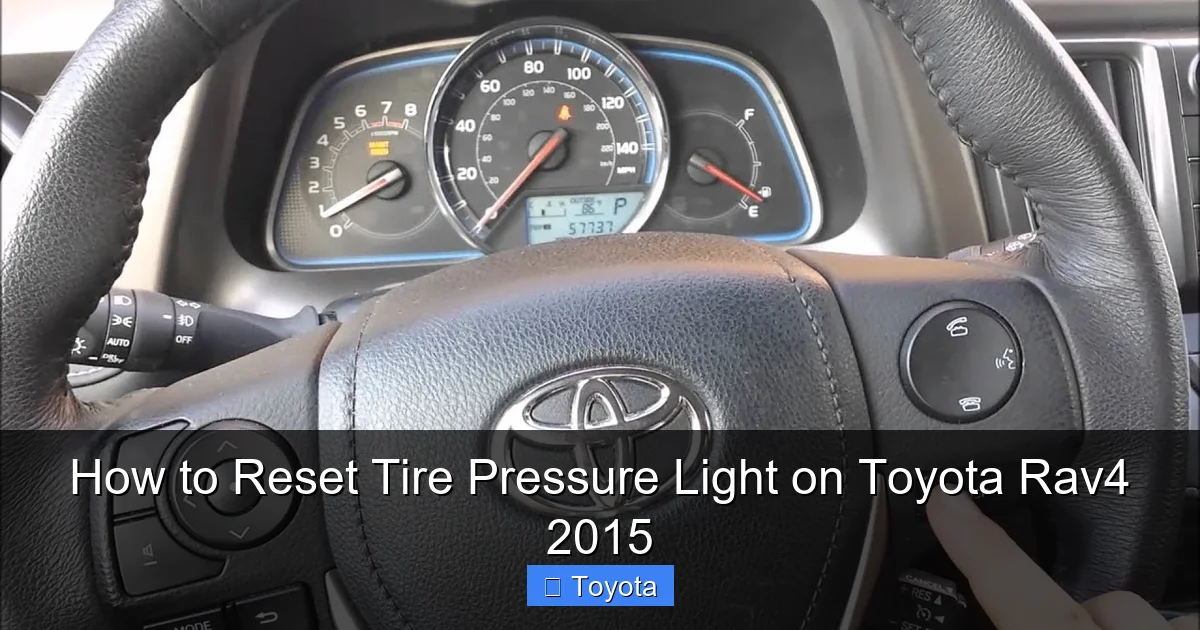
Visual guide about How to Reset Tire Pressure Light on Toyota Rav4 2015
Image source: i.ytimg.com
1. Find the Correct Tire Pressure
Do not use the number on the tire sidewall. That’s the maximum pressure the tire can hold, not what your RAV4 needs. Open the driver’s side door and look for the yellow and white sticker on the door jamb. It lists the recommended PSI for the front and rear tires. For a typical 2015 RAV4, it’s often 33 PSI for all four, but always verify with your specific sticker. Loaded with passengers or cargo? You might need a few extra PSI, as noted on the sticker.
2. Check and Inflate Tires When Cold
“Cold” doesn’t mean chilly weather. It means the tires haven’t been driven on for at least three hours or have been driven less than a mile. Driving heats the tires and air inside, increasing pressure and giving a falsely high reading. Check all four tires, including the spare if it’s a full-size one with a sensor (most RAV4 spares are temporary and don’t have a sensor). Use a reliable, high-quality digital tire pressure gauge. Adjust each tire to exactly the PSI listed on your door jamb sticker. Don’t “ballpark it.”
3. Inspect the Tires Themselves
While you’re down there, give each tire a visual and tactile once-over. Look for nails, screws, or other debris embedded in the tread. Check the sidewalls for cuts, bulges, or cracks. Feel for any Gouges. If you find damage, don’t just inflate and reset—have the tire professionally inspected and repaired or replaced. A slow leak will just trigger the light again. For more general maintenance knowledge, you can read about how to reset other maintenance lights on various Toyota models, which follows a similar principle of addressing the cause first.
The Manual Reset Procedure: Using the TPMS Button
If your tires are properly inflated and the light is still on after a few minutes of driving, it’s time for a manual reset. Your 2015 RAV4 is equipped with a dedicated TPMS reset button, usually located under the dashboard on the left side of the steering column, near the hood release. It’s a small, usually black or red, button. You might need to get on your knees or use a flashlight to see it clearly.
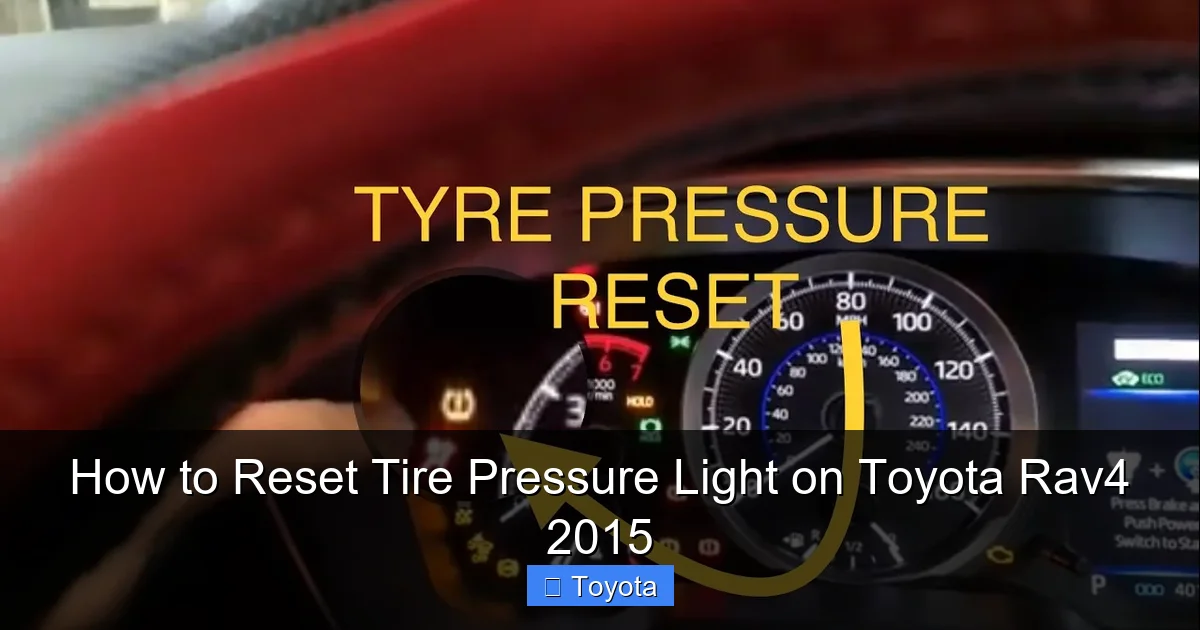
Visual guide about How to Reset Tire Pressure Light on Toyota Rav4 2015
Image source: i.ytimg.com
Step-by-Step Button Reset Guide
- Turn the Ignition On: Insert your key and turn it to the “ON” position (the position right before starting the engine, where all dashboard lights come on). Do not start the engine.
- Locate and Press the Button: Find the TPMS reset button. Press and hold it down firmly.
- Watch the Dashboard Light: The TPMS warning light on your dash will begin to blink slowly. After about 3-5 seconds of blinking, it should turn off. This indicates the system has been reset and is now re-learning the sensor IDs and pressures.
- Release the Button: Once the light goes off, you can release the button.
- Start the Engine: Now start the engine and let it idle for about 20-30 seconds. The light should remain off. If it comes back on immediately, double-check your tire pressures—one might still be low.
Important Note: If you cannot find the button, consult your owner’s manual. The exact location and procedure can sometimes vary slightly by trim level (LE, XLE, Limited). Some models might require you to use the multi-information display on the gauge cluster to access a TPMS reset menu, but the physical button is the standard method for the 2015 RAV4.
The “Drive Cycle” or Automatic Reset Method
This is the method the car uses on its own, and sometimes you just need to help it along. If your tires are perfectly inflated and you’ve done a manual reset, the system still needs to verify that the pressures are stable at driving speed. It’s a self-test.
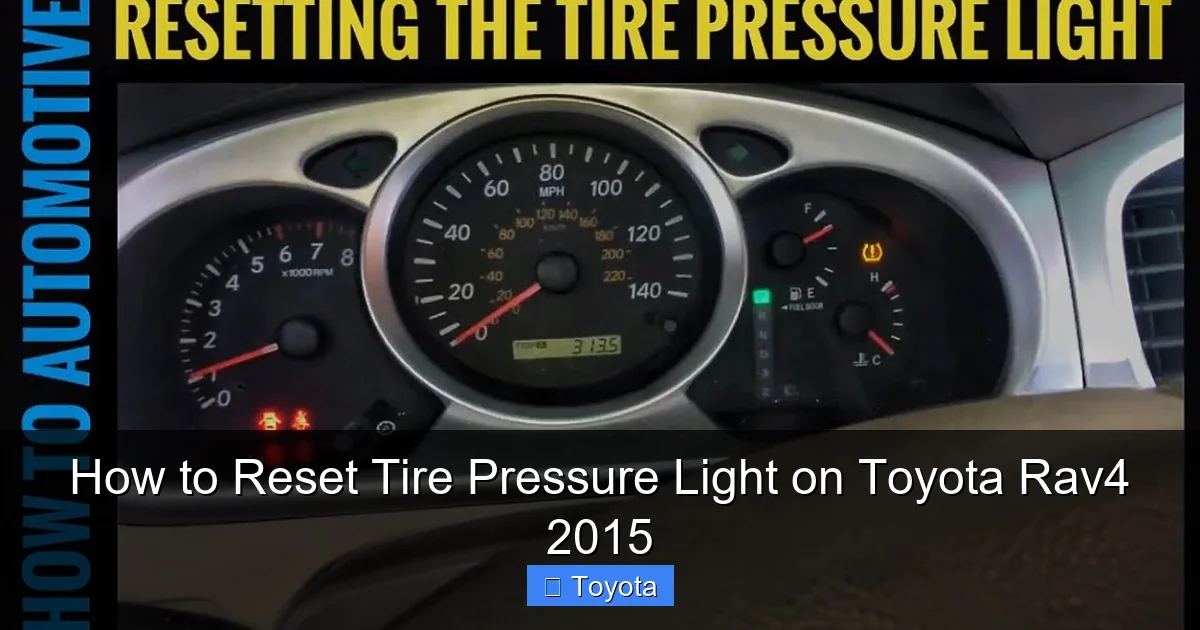
Visual guide about How to Reset Tire Pressure Light on Toyota Rav4 2015
Image source: i.ytimg.com
How to Perform a Successful Drive Cycle
- Ensure All Tires are Correctly Inflated: This is non-negotiable. Check them cold.
- Drive at Consistent Speeds: Get on a highway or a safe, open road. Drive at a steady speed between 25-65 mph (40-105 km/h) for at least 10-15 minutes. The system needs to see the tires rotating at normal speeds for a sustained period.
- Avoid Extreme Maneuvers: Don’t do hard acceleration or hard braking during this cycle. Just steady cruising.
- Temperature Matters: If it’s very cold outside, the air density is higher, and pressures can be lower. You might need to add 1-2 PSI to your tires on a very cold morning compared to a warm afternoon. The drive cycle helps the system acclimate to the new temperature.
After completing this drive, the light should extinguish. If it’s still on, you either have a persistent low-pressure issue (a slow leak) or a faulty sensor.
When the Light Won’t Turn Off: Troubleshooting Persistent TPMS Warnings
So you’ve inflated the tires perfectly, you’ve performed the manual reset, you’ve done the drive cycle, and that stubborn light is still glaring at you. Now what? This is your car telling you the problem is deeper than just low air.
Common Reasons for a Stubborn TPMS Light
- Faulty or Dead TPMS Sensor: The sensor batteries inside the valve stem have a lifespan of about 7-10 years. Your 2015 RAV4 is getting into that range. A dead sensor will stop transmitting, causing the system to flag an error.
- Damaged Sensor: A sensor can be damaged during a tire service (like an improper tire mount/dismount) or by impact (hitting a curb or pothole hard).
- Sensor Mismatch After Tire Rotation: If the tires were rotated and the shop did not perform a TPMS relearn procedure (which your manual reset should handle, but sometimes the system needs a scan tool to re-map sensor positions), the system may get confused.
- Spare Tire in Use: If you have a temporary spare (the small “donut” type) installed, it has no TPMS sensor. The system will detect a “missing” sensor and illuminate the light. This is normal and should go away when the full-size wheel with sensor is reinstalled.
- Extreme Temperature Fluctuation: A very rapid drop in outside temperature (a cold front) can cause a legitimate drop in pressure. Re-inflate the tires to the correct cold pressure.
Next Steps for Professional Help
At this point, diagnosis requires specialized tools. A tire shop or dealership will use a TPMS scan tool to communicate with each sensor individually. They can check battery life, sensor ID, and pressure/temperature readings. They can also perform a “relearn” procedure to teach the car’s computer which sensor is at which wheel position. This is often necessary after replacing a sensor or rotating tires. The cost for a new TPMS sensor and installation can range from $80 to $150 per wheel. If you’re dealing with other dashboard lights on different models, the diagnostic process for systems like the airbag system on a Camry similarly often requires professional scan tools.
Proactive Maintenance: Keeping Your TPMS Happy
An ounce of prevention is worth a pound of cure. A few simple habits can drastically reduce the frequency of your TPMS light coming on and extend the life of your sensors.
Monthly Pressure Checks are Non-Negotiable
Even with TPMS, you should manually check all tire pressures (including the spare) at least once a month and before any long trip. Don’t rely on the light as your primary check. TPMS is a warning system, not a maintenance scheduler. By the time the light comes on, your tires are already 25% underinflated, which is too late for optimal safety and wear.
Use the Right Valve Stem Caps
Always use the plastic or metal caps that come with your sensors. They keep dirt and moisture out of the valve stem, which can cause leaks and sensor corrosion. Never use cheap, non-sealing caps. Losing a cap? Replace it immediately. You can find genuine caps at any Toyota dealer or reputable auto parts store.
Be Mindful During Tire Service
When you get tires rotated, balanced, or replaced, tell the technician your car has TPMS. They need to use proper techniques and tools to avoid damaging the sensors. After a tire service, it’s a good idea to check the TPMS light within a day to ensure it’s still off. If it’s on, have them perform a relearn.
Consider a Portable Air Compressor
Having a good quality 12V portable air compressor in your trunk is a lifesaver. It allows you to top off a slowly leaking tire or adjust pressure for seasonal changes without needing to find a gas station air pump, which are often inaccurate or broken. This small investment can save you from multiple TPMS light activations.
Conclusion: Knowledge is Power (and a Safe Ride)
Resetting the tire pressure light on your 2015 Toyota RAV4 is a simple process, but it’s the final step in a sequence that starts with proper tire maintenance. Remember the golden rule: Check, Inflate, Reset, Drive. Always verify your pressures with a good gauge, inflate to the spec on your door jamb, perform the manual reset if needed, and then complete a short drive cycle. If the light persists or flashes, treat it as a real problem and seek professional help. Your tires are the only part of your car touching the road, and their condition is paramount to your safety, your fuel budget, and your overall driving enjoyment. By understanding your TPMS and responding correctly to its alerts, you’re taking a major step toward ensuring every journey in your RAV4 is a safe and confident one.
Frequently Asked Questions
Why does my tire pressure light keep coming back on after I reset it?
This usually means one or more tires is still losing air due to a puncture, a poor seal at the valve stem, or a damaged wheel. It can also indicate a failing TPMS sensor. You need to find and fix the source of the leak or have the faulty sensor replaced.
Can I disable or remove the TPMS fuse to turn off the light permanently?
Technically, you could, but it is illegal in all 50 states and extremely dangerous. TPMS is a critical safety system. Tampering with it will also likely cause your vehicle to fail any safety or emissions inspection. You should never disable it.
My TPMS light is flashing instead of solid. What does that mean?
A flashing TPMS light typically indicates a system malfunction, such as a dead sensor battery or a communication failure with one of the sensors. It is not indicating low pressure at that moment. You need to have the system scanned by a professional to diagnose the specific fault.
Do I need a special tool to reset the TPMS after changing a tire or sensor?
For a simple pressure adjustment after inflation, no. The manual button reset or drive cycle is sufficient. However, after replacing a sensor or if the system doesn’t recognize a sensor after tire rotation, a professional “relearn” procedure using a scan tool is often required to map the new sensor to the correct wheel position.
Is the TPMS light the same as the low tire pressure symbol on other cars?
Yes, the symbol is standardized across all vehicles sold in the U.S. It’s a cross-section of a tire with an exclamation point inside. You might also see a message like “CHECK TIRE PRESSURE” appear on your multi-information display.
What’s the difference between the TPMS light and the maintenance required light?
They are completely separate systems. The TPMS light (yellow tire symbol) relates only to tire pressure. The “MAINTENANCE REQUIRED” light (often a wrench or “MAINT” text) is a reminder for routine service like oil changes, tire rotations, and inspections based on mileage or time. You can learn more about that specific light for your RAV4 in dedicated guides for newer RAV4 models.