
How to Reset the Check Engine Light on a 2006 Toyota Matrix

Resetting the check engine light on your 2006 Toyota Matrix is a simple process, but it’s critical to understand it’s not a fix for the underlying problem. You can clear the light using an OBD2 scanner, by disconnecting the battery, or by completing a successful drive cycle after repairs. Never ignore the light or reset it without diagnosing the issue first, as this can lead to more serious damage and failed emissions tests.
Key Takeaways
- The check engine light is a warning, not a routine maintenance indicator. It signals an issue in the emissions, engine, or transmission system that needs diagnosis.
- Always retrieve and address the stored trouble code before resetting the light. Resetting without repair is temporary and the light will return.
- The most reliable reset method is using an OBD2 scanner. This tool plugs into your Matrix’s port and can clear codes quickly and safely.
- Disconnecting the battery is a last-resort method. It can reset other vehicle systems (radio, clock) and may not clear all codes on modern cars.
- A “drive cycle” can automatically reset the light if the problem is fixed. The vehicle’s computer needs to see specific conditions to verify the repair.
- Driving with a solid check engine light is generally safe for short distances to get diagnostics, but a flashing light requires immediate stop to prevent engine damage.
- For complex or persistent codes, consult a professional mechanic. Some issues require specialized knowledge and tools beyond basic DIY.
📑 Table of Contents
- Understanding Your 2006 Toyota Matrix Check Engine Light
- Essential Preparation: Diagnosis Before Reset
- Method 1: The Professional Way – Using an OBD2 Scanner
- Method 2: The Manual Reset – Disconnecting the Battery
- Method 3: The Automatic Reset – Completing a Drive Cycle
- When to Seek Professional Help: Red Flags
- Preventive Maintenance: Keeping the Light Off for Good
- Conclusion: A Simple Task with Major Responsibility
Understanding Your 2006 Toyota Matrix Check Engine Light
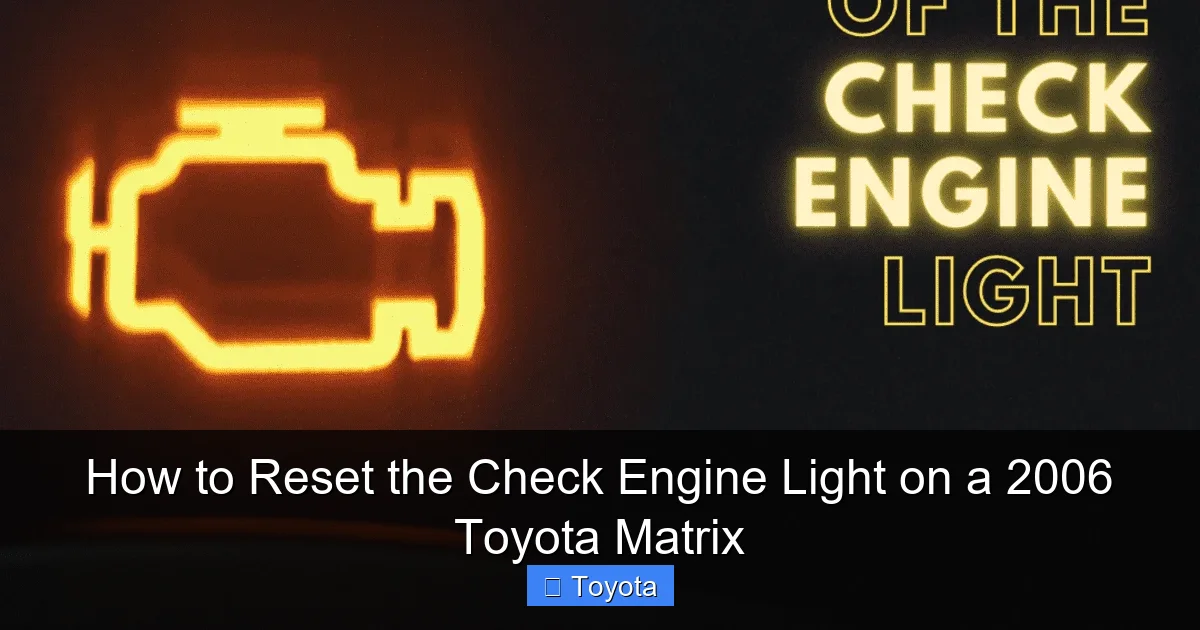
That little amber light on your dashboard, shaped like an engine, can cause a lot of anxiety. On your 2006 Toyota Matrix, it’s officially called the Malfunction Indicator Lamp (MIL). Its sole purpose is to tell you that the car’s computer, the Engine Control Module (ECM), has detected a problem outside of normal parameters. This could be anything from a loose gas cap—a very common and simple fix—to a failing catalytic converter or a serious engine misfire.
It’s absolutely vital to internalize this first and most important concept: resetting the check engine light does not fix the problem. It only turns off the warning signal. If the underlying issue remains, the light will come back, often after just a few drive cycles. Think of it like turning off a smoke alarm without checking for a fire—dangerous and unproductive. The proper sequence is: diagnose the problem, perform the repair, and then reset the light to clear the code and allow the system to monitor for new issues.
Your 2006 Matrix is equipped with OBD-II (On-Board Diagnostics, Second Generation), a standardized system that makes reading these trouble codes possible with an affordable tool. This is your gateway to understanding what your car is trying to tell you. Before you even think about resetting anything, your first step should be to find out why the light is on.
Why the Light Comes On: Common Matrix Culprits
The 2006 Toyota Matrix, with its reliable 1ZZ-FE or 2ZZ-GE engine, has some well-known triggers for the check engine light. The most frequent offender is a loose or faulty gas cap. A poor seal allows fuel vapors to escape, triggering an EVAP system code (often P0440, P0441, P0442, or P0455). It’s an easy fix—tighten or replace the cap—but the code must be cleared afterward.
Other common issues include:
- Oxygen (O2) Sensor Failure: These sensors monitor exhaust gases. A failed sensor reduces fuel efficiency and increases emissions. Codes like P0130-P0134 (Bank 1) or P0150-P0154 (Bank 2) are typical.
- Mass Air Flow (MAF) Sensor Issues: A dirty or failing MAF sensor, which measures incoming air, causes poor performance and codes like P0100-P0103.
- Catalytic Converter Efficiency: A failing cat triggers codes like P0420 (Catalyst System Efficiency Below Threshold). This is a more serious and expensive repair.
- Evaporative Emission (EVAP) System Leaks: Beyond a gas cap, this could be a cracked hose or a faulty purge valve, storing codes in the P0440-P0457 range.
- Misfires: Worn spark plugs, bad ignition coils, or damaged spark plug wires cause misfires (codes P0300-P0304). A flashing check engine light indicates a severe misfire that can damage the catalytic converter—stop driving immediately.
Essential Preparation: Diagnosis Before Reset
You are now armed with the knowledge that resetting is step two. Step one is diagnosis. You need to know the specific Diagnostic Trouble Code (DTC) stored in your Matrix’s computer. This is non-negotiable for a responsible repair.
Visual guide about How to Reset the Check Engine Light on a 2006 Toyota Matrix
Image source: i.ebayimg.com
Tools of the Trade: Getting Your Code Reader
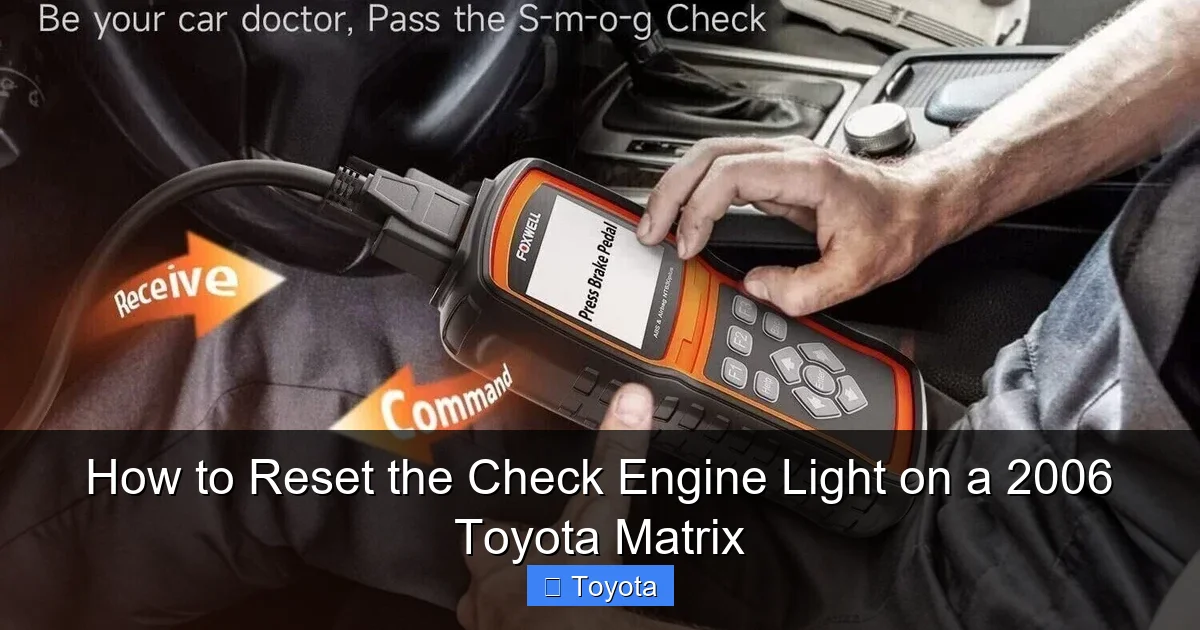
For a 2006 vehicle, you don’t need an expensive professional scan tool. A basic OBD-II code reader is perfect. These are widely available at auto parts stores (often with free loaner programs), Walmart, or Amazon for $20-$50. They simply plug into the OBD-II port, which on your Matrix is located under the dashboard, just to the right of the steering column, near the driver’s knee. It’s a trapezoidal 16-pin connector.
Once you have the tool:
- Turn the ignition to the “ON” position (do not start the engine).
- Plug the scanner into the OBD-II port.
- Follow the scanner’s menu to “Read Codes” or “Diagnose.”
- It will display one or more codes, like “P0442” or “P0301.”
- Write these down! This is your clue. You can look them up online (sites like OBD-Codes.com are free) or ask for help at a parts store.
If you don’t want to buy a tool, many national auto parts retailers (AutoZone, Advance Auto Parts, O’Reilly) will scan your codes for free as a customer service. This is a fantastic option for a one-time job. You can then research the code and decide on a repair.
Interpreting the Results: What Does That Code Mean?
A code is a starting point, not a final diagnosis. “P0442” means “Evaporative Emission System Leak Detected (small leak).” It doesn’t tell you where the leak is. That requires further inspection—checking the gas cap, inspecting charcoal canister hoses, etc. For a misfire code like P0302 (Cylinder 2 Misfire Detected), you’ll need to inspect the spark plug, wire, and coil for that specific cylinder.
This is where you decide: is this a fix I can handle? A gas cap or MAF sensor cleaning is DIY-friendly. A catalytic converter or internal engine issue is not. If the repair is beyond your skill level, take it to a trusted mechanic. Have them fix it, and then you can reset the light yourself or ask them to do it upon completion.
Method 1: The Professional Way – Using an OBD2 Scanner
This is the cleanest, fastest, and most reliable method. It’s what professionals use. If you’ve already diagnosed and repaired the issue, or if you simply want to clear a code after a repair (like replacing an O2 sensor), this is your best bet.
Visual guide about How to Reset the Check Engine Light on a 2006 Toyota Matrix
Image source: i.ytimg.com
Step-by-Step Reset with a Basic Scanner
Assuming you have your code reader and the problem is fixed:
- Ensure the ignition is ON (key in “ON” position, engine off).
- Plug the scanner into the OBD-II port. It should click into place.
- Turn the scanner on and navigate through the menus. You’re looking for options like “Erase Codes,” “Clear Codes,” or “DTC Reset.” The wording varies by brand.
- Select “Erase Codes.” The scanner will communicate with the ECM and wipe the stored fault codes and the check engine light.
- You should see the light on the dash go out immediately.
- Turn the ignition OFF for a few seconds, then back ON. Start the engine. The light should remain off. If it comes back on immediately or within a few drive cycles, your repair was not successful or a new problem exists.
Pro Tip: Some advanced scanners have a “Readiness Monitor” or “Emissions Test” screen. After clearing codes, these monitors will show as “Not Ready.” You must drive the car under varying conditions (see the Drive Cycle section below) to set them to “Ready” for a smog test. Simply clearing the light doesn’t mean the car is ready to pass inspection.
Method 2: The Manual Reset – Disconnecting the Battery
This is the old-school method, used before OBD-II scanners were common. It can work on your 2006 Matrix, but it has significant drawbacks. It should be considered a last resort if you have no access to a scanner and are certain the repair is complete.
Visual guide about How to Reset the Check Engine Light on a 2006 Toyota Matrix
Image source: images.saymedia-content.com
The Process and Its Consequences
- Pop the hood and locate the battery. It’s in the front of the engine compartment on the driver’s side.
- Identify the negative (-) terminal. It has a black cable and a negative (-) symbol.
- Using a 10mm wrench or socket, loosen the nut on the negative terminal clamp.
- Carefully lift the clamp off the terminal and move the cable away so it cannot touch the battery post.
- Wait at least 10-15 minutes. This allows the ECM’s volatile memory to fully discharge. Some systems may require longer.
- Reconnect the negative cable and tighten the nut securely. Reconnect any other components you may have unplugged (like a radio memory saver).
- Start the car. The check engine light should be off. However, be prepared for other things to reset:
- Radio/Clock: Will need to be reprogrammed.
- Power Window Calibration: The auto-up/down feature may need to be relearned (consult manual).
- Transmission Adaptations: The transmission control module may have lost its learned shift points, leading to slightly harsh shifts for the first few drives as it relearns your driving style.
- Fuel Trims: The engine computer will need to re-learn optimal fuel mixture, which might cause a slight idle roughness for a short time.
Because of these side effects, and because it may not clear all trouble codes (some are “non-volatile” and stay stored), the battery disconnect method is not recommended when a scanner is available.
Method 3: The Automatic Reset – Completing a Drive Cycle
This is the method you hope for after a successful repair. If you fix the issue—say, you tightened the gas cap or replaced an O2 sensor—the ECM will eventually turn off the light on its own once it verifies the problem is gone. This verification happens through a series of specific driving conditions called a “drive cycle” or ” readiness monitors.”
Understanding Readiness Monitors
Your Matrix’s computer runs self-tests on various emissions-related systems. There are several monitors (e.g., Catalyst, Evaporative System, Oxygen Sensor, EGR, etc.). When you clear a code, all monitors reset to “Not Complete.” As you drive, the ECM runs these tests. When all applicable monitors show “Complete” or “Ready,” and no new codes are set, the check engine light will go off.
How to Perform a Generic Toyota Drive Cycle
While exact cycles vary by model year and engine, a general pattern for your 2006 Matrix is:
- Start with a cold engine. Let it idle for at least 2-3 minutes.
- Accelerate smoothly to about 45-50 mph. Hold that speed for 2-3 minutes.
- Decelerate by easing off the gas (do not brake) down to about 20 mph.
- Accelerate again to 45-50 mph and hold.
- Perform a series of gentle stops and accelerations in city-like driving for 5-10 minutes.
- Let the engine idle again for 2-3 minutes with all accessories (A/C, lights) off, then with them on.
This sequence covers a range of engine loads, speeds, and temperatures, giving the ECM a chance to run its monitors. After this, you may need to drive normally for another 20-50 miles. The light may go off during this time. You can check monitor status with an OBD2 scanner (see Method 1). If the light is still on after a successful repair and a proper drive cycle, the code may still be stored, or the repair was ineffective.
When to Seek Professional Help: Red Flags
While resetting the light is easy, the diagnosis and repair are where expertise is crucial. Here are clear signs you should stop and call a mechanic:
- A Flashing Check Engine Light: This is an emergency. It indicates a severe misfire that is dumping raw fuel into the exhaust, risking catastrophic damage to the catalytic converter. Stop driving immediately and have the car towed.
- Multiple Codes in Different Systems: If you have, for example, an O2 sensor code, an EVAP code, and a misfire code, it could indicate a larger issue like a major vacuum leak or an electrical problem.
- Codes Related to Internal Engine or Transmission: Codes for cylinder pressure, transmission solenoid performance, or turbocharger (if equipped) require professional diagnosis.
- The Light Returns Immediately After Reset: If you clear the code and it pops back on within a day or even a single drive, the underlying component is likely failed and needs replacement.
- You Lack the Tools or Confidence: Diagnosing an intermittent problem or a complex code can be frustrating and time-consuming. A professional’s scan tool and experience can save you hours.
Remember, a mechanic’s diagnostic fee is for their time, expertise, and equipment. It’s an investment in correctly fixing your car. If you’re looking for guidance on other Toyota maintenance tasks, such as resetting the maintenance light on a Toyota Yaris, the principles are similar but the procedure is different and applies to service reminders, not engine faults.
Preventive Maintenance: Keeping the Light Off for Good
The best way to deal with a check engine light is to prevent it from coming on in the first place. Adhering to your Matrix’s maintenance schedule is the single most effective strategy.
Key Maintenance Items for Your 2006 Matrix
- Regular Oil Changes: Every 5,000-7,500 miles. Clean oil prevents engine wear and sludge that can trigger sensors.
- Air Filter Inspection/Replacement: A clogged air filter restricts airflow, causing the MAF sensor to work harder and potentially throw a code. Check it every 12,000 miles.
- Spark Plugs and Ignition Wires: Replace on schedule (typically every 30,000-60,000 miles for plugs). Worn plugs cause misfires.
- Gas Cap: Ensure it’s tightened until it clicks. Replace it if the seal is cracked or damaged. This is the #1 cause of EVAP codes.
- Quality Fuel: Use Top Tier detergent gasoline to keep fuel injectors and intake valves clean.
- Address Small Problems Early: That rough idle or slight drop in fuel economy could be a warning sign. Don’t wait for the light to come on.
By staying proactive, you’ll enjoy your reliable Toyota Matrix for years to come with minimal unexpected dashboard surprises. If you’re working on other vehicle systems, always ensure you’re following the correct procedure—for instance, resetting the maintenance light on a Toyota Highlander involves a different button sequence on the odometer, completely unrelated to the OBD-II system used for the check engine light.
Conclusion: A Simple Task with Major Responsibility
Resetting the check engine light on your 2006 Toyota Matrix is a straightforward mechanical task. Whether you use an OBD-II scanner, disconnect the battery, or simply complete a drive cycle after a repair, the physical steps take minutes. However, the philosophy behind the action is what matters most. The light is your car’s voice. Resetting it without listening to what it said is ignoring a cry for help.
Embrace the diagnostic process. Use the free code scanning services available. Research your specific code. Make the necessary, safe repairs. Then, and only then, use your chosen method to clear the code and extinguish the light. This approach protects your vehicle’s longevity, ensures it passes emissions testing, and, most importantly, keeps you safe on the road. Your Toyota Matrix is a testament to reliable engineering—treat its warnings with respect, and it will serve you faithfully for many more miles.
Frequently Asked Questions
Is it safe to drive my Matrix with the check engine light on?
If the light is solid and the car is running normally, it’s generally safe to drive a short distance to get diagnostics. However, if the light is flashing, or if you notice severe symptoms like loss of power, strange noises, or smoke, stop driving immediately and seek help.
Do I absolutely need a scanner to reset the light?
While a scanner is the best and preferred method, you can also disconnect the battery for 10-15 minutes to clear the ECM memory. However, this resets all other systems too and may not work on all codes. The scanner is precise and recommended.
How long does it take for the light to reset after a repair?
It depends. If you use a scanner, it’s instantaneous. If you rely on a drive cycle, it could take 50-100 miles of driving under specific conditions for the computer to verify the repair and turn the light off.
Why did my check engine light come back on after I reset it?
This almost always means the original problem was not properly fixed. The code was stored again because the faulty component (e.g., bad O2 sensor, cracked hose) is still present. You must re-diagnose and complete the correct repair.
Will disconnecting the battery harm my car’s computer?
No, it will not harm the ECM. However, it will erase learned data for the transmission shift points and idle control, which may cause temporary rough running or harsh shifts until the computer relearns. It will also reset your radio presets and clock.
Should I reset the light myself or let a mechanic do it?
If you have diagnosed and repaired the issue yourself, resetting it with a scanner is a simple final step. If a professional mechanic performed the repair, they should reset it for you as part of the service. Always ensure the light is off after any work is completed.
