How to Reset Check Engine Light on a 2013 Toyota Corolla

Contents
- 1 Key Takeaways
- 2 📑 Table of Contents
- 3 Introduction: That Glowing Dashboard Puzzle
- 4 Understanding Your 2013 Corolla’s Check Engine Light
- 5 Critical First Step: Diagnose, Don’t Just Erase
- 6 How to Reset the Check Engine Light: Three Proven Methods
- 7 Important Warnings and Common Pitfalls
- 8 What to Do If the Light Comes Back
- 9 Conclusion: Knowledge is Power (and a Clear Dashboard)
- 10 Frequently Asked Questions


Resetting the check engine light on your 2013 Toyota Corolla is a simple process, but it must be done correctly. First, always diagnose the underlying issue with an OBD2 scanner—ignoring the cause can lead to serious engine damage. You can reset the light using a scanner, by disconnecting the battery, or via a driving cycle after repairs. Remember, if the problem persists, the light will return. For other Toyota models, like the Highlander, the steps are very similar, but always consult your specific owner’s manual.
Key Takeaways
- Diagnosis Before Reset: Never reset the light without first identifying and fixing the trouble code. Use an OBD2 scanner to read the code.
- Multiple Reset Methods: You can clear the light with an OBD2 tool, by disconnecting the negative battery terminal, or completing a successful driving cycle after a repair.
- Light May Return: If the original problem isn’t fixed, the check engine light will illuminate again, often within a few drive cycles.
- Safety First: A flashing check engine light indicates a severe problem (like misfire). Stop driving immediately and seek professional help; do not attempt a reset.
- Scanner Recommended: Using a basic OBD2 scanner is the fastest, most reliable method and avoids resetting other vehicle systems inadvertently.
- Battery Disconnect Risks: Disconnecting the battery may reset radio presets, climate control settings, and require a steering wheel recalibration on some models.
- Professional Help Available: If you’re uncomfortable, auto parts stores often read codes for free, and a mechanic can diagnose and reset the light properly.
📑 Table of Contents
- Introduction: That Glowing Dashboard Puzzle
- Understanding Your 2013 Corolla’s Check Engine Light
- Critical First Step: Diagnose, Don’t Just Erase
- How to Reset the Check Engine Light: Three Proven Methods
- Important Warnings and Common Pitfalls
- What to Do If the Light Comes Back
- Conclusion: Knowledge is Power (and a Clear Dashboard)
Introduction: That Glowing Dashboard Puzzle
There it is. That little amber engine-shaped icon glowing on your 2013 Toyota Corolla’s dashboard. The check engine light. It’s one of the most common—and often most frustrating—warnings we see as car owners. Your first instinct might be to simply make it go away. But before we dive into the “how,” we need to talk about the “why.” This light is your car’s way of saying, “Hey, something needs attention.” It’s connected to the car’s On-Board Diagnostics II (OBD2) system, a sophisticated computer that monitors everything from engine performance to emissions controls.
Resetting the light is just clearing the message, not fixing the problem. Think of it like turning off a smoke alarm without checking for fire. This guide will walk you through the entire process for your 2013 Corolla, from the crucial first step of diagnosis to the actual reset procedures. We’ll cover the safe ways to do it, the pitfalls to avoid, and what to expect afterward. By the end, you’ll know exactly how to handle that light, whether you just fixed a loose gas cap or are dealing with a more complex issue.
Understanding Your 2013 Corolla’s Check Engine Light
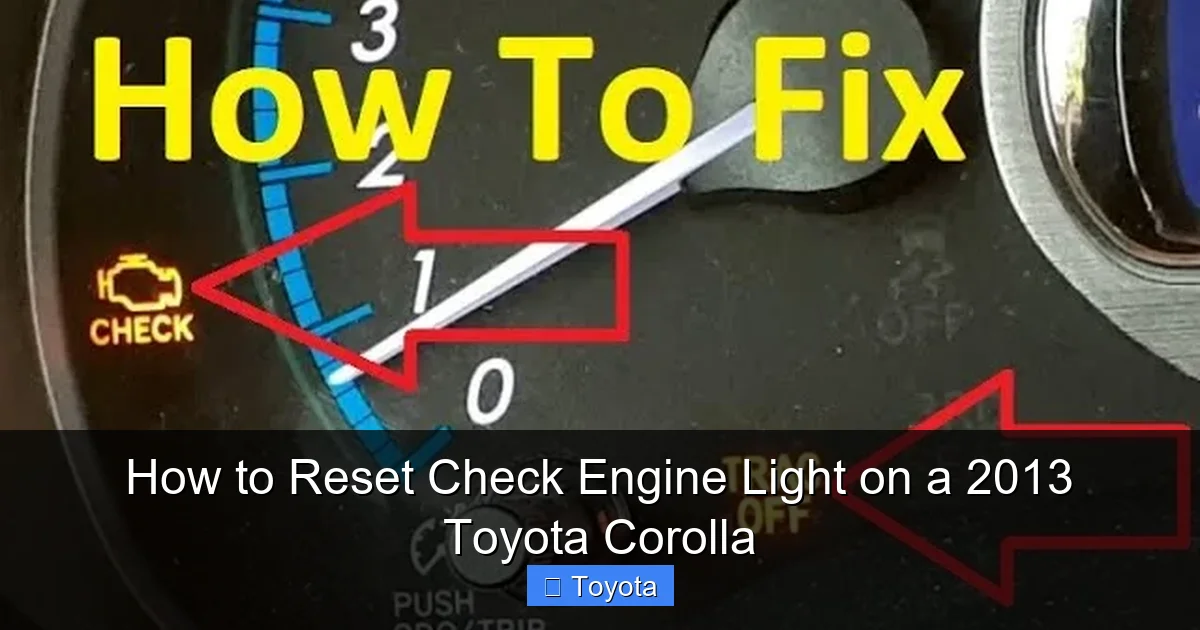
The check engine light, or Malfunction Indicator Lamp (MIL), is part of a federally mandated emissions system. When your Corolla’s engine computer (ECU) detects a parameter outside its normal range, it stores a Diagnostic Trouble Code (DTC) and turns on the light. The light’s behavior is important:
Visual guide about How to Reset Check Engine Light on a 2013 Toyota Corolla
Image source: i.ytimg.com
- Solid Light: A non-emergency issue that should be diagnosed soon. It could be anything from a faulty gas cap to an oxygen sensor problem.
- Flashing Light: A severe, immediate problem, usually a cylinder misfire that can damage the catalytic converter. You should stop driving as soon as it’s safe and get it towed.
Your 2013 Corolla can store multiple codes. The light tells you a problem exists, but the code tells you what. That’s why a scanner is the essential first tool.
The OBD2 Port: Your Car’s Diagnostic Gateway
Under your Corolla’s dashboard, just below the steering column, is a small, trapezoidal connector—the OBD2 port. This is where you plug in a scan tool. For model year 1996 and newer, this port is standardized. Any basic OBD2 scanner (available for $20-$50) will work with your 2013 Corolla to read and clear codes. More advanced scanners provide live data, which is invaluable for diagnosing intermittent issues.
Critical First Step: Diagnose, Don’t Just Erase
Resetting the light without addressing the root cause is the #1 mistake. The light will return, often within 50-100 miles of driving. Worse, you could be driving with a serious problem that’s causing expensive damage. Here’s the proper pre-reset protocol:
Visual guide about How to Reset Check Engine Light on a 2013 Toyota Corolla
Image source: i.ytimg.com
Step 1: Retrieve the Trouble Code(s)
Plug your OBD2 scanner into the port under the dash. Turn your Corolla’s ignition to the “ON” position (do not start the engine). Follow your scanner’s prompts to “Read Codes.” You’ll get a code like “P0171” (System Too Lean) or “P0304” (Cylinder 4 Misfire Detected). Write this code down. This is your clue.
Step 2: Research the Code
A quick internet search for “P0171 Toyota Corolla” will yield thousands of results from forums and repair sites. This gives you a starting point. Common culprits for a 2013 Corolla include:
- Loose or Faulty Gas Cap: The #1 cause of EVAP system codes. Tighten it until it clicks.
- Oxygen (O2) Sensor: Fails over time and affects fuel economy.
- Mass Air Flow (MAF) Sensor: Can get dirty, causing lean/rich conditions.
- Catalytic Converter: Less common on a well-maintained Corolla, but possible.
- Spark Plugs/Ignition Coils: Worn plugs or bad coils cause misfires (P030X codes).
If the code points to something simple you can fix (like the gas cap), do it. Then, you’re ready to reset. If it’s complex, a professional diagnosis is wise. For other Toyota models, such as the Highlander, the diagnostic process is identical due to the universal OBD2 standard.
How to Reset the Check Engine Light: Three Proven Methods
Once the underlying issue is resolved, it’s time to clear the code and turn off the light. Here are your three main options, in order of recommendation.
Visual guide about How to Reset Check Engine Light on a 2013 Toyota Corolla
Image source: weldingtroop.com
Method 1: The OBD2 Scanner Reset (Easiest & Safest)
This is the professional and recommended method. Your scanner, which you used to read the code, will have a “Clear Codes” or “Erase Codes” function.
- With the ignition still in the “ON” position (engine off), go to the “Clear Codes” menu on your scanner.
- Select it. You may get a confirmation prompt. Accept it.
- The scanner will communicate with the ECU and wipe the stored code(s).
- Start your Corolla’s engine. The check engine light should be off. If it comes back immediately, the problem was not fully fixed.
Pro Tip: Some basic scanners require you to turn the ignition off and back on after clearing codes for the light to extinguish. Consult your scanner’s manual.
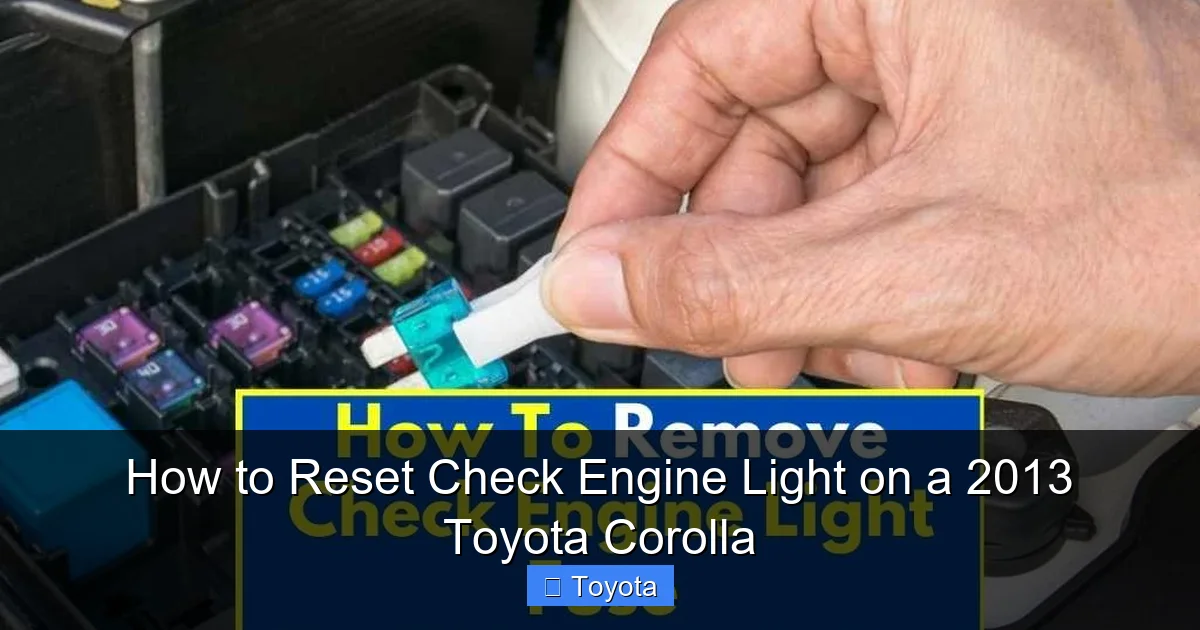
Method 2: The Battery Disconnect Method (The “Hard Reset”)
This method works by draining the residual power from the car’s computer, forcing it to reset. It’s effective but has downsides.
- Park safely and turn off the engine. Engage the parking brake.
- Locate the negative (-) battery terminal. It’s usually black with a minus sign and a black cable.
- Using a 10mm wrench or socket, loosen the nut on the negative terminal. Be careful not to let the wrench touch any metal parts.
- Carefully lift the negative cable and tuck it away so it cannot touch the battery post.
- Wait 10-15 minutes. This allows the ECU’s capacitors to fully discharge. You can also turn on the headlights for a minute during this wait to drain any remaining stored energy.
- Reconnect the negative cable and tighten the nut securely.
- Start your Corolla. The check engine light should be off. However, you will likely need to:
- Re-enter radio presets and security codes.
- Re-set the clock.
- Re-calibrate the power window settings (if applicable).
- The steering wheel may need to be turned from lock to lock to recalibrate the electric power steering—this is normal.
Warning: Disconnecting the battery on some modern cars can cause issues with the Engine Control Module (ECM) requiring a professional relearn procedure. For a 2013 Corolla, it’s generally safe, but the scanner method is always preferred.
Method 3: The Driving Cycle (Letting the System Self-Clear)
After you’ve fixed the problem, the ECU needs to see that the fault is gone under specific driving conditions. This is called a “drive cycle” or “relearn.” If the fault doesn’t reappear within a set number of “cold starts” and drive patterns, the light will turn itself off. For a simple fix like a tightened gas cap, this may take 2-3 normal drives. For more complex repairs, you may need a specific drive cycle. Patience is key here. If the light remains on after 100 miles of driving, the issue persists or the code wasn’t cleared.
Important Warnings and Common Pitfalls
Resetting the light is straightforward, but there are critical things to watch out for to avoid bigger headaches.
Do NOT Reset a Flashing Light
A flashing check engine light means “SEVERE MISFIRE.” Unburned fuel is flooding your catalytic converter, which can destroy it in minutes. If the light is flashing, pull over safely and shut off the engine. Have the vehicle towed. Resetting it in this state is dangerous and will cause catastrophic damage.
Don’t Use “Code Erasers” or “Turn Off Light” Tools Without Reading
Some cheap, generic tools only clear codes. They don’t read them. Using one blindly is like taking painkillers for a broken leg. The problem remains hidden and worsens. Always read the code first, even if you plan to clear it immediately after a repair.
Battery Disconnect Can Cause Other Lights
Draining the system can sometimes trigger other warning lights, like the airbag or ABS light, which may need a professional scan tool to clear. It can also reset the maintenance required light on your Corolla, which is a separate system for oil changes.
Emissions Testing Implications
In most states, your car must pass an emissions (smog) test. You cannot pass if the check engine light is on. However, you also cannot pass immediately after resetting the light. The OBD2 system must complete its “readiness monitors”—a series of self-tests that happen during normal driving. This can take 50-100 miles of varied driving (highway, city, idle). If you reset the light and go straight to the test station, you will likely fail because the monitors aren’t set. Plan your reset and test accordingly.
What to Do If the Light Comes Back
So you reset the light, drove for a few days, and it’s back on. Now what? This means the initial repair either didn’t fix the problem or a new issue has developed.
Step 1: Re-Read the Code
Use your scanner again. Is it the same code? That means your fix was incomplete or incorrect. For example, if you replaced an O2 sensor but the new one is defective or the wiring is bad, the same code will return. If it’s a different code, a new problem has emerged.
Step 2: Deep Dive Diagnosis
Now you need more than a code reader. You need to look at “live data.” A better scanner will show you real-time parameters: fuel trims, oxygen sensor voltages, coolant temperature, etc. This data helps you see if values are out of spec. For instance, a long-term fuel trim of +20% indicates a lean condition (vacuum leak, weak fuel pump). This step often separates DIYers from professional mechanics.
Step 3: Seek Professional Help
If you’ve retried the fix and the light returns, or if the diagnosis is beyond your comfort level, take it to a trusted mechanic. Explain what you did and what codes were set. A good technician will use this information as a starting point for their own diagnosis. For other common issues, like a battery light on a Corolla, the diagnostic path is different but equally important.
Conclusion: Knowledge is Power (and a Clear Dashboard)
Resetting the check engine light on your 2013 Toyota Corolla is a useful skill, but it’s only one piece of vehicle ownership. The true power lies in understanding that the light is a messenger, not the problem itself. By always diagnosing first, using the proper tools, and following safe reset procedures, you maintain your car’s health and avoid costly surprises. Remember the simple hierarchy: Diagnose → Repair → Reset → Verify. If you follow these steps, you’ll keep your Corolla running smoothly and your dashboard clear. For more specific guides on other models, like resetting the light on a Nissan Altima, the principles remain the same, but the exact steps for driving cycles or battery disconnect locations can vary. Happy, and safe, motoring.
Frequently Asked Questions
Will the check engine light reset itself?
Yes, but only under specific conditions. After you fix the problem, the ECU needs to see that the fault is gone across multiple drive cycles (usually 2-3). If the issue doesn’t recur, the light will turn off automatically after about 50-100 miles of normal driving. It will not reset on its own if the problem persists.
How long does it take for the check engine light to come back after a reset if the problem isn’t fixed?
It varies. For some constant faults (like a disconnected sensor), the light may return immediately upon the next start. For intermittent issues (like a loose wire that vibrates), it could take days or weeks. Typically, if the fault is still present, the light will reappear within 1-5 drive cycles as the system re-monitors the parameter.
Can I reset the check engine light without an OBD2 scanner?
Yes, you can use the battery disconnect method (removing the negative terminal for 10-15 minutes). However, this is a “hard reset” that will also erase radio presets, clock settings, and may require steering wheel calibration. It’s less precise than a scanner and is not recommended for newer vehicles with complex electronics. A scanner is the preferred, targeted method.
What tools do I absolutely need to reset the light properly?
The single most useful tool is a basic OBD2 scan tool that can both read and clear codes. These are inexpensive and available at any auto parts store. You’ll also need a 10mm wrench or socket if you choose the battery disconnect method. Always have your owner’s manual handy for reference.
Is it safe to drive with a solid check engine light on?
It depends on the severity. A solid light means a non-emergency emissions or performance issue. You can usually drive cautiously to a repair shop, but you risk further damage and poor fuel economy. A flashing light means an active, severe misfire. Stop driving immediately and get towed. When in doubt, consult a professional.
Why does my check engine light keep coming back after I reset it and fix the code?
This usually means one of three things: 1) The repair was incomplete or incorrect (e.g., a new part is defective). 2) There is a related secondary issue (e.g., you replaced an O2 sensor but the wiring harness is damaged). 3) The problem is intermittent and hard to catch (e.g., a vacuum leak that only occurs under load). You need to re-diagnose with live data to find the true root cause.