
How to Put Coolant in a Hyundai Accent

Adding coolant to your Hyundai Accent is a simple yet critical maintenance task that prevents engine overheating and costly damage. This guide walks you through the entire process, from identifying the correct coolant type to properly filling the reservoir and bleeding air from the system. Always ensure the engine is cool, use the specified Hyundai coolant, and check for leaks after filling. Regular coolant checks are essential for your Accent’s long-term health and reliability.
Key Takeaways
- Engine Must Be Cool: Never open the coolant reservoir when the engine is hot; severe burns from pressurized steam and fluid are a major risk.
- Use Correct Coolant: Hyundai specifies a particular type (often OAT or hybrid organic acid technology), typically green, pink, or orange. Using the wrong type can cause corrosion or gelling.
- Locate the Reservoir, Not the Radiator: Modern cars like the Accent are designed to be filled via the translucent overflow/expansion tank, not directly into the radiator.
- Fill Between MIN and MAX Lines: Do not overfill. Coolant expands when hot; overfilling can cause leaks and system pressure issues.
- Bleed Air After Filling: Trapped air pockets reduce cooling efficiency. Running the engine with the heater on high helps purge air from the system.
- Inspect for Leaks: After filling and bleeding, check all hoses, the reservoir, and the radiator core for any signs of new leaks.
- Regular Checks Prevent Emergencies: Checking coolant level during oil changes or monthly can catch slow leaks before they cause overheating.
[FEATURED_IMAGE_PLACEHOLDER]
📑 Table of Contents
- Introduction: Why Coolant is Your Accent’s Lifeline
- Safety First: The Golden Rules Before You Touch the Cap
- Step-by-Step: Locating the Coolant Reservoir and Checking the Level
- The Main Event: How to Add Coolant to Your Hyundai Accent
- Understanding Coolant Types and Mixing: A Critical Warning
- Post-Fill Checklist and Long-Term Maintenance
- When to Seek Professional Help
- Conclusion: Empowerment Through Simple Maintenance
Introduction: Why Coolant is Your Accent’s Lifeline
Imagine your Hyundai Accent’s engine as a high-performance athlete. It generates an immense amount of heat just doing its job. Without proper cooling, that heat would literally melt the engine’s metal components, warp the cylinder head, and destroy the entire powerplant in minutes. This is where coolant—often called antifreeze—becomes your car’s unsung hero. It’s not just about preventing freeze-ups in winter; its primary job is to absorb and transfer that searing heat away from the engine and release it through the radiator.
Knowing how to put coolant in a Hyundai Accent is a fundamental skill for any owner. It’s one of the easiest DIY maintenance tasks you can perform, saving you time and money at the shop while giving you peace of mind on the road. A low coolant level is one of the most common reasons for a warning light or, worse, a breakdown. By the end of this guide, you’ll be confident in checking the level, identifying the right fluid, and topping it off correctly, ensuring your Accent’s engine stays cool, calm, and collected for years to come.
Safety First: The Golden Rules Before You Touch the Cap
Before we even pop the hood, let’s talk safety. This isn’t just about wearing goggles (though that’s smart). The cooling system is a pressurized, hot container. The single most important rule is: THE ENGINE MUST BE COMPLETELY COLD. If you’ve been driving, wait at least 1-2 hours. A warm or hot engine means the coolant is under pressure and can erupt violently when the cap is removed, causing severe third-degree burns. Touch the radiator hose carefully—if it’s hot, walk away and wait.
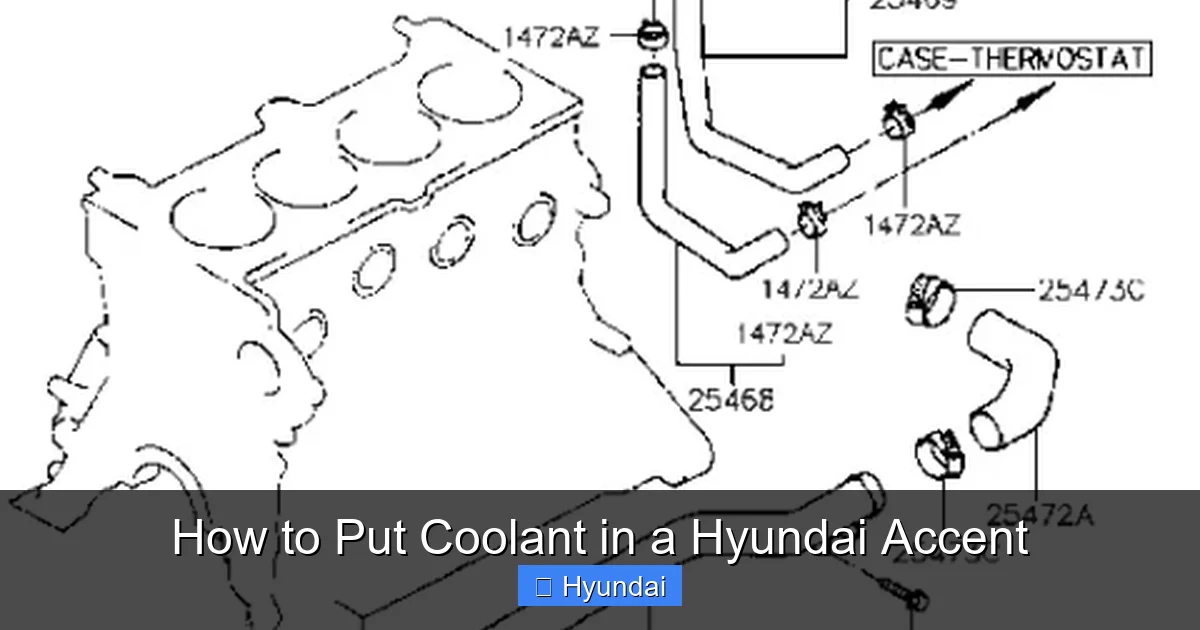
Visual guide about How to Put Coolant in a Hyundai Accent
Image source: hyundaipartsdeal.com
Gathering Your Tools and Materials
You don’t need a toolbox full of equipment. Here’s a simple checklist:
- The Correct Coolant: This is non-negotiable. Consult your owner’s manual. Most Hyundai Accents (2012-2020 models) use a hybrid organic acid technology (HOAT) coolant, often specified as “Hyundai Genuine Coolant” or a phosphate-free OAT type. It’s commonly pink or orange. Using generic green coolant or mixing types can create sludge and reduce cooling efficiency. When in doubt, buy the pre-mixed 50/50 coolant from a Hyundai dealer or a reputable auto parts store that matches the specification.
- A Funnel: A clean plastic funnel with a flexible spout makes pouring mess-free.
- Clean Rags or Paper Towels: For wiping up spills and checking the dipstick on the reservoir.
- Gloves and Safety Glasses: For your protection.
- Flashlight: The engine bay can be dark, especially under the reservoir.
Step-by-Step: Locating the Coolant Reservoir and Checking the Level
Now, let’s get hands-on. With a cold engine, open the hood and secure it with the prop rod.
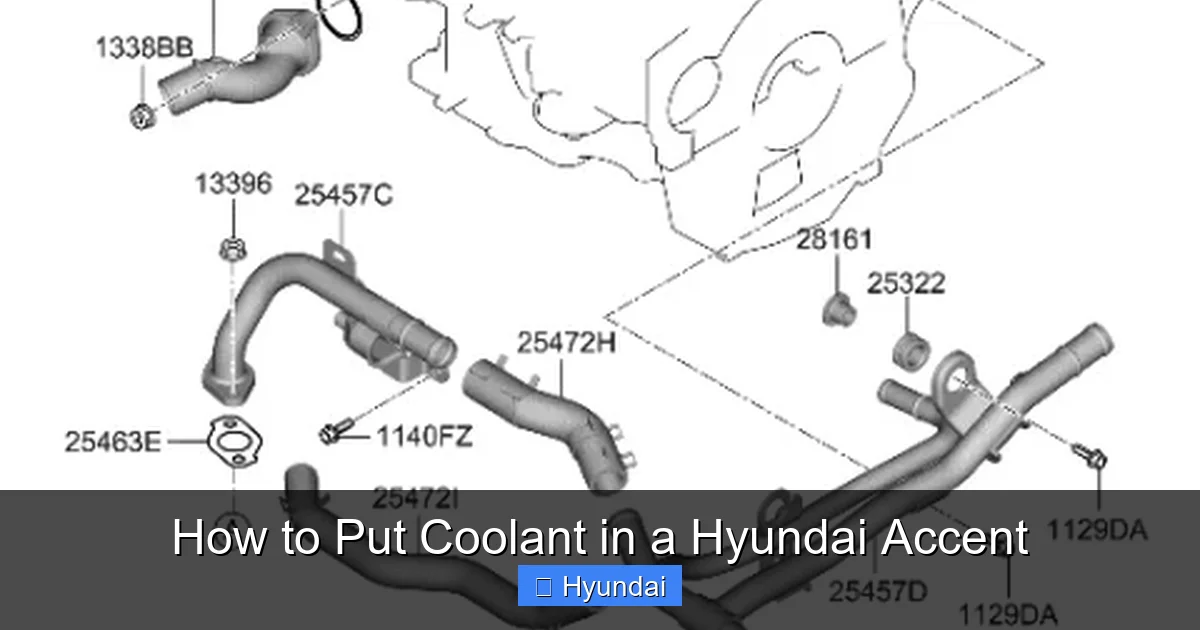
Visual guide about How to Put Coolant in a Hyundai Accent
Image source: hyundaipartsdeal.com
Finding the Reservoir on Your Hyundai Accent
The coolant reservoir is a white or translucent plastic tank, usually located near the radiator on the driver’s side front corner of the engine bay. It has a cap, often labeled “COOLANT” or with a thermometer/water symbol. It’s connected to the radiator by a rubber hose. On the side of the tank, you’ll see two clear molded lines: “MIN” (low) and “FULL” or “MAX” (high). This is your visual guide. If you’re having trouble, your owner’s manual has a diagram of the engine bay components.
Pro Tip: Before you even open the cap, visually check the coolant level through the plastic. It should be clearly visible and sit between the two lines. If it’s below MIN, you need to add coolant.
Inspecting the Coolant’s Condition
While you’re there, take a moment to look at the coolant’s color and clarity. It should be a vibrant pink, orange, or green (depending on type) and clear. If it looks rusty, brown, oily, or has debris floating in it, that’s a sign of a deeper problem—like a failing radiator, a blown head gasket, or internal engine corrosion. In this case, simply topping it off is a temporary fix; you need a professional diagnosis and likely a system flush. If the fluid looks clean and the level is just low, you’re likely dealing with a minor leak or natural evaporation over time.
The Main Event: How to Add Coolant to Your Hyundai Accent
You’ve confirmed the level is low and you have the right coolant. Let’s fill it up properly.
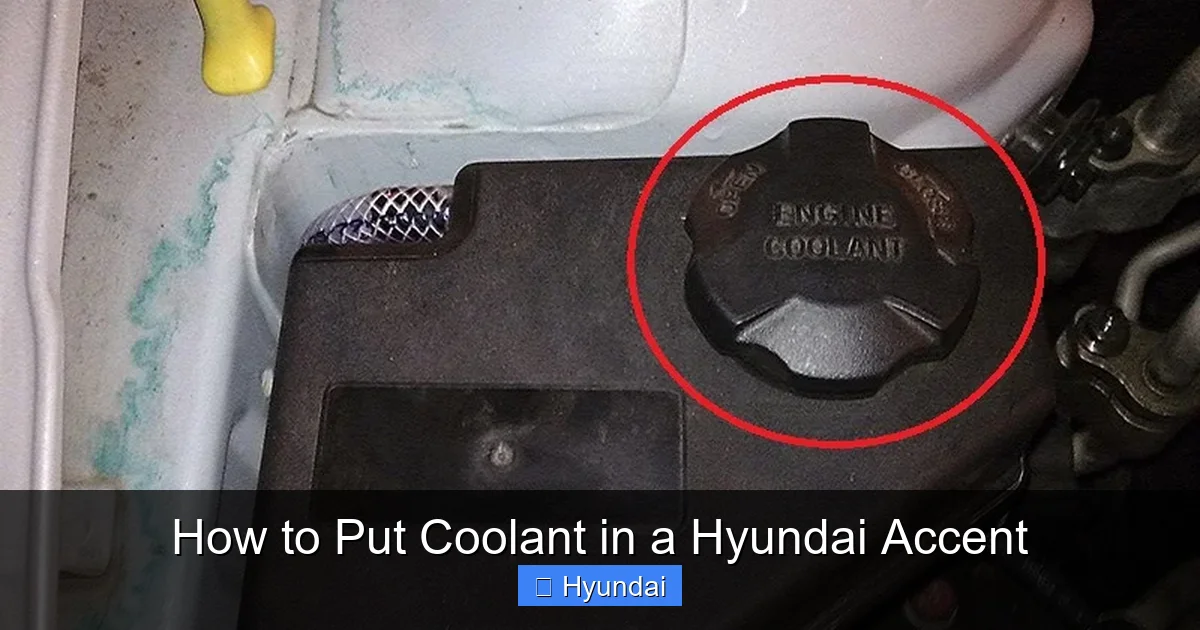
Visual guide about How to Put Coolant in a Hyundai Accent
Image source: carpedia.club
Removing the Cap and Filling
Place your rag over the cap. Press down firmly (some caps require a twist while pressing) and turn counter-clockwise. You might hear a slight hiss as pressure releases—this is normal. Remove the cap completely and set it aside in a clean place.
Insert your funnel into the reservoir opening. Slowly pour the pre-mixed coolant into the funnel. Watch the level rise in the sight glass on the side of the tank. Stop pouring when the coolant reaches just below the “FULL” or “MAX” line. It’s better to be slightly under than over. Overfilling is a common mistake that can lead to coolant being expelled from the overflow hose when the engine heats up, creating a puddle under your car and a low-fluid situation again.
Securing the System and Initial Bleeding
Once filled, remove the funnel and carefully screw the cap back on until it clicks. You’ve completed the basic fill. However, air is now trapped in the system. To purge it, you need to “burp” the cooling system. Start the engine and let it idle with the heater set to the highest temperature and the fan on high. This opens the heater core, which acts as a second radiator, helping to push air bubbles out. You may need to let it run for 10-15 minutes, occasionally revving the engine to about 2000 RPM for a few seconds. Watch the coolant level in the reservoir; it will drop slightly as air escapes. Turn the engine off and let it cool completely again. Check the level one more time and top it off to the MAX line if needed. This process is crucial for preventing hot spots and overheating.
Understanding Coolant Types and Mixing: A Critical Warning
This bears repeating: DO NOT MIX COOLANT TYPES OR COLORS ARBITRARILY. The automotive industry uses several coolant technologies (IAT, OAT, HOAT, P-OAT), each with different additive packages and service lives. Mixing a green IAT (inorganic acid technology) coolant with a pink or orange OAT (organic acid technology) coolant can cause the additives to react, forming a gel-like substance that clogs the tiny passages in the radiator and heater core. This leads to catastrophic overheating.
If you absolutely must top off in an emergency and only have a different color on hand, use only a small amount to get you to a parts store or shop, then flush the system as soon as possible. The safest and best practice is to use only the coolant type specified for your specific model year and engine. When in doubt, stick with Hyundai-branded coolant or a universal coolant that explicitly states compatibility with “all makes and models” and is OAT-based. You can also check the existing fluid’s color in the reservoir as a clue, but the owner’s manual is the ultimate authority. For more on vehicle-specific fluids, our guide on how to change car temperature from Celsius to Fahrenheit in a Hyundai explains how to access and interpret your vehicle’s onboard settings, which can sometimes indicate service needs.
Post-Fill Checklist and Long-Term Maintenance
The job isn’t done when the cap is tight. A quick post-fill inspection is vital.
Inspecting for Leaks
With the engine still warm (but not scalding hot), use a flashlight to inspect all coolant hoses—the upper and lower radiator hoses, the heater hoses going into the firewall, and the small bypass hoses. Look for signs of wetness, cracks, or bulges. Also, check the reservoir itself for cracks and the area where it connects to the cap for any seeping. Finally, look at the radiator core (the front-facing aluminum fins) for any drips or stains. If you find a leak, you’ve identified the reason the level was low. A hose clamp may just need tightening, or a hose may need replacement.
Establishing a Routine
Coolant doesn’t get used up like oil; a significant drop in level usually indicates a leak. Make it a habit to check your coolant level at least once every two months or with every oil change. It’s a 10-second visual check. Also, be aware of your Accent’s warning system. Most modern Accents have a coolant temperature warning light (a thermometer icon) or a “Check Engine” light that can be triggered by overheating. If this light comes on, pull over safely, shut off the engine, and check the level only when the engine is cool. Regularly scheduled coolant flushes (typically every 30,000 to 50,000 miles or 3-5 years, per your manual) are also essential to remove rust, scale, and degraded additives, ensuring the system functions optimally. Proper fluid maintenance extends to other systems too; understanding how to put oil in a car is just as fundamental for overall engine health.
When to Seek Professional Help
While topping off coolant is DIY-friendly, there are clear signs that the problem is beyond a simple fill:
- Rapid Loss of Coolant: If you’re adding a quart or more every few weeks, you have a significant leak that needs diagnosis.
- Overheating with Full Reservoir: If the engine overheats but the coolant is full, the issue could be a faulty thermostat, a broken water pump, a clogged radiator, or a failing cooling fan.
- Sweet Smell Inside the Car: A distinct sweet odor (like maple syrup) when the heater is on is a classic sign of a leaking heater core.
- White Smoke from Exhaust: Thick white smoke that smells sweet indicates coolant is burning in the combustion chambers, likely from a blown head gasket—a major repair.
- Milky or Frothy Oil: Check your dipstick. If the oil looks like a chocolate milkshake, coolant is leaking into the oil system, which is catastrophic.
In these cases, continued driving will cause severe engine damage. Stop the car and call for professional service.
Conclusion: Empowerment Through Simple Maintenance
Mastering the simple task of how to put coolant in a Hyundai Accent connects you directly to your vehicle’s well-being. It transforms you from a passive driver into an active caretaker. You’ve learned the non-negotiable safety rule of a cold engine, the critical importance of using the correct Hyundai-spec coolant, and the precise steps to fill the reservoir without overfilling. You now understand the need to bleed air from the system and the vital post-fill inspection for leaks.
By incorporating this quick check into your routine, you safeguard against one of the most common and destructive failures an engine can experience—overheating. You’ll save money on diagnostics and repairs, avoid the stress of a roadside breakdown, and gain confidence in your ability to handle your car’s basic needs. Remember, a well-maintained cooling system is the key to your Accent’s longevity and reliability. So pop that hood, find that reservoir, and give your engine the cool confidence it deserves.
Frequently Asked Questions
Can I put regular water in my Hyundai Accent’s coolant tank?
In an absolute emergency to reach a repair shop, a small amount of clean water can be used as a temporary top-off. However, water alone lacks corrosion inhibitors, boiling point elevation, and freeze protection. You must add the correct pre-mixed coolant as soon as possible and flush the system if a significant amount of water was used.
What happens if I overfill the coolant reservoir?
Overfilling leaves no room for coolant expansion as the engine heats up. The excess will be forced out through the overflow hose, creating a puddle under your car and eventually leading to a low-coolant condition again. In severe cases, it can cause pressure issues and leaks at the reservoir cap or hoses.
My coolant looks rusty—can I just add more to fix it?
No. Rusty, discolored coolant means the corrosion inhibitors have broken down and the system is rusting from the inside. Simply adding fresh coolant mixes with the contaminated fluid, providing little benefit. This requires a complete cooling system flush to remove all rust and scale, followed by a refill with fresh coolant.
How do I know if my Accent needs a coolant flush vs. just a top-off?
A simple top-off is for when the level is slightly low but the fluid itself is clean and vibrant. You need a full flush if the coolant is discolored (brown, rusty), has particles in it, or if it’s been over 3-5 years or 30,000-50,000 miles since the last service, regardless of appearance.
Why is my engine overheating even after filling the coolant?
This indicates a problem beyond low fluid. Possible causes include a stuck-closed thermostat preventing circulation, a failed water pump, a clogged radiator, malfunctioning cooling fans, air pockets still trapped in the system, or a more serious issue like a blown head gasket. Professional diagnosis is required.
Is the coolant reservoir the same as the radiator cap?
No. On modern cars like the Hyundai Accent, you fill the translucent plastic overflow/expansion reservoir. The radiator cap is a separate, metal pressure cap on the radiator itself. You should never need to open the radiator cap for routine topping off; doing so is riskier and often unnecessary. The reservoir is designed as the fill point.
