How to Open Subaru Forester Hood

Contents
- 1 Key Takeaways
- 2 📑 Table of Contents
- 3 Understanding the Subaru Forester Hood Release System
- 4 Step-by-Step Guide to Opening the Subaru Forester Hood
- 5 Troubleshooting Common Hood Opening Issues
- 6 Seasonal Considerations and Maintenance Tips
- 7 Safety Tips and Best Practices
- 8 Conclusion
- 9 Frequently Asked Questions

Car Hydraulic Jack

Car Door Edge Guard
Car Inverter

Car Tissue Holder
Opening the hood of your Subaru Forester is simple once you know the steps, but it can be confusing if you’re new to the vehicle. This guide walks you through the process, common issues, and safety tips to ensure a smooth experience every time.
So, you’ve just gotten behind the wheel of a Subaru Forester—maybe it’s your first SUV, or perhaps you’re upgrading from an older model. You’re ready to check the oil, top off the coolant, or inspect the battery, but there’s one small problem: you can’t figure out how to open the hood. Don’t worry—you’re not alone. Even experienced drivers sometimes struggle with this seemingly basic task, especially if they’re new to Subarus or haven’t opened a hood in a while.
The good news? Once you know the steps, opening the Subaru Forester hood is quick, safe, and straightforward. Unlike some vehicles that use a foot pedal or exterior handle, the Forester relies on a two-stage release system: an interior lever and an external safety latch. This design enhances safety by preventing accidental hood openings while driving, but it can confuse first-timers. In this guide, we’ll walk you through every step, from locating the release lever to propping the hood securely. We’ll also cover common problems, seasonal challenges, and maintenance tips to keep your hood functioning smoothly for years to come.
Whether you drive a 2003 Forester or a brand-new 2024 model, the process is largely the same—but we’ll highlight any differences along the way. By the end of this article, you’ll feel confident opening your Forester’s hood like a pro, whether you’re performing routine maintenance or troubleshooting an issue under the hood.
Key Takeaways
- Locate the hood release lever inside the cabin: It’s typically found under the dashboard on the driver’s side, near the footwell.
- Pull the lever firmly to release the primary latch: You’ll hear a click when the hood pops open slightly.
- Find and lift the secondary safety latch under the hood: This prevents accidental opening while driving and must be manually disengaged.
- Use the hood prop rod to keep the hood open: Never rely on the hydraulic strut alone, especially in older models.
- Check for obstructions or ice in winter: Cold weather can freeze the latch mechanism, requiring gentle warming or de-icer.
- Regular maintenance prevents future issues: Lubricate latches and hinges every 6–12 months to ensure smooth operation.
- Consult your owner’s manual for model-specific details: Features may vary slightly between Forester generations (2000–2024).
📑 Table of Contents
Understanding the Subaru Forester Hood Release System
Before diving into the step-by-step process, it’s helpful to understand how the hood release system works in your Subaru Forester. Unlike older cars that might have a single pull handle or a hood that lifts directly from the front, modern Subarus—including all Forester models from 2000 onward—use a dual-latch safety system. This means there are two separate mechanisms you must disengage to fully open the hood: the primary interior release and the secondary external safety latch.
The primary release is located inside the cabin, typically on the lower left side of the dashboard, just above the driver’s footwell. It’s a small, often red or black lever that you pull toward you. When you do, it activates a cable that releases the main hood latch. However, this only partially opens the hood—it lifts just enough to reveal a small gap at the front. That’s your cue that the first stage is complete.
The second stage involves reaching under the hood to find and lift a small metal lever or push-button mechanism. This is the safety latch, designed to prevent the hood from flying open accidentally during driving. It’s a critical safety feature, especially at high speeds or in the event of a collision. Once you lift this latch, the hood will swing open freely.
It’s important to note that the exact location and design of these components can vary slightly depending on your Forester’s model year and trim level. For example, older models (2000–2008) may have a more basic cable system, while newer models (2014–2024) often include improved ergonomics and smoother operation. However, the core principle remains consistent across all generations.
Why the Two-Stage System Matters
You might wonder why Subaru doesn’t just use a single release like some other manufacturers. The answer lies in safety and reliability. A two-stage system significantly reduces the risk of the hood opening unexpectedly while the vehicle is in motion. Imagine driving down the highway and suddenly having your hood fly up, blocking your view—that’s a dangerous scenario no driver wants to experience.
The interior lever ensures that only someone inside the vehicle can initiate the opening process. The external safety latch adds an extra layer of protection, requiring physical access under the hood to complete the action. This dual design is especially valuable in emergency situations or when the vehicle is parked in a public area where tampering could occur.
Additionally, this system helps prevent accidental openings due to vibrations, bumps, or improper closing. If the primary latch isn’t fully engaged, the safety latch acts as a backup, keeping the hood securely closed. It’s a simple but effective engineering solution that reflects Subaru’s commitment to driver and passenger safety.
Components Involved in the Hood Release
To better understand the process, let’s break down the key components involved in opening the Forester’s hood:
– Interior Hood Release Lever: Located under the dashboard on the driver’s side. It’s usually marked with a hood icon or labeled “Hood Release.” Pulling this lever activates the primary latch.
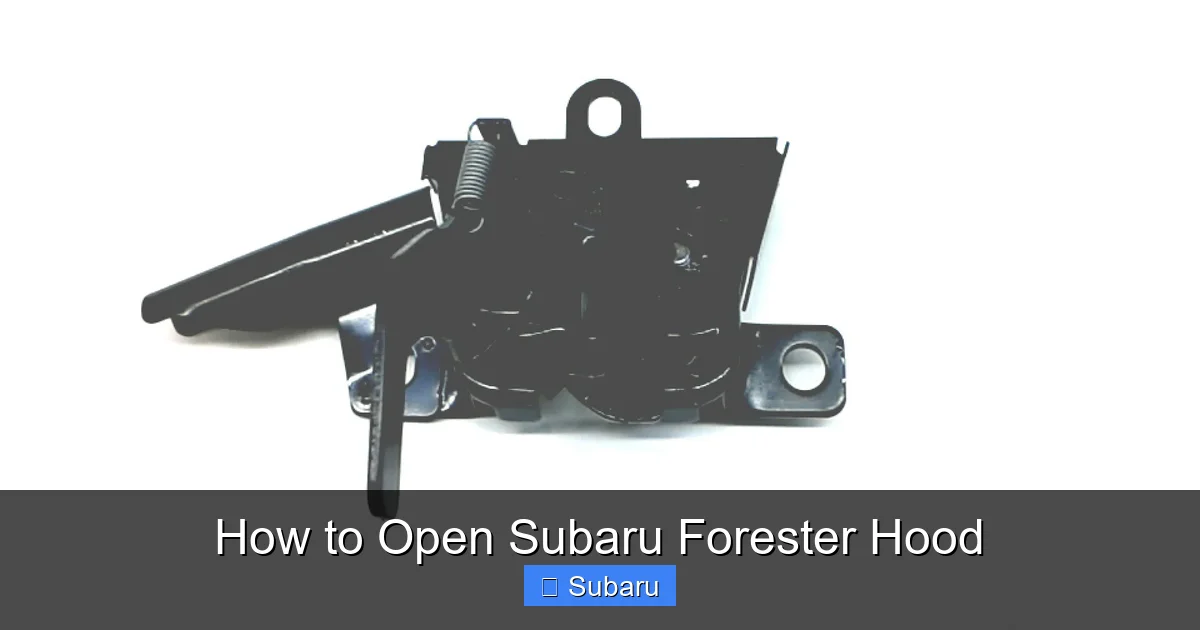
– Primary Latch Mechanism: A metal hook or claw that holds the hood in place. When the interior lever is pulled, a cable pulls this latch open, allowing the hood to lift slightly.
– Secondary Safety Latch: A small lever or button located just behind the front grille, under the hood. It must be manually lifted or pushed to fully release the hood.
– Hood Prop Rod or Hydraulic Struts: These support the hood once it’s open. Older models use a manual prop rod, while newer Foresters often have gas-charged struts that hold the hood in place automatically.
– Hood Hinges: Allow the hood to pivot upward. These should be lubricated periodically to prevent squeaking or stiffness.
Understanding these parts will help you troubleshoot issues and perform maintenance more effectively. For instance, if the hood doesn’t pop open after pulling the lever, the problem could be a stuck primary latch, a broken cable, or a frozen safety latch—especially in cold climates.
Step-by-Step Guide to Opening the Subaru Forester Hood
Visual guide about How to Open Subaru Forester Hood
Image source: images.simplepart.com
Now that you know how the system works, let’s walk through the actual process of opening your Subaru Forester hood. Follow these steps carefully to ensure a smooth and safe experience.
Step 1: Locate the Interior Hood Release Lever
Start by sitting in the driver’s seat and looking down near your left foot. The hood release lever is usually positioned just above the floor mat, slightly to the left of the steering column. It’s often a small, horizontal lever made of plastic, sometimes colored red or black for visibility. On some models, it may be tucked behind a small panel or covered by a trim piece.
If you can’t find it right away, don’t panic. The exact location can vary slightly depending on your Forester’s year and trim. For example:
– 2000–2008 models: The lever is typically mounted directly on the lower dashboard, near the fuse box.
– 2009–2013 models: It may be integrated into the side panel or slightly recessed.
– 2014–2024 models: The lever is often more ergonomically designed and easier to reach.
Tip: If you’re still having trouble, consult your owner’s manual. Subaru includes a detailed diagram showing the location of the hood release lever for your specific model.
Step 2: Pull the Hood Release Lever
Once you’ve located the lever, grasp it firmly and pull it toward you in a smooth, steady motion. You should feel a slight resistance, followed by a distinct “click” as the primary latch releases. This sound confirms that the first stage is complete.
Important: Pull the lever fully. Some drivers only give it a light tug, which may not fully disengage the latch. If the hood doesn’t pop open after pulling, try pulling again with a bit more force.
After pulling the lever, you’ll notice that the front of the hood lifts slightly—usually about 1 to 2 inches. This gap is your visual confirmation that the primary latch has been released. Do not attempt to lift the hood further at this point, as the safety latch is still engaged.
Step 3: Exit the Vehicle and Approach the Front
With the primary latch released, exit the vehicle and walk to the front of the Forester. Stand directly in front of the hood, facing the grille. You’ll need to reach under the hood to access the secondary safety latch.
Be cautious when approaching the front of the vehicle, especially if you’re in a busy area or on a slope. Make sure the car is in “Park” (for automatics) or in gear with the parking brake engaged (for manuals) to prevent rolling.
Step 4: Locate and Release the Secondary Safety Latch
Now comes the trickiest part for many drivers: finding the safety latch. It’s located just behind the front grille, centered under the hood. Look for a small metal lever or a push-button mechanism—it’s usually black or silver and may be recessed slightly.
To access it:
– Lean forward and reach under the hood with your right hand (most drivers find this more comfortable).
– Feel for a small lever near the center of the hood’s front edge.
– Once you locate it, lift it upward or push it to the side (depending on the model).
You’ll hear a second “click” when the safety latch releases. At this point, the hood is fully unlatched and ready to be lifted.
Tip: If you’re having trouble finding the latch, try shining a flashlight under the hood or asking a friend to help. Some drivers use a small mirror on a stick to get a better view.
Step 5: Lift the Hood and Secure It
With both latches released, gently lift the hood upward. It should open smoothly, pivoting on its hinges. Be careful not to force it—if it feels stuck, double-check that both latches are fully disengaged.
Once the hood is open, you’ll need to secure it in place. Here’s where model differences come into play:
– Older Models (2000–2013): These typically use a manual prop rod. Look for a metal rod attached to the underside of the hood. Lift it and insert the end into the designated slot on the radiator support. Make sure it’s fully seated to prevent the hood from falling.
– Newer Models (2014–2024): Most come equipped with gas-charged hydraulic struts that automatically hold the hood open. Simply lift the hood, and the struts will support it. No prop rod is needed.
Never rely solely on the struts or prop rod without ensuring it’s properly engaged. A falling hood can cause serious injury or damage.
Step 6: Perform Your Task and Close the Hood
With the hood securely open, you can now check fluids, inspect belts, or perform any maintenance tasks. When you’re finished, it’s time to close the hood.
To close:
– Remove the prop rod (if used) and return it to its holder.
– Lower the hood slowly, guiding it down with both hands.
– Let it drop the last few inches to ensure the latches engage fully.
Do not slam the hood shut. A firm, controlled closure is sufficient. After closing, give the hood a gentle push to confirm it’s securely latched.
Troubleshooting Common Hood Opening Issues

Visual guide about How to Open Subaru Forester Hood
Image source: images.simplepart.com
Even with the right steps, you might encounter problems when trying to open your Subaru Forester hood. Here are some common issues and how to fix them.
The Hood Won’t Pop Open After Pulling the Lever
If you pull the interior lever but the hood doesn’t lift at all, the primary latch may be stuck. This can happen due to dirt, rust, or lack of lubrication. Try the following:
– Pull the lever again with more force.
– Have a friend push down on the hood while you pull the lever—this can help release a stuck latch.
– If that doesn’t work, inspect the latch mechanism under the hood (once you can access it) and apply a silicone-based lubricant.
In rare cases, the release cable may be broken or disconnected. This requires professional repair.
The Safety Latch Is Frozen or Stuck
In cold weather, moisture can freeze around the safety latch, making it difficult to release. If you can’t lift the latch:
– Use a hairdryer or portable heater to gently warm the area.
– Apply a de-icing spray designed for automotive use.
– Avoid using excessive force, as this can damage the latch.
Prevention: In winter, consider applying a light coat of silicone spray to the latch mechanism during routine maintenance.
The Hood Feels Loose or Won’t Stay Open
If the hood doesn’t stay open or feels wobbly, the prop rod may not be fully engaged, or the hydraulic struts may be worn out. Check the following:
– Ensure the prop rod is securely inserted into its slot.
– Inspect the struts for leaks or damage. Worn struts should be replaced.
– Lubricate the hinges to reduce friction.
Misaligned Hood After Closing
If the hood doesn’t sit flush after closing, the latches or hinges may be misaligned. This can happen after an accident or due to wear. Adjustments should be made by a qualified technician to ensure proper sealing and safety.
Seasonal Considerations and Maintenance Tips

Visual guide about How to Open Subaru Forester Hood
Image source: cruxmoto.com
Opening the hood isn’t just a one-time task—it’s part of regular vehicle care. Different seasons bring unique challenges, and proper maintenance can prevent future headaches.
Winter Challenges
Cold weather is the biggest enemy of smooth hood operation. Ice can form around the latches, and metal components may contract, making them harder to move. To prepare:
– Apply a silicone-based lubricant to the primary and secondary latches before winter.
– Keep a de-icer spray in your glove compartment.
– If the hood is frozen shut, park in a garage or use a portable heater to thaw it gently.
Summer and Humidity
High heat and humidity can cause rubber seals to degrade and metal parts to expand. While this rarely affects hood operation directly, it’s a good idea to:
– Inspect the hood seals for cracks or wear.
– Clean debris from the latch area to prevent corrosion.
– Avoid parking under trees where sap or bird droppings can accumulate.
Routine Maintenance Schedule
To keep your hood functioning smoothly, follow this simple maintenance routine:
– Every 6 months: Lubricate latches, hinges, and the release cable with silicone spray.
– Annually: Inspect the prop rod or struts for wear and replace if necessary.
– After washing the car: Check that water hasn’t pooled around the latch mechanisms.
These small efforts can save you time and frustration down the road.
Safety Tips and Best Practices
Opening the hood may seem simple, but safety should always come first. Here are some best practices to keep in mind:
– Always park on level ground: This ensures the hood opens and closes evenly.
– Use the parking brake: Prevents the vehicle from rolling while you’re working.
– Wear gloves: Protects your hands from sharp edges or hot components.
– Never work under the hood alone in remote areas: Have someone nearby in case of emergency.
– Keep children and pets away: The hood can be heavy and dangerous if it falls.
By following these guidelines, you’ll ensure a safe and efficient experience every time you open your Subaru Forester hood.
Conclusion
Opening the hood of your Subaru Forester is a fundamental skill every owner should master. While the two-stage release system may seem confusing at first, it’s designed with safety and reliability in mind. By following the step-by-step process—locating the interior lever, releasing the primary latch, finding the safety latch, and securing the hood—you’ll be able to access the engine bay with confidence.
Remember, regular maintenance and seasonal preparation can prevent most common issues. Whether you’re checking your oil on a chilly morning or inspecting the battery in the summer heat, knowing how to open your Forester’s hood ensures you’re always ready for routine care.
With this guide, you’re now equipped with the knowledge to handle any hood-related task. So the next time you need to pop the hood, you’ll do it like a pro—safely, efficiently, and without hesitation.
Frequently Asked Questions
Where is the hood release lever on a Subaru Forester?
The hood release lever is located under the dashboard on the driver’s side, typically near the footwell. It’s a small lever you pull toward you to release the primary latch.
Why won’t my Subaru Forester hood open after pulling the lever?
This usually means the primary latch is stuck. Try pulling the lever again with more force, or have someone push down on the hood while you pull. If it still doesn’t work, the latch may need lubrication or the cable could be damaged.
How do I open the hood if the safety latch is frozen?
Use a hairdryer or de-icing spray to gently warm the latch area. Avoid using excessive force, as this can break the mechanism. Prevention includes applying silicone lubricant before winter.
Do all Subaru Forester models use the same hood release system?
Yes, all Forester models from 2000 to 2024 use a two-stage release system with an interior lever and external safety latch. However, the exact location and design may vary slightly by year.
Can I drive with the hood partially open?
No. Even if the safety latch is engaged, driving with the hood not fully closed is extremely dangerous and can lead to the hood flying open, blocking your view.
How often should I lubricate the hood latches?
It’s recommended to lubricate the latches and hinges every 6 to 12 months with a silicone-based spray to ensure smooth operation and prevent rust or sticking.