
Can a Subaru Crosstrek Pull a Trailer

Yes, the Subaru Crosstrek can pull a trailer—but with important limitations. Depending on the model year and engine type, towing capacity ranges from 1,500 to 2,000 pounds. Proper setup, weight distribution, and driving habits are key to safe towing.
If you’re a Subaru Crosstrek owner wondering whether your versatile compact SUV can handle towing a trailer, you’re not alone. The Crosstrek is known for its rugged design, all-wheel drive capability, and off-road charm—but how does it perform when you need to haul a small camper, a motorcycle trailer, or a load of firewood? The short answer? Yes, the Subaru Crosstrek can pull a trailer, but it’s not built for heavy-duty towing like a full-size truck or SUV. Understanding its limits, preparing properly, and driving smart are essential to making towing safe and successful.
The Crosstrek’s towing capability depends heavily on the model year, engine type, and whether it’s equipped with the right accessories. While it won’t replace a Ford F-150 or a Toyota Tacoma when it comes to hauling power, it’s more than capable of handling lightweight trailers for weekend adventures, camping trips, or moving small items. Whether you’re planning a road trip with a teardrop camper or need to transport a jet ski to the lake, the Crosstrek can be a reliable partner—if you respect its boundaries.
In this guide, we’ll break down everything you need to know about towing with a Subaru Crosstrek. From understanding towing capacity and required equipment to real-world tips and safety precautions, we’ll help you make informed decisions. Whether you’re a first-time tower or an experienced adventurer, this article will give you the confidence to tow safely and efficiently with your Crosstrek.
Key Takeaways
- Towing capacity varies by model: Most Crosstreks can tow between 1,500 and 2,000 pounds, with some newer models offering up to 2,000 lbs when properly equipped.
- Engine and transmission matter: Models with the 2.5L engine and CVT typically have higher towing capacity than older 2.0L versions.
- Factory tow package recommended: Adding a factory or aftermarket tow hitch and wiring harness improves safety and performance.
- Weight distribution is critical: Keep trailer tongue weight at 10–15% of total trailer weight to avoid sway and instability.
- Driving adjustments needed: Allow extra stopping distance, avoid sudden maneuvers, and use lower gears on hills.
- Not ideal for heavy loads: The Crosstrek is best suited for small trailers, campers, or utility loads—not large boats or RVs.
- Regular maintenance helps: Check brakes, tires, and fluids before and during long towing trips.
📑 Table of Contents
Understanding Subaru Crosstrek Towing Capacity
When it comes to towing, the first thing every driver needs to know is the vehicle’s towing capacity—the maximum weight it can safely pull. For the Subaru Crosstrek, this number isn’t one-size-fits-all. It varies significantly based on the model year, engine configuration, and whether the vehicle has been properly equipped for towing.
Most Subaru Crosstreks built from 2013 to 2022 with the standard 2.0-liter four-cylinder engine have a towing capacity of 1,500 pounds. That’s enough for small utility trailers, lightweight pop-up campers, or a couple of ATVs. However, starting with the 2018 model year, Subaru introduced a more powerful 2.5-liter engine option (available on higher trims like the Limited and later standard on all 2023+ models). This upgrade increased the towing capacity to 2,000 pounds when the vehicle is equipped with the factory tow package.
It’s important to note that simply having the larger engine doesn’t automatically mean your Crosstrek can tow 2,000 pounds. The tow package typically includes a Class I or Class II hitch receiver, a wiring harness for trailer lights, and sometimes upgraded cooling systems. Without these components, even a 2.5L Crosstrek may be limited to 1,500 pounds. Always check your owner’s manual or consult a Subaru dealer to confirm your specific model’s towing rating.
Model Year Breakdown
Let’s look at how towing capacity has evolved over the years:
– 2013–2017 Crosstrek (2.0L engine): 1,500 lbs towing capacity. These models were not originally designed with towing in mind, so adding a hitch and wiring is essential.
– 2018–2022 Crosstrek (2.0L or 2.5L engine): 1,500 lbs for 2.0L models; 2,000 lbs for 2.5L models with tow package.
– 2023–2024 Crosstrek (2.5L standard): 2,000 lbs towing capacity when equipped with the factory tow package.
This progression shows Subaru’s effort to make the Crosstrek more capable for outdoor enthusiasts. The 2023 redesign, in particular, brought a more robust chassis and improved transmission cooling, making it better suited for light towing.
Why Towing Capacity Isn’t Just About Power
You might wonder why a vehicle with 152 horsepower (on the 2.0L) or 182 horsepower (on the 2.5L) can’t tow more. After all, some trucks with similar power can haul thousands of pounds. The answer lies in the vehicle’s design. The Crosstrek is a unibody crossover, not a body-on-frame truck. It’s built for comfort, fuel efficiency, and all-weather driving—not heavy hauling.
Additionally, the Crosstrek uses a continuously variable transmission (CVT), which is great for smooth acceleration and fuel economy but can be stressed under heavy loads. Towing near the maximum capacity for long distances or on steep grades can cause the transmission to overheat, especially without proper cooling. That’s why Subaru recommends using the tow package and driving cautiously when towing.
Required Equipment for Towing with a Crosstrek
Visual guide about Can a Subaru Crosstrek Pull a Trailer
Image source: images.simplepart.com
You can’t just hook up a trailer and hit the road. To tow safely and legally with your Subaru Crosstrek, you’ll need the right equipment. Skipping this step can lead to poor handling, brake failure, or even accidents.
Tow Hitch and Receiver
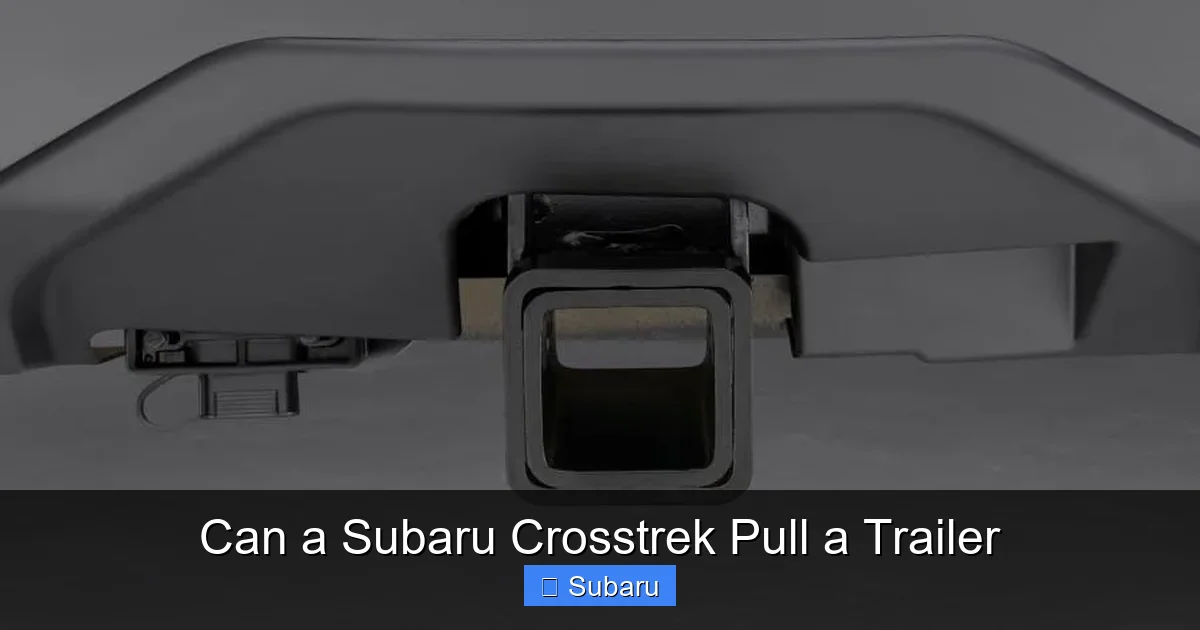
The most essential piece of equipment is a tow hitch. Subaru offers a factory-installed Class I or Class II hitch receiver for most Crosstrek models. A Class I hitch can handle up to 2,000 pounds and is sufficient for most Crosstrek towing needs. Aftermarket options from brands like Curt, Draw-Tite, or Reese are also available and often more affordable.
When choosing a hitch, make sure it’s compatible with your model year and engine. Some hitches are designed specifically for the 2.5L models to support the higher towing capacity. Installation is typically straightforward, but if you’re not comfortable doing it yourself, have it done by a professional.
Wiring Harness
Trailer lights—brake lights, turn signals, and running lights—are required by law in most states. A wiring harness connects your Crosstrek’s electrical system to the trailer. Subaru offers a factory wiring kit that plugs into the vehicle’s existing harness, making installation clean and reliable. Aftermarket harnesses are also available, but be sure they’re compatible with your Crosstrek’s year and trim.
Some trailers come with their own wiring, but it’s always a good idea to test the lights before every trip. A simple light checker tool can save you from getting pulled over or causing a safety hazard.
Ball Mount and Trailer Ball
The ball mount attaches to the hitch receiver, and the trailer ball (usually 2 inches for lightweight trailers) screws into it. The height of the ball mount is important—it should allow the trailer to sit level when hitched. If the trailer tilts up or down, it can affect handling and put extra stress on the hitch.
Most small trailers use a 2-inch ball, but always check your trailer’s coupler size. You can buy adjustable ball mounts that let you fine-tune the height, which is helpful if you tow different types of trailers.
Weight Distribution and Sway Control (Optional but Recommended)
For trailers over 1,000 pounds, especially those with a high center of gravity (like campers), consider adding a weight distribution hitch or sway control system. These devices help keep the trailer stable and reduce the risk of fishtailing, especially in windy conditions or when passing large trucks.
While not required for all trailers, they’re highly recommended for anything over 1,500 pounds or for long-distance towing. They distribute the trailer’s weight more evenly across the vehicle and trailer axles, improving control and safety.
Types of Trailers the Crosstrek Can Handle
Visual guide about Can a Subaru Crosstrek Pull a Trailer
Image source: i.ytimg.com
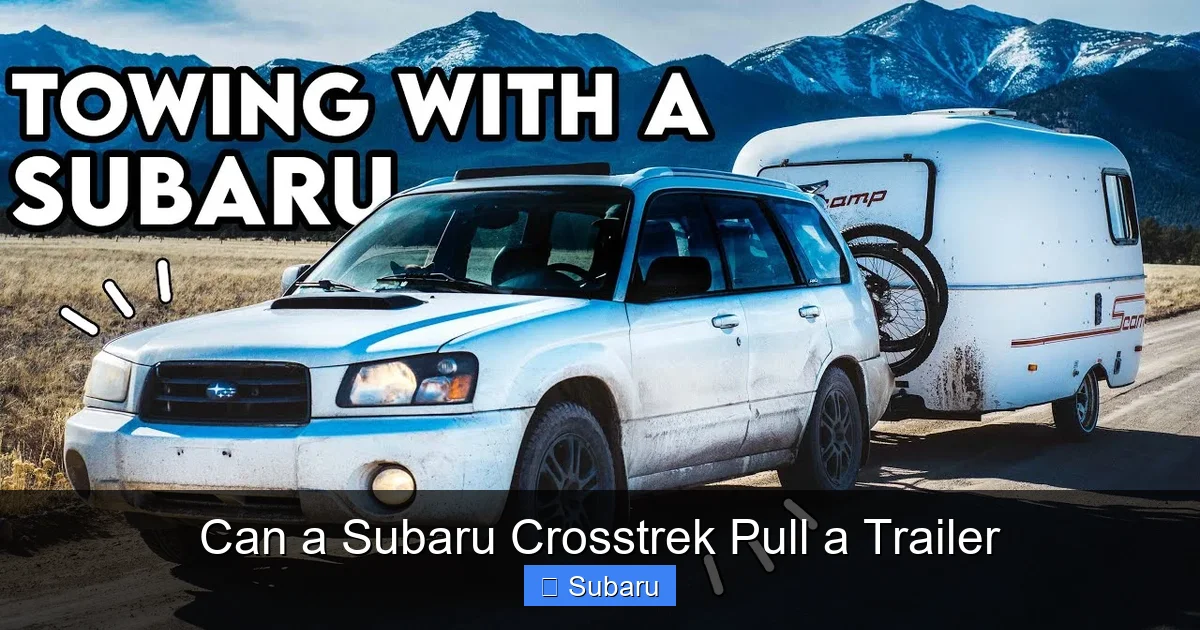
Now that you know the capacity and equipment needed, let’s talk about what you can actually tow. The Subaru Crosstrek is ideal for lightweight, compact trailers. Here are some common types it can handle:
Utility Trailers
Small utility trailers (4×6 or 5×8 feet) are perfect for the Crosstrek. These are great for hauling firewood, landscaping materials, furniture, or camping gear. Most weigh under 1,000 pounds empty, so even with a full load, you’re well within the 1,500–2,000 pound limit.
For example, a typical 5×8 utility trailer weighs around 600 pounds. Add 800 pounds of cargo, and you’re at 1,400 pounds—still under the limit. Just make sure the weight is distributed evenly and secured properly.
Pop-Up Campers and Teardrop Trailers
One of the most popular uses for the Crosstrek is towing small campers. Pop-up campers (like the Jayco Jay Series or Forest River R-Pod) typically weigh between 1,500 and 2,000 pounds when loaded. Teardrop trailers are even lighter, often under 1,500 pounds.
These trailers are aerodynamic and low to the ground, which helps with stability. They’re perfect for weekend getaways or cross-country trips. Just remember: even if your trailer is within the weight limit, you still need to account for passenger and cargo weight inside the Crosstrek. Overloading the vehicle itself can affect handling and braking.
Motorcycle and ATV Trailers
If you’re into motorsports, the Crosstrek can tow a small motorcycle trailer with one or two bikes. A single motorcycle might weigh 500–700 pounds, and the trailer adds another 300–500 pounds. That’s well within the Crosstrek’s capability.
Some riders use enclosed trailers for extra protection, but these can be heavier. Stick to open trailers for better fuel economy and easier maneuvering.
Boat Trailers (Small Boats Only)
Can the Crosstrek tow a boat? Yes—but only small ones. A lightweight aluminum fishing boat with a small motor might weigh 1,200–1,500 pounds with trailer and gear. That’s right at the limit, so you’ll need to be careful.
Avoid larger fiberglass boats or pontoon boats, which can easily exceed 2,000 pounds. Also, launching and retrieving a boat requires extra skill, especially on steep ramps. The Crosstrek’s ground clearance and AWD help, but it’s not designed for heavy marine use.
Driving Tips for Safe Towing
Visual guide about Can a Subaru Crosstrek Pull a Trailer
Image source: images.simplepart.com
Towing changes how your vehicle handles. Even with a lightweight trailer, you’ll notice differences in acceleration, braking, and steering. Here’s how to drive safely with a trailer in tow.
Allow Extra Distance
Your Crosstrek will take longer to stop when towing. Increase your following distance to at least 4–6 seconds behind the vehicle in front of you. This gives you time to react and brake gradually.
Sudden braking can cause the trailer to push the vehicle, leading to loss of control. Use gentle, steady pressure on the brakes, especially on downhill grades.
Use Lower Gears on Hills
When climbing or descending hills, use the manual mode on your CVT (if equipped) or shift to a lower gear. This helps maintain speed without overworking the engine and transmission.
On long descents, engine braking reduces wear on your brakes and prevents overheating. The Crosstrek’s AWD system also helps with traction, but don’t rely on it to compensate for poor driving habits.
Avoid Sudden Maneuvers
Sharp turns, quick lane changes, or aggressive driving can cause trailer sway. If you feel the trailer fishtailing, ease off the accelerator and gently steer in the direction of the sway until it stabilizes.
Never slam on the brakes if the trailer starts to sway—this can make it worse. Instead, slow down gradually and pull over safely if needed.
Check Mirrors Frequently
Use your side mirrors to keep an eye on the trailer. Make sure it’s tracking straight and not swinging wide on turns. Some drivers install extended mirrors for better visibility.
If your trailer has brakes, make sure they’re working properly. Electric trailer brakes require a brake controller, which can be installed in the Crosstrek’s cabin.
Practice Before You Go
If you’ve never towed before, practice in an empty parking lot. Try backing up, turning, and stopping with the trailer attached. Backing up takes practice—turn the wheel in the opposite direction of where you want the trailer to go.
The more comfortable you are with towing, the safer your trips will be.
Maintenance and Safety Checks
Towing puts extra stress on your vehicle. Regular maintenance is crucial to keep your Crosstrek in top shape.
Pre-Trip Inspection
Before every towing trip, check:
– Tire pressure (on both vehicle and trailer)
– Brake function
– Lights and signals
– Hitch and coupler security
– Fluid levels (engine oil, coolant, transmission fluid)
Low tire pressure or worn brakes can lead to dangerous situations, especially under load.
Transmission and Cooling
The CVT in the Crosstrek can overheat when towing, especially in hot weather or on long climbs. If your model has a transmission cooler (part of the tow package), make sure it’s functioning.
Avoid towing at maximum capacity for extended periods. Take breaks every 1–2 hours to let the engine and transmission cool down.
Brake Maintenance
Towing increases wear on your brakes. Have them inspected regularly, especially the pads and rotors. If you notice squeaking, grinding, or reduced stopping power, get them checked immediately.
Some drivers upgrade to high-performance brake pads for better stopping power when towing.
Tire Care
Use tires with a load rating appropriate for towing. All-season or all-terrain tires are usually fine, but avoid worn or underinflated tires.
Check trailer tires too—they often go unnoticed but are critical for safety.
Real-World Examples and Owner Experiences
Many Crosstrek owners successfully tow trailers for camping, hauling, and recreation. Here are a few real-world examples:
– Sarah from Colorado: “I tow a 1,400-pound teardrop camper with my 2020 Crosstrek Limited. It handles mountain passes well, but I always use lower gears on descents. The factory tow package made a big difference.”
– Mike from Oregon: “I haul a 5×8 utility trailer with firewood and camping gear. It’s perfect for weekend trips. I added a sway bar for extra stability.”
– Jenna from Vermont: “I tow a small aluminum fishing boat to the lake. It’s right at the limit, so I’m careful with weight. The AWD helps on wet ramps.”
These stories show that with proper preparation, the Crosstrek can be a reliable towing vehicle for light-duty needs.
Conclusion
So, can a Subaru Crosstrek pull a trailer? Absolutely—within its limits. With a towing capacity of 1,500 to 2,000 pounds, the Crosstrek is well-suited for small trailers, campers, and utility loads. It’s not a heavy-duty tow rig, but for weekend adventurers, campers, and outdoor enthusiasts, it’s a capable and practical choice.
Success comes down to knowing your vehicle’s specs, equipping it properly, and driving responsibly. Use the factory tow package, check your weights, and adjust your driving habits. With the right setup, your Crosstrek can open up a world of possibilities—from mountain campsites to lakeside retreats.
Remember: towing is a skill that improves with experience. Start small, stay safe, and enjoy the journey. Your Crosstrek may not be the strongest tow vehicle on the road, but it’s more than enough for the adventures that matter most.
Frequently Asked Questions
Can a Subaru Crosstrek tow 3,000 pounds?
No, the Subaru Crosstrek cannot safely tow 3,000 pounds. Its maximum towing capacity is 2,000 pounds, and only when equipped with the proper tow package. Attempting to tow beyond this limit can damage the vehicle and create serious safety risks.
Do I need a special license to tow with a Crosstrek?
In most states, no special license is required to tow a trailer under 2,000 pounds with a passenger vehicle like the Crosstrek. However, check your local laws—some states have specific rules for trailers over certain weights or lengths.
Can I install a tow hitch myself on a Crosstrek?
Yes, many Crosstrek owners install aftermarket hitches themselves. Kits from Curt or Draw-Tite come with instructions and typically take 1–2 hours. However, if you’re unsure, professional installation ensures safety and warranty compliance.
Will towing reduce my Crosstrek’s fuel economy?
Yes, towing will reduce fuel economy. Expect a drop of 20–30%, especially at highway speeds or on hills. A loaded trailer increases wind resistance and engine load, which burns more fuel.
Can I tow a camper with a Subaru Crosstrek?
Yes, you can tow small campers like teardrop or pop-up models, as long as the total weight (including cargo) stays under 1,500–2,000 pounds. Make sure the camper is aerodynamic and properly balanced for safe towing.
What happens if I exceed the Crosstrek’s towing capacity?
Exceeding the towing capacity can cause transmission overheating, brake failure, suspension damage, and loss of control. It may also void your warranty and increase the risk of accidents. Always stay within the manufacturer’s limits.
