How to Open a Tesla Model X Door from Outside

Contents
- 1 Key Takeaways
- 2 📑 Table of Contents
- 3 Introduction: The Futuristic Lockout Dilemma
- 4 Understanding the Model X Falcon Door System
- 5 Method 1: Opening with the Tesla Key Card
- 6 Method 2: Using the Tesla Smartphone App
- 7 Method 3: Emergency Manual Override – The Last Resort
- 8 Troubleshooting: Why Won’t My Door Open?
- 9 Prevention and Maintenance: Never Get Locked Out
- 10 Conclusion: Mastery Through Understanding
- 11 Frequently Asked Questions
Car Neck Pillow

Portable Air Pump

Reflective Stickers
Side Window Sunshade
Opening a Tesla Model X door from the outside is straightforward using your key card, smartphone app, or the hidden emergency manual release. Even during a power outage or system glitch, you have backup options. This guide covers every method in detail, ensuring you’re never locked out.
Key Takeaways
- Primary Methods: Use your Tesla key card or the Tesla smartphone app as the first and most reliable ways to open Model X doors from outside.
- Emergency Manual Override: A hidden mechanical release inside the wheel well allows door opening during total power failure—know its location and procedure.
- Key Card is Essential: Always carry your key card; it works without cellular or Bluetooth connectivity and is the fallback if your phone dies.
- App Requires Connectivity: The Tesla app needs Bluetooth (for close range) or cellular/internet (for remote) to function—ensure your phone has service or battery.
- Software Matters: Keep your Model X software updated; updates often improve door operation reliability and add features.
- Preventative Maintenance: Regularly check key card battery, clean door sensors, and inspect seals to avoid common issues like unresponsive doors.
- No Traditional Key: The Model X has no physical keyhole—all entry is electronic via key card, app, or PIN to drive (which does not unlock doors).
📑 Table of Contents
- Introduction: The Futuristic Lockout Dilemma
- Understanding the Model X Falcon Door System
- Method 1: Opening with the Tesla Key Card
- Method 2: Using the Tesla Smartphone App
- Method 3: Emergency Manual Override – The Last Resort
- Troubleshooting: Why Won’t My Door Open?
- Prevention and Maintenance: Never Get Locked Out
- Conclusion: Mastery Through Understanding
Introduction: The Futuristic Lockout Dilemma
You’re standing outside your sleek Tesla Model X, groceries in hand, ready to hit the road. You tap the door handle—nothing happens. The futuristic falcon doors remain stubbornly closed. Panic sets in. This isn’t your grandfather’s car with a simple keyhole. The Model X, with its advanced electric gullwing doors, operates on a different philosophy. But don’t worry. Tesla designed multiple redundant systems precisely for this scenario. Whether it’s a dead phone, a drained 12-volt battery, or a software hiccup, you have at least three distinct ways to gain entry from the outside. This guide will walk you through each method, step-by-step, with clear instructions and pro tips. We’ll also explore why these systems sometimes fail and how to prevent lockouts altogether. By the end, you’ll be a Model X door-opening expert, ready for any situation.
Understanding the Model X Falcon Door System
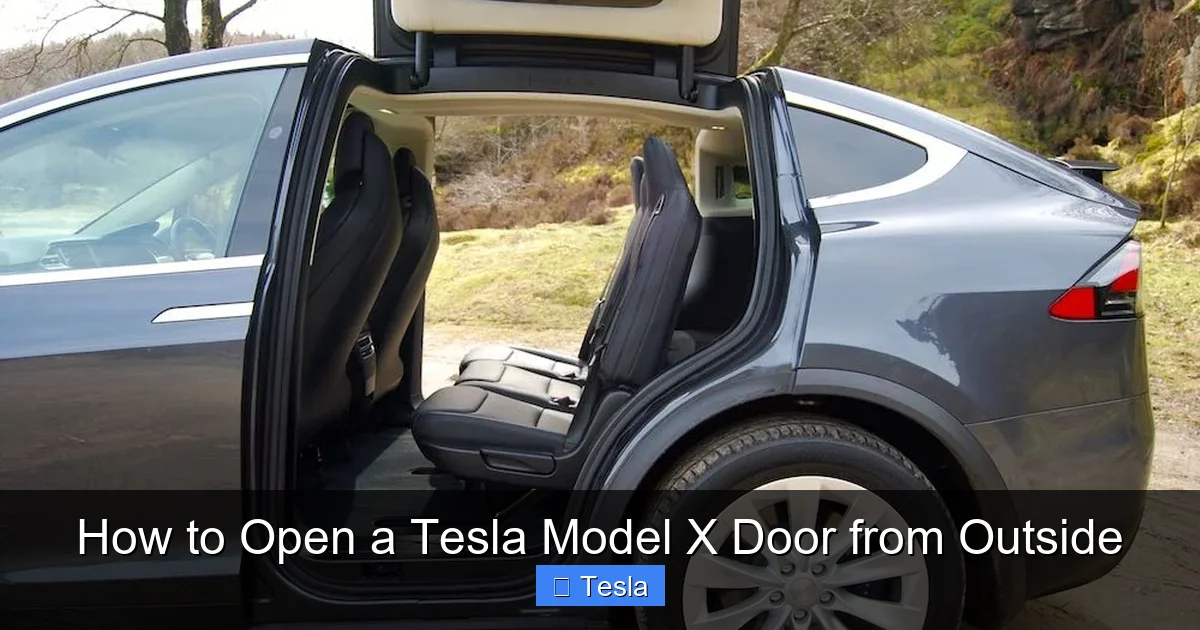
Before diving into solutions, it helps to understand what makes the Model X doors unique. Unlike conventional doors that swing on hinges, the Model X features “Falcon Wing” rear doors and conventional front doors. Both types are powered by electric motors and controlled by the vehicle’s central computer. They use proximity sensors to detect the key card or paired smartphone. When you approach, the car authenticates the device and prepares to open. Pressing the door handle button sends a signal to the motor to operate.

Visual guide about How to Open a Tesla Model X Door from Outside
Image source: koala.sh
The Role of the 12-Volt Battery
Even though the Model X is a high-voltage electric vehicle, its door locks, windows, and infotainment run on a standard 12-volt battery—just like a gas car. If this auxiliary battery dies, the entire low-voltage system shuts down. That means no power door locks, no key card recognition, and no smartphone app connectivity. The high-voltage main battery is untouched; the car is not “dead” in the EV sense, but the 12V is critical for access. This is a common cause of lockouts.
Key Card vs. Smartphone: Two Keys to the Kingdom
Tesla provides two primary authentication devices: a RFID key card and a Bluetooth-paired smartphone. The key card is a physical card you tap on the door pillar. It contains a unique chip and works independently of any battery or network. Your smartphone, when the Tesla app is installed and logged in, uses Bluetooth Low Energy (BLE) for close-range operation or cellular for remote commands. Both methods communicate with the car’s Body Control Module (BCM) to authorize door release.
Method 1: Opening with the Tesla Key Card
The key card is your most reliable backup. It requires no charging, no signal, and works even if your phone is lost or the 12V battery is low (as long as it has enough charge to power the BCM briefly). Here’s exactly how to use it.
Visual guide about How to Open a Tesla Model X Door from Outside
Image source: drivingtorque.com
Step-by-Step Key Card Operation
First, locate your key card. It’s usually a small, credit-sized card. For the front doors, approach the driver’s or passenger’s door. You’ll see a small, dark-colored plastic area on the B-pillar (the vertical post between front and rear doors). This is the key card reader. Hold the card flat against this area. The car will emit a gentle chime and the door handle will illuminate. Within a few seconds, the door will automatically unlock and pop open slightly. You can then pull the handle fully to open. For the rear falcon doors, the process is identical but the reader is on the pillar next to the rear door. Tap the card there. The falcon door will unlatch and raise slightly. Important: The card must be held steady against the reader for 1-2 seconds. A quick tap may not register.
What If the Key Card Doesn’t Work?
If tapping does nothing, first check the card’s condition. Is it damaged? The embedded chip can be compromised by bending or water exposure. Try the other door’s reader. Sometimes one reader may be faulty. If neither works, your 12V battery might be completely dead. In that case, the BCM has no power to authenticate anything. You’ll need to use the emergency manual override (covered later). Also, ensure your key card is properly paired. If you recently replaced it, you must add it via the touchscreen (if you can get in) or Tesla mobile app.
Method 2: Using the Tesla Smartphone App
The Tesla app turns your phone into a smart key. It’s convenient for remote operation, but has dependencies.

Visual guide about How to Open a Tesla Model X Door from Outside
Image source: teslashooters.com
Bluetooth Proximity Unlock
When your paired phone is within about 30 feet, Bluetooth allows “walk-away” locking and automatic unlocking as you approach. To manually open via app: Open the Tesla app, ensure you’re logged into your account and the car is selected. Tap the “Unlock” button. The app will communicate via Bluetooth to the car. The doors will unlock. For the falcon doors, you may need to tap “Open” after unlocking. This method is fast and seamless, but requires Bluetooth to be enabled on your phone and the app to be running in the background.
Remote Unlock via Cellular
If you’re far from the car (e.g., you left it in a parking garage and are upstairs), Bluetooth won’t reach. The app uses Tesla’s cellular connection (through the car’s built-in modem) to send a command over the internet. Simply open the app, tap “Unlock” or “Open” for the specific door. The command travels to Tesla’s servers, then to your car. This requires your phone to have cellular service and the car to have an active Tesla service plan with connectivity. It’s slower than Bluetooth (5-10 seconds) but works from anywhere with signal.
Common App Issues and Fixes
If the app says “Vehicle Not Reachable,” your phone may have no service, or the car’s connectivity is disabled. Check your phone’s signal. Restart the app. If the car is in “Sleep” mode, it may take a moment to wake. Ensure location services are enabled for the app. Sometimes, toggling Bluetooth off and on resets the connection. If you recently changed your Tesla account password, re-login to the app. For persistent issues, check Tesla’s status page for outages.
Method 3: Emergency Manual Override – The Last Resort
When both key card and app fail—typically due to a completely dead 12V battery—you must use the mechanical emergency release. This is a hidden but easily accessible feature designed for exactly this scenario.
Locating the Front Door Manual Release
The front doors have a traditional interior door handle that mechanically releases the latch. But from the outside? There is no external manual release for the front doors. If the 12V is dead and you have no key card, you cannot open the front doors from outside without damaging the car. You must first gain entry through the rear falcon doors or another method. This is a critical point: the front doors lack an external emergency cable.
Accessing the Rear Falcon Door Manual Release
The rear falcon doors have an external emergency release. It’s cleverly hidden to maintain aesthetics. Look at the bottom of the rear door, near the wheel arch. You’ll see a small, rectangular plastic panel (about 2×3 inches) on the interior side of the door’s lower edge. This panel is part of the interior trim. To access the release:
- Use a flat plastic tool (like a trim removal tool) or a careful fingernail to pry off this panel. It clips on gently.
- Behind the panel, you’ll see a red handle or lever with a “Emergency” label.
- Pull this handle firmly toward you. You’ll feel resistance as it mechanically unlocks the door latch.
- The falcon door will then pop open slightly. You can now lift it manually.
Important: After opening, the door will not operate electrically until the 12V battery is jump-started or replaced. Close the door carefully; the power assist is off. This method is safe and designed for owner use—no special tools beyond a prying tool.
Troubleshooting: Why Won’t My Door Open?
Even with the right method, things can go wrong. Here’s a diagnostic flowchart.
Symptom: Door Handle Doesn’t Light Up or Respond
This indicates the car isn’t detecting your key device. First, ensure you’re holding the key card correctly against the reader. Try the other door’s reader. If using the app, check Bluetooth is on and the app is connected (you’ll see a car icon). If the car’s 12V battery is low, the BCM may not power the readers. Listen for a faint click from the door when you press the handle—if you hear it but nothing happens, the motor or latch may be faulty.
Symptom: Door Starts to Open but Stops or Retracts
The falcon doors have safety sensors (pizeoelectric strips along the edge) that detect obstructions. If something is in the way—ice, snow, a leaning object—the door will reverse. Clear the path. Also, extreme cold can thicken lubricant and slow motor operation; the door may pause. In very cold climates, pre-heat the car via app to warm the mechanisms.
Symptom: App Shows “Unlocking” but Doors Stay Locked
This is often a connectivity issue. If using Bluetooth, you might be at the edge of range. Move closer. If using remote, check your phone’s signal and Tesla’s server status. A dead 12V battery will also cause this—the app may think it sent a command, but the car has no power to execute. If the 12V is low, you might see other symptoms like the touchscreen not powering on.
Prevention and Maintenance: Never Get Locked Out
An ounce of prevention saves a pound of panic. Here’s how to keep your Model X doors reliable.
Key Card Care and Backup
Treat your key card like a credit card—don’t bend it, keep it away from magnets, and avoid getting it wet. Store it in a dedicated protective sleeve. Crucially, always carry it with you when driving. Do not leave it inside the car; if the 12V dies, you’re locked out with the card inside. Consider getting a second key card as a backup. They can be ordered from Tesla. Also, check the key card’s battery (a small coin cell) annually; replace it if the range seems reduced. While the card works without battery for tapping, the battery is used for active requests over distance via the app’s “phone as key” feature.
12-Volt Battery Health
The 12V battery typically lasts 3-5 years. A weak battery causes all sorts of gremlins, including door lock failures. Watch for slow door responses or frequent “12V battery low” warnings on the touchscreen. Have it tested annually. If you store the car for long periods, use a 12V battery tender to keep it charged. Tesla’s high-voltage system charges the 12V automatically, but if the main battery is very low, it may stop charging the 12V to preserve range.
Software Updates and Sensor Cleaning
Keep your car’s software current. Tesla over-the-air updates often include door system improvements. Enable “Advanced” updates for early access. Regularly clean the door handle sensors (small rubber pads on the handle) and the key card readers with a microfiber cloth. Dirt and grime can interfere with detection. For falcon doors, wipe the safety sensor strips along the door edge. In winter, remove ice and snow thoroughly before opening—forcing a frozen door can damage seals or motors.
Protecting Your Investment: Consider a Wrap
Frequent door operation and potential emergency manual releases can wear on paint and seals. Many Model X owners opt for a full or partial vinyl wrap to protect the original paint, especially on the complex falcon door edges. A high-quality wrap guards against scratches, UV damage, and minor abrasions from manual handling. If you’re concerned about maintaining your Model X’s pristine condition, researching how much it costs to wrap a Tesla Model X is a wise step. Professional wraps can also be easier to clean and repair than painted surfaces.
Conclusion: Mastery Through Understanding
Opening a Tesla Model X door from the outside is rarely a problem once you know the tools at your disposal. The key card is your rock-solid, battery-free anchor. The smartphone app offers convenient remote access. And the emergency manual release is your ultimate fail-safe, built right into the falcon door. By understanding how these systems interconnect—and the critical role of the 12-volt battery—you transform a potential lockout from a crisis into a minor inconvenience. Regular maintenance, a spare key card, and keeping software updated will make lockouts exceptionally rare. Remember, the Model X’s doors are a marvel of engineering, but they’re designed with you in mind. Now, next time you approach your car, you can do so with confidence, knowing you hold the keys—literal and figurative—to a seamless entry.
Frequently Asked Questions
What if my Tesla key card battery is dead?
The key card’s internal battery is only used for active requests over distance (like via the app). For tapping on the reader, it works without any battery power. So even with a dead battery, you can still open the doors by tapping the card on the pillar. Replace the coin cell battery (CR2032) when you notice reduced range for remote functions.
Can I open the doors if the 12V battery is completely dead?
Yes, but only the rear falcon doors have an external manual override. You must locate and pull the emergency release handle behind the small panel on the inner side of the door’s lower edge. The front doors have no external manual release; you would need to jump-start the 12V battery first.
How do I open a frozen Model X door in winter?
Never force a frozen door. Use the Tesla app to pre-heat the cabin and door mechanisms for 15-30 minutes. If ice has sealed the door, carefully remove ice around the seal with a plastic ice scraper. For the falcon doors, ensure the entire door edge is clear of ice before using the emergency release, as ice can jam the latch mechanism.
Does the Tesla app work without cellular service?
For remote unlock (when you’re far away), yes, the app requires cellular service on your phone and an active Tesla connectivity subscription. However, for close-range operation (within ~30 feet), the app uses Bluetooth and does not need cellular service, as long as Bluetooth is enabled on your phone.
Are the falcon doors waterproof? Can I open them in heavy rain?
The falcon doors are weather-sealed and designed to operate in rain. However, heavy rain combined with wind can sometimes interfere with the safety sensors, causing the door to reverse. It’s safe to open them in moderate rain, but be aware of water dripping into the interior when the door is raised.
Can I disable the automatic door opening feature?
Yes. Go to Controls > Locks on the touchscreen. You can toggle “Auto Unlock” on or off. When off, you must manually unlock via the app, key card, or touchscreen before the doors will open. This can prevent accidental opening when walking near the car.