

How to Manually Close a Sunroof on a Hyundai Santa Fe

Contents
- 1 Key Takeaways
- 2 📑 Table of Contents
- 3 Why Knowing How to Manually Close Your Santa Fe Sunroof Matters
- 4 Understanding Your Hyundai Santa Fe Sunroof System
- 5 When and Why You Might Need to Manually Close the Sunroof
- 6 Step-by-Step: How to Manually Close Your Hyundai Santa Fe Sunroof
- 7 Essential Tools and Materials You’ll Need
- 8 Safety Precautions and Mistakes to Avoid
- 9 After Manual Closure: Next Steps and Troubleshooting
- 10 Conclusion: You’ve Got This
- 11 Frequently Asked Questions
Wiper Blade Refills

Pressure Washer for Car

Anti-Slip Dashboard Mat

Engine Flush Cleaner
If your Hyundai Santa Fe’s electric sunroof fails, manually closing it is a crucial skill to prevent water damage and secure your vehicle. This guide provides clear, safe steps to locate and use the manual release mechanism, typically found behind an interior panel. You’ll need basic tools and a calm approach, but no special expertise. Always prioritize safety by parking on a level surface and disconnecting the battery if possible before starting.
Key Takeaways
- Manual closure is for emergencies only: Use this method only when the electric sunroof fails due to power loss, motor issues, or switch malfunction.
- The manual release is hidden inside: You must remove a small interior panel near the sunroof to access a mechanical lever or bolt.
- Always prioritize electrical safety: If your Santa Fe is a hybrid or electric model, disconnect the 12V battery or follow EV safety protocols to avoid shock.
- Work slowly and carefully: Forcing the sunroof or using incorrect tools can damage the glass, tracks, or seals, leading to costly repairs.
- After manual closure, the sunroof will be inoperative: You must have the electric system repaired by a professional before using the sunroof automatically again.
- Common tools include a flathead screwdriver and flashlight: No special tools are required, but having gloves and a helper can make the job easier.
- Inspect for damage afterward: Check the sunroof seal and glass for cracks or misalignment after manually closing to prevent leaks.
📑 Table of Contents
- Why Knowing How to Manually Close Your Santa Fe Sunroof Matters
- Understanding Your Hyundai Santa Fe Sunroof System
- When and Why You Might Need to Manually Close the Sunroof
- Step-by-Step: How to Manually Close Your Hyundai Santa Fe Sunroof
- Essential Tools and Materials You’ll Need
- Safety Precautions and Mistakes to Avoid
- After Manual Closure: Next Steps and Troubleshooting
- Conclusion: You’ve Got This
Why Knowing How to Manually Close Your Santa Fe Sunroof Matters
Imagine you’re caught in a sudden downpour, or you park your Hyundai Santa Fe overnight only to find the sunroof won’t close in the morning. A sunroof that won’t shut is more than a nuisance—it’s an open invitation for water, dust, and even theft to enter your vehicle. While modern Santa Fe models feature reliable electric sunroofs, they can occasionally fail due to electrical gremlins, motor burnout, or a dead battery. That’s when knowing how to manually close the sunroof becomes an essential skill for every owner.
This guide is designed for the everyday Santa Fe driver. We’ll walk you through the process in simple, friend-to-friend terms. No mechanic degree needed. Just follow the steps carefully, and you’ll regain control over your sunroof in minutes. Remember, this is an emergency procedure. After manually closing it, you’ll need a professional to diagnose and fix the underlying issue before using the sunroof automatically again.
Understanding Your Hyundai Santa Fe Sunroof System
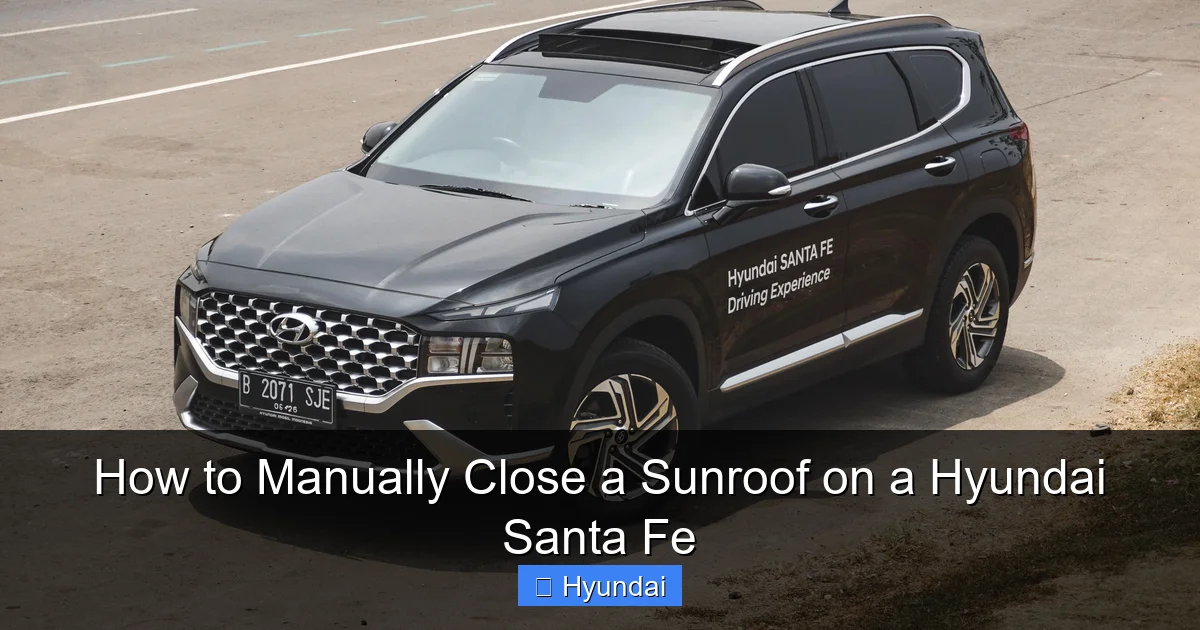
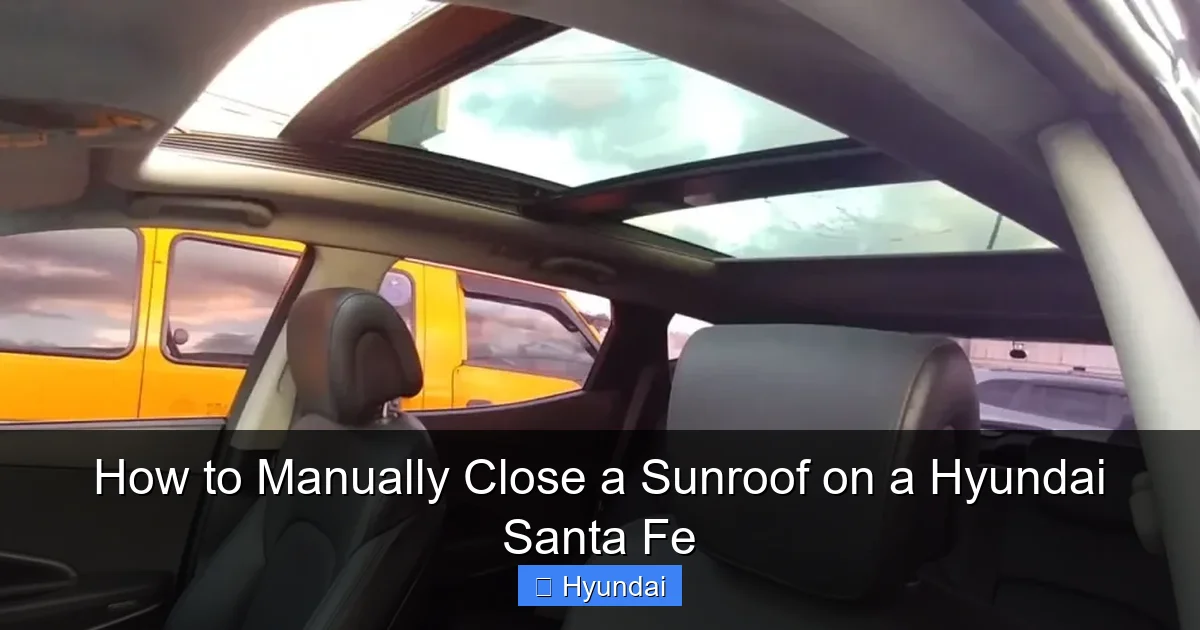
Before you start, it helps to know what you’re working with. The Hyundai Santa Fe has featured sunroofs for many model years, typically as a single-panel glass roof (sometimes called a moonroof when tinted). Most are electric, operated by a switch on the overhead console or a key fob. The system includes a motor, control module, tracks, and a set of cables or arms that move the glass panel.
Visual guide about How to Manually Close a Sunroof on a Hyundai Santa Fe
Image source: hyundaimobil.co.id
Electric vs. Manual Sunroofs in the Santa Fe
Almost all recent Santa Fe models (2013 onward) come with an electric sunroof. There is no standard manual crank option from the factory. The “manual” closure we’re discussing is a manual override—a hidden mechanical release that lets you physically move the sunroof when the power system fails. This override is a common feature in many vehicles, including brands like Lexus, as seen in our guide on how to close the moonroof on a Lexus RX350. The principle is similar: access a concealed lever or bolt to disengage the motor and move the glass by hand.
Key Components of the Sunroof Mechanism
Inside your Santa Fe’s headliner, the sunroof assembly sits in a cutout in the roof. Key parts include:
- Sunroof glass panel: The movable glass that tilts or slides.
- Sunroof frame and tracks: The metal channels the glass rides in.
- Electric motor and gear assembly: Powers the movement.
- Control switch and wiring: Sends signals to the motor.
- Manual release mechanism: A lever, pin, or bolt that, when activated, disconnects the motor from the tracks, allowing manual movement. This is your target.
When and Why You Might Need to Manually Close the Sunroof
You won’t need this procedure every day. But when you do, it’s usually urgent. Here are the most common scenarios that call for manual closure on a Santa Fe.

Visual guide about How to Manually Close a Sunroof on a Hyundai Santa Fe
Image source: hyundaipartsdeal.com
Common Sunroof Failures in the Santa Fe
Electric sunroofs can fail for several reasons:
- Dead or disconnected 12V battery: The sunroof motor needs battery power. If the battery is dead or recently disconnected, the sunroof won’t work. This often happens after a battery replacement or a complete drain.
- Faulty sunroof switch: The overhead console switch can wear out or get debris inside, causing it to fail.
- Blown fuse: The sunroof circuit has a dedicated fuse. A short or overload can blow it, killing power.
- Motor failure: The motor itself can burn out over time, especially if the sunroof is obstructed.
- Obstruction or misalignment: Leaves, ice, or debris in the tracks can jam the sunroof, triggering a safety lockout.
- Wiring or control module issues: Less common, but wiring damage or a faulty body control module can disable the sunroof.
Emergency Situations Requiring Manual Closure
You should attempt manual closure when:
- Weather is threatening: Rain, snow, or hail is approaching, and the sunroof is stuck open or partially open.
- Vehicle is parked unattended: You need to secure the cabin from elements or potential theft.
- After battery disconnect: You’ve jump-started or replaced the battery, and the sunroof won’t respond until you reset it (but manual closure gets you mobile immediately).
- Before a long trip: If the sunroof acts up, you don’t want it opening unexpectedly on the highway.
Important: If the sunroof is stuck in a tilted position (vent mode), you may be able to close it manually without panel removal in some Santa Fe models. Try the normal close switch first after ensuring power is restored (e.g., jump-start). If that fails, proceed to the full manual override.
Step-by-Step: How to Manually Close Your Hyundai Santa Fe Sunroof
Now, the hands-on part. This process varies slightly by model year, but the general steps are the same for Santa Fe models from approximately 2013 to 2023. We’ll cover the most common configuration. Always consult your owner’s manual first for model-specific details.
Visual guide about How to Manually Close a Sunroof on a Hyundai Santa Fe
Image source: i0.wp.com
Preparation and Safety First
Before you touch anything, set up for success and safety:
- Park safely: Park on a level surface, set the parking brake, and turn off the ignition. Remove the key or key fob.
- Disconnect the battery (recommended): This prevents any accidental electrical engagement and protects the sunroof motor. Locate the 12V battery (usually in the engine bay). Disconnect the negative (-) terminal first. If you drive a Hyundai plug-in hybrid or electric Santa Fe, follow specific high-voltage safety procedures—consult your manual. For standard 12V systems, this step is crucial to avoid short circuits. You can learn more about safe electrical handling in our guide on how to unplug an electric car charger on a Hyundai.
- Gather tools: You’ll likely need a flathead screwdriver (plastic-coated to avoid scratches), a flashlight, and possibly a trim removal tool. Gloves are a good idea.
- Clean the area: Sweep away any loose debris from the sunroof glass and surrounding headliner to prevent dirt from falling into the tracks during manual operation.
- Have a helper: The sunroof can be heavy. A second pair of hands makes it safer and easier to guide the glass closed.
Locating the Manual Release Mechanism
The manual release is almost always hidden behind an interior panel. In most Santa Fe models, you’ll find it in the headliner trim near the rear edge of the sunroof opening. Look for a small, rectangular access panel—often made of plastic or fabric-covered board—about the size of your hand. It’s usually located behind the sunroof switch assembly or near the center of the headliner toward the back.
Some model years may have the release behind the overhead console or even in the trunk** (for panoramic sunroofs). Check your owner’s manual index for “sunroof manual override” or “emergency sunroof closure.” If you don’t have the manual, online forums for your specific year (e.g., 2018 Hyundai Santa Fe forums) often have photos and exact locations.
Accessing the Release: Removing the Interior Panel
This is often the trickiest part. The access panel is held by clips or a few screws.
- Inspect the panel: Look for any visible screws. Sometimes there’s one in a hidden spot under a plastic cap or near the sunroof switch.
- Gently pry: If no screws, it’s clip-mounted. Insert your flathead screwdriver (or trim tool) into the seam at the edge. Work gently around the perimeter, releasing each clip. Do not use excessive force—you can crack the plastic or damage the headliner fabric.
- Set aside the panel: Once free, carefully remove it and set it aside. You’ll see a hole in the headliner exposing the sunroof’s mechanical parts.
Tip: The process is similar to accessing components behind interior trim in other vehicles. For example, changing windshield wipers on a Honda Civic might require removing plastic covers, as described in our how to change windshield wipers on a Honda Civic guide. The principle of gentle prying and clip identification is universal.
Operating the Manual Closure Mechanism
Once you have access, you should see one of two common manual release designs:
- A lever or hook: A metal arm that you pull or rotate to disengage the motor from the drive cable.
- A hex bolt or T-handle: A bolt that you turn with an Allen wrench or your fingers to manually crank the sunroof.
For a lever-style release:
- Identify the lever. It may be spring-loaded or have a locking pin.
- Pull or rotate the lever as directed (usually toward the front of the car) to disengage the motor. You should feel a click or reduced resistance.
- Now, with your helper, firmly grip the sunroof glass (use a cloth to avoid fingerprints). Gently push or pull the glass toward the closed position. It will move slowly. Do not force it—if it binds, stop and check for obstructions.
- Guide the glass fully into the closed position until it seats flush with the roof. You should hear a soft thud as it hits the closed stops.
For a bolt-style release:
- Locate the bolt. It may have a square or hex head.
- Turn the bolt clockwise (usually) to close the sunroof. You may need an Allen wrench if it’s an Allen bolt. Turn slowly and steadily.
- Continue turning until the glass is fully closed and aligned with the roof. You’ll feel increased resistance at the end.
Note: If your Santa Fe has a panoramic sunroof with two panels, you may need to close the rear panel first, then the front. The mechanism might have two separate releases. Consult your manual.
Securing the Sunroof After Closure
Once the glass is fully closed:
- Re-engage the motor (if applicable): For lever systems, return the lever to its original position to re-engage the motor gears. This prevents the motor from trying to move the sunroof when power is restored, which could damage it.
- Check alignment: Look at the sunroof from outside. The glass should be flush with the roof, with even gaps all around. If it’s crooked, you may need to adjust slightly by loosening and retightening the manual bolt or repositioning.
- Test the seal: Run your hand around the edge. There should be no large gaps.
- Replace the access panel: Snap or screw the interior panel back into place. Ensure all clips are secure.
- Reconnect the battery: If you disconnected it, reconnect the negative terminal first, then the positive. Tighten securely.
Your sunroof is now manually closed and secured. However, it will not operate electrically until the underlying issue is repaired.
Essential Tools and Materials You’ll Need
You don’t need a fancy toolkit. Here’s a simple checklist.
Basic Tools for the Job
- Flathead screwdriver (medium size): For prying clips. A plastic-coated one protects your interior.
- Flashlight or headlamp: The headliner is dark; you need good light to see the release mechanism.
- Gloves: To protect your hands from sharp edges and keep the glass clean.
- Clean microfiber cloth: To grip the glass without scratching it.
- Allen wrench set (optional): Some models use an Allen bolt for the manual release.
Optional but Helpful Items
- Trim removal tools: Plastic pry tools that minimize damage to clips and headliner.
- Helper: Strongly recommended for lifting and guiding the heavy sunroof glass.
- Magnetic tray: To hold screws if you remove any.
- Owner’s manual: The best reference for your specific model.
Safety Precautions and Mistakes to Avoid
Rushing or skipping steps can lead to injury or expensive damage. Here’s what to watch out for.
Critical Safety Steps Before Starting
- Always disconnect the 12V battery first. This eliminates the risk of the sunroof motor suddenly activating while you’re working, which could trap fingers or cause the glass to shatter.
- Ensure the vehicle is on level ground with the parking brake set. A rolling vehicle is dangerous.
- Work in a clear, well-lit area. Park in a garage or use portable lights.
- Protect your eyes from falling debris when removing panels.
- Don’t work alone if possible. The sunroof glass can be heavy and awkward.
Common Errors That Can Cause Damage
- Forcing the glass: If the sunroof doesn’t move easily, stop. There may be an obstruction in the tracks (leaves, twigs, ice) or the manual release may not be fully disengaged. Forcing it can strip gears or crack the glass.
- Using metal tools directly on glass: Never pry on the sunroof glass itself. Always use the designated manual release.
- Skipping the battery disconnect: This is the most dangerous mistake. The motor could kick in unexpectedly.
- Damaging interior clips: Use plastic tools and work slowly around the access panel. Broken clips are hard to replace.
- Not re-engaging the motor: If you leave the manual release disengaged, the motor will try to move the sunroof when power is restored, potentially grinding against the manual mechanism and causing severe damage.
- Ignoring the root cause: Manual closure is a temporary fix. Don’t forget to have the electrical system diagnosed by a professional. Continuing to use the sunroof without repair will likely lead to repeat failures.
After Manual Closure: Next Steps and Troubleshooting
You’ve manually closed the sunroof. Now what?
Testing the Sunroof After Manual Closure
Before you reconnect the battery and test the switch:
- Double-check the manual release is re-engaged. Ensure any lever is back in its original position.
- Reconnect the battery.
- Test the sunroof switch: Try tilting and sliding the sunroof. It should move smoothly. If it doesn’t move at all, the manual release may still be disengaged, or there’s another electrical issue (fuse, switch, motor).
- Listen for noises: Grinding, clicking, or straining sounds indicate a problem. Stop immediately.
- Check for error messages: Some Santa Fe models may display a sunroof warning on the instrument cluster. Note any codes for your mechanic.
When to Call a Professional
Manual closure is a stopgap. You should consult a qualified technician, preferably a Hyundai specialist, if:
- The sunroof fails again after manual closure.
- You notice water leaks around the sunroof after rain.
- The glass is cracked or the frame is bent.
- The tracks are visibly obstructed or damaged.
- The sunroof motor, switch, or wiring needs diagnosis/replacement.
- You’re uncomfortable performing any step yourself.
A professional can also recalibrate the sunroof system after manual intervention, which is often necessary for the auto-close/anti-pinch features to work correctly.
Preventing Future Sunroof Issues
Keep your Santa Fe’s sunroof healthy with these habits:
- Regular cleaning: Remove debris from the glass and drainage channels (small holes at the front corners of the sunroof frame) at least twice a year. Clogged drains cause leaks.
- Lubricate tracks occasionally: Use a silicone-based spray lubricant on the tracks (not the glass) to ensure smooth operation.
- Inspect the seal: Look for cracks or brittleness in the rubber seal around the glass.
- Operate the sunroof regularly: Even if you don’t use it often, open and close it monthly to keep parts moving.
- Address minor issues early: If the sunroof starts to move slowly or make noise, have it checked before it fails completely.
Routine maintenance like checking tire pressure or resetting service lights is also part of car ownership. For example, learning how to check tire pressure on a 2020 Honda Civic is a simple skill that prevents bigger problems. Similarly, sunroof upkeep saves you from emergencies.
Conclusion: You’ve Got This
Manually closing the sunroof on your Hyundai Santa Fe isn’t something you’ll do every day, but it’s a powerful piece of knowledge to have. It turns a potential disaster—a sudden storm, a dead battery, a stuck sunroof—into a manageable situation. By following this guide, you’ve learned how to safely access the manual release, operate it correctly, and understand the limitations of temporary fixes.
Remember the golden rules: disconnect the battery, work slowly, and never force the glass. And most importantly, treat manual closure as a bridge to professional repair. Your Santa Fe’s sunroof is a sophisticated system designed for convenience and comfort. Keeping it in good working order through regular maintenance and timely repairs will ensure it serves you well for years. Now you’re prepared for the unexpected, and that’s what being a smart car owner is all about.
Frequently Asked Questions
Can I manually close my Hyundai Santa Fe sunroof if it’s stuck open?
Yes, if it’s stuck due to electrical failure, you can use the manual override described in this guide. However, if it’s physically jammed by debris or ice, clear the obstruction first to avoid damage.
Will manually closing the sunroof damage it?
Not if done correctly. The manual release is designed for this purpose. Damage only occurs if you force the glass, skip disconnecting the battery, or fail to re-engage the motor before restoring power.
Do I need special tools to manually close the sunroof?
No. Basic tools like a flathead screwdriver and flashlight are sufficient. Some models may require an Allen wrench for the manual bolt. Avoid using excessive force or inappropriate tools that could scratch or break components.
How often should I manually close my sunroof?
Only in emergencies when the electric system fails. It’s not meant for regular use. Frequent manual operation indicates a persistent electrical problem that needs professional diagnosis.
What if I can’t find the manual release?
Consult your owner’s manual first. If unavailable, search online forums for your specific Santa Fe year and trim. The location is typically behind a headliner panel near the sunroof’s rear edge. If still unsure, seek professional help to avoid damaging interior trim.
After manually closing, the sunroof still won’t work electrically. What now?
This means the underlying issue (blown fuse, faulty motor, bad switch, etc.) hasn’t been resolved. You must have a mechanic scan for faults and repair the electrical system before the sunroof will operate automatically again.


