How to Jump-start a Hyundai Elantra

Contents
- 1 Key Takeaways
- 2 📑 Table of Contents
- 3 Introduction: Your Elantra’s Dead Battery Isn’t the End of the World
- 4 Understanding Your Hyundai Elantra’s Battery
- 5 Essential Tools and Safety Precautions
- 6 Step-by-Step: The Jump-Start Process for Your Elantra
- 7 After the Jump-Start: What to Do Next
- 8 Common Mistakes and Troubleshooting
- 9 When to Replace Your Elantra’s Battery
- 10 Conclusion: Confidence on the Road
- 11 Frequently Asked Questions



Dead battery in your Hyundai Elantra? Don’t panic. Jump-starting it is a straightforward process if you follow the correct, safe sequence. You’ll need a set of jumper cables and a working donor vehicle. The key is connecting the cables in the proper order—positive to positive, negative to an unpainted metal ground—to avoid sparks or damage. After starting the Elantra, let it run to recharge the battery and drive for at least 20 minutes. If the battery dies again quickly, it likely needs replacement. Always consult your owner’s manual for model-specific details.
Key Takeaways
- Safety First: Always wear eye protection and ensure vehicles are parked safely with ignitions off before connecting cables.
- Locate Terminals: The Hyundai Elantra’s battery may be in the engine bay or trunk; know where your positive (+) and negative (-) terminals are.
- Correct Connection Order: Connect red to dead battery’s positive, red to donor’s positive, black to donor’s negative, and black to an unpainted metal ground on the Elantra.
- Don’t Rush: After the Elantra starts, let it idle for a few minutes before disconnecting cables in reverse order to stabilize the electrical system.
- Fully Recharge: Drive the Elantra for 20-30 minutes to allow the alternator to replenish the battery; a short trip won’t be enough.
- Battery Health Check: If the battery dies repeatedly, have it tested. A battery over 3-4 years old often needs replacement.
- Know When to Call Pros: If jump-starting fails, or you smell rotten eggs (sulfur), the battery may be physically damaged—seek professional help.
📑 Table of Contents
- Introduction: Your Elantra’s Dead Battery Isn’t the End of the World
- Understanding Your Hyundai Elantra’s Battery
- Essential Tools and Safety Precautions
- Step-by-Step: The Jump-Start Process for Your Elantra
- After the Jump-Start: What to Do Next
- Common Mistakes and Troubleshooting
- When to Replace Your Elantra’s Battery
- Conclusion: Confidence on the Road
Introduction: Your Elantra’s Dead Battery Isn’t the End of the World
You’re running late, you grab your keys, get in your Hyundai Elantra, turn the ignition, and… nothing. Maybe you hear a slow, labored crank or just a sad click. That sinking feeling is universal. A dead battery is one of the most common—and frustrating—car problems. But here’s the great news: knowing how to jump-start a Hyundai Elantra is a simple, essential skill that can save you time, money, and a huge headache. It’s not magic; it’s just connecting some cables in the right order. This guide will walk you through every single step, from finding your Elantra’s battery to the final rev of the engine, with safety as our top priority. We’ll cover specifics for different Elantra model years, common pitfalls to avoid, and what to do after you’re back on the road. By the end, you’ll be prepared to handle a dead battery with confidence.
Before we dive in, remember that while the core principles of jump-starting are universal, every car has its quirks. The Hyundai Elantra, for instance, has had its battery located in both the engine bay and the trunk over the years. We’ll help you identify yours. The process is fundamentally the same as jump-starting a Subaru Outback or a Lexus CT200h, but knowing your Elantra’s specific layout is crucial for a smooth, safe connection.
Understanding Your Hyundai Elantra’s Battery
To jump-start anything, you need to understand what you’re working with. Your Elantra’s battery is the heart of its electrical system. It provides the massive jolt of power needed to crank the engine and runs all the electronics when the engine is off. Over time, batteries naturally degrade. Extreme temperatures, short trips that don’t allow full recharging, and age (most batteries last 3-5 years) can leave it unable to hold a charge. Recognizing the signs of a failing battery—like dim headlights, slow engine cranking, or the check engine light—can help you address the problem before you’re stranded.
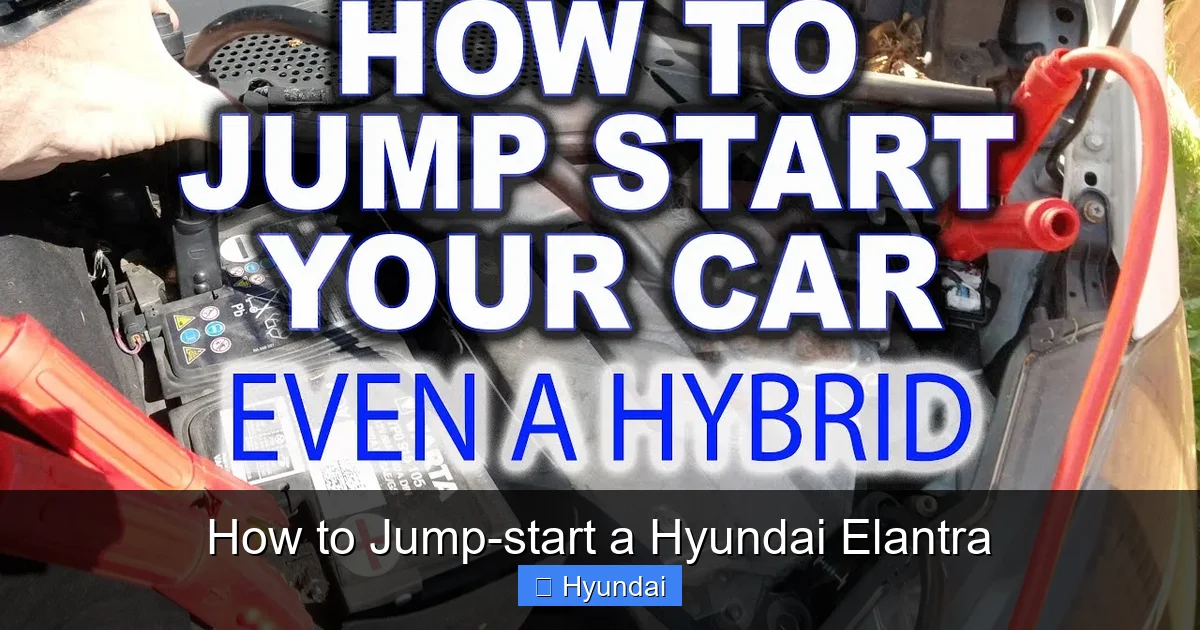
Visual guide about How to Jump-start a Hyundai Elantra
Image source: i.ytimg.com
Battery Location: Engine Bay vs. Trunk
This is the first thing you need to know. The Hyundai Elantra has had two primary battery locations across its generations:
- Engine Bay (Most Common): In many model years, the battery is located in the traditional spot: the engine compartment, usually on the driver’s side (left side). You’ll see a black rectangular box with two terminals (positive + and negative -) and often a cover.
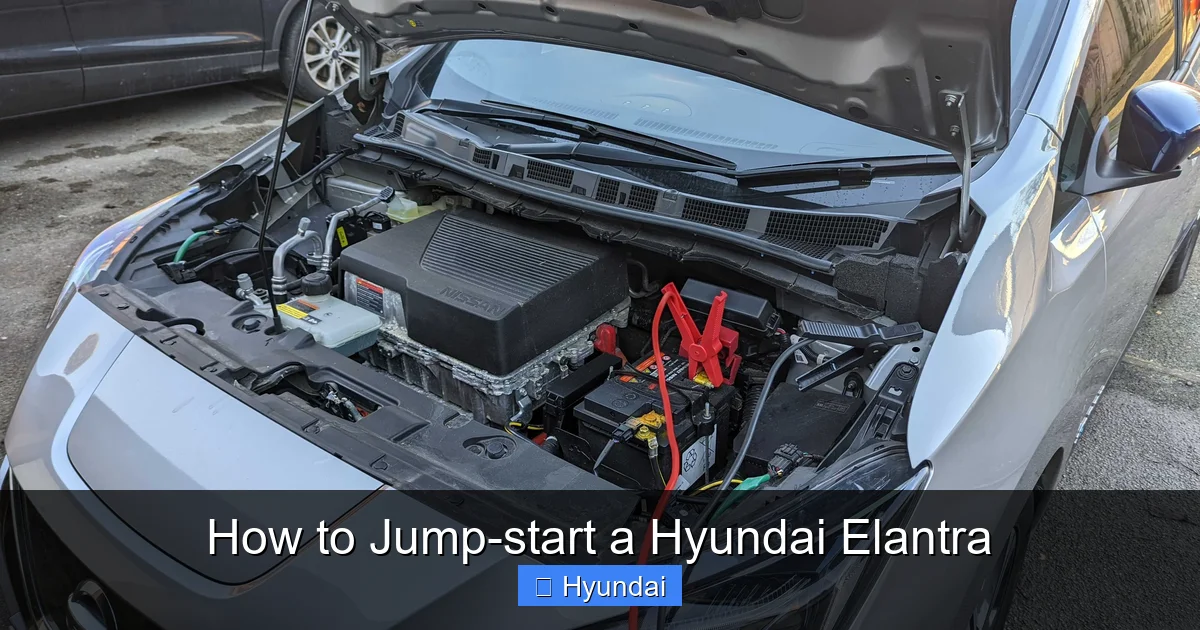
- Trunk (Some Models): Hyundai, like several other manufacturers, moved the battery to the trunk in some recent model years to improve weight distribution and free up engine space. If you don’t see a large battery under the hood, check your trunk. It’s typically located under the trunk floor mat, in a compartment on one side. Crucially, even if the battery is in the trunk, your Elantra will still have designated jump-start terminals in the engine bay. These are separate, always-connected posts specifically for providing power. You will almost always use these engine bay terminals to jump-start, not the trunk battery itself. Your owner’s manual will show you exactly where they are—look for a red (+) cap and a black (-) cap, often near the fuse box or on the strut tower.
Pro Tip: Pop your hood and look for the labels. Hyundai usually marks the positive jump-start terminal clearly with a red cover and a “+” symbol. The negative is often a bare metal bolt or a black-capped post. Finding these before you ever have a dead battery is a smart move.
Battery Type: AGM vs. Standard Flooded
Modern Elantras often use Absorbent Glass Mat (AGM) batteries, which are more powerful, sealed, and maintenance-free. They have specific charging requirements. While you can jump-start an AGM battery with standard jumper cables, it’s important not to overcharge it. The jump-start process is identical, but if your battery is AGM and repeatedly dies, it may need a specialized, slower charger. You can usually tell if you have an AGM battery by its label—it will say “AGM” or “Absorbent Glass Mat.” If in doubt, your owner’s manual or a quick visual check (AGM batteries often have a flat top with no filler caps) will tell you.
Essential Tools and Safety Precautions
Jump-starting is simple, but it involves high electrical currents. Taking a few safety steps prevents sparks, shocks, or damage to your car’s sensitive electronics. Rushing or skipping precautions is the #1 cause of problems during a jump-start.
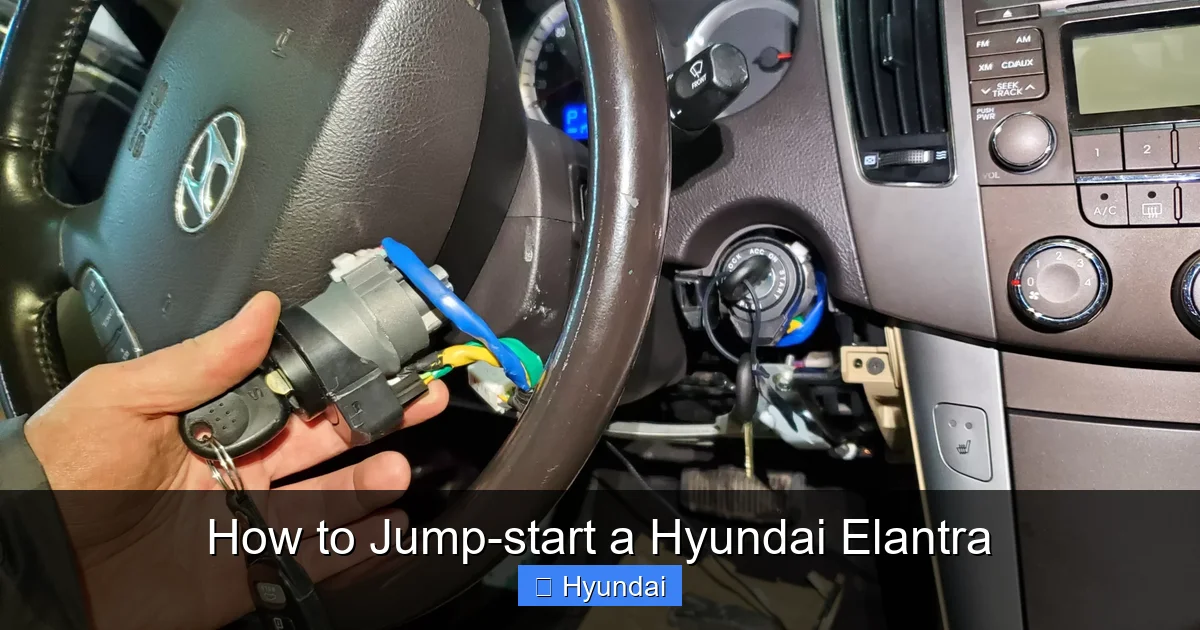
Visual guide about How to Jump-start a Hyundai Elantra
Image source: techmod.ca
The Only Tool You Absolutely Need: Jumper Cables
A good set of jumper cables is non-negotiable. They come in various lengths and gauges (thickness). For an Elantra, a 10-12 gauge cable that’s at least 10-12 feet long is perfect. Thicker cables (lower gauge number like 4 or 6) are more robust for larger engines but are bulkier and more expensive. Avoid those super cheap, thin 16-gauge cables—they may not carry enough current and can overheat.
Your cables have four clamps: two red (positive) and two black (negative). The clamps should be clean and corrosion-free to ensure a solid connection. Keep them organized so you don’t mix up the colors.
Safety Gear and Vehicle Preparation
Before you touch a cable, do this checklist:
- Read Your Manual: Your Hyundai Elantra’s owner’s manual has the final say. It will confirm battery location, terminal locations, and any model-specific warnings (like not using a certain type of booster).
- Park Safely: Park the donor (good) vehicle close to the Elantra, but do not let the vehicles touch. Turn off both engines, remove keys, and set parking brakes.
- Protect Your Eyes: Wear safety glasses or goggles. A battery can occasionally vent explosive gases or spray acid.
- Check for Damage: Look at the dead battery. If it’s cracked, leaking, or you smell a strong rotten egg odor (hydrogen sulfide), do not attempt a jump-start. A damaged battery can explode. Call for professional help.
- Clean Terminals: If the terminals are covered in white or blue crusty corrosion, try to clean it off with a wire brush or a cloth. A clean connection is vital. You can sprinkle a little baking soda on the corrosion to neutralize it, but be gentle.
- Unplug Accessories: Turn off all accessories in the Elantra—lights, radio, heater, phone chargers. This reduces the electrical load when you try to start it.
Step-by-Step: The Jump-Start Process for Your Elantra
This is the core of it all. The order of connections is critical. Doing it wrong can cause sparks near the battery (where explosive hydrogen gas may be present) or fry your car’s computer modules. Follow these steps exactly.
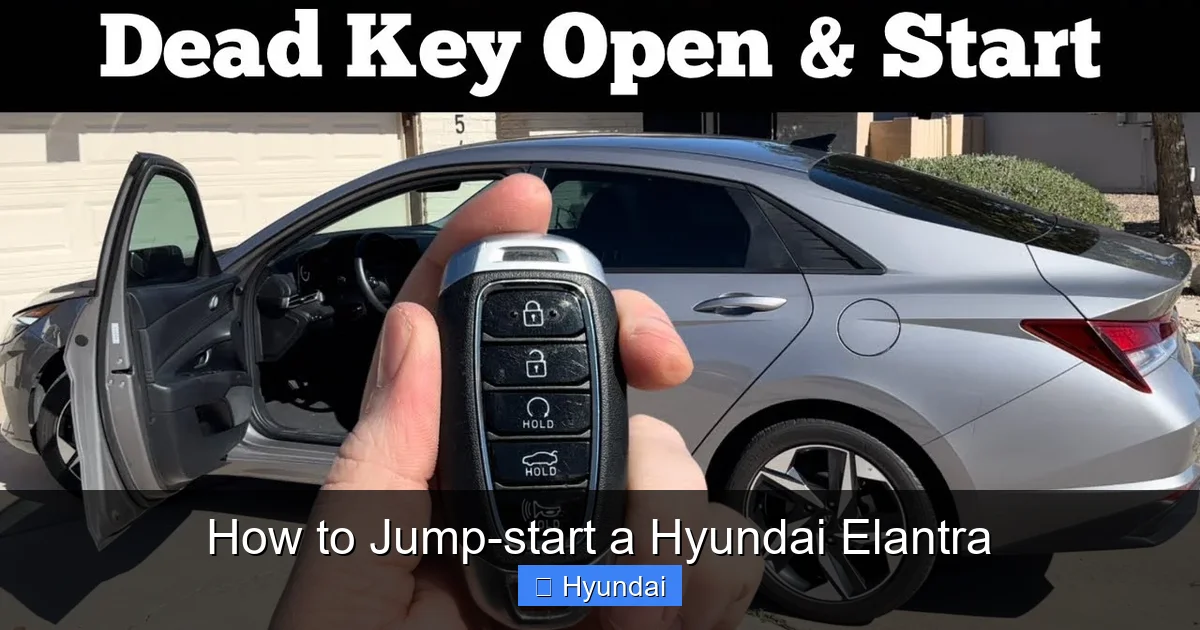
Visual guide about How to Jump-start a Hyundai Elantra
Image source: i.ytimg.com
Step 1: Connect to the Dead Battery (Elantra) First
We start with the dead car to minimize the risk of a short circuit when you handle the final clamp.
- Clamp 1 (Red): Take one red (positive) clamp and attach it firmly to the positive (+) terminal on your Hyundai Elantra. This is the terminal under the red cover or with a “+” symbol. Ensure it’s metal-to-metal contact, not on the plastic post.
- Clamp 2 (Red): Take the other red (positive) clamp and attach it to the positive (+) terminal on the donor vehicle’s battery.
At this point, both red clamps are connected. Do not let the black clamps touch anything yet.
Step 2: Connect to the Donor Vehicle and Ground
Now we complete the circuit, but we’ll ground the final connection away from the dead battery.
- Clamp 3 (Black): Take one black (negative) clamp and attach it to the negative (-) terminal on the donor vehicle’s battery.
- Clamp 4 (Black – THE GROUND): This is the most important step. Take the final black (negative) clamp and attach it to an unpainted, clean, metal surface on the Elantra’s engine or frame. Do NOT connect this clamp to the Elantra’s negative (-) battery terminal. Good spots include a bare metal bolt on the engine block, a strut tower nut, or a designated ground point (sometimes marked with a (-) or a star symbol). The goal is to put this clamp as far away from the battery as possible to avoid any potential sparks igniting hydrogen gas.
Why this order? By connecting the final clamp to a ground on the Elantra away from the battery, any spark that might occur when you make the last connection will happen near the engine block, not right over the battery where explosive fumes could be. This is a critical safety protocol.
Step 3: Start the Donor Vehicle and Then the Elantra
- Start the donor vehicle’s engine and let it idle at a moderate RPM (around 1500-2000) for a minute or two. This sends current to the Elantra’s battery and begins to build a charge.
- Now, try to start the Hyundai Elantra. Turn the key (or press the start button if it’s a keyless model) and let the engine crank for 5-7 seconds maximum. If it doesn’t start immediately, wait 10-15 seconds before trying again to avoid overheating the cables or the starter. It should start within a couple of attempts.
- If it starts, great! If it just clicks or cranks slowly, the battery may be completely dead or there’s another issue (bad cables, poor connection). Double-check all clamp connections for tightness and cleanliness.
Step 4: Disconnecting the Cables (Reverse Order)
Once the Elantra is running, you must disconnect the cables carefully.
- First, remove the black clamp from the Elantra’s ground point.
- Second, remove the black clamp from the donor vehicle’s negative terminal.
- Third, remove the red clamp from the donor vehicle’s positive terminal.
- Finally, remove the red clamp from the Elantra’s positive terminal.
Never let any clamp touch another clamp or any metal surface while any part of the cable is still attached to a vehicle. Place the clamps on the ground away from the cars, with the handles pointing up to avoid accidental contact.
After the Jump-Start: What to Do Next
Your Elantra is running! That’s a huge win. But the job isn’t done. The battery is still severely depleted. What you do next determines whether you’ll be stranded again tomorrow or back to normal.
Let It Recharge Properly
The alternator, which generates electricity while the engine runs, is now working to refill the battery’s “bank.” This takes time and sustained engine RPM.
- Keep it running: Leave the Elantra’s engine idling for at least 5-10 minutes with all accessories (lights, radio, AC) off. This allows the alternator to send maximum charging power to the battery without other drains.
- Go for a drive: After idling, take it for a drive. A 20-30 minute drive at moderate speeds (above 40 mph) is ideal. Short, stop-and-go trips in town often don’t allow the alternator to fully recharge the battery because the engine RPM is too low. Highway driving is perfect. If you just drive 2 miles to the store and turn the car off, the battery may not have gained enough charge to restart.
Check for the Underlying Cause
A jump-start is a temporary fix, not a cure. You need to figure out why the battery died.
- Did you leave an accessory on? This is common. A light, charging port, or the radio left on overnight can drain a healthy battery. If this is the case, the drive should fully recharge it.
- Is the battery old? If your battery is more than 3-4 years old, it may simply be at the end of its life. The jump-start got it going, but it can’t hold a charge anymore. Visit an auto parts store (most offer free battery testing) or a mechanic to have it checked.
- Is there a parasitic drain? Something is staying on when it shouldn’t, slowly draining the battery. This requires electrical diagnosis.
- Is the alternator failing? If the battery light came on before it died, or the car dies again after a short drive even with a new battery, your alternator might not be charging properly. Starting issues can stem from multiple sources beyond just the battery itself.
Common Mistakes and Troubleshooting
Even with the best instructions, things can go wrong. Knowing these common errors helps you avoid them or diagnose the problem.
Mistake 1: Reversing the Cable Polarity
Connecting red to black or positive to negative is the cardinal sin. This can cause a massive short circuit, melting cables, frying the car’s computer (ECU), and even making the battery explode. Double-check every connection. Red goes to red (+), black goes to ground or black (-). If you’re ever unsure, stop and look at the terminals again. The positive terminal is almost always larger and may have a red cover or “+” symbol. The negative is smaller with a “-” symbol.
Mistake 2: Connecting the Final Black Clamp to the Dead Battery’s Negative Terminal
As explained, this creates a spark right over the battery, which is a major explosion risk. Always find a good, solid metal ground point away from the battery. The engine block or a chassis bolt is perfect.
Mistake 3: Not Getting a Solid Connection
If the clamps are loose or attached to painted, rusty, or dirty metal, the connection is poor. The Elantra won’t get enough power to start. Wiggle the clamps to ensure they’re tight on bare metal. If terminals are corroded, clean them first.
Mistake 4: Giving Up Too Soon
If the Elantra doesn’t start on the first try, don’t immediately assume it’s failed. Wait 10-15 seconds between attempts to let the cables and starter cool. Try wiggling the clamps for a better connection. If it still won’t start after 3-4 tries, the battery may be completely sulfated or there’s another mechanical issue. It’s time to call for a tow or a professional.
Troubleshooting: What If It Still Won’t Start?
Follow this checklist:
- Are all clamps securely attached to clean, bare metal?
- Is the donor vehicle’s engine running at a good idle?
- Are you using good, thick-gauge cables (not those tiny, cheap ones)?
- Does the Elantra’s battery show any signs of physical damage (bulging, cracks, leaks)? If yes, STOP.
- Try the ground clamp on a different metal point on the engine.
- If nothing works, the battery may be beyond help, or the starter/solenoid could be faulty. It’s time to call a professional.
When to Replace Your Elantra’s Battery
A successful jump-start is a band-aid. You need to evaluate the battery’s health. A battery that needs a jump once might just have been drained by an accident. A battery that needs frequent jumps is on its last legs.
Symptoms of a Failing Battery
- Age: Batteries don’t last forever. If yours is over 3-4 years old, start planning for a replacement, especially if it’s in a harsh climate.
- Slow, labored cranking: The engine turns over much slower than usual, especially on cold mornings.
- Clicking sound: A rapid click when turning the key means the battery is too weak to engage the starter.
- Electrical issues: Dimming headlights when idling, malfunctioning infotainment, or power windows that move slowly.
- Check engine light: Sometimes a weak battery can trigger electrical system warnings.
- Swollen battery case: This indicates internal damage, often from freezing or overcharging. Replace immediately.
Getting a Free Battery Test
Don’t guess. Most major auto parts stores (AutoZone, Advance Auto Parts, O’Reilly) offer a free battery and charging system test. They’ll connect a diagnostic tool that measures the battery’s cold cranking amps (CCA) and health. It takes two minutes and gives you a definitive “good” or “replace” reading. This is the best way to know for sure. If the test shows the battery is weak, they can also help you choose a correct replacement for your Elantra’s make, model, and engine size. Knowing specifics like how much oil your Elantra takes is part of being a knowledgeable owner, but battery health is critical for reliability.
Conclusion: Confidence on the Road
Jump-starting a Hyundai Elantra is a vital piece of automotive self-sufficiency. It’s a procedure built on simple principles: completing an electrical circuit to transfer power from a good battery to a dead one. By now, you should know exactly where to find your Elantra’s terminals, the non-negotiable safety steps, the correct sequence of connecting the clamps, and what to do after the engine roars back to life. Remember the golden rules: red to red, black to ground, never reverse the cables, and always let the car drive to fully recharge. A dead battery is usually just a symptom, not the disease. Use this jump-start as an opportunity to check your battery’s health and address the root cause—whether it’s an old battery, a parasitic drain, or a failing alternator. With this knowledge, you’re not just prepared for a dead battery; you’re empowered to keep your Hyundai Elantra running reliably. Keep a set of quality jumper cables in your trunk, review your owner’s manual, and you’ll be ready for anything the road throws your way.
Frequently Asked Questions
Can I jump-start a Hyundai Elantra Hybrid?
Yes, but with extreme caution. The high-voltage hybrid battery system is separate from the 12-volt starter battery. You only jump-start the 12-volt system using the designated jump-start terminals (usually in the engine bay). Never try to jump-start the main hybrid battery. Follow the exact procedure in your hybrid-specific owner’s manual, as some models have strict warnings about using only certain types of boosters.
What if the battery keeps dying immediately after a jump-start?
This indicates a serious problem. The battery itself is likely dead and cannot hold a charge and needs replacement. Alternatively, there could be a “parasitic drain” where something electrical stays on when the car is off, or the alternator isn’t charging the battery. You need a professional diagnosis at a shop or an auto parts store’s free testing service.
Is it safe to jump-start a car in the rain?
It’s generally safe if you take extra precautions. Ensure all connections are made under cover if possible (like with the hood open and using an umbrella). Keep cable connectors and terminals as dry as you can. The low voltage of a car battery (12V) is not enough to electrocute you, but water can cause corrosion and poor connections. If it’s a downpour, it’s better to wait or call for mobile assistance.
My Elantra started but the check engine light is on. Is that from the jump-start?
The jump-start itself shouldn’t trigger a check engine light. However, the low voltage from a severely drained battery can cause temporary glitches in the car’s computer, which might set a code. If the light comes on immediately after, try disconnecting the negative battery terminal for 10 minutes (only after the car is running and you’ve driven it), then reconnect. If the light persists, have the codes read by a mechanic, as the original problem that killed the battery may have triggered it.
Can I use a portable jump starter pack instead of another car?
Absolutely. A portable jump starter (or battery booster) is an excellent tool. The procedure is the same: connect the red clamp to the Elantra’s positive terminal, black clamp to a metal ground on the engine, then turn on the pack and start the car. Ensure the pack is fully charged and has enough amperage (at least 400A for an Elantra). This is often safer and more convenient than relying on another vehicle.
Will jump-starting damage my Elantra’s electronics?
Not if done correctly. Modern cars like the Elantra have sensitive electronics, but following the proper sequence (connecting to the dead battery first, grounding away from the battery) protects the systems. The risk comes from reversed cables or poor connections causing voltage spikes. Always connect cables in the correct order and ensure they are secure. Using a quality set of cables or a modern, smart jump starter with built-in protection further minimizes any risk.