
How to Get Sr-22 Insurance Without a Car

Getting SR-22 insurance without a car is possible through a non-owner car insurance policy. This type of coverage meets state requirements and helps reinstate your driving privileges—even if you don’t own a vehicle.
Key Takeaways
- SR-22 is not insurance—it’s a certificate: It proves you carry the minimum required liability coverage, often mandated after serious driving violations.
- Non-owner SR-22 policies exist: If you don’t own a car, you can still get SR-22 by purchasing a non-owner auto insurance policy from a licensed provider.
- You must maintain continuous coverage: Lapsing or canceling your policy can result in license suspension or extended SR-22 requirements.
- Costs vary by state and driving history: Rates depend on your violation, location, and insurer—shop around for the best deal.
- Not all insurers offer non-owner SR-22: Only certain companies provide this specialized coverage, so research is key.
- You can drive borrowed or rented vehicles legally: Non-owner policies typically cover you when driving someone else’s car with permission.
- SR-22 duration varies: Most states require it for 1–3 years, but repeat offenses may extend the period.
📑 Table of Contents
- Understanding SR-22 Insurance: What It Is and Why You Might Need It
- Who Needs SR-22 Insurance Without a Car?
- How Non-Owner SR-22 Insurance Works
- Step-by-Step Guide: How to Get SR-22 Insurance Without a Car
- Cost of Non-Owner SR-22 Insurance: What to Expect
- Common Mistakes to Avoid When Getting SR-22 Without a Car
- Top Insurance Providers for Non-Owner SR-22 Policies
- Conclusion: Stay Legal, Stay Protected
Understanding SR-22 Insurance: What It Is and Why You Might Need It
If you’ve recently had your driver’s license suspended or faced a serious traffic violation, you may have heard the term “SR-22” thrown around by the DMV or your insurance agent. But what exactly is it? And why would someone need it—especially if they don’t even own a car?
Let’s clear up the confusion. An SR-22 is not actually an insurance policy. Instead, it’s a **legal document filed by your insurance company** with your state’s Department of Motor Vehicles (DMV) to prove that you carry the minimum required auto liability coverage. Think of it as a “financial responsibility” certificate. States require it for drivers who have been convicted of certain offenses—like DUIs, driving without insurance, reckless driving, or multiple at-fault accidents.
Now, here’s where things get interesting: **you don’t need to own a car to get an SR-22**. Many people assume that because they don’t have a vehicle, they’re off the hook. But if you want to reinstate your driving privileges—even if you only plan to borrow a friend’s car or rent one occasionally—you’ll likely need an SR-22 on file.
This is where non-owner car insurance comes into play. It’s a specialized type of policy designed for individuals who don’t own a vehicle but still need to meet state-mandated insurance requirements. And yes, many insurers will attach an SR-22 filing to a non-owner policy, allowing you to stay compliant without owning a car.
Who Needs SR-22 Insurance Without a Car?
Visual guide about How to Get Sr-22 Insurance Without a Car
Image source: sr-22-insurance.org
You might be wondering: “Do I really need this if I don’t drive often?” The short answer is: **if your state requires an SR-22, then yes—you do**, regardless of whether you own a car.
Here are some common scenarios where someone might need SR-22 insurance without owning a vehicle:
- License reinstatement after a DUI or DWI: Most states require an SR-22 for at least one to three years after a drunk driving conviction—even if you sold your car.
- Driving without insurance (uninsured motorist violation): If you were caught driving uninsured, the DMV may mandate an SR-22 before restoring your license.
- At-fault accidents with injuries or major property damage: Serious crashes can trigger SR-22 requirements, especially if you were uninsured at the time.
- Repeated traffic violations: Multiple speeding tickets, reckless driving citations, or other infractions can lead to SR-22 mandates.
- Reinstating a suspended or revoked license: Even if you no longer own a car, you’ll need proof of insurance to get back on the road legally.
For example, imagine Sarah, a college student who got a DUI last year. She sold her car to save money but still needs to drive occasionally—to work, visit family, or run errands. Her state requires an SR-22 for three years post-conviction. Without it, her license remains suspended. By getting a non-owner SR-22 policy, she can legally drive borrowed or rented vehicles while meeting her legal obligations.
How Non-Owner SR-22 Insurance Works
Visual guide about How to Get Sr-22 Insurance Without a Car
Image source: y6c7i2k3.rocketcdn.me
So, how does non-owner SR-22 insurance actually function? Let’s break it down in simple terms.
A **non-owner car insurance policy** provides liability coverage when you drive a vehicle you don’t own. It typically includes:
– Bodily injury liability (covers medical costs for others if you’re at fault)
– Property damage liability (covers damage to another person’s vehicle or property)
– Sometimes uninsured/underinsured motorist coverage (optional in many states)
Importantly, **non-owner policies do not include collision or comprehensive coverage**, because you don’t own the vehicle being driven. That means if you crash a borrowed car, the owner’s insurance would handle repairs—not yours. Your policy only covers damage or injury you cause to others.
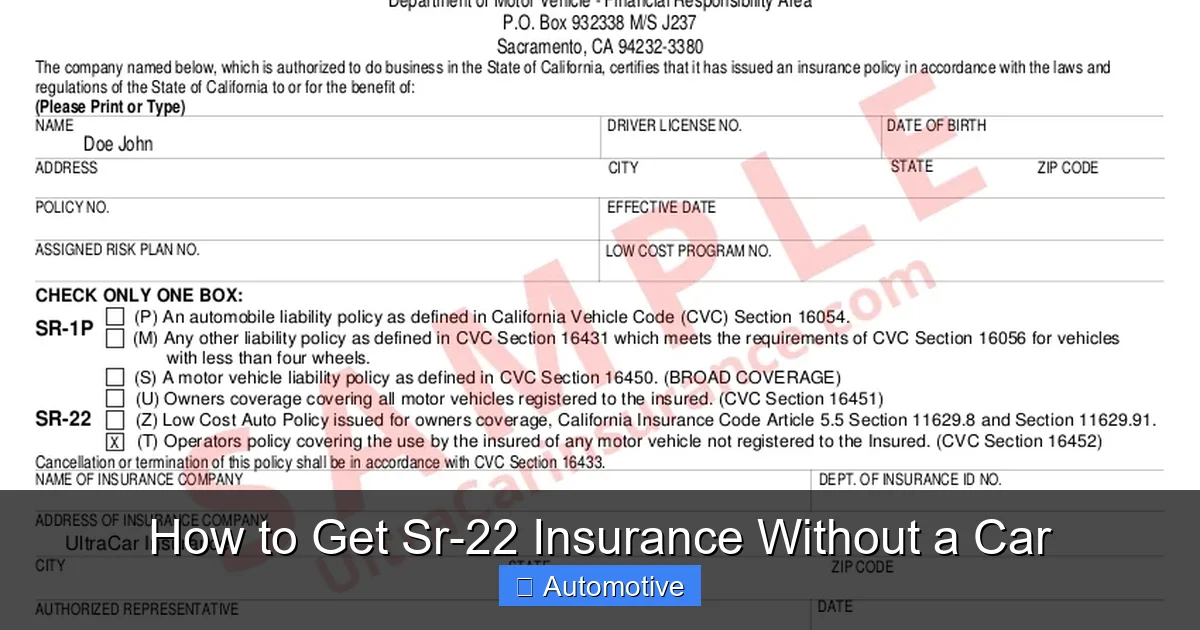
When you add an SR-22 filing to this policy, your insurer submits the form to the DMV on your behalf. Once approved, your license can be reinstated (assuming all other requirements are met). The SR-22 stays active as long as your policy remains in force.
Key Features of Non-Owner SR-22 Policies
- No vehicle ownership required: You don’t need to insure a specific car—just yourself as a driver.
- Covers permissive use: You’re protected when driving someone else’s car with their permission (e.g., a friend’s sedan or a rental).
- Limited personal use: These policies usually exclude driving vehicles owned by household members or using them for business purposes (like rideshare).
- State-specific requirements: Coverage limits must meet your state’s minimum liability standards (e.g., 25/50/25 in California).
- Continuous coverage is mandatory: If your policy lapses, your insurer must notify the DMV, which can result in license suspension.
For instance, let’s say you rent a car for a weekend trip. With a non-owner SR-22 policy, you’re covered if you accidentally rear-end another driver. Your liability coverage pays for their medical bills and car repairs (up to your policy limits), and the SR-22 ensures you’re legally compliant.
Step-by-Step Guide: How to Get SR-22 Insurance Without a Car
Visual guide about How to Get Sr-22 Insurance Without a Car
Image source: ultracarinsurance.com
Ready to get started? Here’s a clear, step-by-step process to secure SR-22 insurance—even if you don’t own a vehicle.
Step 1: Confirm Your SR-22 Requirement
First, contact your state’s DMV or check their official website. Ask whether you’re required to file an SR-22 and for how long. Requirements vary widely:
– California: 3 years for a first DUI
– Texas: 2 years for driving without insurance
– Florida: 3 years for a DUI or reckless driving
Don’t assume—verify directly with your state agency.
Step 2: Find an Insurance Provider That Offers Non-Owner SR-22
Not all insurers offer non-owner policies, and even fewer provide SR-22 filings for them. Start by searching for “non-owner SR-22 insurance” along with your state name. Look for companies that specialize in high-risk or non-standard auto insurance.
Some top providers known for offering non-owner SR-22 include:
– The General
– Dairyland
– Progressive (in select states)
– National General
– SafeAuto
Call or use online quote tools to confirm they offer both non-owner policies and SR-22 filings.
Step 3: Get Quotes and Compare Options
Request quotes from at least three insurers. Be honest about your driving history—lying can lead to policy cancellation or denial of claims.
When comparing quotes, consider:
– Monthly or annual premium cost
– Coverage limits (higher limits = better protection)
– Customer service ratings
– Ease of filing and maintaining the SR-22
– Flexibility in payment plans
For example, one insurer might charge $75/month with basic liability, while another offers $90/month but includes uninsured motorist coverage—a smart add-on if you drive in high-risk areas.
Step 4: Purchase the Policy and File the SR-22
Once you choose a provider, complete the application. You’ll need:
– Valid driver’s license number
– Social Security number
– Proof of residency (utility bill or lease agreement)
– Details of your violation (if applicable)
After approval, the insurer will file the SR-22 form with your state’s DMV—usually within 1–3 business days. You’ll receive a copy for your records.
Step 5: Maintain Continuous Coverage
This is critical. **Never let your policy lapse**. Set up automatic payments and calendar reminders for renewal dates. If you cancel or miss a payment, your insurer must report the lapse to the DMV, which can reinstate your license suspension.
Most states require you to keep the SR-22 active for 1–3 years without interruption. Even a single day without coverage can reset the clock.
Step 6: Monitor Your Status and Prepare for Removal
Check in with your DMV periodically to confirm your SR-22 is active. Once your required period ends, ask your insurer to file an SR-26 form (the “release” document). Then, you can cancel the non-owner policy—or switch to a standard policy if you buy a car.
Cost of Non-Owner SR-22 Insurance: What to Expect
One of the biggest questions people have is: “How much will this cost me?”
The truth is, **non-owner SR-22 insurance is often cheaper than standard policies**—but still more expensive than basic non-owner coverage due to the high-risk nature of SR-22 drivers.
On average, expect to pay:
– $30–$80 per month for a non-owner SR-22 policy
– $360–$960 annually
However, costs vary significantly based on:
– Your state (e.g., California vs. Ohio)
– Your age and gender (younger drivers pay more)
– Your driving record (DUIs increase rates dramatically)
– Coverage limits (higher limits = higher premiums)
– Your credit score (in most states)
For example, a 35-year-old with a clean record might pay $45/month, while a 22-year-old with a DUI could pay $120/month—even without owning a car.
Tips to Reduce Your Premium
- Raise your deductible: Not applicable to liability-only policies, but consider higher coverage limits for better long-term value.
- Maintain a clean record: Avoid new tickets or accidents during your SR-22 period—it helps lower future rates.
- Bundle services: Some insurers offer discounts if you have other policies (e.g., renters insurance).
- Pay annually: Many companies offer a small discount for full upfront payment.
- Shop every 6–12 months: Rates change, and new insurers may offer better deals.
Remember: the cheapest option isn’t always the best. Choose a reputable insurer with strong customer support—especially since you’ll need them to manage your SR-22 filing accurately.
Common Mistakes to Avoid When Getting SR-22 Without a Car
Even with the best intentions, it’s easy to make errors that can delay your license reinstatement or cost you more money. Here are the most common pitfalls—and how to avoid them.
Mistake #1: Assuming You Don’t Need Insurance Because You Don’t Own a Car
This is the #1 misconception. If your state requires an SR-22, you must have active liability coverage—even if you only drive once a month. Skipping it means your license stays suspended.
Mistake #2: Choosing the Wrong Type of Policy
Don’t buy a standard auto policy for a car you don’t own. It won’t cover you when driving borrowed vehicles and may be canceled for misrepresentation. Always opt for a **non-owner policy** with SR-22 filing.
Mistake #3: Letting Your Policy Lapse
A single missed payment can trigger an SR-22 cancellation notice to the DMV. Set up autopay and keep your contact info updated so you never miss a renewal.
Mistake #4: Not Verifying the SR-22 Was Filed
Just buying the policy isn’t enough. Confirm with your insurer that the SR-22 was submitted to the DMV. Follow up within a week to ensure it’s processed.
Mistake #5: Driving Without Permission
Non-owner policies only cover you when driving with the owner’s permission. Never drive a friend’s car without asking—it could void your coverage.
Mistake #6: Ignoring State-Specific Rules
Each state has unique SR-22 requirements. For example, in Arizona, you must carry higher liability limits than in Texas. Always check your state’s DMV guidelines.
Top Insurance Providers for Non-Owner SR-22 Policies
Finding the right insurer makes all the difference. Here are some of the most reliable companies that offer non-owner SR-22 coverage across multiple states:
- The General: Known for high-risk drivers, offers affordable non-owner SR-22 policies with quick filing.
- Dairyland: Specializes in non-standard insurance; available in 44 states with flexible payment options.
- Progressive: Offers non-owner policies in select states (check availability); strong online tools and customer service.
- National General: Provides SR-22 filings for non-owner policies; good for drivers with DUIs.
- SafeAuto: Budget-friendly option with straightforward SR-22 processing; ideal for minimal coverage needs.
When choosing, read customer reviews, check complaint ratios (via NAIC or BBB), and confirm they serve your state. A quick phone call can clarify coverage details and filing timelines.
Conclusion: Stay Legal, Stay Protected
Getting SR-22 insurance without a car might seem complicated at first, but it’s entirely doable—and often necessary to regain your driving privileges. By understanding what an SR-22 really is, knowing your state’s requirements, and selecting the right non-owner policy, you can meet your legal obligations without owning a vehicle.
Remember: this isn’t just about checking a box for the DMV. It’s about protecting yourself and others on the road. Even if you only drive occasionally, having proper liability coverage ensures that if something goes wrong, you won’t face devastating out-of-pocket costs.
Take action today. Contact a few insurers, get quotes, and file your SR-22. Within days, you could be back behind the wheel—legally and responsibly.
Your future self will thank you.
Frequently Asked Questions
Can I get SR-22 insurance if I don’t own a car?
Yes, you can. A non-owner car insurance policy allows you to meet state SR-22 requirements without owning a vehicle. It provides liability coverage when you drive borrowed or rented cars.
How long do I need to keep an SR-22 on file?
Most states require an SR-22 for 1 to 3 years, depending on the violation. Check with your local DMV for exact duration requirements based on your offense.
Will a non-owner SR-22 policy cover me if I rent a car?
Yes, as long as you have the rental company’s permission and the policy includes permissive use. Your liability coverage will apply, but physical damage to the rental is typically covered by the rental company’s insurance.
What happens if my non-owner SR-22 policy lapses?
Your insurer must notify the DMV, which can result in license suspension or an extension of your SR-22 requirement. Always maintain continuous coverage.
Can I drive family members’ cars with a non-owner SR-22 policy?
Generally, no—if the vehicle is owned by someone in your household, it’s excluded. You can only drive cars owned by non-household members with their permission.
Is SR-22 the same as car insurance?
No. SR-22 is a certificate filed by your insurer to prove you carry the minimum required liability coverage. It’s attached to an insurance policy but is not insurance itself.