
How to Fix Ac Light Blinking on Toyota Camry

If your Toyota Camry’s AC light is blinking, it’s a warning signal—not just a glitch. This issue often points to low refrigerant, electrical faults, or sensor problems. With the right diagnosis and steps, you can resolve it safely and restore cool, comfortable air.
Key Takeaways
- Low refrigerant levels are the most common cause of a blinking AC light—recharging may fix it.
- A faulty AC pressure switch can trigger the blinking light even when refrigerant levels are normal.
- Electrical issues like blown fuses or damaged wiring can disrupt the AC system and cause warning signals.
- Dirty or clogged condenser coils reduce cooling efficiency and may lead to system overloads.
- A malfunctioning compressor clutch prevents the AC from engaging, often accompanied by a blinking light.
- Regular maintenance helps prevent AC problems—check refrigerant, filters, and electrical connections annually.
- Professional diagnosis is recommended if basic troubleshooting doesn’t resolve the issue.
📑 Table of Contents
Why Is the AC Light Blinking on Your Toyota Camry?
You’re driving down the highway on a hot summer day, and suddenly you notice the AC light on your Toyota Camry’s dashboard is blinking. At first, you might think it’s just a minor glitch—maybe the system is resetting. But a blinking AC light is rarely something to ignore. It’s your car’s way of saying, “Hey, something’s wrong with the air conditioning system.”
This warning signal can appear in various Toyota Camry models, from the 2010s to the latest 2023 and 2024 versions. While the exact cause can vary, the blinking light typically indicates a problem that’s preventing the AC from functioning properly. It could be as simple as low refrigerant or as complex as a failing compressor. The good news? Most causes are fixable—and many can be diagnosed and resolved without a costly trip to the dealership.
In this guide, we’ll walk you through everything you need to know about how to fix AC light blinking on Toyota Camry. From understanding what the light means to step-by-step troubleshooting and when to call a professional, we’ve got you covered. Whether you’re a DIY enthusiast or just want to understand what’s going on under the hood, this article will help you get your Camry’s AC back to blowing cold air reliably.
Understanding the AC Light: What Does It Mean?
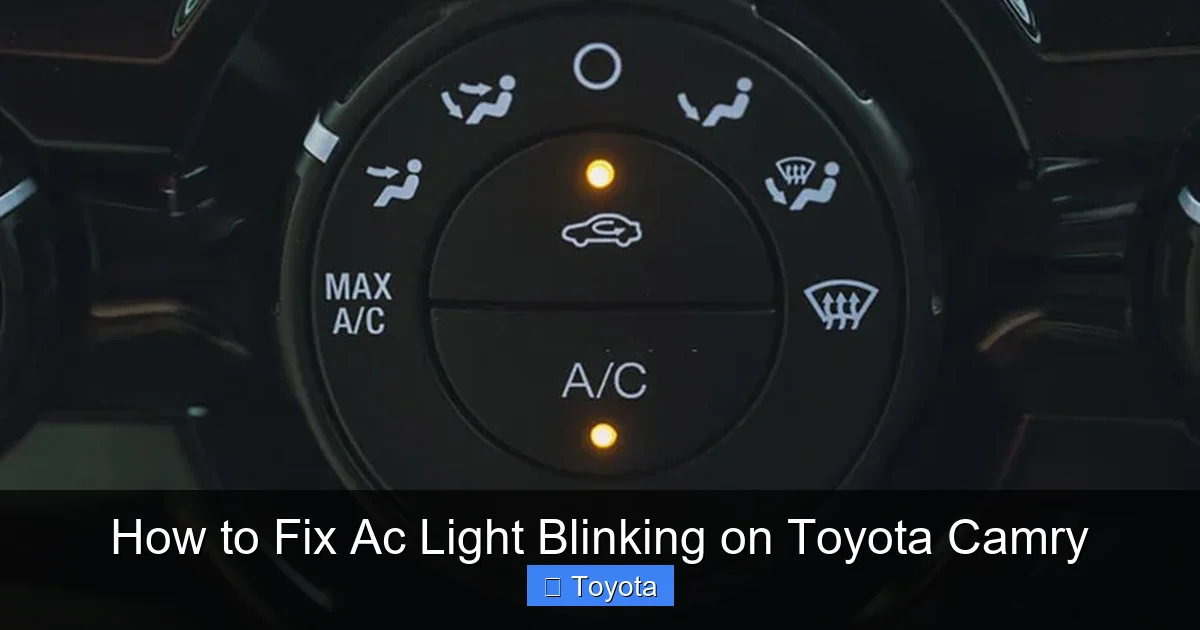
The AC light—usually labeled “A/C” or “AC”—on your Toyota Camry’s climate control panel is more than just an indicator that the air conditioning is on. When it blinks, it’s a diagnostic signal from the vehicle’s onboard computer system. This isn’t random; it’s part of Toyota’s self-diagnostic system designed to alert you to potential issues before they become major problems.

Visual guide about How to Fix Ac Light Blinking on Toyota Camry
Image source: bryansgarage.com
How the AC System Communicates
Modern Toyota Camrys use a network of sensors, switches, and control modules to monitor the AC system. When something goes out of range—like low refrigerant pressure or a faulty electrical connection—the system sends a signal to the climate control module. In response, the AC light may blink in a specific pattern or continuously, depending on the severity of the issue.
Common Triggers for the Blinking Light
While the exact cause can vary, the blinking AC light is most often triggered by one of the following:
- Low refrigerant (freon) levels: The AC system relies on refrigerant to cool the air. If levels drop due to a leak or natural depletion, the pressure sensors detect the change and trigger the warning light.
- Faulty pressure switch: This switch monitors refrigerant pressure. If it fails, it may send incorrect signals, causing the light to blink even when refrigerant levels are fine.
- Electrical faults: Blown fuses, corroded connectors, or damaged wiring can interrupt the signal between components, leading to a blinking light.
- Compressor issues: The compressor is the heart of the AC system. If the clutch fails to engage or the compressor overheats, the system may shut down and flash the warning light.
- Clogged condenser or dirty coils: Over time, dirt and debris can block airflow through the condenser, causing the system to overheat and trigger safety warnings.
Understanding these triggers is the first step toward fixing the problem. The key is to diagnose the root cause quickly—before it leads to more serious damage or a complete AC failure.
Step-by-Step Guide: How to Fix AC Light Blinking on Toyota Camry
Now that you know what the blinking AC light means, let’s dive into the practical steps you can take to fix it. Most issues can be resolved with basic tools and a little patience. Always start with the simplest solutions before moving to more complex repairs.
Visual guide about How to Fix Ac Light Blinking on Toyota Camry
Image source: bryansgarage.com
Step 1: Check the Refrigerant Level
Low refrigerant is the number one cause of a blinking AC light. Over time, small leaks can develop in the system, or refrigerant may simply deplete. Here’s how to check and recharge it:
- Locate the low-pressure port: It’s usually on the larger aluminum tubing near the firewall, labeled “L” or “LOW.”
- Use a refrigerant recharge kit: These are available at auto parts stores and include a gauge and hose. Attach the hose to the low-pressure port.
- Check the pressure: With the engine running and AC on max, the pressure should be between 25–45 psi (depending on ambient temperature). If it’s below 25 psi, you likely need a recharge.
- Add refrigerant: Slowly add refrigerant while monitoring the gauge. Stop when pressure reaches the recommended range.
Pro Tip: If the system loses refrigerant quickly after recharging, there’s likely a leak. Use a UV dye kit to locate it or visit a professional for a leak test.
Step 2: Inspect the AC Pressure Switch
The pressure switch is a small sensor that monitors refrigerant pressure. If it’s faulty, it can send false signals and cause the AC light to blink. Here’s how to test it:
- Locate the switch: It’s typically mounted on the high-pressure line near the condenser or receiver-drier.
- Disconnect the electrical connector: Use a multimeter to check for continuity. With the engine off, there should be no continuity. Start the engine and turn on the AC—continuity should appear when pressure is normal.
- Replace if faulty: If the switch doesn’t respond correctly, replace it with an OEM or high-quality aftermarket part.
Note: Some Camry models have two pressure switches—one for high pressure and one for low. Check both if the issue persists.
Step 3: Check Fuses and Electrical Connections
Electrical issues are often overlooked but can cause persistent blinking. Start with the fuse box:
- Locate the fuse box: In most Camrys, it’s under the dashboard on the driver’s side or in the engine bay.
- Find the AC fuse: Refer to your owner’s manual for the exact location. It’s usually labeled “AC,” “COMP,” or “CLIMATE.”
- Inspect the fuse: Remove it and check for a broken filament. Replace with a fuse of the same amperage if blown.
- Check wiring and connectors: Look for corrosion, loose connections, or damaged wires near the compressor, pressure switch, and climate control module.
Pro Tip: Use electrical contact cleaner to clean corroded connectors. A poor connection can mimic a major system failure.
Step 4: Examine the Compressor and Clutch
The compressor clutch engages when the AC is turned on. If it fails, the compressor won’t spin, and the system won’t cool. Here’s how to check it:
- Start the engine and turn on the AC: Listen for a “click” from the compressor. This is the clutch engaging.
- Watch the clutch plate: It should spin when engaged. If it doesn’t, the clutch may be worn or the compressor may be seized.
- Test voltage: Use a multimeter to check if power is reaching the clutch. If there’s power but no engagement, the clutch is likely faulty.
Replacement Tip: Replacing a clutch is less expensive than replacing the entire compressor. However, if the compressor is old or damaged, a full replacement may be more cost-effective long-term.
Step 5: Clean the Condenser and Coils
A dirty condenser restricts airflow, causing the system to overheat and trigger the blinking light. Cleaning it is simple:
- Locate the condenser: It’s in front of the radiator, behind the grille.
- Spray with condenser cleaner: Use a foaming cleaner designed for AC systems. Let it sit for 5–10 minutes, then rinse with low-pressure water.
- Check for bent fins: Use a fin comb to straighten any bent aluminum fins that block airflow.
Prevention: Clean the condenser every 12–18 months, especially if you drive in dusty or bug-prone areas.
When to Call a Professional
While many AC issues can be fixed at home, some problems require specialized tools and expertise. Here’s when it’s time to visit a certified technician:

Visual guide about How to Fix Ac Light Blinking on Toyota Camry
Image source: autoowa.com
- Persistent blinking after recharging: If the light continues to blink after adding refrigerant, there may be a leak or internal component failure.
- Compressor replacement: This requires evacuating the system, replacing the part, and recharging with the correct oil and refrigerant.
- Electrical diagnostics: If you suspect a control module or sensor issue, a professional scan tool can read error codes and pinpoint the problem.
- Warranty concerns: If your Camry is still under warranty, DIY repairs could void coverage. Let a dealership handle it.
Pro Tip: Ask for a detailed diagnostic report. This helps you understand the issue and avoid unnecessary repairs.
Preventing Future AC Problems
The best way to avoid a blinking AC light is through regular maintenance. Here’s how to keep your Camry’s AC running smoothly:
- Run the AC year-round: Even in winter, turn it on for 10 minutes monthly to keep seals lubricated and prevent leaks.
- Replace the cabin air filter: A dirty filter restricts airflow and forces the system to work harder. Replace it every 12,000–15,000 miles.
- Inspect hoses and seals: Look for cracks or wear in refrigerant lines and O-rings during oil changes.
- Schedule annual AC checks: A professional can test refrigerant levels, check for leaks, and ensure all components are working.
Bonus Tip: Park in the shade or use a sunshade to reduce cabin heat. This lowers the load on your AC system and extends its life.
Conclusion
A blinking AC light on your Toyota Camry is more than an annoyance—it’s a warning that demands attention. But with the right knowledge and tools, you can often fix the issue yourself. Start by checking refrigerant levels, inspecting the pressure switch, and testing fuses. Clean the condenser regularly and listen for unusual sounds from the compressor.
Remember, the key to a healthy AC system is prevention. Regular maintenance not only prevents blinking lights but also saves you money on costly repairs down the road. And if you ever feel unsure, don’t hesitate to consult a professional. Your comfort—and your Camry’s performance—are worth it.
Now that you know how to fix AC light blinking on Toyota Camry, you can drive with confidence, knowing you’re prepared for whatever the summer heat throws your way.
Frequently Asked Questions
Why is my Toyota Camry’s AC light blinking but still blowing cold air?
The AC may still blow cold air temporarily even with a blinking light, especially if the issue is minor like a faulty sensor or low refrigerant. However, the blinking indicates a problem that could worsen, so it’s best to diagnose and fix it soon.
Can I drive my Camry with the AC light blinking?
Yes, you can drive the car, but avoid using the AC until the issue is resolved. Continuing to run a faulty AC system can damage the compressor or other components, leading to expensive repairs.
How much does it cost to fix a blinking AC light on a Toyota Camry?
Costs vary: recharging refrigerant costs $100–$200, replacing a pressure switch $50–$150, and compressor repairs $500–$1,200. DIY fixes can save labor costs, but complex issues require professional help.
Is a blinking AC light the same as an AC compressor failure?
Not necessarily. While compressor failure can cause the light to blink, so can low refrigerant, electrical faults, or sensor issues. A proper diagnosis is needed to determine the exact cause.
How often should I recharge the AC in my Toyota Camry?
AC systems are sealed and shouldn’t need recharging unless there’s a leak. If you’re recharging more than once every 2–3 years, have the system inspected for leaks.
Can a bad cabin air filter cause the AC light to blink?
Not directly. A dirty cabin filter reduces airflow but doesn’t trigger the blinking light. However, it can strain the system and contribute to overheating, especially if combined with other issues.