
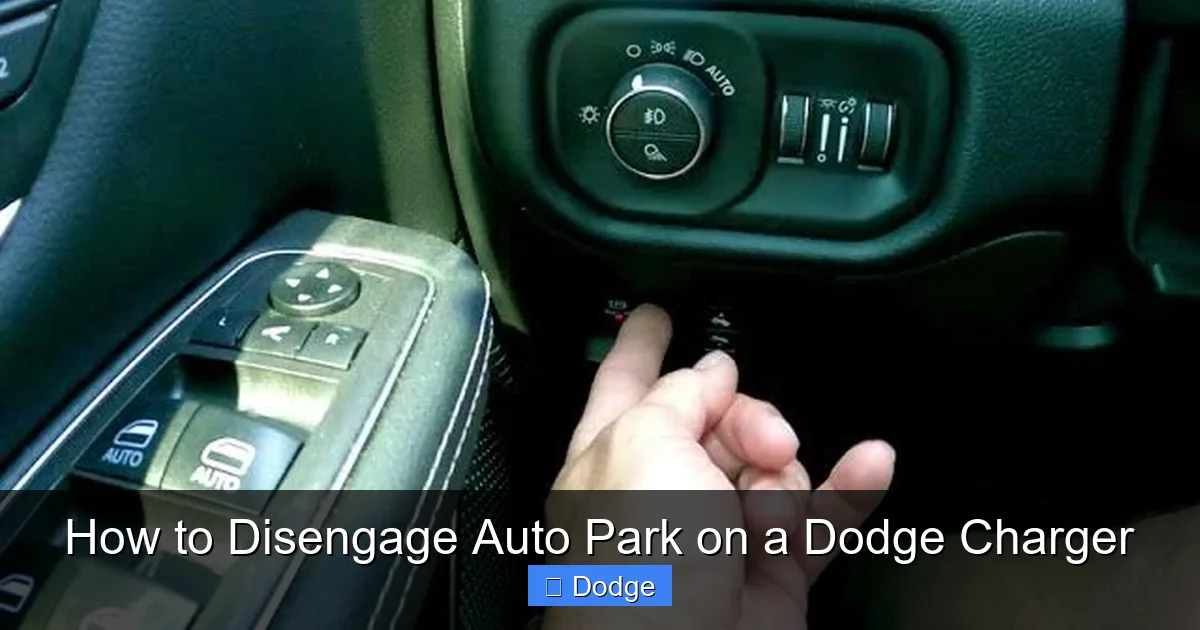
How to Disengage Auto Park on a Dodge Charger

Contents
- 1 Key Takeaways
- 2 📑 Table of Contents
- 3 Understanding the Auto Park System in Dodge Chargers
- 4 Standard Procedure to Disengage Auto Park
- 5 Troubleshooting Common Auto Park Issues
- 6 Using the Manual Shift Release (Emergency Override)
- 7 Preventing Future Auto Park Problems
- 8 Model-Specific Notes
- 9 When to See a Mechanic
- 10 Conclusion
- 11 Frequently Asked Questions


Disengaging auto park on a Dodge Charger is simple once you know the steps. Whether you’re driving a newer model with electronic shift or an older version, this guide covers everything you need—from basic procedures to troubleshooting common issues.
So, you’re behind the wheel of your Dodge Charger, ready to hit the road—but the gear shifter won’t budge out of Park. Frustrating, right? Don’t worry. This is a common issue many Charger owners face, especially with the electronic park system found in newer models. Whether you’re driving a 2015 Charger SXT or a 2023 Charger R/T Scat Pack, knowing how to disengage auto park on a Dodge Charger can save you time, stress, and a potential tow truck call.
The good news? Most of the time, it’s a quick fix. The auto park system—also known as the electronic shift interlock—is designed to keep your car safe by only allowing you to shift out of Park when certain conditions are met. Think of it like a digital seatbelt: it won’t let you drive unless everything’s secure. But sometimes, that safety feature gets a little overzealous. Maybe your brake lights are out, your key fob is weak, or there’s a glitch in the system. Whatever the cause, understanding how to safely and correctly disengage auto park is essential for every Charger owner.
In this guide, we’ll walk you through everything you need to know—step by step—so you can get back on the road with confidence. We’ll cover the basics of how the system works, the standard procedure for shifting out of Park, what to do if it gets stuck, and how to prevent future issues. Whether you’re a first-time Charger driver or a seasoned enthusiast, this article will give you the knowledge and tools to handle auto park like a pro.
Key Takeaways
- Understand your Charger’s transmission type: Newer models use electronic shift (e-shift), while older ones have a traditional gear selector. The disengagement method varies slightly.
- Always press the brake pedal: This is required to safely shift out of Park and prevent damage to the transmission.
- Use the shift release button if stuck: Located near the shifter, this manual override helps when the electronic system fails.
- Check the brake lights: If they’re not working, the vehicle may not allow you to shift out of Park—fix the brake switch or fuse first.
- Keep the key fob nearby: Some Chargers won’t disengage Park if the key fob battery is dead or out of range.
- Regular maintenance prevents issues: Clean the shifter area and inspect electrical connections to avoid future problems.
- Consult the owner’s manual: Always refer to your specific model year for exact instructions and safety warnings.
📑 Table of Contents
Understanding the Auto Park System in Dodge Chargers
Before we dive into the how-to, let’s take a moment to understand what auto park actually is and why it exists. The auto park system in Dodge Chargers is part of the vehicle’s electronic shift interlock mechanism. It’s designed to prevent accidental shifting out of Park, which could lead to unintended movement and potential accidents. This system is especially important in modern vehicles with push-button start and electronic gear selectors.
In older Dodge Chargers (pre-2011), the gear shifter was mechanically linked to the transmission. You’d physically move a lever that engaged or disengaged Park. But starting around 2011, Dodge began introducing electronic shift systems—often called “e-shift” or “shift-by-wire.” These systems use electronic signals instead of mechanical linkages. When you press the shifter button or move the lever, it sends a signal to the transmission control module (TCM), which then engages the desired gear.
The auto park function locks the transmission in Park when the vehicle is turned off. To disengage it, the system checks several conditions:
– Is the brake pedal pressed?
– Is the key fob present and functional?
– Are the brake lights working?
– Is the ignition in the correct position?
Only when all these conditions are met will the system allow you to shift out of Park. This might sound complicated, but in practice, it’s seamless—most of the time. However, if one of these conditions isn’t met, you might find yourself stuck in Park with no way to move the shifter.
For example, let’s say you’re parked in your driveway, ready to back out. You press the brake, push the shifter forward to go into Reverse—but nothing happens. The shifter won’t move. This is likely because the system didn’t detect your brake press, possibly due to a faulty brake light switch. Or maybe your key fob battery is dying, and the car can’t confirm you’re authorized to drive.
Understanding these underlying mechanisms helps you troubleshoot more effectively. It also explains why simply “jiggling” the shifter or turning the key harder won’t work—it’s not a mechanical issue, but an electronic one. The system needs the right signals to unlock.
Standard Procedure to Disengage Auto Park
Visual guide about How to Disengage Auto Park on a Dodge Charger
Image source: i.pinimg.com
Now that you know how the system works, let’s go over the standard steps to disengage auto park on a Dodge Charger. This is the process you should follow every time you start your car and want to drive.
Step 1: Ensure the Vehicle is in Park and the Engine is Off
Before starting, make sure your Charger is fully stopped and in Park. If you’re already in Park, great. If not, bring the vehicle to a complete stop, press the brake, and shift into Park using the shifter. For electronic shifters, this usually means pressing the “P” button or moving the lever to the Park position.
Once in Park, turn off the engine using the Start/Stop button. Wait a few seconds for the system to fully power down. This ensures all electronic systems are reset and ready for the next startup.
Step 2: Press and Hold the Brake Pedal
This is the most critical step. The auto park system will not allow you to shift out of Park unless the brake pedal is fully depressed. Place your foot firmly on the brake pedal and press it all the way down. You should feel resistance, and your brake lights should illuminate (if they’re working).
If your brake lights don’t come on, that’s a red flag. The system may not detect the brake press, which means you won’t be able to shift. We’ll cover troubleshooting this issue later, but for now, assume your brake lights are functional.
Step 3: Press the Start/Stop Button to Turn On the Ignition
With your foot still on the brake, press the Start/Stop button once to turn on the ignition (without starting the engine). You’ll see the dashboard lights up, and the gear indicator should show “P” for Park.
At this point, the system is powered up and ready to receive input. Don’t start the engine yet—just turn on the ignition.
Step 4: Shift Out of Park
Now, while keeping your foot on the brake, move the shifter out of Park. On electronic shifters, this usually means pressing the shifter button (if equipped) and moving the lever forward to “D” for Drive or “R” for Reverse. On some models, you may need to press a release button on the side of the shifter.
You should feel a slight click or resistance as the system disengages Park. The gear indicator on the dashboard should change from “P” to “D” or “R.”
Step 5: Start the Engine (Optional)
If you haven’t already started the engine, you can do so now by pressing the Start/Stop button again (with your foot still on the brake). The engine should fire up, and you’re ready to drive.
Step 6: Release the Brake and Begin Driving
Once the engine is running and you’re in the desired gear, slowly release the brake pedal. The Charger should begin to creep forward (in Drive) or backward (in Reverse), just like any automatic vehicle.
That’s it! You’ve successfully disengaged auto park. This process should take less than 10 seconds once you’re familiar with it.
Troubleshooting Common Auto Park Issues

Visual guide about How to Disengage Auto Park on a Dodge Charger
Image source: docharger.org
Even with the correct procedure, things can go wrong. Here are some of the most common issues that prevent you from disengaging auto park on a Dodge Charger—and how to fix them.
Brake Lights Not Working
One of the most frequent causes of auto park failure is non-functioning brake lights. The system relies on the brake light circuit to confirm that the brake pedal is pressed. If the brake lights don’t come on when you press the pedal, the system may not register the input.
**Solution:**
Check your brake lights. Have someone stand behind the car while you press the brake pedal. If the lights don’t illuminate, the issue could be:
– A blown fuse (check the fuse box under the dashboard or hood)
– A faulty brake light switch (located near the brake pedal)
– Burnt-out bulbs
Replace the fuse or bulbs as needed. If the switch is faulty, it may need to be replaced by a mechanic. A new brake light switch typically costs $20–$50 and can be installed in under an hour.
Dead or Weak Key Fob Battery
Modern Dodge Chargers use a keyless entry and ignition system. If your key fob battery is dead or weak, the car may not detect it, preventing you from shifting out of Park.
**Solution:**
Try replacing the key fob battery (usually a CR2032 coin cell). If you don’t have a spare, most Chargers have a backup method:
– Place the key fob directly against the Start/Stop button (some models have a symbol indicating this spot)
– Press the brake and try starting the car
This uses inductive coupling to read the fob’s signal even with a dead battery.
Shifter Stuck or Jammed
Sometimes, the shifter itself can get stuck due to dirt, debris, or mechanical wear. This is more common in older models or vehicles driven in dusty or muddy conditions.
**Solution:**
Try gently wiggling the shifter while pressing the brake. Avoid forcing it—this can damage the mechanism. If it’s dirty, use compressed air or a soft brush to clean around the shifter base. For persistent issues, inspect the shift cable or electronic sensors.
Faulty Shift Interlock Solenoid
The shift interlock solenoid is an electronic component that physically locks the shifter in Park. If it fails, the shifter won’t move.
**Solution:**
This usually requires professional diagnosis. A mechanic can test the solenoid with a scan tool and replace it if needed. Replacement costs vary but typically range from $100 to $300 including labor.
Battery or Electrical Issues
Low battery voltage or poor electrical connections can disrupt the auto park system. If your Charger has been sitting for a long time or the battery is old, this could be the culprit.
**Solution:**
Check the battery voltage with a multimeter. It should read at least 12.4 volts when the car is off. If it’s lower, try jump-starting the vehicle or replacing the battery. Also, inspect the battery terminals for corrosion and clean them if necessary.
Using the Manual Shift Release (Emergency Override)

Visual guide about How to Disengage Auto Park on a Dodge Charger
Image source: jeepfixes.com
What if none of the above solutions work? Don’t panic. Dodge Chargers are equipped with a manual shift release—a hidden emergency override that lets you disengage auto park mechanically.
This feature is essential if your Charger loses power, the electronic system fails, or you’re stuck in Park with no other options.
Locating the Manual Shift Release
The manual shift release is typically located near the shifter, inside a small cover or slot. On most Dodge Chargers, you’ll find it:
– Under a small plastic cover on the center console
– Behind a removable panel near the shifter
– In the storage compartment next to the shifter
Look for a small hole or slot labeled “Shift Release” or marked with a shifter icon.
How to Use It
1. **Turn on the ignition** (or insert the key into the ignition slot if your model has one).
2. **Press and hold the brake pedal.**
3. **Insert a small tool** (like a flathead screwdriver, key, or paperclip) into the shift release slot.
4. **Push down firmly** until you feel a click—this manually releases the shifter lock.
5. **Move the shifter** out of Park into Neutral (N) or Drive (D).
Once the shifter is free, you can start the engine and drive normally. However, this is a temporary fix. You should still diagnose and repair the underlying issue to prevent it from happening again.
Safety Tips
– Only use the manual release in emergencies.
– Never force the shifter—gentle pressure is enough.
– After using the override, have your Charger inspected by a professional.
– Keep a small tool (like a key or screwdriver) in your glove box for quick access.
Preventing Future Auto Park Problems
The best way to deal with auto park issues is to prevent them from happening in the first place. Here are some proactive steps you can take to keep your Dodge Charger’s system running smoothly.
Regular Maintenance
Follow your Charger’s recommended maintenance schedule. This includes:
– Checking and replacing brake light bulbs
– Inspecting the brake light switch
– Testing the battery and charging system
– Cleaning the shifter and surrounding area
A little maintenance goes a long way in avoiding electronic gremlins.
Keep the Shifter Area Clean
Dirt, crumbs, and debris can accumulate around the shifter, potentially interfering with its movement. Use a soft brush or vacuum to clean the area regularly. Avoid using harsh chemicals that could damage plastic or electronics.
Replace the Key Fob Battery Annually
Even if the fob seems to work, replace the battery once a year to ensure reliable performance. A weak battery can cause intermittent issues, especially in cold weather.
Check Fuses Periodically
The brake light and shift interlock systems rely on fuses. Check the fuse box (usually under the dashboard or in the engine compartment) every few months. Replace any blown fuses and investigate the cause—repeated blown fuses may indicate a deeper electrical issue.
Use Quality Fuel and Keep the Battery Charged
A weak or dying battery can cause all sorts of electronic problems, including auto park failure. If your Charger sits unused for long periods, consider using a battery maintainer or trickle charger.
Model-Specific Notes
While the general principles apply to most Dodge Chargers, there are some differences depending on the model year and trim.
2011–2014 Chargers (First Gen E-Shift)
These models introduced the electronic shifter. The manual shift release is usually under a small cover on the console. The brake light switch is a common failure point—replace it if you experience repeated issues.
2015–2023 Chargers (Updated E-Shift)
These models have a more refined electronic system. Some include a “Shift Lock” button on the shifter itself. The manual release is often hidden in the storage compartment. These models are also more sensitive to key fob signal strength.
Charger SRT and Hellcat Models
High-performance models like the SRT 392 and Hellcat have the same auto park system but may include additional safety features. Always refer to the owner’s manual for specific instructions.
Pre-2011 Chargers (Mechanical Shifters)
Older Chargers with mechanical shifters don’t have an electronic auto park system. However, they may still have a brake interlock that requires the brake to be pressed. The manual release is usually a lever under the shifter.
When to See a Mechanic
While most auto park issues can be resolved at home, some problems require professional attention. See a mechanic if:
– The shifter remains stuck after using the manual release
– The brake lights work but the car still won’t shift
– You hear unusual noises from the shifter or transmission
– The issue happens frequently, even after troubleshooting
A certified Dodge technician can run diagnostics, check the TCM, and inspect wiring for faults.
Conclusion
Disengaging auto park on a Dodge Charger doesn’t have to be a headache. With the right knowledge and a little patience, you can handle most issues quickly and safely. Remember: always press the brake, keep your key fob charged, and don’t ignore warning signs like non-working brake lights.
The auto park system is there to protect you—not trap you. By understanding how it works and knowing the steps to override it when needed, you’ll stay in control of your Charger, no matter what.
So the next time you’re stuck in Park, take a deep breath, follow this guide, and get back on the road. Your Charger is built for performance, and that includes getting you where you need to go—smoothly and safely.
Frequently Asked Questions
Why won’t my Dodge Charger shift out of Park?
This is usually due to the brake pedal not being pressed, a dead key fob battery, or faulty brake lights. Check these first before assuming a mechanical failure.
Can I drive my Charger if the auto park won’t disengage?
No. If you can’t shift out of Park, the car won’t move. Use the manual shift release to get it into Neutral, then have it towed or repaired.
Where is the manual shift release on a Dodge Charger?
It’s typically under a small cover near the shifter or in the storage compartment. Look for a slot labeled “Shift Release” or marked with a shifter icon.
Does the auto park system drain the battery?
No, it uses minimal power. However, a weak battery can cause the system to malfunction, making it seem like the auto park is the issue.
Can cold weather affect auto park?
Yes. Cold temperatures can reduce battery performance and weaken the key fob signal, both of which may prevent the system from disengaging Park.
Is it safe to use the manual shift release regularly?
No. It’s designed for emergencies only. Frequent use may indicate an underlying problem that needs professional diagnosis.


