How to Clear the Flat Tire Warning on an Infiniti Q50

Contents


Clearing the flat tire warning on your Infiniti Q50 is easier than you think—no mechanic required. This guide walks you through step-by-step instructions to reset the TPMS system, whether you’ve fixed a flat, rotated tires, or replaced sensors. Keep your dashboard clean and drive with confidence using these proven methods.
Key Takeaways
- Understand the TPMS warning light: The flat tire warning on your Infiniti Q50 is part of the Tire Pressure Monitoring System (TPMS), which alerts you when tire pressure is too low or a sensor detects an issue.
- Check tire pressure first: Always verify that all four tires (plus the spare, if equipped) are inflated to the recommended PSI before attempting to reset the warning.
- Use the TPMS reset button: Most Infiniti Q50 models have a physical reset button located under the steering column or near the fuse box—press it after correcting tire pressure.
- Drive to complete the reset: After pressing the reset button, drive at speeds above 19 mph for 10–15 minutes to allow the system to recalibrate and clear the warning.
- Consider sensor replacement if needed: If the warning persists, one or more TPMS sensors may be faulty or dead—replacement costs $50–$150 per sensor depending on the model year.
- Avoid common mistakes: Don’t ignore the warning light, and never reset the system without first checking tire pressure—doing so can mask real safety issues.
- Use professional help when necessary: If DIY steps don’t work, visit an Infiniti dealership or trusted mechanic with TPMS diagnostic tools for accurate troubleshooting.
📑 Table of Contents
Understanding the Flat Tire Warning on Your Infiniti Q50
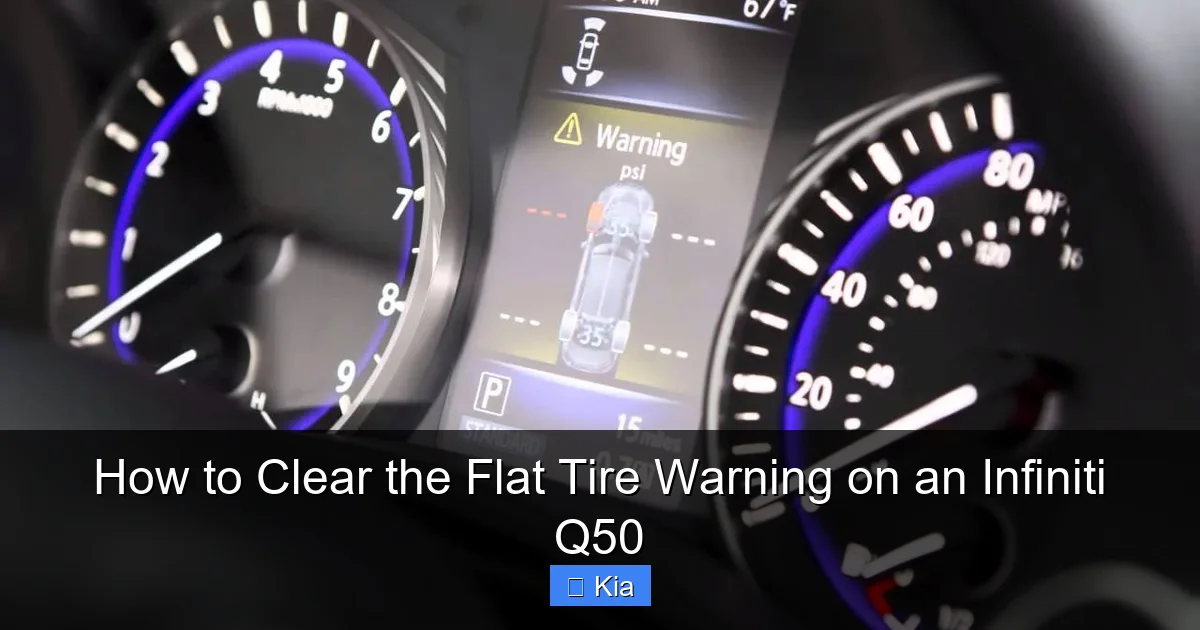
If you’ve ever been driving your Infiniti Q50 and suddenly seen a yellow or orange light flash on your dashboard—often shaped like a tire with an exclamation point—you’ve encountered the flat tire warning. This isn’t just a random alert; it’s your vehicle’s Tire Pressure Monitoring System (TPMS) doing its job. The system constantly monitors the air pressure in each tire and alerts you when something’s off. But what does it really mean, and why does it sometimes stay on even after you’ve fixed the problem?
The TPMS in the Infiniti Q50 is designed to enhance safety. Underinflated tires can reduce fuel efficiency, wear out faster, and even lead to blowouts—especially at high speeds. That’s why Infiniti built this system to catch issues early. However, the warning light can be triggered by more than just a flat. Temperature changes, tire rotations, new tires, or even a dead sensor battery can set it off. And while the system is smart, it’s not perfect. Sometimes, it needs a little help from you to reset properly.
Many Q50 owners assume the warning means they have a flat tire—and while that’s possible, it’s not always the case. In fact, most TPMS warnings are due to low pressure from seasonal temperature drops or gradual air loss. The good news? Once you’ve addressed the root cause, clearing the warning is usually straightforward. But it’s not as simple as turning the car off and on again. You’ll need to follow specific steps to ensure the system recognizes the correction and resets correctly.
How the TPMS System Works in the Infiniti Q50
The Infiniti Q50 uses a direct TPMS system, which means each wheel has its own sensor mounted inside the tire, usually attached to the valve stem. These sensors measure the actual air pressure and temperature inside the tire and send that data wirelessly to the vehicle’s onboard computer. When pressure drops below the recommended level—typically around 25–30 PSI for the Q50—the system triggers the warning light.
Each sensor has a unique ID, and the car’s computer learns these IDs during the initial setup or after a reset. This allows the system to monitor each tire individually. If you rotate your tires or replace one, the system may need to relearn the sensor positions. That’s why a tire rotation can sometimes cause the warning light to come on—even if all tires are properly inflated.
The sensors are powered by small lithium batteries, which typically last 5–10 years. Once the battery dies, the sensor stops transmitting data, and the warning light may stay on permanently until the sensor is replaced. This is a common issue in older Q50 models, especially those from 2014–2017. So if you’ve checked your tire pressure and everything looks fine, but the light won’t go away, a dead sensor could be the culprit.
Common Causes of the Flat Tire Warning
Before you try to clear the warning, it’s important to understand why it appeared in the first place. Here are the most common reasons the flat tire warning lights up on an Infiniti Q50:
– Low tire pressure: The most frequent cause. Cold weather can cause air to contract, dropping pressure by 1 PSI for every 10°F temperature decrease. Even a slow leak from a nail or valve stem issue can trigger the alert.
– Tire rotation or replacement: When tires are moved to different positions, the TPMS system may not recognize the new sensor locations, causing a warning until it’s reset.
– Dead or faulty TPMS sensor: As mentioned, sensor batteries die over time. A malfunctioning sensor may send incorrect data or no data at all.
– Spare tire not monitored: Some Q50 models don’t have a TPMS sensor in the spare tire. If you’re using the spare and it’s underinflated, the system won’t detect it—but if the spare is equipped with a sensor and it’s low, it can still trigger the light.
– System glitch or software issue: Occasionally, the TPMS control module may experience a temporary error, causing a false warning.
Knowing the cause helps you choose the right fix. For example, if you just rotated your tires, you’ll need to reset the system. If the light came on during a cold snap, you probably just need to add air. And if the light won’t go off after multiple resets, it’s likely a hardware issue.
Step-by-Step Guide to Clearing the Flat Tire Warning
Visual guide about How to Clear the Flat Tire Warning on an Infiniti Q50
Image source: vehiclefreak.com
Now that you understand why the warning appears, let’s get into the practical part: how to clear it. The process is relatively simple, but it must be done in the correct order. Skipping steps or doing them out of sequence can leave the warning light on—or worse, mask a real problem.
The key is to first fix the underlying issue (like low pressure), then reset the system so it recognizes the correction. Here’s a step-by-step guide that works for most Infiniti Q50 models from 2014 to 2023.
Step 1: Check and Adjust Tire Pressure
Before touching any buttons or driving anywhere, check the air pressure in all four tires. Use a reliable digital tire pressure gauge—don’t rely on the gas station gauge, as they’re often inaccurate.
The recommended tire pressure for the Infiniti Q50 varies slightly by model year and trim, but it’s usually between 32 and 35 PSI for the front and rear tires. You can find the exact number on a sticker inside the driver’s side door jamb. It’s labeled “Tire and Loading Information.”
Make sure to check the pressure when the tires are cold—meaning the car hasn’t been driven for at least three hours. Driving heats up the tires and increases pressure, giving you a false reading.
If any tire is below the recommended PSI, inflate it to the correct level. Use an air compressor at a gas station or your home garage. Don’t overinflate—just match the number on the door jamb.
Pro tip: Check the spare tire too, if your Q50 has one with a TPMS sensor. Some models include a sensor in the spare, and if it’s low, it can trigger the warning.
Step 2: Locate the TPMS Reset Button
Once all tires are properly inflated, it’s time to reset the system. Most Infiniti Q50 models have a physical TPMS reset button. It’s usually located under the steering column, near the fuse box, or behind a small panel on the lower dashboard.
To find it:
– Turn the ignition to the “ON” position (but don’t start the engine).
– Look for a button labeled “TPMS,” “SET,” or “RESET.” It may have a tire icon next to it.
– On some models, the button is hidden behind a small cover—use a flathead screwdriver to gently pry it open.
If you can’t find the button, consult your owner’s manual. The location can vary slightly between model years. For example, 2014–2016 Q50s often have the button under the steering wheel, while 2017–2020 models may have it near the glove compartment.
Step 3: Press and Hold the Reset Button
With the ignition on and the engine off, press and hold the TPMS reset button. You’ll usually need to hold it for about 3–5 seconds. You should see the TPMS warning light on the dashboard blink three times, then stay on solid. This indicates the system is in reset mode.
Don’t release the button too early. If the light doesn’t blink, try again—sometimes it takes a few attempts.
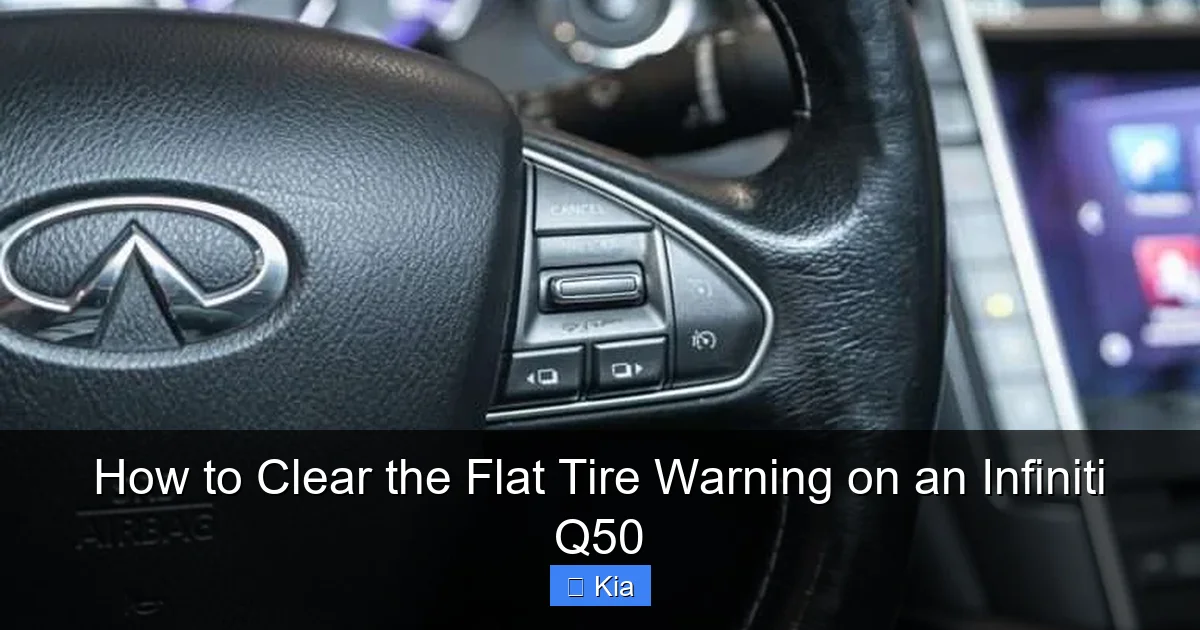
On some newer Q50 models, the reset process may be done through the infotainment system. If you don’t have a physical button, check the vehicle settings menu:
– Go to “Settings” > “Vehicle” > “Tire Pressure Monitor.”
– Select “Reset” or “Initialize.”
– Follow the on-screen prompts.
This method is less common but used in later model years with updated software.
Step 4: Drive to Complete the Reset
After pressing the reset button, the system needs to relearn the sensor data. This happens while you drive.
Start the engine and drive at a speed of at least 19 mph (30 km/h) for 10–15 minutes. The system will scan each sensor and confirm that pressure is normal. During this time, the warning light may stay on or blink intermittently—this is normal.
Avoid sudden stops, sharp turns, or driving on rough roads during this process. The system needs stable conditions to accurately read the sensors.
Once the drive is complete, the warning light should turn off. If it doesn’t, repeat the process. Sometimes it takes two or three attempts, especially if the sensors were recently replaced or the battery was low.
Step 5: Verify the Reset Was Successful
After driving, park the car and turn off the ignition. Wait a few minutes, then start the engine again. Check the dashboard—the TPMS warning light should be off.
If the light is still on, double-check your tire pressure. Use your gauge to confirm each tire is at the correct PSI. Even a small deviation can prevent the system from resetting.
Also, make sure you didn’t skip any steps. Did you press the button long enough? Did you drive at the required speed? These details matter.
If everything checks out and the light remains, it’s time to consider other causes—like a faulty sensor.
What to Do If the Warning Won’t Clear

Visual guide about How to Clear the Flat Tire Warning on an Infiniti Q50
Image source: vehiclefreak.com
Sometimes, despite following all the steps correctly, the flat tire warning refuses to go away. This can be frustrating, but it usually points to a deeper issue. Here’s how to troubleshoot when the reset doesn’t work.
Check for a Faulty TPMS Sensor
The most likely culprit is a dead or malfunctioning TPMS sensor. As mentioned earlier, these sensors have internal batteries that last 5–10 years. Once the battery dies, the sensor can’t transmit data, and the system keeps the warning light on.
To confirm, you’ll need a TPMS diagnostic tool. These devices can read the sensor IDs and check their status. Many auto parts stores (like AutoZone or O’Reilly) offer free TPMS scans. Just drive in and ask—they’ll hook up a scanner and tell you which sensor is dead.
If one sensor is faulty, you’ll need to replace it. Costs vary:
– OEM (original equipment) sensors: $100–$150 each
– Aftermarket sensors: $50–$100 each
– Labor (if done by a shop): $20–$50 per sensor
Some sensors can be reprogrammed to match your vehicle, while others must be replaced with exact matches. Always check compatibility before buying.
Inspect for Physical Damage
Sometimes, the sensor isn’t dead—it’s damaged. A bent valve stem, corrosion, or impact from a pothole can break the sensor or its antenna. This prevents it from sending signals.
Visually inspect each tire’s valve stem. Look for cracks, rust, or loose fittings. If you see damage, the sensor may need replacement.
Also, check the tire itself. A slow leak from a puncture or bead leak can cause low pressure that the system can’t stabilize, even after inflation. Use soapy water to check for bubbles around the valve stem and tire bead.
Try a Manual Relearn Procedure
If the standard reset doesn’t work, your Q50 may need a manual relearn procedure. This is more advanced and often required after tire rotation or sensor replacement.
The process varies by model year, but generally involves:
1. Turning the ignition on.
2. Pressing the TPMS button in a specific sequence (e.g., press 3 times, wait 10 seconds, press again).
3. Using a magnet or tool to trigger each sensor (placed near the valve stem).
4. Confirming each sensor is recognized via dashboard lights or beeps.
This method requires precision and patience. If you’re not comfortable doing it yourself, visit an Infiniti dealership or tire shop with TPMS programming tools.
Visit a Professional
If all else fails, it’s time to seek professional help. Infiniti dealerships have specialized diagnostic equipment that can read TPMS error codes and reset the system accurately.
They can also check for software updates. Sometimes, a firmware update for the TPMS control module can resolve persistent warnings.
While dealership service can be more expensive, it’s often the most reliable solution for complex issues.
Preventing Future Flat Tire Warnings

Visual guide about How to Clear the Flat Tire Warning on an Infiniti Q50
Image source: vehiclefreak.com
Once you’ve cleared the warning, you don’t want it coming back. Here are some tips to keep your TPMS system happy and your dashboard warning-free.
Check Tire Pressure Monthly
Make it a habit to check your tire pressure at least once a month. Use a quality gauge and check when tires are cold. This helps catch slow leaks or pressure drops before they trigger the warning.
Keep a tire pressure gauge in your glove compartment or garage. Digital gauges are more accurate than analog ones.
Rotate Tires Regularly
Infiniti recommends rotating your tires every 5,000 to 7,500 miles. This promotes even wear and extends tire life. But remember: after rotation, you may need to reset the TPMS system.
If you do it yourself, follow the reset steps above. If you go to a shop, ask them to reset the TPMS after rotation.
Replace Sensors Before They Die
If your Q50 is more than 5 years old, consider replacing the TPMS sensors proactively. It’s cheaper and less stressful than dealing with a dead sensor on the road.
Some mechanics offer sensor replacement during routine tire changes. Ask about it when you get new tires.
Use the Correct Tire Pressure
Never inflate tires above the recommended PSI to “improve performance” or fuel economy. Overinflated tires wear unevenly and reduce traction. Stick to the number on the door jamb.
Also, don’t ignore the spare. If your Q50 has a TPMS-equipped spare, keep it inflated to the correct pressure.
Be Mindful of Temperature Changes
Cold weather is a major cause of low tire pressure. In winter, check your tires more frequently. Consider using nitrogen inflation—it’s less affected by temperature swings than regular air.
Conclusion
Clearing the flat tire warning on your Infiniti Q50 doesn’t have to be a mystery. With the right knowledge and a few simple steps, you can reset the TPMS system and get back to driving with confidence. Start by checking tire pressure, then use the reset button and a short drive to complete the process. If the warning persists, consider a faulty sensor or professional help.
Remember, the TPMS is there to keep you safe. Don’t ignore it—but don’t panic either. Most warnings are easy to fix with a little attention and care. By following this guide, you’ll keep your Q50 running smoothly and your dashboard warning-free.
Whether you’re a DIY enthusiast or prefer to leave it to the pros, understanding how your TPMS works empowers you to make smart decisions about your vehicle’s maintenance. So the next time that yellow light flashes, you’ll know exactly what to do.
Frequently Asked Questions
Why is my Infiniti Q50 showing a flat tire warning when all tires are full?
This could be due to a dead TPMS sensor, a system glitch, or incorrect sensor positioning after a tire rotation. Check tire pressure first, then try resetting the system. If the light remains, a sensor may need replacement.
Can I drive with the flat tire warning light on?
You can drive short distances, but it’s not recommended. The warning could indicate low pressure, which affects handling, fuel economy, and safety. Address the issue as soon as possible.
How often should I check my tire pressure on the Q50?
Check tire pressure at least once a month and before long trips. Cold weather and seasonal changes can cause pressure drops, so more frequent checks in winter are wise.
Do I need special tools to reset the TPMS on my Infiniti Q50?
No, most models have a physical reset button or menu option in the infotainment system. You only need special tools if sensors are faulty and require reprogramming.
Will replacing a tire require a TPMS reset?
Yes, if the new tire has a TPMS sensor, the system may need to relearn the sensor ID. Follow the reset procedure after installation to clear any warnings.
Can I disable the TPMS warning light on my Infiniti Q50?
Disabling the TPMS is not recommended and may be illegal in some areas. The system is critical for safety. Instead, fix the underlying issue or replace faulty components.