How to Choose the Right Window Tint Percentage

Contents
- 1 Key Takeaways
- 2 📑 Table of Contents
- 3 Understanding VLT: The Science Behind Tint Percentages
- 4 Legal Landscape: What BMW Owners Need to Know
- 5 Matching Tint to Your BMW’s Use Case: A Practical Guide
- 6 Factory Tint vs. Aftermarket: The BMW-Specific Debate
- 7 Installation Matters: Why Professional Fitting is Crucial for Your BMW
- 8 Care and Maintenance: Keeping Your Tint Pristine for Years
- 9 Frequently Asked Questions

Car Bumper Protector

Car Seat Cover (Universal Fit)

LED Indicator Light

Solar Car Battery Maintainer
Choosing the right window tint percentage for your BMW means understanding VLT (Visible Light Transmission) and how it affects privacy, heat rejection, and legality. Each state has different laws, and BMW’s advanced electronics require professional installation to avoid interference. Match your tint to your driving needs—lower percentages for maximum privacy, higher for better night visibility—and always consider factory tint options for a seamless, warranty-friendly look.
So, you’ve got your beautiful BMW. The precision engineering, the driving dynamics, the iconic kidney grilles—it’s a masterpiece. But then you look at the windows. They’re clear, letting the world see in, and on a hot summer day, the cabin feels like an oven. You think about tinting, but the terminology is confusing. “Five percent? Thirty-five? What does it even mean?” You’re not alone. Choosing the right window tint percentage is one of the most common—and impactful—modifications BMW owners consider. Get it right, and you enhance comfort, privacy, and style. Get it wrong, and you could face legal trouble, hinder your car’s sophisticated electronics, or simply hate the result. This guide will cut through the noise. We’ll break down exactly what that percentage means, how it applies specifically to your BMW, and walk you through a step-by-step process to make the perfect choice. Let’s get into it.
Key Takeaways
- VLT is Key: Window tint percentage refers to VLT (Visible Light Transmission), the amount of light that passes through. Lower numbers (e.g., 20%) are darker; higher numbers (e.g., 70%) are lighter.
- Know Your Local Laws: BMW owners must follow state-specific VLT limits for front, rear, and side windows. Non-compliance can lead to fines and failed inspections.
- Match Tint to Your Lifestyle: A daily-driven BMW 5 Series benefits from 35-50% VLT for balanced comfort, while a track-focused M4 might use 15-20% for maximum heat and glare reduction.
- Factory vs. Aftermarket: BMW’s factory tint is integrated and warranty-safe. Aftermarket offers more customization but requires professional installation to protect sensors and cameras.
- Professional Installation is Non-Negotiable: Improperly installed tint can bubble, peel, and interfere with BMW’s advanced driver-assistance systems (ADAS) like parking sensors and cameras.
- Heat Rejection ≠ Darkness: Don’t assume a darker tint rejects more heat. Modern ceramic films can offer high heat rejection at higher VLT percentages (e.g., 70%).
- Maintenance Extends Life: Use ammonia-free cleaners and soft cloths to avoid damaging tint film, ensuring it stays clear and functional for years.
📑 Table of Contents
- Understanding VLT: The Science Behind Tint Percentages
- Legal Landscape: What BMW Owners Need to Know
- Matching Tint to Your BMW’s Use Case: A Practical Guide
- Factory Tint vs. Aftermarket: The BMW-Specific Debate
- Installation Matters: Why Professional Fitting is Crucial for Your BMW
- Care and Maintenance: Keeping Your Tint Pristine for Years
Understanding VLT: The Science Behind Tint Percentages
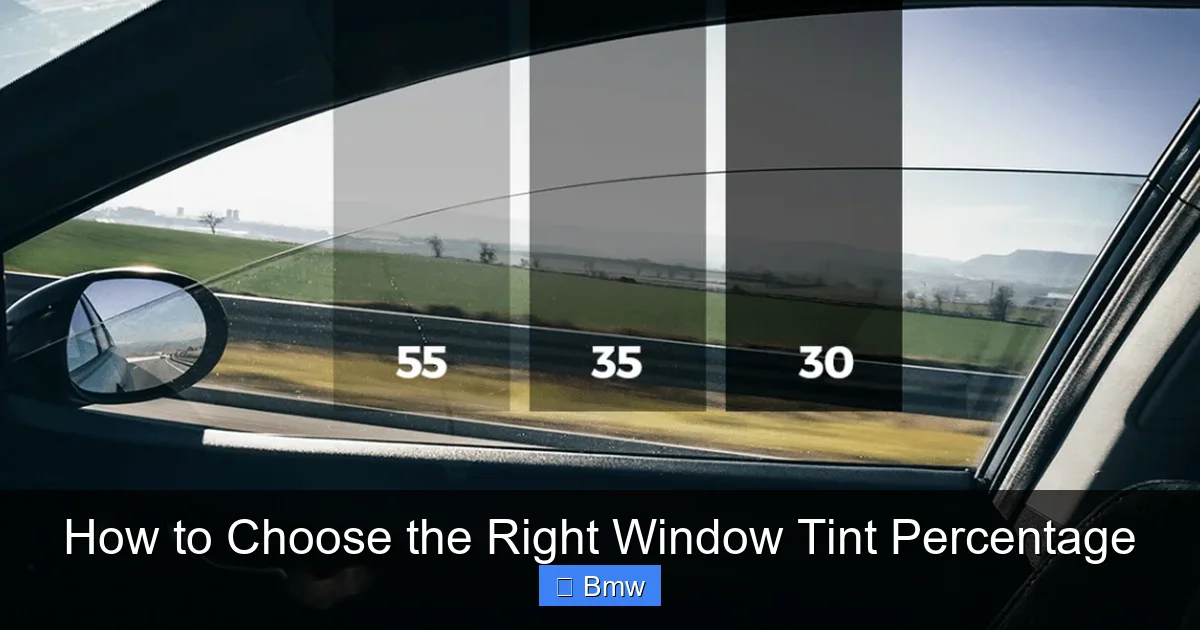
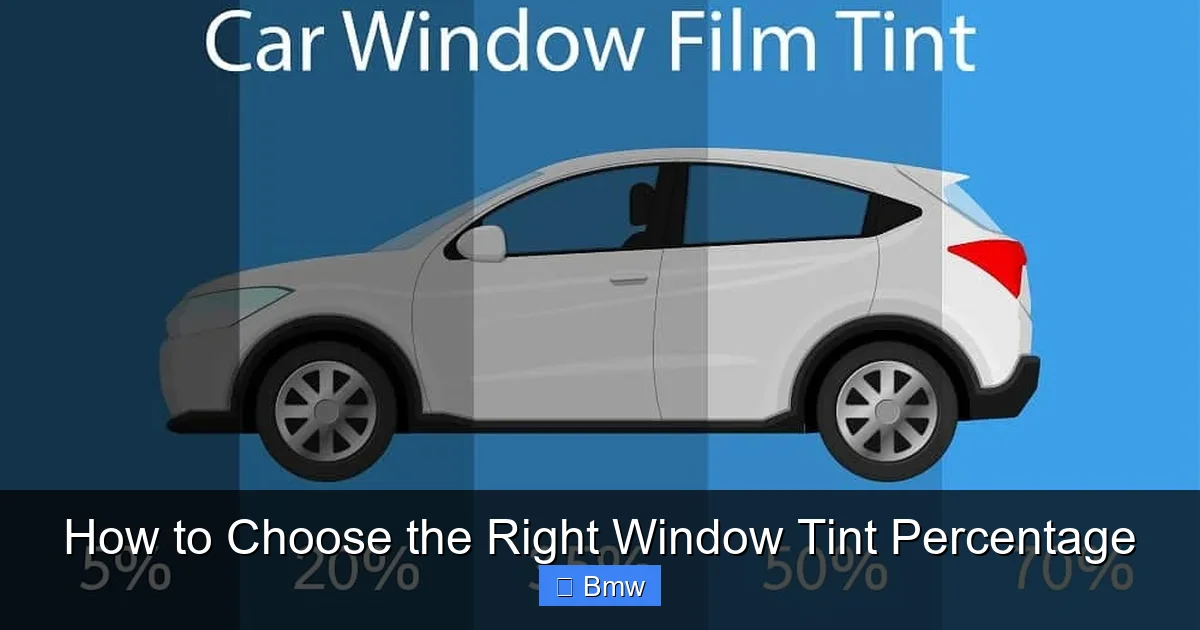
First, let’s demystify the number. When you hear “window tint percentage,” it refers to VLT, or Visible Light Transmission. This is the crucial metric. VLT is the percentage of visible light that the tint allows to pass through the glass. A 50% VLT tint allows 50% of outside light to enter, making it a medium shade. A 20% VLT tint only allows 20% of light through, making it quite dark. A 70% VLT tint is very light, often called a “factory” or “lite” tint. It’s a simple inverse relationship: the lower the percentage number, the darker the tint.
Why VLT Matters More Than “Darkness”
Many people think in terms of “dark” or “light,” but VLT is the industry standard for a reason. It’s a measurable, consistent value. Two different brands’ “dark” tints might have different VLT ratings, leading to unexpected results. Always ask for, and trust, the VLT number. For BMWs, this is especially important because your car likely has a factory-tinted rear glass from the factory. Many modern BMWs come with around 20-25% VLT on the rear windows and sunroof from the factory. If you add aftermarket tint to the front and want a uniform look, you must calculate the combined VLT. For example, if your factory rear glass is 20% VLT and you add a 35% VLT film to the front, the front will appear significantly lighter than the rear. To match, you’d need a front film with a VLT close to 20%, but you must first check if that’s legal in your state for front windows.
Heat Rejection and UV Protection Are Separate Stats
Here’s a critical point that trips everyone up: VLT is only about light, not heat. A dark (low VLT) tint isn’t automatically the best at blocking heat. Modern window film technology uses ceramics and metals to reject infrared (IR) heat rays. You can find a 70% VLT ceramic film that rejects 60% of heat, and a 20% VLT dyed film that rejects only 25% of heat. When shopping, look for separate specs: Total Solar Energy Rejected (TSER) or Infrared Rejection (IRR). For a BMW, where cabin comfort and protecting the premium leather and electronics from sun damage are key, prioritizing high heat/UV rejection is often smarter than just going for the darkest legal option. This is where the investment in quality film pays off.
Legal Landscape: What BMW Owners Need to Know
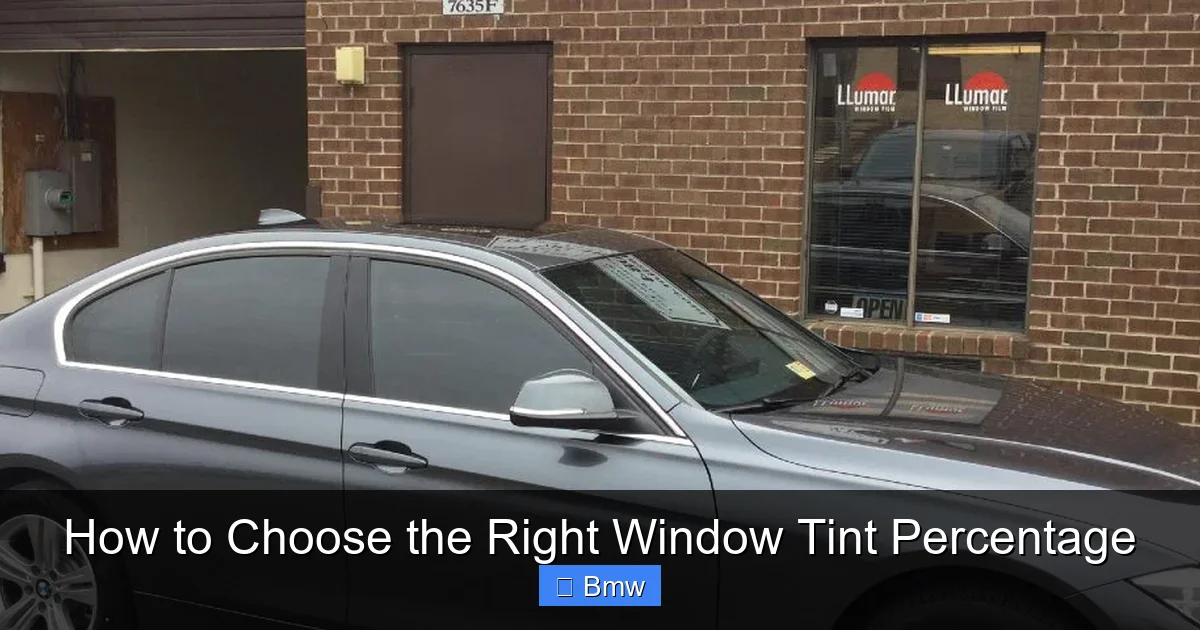
This is the non-negotiable foundation. You cannot skip this step. Window tint laws are not federal; they are set by each state (and sometimes counties or municipalities). They vary wildly. For a BMW owner, the primary concern is usually the front side windows and windshield. Many states are strict here.
Visual guide about How to Choose the Right Window Tint Percentage
Image source: denwindowtint.com
Decoding State Regulations
Laws typically specify:
- Front Side Windows: Must allow a certain percentage of light (e.g., 70%, 75%, 88%). Some states ban any tint on the front side windows.
- Rear Side Windows & Rear Glass: Often have more lenient rules, allowing darker tints like 15% or 5%.
- Windshield: Almost universally, only a non-reflective stripe at the top (often 5-6 inches) is allowed, or the entire windshield must be clear.
For example, California requires front side windows to have a VLT of at least 70%. New York is the same. Florida is more lenient at 28% for front sides. Texas allows 25% for front sides and any darkness for the rear. You must check the laws for your state of residence and any states you frequently drive through. A quick search for “[Your State] window tint law” will lead you to the official DMV or highway patrol site. Remember, if you buy a car with tint from a state with lax laws and then move to a strict state, you could be forced to remove it.
BMW-Specific Considerations: Sensors, Cameras, and Warranty
Your BMW is a rolling computer. It’s packed with sensors and cameras, many located behind the glass: rain/light sensors on the windshield, rearview camera, parking sensors, side-view camera systems (like Surround View), and even some ADAS (Advanced Driver-Assistance Systems) that rely on clear optical paths. Metallic or low-quality films can interfere with radio signals, GPS, and sensor accuracy. This is why choosing a high-quality, non-metallic (ceramic) film is highly recommended for modern BMWs. It’s also why professional installation is critical; improper cutting or application can block sensor lenses. Regarding warranty: BMW’s new car warranty generally does not cover aftermarket modifications. However, if improperly installed tint causes damage to glass or defogger lines, the repair may not be covered. A reputable installer will use techniques that avoid this and often offer a separate warranty on the film and labor.
Matching Tint to Your BMW’s Use Case: A Practical Guide
Now for the fun part. What’s your goal? The “perfect” tint percentage depends entirely on how you use your car. Let’s break down common BMW owner profiles.
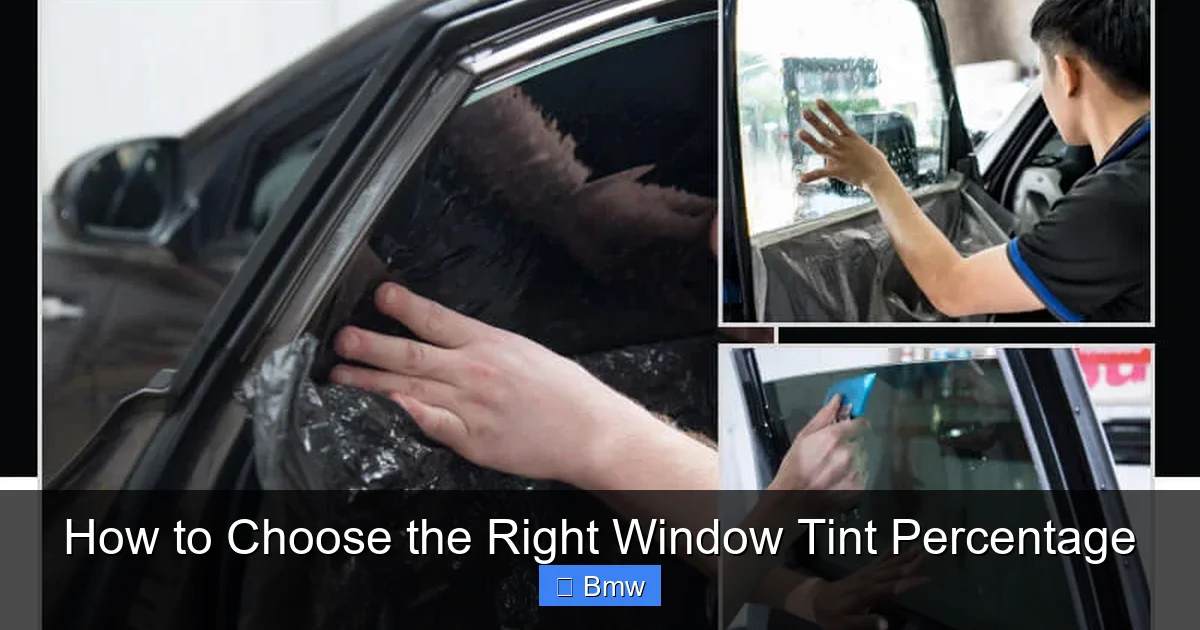
Visual guide about How to Choose the Right Window Tint Percentage
Image source: calgarywindowtinting.ca
The Daily Commuter in a Sunny Climate
You drive your 3 Series or X5 to work every day, often in bright sun. Your priorities are reducing glare, lowering cabin temperature to save AC strain, and protecting your interior. Recommended VLT Range: 35% – 50% for front sides. This provides a noticeable improvement in comfort without excessively darkening the view at night or in garages. Pair this with a high TSER ceramic film (aim for 50%+ heat rejection). For the rear, you can go darker (15-30%) for passenger privacy and rear-seat comfort. This creates a graduated look that is both functional and stylish. If your state allows darker front tints (like 20%), and you prioritize heat rejection above all, you could go darker, but test the visibility at night first.
The Weekend Warrior / Track Driver
Your M3 or M4 sees track days and canyon roads. Here, maximum heat and glare rejection is critical for performance and endurance. Interior temperature management keeps the cabin (and driver) cooler. Recommended VLT Range: 15% – 30% for all windows, if legal. You might opt for a full 20% VLT ceramic film with high IR rejection. The trade-off is significantly reduced visibility at night or in poor weather. This is a conscious choice for the track, but for street driving, ensure you are comfortable with the darkness. Some track drivers even use a removable shade band on the helmet visor instead of dark window tint to maintain optimal peripheral vision.
The Luxury Tourer / Family Hauler
Your 5 Series or 7 Series is for long road trips with family. Privacy for rear passengers and a clean, elegant, uniform factory-like appearance are key. You also want to protect rear-seat passengers from UV rays. Recommended VLT Range: Match the factory rear tint. First, find your factory rear glass VLT (often 20-25%). Then, choose a front-side film with a VLT that creates a balanced, symmetrical look from the outside. If your state permits, a 30-35% front film paired with the factory 20% rear is a classic, sophisticated look. Emphasize UV protection (99%+) to shield passengers. A ceramic film will also prevent the interior’s rich leather and wood from fading.
The Urban Stealth / Privacy Seeker
You value privacy above all. Your GLE or X6 is your personal space. You want the darkest legal option to prevent people from seeing in. Recommended VLT Range: The darkest legal percentage for your state on rear sides, and the legal limit for front sides. In states like Texas or Florida, this could mean 5% rear and 25% front. Be prepared for the significant challenges at night: checking blind spots becomes harder, and you’ll rely heavily on your BMW’s excellent mirrors and cameras. Ensure your side mirrors are also tinted to the same darkness for a uniform look, but check if your state has specific mirror tint rules.
Factory Tint vs. Aftermarket: The BMW-Specific Debate
When you buy a new BMW, you might notice the rear glass is already slightly tinted. This is factory tint, baked into the glass during manufacturing. You have a choice: live with it and tint only the front, or have the entire car retinted aftermarket.
Visual guide about How to Choose the Right Window Tint Percentage
Image source: protintutah.com
The Case for Sticking with Factory Tint
Factory tint is integrated. It’s part of the glass specification, so there’s no film layer to peel, bubble, or interfere with defroster lines. It’s 100% warranty-safe for the glass itself. The look is perfectly uniform from the factory. For many BMW owners, simply adding a matching VLT film to the front windows (if legal) is the simplest, most worry-free path. You maintain that clean, original equipment manufacturer (OEM) aesthetic. The downside? You have less control over the heat rejection specs. Factory tint is usually just a dyed or basic deposited film, offering modest heat rejection. If you live in a very hot climate like Arizona or Florida, you’ll likely want the superior performance of a premium aftermarket ceramic film on all windows.
The Aftermarket Advantage: Customization and Performance
Going full aftermarket lets you choose the exact VLT for every window, creating a custom look. More importantly, you can select a top-tier ceramic film that offers exceptional heat, UV, and even signal-friendly (non-metallic) properties. This is the route for the enthusiast who wants the best performance and a specific aesthetic, like a limo-tinted rear with a slightly lighter front for a sporty gradient. The major considerations are cost and installer quality. A full-car premium ceramic tint job on a BMW can cost $800-$1500+. But you’re paying for material and, more critically, expertise. The installer must know how to work around BMW’s complex window frames, rubber seals, and, most importantly, the multitude of sensors and cameras. They need to precision-cut the film to avoid covering the lens of the rearview camera or the sensors in the rear windshield. A bad install here can cause expensive problems.
Installation Matters: Why Professional Fitting is Crucial for Your BMW
Let’s be blunt: DIY tint kits are a gamble on a BMW. The risk is not just a bubbly, ugly finish. It’s potentially compromising your car’s technology. Professional installation is an investment in your car’s functionality and the tint’s longevity.
The Perils of a Bad Install on a Modern BMW
Think about your BMW’s rear windshield. It’s not just glass; it’s a housing for the rearview camera, the antenna for the keyless entry, and the defroster lines. An amateur might:
- Cut the film too large, trapping moisture and causing bubbles that won’t dissipate.
- Get film adhesive on the rubber door seals, causing them to tear or age prematurely.
- Carelessly cover the rearview camera lens with film or adhesive, rendering it useless until professionally removed.
- Use a heat gun improperly and damage the adhesive or even the glass.
The precision required to remove interior trim panels (like on the rear window of a coupe) to properly install tint is something most DIYers cannot safely manage. One slip can scratch the expensive interior plastic or damage wiring for the rear window defroster.
Finding the Right Installer for Your BMW
Don’t just pick the cheapest shop. Ask specific questions:
- “Have you worked on many BMWs, specifically models with surround-view cameras or sensor arrays?” They should know exactly where the sensitive components are.
- “What brand and type of film do you use, and what is its VLT and TSER rating?” A pro will have technical data sheets. Look for brands like 3M, Llumar, SunTek, or Huper Optik.
- “Do you offer a warranty on both the film and the installation labor?” A good shop guarantees their work for 5-10 years against peeling, bubbling, and fading.
- “Can I see examples of your work on a BMW?” Check their portfolio for clean, crisp installations with no gaps or misalignment around the complex door windows of a 4 Series Gran Coupe, for instance.
A great installer will also advise you on the best VLT for your state’s laws and your BMW’s factory tint. They are your partner in this process. This level of care is what you want for a car that represents a significant investment. Speaking of investments, keeping up with routine maintenance like your cabin air filter is just as important for long-term comfort and performance, regardless of your car’s brand.
Care and Maintenance: Keeping Your Tint Pristine for Years
You’ve chosen the perfect VLT, had it installed flawlessly by a pro. Now, how do you keep it looking new? Tint film is a polymer layer on your glass. It needs proper care.
The Golden Rules of Cleaning
For the first week after installation, the film is curing. Do not clean the windows during this time. After curing:
- Use the Right Cleaner: Never, ever use ammonia-based cleaners (like Windex) or abrasive chemicals. They will degrade the film’s adhesive and coatings, causing it to turn purple or brown over time. Use only cleaners specifically labeled as safe for window film, or a simple solution of mild soap (like baby shampoo) and water.
- Use the Right Tools: A soft microfiber cloth is your best friend. For the interior, a soft scrub pad (like a melamine sponge, used gently) can help with stuck-on bugs without scratching. Never use razor blades, steel wool, or abrasive pads.
- Technique: Spray the cleaner onto the cloth, not directly onto the glass (to avoid seeping into the edges). Wipe gently in a circular motion, then dry with a clean, dry microfiber section.
Long-Term Preservation
Sun exposure is the biggest enemy of all car components. While your tint protects the interior, the film itself is exposed to relentless UV and heat cycles. This is why investing in a high-quality ceramic film with UV inhibitors is so important—it resists fading and degradation. Avoid using sharp objects near the tinted glass. Be careful when loading items into the car; seatbelt buckles or cargo can scratch the film if they rub against it repeatedly. If you notice a small scratch, often it’s only in the top coating and can be polished out by a professional. For major damage, the film will need to be replaced. A well-maintained, high-quality tint on a BMW can easily last 10-15 years or more, continuing to provide comfort and style.
Frequently Asked Questions
What is the most common legal window tint percentage for front side windows in the US?
The most common legal limit for front side windows is 70% VLT (allowing 70% of light in), which is the standard in states like California, New York, and Illinois. Some states are more lenient (e.g., Florida at 28%, Texas at 25%), while others prohibit any tint. Always check your specific state’s law.
Will window tint affect my BMW’s parking sensors or cameras?
High-quality, non-metallic (ceramic) films generally do not interfere with radio-based sensors or cameras. However, if the film is improperly installed and covers the lens of a rearview or side camera, it will block its view. This is why professional installation by someone experienced with BMW’s sensor placement is absolutely essential to avoid creating blind spots for your car’s safety systems.
What window tint percentage is best for night driving on a BMW?
For optimal night visibility, a higher VLT is better. We recommend staying above 35% VLT for front side windows. Tints darker than 20% can significantly reduce visibility in low-light conditions, making it harder to see pedestrians, animals, or road signs. For a BMW with excellent headlights, 40-50% VLT is a great balance for night and day comfort.
How much does it typically cost to tint a BMW?
For a full-car tint using premium ceramic film on a typical BMW sedan or SUV, expect to pay between $800 and $1,500+. The cost varies based on the film brand, the specific BMW model (window sizes and complexity), and the installer’s reputation. A basic dyed film will be cheaper but offers less heat rejection and longevity.
Can I tint my BMW’s windows myself to save money?
While possible, we strongly advise against DIY tinting on a BMW. The risk of damaging interior trim, creating bubbles, and—most critically—interfering with or covering the numerous sensors and cameras is very high. The cost to professionally fix a bad DIY job often exceeds the cost of a correct professional installation initially. This is a modification where expertise is worth every penny.
How long does aftermarket window tint last on a BMW?
With proper care and a high-quality ceramic film from a reputable brand, window tint can last 10-15 years or the life of the car. Lower-quality dyed films may start to fade, turn purple, or peel at the edges in 3-5 years, especially in harsh sun climates. The key is choosing quality film and a skilled installer who ensures proper adhesion to the glass.