
How to Check Tire Pressure on Toyota Corolla 2021

Checking tire pressure on your 2021 Toyota Corolla is quick, easy, and essential for safety and fuel efficiency. With built-in TPMS and simple manual checks, you can maintain optimal tire health in minutes—no mechanic needed.
Key Takeaways
- Use the TPMS dashboard light: The 2021 Corolla has a Tire Pressure Monitoring System that alerts you when pressure is low.
- Check when tires are cold: For accurate readings, inspect tire pressure before driving or after the car has sat for 3+ hours.
- Recommended PSI is 32–35: Find the exact number on the driver’s door jamb sticker—don’t rely on the tire sidewall.
- Use a reliable pressure gauge: Digital or analog gauges work; avoid gas station air pumps with built-in gauges—they’re often inaccurate.
- Inspect all four tires plus the spare: Don’t forget the spare tire—it should also be properly inflated.
- Adjust seasonally: Tire pressure drops in cold weather—check more often in winter.
- Reset TPMS after adjustment: After inflating, drive briefly or use the TPMS reset button to clear the warning light.
📑 Table of Contents
- Why Checking Tire Pressure Matters on Your 2021 Toyota Corolla
- Understanding Tire Pressure Basics
- Tools You’ll Need to Check Tire Pressure
- Step-by-Step Guide to Checking Tire Pressure
- Using the Toyota Corolla’s Built-In TPMS
- When and How Often to Check Tire Pressure
- Common Mistakes to Avoid
- Conclusion
Why Checking Tire Pressure Matters on Your 2021 Toyota Corolla
Maintaining proper tire pressure isn’t just a suggestion—it’s a safety necessity. Your 2021 Toyota Corolla is designed for efficiency, comfort, and reliability, but all of that depends on healthy tires. Underinflated or overinflated tires can lead to poor handling, reduced fuel economy, uneven tread wear, and even blowouts. In fact, the National Highway Traffic Safety Administration (NHTSA) reports that underinflated tires contribute to thousands of accidents each year.
The good news? Your Corolla makes it easier than ever to stay on top of tire pressure. With a built-in Tire Pressure Monitoring System (TPMS), you’ll get a warning light the moment pressure drops below safe levels. But don’t wait for that light to come on—regular checks are key. Whether you’re commuting to work, taking a weekend road trip, or just running errands, a few minutes spent checking your tires can save you money, improve performance, and keep you safe on the road.
Understanding Tire Pressure Basics
Visual guide about How to Check Tire Pressure on Toyota Corolla 2021
Image source: ebaymotorsblog.com
Before diving into the how-to, let’s clarify what tire pressure actually means. Tire pressure refers to the amount of air inside your tires, measured in pounds per square inch (PSI). Think of it like the air in a balloon—too little, and it sags; too much, and it’s stiff and prone to bursting. Your Corolla’s tires need just the right balance to support the vehicle’s weight, absorb road shocks, and maintain grip.
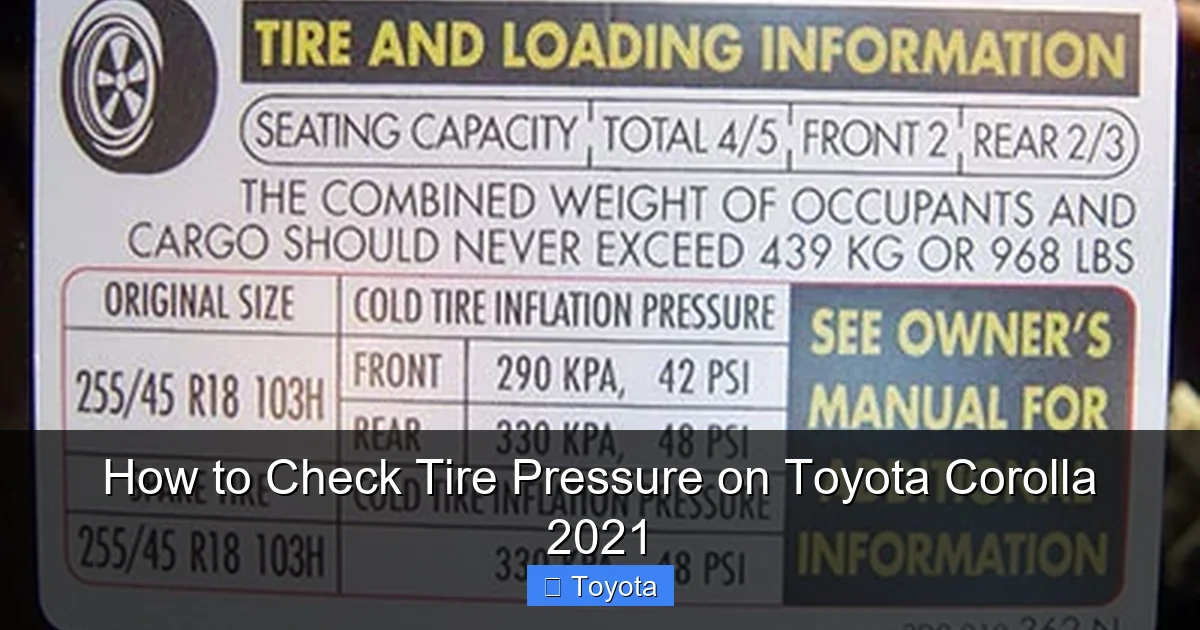
The ideal PSI for your 2021 Corolla typically ranges between 32 and 35, but always check the label on the driver’s side door jamb for the exact number. This sticker, often overlooked, lists the manufacturer-recommended pressure for both front and rear tires under normal load conditions. Never use the maximum PSI printed on the tire sidewall—that’s the tire’s limit, not the recommended pressure for your car.
What Happens If Tire Pressure Is Too Low?
Underinflation is the most common tire issue. When tires don’t have enough air, the sidewalls flex more than they should. This creates excess heat, which can lead to tire failure. You might notice your Corolla feels sluggish, pulls to one side, or has a bumpy ride. Fuel efficiency also drops—studies show that driving on underinflated tires can reduce gas mileage by up to 3%. Over time, low pressure causes uneven tread wear, especially on the outer edges, shortening the tire’s lifespan.
What Happens If Tire Pressure Is Too High?
Overinflation isn’t common, but it’s still a risk. Too much air makes tires rigid, reducing the contact patch with the road. This leads to a harsher ride, less traction, and increased wear in the center of the tread. In wet or slippery conditions, overinflated tires are more likely to hydroplane or lose grip. Plus, they’re more susceptible to damage from potholes or road debris.
Tools You’ll Need to Check Tire Pressure
Visual guide about How to Check Tire Pressure on Toyota Corolla 2021
Image source: i.ytimg.com
You don’t need fancy equipment to check tire pressure on your 2021 Corolla. A few simple tools will do the job quickly and accurately. The most important is a tire pressure gauge. There are two main types: analog (dial) and digital. Both work well, but digital gauges are often easier to read and more precise.
Choosing the Right Tire Pressure Gauge
When shopping for a gauge, look for one with a range that includes your Corolla’s recommended PSI (usually up to 50 PSI is sufficient). Avoid the built-in gauges at gas station air pumps—they’re often worn out and inaccurate. A quality handheld gauge costs between $10 and $20 and can last for years. Some popular brands include Accutire, Michelin, and JACO. Many also come with a built-in valve stem tool, which makes removing the cap easier.
Optional but Helpful Tools
While not required, a few extras can make the process smoother. A portable air compressor lets you inflate tires on the go—great for road trips or cold mornings. Some models even come with preset PSI settings and auto-shutoff features. A tire tread depth gauge helps you monitor wear, and a valve stem cap organizer keeps track of the small caps so you don’t lose them. A flashlight can be handy if you’re checking tires in low light, like early morning or evening.
Step-by-Step Guide to Checking Tire Pressure
Visual guide about How to Check Tire Pressure on Toyota Corolla 2021
Image source: i.ytimg.com
Now that you have your tools, let’s walk through the process. Checking tire pressure on your 2021 Corolla takes less than 10 minutes and can be done anywhere—your driveway, a parking lot, or even at a gas station.
Step 1: Park on a Level Surface
Start by parking your Corolla on a flat, level surface. This ensures the tires are evenly weighted and gives you stable footing. Turn off the engine and engage the parking brake. If you’ve been driving, wait at least three hours before checking—this allows the tires to cool down. Hot tires give false high readings because air expands with heat.
Step 2: Locate the Recommended PSI
Open the driver’s side door and look for the tire information sticker on the door jamb. It’s usually near the latch or hinge. This sticker lists the correct PSI for your Corolla’s front and rear tires. For most 2021 models, it’s 32 PSI for all four tires, but confirm yours. Write it down or take a photo so you don’t forget.
Step 3: Remove the Valve Stem Cap
Unscrew the plastic cap from the valve stem on the first tire. The valve stem is a small metal tube sticking out of the wheel. Keep the cap in a safe place—like your pocket or glove box—so you don’t lose it. If it’s tight, use the valve tool on your pressure gauge or a pair of pliers (gently).
Step 4: Attach the Pressure Gauge
Press the gauge firmly onto the valve stem. You’ll hear a brief hiss of air—that’s normal. Hold it steady for a few seconds until the reading stabilizes. If using a digital gauge, it will display the PSI automatically. For an analog gauge, read the dial where the needle stops. Note the pressure and compare it to the recommended PSI.
Step 5: Adjust the Pressure If Needed
If the pressure is too low, add air using an air compressor. Most gas stations have one, or you can use a portable unit. Attach the air hose to the valve stem and add air in short bursts, checking the pressure frequently. Don’t overinflate—it’s easier to add air than remove it. If the pressure is too high, press the center pin in the valve stem with the back of the gauge or a small tool to release air. Check again until it matches the recommended PSI.
Step 6: Replace the Valve Stem Cap
Once the pressure is correct, screw the valve stem cap back on tightly. This keeps dirt and moisture out of the valve, which can cause leaks over time. Repeat the process for the remaining three tires. Don’t forget the spare tire—it should also be checked and inflated to the recommended PSI (usually listed on the spare or in the owner’s manual).
Step 7: Reset the TPMS (If Needed)
After adjusting the pressure, the TPMS warning light may still be on. To reset it, turn the ignition to the “ON” position (don’t start the engine) and press and hold the TPMS reset button. This button is usually located under the steering column or in the glove box—check your owner’s manual for the exact location. Hold it for 3–5 seconds until the light blinks and turns off. Then start the car and drive for a few minutes. The system will recalibrate and confirm the pressure is correct.
Using the Toyota Corolla’s Built-In TPMS
Your 2021 Corolla comes equipped with a direct Tire Pressure Monitoring System (TPMS), which uses sensors inside each tire to monitor pressure in real time. This system is a huge advantage—it alerts you immediately if pressure drops below a safe threshold, usually around 25% below the recommended PSI.
How the TPMS Light Works
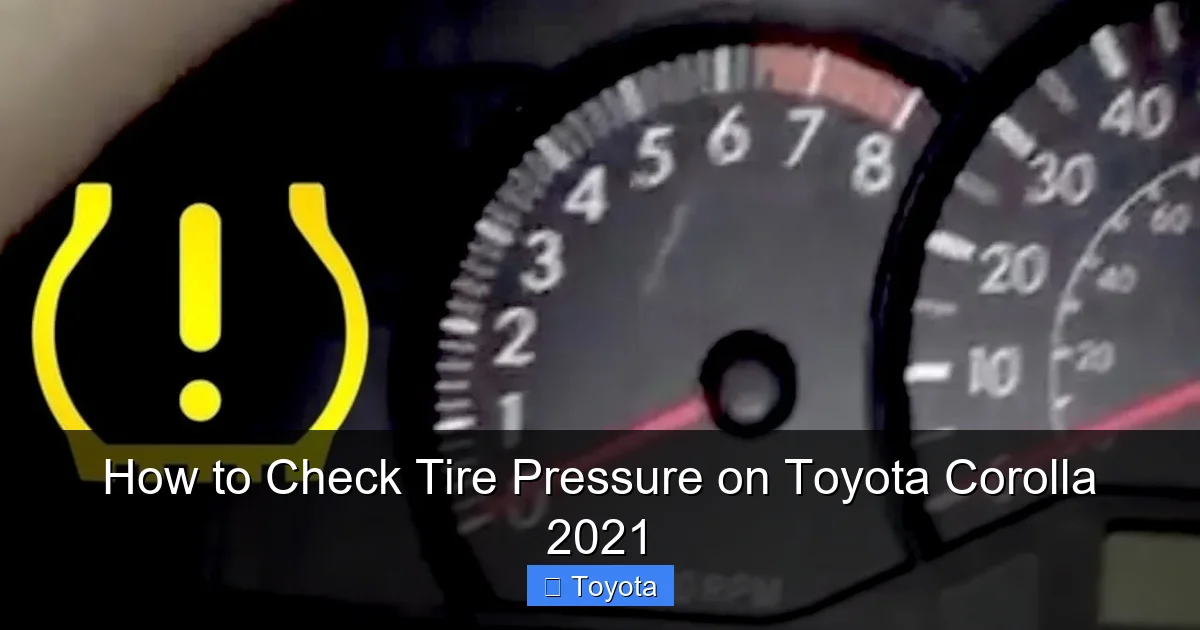
The TPMS warning light looks like a horseshoe with an exclamation point inside. It’s located on the dashboard, near the speedometer. If it comes on and stays lit, one or more tires are underinflated. If it flashes for about a minute and then stays on, there may be a system malfunction—visit a Toyota service center for diagnosis.
Limitations of TPMS
While TPMS is helpful, it’s not a substitute for manual checks. The system only alerts you when pressure is significantly low, so minor underinflation might go unnoticed. Also, TPMS doesn’t measure tread depth or detect damage. Regular manual inspections ensure your tires are in top condition.
When and How Often to Check Tire Pressure
How often should you check tire pressure? Experts recommend at least once a month, and always before long trips. Tires naturally lose air over time—about 1–2 PSI per month—due to temperature changes and small leaks. Cold weather is especially tough on tire pressure. For every 10°F drop in temperature, tire pressure can decrease by 1 PSI. That means winter months require more frequent checks.
Seasonal Tips for Tire Pressure
In winter, check your tires weekly. If you live in a cold climate, consider using nitrogen instead of regular air—it’s less affected by temperature swings and leaks slower. In summer, heat can cause pressure to rise, so monitor closely during heatwaves. Avoid parking in direct sunlight for long periods, as this can increase tire temperature and pressure.
Common Mistakes to Avoid
Even experienced drivers make mistakes when checking tire pressure. Here are a few to watch out for:
- Checking hot tires: Always check when tires are cold for accurate readings.
- Using the wrong PSI: Rely on the door jamb sticker, not the tire sidewall.
- Ignoring the spare: A flat spare is useless in an emergency.
- Overinflating to “feel” better: Higher pressure doesn’t mean better performance—it can reduce grip and comfort.
- Skipping the TPMS reset: Forgetting to reset the system can leave the warning light on unnecessarily.
Conclusion
Checking tire pressure on your 2021 Toyota Corolla is a simple habit that pays big dividends. With the right tools, a few minutes of your time, and attention to detail, you can keep your tires in peak condition. Proper inflation improves safety, extends tire life, boosts fuel economy, and enhances your driving experience. Whether you use the built-in TPMS or a handheld gauge, make tire checks a regular part of your car care routine. Your Corolla—and your peace of mind—will thank you.
Frequently Asked Questions
How often should I check tire pressure on my 2021 Toyota Corolla?
You should check tire pressure at least once a month and before long trips. Cold weather or seasonal changes may require more frequent checks.
Where can I find the recommended tire pressure for my Corolla?
Look for the tire information sticker on the driver’s side door jamb. It lists the correct PSI for front and rear tires.
Can I rely solely on the TPMS warning light?
No, the TPMS only alerts you when pressure is significantly low. Regular manual checks ensure accurate and consistent tire health.
What PSI should my 2021 Corolla tires be at?
Most 2021 Corollas recommend 32–35 PSI, but always check the door jamb sticker for your specific model and load conditions.
Do I need to check the spare tire?
Yes, the spare tire should be checked and inflated to the recommended PSI—usually listed on the spare or in the owner’s manual.
How do I reset the TPMS light after inflating tires?
Turn the ignition to “ON,” press and hold the TPMS reset button for 3–5 seconds, then drive briefly to allow the system to recalibrate.
