
How to Check Oil Level in a Bmw

Checking the oil in a BMW is a critical maintenance task that differs from many other cars. Modern BMWs often use electronic oil level sensors instead of traditional dipsticks, requiring a specific procedure via the onboard iDrive system. For older models with dipsticks, the process is more familiar but still has BMW-specific nuances. Regularly verifying your oil level ensures proper engine lubrication, prevents costly damage, and maintains your vehicle’s performance and longevity. Always check when the engine is warm and on level ground for the most accurate reading.
Owning a BMW is an experience. It’s the thrill of a perfectly balanced chassis, the smooth surge of a turbocharged inline-six, and the impeccable build quality that feels solid and precise. But with great engineering comes great responsibility—specifically, the responsibility of proper maintenance. At the heart of that maintenance is one simple, non-negotiable task: checking your engine oil level. It’s not just about topping up a quart now and then; it’s about understanding how your specific BMW communicates its vital statistics to you. Unlike many American and Asian cars that have relied on a dipstick for a century, BMW has been a pioneer in moving to electronic oil level monitoring. This means the “how-to” isn’t one-size-fits-all. Whether you’re behind the wheel of a classic E46 3 Series or a brand-new G80 M3, knowing the correct procedure for your model is essential for protecting one of the most complex and expensive components under your hood: the engine.
The importance of this cannot be overstated. Engine oil is the lifeblood of your BMW’s powerplant. It lubricates moving parts, reduces friction, cools components, cleans sludge, and prevents corrosion. Running an engine with low oil is like running a marathon with no water—it leads to excessive heat, rapid wear, and ultimately, a seized engine that requires a complete rebuild or replacement. The cost of neglecting this simple check can easily exceed $10,000. Conversely, a few minutes of your time once a month can add hundreds of thousands of miles to your engine’s life. This guide will walk you through every scenario, from the classic dipstick to the modern iDrive interface, ensuring you always know exactly what your BMW is telling you about its oil health.
Key Takeaways
- Method Varies by Model Year: BMWs built roughly after 2005-2006 typically use an electronic oil level sensor checked via the iDrive menu, while older models (pre-2005) and some specific lines (like certain M models) may still have a traditional dipstick.
- Correct Conditions are Crucial: Always check the oil level when the engine is at operating temperature and the car is parked on a perfectly level surface for at least 5-10 minutes to allow oil to settle in the pan.
- Electronic Systems Require a Warm Engine: For cars with the electronic system, the engine must be running and at operating temperature to get an accurate reading from the sensor.
- Interpret the Display: The iDrive system will show “Oil Level OK,” “Oil Level Low,” or a specific bar/percentage. “Low” means you must add oil immediately, even if the engine is not yet showing warning lights.
- Use the Correct Oil: BMW engines require specific oil specifications (e.g., BMW LL-04, LL-01). Using the wrong oil can trigger false level readings or damage the engine. Consult your owner’s manual.
- Check Regularly: Make checking your oil a monthly habit, or before any long trip. This simple task is the first line of defense against engine wear and catastrophic failure.
- When in Doubt, Consult a Pro: If your electronic system shows a persistent low level but you see no leaks, or if the level drops rapidly between checks, have a BMW specialist diagnose for potential sensor faults or internal consumption issues.
📑 Table of Contents
Understanding BMW’s Two Oil Level Checking Systems
Before you pop the hood, you need to know what you’re looking for. BMW has primarily used two distinct systems over the past two decades. Identifying which one your car has is the first and most critical step. You cannot check an electronically monitored system with a dipstick, and you shouldn’t try to use the iDrive method on a car designed for a dipstick.
The Traditional Dipstick System
Found on BMWs from the 1990s through the mid-2000s, and persisting on some high-performance M models and certain engine types (like some N52B30 or earlier six-cylinders), the dipstick is a familiar metal rod with a looped handle. It’s usually located on the driver’s side of the engine bay, near the firewall, often with a yellow or black plastic handle. The principle is simple: you pull it, wipe it clean, reinsert it fully, then pull it again to read the oil film level against marked notches indicating “MIN” and “MAX” or “Add” and “Full.” This method, while analog, is highly reliable and gives you a direct, physical sample of the oil’s condition alongside its level. You can see the color and smell the oil to gauge its health.
The Electronic Oil Level Sensor System
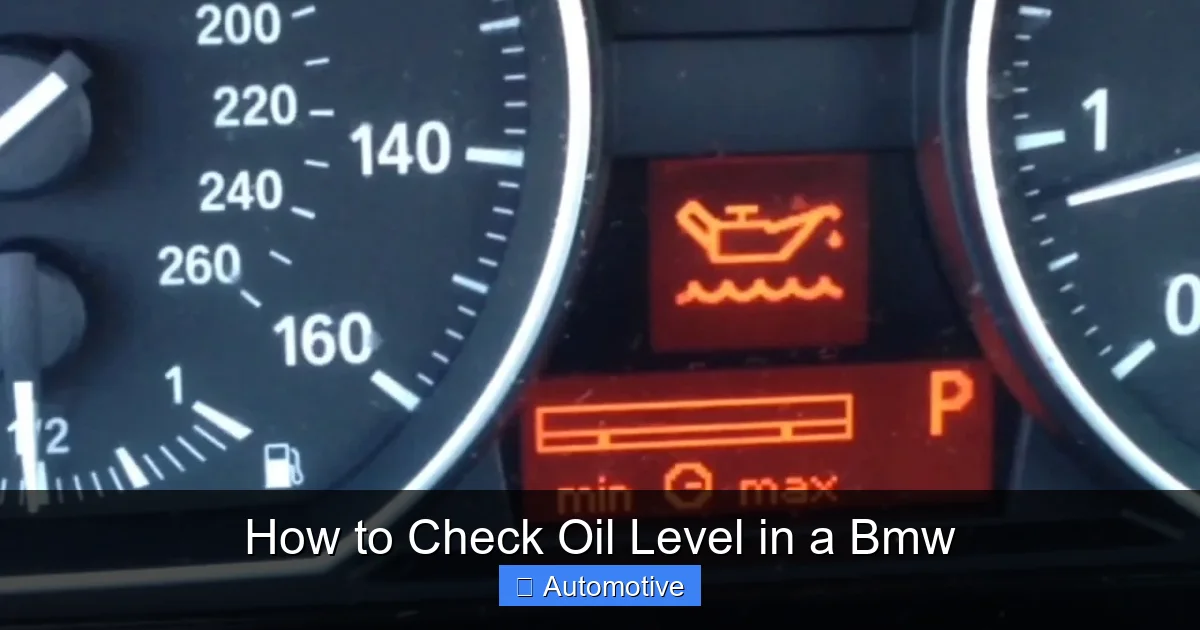
Starting around the 2006-2007 model year for most passenger cars (E90 3 Series, E60 5 Series, etc.), BMW phased in a capacitive electronic sensor mounted in the oil pan. This sensor continuously measures the oil level and quality, sending the data to the vehicle’s computer. The driver reads this information through the central iDrive display. The system is designed to provide a more accurate, consistent reading without the potential for human error (like not fully re-seating a dipstick). However, it has a critical requirement: the engine must be at full operating temperature and running (or recently shut off, depending on the generation) for the sensor to function correctly. The reading is accessed through the iDrive menu: MENU -> Vehicle Info -> Service -> Oil Level (the exact path can vary slightly by iDrive version). The display will show a bar graph or percentage, and a definitive “OK” or “Add 1.0 qt” message.
So, how do you know which system you have? The simplest way is to look for a dipstick. Open the hood and search the engine bay for a long, thin rod with a handle. If you can’t find one, you almost certainly have the electronic system. Your owner’s manual will also state the procedure explicitly. If you’ve lost your manual, a quick VIN lookup on a BMW forum or with a dealer can confirm your model’s specifications.
Step-by-Step: Checking Oil on a Dipstick-Equipped BMW
For owners of E46s, E39s, early E90s, and various other models, the dipstick is your best friend. The process is straightforward but has key steps to ensure accuracy.
Visual guide about How to Check Oil Level in a Bmw
Image source: i.ytimg.com
Preparation: The Golden Rules of Level Ground and Warm Oil
This is the most important part. Oil expands when hot and contracts when cold. If you check it when the engine is stone cold, the level will read artificially low. If you check it immediately after hard driving, the oil will be sloshed around the pan and may read high. The ideal condition is a warm engine after a normal drive (5-10 miles), parked on a perfectly level surface. Turn off the engine and wait at least 5-10 minutes. This allows the oil to drain fully back into the sump from the upper engine galleries, giving you a true “static” reading. If you check it too soon, you might add oil unnecessarily, leading to overfilling, which is just as dangerous as low oil.
The Physical Check: A Clean Process
- Locate the Dipstick: Identify the yellow or black handled dipstick. It is almost always on the driver’s side of the engine. Pull it out completely.
- Wipe It Clean: Use a lint-free rag or paper towel to thoroughly wipe the entire length of the dipstick. You want to remove all old oil to get a clean baseline.
- Reinsert Fully: Push the dipstick all the way back into its tube until it seats firmly. It’s important it goes in all the way to avoid a false high reading.
- Read the Level: Pull the dipstick out again and hold it vertically. The oil will cling to the stick. Look at the tip. You will see two notches, lines, or a crosshatched area. The oil level should be between these marks. The precise correct spot is usually indicated by a “full” mark or the upper edge of the crosshatch. If it’s at or below the “MIN” or “Add” mark, you need to add oil immediately.
- Inspect the Oil: While you have the dipstick out, look at the oil’s color and consistency. Fresh BMW-approved oil should be a clear, amber color (though it darkens quickly). If it’s jet black, gritty, or has a milky (coffee-with-cream) appearance, that indicates severe contamination or a coolant leak, respectively, and you need a service visit.
Pro Tip: Keep a small funnel and a sealed bottle of the correct BMW-spec oil in your trunk. If you need to add a quart, it’s a quick fix. But if you’re adding more than a quart, you have a leak or burning issue that needs diagnosis. For a deeper understanding of oil health and change intervals, our guide on how often to change oil in a BMW 3 Series provides model-specific recommendations.
Step-by-Step: Checking Oil on an Electronic System (iDrive)
This is the procedure for the vast majority of BMWs from the late 2000s onward. It’s a digital process that, once you know the steps, is very quick. But the prerequisites are non-negotiable.
Visual guide about How to Check Oil Level in a Bmw
Image source: i.ytimg.com
The Non-Negotiable Prerequisite: A Hot, Running Engine
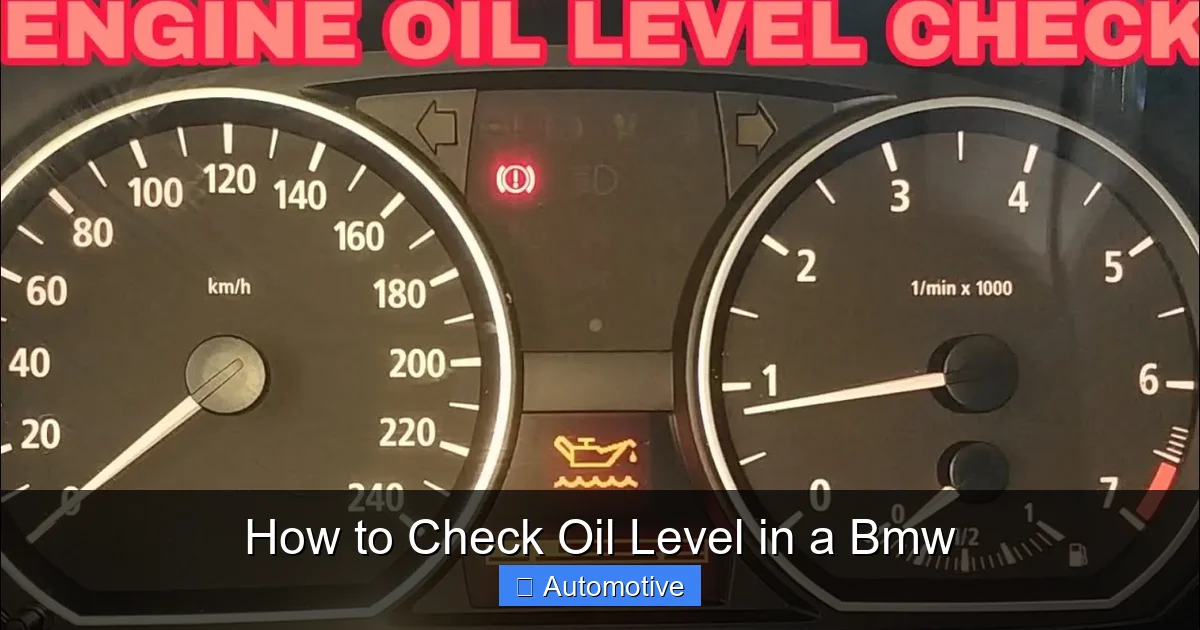
The capacitive sensor in the oil pan needs a certain temperature and a “sloshed” oil condition to get an accurate capacitance reading. This means the engine oil must be hot, around 80-90°C (176-194°F). The standard procedure is to start a cold car and let it idle until the temperature gauge is at its normal operating point (usually the middle of the gauge or when the blue cold light goes off). This typically takes 5-10 minutes of idling, or you can just drive normally for 5-10 miles. The car must be on level ground during this entire warm-up and check process.
Navigating the iDrive Menu
Once your engine is hot and idling (or you’ve just turned it off after a drive—consult your manual, as some models require it to be running), follow these steps:
- Turn On the Ignition: Ensure the car is in Park (or Neutral with the parking brake on) and the ignition is on (Position II, where the dashboard lights are on). The engine can be running or just turned off, but it must be hot.
- Access the Menu: Use the iDrive controller (the knob and buttons between the front seats). Press the MENU button.
- Navigate to Vehicle Info: Rotate the knob to highlight “Vehicle Info” and press the knob to select. (On newer iDrive 7/8 systems, it might be under “My Vehicle”).
- Find Service Data: Select “Service” or “Service Requirements.”
- Select Oil Level: Look for “Oil Level” or “Engine Oil Level.” Select it.
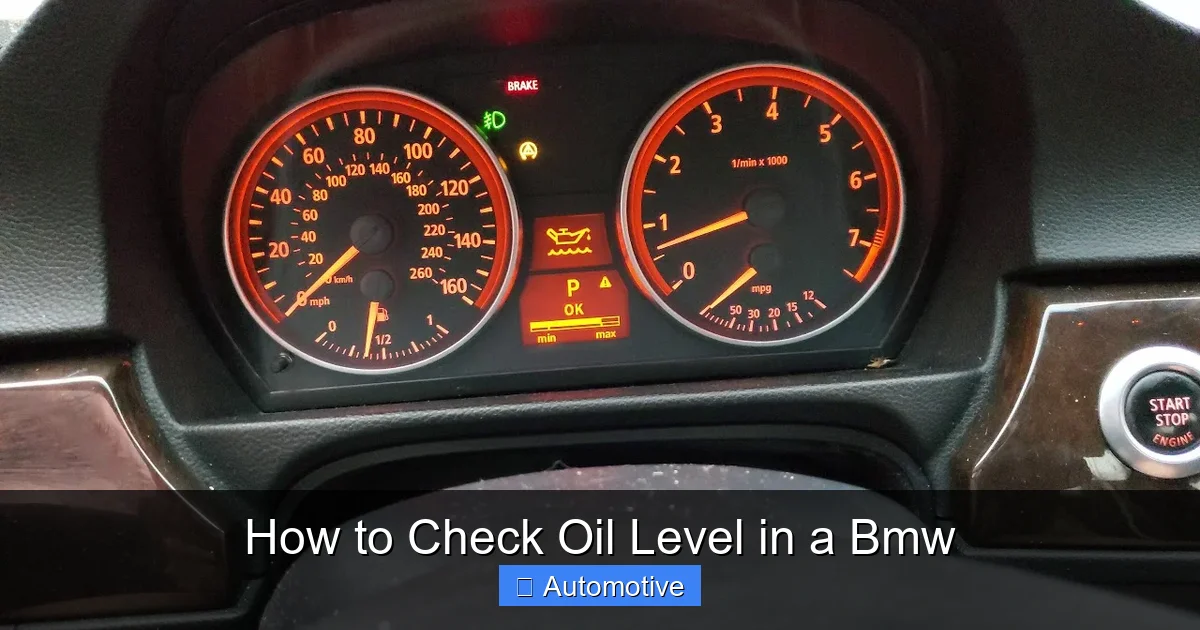
- Interpret the Result: The screen will display a graphic—often a bar that fills from left to right—and a text message. It will say “Oil Level OK” in green, or “Oil Level Low” in red or yellow, sometimes with an instruction like “Add 1.0 qt.” Some systems show a percentage or a vertical bar with MIN and MAX markers. Trust the system’s “OK” or “Low” message over trying to guess at a partial bar.
Critical Warning: If the electronic system shows “Oil Level Low,” you must add oil immediately, even if your engine oil pressure warning light has not yet come on. The level sensor and the pressure sensor are two different systems. A low level reading is a direct, urgent warning. Do not ignore it. For general car maintenance knowledge that applies to any vehicle, including how to properly add oil, our friendly guide on adding oil to a car covers the universal best practices.
Interpreting Readings and Knowing When to Act
You’ve followed the steps and have a reading. Now what? Understanding what that reading means is just as important as getting it.
Visual guide about How to Check Oil Level in a Bmw
Image source: i.ytimg.com
“Oil Level OK” – The Green Light
This is the message you want to see. It means the oil level is within the safe operating range specified by BMW for your specific engine. No action is needed. However, if you get this message but your oil change light is on (based on the service interval counter), you still need to schedule an oil change. The level is fine, but the oil’s chemical properties are degraded.
“Oil Level Low” – The Red Alert
This is an immediate, actionable warning. It means the oil level has dropped below the safe minimum. You must:
- Add oil immediately. Use only the oil specification listed in your owner’s manual (e.g., BMW Longlife-04, BMW Longlife-01, or a specification listed on your oil cap). The most common is 0W-30 or 0W-40 meeting LL-04. Using the wrong viscosity or specification can harm the engine and may cause false sensor readings.
- Open the hood and locate the oil filler cap. It’s usually a large black cap on the top of the valve cover, marked with an oil can symbol.
- Add approximately half the amount suggested (e.g., if it says “Add 1.0 qt,” add 0.5 qt), wait a minute, then re-check the level via the iDrive system.
- Repeat until the system reads “OK.” Do not overfill. Once “OK” is displayed, stop adding oil. Overfilling can cause aeration (foaming), which destroys the oil’s lubricating ability and can lead to engine damage.
Rapid Oil Consumption: A Cause for Concern
If you find yourself adding more than a quart of oil between regular service intervals (every 7,500-10,000 miles), your engine is “consuming” oil. A small amount of consumption (a few ounces per 1,000 miles) can be normal for some high-performance engines, but significant consumption indicates a problem. Potential causes include worn piston rings, valve stem seals, or leaks. If your oil level is consistently low soon after a change, get your car diagnosed by a BMW specialist. They can perform a leak-down test or check for other issues. Persistent low oil levels are a primary cause of low oil pressure, which is an extreme danger to your engine.
Common Mistakes and Troubleshooting
Even with the best instructions, BMW owners can fall into some predictable traps. Here’s how to avoid them.
Mistake 1: Checking a Cold Electronic System
This is the #1 error. You get in your car on a cold morning, start it, and immediately check the iDrive oil level. It will almost certainly read “Low” or show a very low bar. This is a false low reading. The sensor needs heat. Always warm up the engine as described. If you’re unsure, take a short drive and check again when you get home.
Mistake 2: Checking on an Uneven Surface
Parking on a hill or even a slightly sloped driveway will cause oil to pool to one side of the pan, giving a falsely low or high reading depending on the sensor’s location. Always, always use a level surface. A garage floor is ideal. If you must check on a slope, try to find the most level spot possible and understand the reading may be inaccurate.
Mistake 3: Overlooking the Dipstick Tube
On some older BMWs, the dipstick tube can be tricky. Make sure you’re inserting the dipstick into the correct tube—it should be the one with the large opening that matches the dipstick’s shape. There are often multiple tubes in the engine bay (for transmission fluid, coolant, etc.). If the dipstick slides in too easily or feels misaligned, you might be in the wrong tube.
Mistake 4: Ignoring the “Service” Light for Oil Level
BMW’s service indicator is based on a mileage and time algorithm, not actual oil condition or level. A “Service” light means it’s time for a scheduled maintenance visit (which includes an oil change). It does not replace the need for you to manually check the oil level monthly. You could have a perfectly serviced car that develops a leak and is low on oil a week later. The two systems are independent.
Mistake 5: Using the Wrong Oil
This is a silent killer. BMW engines, especially the turbocharged ones, are engineered for specific oil formulations. Using a generic 5W-30 or a non-BMW-approved oil can lead to increased wear, sludge formation, and even damage to seals and turbos. It can also cause the electronic sensor to malfunction. Always use oil meeting the BMW specification (LL-01, LL-04, etc.) printed in your manual. When in doubt, ask a BMW specialist or use the oil finder tool on major brand websites like Mobil 1 or Pennzoil.
Oil Level Check as Part of Holistic Maintenance
Checking your oil is not an isolated task; it’s one vital sign in a complete physical exam of your car. It should be part of a regular under-hood and under-car inspection routine. When you check your oil, take an extra 60 seconds to:
- Visually inspect for leaks: Look for fresh drips or wetness around the oil filter housing, oil pan drain plug, and valve cover gaskets. A small, slow leak can become a big problem.
- Check other fluid levels: While the hood is open, glance at the coolant reservoir (it should be between MIN and MAX when the engine is cold), windshield washer fluid, and power steering fluid if applicable. Understanding how to check coolant levels on any car is another essential skill, as cooling system failure is equally catastrophic.
- Listen and feel: After a drive, note any new noises (ticking, knocking) or changes in performance. Low oil often manifests as a faint ticking from the valvetrain on cold start.
By building these habits, you move from being a driver to a caretaker. You develop an intuitive sense of your car’s health. You’ll notice a quart lost here, a slight rise in operating temperature there, and can address small issues before they spiral into major repairs. This proactive approach is what keeps a BMW—a complex, performance-oriented machine—running reliably for years. If your oil level is consistently correct and your car is still showing signs of trouble, the issue may lie elsewhere, such as with the transmission fluid in vehicles that use a CVT, though this is less common in traditional BMW automatics.
Frequently Asked Questions
My BMW has an electronic oil level sensor, but it’s showing “Low” after a fresh oil change. Is it broken?
This is a common and frustrating scenario. First, ensure you followed the correct procedure: the engine was fully warmed up and on level ground. If it still shows low, the most likely cause is that the system was not properly reset after the service. The oil level sensor needs to “learn” the new capacity. Drive the car normally for 20-30 minutes, cycling the ignition a few times. If it persists, the sensor itself or its wiring may be faulty, or there is a genuine leak you missed. Have a shop perform a diagnostic scan.
Can I use a traditional dipstick method on a BMW that only has an electronic sensor?
No, you cannot. The electronic system has no dipstick tube. The oil pan is sealed for the sensor. Attempting to check it by removing a different plug or component will likely cause a major leak and damage. You must use the iDrive system as intended. If the iDrive system is inoperative, you need a professional with a BMW-specific diagnostic computer (like ISTA) to check the level and diagnose the fault.
My dipstick shows oil between the marks, but it looks very dark and smells burnt. What does this mean?
The level is safe, but the oil’s condition is poor. Dark, sludgy, or burnt-smelling oil indicates it has broken down and is no longer providing proper lubrication and cleaning. This can happen from excessively long oil change intervals, using the wrong oil, or severe engine stress. You should schedule an oil change immediately, even if your service interval hasn’t been reached. Consider switching to a high-quality full synthetic that meets BMW’s latest specification.
Is it normal for the oil level to drop slightly between scheduled changes?
A small drop is normal due to a combination of a few factors: a tiny amount of oil being burned in the combustion chamber (especially in higher-mileage engines), minor evaporation, and the natural settling of oil. However, a drop of more than 1 quart between changes (or about 0.5 quarts per 3,000 miles) is considered excessive consumption and should be investigated for leaks or internal engine wear.
What’s the difference between checking oil level and checking oil life/condition?
They are two separate things. Oil Level tells you the quantity of oil in the sump. It’s a simple “enough or not enough” check. Oil Life/Condition (often shown as a percentage or a “Service” light) is an algorithm based on mileage, time, and sometimes engine operating conditions (temperature, RPMs) that estimates when the oil’s chemical additives have degraded. You must have a correct level for the engine to run, but you must change the oil when its life is up, regardless of the level.
My BMW’s electronic oil level display is blank or shows an error message. What should I do?
An error or blank display indicates a fault in the oil level sensor circuit, the sensor itself, or a communication issue with the vehicle’s computer. First, try a simple ignition cycle (turn car off, remove key, wait 30 seconds, restart). If it persists, you need to have the vehicle scanned with a proper BMW diagnostic tool. This will read the specific fault code (e.g., “Oil level sensor implausible signal”). Driving with an unknown oil level is extremely risky; check the dipstick if your model has one, or add a quart of oil as a precaution and get the car to a shop immediately.