How to Check Coolant Level in a Bmw

Contents
- 1 Key Takeaways
- 2 📑 Table of Contents
- 3 Why Checking Your BMW’s Coolant is Non-Negotiable
- 4 When and How to Check: The Golden Rules of Safety
- 5 Your Step-by-Step Guide to Checking Coolant Level
- 6 Interpreting Your Findings: What the Level Tells You
- 7 Model-Specific Considerations and Common Pitfalls
- 8 Beyond the Check: Maintenance and When to Call a Pro
- 9 Frequently Asked Questions

Chain Lubricant Spray

Diesel Fuel Additive

Liquid Car Polish

Car Sunshade for Windshield
Checking your BMW’s coolant level is a simple, critical maintenance task that prevents engine overheating and costly repairs. Unlike many cars, most modern BMWs use a transparent coolant expansion tank with marked Min/Max lines, accessible in the engine bay. You must check the level when the engine is completely cold to avoid dangerous pressurized coolant spray. Always use the correct BMW-approved coolant type, and never open a hot system.
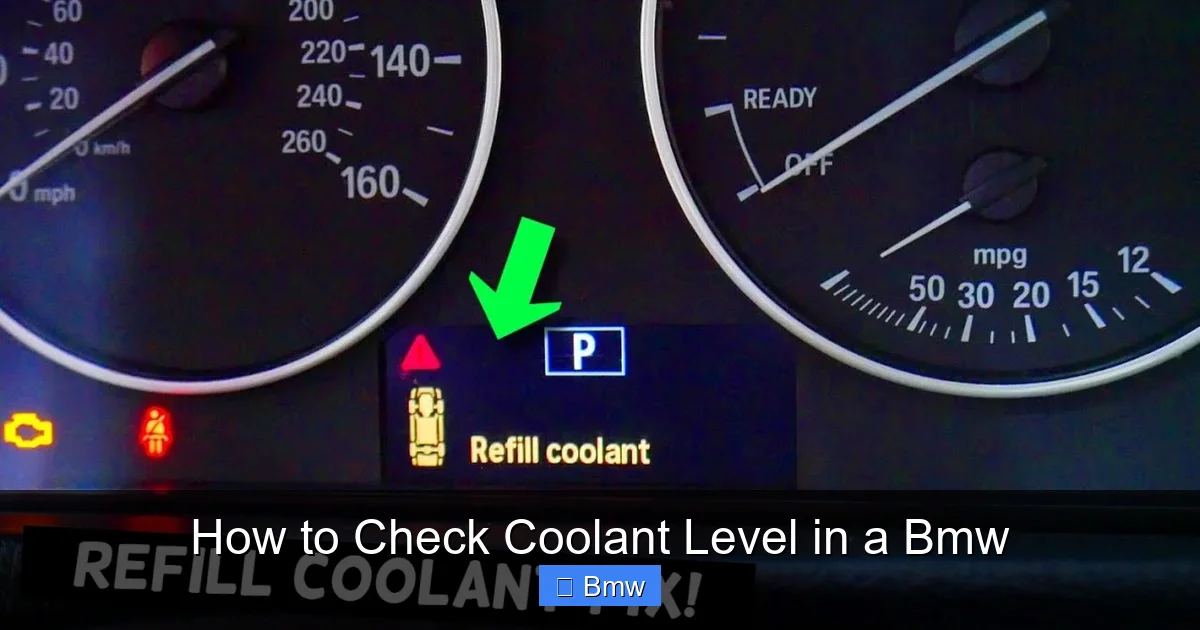
Picture this: you’re cruising down the highway in your BMW, the engine purring perfectly, when suddenly a red warning light shaped like a thermometer flickers on the dashboard. Your heart skips a beat. That’s the low coolant warning, your car’s urgent cry for help. Ignoring it is a direct path to a seized engine and a repair bill that will make you gasp. But here’s the good news: catching a low coolant situation early is incredibly easy and takes less than two minutes. This guide will turn you from a worried driver into a confident caretaker, showing you exactly how to check your BMW’s coolant level safely and correctly on any model year.
Key Takeaways
- Safety First: Only check coolant when the engine is stone cold. A hot cooling system is pressurized and can cause severe burns.
- Know Your Tank: BMWs typically use a translucent plastic expansion tank with “MIN” and “MAX” marks. Locate it in your engine bay—it’s usually bright yellow or orange.
- Correct Coolant is Crucial: BMW engines require specific phosphate-free, silicate-free coolant (often G48 or HT-12). Using the wrong type can cause corrosion and damage.
- Visual Check Only: Simply look at the side of the tank. The coolant should sit between the two lines. No dipstick is needed for this procedure.
- Low Coolant Means a Problem: If the level is consistently low, you have a leak. Do not just keep topping it up; investigate the source to prevent a coolant leak from causing major engine damage.
- Adding Coolant Properly: Use a funnel to avoid spills. Fill to the “MAX” line with the correct mixed coolant (usually 50/50 with distilled water). Recheck after driving and when cold.
📑 Table of Contents
- Why Checking Your BMW’s Coolant is Non-Negotiable
- When and How to Check: The Golden Rules of Safety
- Your Step-by-Step Guide to Checking Coolant Level
- Interpreting Your Findings: What the Level Tells You
- Model-Specific Considerations and Common Pitfalls
- Beyond the Check: Maintenance and When to Call a Pro
Why Checking Your BMW’s Coolant is Non-Negotiable
Let’s start with the “why.” The cooling system is your engine’s lifeline. It manages the extreme temperatures generated by combustion, keeping your BMW’s powerful inline-6 or V8 operating within a tight, safe range. Coolant (a mixture of antifreeze and water) doesn’t just carry heat away; it also prevents corrosion, lubricates seals, and raises the boiling point of the fluid. A low coolant level means air is circulating in the system, creating hot spots that can warp cylinder heads, blow head gaskets, and ultimately lead to a total engine failure. For a brand synonymous with performance and precision engineering like BMW, maintaining this system is paramount. Regularly checking the coolant level is the single most important thing you can do to prevent a catastrophic—and extremely expensive—breakdown.
The BMW Difference: The Expansion Tank
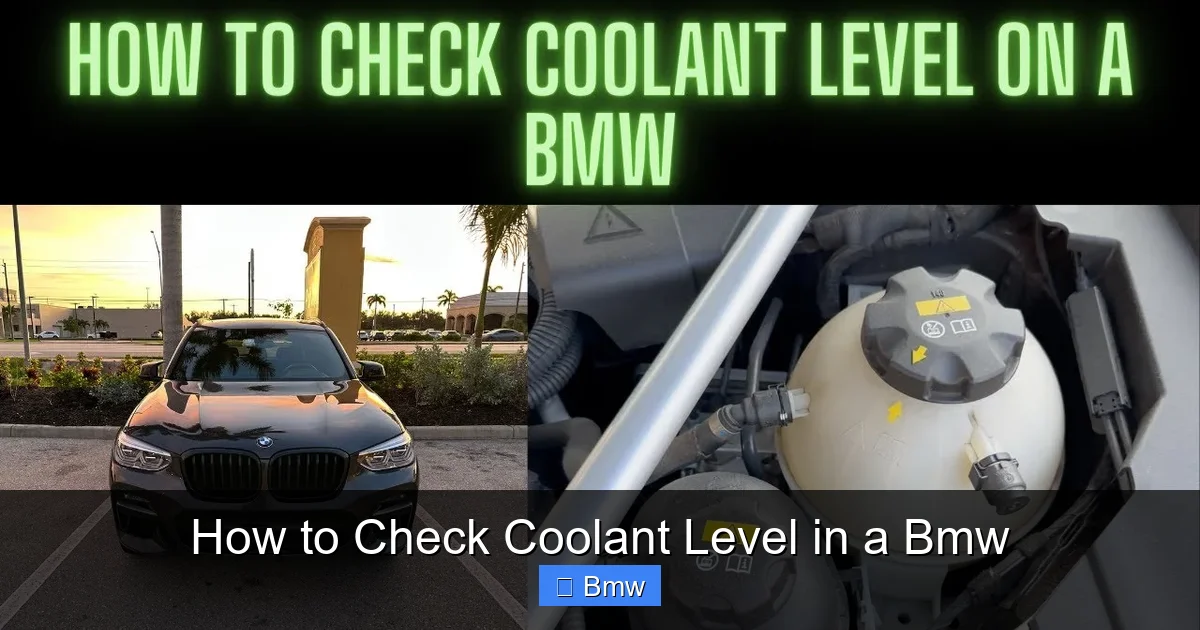
While many older American or Japanese cars used a simple radiator cap and a separate coolant recovery tank, BMWs almost universally use an integrated coolant expansion tank. This is usually a sturdy, translucent (see-through) plastic container, often a vibrant yellow or orange, located in the engine bay. It has clearly marked “MIN” (minimum) and “MAX” (maximum) lines on its side. This design is part of a sealed, pressurized system that allows the coolant to expand as it heats up without spilling. Your check is simply a visual inspection of the fluid level through the tank’s walls against these marks. There is no dipstick to pull out or special procedure involving the radiator cap for a basic check. This makes the process straightforward, but the safety rules are even more critical because of the system’s pressure.
When and How to Check: The Golden Rules of Safety
Before you even pop the hood, you must understand two inviolable rules for checking coolant in a BMW (or any modern car, for that matter).
Visual guide about How to Check Coolant Level in a Bmw
Image source: ridecove.com
Rule #1: The Engine Must Be Cold
This is the most important safety rule. The cooling system operates under significant pressure when the engine is hot. The pressure cap on the expansion tank is designed to keep the system sealed. If you unscrew the cap while the engine is warm or hot, pressurized boiling coolant can erupt like a geyser, causing instant, severe scalding burns. Always check the level after the car has been parked for at least 3-4 hours, or first thing in the morning. Touch the hood and the top of the radiator (if accessible) to confirm it’s cold. If you’ve just driven the car, do not attempt to open the system. Wait.
Rule #2: Use the Correct Coolant
BMW is very specific about its coolant chemistry. Using generic green antifreeze or the wrong type can lead to gelling, clogging of tiny coolant passages in the cylinder head, and accelerated corrosion. The correct coolant for most BMWs from the late 1990s onward is a phosphate-free, silicate-free, typically G48 (also labeled as HT-12 or part number 82 14 1 468 570). It’s usually a blue or turquoise color. Always consult your owner’s manual for the exact specification for your model year and engine. You can purchase genuine BMW coolant or reputable aftermarket versions that meet the specification (like Pentosin). Never mix different colored coolants unless you are certain they are compatible. When in doubt, flush the system properly.
Your Step-by-Step Guide to Checking Coolant Level
Now that you know the “when” and “why,” let’s get to the “how.” Grab a flashlight and a lint-free cloth. Here’s the process that works for the vast majority of BMWs, from an E30 3 Series to a G30 5 Series and everything in between.

Visual guide about How to Check Coolant Level in a Bmw
Image source: i.ytimg.com
Step 1: Locate and Prepare
Park your BMW on a level surface. Turn off the engine and let it cool completely. Pull the hood release lever (usually inside the car near the driver’s footwell). Go to the front of the car and release the hood latch under the hood lip, then prop the hood open securely with the strut or rod. Locate the coolant expansion tank. It’s typically a white or light-colored plastic bottle with a black or yellow cap labeled with a thermometer symbol or “COOLANT.” It’s often near the firewall (the wall between the engine and the passenger compartment) on the passenger side, but consult your manual if you’re unsure. Once found, wipe the top of the tank and the cap with your cloth to remove any dirt or grime that could fall in when you open it.
Step 2: The Visual Inspection (No Cap Removal Needed!)
Here’s the beauty of the BMW system: for a routine level check, you often do not need to remove the cap at all. Simply look at the side of the translucent expansion tank. You should see a distinct “MIN” (lower) and “MAX” (upper) line molded into the plastic. The coolant inside should be a clear, colorful liquid (blue, green, yellow, or turquoise depending on the type) and the fluid level should sit squarely between these two marks. If it’s below the MIN line, you need to add coolant. If it’s above the MAX line, that’s also a problem (overfilled), which can cause overflow and other issues. This visual check is perfectly adequate for monthly maintenance. You only need to remove the cap if you are adding fluid or performing a more thorough system inspection.
Step 3: If Adding Coolant – The Safe Way
If your level is low, you’ll need to add the correct coolant mixture. First, double-check that the engine is cold. Place a clean funnel into the opening of the expansion tank. Slowly pour in the pre-mixed 50/50 BMW-approved coolant (or the concentrate mixed with distilled water in a separate container first). Do not overfill. Stop when the fluid reaches the “MAX” line. Replace the cap tightly until it clicks. It’s a good practice to run the engine for a few minutes with the heater set to hot, then let it cool again and re-check the level, as air pockets can escape and cause the level to drop slightly. Top up if necessary. If you find yourself needing to add more than a quart or so, you have a leak that needs diagnosis.
Interpreting Your Findings: What the Level Tells You
Finding the coolant level is just the first step. Understanding what it means is where true automotive insight comes in.
Visual guide about How to Check Coolant Level in a Bmw
Image source: i.pinimg.com
Level Between MIN and MAX: All Clear
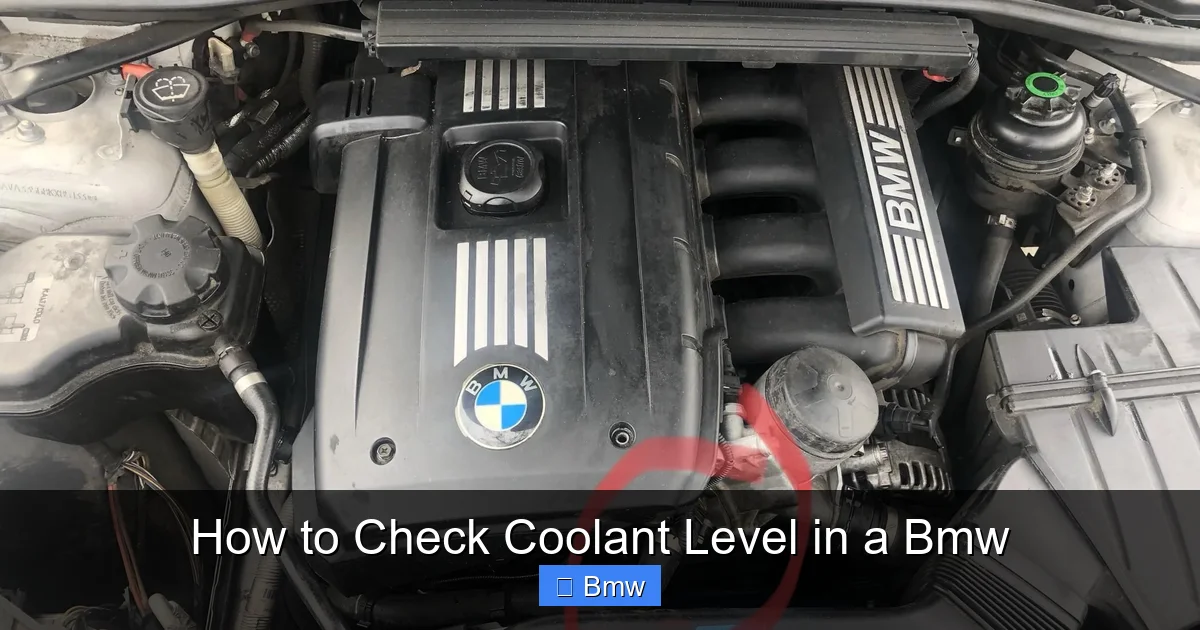
If your coolant sits comfortably between the marks when cold, your system’s fluid volume is correct. This is the desired state. It means there are no major active leaks and the system is holding pressure. Continue to check it periodically, say once a month or before a long trip, as part of your regular BMW maintenance routine. Keeping up with other fluid checks like oil is equally important for overall vehicle health.
Level Below MIN: The Red Flag
A low coolant level is a symptom, not the disease itself. It means coolant is escaping the closed system. The leak could be tiny and slow (a seeping hose, a minor radiator crack, a failing water pump seal) or sudden and severe (a burst hose or a ruptured radiator). Your immediate action is to top up to the MAX line with the correct coolant. However, your next action must be to find the source. Inspect the engine bay and underneath the car for any puddles or stains (coolant is often brightly colored and sweet-smelling). Common leak points on BMWs include the expansion tank itself (they can crack with age), the water pump (especially on models with electric water pumps), thermostat housing, radiator, and various hoses and clamps. Driving with low coolant risks rapid overheating. If the leak is significant, do not drive the car; have it towed.
Level Above MAX: An Overlooked Problem
This is less common but can happen. An overfilled system has no room for the coolant to expand as it heats. This can force coolant out of the overflow hose, creating a mess in your engine bay and potentially depleting the level anyway. More critically, it can introduce air into the system or cause excessive pressure. The fix is to carefully drain some coolant out until it sits at the proper level. You can do this by siphoning from the expansion tank or, on some models, by loosening a lower radiator drain plug. Be prepared to catch and dispose of the coolant properly.
Model-Specific Considerations and Common Pitfalls
While the core principle is the same, some BMW models have nuances.
BMWs with Electric Water Pumps (Most post-2007 N-series and newer)
These engines, like the popular N55 or B48, use an electric water pump instead of a belt-driven one. The pump is controlled by the engine computer and can fail electronically even if the impeller is fine. A failing electric water pump might not trigger an immediate leak but will cause the coolant to overheat and expand, sometimes pushing the level slightly above MAX or triggering a warning. The check procedure is identical, but a persistent low level with no visible leak might point to this component.
The Hidden Dipstick: Some Older Models
A very small number of older BMWs (some early 3 Series and 5 Series from the 1990s) may have a traditional radiator cap and a separate dipstick on the radiator itself for checking. If your car has a metal radiator cap on the top of the radiator, you would check the level by removing that cap with extreme caution (engine cold!) and looking inside. However, the vast majority of BMWs you’ll encounter use the plastic expansion tank method described above. When in doubt, your owner’s manual is your best friend.
The “Coolant Level Sensor” Warning
Modern BMWs are packed with sensors. Your dashboard warning is likely triggered by a float switch in the expansion tank. If this sensor fails or gets stuck, it might give a false low-coolant warning even if the level is fine. A visual check with your own eyes, as described, is the ultimate truth-teller and will tell you if the sensor is faulty. If the level is fine but the light persists, you may need to replace the sensor module in the tank.
Beyond the Check: Maintenance and When to Call a Pro
Checking the level is diagnostics 101. What comes next depends on what you find.
Routine Top-Ups vs. System Service
If you check your coolant monthly and it’s always perfectly between the lines, you’re doing great. If it’s consistently a half-inch below MIN after a few months, you have a slow leak that needs a professional’s eye. A complete coolant system service on a BMW involves not just draining and refilling, but also bleeding all air pockets from the system—a critical step that requires specific procedures, sometimes involving the vehicle’s diagnostic computer to run the electric water pump and thermostat to purge air. Improper bleeding can lead to air locks, overheating, and damage. This is a job often best left to specialists familiar with BMW’s complex systems.
Coolant Flush Intervals
Coolant degrades over time. Its anti-corrosion additives wear out, and it can become acidic. BMW’s official recommendation is typically a coolant flush and refill every 3-4 years or 30,000-50,000 miles, but this varies by model and coolant type. Sticking to this schedule is as important as the level check. A system flush involves completely removing old coolant, flushing the block and heater core, and refilling with fresh, correct coolant. This prevents internal corrosion and maintains optimal heat transfer.
In summary, the simple act of looking at a plastic tank once a month is one of the most powerful protective measures you can take for your BMW. It connects you directly to the health of its heart. Combine this with understanding the need for the correct fluid, respecting the cold-engine rule, and knowing that a persistent low level means a leak hunt, and you’ve mastered a fundamental skill that will save you thousands in potential repairs. Your BMW’s performance and longevity depend on it.
Frequently Asked Questions
Can I check my BMW coolant level when the engine is warm?
No, you should never open the coolant system or check the level when the engine is warm or hot. The system is pressurized, and opening it can cause boiling coolant to spray out, resulting in serious burns. Always wait until the engine is completely cold, which usually means waiting at least 3-4 hours after driving.
My BMW’s coolant looks rusty or dirty. Is that normal?
No, coolant should be a clear, vibrant color (blue, turquoise, green, or yellow depending on the type). Rusty, brown, or cloudy coolant indicates severe corrosion inside the system, likely from using the wrong coolant or neglecting flush intervals. This is a sign you need a professional coolant system flush and inspection immediately.
My coolant level is fine, but I still get a low coolant warning. Why?
This is common. The warning is triggered by a sensor (a float switch) in the expansion tank. The sensor itself can fail, become stuck, or its electrical connector can be dirty. Perform a manual visual check as described. If the level is truly fine, the fault lies with the sensor or its wiring, which will need diagnosis and replacement.
How often should I check my BMW’s coolant level?
As part of a proactive maintenance routine, check your coolant level at least once a month and before any long road trips. It’s also a good habit to glance at it whenever you check your oil. This frequent check allows you to spot a slow leak early before it causes damage.
Can I just top up my BMW with water in an emergency?
In a dire emergency where you are stranded and must move the car a very short distance to safety, you can add a small amount of clean water to get to a safe location. However, this dilutes the coolant’s protective properties and lowers its boiling/freezing points. You must drain and refill with the correct 50/50 coolant mixture as soon as possible. Do not make a habit of it.
My BMW is leaking coolant. Can I just keep topping it up and driving?
This is a dangerous gamble. Topping up is a temporary measure to get you to a repair shop, not a long-term solution. Driving with low coolant risks rapid overheating, which can warp the cylinder head or blow the head gasket in minutes, leading to an engine replacement that costs thousands. Identify and repair the leak source immediately.