
How to Care for an Outdoor Car Cover: Cleaning, Drying, and Storage Tips

Quick Answer
To care for an outdoor car cover, remove loose dirt regularly, clean it according to the manufacturer’s instructions, and let it dry completely before storage. Keep the vehicle and the cover’s inner surface free of grit, secure the cover against wind, and inspect its seams and fabric for damage. These habits help preserve the cover’s weather protection and reduce the risk of scratching your car’s paint.
Essential outdoor car cover care steps
- Remove debris: Shake off loose leaves, dust, and grit before folding or reinstalling the cover.
- Clean gently: Use an approved cleaning method and mild cleaner only when the care label permits it.
- Dry completely: Check both sides, seams, and elastic before folding the cover away.
- Prevent paint abrasion: Start with a reasonably clean vehicle and avoid dragging a gritty cover across its finish.
- Secure against wind: Use the supplied straps and tie-downs to limit flapping and movement.
- Inspect regularly: Look for tears, worn elastic, loose stitching, and deteriorating protective coatings.
The most important rule
- Never assume every cover can be machine-washed, tumble-dried, or treated with waterproofing spray. Follow the instructions for your exact model.
An outdoor car cover shields your vehicle from sun, dust, rain, bird droppings, and falling debris, but the cover needs care to keep doing its job. I approach car cover maintenance as a simple part of regular vehicle upkeep rather than a task to tackle only when the fabric looks dirty.
This guide explains how to clean an outdoor car cover, protect its material, reduce paint-scratch risks, and store it correctly. I’ll also cover weather exposure, common mistakes, and the signs that a cover needs repair or replacement.
In This Guide
- Why Does Outdoor Car Cover Care Matter?
- How Do You Clean an Outdoor Car Cover?
- How Should You Dry and Store a Car Cover?
- How Do You Protect a Car Cover From Sun, Rain, and Wind?
- How Do You Use a Car Cover Without Damaging Paint?
- When Should You Inspect or Replace an Outdoor Car Cover?
- Outdoor Car Cover Care FAQs
Why Does Outdoor Car Cover Care Matter?
Outdoor car cover care means cleaning, drying, inspecting, securing, and storing a protective vehicle cover so it remains suitable for its intended use. Consistent maintenance helps limit fabric deterioration and reduces the chance of trapped dirt rubbing against your vehicle’s finish.
A cover takes the brunt of outdoor exposure, but it also collects contaminants. Dust, pollen, tree sap, bird droppings, and moisture can accumulate on its outer surface and sometimes reach the vehicle-facing lining.
What can happen when you neglect a car cover?
A neglected cover may become harder to clean, develop unpleasant odors, or lose some of its protective performance. The exact outcome depends on the fabric, its coatings, the climate, and how the cover is used.
- Paint abrasion: Grit trapped between the cover and paint can cause fine scratches when the material moves.
- Moisture problems: A damp cover stored in a closed bag may develop mildew or a musty smell.
- Weather damage: Prolonged sunlight and repeated exposure can weaken some fabrics and coatings.
- Fit problems: Worn elastic or damaged straps can allow the cover to shift during windy weather.
- Reduced water resistance: Wear, contamination, damaged seams, and deteriorating coatings may allow more moisture through.
Does every outdoor car cover need the same maintenance?
No. Materials and construction differ, so the correct cleaning method depends on the specific cover rather than its appearance alone.
| Cover type or construction | Main care consideration | What to check |
|---|---|---|
| Lightweight fabric cover | Dust and surface contamination | Approved washing method and drying instructions |
| Multilayer weather-resistant cover | Seams, bonded layers, and coatings | Restrictions on machine washing, heat, and detergents |
| Breathable outdoor cover | Airflow and moisture management | Whether the lining and seams are dry before use |
| Waterproof or heavily coated cover | Preserving the coating and seam integrity | Manufacturer-approved cleaners and repair methods |
These categories can overlap, and a breathable cover may also resist water. Check the product label or manual instead of relying on the material category alone.
Section takeaway: A cover protects your vehicle only when its material, fit, and condition remain suitable. Regular cleaning and inspection help catch problems before they affect your car.
How Do You Clean an Outdoor Car Cover?
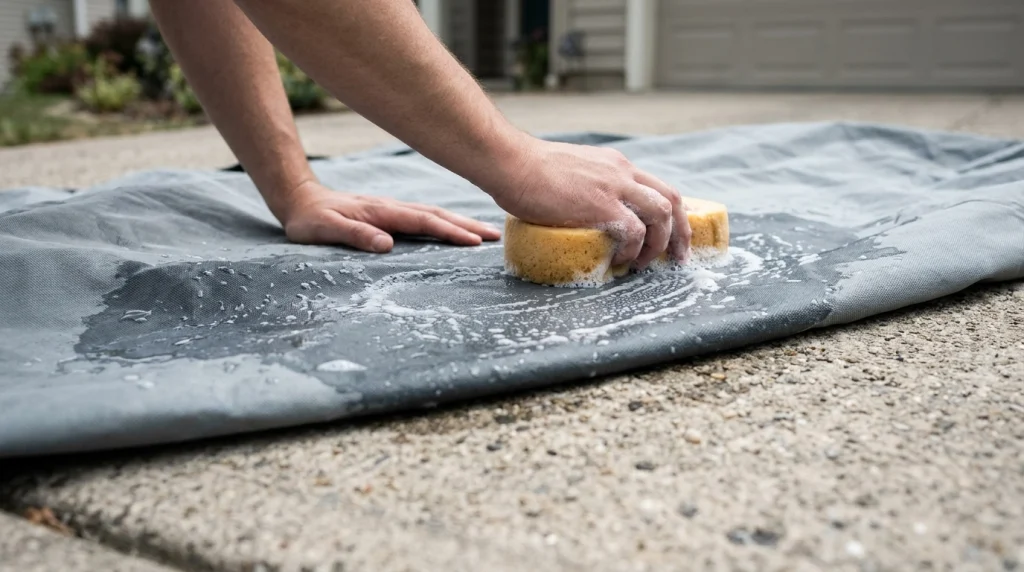
Clean an outdoor car cover by removing loose debris, checking its care instructions, washing it with an approved method, rinsing as directed, and drying it thoroughly. Gentle cleaning is the safest starting point because aggressive chemicals and excessive friction can damage some protective fabrics.
Step 1: Check the manufacturer’s instructions
Before adding water or cleaner, find the sewn-in care label or the manufacturer’s manual. Confirm whether the cover permits hand washing, machine washing, spot cleaning, or rinsing while fitted to the vehicle.
Do not assume that a washing method suitable for one polyester cover will work for another multilayer design. If the instructions are missing, contact the manufacturer before using a washing machine or chemical treatment.
Step 2: Remove loose dirt and debris
Take the cover off carefully and shake it gently in a suitable area. Remove leaves, twigs, and loose dust without scraping the vehicle-facing surface against the ground.
- Choose a clean driveway, patio, or other suitable washing area.
- Inspect the inner lining for sand, grit, and small pieces of debris.
- Use a soft cloth to remove loose particles when the material allows it.
- Keep the cover away from sharp tools, rough concrete edges, and dirty ground.
Step 3: Wash using an approved cleaning method
For a cover that permits hand washing, use water and a small amount of manufacturer-approved mild cleaner. Work in manageable sections with a soft sponge or cloth rather than scrubbing aggressively.
Use the following routine when it matches the product’s instructions:
- Place the cover on a clean surface or another approved washing area.
- Prepare the recommended cleaning solution at the specified concentration.
- Gently clean visibly dirty sections without stretching or twisting the fabric.
- Pay attention to hems and other areas where dirt accumulates.
- Rinse according to the manufacturer’s directions until the cleaner is removed.
Some covers allow machine washing in a suitably sized washer, while others prohibit it. Follow the exact instructions for the cover rather than treating machine washing as a universal option.
Which cleaning products should you avoid?
Bleach, strong solvents, abrasive cleaners, and unapproved stain removers can damage certain fabrics or protective coatings. Fabric softeners may also interfere with the performance of materials designed to repel water or manage moisture.
Avoid pressure washing unless the manufacturer explicitly permits it. High-pressure water can damage some fabrics, coatings, or seams, depending on the cover’s construction.
For additional practical guidance, consult the instructions supplied with your product and the cleaning advice from AutoZone’s car cover cleaning guide. Where general advice conflicts with your product’s care label, follow the manufacturer’s instructions.
How often should you clean an outdoor car cover?
There is no universal cleaning interval for every vehicle cover. Inspect it regularly and clean it when dirt accumulates, stains appear, or the material becomes noticeably contaminated.
- Dusty surroundings: Remove loose dirt more frequently to limit grit buildup.
- Parking beneath trees: Check for leaves, sap, and bird droppings.
- Heavy rain or humid weather: Inspect for persistent dampness and odors.
- After a particularly dirty spell: Clean the affected areas using an approved method.
Frequent washing is not automatically better. Unnecessary cleaning can add wear, so match the cleaning schedule to actual conditions.
Section takeaway: Start with the care label, remove loose debris, and clean gently. The right method depends on your cover’s construction, not simply on how dirty it looks.
How Should You Dry and Store a Car Cover?
Dry an outdoor car cover using the method approved by its manufacturer, ensuring that both sides, seams, hems, and elastic are completely dry before storage. Store it loosely folded in a clean, dry place where it is protected from moisture, excessive heat, and sharp objects.
How do you dry a car cover safely?
Air drying is appropriate for many covers, but the product’s instructions determine the safest method. Spread or hang the cover on a clean, suitable surface that allows air to circulate around the material.
- Remove excess water gently without wringing or twisting the fabric.
- Arrange the cover so that large sections are exposed to moving air.
- Reposition it when necessary to help the inner and outer surfaces dry.
- Check thicker seams, folded areas, and elastic sections for trapped moisture.
- Wait until the entire cover is dry before folding or bagging it.
Avoid using a tumble dryer unless the manufacturer specifically allows it. Heat can shrink certain fabrics or damage coatings and bonded layers.
Can you put a wet car cover back on your vehicle?
It depends on the cover’s instructions and the conditions, but covering a wet vehicle or leaving moisture trapped for long periods can create avoidable problems. If possible, start with a clean, dry vehicle and follow the manufacturer’s guidance on damp-weather use.
Outdoor covers vary in breathability and water resistance. A waterproof cover may behave differently from a breathable one, so do not assume that every design handles condensation in the same way.
What is the best way to store a car cover?
Store the cover only after it is clean enough for storage and completely dry. A loose fold or roll makes it easier to handle without dragging the inner surface across dirty ground.
- Use the supplied storage bag if it is suitable for the cover.
- Choose a dry, clean cupboard, shelf, or other protected storage location.
- Keep the cover away from sharp tools, oils, solvents, and excessive heat.
- Avoid compressing it around sharp folds or trapping damp material in a sealed container.
- Keep the storage area free from pests and standing water.
In humid climates, allow the cover to dry fully in a well-ventilated location before packing it away. If you discover moisture inside a storage bag, take the cover out and dry it again before reuse.
Section takeaway: Drying is part of cleaning, not an optional final step. Store the cover only when its fabric and seams are completely dry.
How Do You Protect a Car Cover From Sun, Rain, and Wind?
Protect an outdoor car cover by reducing unnecessary exposure, securing it correctly, and checking for weather-related wear. No cover can eliminate every risk from prolonged sunlight, heavy rain, or severe wind.
How does sunlight affect an outdoor car cover?
Ultraviolet (UV) radiation can gradually degrade some fabrics, elastic components, and surface coatings. The rate of deterioration depends on the material, its UV resistance, local conditions, and how long it remains exposed.
Choose a cover specifically designed for outdoor use rather than assuming an indoor dust cover will withstand continuous sunlight. Follow any manufacturer recommendations about UV protection and material care.
When the vehicle is not being covered, store the cover away from direct sunlight. Avoid applying aftermarket UV protectants unless they are approved for the fabric.
How do you prevent wind damage?
Wind can lift a loose cover, stretch its elastic, and cause repeated movement against the vehicle’s paint. Correct sizing and secure fastening help reduce these risks.
- Use the supplied wind straps and tie-down points as directed.
- Check that the front and rear hems fit properly.
- Inspect straps, buckles, and elastic for wear before installation.
- Check the fit after windy weather, especially if the vehicle sits beneath trees.
- Remove the cover if conditions exceed the manufacturer’s recommended limits.
Don’t rely on a single lock or cable to prevent wind movement. Theft-deterrent hardware and wind restraints serve different purposes.
How should you manage rain and humidity?
Water resistance and waterproofing are not identical. A water-resistant fabric may repel light moisture but allow water through under prolonged exposure, while a waterproof design depends on its construction and the condition of its seams.
After extended rain, check the cover and the vehicle for persistent dampness. If moisture repeatedly collects underneath, review the cover’s suitability, fit, and ventilation requirements rather than assuming another coating will solve the problem.
For covers that permit it, inspect water resistance after cleaning and drying. If performance has deteriorated, ask the manufacturer whether a compatible treatment is appropriate.
Should you reapply waterproofing spray?
Only apply a water-repellent treatment when the manufacturer confirms that it is suitable for your specific cover. An incompatible spray may affect the coating, breathability, or other intended properties.
Cleaning cannot restore a coating that has physically deteriorated. If the fabric is peeling, cracked, or leaking through damaged seams, investigate the cause before trying a surface treatment.
Section takeaway: Correct fit, secure fastening, and sensible weather checks help protect both the cover and the vehicle. Use approved treatments only, and replace or repair materials that have deteriorated beyond routine cleaning.
How Do You Use a Car Cover Without Damaging Paint?
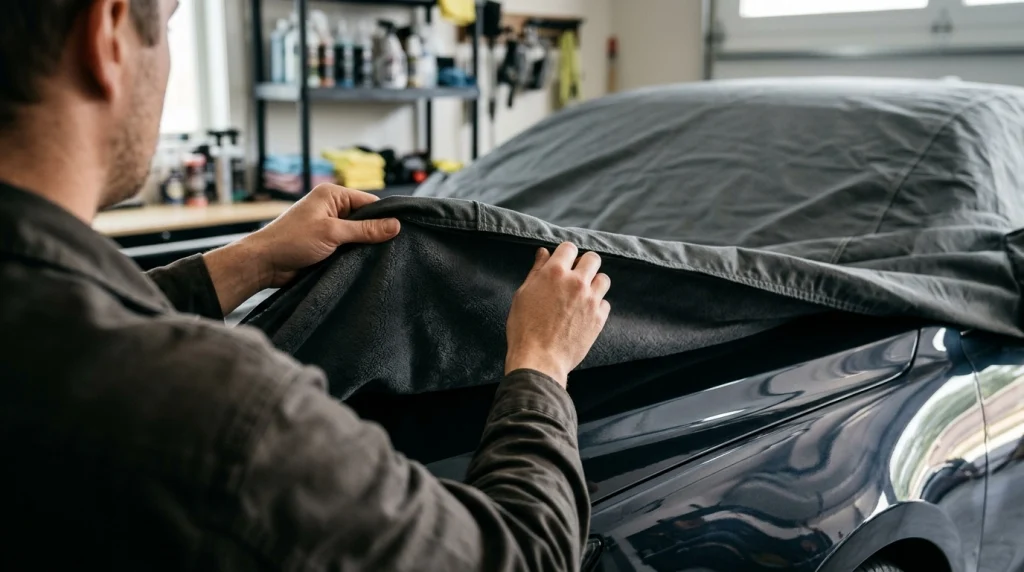
To reduce paint damage, start with a reasonably clean vehicle, keep grit away from the cover’s inner lining, and install the material without dragging it across the bodywork. A cover can trap abrasive particles even when its outer surface looks clean.
Should you wash your car before covering it?
Ideally, yes. Remove loose dirt and abrasive contamination before fitting the cover, particularly after driving on dusty roads or parking beneath trees.
You don’t need to perform a full detail every time, but visible grit and heavy contamination deserve attention. Check that the vehicle is dry when the cover’s instructions require a dry surface.
What is the correct way to install an outdoor car cover?
Follow the product’s installation instructions, since fitted designs, mirror pockets, and fastening systems vary. The following sequence applies to many conventional covers:
- Confirm that the vehicle is parked safely and the exhaust has cooled.
- Unfold the cover in a clean area without dragging its inner surface on the ground.
- Identify the front and rear before placing it over the vehicle.
- Align the fabric and fit any mirror pockets as directed.
- Pull the cover gently over the bodywork and bumper edges.
- Fasten the supplied straps and check that the fabric sits securely.
Never fit a cover over a hot exhaust or another hot component that could damage the fabric. If the vehicle has recently been repainted, ask the body shop when it is safe to cover the new finish.
How should you remove the cover?
Release the fasteners first, then fold or roll the cover according to its instructions. Avoid pulling the fabric along the paint or allowing dirty sections to rub against the vehicle-facing lining.
If the cover has accumulated substantial dust, stop and remove the debris using an approved method before reinstalling it. A few careful minutes can prevent unnecessary abrasion.
Can you use an outdoor cover every day?
Daily use is possible when the cover is designed for the conditions and the manufacturer permits regular installation and removal. However, repeated handling increases the importance of keeping both the vehicle and the cover clean.
For a daily-driven car, consider whether the time required to uncover, inspect, and cover the vehicle fits your routine. If the car remains dirty or wet after driving, address those conditions before covering it whenever practical.
Section takeaway: The most important paint-protection habit is preventing grit from moving between the fabric and the finish. Careful installation and removal matter just as much as washing the cover.
When Should You Inspect or Replace an Outdoor Car Cover?
Inspect an outdoor car cover regularly for damage to its fabric, seams, elastic, fasteners, and inner lining. Repair or replace it when deterioration compromises its fit, creates abrasive areas, or prevents it from providing the protection you need.
What should you check during an inspection?
A quick inspection after cleaning or severe weather can reveal problems before the next installation. Examine the following areas:
- Fabric: Look for holes, thinning, brittleness, tears, and damaged coatings.
- Seams: Check for loose stitching, separated layers, and openings that could admit water.
- Elastic: Look for stretching, cracking, or loss of tension around the edges.
- Straps and buckles: Confirm that fasteners remain secure and functional.
- Inner lining: Check for embedded grit, rough patches, and contamination.
- Odor and moisture: Investigate persistent musty smells or recurring dampness.
Can you repair a damaged car cover?
Minor damage may be repairable if the manufacturer approves a compatible patch or repair method. The repair must not leave rough edges, exposed adhesive, or loose hardware that could contact the paint.
Don’t assume that ordinary adhesive tape or a generic waterproof patch is safe for automotive fabric. Contact the manufacturer if the cover has a specialized coating or multilayer construction.
What are the signs that a car cover needs replacing?
Replacement becomes more sensible when the material has widespread deterioration, repeated leaks, failing fasteners, or damage that cannot be repaired safely. A cover that no longer fits securely may also be unsuitable for exposed parking.
There is no single replacement age that applies to every cover. Actual service life depends on construction, weather exposure, handling, maintenance, and storage conditions.
Compare the cost and practicality of an approved repair with the condition of the remaining material. If multiple components are failing, replacing the cover may be the more reliable option.
Section takeaway: Inspect the cover rather than relying on age alone. Damage to the fabric, seams, fasteners, or vehicle-facing surface can be a reason to repair or replace it.
Outdoor Car Cover Care FAQs
Can I wash my outdoor car cover in a washing machine?
Only if the manufacturer explicitly permits machine washing for your cover’s material and construction. Some covers require hand washing or spot cleaning, while others have specific washer and detergent requirements. Never assume that a machine-washable label on a different cover applies to yours.
Can I leave my car cover outside in the rain?
You can leave a cover outside in rain if it is designed for those conditions and installed as directed. Water resistance varies by product, and prolonged rain can expose weaknesses in seams or coatings. Check the vehicle and cover afterward for persistent dampness or signs of water penetration.
How do I stop mold and mildew from developing on a car cover?
Clean the cover when necessary, dry it thoroughly, and store it in a clean, dry, ventilated location. Avoid packing damp material into a closed storage bag. If mildew develops, follow the manufacturer’s approved cleaning instructions rather than applying bleach or strong chemicals without permission.
Can I use dish soap to clean my car cover?
Use dish soap only if the cover’s manufacturer confirms that it is suitable. Some cleaning products can affect water-repellent coatings or other specialized finishes. A recommended mild cleaner is a safer choice than experimenting with household chemicals.
Does a car cover scratch paint?
A properly fitted, clean cover can help protect paint from environmental contaminants, but trapped grit and repeated fabric movement can cause scratches. Reduce the risk by cleaning the vehicle, inspecting the inner lining, and handling the cover carefully during installation and removal.
Can I put a car cover on a wet car?
Follow the manufacturer’s instructions for your specific cover. Covering a wet vehicle may trap moisture, depending on the material and conditions. Whenever practical, let the vehicle dry before covering it, and investigate recurring dampness beneath the cover.
How often should I inspect an outdoor car cover?
Check the cover during routine use, after strong winds or prolonged rain, and whenever you clean it. Look for damaged seams, worn elastic, loose fasteners, and debris on the inner surface. Inspect more frequently when the vehicle is exposed to harsh weather throughout the year.
Keep Your Outdoor Car Cover Ready for Every Season
Learning how to care for an outdoor car cover comes down to a few consistent habits: remove dirt, clean according to the label, dry completely, secure the material, and inspect it for wear.
These steps help maintain the cover’s condition and reduce avoidable paint damage. They also make it easier to spot problems before a cover that appears usable starts letting moisture through or shifting in the wind.
Start with a quick inspection today. Check the inner lining, clean any accumulated debris, and confirm that your cover’s washing and storage instructions are easy to find for the next maintenance session.