
How to Buy Your First Car as a Teenager

Buying your first car as a teenager is exciting but requires careful planning. From setting a realistic budget to understanding insurance and safety, this guide walks you through every step to help you make a smart, confident decision.
Key Takeaways
- Start with a budget: Know how much you can afford, including insurance, gas, and maintenance.
- Prioritize safety and reliability: Choose a car with good crash ratings and a solid maintenance record.
- Shop smart: Compare prices, read reviews, and inspect used cars thoroughly.
- Understand insurance costs: Teen drivers pay more—shop around and ask about discounts.
- Get a pre-purchase inspection: Always have a mechanic check a used car before buying.
- Consider fuel efficiency: A car that saves on gas can save you hundreds each year.
- Involve a trusted adult: A parent or guardian can help with paperwork, negotiation, and advice.
📑 Table of Contents
How to Buy Your First Car as a Teenager
Buying your first car is a big milestone—especially when you’re a teenager. It’s more than just freedom to drive to school, hang out with friends, or run errands. It’s about responsibility, independence, and making smart decisions that will impact your finances and safety for years to come.
But let’s be real: the process can feel overwhelming. There are so many options, prices, and things to consider. Do you buy new or used? How much should you spend? What about insurance—will it cost a fortune? And how do you even know if a car is safe or reliable?
The good news? With the right plan, research, and support, buying your first car can be a smooth and rewarding experience. This guide is here to walk you through every step—from setting a budget to signing the paperwork—so you can drive off with confidence, not stress.
Step 1: Set a Realistic Budget
Visual guide about How to Buy Your First Car as a Teenager
Image source: auto-facts.org
Before you even think about test-driving a car, you need to know how much you can actually afford. And we’re not just talking about the price tag. A car comes with hidden costs that can sneak up on you if you’re not prepared.
Understand the True Cost of Car Ownership
The sticker price is just the beginning. Here’s what else you’ll need to budget for:
– **Insurance:** This is often the biggest expense for teen drivers. Insurance companies see teens as high-risk, so premiums can be steep.
– **Fuel:** Gas isn’t free. Depending on how much you drive, you could spend $100–$200 a month.
– **Maintenance and Repairs:** Oil changes, tire rotations, brake pads—these add up. Even reliable cars need regular upkeep.
– **Registration and Taxes:** Most states require you to pay registration fees and possibly sales tax when you buy a car.
– **Parking:** If you live in a city or go to a school with limited parking, you might need to pay for a spot.
A good rule of thumb? Your total car expenses (including loan payments, insurance, gas, and maintenance) should not exceed 15–20% of your monthly income. If you’re working part-time and earning $800 a month, that means your car costs should stay under $160.
New vs. Used: Which Is Right for You?
New cars come with the latest features, full warranties, and that fresh-off-the-lot smell. But they also lose value fast—some drop 20% in the first year. For a teen on a budget, a used car is usually the smarter choice.
Used cars are more affordable upfront and depreciate slower. You can find reliable models that are 3–5 years old with low mileage for a fraction of the price of a new one. Just make sure to do your homework—check the vehicle history, get it inspected, and avoid cars with major damage or high repair costs.
Financing Options for Teens
Most teens don’t have enough savings to buy a car outright. That’s where financing comes in. But here’s the catch: you usually need a co-signer—like a parent or guardian—to get a car loan. Lenders see teens as higher risk, so they want someone with a stronger credit history to back the loan.
If you go this route, make sure you understand the terms:
– **Interest rate:** This is the cost of borrowing money. Lower is better.
– **Loan term:** A longer loan means lower monthly payments, but you’ll pay more in interest over time.
– **Down payment:** Putting money down upfront reduces your loan amount and monthly payment.
Even if you’re not the one signing the loan, it’s important to know how much you’ll owe each month and how long it will take to pay off the car.
Step 2: Choose the Right Type of Car

Visual guide about How to Buy Your First Car as a Teenager
Image source: myvehicle.ie
Not all cars are created equal—especially when you’re a new driver. Safety, reliability, and cost should be your top priorities.
Prioritize Safety Features
As a teen, you’re more likely to be in an accident. That’s why safety should be your number one concern. Look for cars with:
– **High safety ratings:** Check the National Highway Traffic Safety Administration (NHTSA) or Insurance Institute for Highway Safety (IIHS) websites.
– **Advanced safety tech:** Features like automatic emergency braking, blind-spot monitoring, and lane departure warning can prevent accidents.
– **Good crash test scores:** A car that protects you in a crash is worth more than flashy rims or a loud stereo.
Some of the safest cars for teens include the Honda Civic, Toyota Corolla, Subaru Impreza, and Hyundai Elantra. These models are known for their reliability, affordability, and strong safety records.
Reliability Matters More Than Looks
You might be tempted by a cool-looking sports car or a rugged SUV, but flashy doesn’t mean practical. A car that breaks down often will cost you time, money, and stress.
Stick to brands and models known for reliability. Consumer Reports and J.D. Power publish annual reliability rankings—use them to guide your search. Toyota, Honda, and Subaru consistently rank high for dependability.
Also, consider the cost of repairs. Some cars have expensive parts or require specialized mechanics. A used Ford Focus might be cheap to buy, but if it has transmission issues, you could end up paying thousands to fix it.
Fuel Efficiency Saves Money
Gas prices go up and down, but they rarely go down for long. A fuel-efficient car can save you hundreds of dollars a year.
Look for cars with good miles per gallon (MPG). Compact sedans and hatchbacks like the Toyota Prius, Honda Fit, or Hyundai Ioniq get great gas mileage. Even some small SUVs, like the Mazda CX-30 or Subaru Crosstrek, offer decent fuel economy without sacrificing space.
If you drive a lot—say, 15,000 miles a year—a car that gets 30 MPG instead of 20 MPG could save you over $500 annually, assuming gas is $3.50 per gallon.
Step 3: Shop Smart and Compare Options
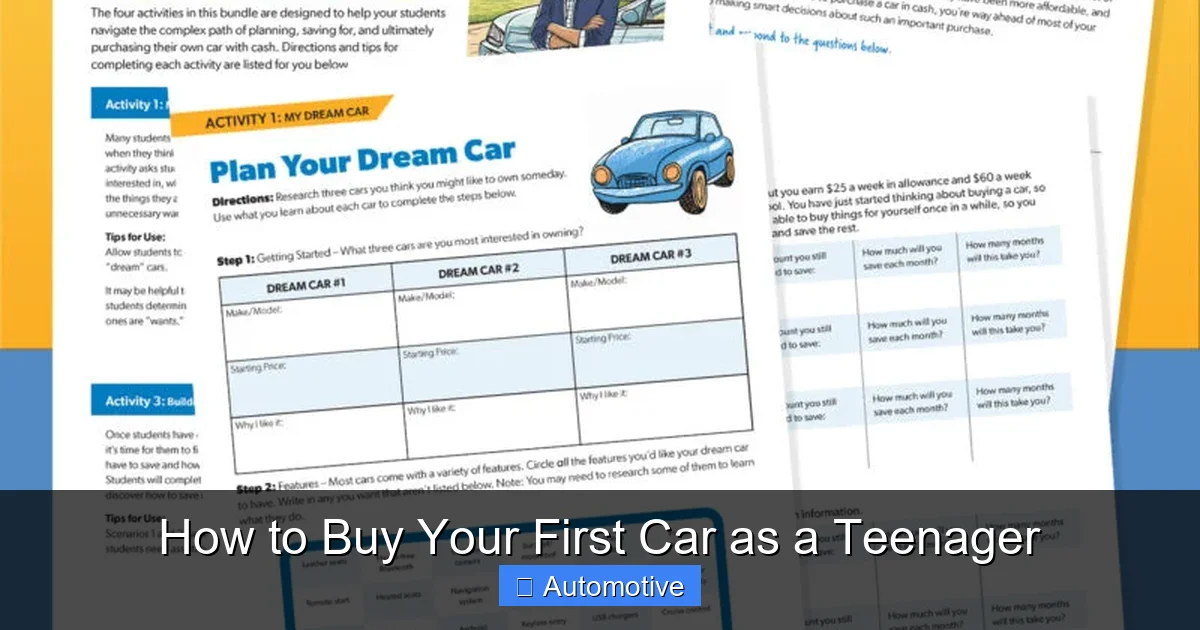
Visual guide about How to Buy Your First Car as a Teenager
Image source: weareteachers.com
Now that you know what you’re looking for, it’s time to start shopping. But don’t rush. Take your time, compare options, and avoid impulse buys.
Where to Look for Cars
You’ve got several options:
– **Dealerships:** Offer certified pre-owned (CPO) cars with warranties and inspections. Prices are usually higher, but you get peace of mind.
– **Private sellers:** Often cheaper, but you take on more risk. You’ll need to do more research and inspections.
– **Online marketplaces:** Websites like Cars.com, Autotrader, and Facebook Marketplace let you filter by price, mileage, and location.
Start broad, then narrow your search. Set filters for your budget, preferred models, and maximum mileage (under 80,000 miles is ideal for a first car).
Research Each Car’s History
If you’re buying used, always check the vehicle history report. Services like Carfax or AutoCheck show:
– Accident history
– Number of previous owners
– Title status (clean, salvage, rebuilt)
– Odometer readings
– Maintenance records
A clean report doesn’t guarantee a perfect car, but it helps rule out problem vehicles. Avoid cars with salvage titles or multiple accidents—they’re often unsafe and hard to insure.
Test Drive Like a Pro
A test drive isn’t just about how the car feels on the road. It’s your chance to spot red flags.
During the drive, pay attention to:
– **Engine noise:** Knocking, ticking, or loud revving could mean trouble.
– **Brakes:** Do they feel smooth and responsive? Squeaking or grinding is a bad sign.
– **Steering:** Does the car pull to one side? Is the steering wheel shaky at high speeds?
– **Transmission:** Automatic should shift smoothly. Manual should engage without grinding.
– **Interior condition:** Check for worn seats, bad smells, or warning lights on the dashboard.
Bring a checklist and take notes. If something feels off, don’t ignore it.
Step 4: Get a Pre-Purchase Inspection
This is non-negotiable. Even if the car looks great and the seller seems honest, you need a mechanic to check it before you buy.
Why an Inspection Is Worth It
A pre-purchase inspection (PPI) costs $100–$150, but it can save you thousands. A qualified mechanic will:
– Look for hidden damage or wear
– Test the engine, transmission, and suspension
– Check fluid levels and condition
– Inspect brakes, tires, and exhaust system
– Verify the car’s computer systems
If the mechanic finds issues, you can:
– Walk away from the deal
– Ask the seller to fix the problems
– Negotiate a lower price
Never skip this step—especially with private sales. Sellers may not disclose problems, and you don’t want to buy a lemon.
How to Find a Good Mechanic
Ask friends or family for recommendations. Look for independent shops with good reviews—avoid dealership service centers, which may charge more.
Call ahead and explain you’re getting a PPI. Most mechanics will schedule you within a day or two. Bring the car to them, or ask if they offer mobile inspections.
Step 5: Understand and Shop for Insurance
Insurance is one of the biggest expenses for teen drivers—but it doesn’t have to break the bank.
Why Teens Pay More
Insurance companies base rates on risk. Teens are more likely to speed, get distracted, or be in accidents. As a result, premiums can be 2–3 times higher than for adult drivers.
But there are ways to lower your costs.
Ways to Save on Insurance
– **Maintain good grades:** Many insurers offer “good student discounts” for teens with a B average or higher.
– **Take a driver’s education course:** Completing a certified course can reduce your premium by 10–15%.
– **Choose a safe, low-powered car:** Sports cars and high-performance vehicles cost more to insure.
– **Increase your deductible:** A higher deductible (the amount you pay out of pocket before insurance kicks in) lowers your monthly premium—just make sure you can afford it if you need to file a claim.
– **Ask about discounts:** Some insurers offer discounts for safety features, low mileage, or bundling with your parents’ policy.
Shop Around for the Best Rate
Don’t just go with the first quote you get. Compare rates from at least three insurers. Use online comparison tools or work with an independent agent who can check multiple companies.
Popular insurers for teens include Geico, State Farm, Progressive, and USAA (if you’re eligible). Each has different discounts and pricing models, so it pays to compare.
Step 6: Finalize the Purchase
You’ve found the perfect car, passed the inspection, and locked in insurance. Now it’s time to seal the deal.
Negotiate the Price
Whether you’re buying from a dealer or private seller, there’s almost always room to negotiate. Do your research:
– Check the car’s market value on Kelley Blue Book (KBB) or Edmunds.
– Note any issues found in the inspection.
– Be polite but firm.
Start with a lower offer—say, 10% below the asking price—and be ready to meet in the middle. If the seller won’t budge, ask for extras like new tires, a full tank of gas, or a free oil change.
Review the Paperwork
Make sure all documents are in order:
– **Title:** Must be signed over to you.
– **Bill of sale:** Lists the price, date, and both parties’ information.
– **Registration:** You’ll need to register the car in your name with your state’s DMV.
– **Warranty info:** If the car is still under warranty, get the details.
If you’re financing, the lender will handle some of this, but you should still review everything carefully.
Transfer Ownership Safely
For private sales, meet in a public place and bring a trusted adult. Avoid cash transactions over $500—use a cashier’s check or bank transfer for safety.
Once the sale is complete, update your insurance and register the car within the required timeframe (usually 10–30 days, depending on your state).
Conclusion
Buying your first car as a teenager is a big step—but it doesn’t have to be scary. With the right preparation, you can find a safe, reliable, and affordable vehicle that fits your lifestyle and budget.
Start by setting a realistic budget that includes all costs, not just the purchase price. Focus on safety and reliability over style, and always get a pre-purchase inspection. Shop around for insurance and take advantage of discounts. And don’t be afraid to ask for help from a parent, guardian, or trusted adult.
Remember, this isn’t just about getting behind the wheel. It’s about learning responsibility, making smart financial choices, and building confidence as a driver. Take your time, do your research, and when the day comes, enjoy the freedom—and the pride—of owning your first car.
Frequently Asked Questions
How much should a teenager spend on their first car?
Most experts recommend spending no more than $5,000–$10,000 on a first car, depending on your budget. This range offers reliable, safe options without stretching your finances too thin.
Can a teenager buy a car without a co-signer?
It’s very difficult. Most lenders require a co-signer for teens due to limited credit history. A parent or guardian can help secure the loan and improve your chances of approval.
What’s the best type of car for a new teen driver?
Mid-size sedans or compact SUVs with high safety ratings, good fuel economy, and low repair costs are ideal. Examples include the Honda Civic, Toyota Corolla, and Subaru Crosstrek.
Do I need full coverage insurance as a teen?
It depends on your state and lender. If you’re financing the car, full coverage (including collision and comprehensive) is usually required. For older, paid-off cars, liability-only may be enough.
Should I buy a used car or a new one as a teen?
A used car is usually the better choice. New cars depreciate quickly and cost more to insure. A well-maintained used car offers better value and lower overall costs.
How can I lower my car insurance as a teenager?
Maintain good grades, complete a driver’s ed course, drive a safe car, and shop around for quotes. Ask about discounts for low mileage, safety features, or bundling with family policies.