
How Much Is Car Insurance in Wisconsin

Car insurance in Wisconsin costs an average of $1,200 to $1,600 per year for full coverage, though rates vary based on location, driving record, and coverage choices. Understanding state requirements and shopping around can help you find affordable, reliable protection.
Key Takeaways
- Average annual premiums in Wisconsin range from $1,200 to $1,600 for full coverage. This is slightly below the national average, making Wisconsin a relatively affordable state for auto insurance.
- Minimum liability coverage is required by law. Wisconsin drivers must carry at least $25,000 for bodily injury per person, $50,000 per accident, and $10,000 for property damage.
- Your location impacts your rate significantly. Urban areas like Milwaukee and Madison tend to have higher premiums due to traffic density and accident rates.
- Safe driving and good credit can lower your premium. Insurers in Wisconsin use driving history and credit-based insurance scores to determine rates.
- Uninsured motorist coverage is not required but highly recommended. Nearly 14% of Wisconsin drivers are uninsured, so this protection can be crucial.
- Shop around every 6–12 months. Comparing quotes from multiple insurers can save you hundreds of dollars annually.
- Usage-based insurance programs offer discounts. Telematics programs track your driving habits and reward safe behavior with lower premiums.
📑 Table of Contents
- How Much Is Car Insurance in Wisconsin? A Complete Guide
- Wisconsin Car Insurance Requirements: What You Must Have
- Factors That Affect Car Insurance Rates in Wisconsin
- Average Car Insurance Costs in Wisconsin by Insurer
- How to Save Money on Car Insurance in Wisconsin
- Optional Coverage Options in Wisconsin
- Shopping for Car Insurance in Wisconsin: Tips and Best Practices
- Conclusion: Finding Affordable Car Insurance in Wisconsin
How Much Is Car Insurance in Wisconsin? A Complete Guide
If you’re a driver in Wisconsin, you’ve probably asked yourself: “How much is car insurance in Wisconsin?” It’s a fair question—after all, auto insurance isn’t just a legal requirement; it’s a financial safety net that protects you, your passengers, and your vehicle in case of an accident. But the cost can vary widely depending on where you live, how you drive, and what kind of coverage you choose.
Wisconsin is known for its scenic roads, from the rolling hills of Door County to the bustling highways around Milwaukee. But with beauty comes responsibility—especially when it comes to staying insured. The good news? Wisconsin is one of the more affordable states for car insurance in the U.S. On average, drivers pay between $1,200 and $1,600 per year for full coverage, which includes liability, collision, and comprehensive protection. That’s lower than the national average of around $1,700, making it a smart place to be behind the wheel—if you know how to navigate the system.
But affordability doesn’t mean one-size-fits-all. Your personal rate could be much higher or lower depending on a mix of factors, from your age and driving history to the type of car you drive and even your credit score. In this guide, we’ll break down everything you need to know about car insurance costs in Wisconsin—what’s required by law, what influences your premium, and how you can save money without sacrificing protection.
Wisconsin Car Insurance Requirements: What You Must Have
Visual guide about How Much Is Car Insurance in Wisconsin
Image source: americaninsurance.com
Before we dive into pricing, it’s important to understand what the law requires. Wisconsin is a “fault” state when it comes to car accidents, meaning the driver responsible for the crash pays for the damages. Because of this, the state mandates that all drivers carry a minimum level of liability insurance to cover injuries and property damage they may cause to others.
So, what exactly do you need? Wisconsin law requires the following minimum coverage limits:
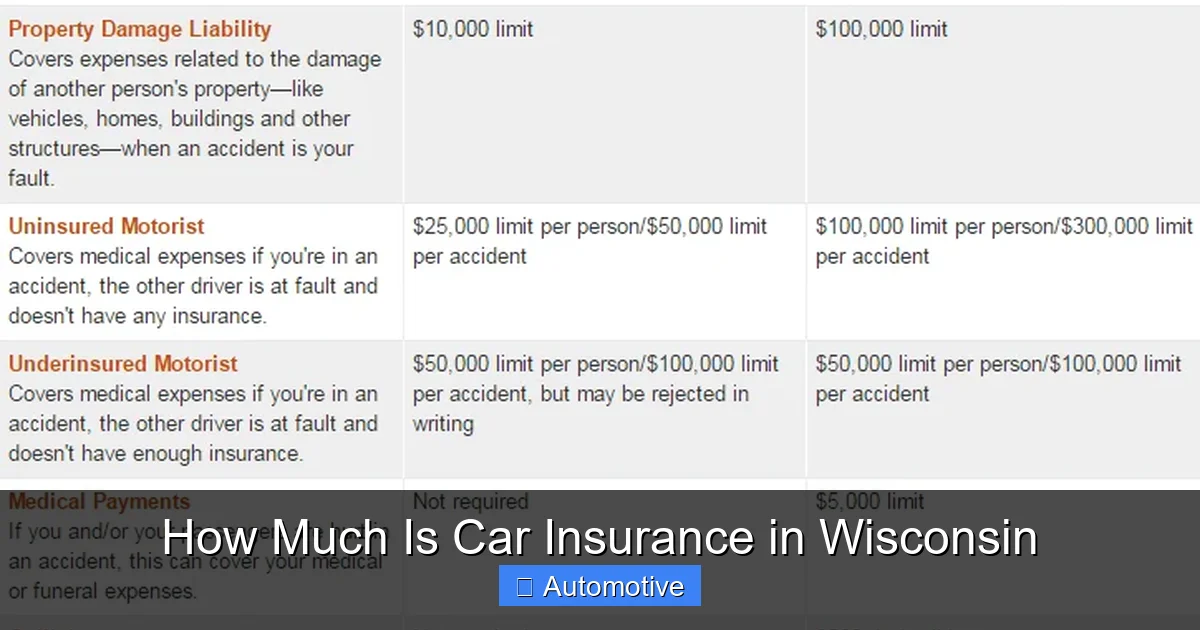
– $25,000 for bodily injury per person
– $50,000 for bodily injury per accident (if more than one person is injured)
– $10,000 for property damage per accident
This is often written as 25/50/10 and is the bare minimum you must carry to legally drive in the state. It’s important to note that this only covers damage you cause to others—not your own vehicle or medical expenses. If you want protection for your car or yourself, you’ll need to add optional coverage like collision, comprehensive, and personal injury protection (PIP).
Why Minimum Coverage Might Not Be Enough
While the 25/50/10 requirement keeps you legal on the road, it may not be enough to protect your finances in a serious accident. For example, if you cause a crash that results in $75,000 in medical bills for the other driver, your insurance will only pay $25,000—leaving you responsible for the remaining $50,000. That’s a huge out-of-pocket expense that could lead to lawsuits or wage garnishment.
Many financial experts recommend increasing your liability limits to at least 100/300/100—meaning $100,000 per person, $300,000 per accident, and $100,000 for property damage. This provides much better protection and often costs only a little more per month.
Uninsured and Underinsured Motorist Coverage
Here’s a sobering fact: about 14% of Wisconsin drivers are uninsured, according to the Insurance Research Council. That means there’s a real chance you could get into an accident with someone who has no insurance at all. If that happens and they’re at fault, you could be stuck paying for your own medical bills and car repairs.
That’s where uninsured motorist (UM) and underinsured motorist (UIM) coverage come in. These optional coverages protect you when the at-fault driver doesn’t have enough (or any) insurance to cover your damages. While Wisconsin doesn’t require UM/UIM coverage, it’s strongly recommended—especially if you have a newer car or high medical expenses.
Factors That Affect Car Insurance Rates in Wisconsin

Visual guide about How Much Is Car Insurance in Wisconsin
Image source: insurancepanda.com
Now that you know what’s required, let’s talk about what determines how much you’ll actually pay. Car insurance companies in Wisconsin use a complex formula to calculate your premium, and it’s based on a mix of personal, vehicle, and location-based factors. Understanding these can help you make smarter choices and potentially lower your rate.
1. Your Driving Record
Your driving history is one of the biggest factors insurers consider. If you have a clean record with no accidents or traffic violations, you’ll likely qualify for lower rates. But even one speeding ticket or at-fault accident can increase your premium by 20% or more.
For example, a 35-year-old driver with a clean record might pay around $1,200 per year for full coverage. But if that same driver gets a speeding ticket, their rate could jump to $1,450 or higher. And if they’re involved in an at-fault accident, they could see their premium double.
2. Age and Experience
Younger drivers, especially those under 25, typically pay the highest insurance rates. This is because statistically, new and teen drivers are more likely to be involved in accidents. A 17-year-old driver in Milwaukee might pay over $3,000 per year for full coverage, while a 45-year-old with a clean record could pay less than half that.
But age isn’t just a disadvantage for the young. Older drivers—especially those over 70—may also see rate increases due to slower reaction times and higher health risks. However, many insurers offer discounts for mature drivers who complete defensive driving courses.
3. Location, Location, Location
Where you live in Wisconsin plays a major role in your insurance cost. Urban areas like Milwaukee, Madison, and Green Bay tend to have higher premiums due to factors like traffic congestion, higher accident rates, and increased theft or vandalism.
For instance, a driver in downtown Milwaukee might pay $1,600 per year for full coverage, while someone in a rural area like Eagle River or Ladysmith could pay closer to $1,100. This is because rural areas generally have fewer cars on the road, lower crime rates, and less severe weather damage.
4. Credit-Based Insurance Score
Wisconsin allows insurers to use your credit-based insurance score when determining your rate. This isn’t the same as your regular credit score, but it’s closely related. Studies have shown that people with lower credit scores tend to file more insurance claims, so insurers use this as a risk indicator.
If you have excellent credit (750+), you could save hundreds of dollars per year. But if your credit is poor (below 600), your premium might be significantly higher. The good news? You can improve your credit over time by paying bills on time, reducing debt, and checking your credit report for errors.
5. Type of Vehicle
The car you drive affects your insurance cost more than you might think. Insurers consider factors like the vehicle’s make, model, age, safety features, and likelihood of theft.
For example, a brand-new SUV with advanced safety features like automatic emergency braking and lane departure warning might cost less to insure than a high-performance sports car. That’s because safer cars are less likely to be involved in serious accidents, and they often come with anti-theft systems.
On the other hand, luxury vehicles, electric cars, and models with high repair costs (like Teslas) typically have higher premiums due to expensive parts and specialized labor.
6. Annual Mileage
How much you drive also impacts your rate. The more miles you put on your car each year, the higher your chance of being in an accident. Most insurers ask for your annual mileage when you apply for coverage.
If you commute 30 miles each way to work, you’ll likely pay more than someone who only drives 5,000 miles per year for errands and weekend trips. Some insurers offer low-mileage discounts for drivers who stay under 7,500 or 10,000 miles annually.
Average Car Insurance Costs in Wisconsin by Insurer
Visual guide about How Much Is Car Insurance in Wisconsin
Image source: wikitechy.com
Now that we’ve covered the factors that influence your rate, let’s look at what real drivers are paying. While individual premiums vary, we can get a sense of average costs by comparing quotes from major insurers in Wisconsin.
Based on data from state insurance departments and consumer reports, here are the average annual premiums for full coverage from some of the top providers:
– State Farm: $1,150
– GEICO: $1,200
– Progressive: $1,300
– Allstate: $1,400
– American Family Insurance: $1,250
– USAA: $950 (for eligible military members and families)
As you can see, there’s a noticeable difference between the lowest and highest rates—over $400 per year. That’s why it’s so important to shop around. A few minutes comparing quotes could save you hundreds.
Cheapest Car Insurance in Wisconsin
If you’re looking to save money, USAA often comes out on top—but it’s only available to active military, veterans, and their families. For the general public, State Farm and GEICO tend to offer the most competitive rates, especially for safe drivers with good credit.
Progressive is another strong option, particularly if you’re a high-risk driver. They’re known for offering coverage to people with accidents or tickets on their record, though at a higher price.
Best Car Insurance for High-Risk Drivers
If you have a less-than-perfect driving record, don’t panic—you can still get affordable coverage. Companies like Progressive, The General, and Dairyland specialize in high-risk insurance and may offer more flexible underwriting.
However, these policies often come with higher deductibles and fewer discounts, so it’s still worth working to improve your driving record. Many insurers offer accident forgiveness programs or safe driver courses that can help reduce your premium over time.
How to Save Money on Car Insurance in Wisconsin
Paying for car insurance doesn’t have to break the bank. With a few smart strategies, you can lower your premium without sacrificing coverage. Here are some proven ways to save:
1. Bundle Your Policies
Most insurers offer a multi-policy discount if you bundle your auto insurance with home, renters, or life insurance. This can save you 10% to 25% on your total premium. For example, if your auto policy costs $1,300 and your home policy costs $800, bundling could reduce your total by $200 or more.
2. Maintain a Clean Driving Record
This one’s obvious, but it’s worth repeating: safe driving pays off. Avoid speeding, distracted driving, and DUIs. Many insurers offer accident-free discounts or safe driver rewards after a few years of clean driving.
3. Take a Defensive Driving Course
Some insurers in Wisconsin offer discounts for completing an approved defensive driving course. These courses teach advanced skills like hazard perception and skid control, and they can reduce your premium by 5% to 10%. Check with your insurer to see if they offer this discount.
4. Increase Your Deductible
Your deductible is the amount you pay out of pocket before insurance kicks in after a claim. Raising your deductible from $500 to $1,000 can lower your premium by 15% to 30%. Just make sure you can afford to pay the higher deductible if you ever need to file a claim.
5. Ask About Discounts
Insurers offer a wide range of discounts, but you have to ask for them. Common ones include:
– Good student discount: For students with a B average or higher
– Military discount: For active-duty service members and veterans
– Low-mileage discount: For drivers who don’t commute often
– Anti-theft device discount: For vehicles with alarms or tracking systems
– Paperless billing discount: For going digital with your statements
6. Use Telematics or Usage-Based Insurance
Many insurers now offer usage-based insurance (UBI) programs that track your driving habits through a mobile app or plug-in device. If you drive safely—avoiding hard braking, speeding, and late-night trips—you could earn discounts of 10% to 20%.
For example, Progressive’s Snapshot program and State Farm’s Drive Safe & Save let you earn rewards for good behavior. These programs are especially helpful for young drivers or those with a few blemishes on their record.
Optional Coverage Options in Wisconsin
While liability insurance is mandatory, there are several optional coverages that can give you peace of mind and better financial protection. Here are the most common ones:
Collision Coverage
This pays to repair or replace your car if it’s damaged in a collision—regardless of who’s at fault. It’s especially important if you drive a newer or more valuable vehicle. Without it, you’d have to pay for repairs out of pocket.
Comprehensive Coverage
This covers non-collision damage, such as theft, vandalism, fire, hail, or hitting a deer. Wisconsin’s unpredictable weather—especially winter storms and summer hail—makes this coverage valuable for many drivers.
Personal Injury Protection (PIP)
Also known as “no-fault” coverage, PIP pays for your medical expenses, lost wages, and other costs after an accident, no matter who caused it. While Wisconsin doesn’t require PIP, it can be a lifesaver if you don’t have health insurance or face high medical bills.
Rental Reimbursement and Roadside Assistance
These add-ons provide extra convenience. Rental reimbursement pays for a rental car while your vehicle is being repaired after a covered claim. Roadside assistance covers towing, jump-starts, flat tires, and lockout services.
While these aren’t required, they’re relatively inexpensive—often $10 to $20 per year—and can save you a lot of stress in an emergency.
Shopping for Car Insurance in Wisconsin: Tips and Best Practices
Finding the right car insurance policy doesn’t have to be overwhelming. With a little research and planning, you can find a plan that fits your needs and budget. Here’s how to get started:
1. Compare Quotes from at Least Three Insurers
Don’t settle for the first quote you get. Prices can vary significantly between companies, even for the same coverage. Use online comparison tools or contact insurers directly to get personalized quotes.
2. Review Your Coverage Annually
Your life changes—so should your insurance. Review your policy every year or after major life events like buying a new car, moving, or getting married. You might need more (or less) coverage than before.
3. Read the Fine Print
Make sure you understand what’s covered—and what’s not. Pay attention to exclusions, limits, and deductibles. If something isn’t clear, ask your agent for clarification.
4. Consider Working with an Independent Agent
Independent agents represent multiple insurers and can help you compare options from different companies. They often have access to exclusive discounts and can provide personalized advice.
5. Check Insurer Ratings and Customer Service
Price isn’t everything. Look at customer satisfaction ratings from J.D. Power, AM Best, or the Better Business Bureau. A company with great rates but poor service might not be worth it if you ever need to file a claim.
Conclusion: Finding Affordable Car Insurance in Wisconsin
So, how much is car insurance in Wisconsin? On average, drivers pay between $1,200 and $1,600 per year for full coverage—making it one of the more affordable states in the U.S. But your personal rate depends on a mix of factors, including your driving record, location, vehicle, and credit score.
The key to getting the best rate is understanding your options and shopping around. Don’t just go with the first quote you receive. Compare policies, ask about discounts, and consider optional coverages that fit your lifestyle.
Remember, the cheapest policy isn’t always the best. Make sure you’re getting the protection you need—not just the lowest price. And don’t forget to review your policy regularly to ensure it still meets your needs.
With the right approach, you can find affordable, reliable car insurance in Wisconsin that keeps you safe on the road without breaking the bank.
Frequently Asked Questions
What is the minimum car insurance required in Wisconsin?
Wisconsin requires drivers to carry at least $25,000 for bodily injury per person, $50,000 per accident, and $10,000 for property damage. This is known as 25/50/10 coverage and is the legal minimum to drive in the state.
Is car insurance cheaper in Wisconsin than other states?
Yes, Wisconsin’s average car insurance rates are slightly below the national average. Full coverage typically costs between $1,200 and $1,600 per year, making it more affordable than many other states.
Do I need uninsured motorist coverage in Wisconsin?
No, it’s not required by law, but it’s highly recommended. About 14% of Wisconsin drivers are uninsured, so this coverage protects you if you’re hit by someone without insurance.
Can my credit score affect my car insurance rate in Wisconsin?
Yes, insurers in Wisconsin can use your credit-based insurance score to determine your premium. Drivers with higher credit scores often receive lower rates.
How can I lower my car insurance premium in Wisconsin?
You can save by maintaining a clean driving record, bundling policies, increasing your deductible, taking a defensive driving course, and shopping around for quotes every year.
What should I do if I can’t afford car insurance in Wisconsin?
If cost is a concern, look into state assistance programs, consider minimum coverage (though it’s not recommended), or contact insurers to discuss payment plans or discounts.
