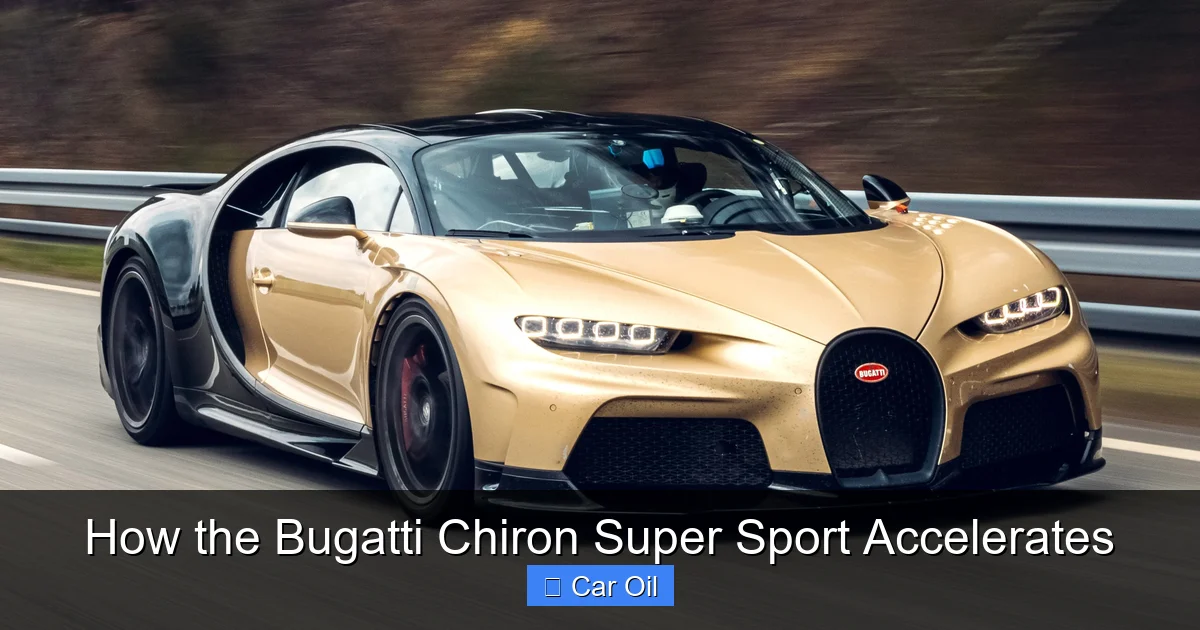
How the Bugatti Chiron Super Sport Accelerates

Contents
- 1 Key Takeaways
- 2 📑 Table of Contents
- 3 The Heart of the Beast: The W16 Quad-Turbo Engine
- 4 Launch Sequence: Transmission and Drivetrain
- 5 The Art of Aerodynamics: Slicing Air and Planting the Car
- 6 Materials Science: Lightweight and Unyielding Strength
- 7 Tires and Traction: The Only Contact Point
- 8 Cooling the Beast: Thermal Management on Overdrive
- 9 The Driver’s Experience: More Than Just Numbers
- 10 Conclusion: The Pinnacle of Internal Combustion Acceleration
- 11 Frequently Asked Questions

LED Indicator Light

Jumper Cables

Car Window Tint Film

Car Cup Holder Expander
The Bugatti Chiron Super Sport accelerates with ferocious intensity, achieving 0-60 mph in a mere 2.3 seconds thanks to its 1,600-hp quad-turbo W16 engine. Its advanced aerodynamics, all-wheel-drive system, and Michelin tires work in harmony to harness this power. This engineering masterpiece redefines what’s possible in automotive acceleration.
Imagine pressing the accelerator pedal and being violently pushed back into your seat. The world outside becomes a smeared watercolor of color and sound. This isn’t just fast; it’s a physical event. This is what it feels like when the Bugatti Chiron Super Sport accelerates. It’s a experience that transcends typical driving, merging the raw violence of a jet engine with the precision of a Formula 1 car. In this deep dive, we’ll unravel the symphony of engineering that makes this 2.3-second 0-60 mph sprint not just possible, but seemingly effortless.
At its core, the Chiron Super Sport’s acceleration is a story of controlled chaos. It’s about taking an almost incomprehensible amount of power—1,600 horsepower—and delivering it to the ground in a way that is both brutally fast and remarkably secure. Every component, from the microscopic fuel injectors to the massive rear wing, plays a critical, synchronized role. We’re going to break down that role piece by piece, from the heart of the beast under the hood to the tiny patches of rubber that meet the road.
Key Takeaways
- Quad-Turbo W16 Powerhouse: The 8.0-liter W16 engine with four turbochargers produces 1,600 horsepower, delivering relentless thrust.
- Blistering Acceleration: It sprints from 0 to 60 mph in 2.3 seconds and 0 to 124 mph in 5.8 seconds, feeling like a rocket launch.
- Aerodynamic Mastery: Active aerodynamics and a streamlined shape generate downforce and reduce drag for stable high-speed acceleration.
- Carbon Fiber Construction: Extensive use of carbon fiber keeps weight low, allowing the massive power to propel the car with incredible efficiency.
- Specialized Tire Technology: Michelin Pilot Sport Cup 2 tires are specifically developed to handle the extreme forces during acceleration.
- Sophisticated Thermal Management: Advanced cooling systems manage heat from the engine, turbos, and brakes to maintain peak performance.
📑 Table of Contents
- The Heart of the Beast: The W16 Quad-Turbo Engine
- Launch Sequence: Transmission and Drivetrain
- The Art of Aerodynamics: Slicing Air and Planting the Car
- Materials Science: Lightweight and Unyielding Strength
- Tires and Traction: The Only Contact Point
- Cooling the Beast: Thermal Management on Overdrive
- The Driver’s Experience: More Than Just Numbers
- Conclusion: The Pinnacle of Internal Combustion Acceleration
The Heart of the Beast: The W16 Quad-Turbo Engine
Forget everything you know about engines. The Bugatti Chiron Super Sport doesn’t have a V8 or a V12. It houses an 8.0-liter quad-turbocharged W16 engine—a unique configuration that is essentially two narrow-angle V8s mounted on a common crankshaft in a ‘W’ shape. This architecture allows Bugatti to package 16 cylinders into an engine that’s surprisingly compact for its output, but its true magic lies in the forced induction system.
Quad-Turbo System: The Four-Fisted Power Delivery
One turbocharger per cylinder bank is for enthusiasts. Four turbochargers, as seen on the Chiron, is for legends. Each turbo is a high-performance unit, but they work in a clever, staged sequence to eliminate turbo lag—that frustrating delay between pressing the throttle and feeling the power. At low RPMs, two of the four turbos are spooled and providing boost. As engine speed climbs, the other two turbos join the party. This seamless transition means the accelerator pedal is connected directly to an endless wave of torque. There is no waiting. The surge is immediate, relentless, and linear all the way to the redline. This system is a key reason why the Chiron Super Sport accelerates so violently from a standstill and never seems to run out of breath.
Fuel and Air: Breathing Fire
To make 1,600 horsepower, an engine needs an astronomical amount of air and fuel. The Chiron’s fuel injection system is a work of art, using 32 individual fuel injectors to spray a precise mist into each combustion chamber. The air intake system is equally sophisticated, with large ducts feeding the turbo inlets. Clean, cool air is paramount for maximum power. While the Chiron uses a bespoke, high-flow system, the principle is universal: an engine can only perform as well as it can breathe. A clogged filter in any car, like a Honda Civic, restricts airflow and strangles performance. That’s why changing your air filter regularly is one of the simplest yet most effective maintenance tasks for preserving engine health and efficiency in everyday vehicles.
Launch Sequence: Transmission and Drivetrain
All that engine power is useless without a way to get it to the pavement. The Chiron Super Sport uses a 7-speed dual-clutch transmission (DCT) and a sophisticated all-wheel-drive system to manage the chaos.
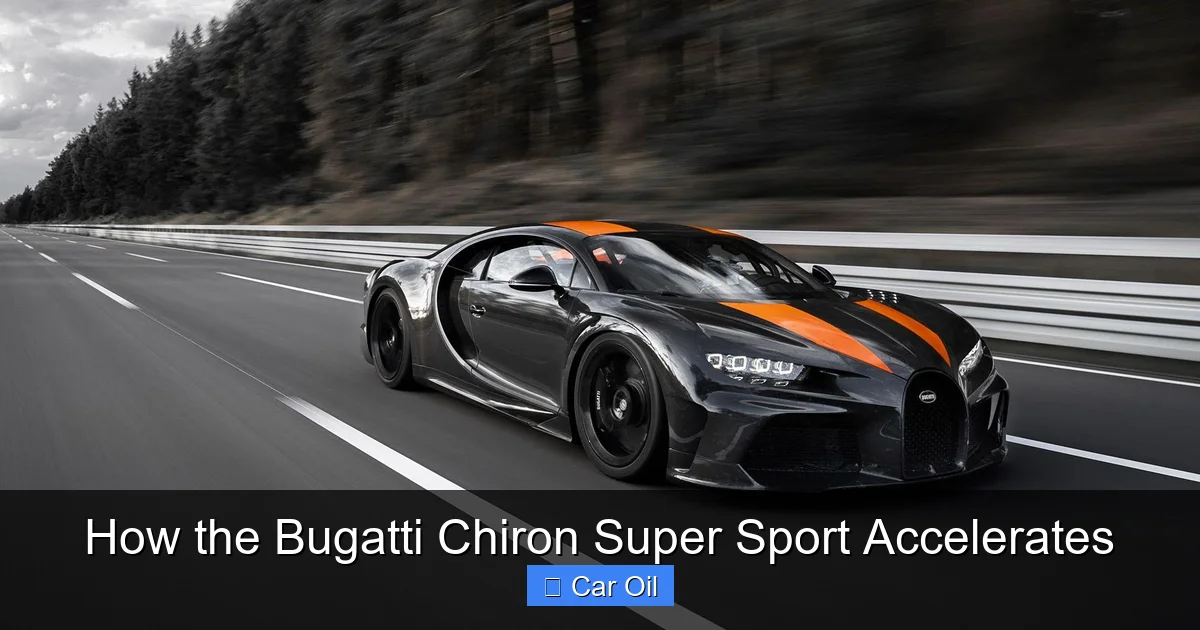
Visual guide about How the Bugatti Chiron Super Sport Accelerates
Image source: wallpaperaccess.com
Dual-Clutch Transmission: Shifts at Light Speed
This isn’t your standard automatic. A dual-clutch gearbox uses two separate clutches for odd and even gears. While one gear is engaged, the next is already pre-selected and spinning at the correct speed. This means gear changes happen in well under 100 milliseconds—faster than any human could manage with a manual paddle shifter. During acceleration, this translates to a continuous, uninterrupted surge of power. There are no gaps, no pauses. The engine never drops out of its optimal power band, which is absolutely critical for achieving those astronomical acceleration figures. The shifts are so fast they feel like a single, seamless power delivery.
All-Wheel Drive and Launch Control: Traction is King
With 1,600 hp, spinning the rear tires would be the default outcome without intelligent power distribution. Bugatti’s all-wheel-drive system is rear-biased but can send up to a significant portion of torque to the front wheels instantly via a multi-plate clutch. This constant, electronic ballet ensures maximum traction off the line. Combine this with a launch control system. When activated (usually via a special procedure), the car’s computers hold the engine at a precise RPM, modulate the clutch engagement, and manage wheelspin to achieve the perfect, fastest possible start. It’s a system that takes the guesswork out of human reaction time, allowing the Chiron Super Sport to consistently hit its advertised 0-60 mph time. Proper tire pressure is also a non-negotiable factor for this system to work correctly. Even on a family sedan, maintaining proper tire pressure is crucial for optimal traction, handling, and safety, as an under-inflated tire can’t grip the road effectively.
The Art of Aerodynamics: Slicing Air and Planting the Car
Acceleration isn’t just about straight-line power; it’s about stability at speed. As the Chiron Super Sport accelerates toward its 273 mph top speed, the air becomes a formidable wall. Its shape is a masterclass in managing airflow.

Visual guide about How the Bugatti Chiron Super Sport Accelerates
Image source: s1.cdn.autoevolution.com
Active Aerodynamics: A Shape-Shifter
The car features numerous active aerodynamic elements. The most obvious is the large, fixed rear wing on the Super Sport model (compared to the active wing on the standard Chiron). This wing is optimized for high-speed stability, generating massive downforce to press the rear tires onto the road. At the front, active flaps open and close to manage airflow and cooling. The entire underbody is meticulously designed to be a flat, stable platform that accelerates air out from under the car, creating a suction effect (ground effect) that pins it down. This downforce is essential; without it, the car would become light and unsettled at high speeds, making acceleration dangerous and inefficient.
Drag Reduction: The Need for Speed
To reach its top speed, the Chiron Super Sport must also minimize drag—the force of air pushing against the car. Its elongated “longtail” body (the Super Sport is 10 inches longer than the standard Chiron) is designed to slice through the air with minimal resistance. Every surface is smooth, flush, and contoured. The goal is a balance: enough downforce for stability, but not so much that it creates excessive drag, which would sap horsepower and limit top speed. It’s a constant compromise that Bugatti’s engineers have perfected through thousands of hours in wind tunnel testing.
Materials Science: Lightweight and Unyielding Strength
Power-to-weight ratio is the holy grail of performance. The Chiron Super Sport weighs approximately 4,400 lbs, which is still heavy, but consider it carries a 1,600 hp engine, a full luxury interior, and immense structural rigidity. That weight is kept in check through the extensive use of advanced materials.
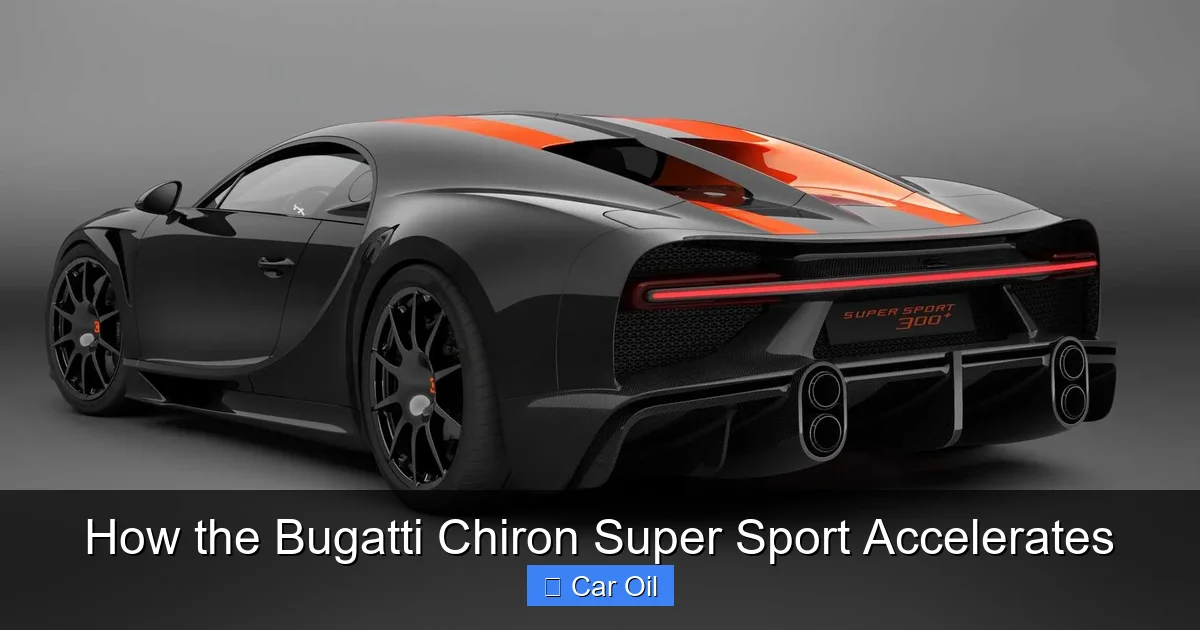
Visual guide about How the Bugatti Chiron Super Sport Accelerates
Image source: espirituracer.com
Carbon Fiber Monocoque: The Safety Cell
The passenger compartment is a carbon fiber monocoque, a single, rigid shell made from woven carbon fiber and epoxy resin. This is the same technology used in Formula 1. It provides incredible strength and safety while being remarkably light. The entire body structure is designed to be as torsionally rigid as possible, ensuring that all the engine’s power translates into forward motion instead of flexing the chassis. This rigidity also allows the suspension to work with pinpoint accuracy, keeping the tires in optimal contact with the road during hard acceleration.
Titanium and Magnesium: Where Strength Meets Lightness
Under the hood, you’ll find titanium connecting rods and magnesium components. Titanium is as strong as steel but about 45% lighter. Using it for high-stress, reciprocating parts like connecting rods reduces internal engine mass. This allows the engine to rev faster and more freely, improving response and power delivery. Magnesium is used for components like the intake manifold. These material choices, while astronomically expensive, shave critical grams from rotating assemblies, contributing to the engine’s ability to accelerate with such ferocity.
Tires and Traction: The Only Contact Point
All that power, all that technology, comes down to a contact patch about the size of your palm on each tire. If the tires can’t grip, the car is just a very expensive, very noisy burnout machine.
Michelin Pilot Sport Cup 2 Tires: Engineering at the Limit
Bugatti works exclusively with Michelin to develop tires specifically for the Chiron. The Pilot Sport Cup 2 tires on the Super Sport are not off-the-shelf. They are bespoke, developed through a joint program that involves extreme testing at the Nardò Ring and on Bugatti’s private tracks. The rubber compound is designed to stay sticky even under the immense thermal load generated by 1,600 hp. The tread pattern and internal construction are engineered to handle the lateral and longitudinal forces that would destroy a normal tire in seconds. These tires are the final, critical link in the acceleration chain, transforming engine torque into forward motion without surrender.
The Importance of Grip and Pressure
Even the best tire is useless at the wrong pressure. Tire pressure affects the shape of the contact patch, rolling resistance, and heat buildup. The Chiron’s systems constantly monitor and can even adjust pressures for optimal performance. This principle is true for every car. Incorrect tire pressure on a Honda Civic leads to poor fuel economy, uneven wear, and compromised handling. That’s why maintaining proper tire pressure is a fundamental aspect of vehicle maintenance. A simple check and adjustment, or knowing how to reset the tire pressure monitoring system after inflating, ensures your car can perform as designed, whether it’s a hypercar or a daily driver.
Cooling the Beast: Thermal Management on Overdrive
When you compress air with four massive turbochargers and ignite a fuel-air mixture in 16 cylinders at over 5,000 rpm, you generate an insane amount of heat. Managing this heat is not optional; it’s essential for survival and sustained performance.
Heat Extraction from the Engine
The W16 engine is a heat factory. Bugatti uses a complex network of coolant passages, oil squirters, and dedicated heat exchangers. The cooling system is over-engineered, with multiple radiators—one for the engine coolant, one for the transmission, and others for the charge air (intercoolers). The intercoolers are particularly vital; they cool the compressed air from the turbos before it enters the engine. Cooler air is denser, meaning more oxygen molecules per volume, which allows for more fuel to be burned and more power to be made. The Chiron’s intercooler system is so effective it can reduce intake air temperatures by over 100 degrees Fahrenheit.
Brake and Turbo Cooling
Hard acceleration is often followed by hard braking. The carbon-ceramic brakes on the Chiron generate phenomenal heat. Dedicated cooling ducts channel air directly onto the brake discs and calipers to prevent fade. Similarly, the turbochargers themselves run incredibly hot. Special heat shields and thermal insulation protect surrounding components. Some versions even have active louvers that open to direct cooling airflow specifically to the turbochargers when needed. This holistic thermal management ensures that every system operates within its ideal temperature window, whether you’re doing a single quarter-mile run or lapping a racetrack repeatedly.
The Driver’s Experience: More Than Just Numbers
So, how does it all come together in the cabin? The acceleration of the Chiron Super Sport is not a raw, terrifying event (though it is terrifying). It’s a polished, almost serene explosion of speed. The sound is a deep, mechanical growl from the exhaust, layered with the whine of the turbos and the mechanical chatter of the 16-valve valvetrain. The acceleration is so intense it physically presses you into the carbon fiber bucket seats. Your vision tunnels. The digital speedometer blurs as the numbers climb with impossible speed: 60, 80, 100 mph in what feels like the blink of an eye.
Yet, there’s a sense of control. The car doesn’t feel nervous or wild. The all-wheel-drive system claws at the pavement, and the aerodynamic downforce pins you down. It’s a testament to Bugatti’s integration of systems. The engine, transmission, drivetrain, aerodynamics, and tires aren’t separate components; they are one single entity. This unity is what allows a car weighing over two tons to achieve acceleration figures that rival a Formula 1 car. It’s physics, defied by engineering.
Conclusion: The Pinnacle of Internal Combustion Acceleration
The Bugatti Chiron Super Sport accelerates not by accident, but by the deliberate, obsessive application of every known engineering principle related to speed. It is a final, glorious monument to the era of internal combustion. Its quad-turbo W16 engine is a marvel of power density. Its dual-clutch gearbox is a shift-lightning conduit. Its active aerodynamics are a shape-shifting extension of the driver’s will. Its carbon fiber skin is a lightweight armor. And its bespoke Michelin tires are the ultimate translators of torque into velocity.
This car demonstrates that true acceleration is a system-wide triumph. It’s not just about peak horsepower; it’s about how that power is delivered, managed, and ultimately put to the ground. It’s about cooling the fire, holding the car down, and changing gears faster than thought. While most of us will never experience this firsthand, the technologies pioneered here—in materials, aerodynamics, and forced induction—trickle down, making all cars faster, safer, and more efficient. The Chiron Super Sport accelerates as a complete package, a symphony of controlled violence that sets the absolute benchmark for what a road car can achieve. It is, and may remain, the fastest accelerating production car in the world, a title earned not by a single spec, but by a million details working in perfect, explosive harmony.
Frequently Asked Questions
How fast is the Bugatti Chiron Super Sport from 0 to 60 mph?
The Bugatti Chiron Super Sport accelerates from 0 to 60 mph in an astonishing 2.3 seconds. This is made possible by its 1,600-horsepower quad-turbocharged W16 engine and advanced all-wheel-drive system with launch control.
What engine gives the Chiron Super Sport its acceleration?
Its acceleration comes from an 8.0-liter quad-turbocharged W16 engine. This unique engine configuration uses four turbochargers in a staged setup to deliver massive, lag-free torque from low RPMs, providing the relentless thrust for its record-breaking runs.
How does the aerodynamics help with acceleration?
The Chiron Super Sport’s aerodynamics generate significant downforce, which presses the car onto the road. This increased tire grip is essential for translating the engine’s 1,600 hp into forward motion without wheelspin, especially as speeds climb. Its streamlined shape also minimizes drag, allowing the car to use its power more efficiently for top speed.
What role do the tires play in such rapid acceleration?
The bespoke Michelin Pilot Sport Cup 2 tires are critical. They are specifically developed to withstand the extreme forces and heat generated during acceleration. Their unique rubber compound and construction provide the necessary grip to put the engine’s power down without disintegrating, acting as the final, vital link in the acceleration chain.
How does the transmission contribute to the acceleration feel?
The 7-speed dual-clutch transmission (DCT) shifts gears in under 100 milliseconds. This means there is no interruption in power delivery; the engine stays in its optimal power band during acceleration. The shifts feel almost singular, creating a continuous, seamless surge of speed that feels like being pushed by an unbroken wave of force.
Is the acceleration of the Chiron Super Sport safe and manageable?
Yes, it is engineered to be manageable despite its extreme performance. The sophisticated all-wheel-drive system, active aerodynamics, and advanced stability controls work together to keep the car planted and predictable. The immense downforce and precise power delivery mean the driver feels in control, even as the car accelerates at the limit of physical possibility.