How Tall Is a 285 75 R16 Tire
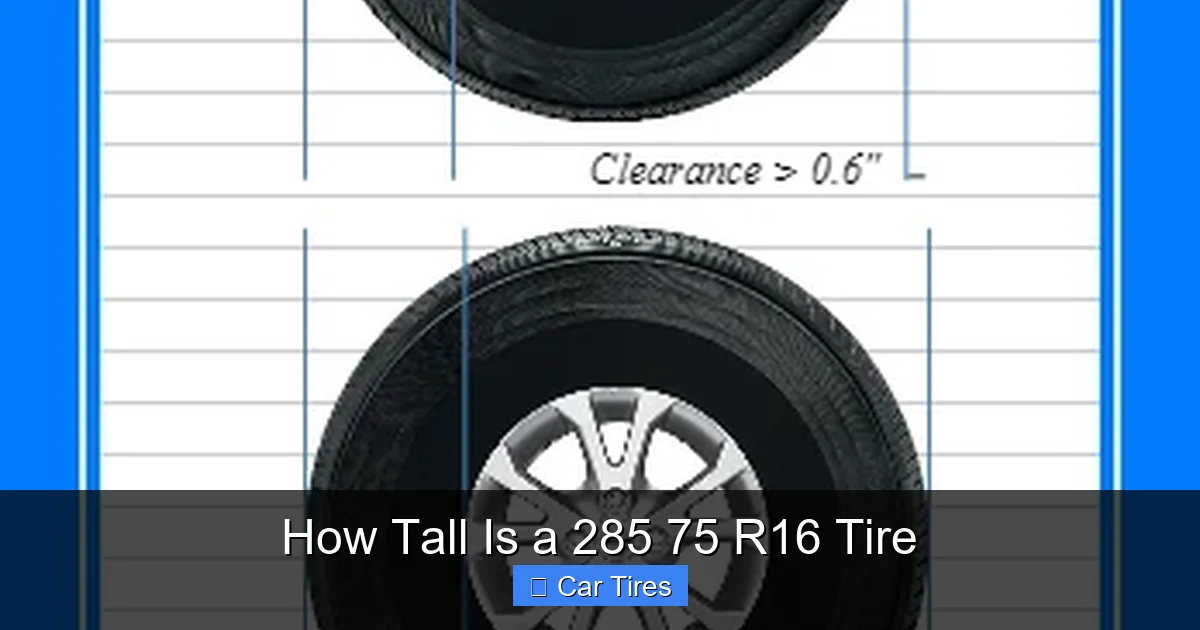
Wondering how tall a 285 75 R16 tire really is? This common light truck and SUV tire measures approximately 32.8 inches in diameter, making it a popular upgrade for off-roaders and daily drivers alike. We’ll break down the specs, real-world fitment, and why size matters for performance and safety.
If you’ve ever stared at your truck’s wheels and wondered, “Just how big is this tire?”—you’re not alone. Tire sizes like “285 75 R16” might look like a secret code, but once you crack it, you’ll understand exactly what you’re rolling on. Whether you’re upgrading for off-road adventures, improving towing capacity, or just curious about your vehicle’s specs, knowing how tall a 285 75 R16 tire is can make a big difference in performance, safety, and style.
This tire size is a favorite among Jeep Wrangler owners, Ford F-150 drivers, Toyota Tacoma enthusiasts, and anyone who values rugged capability. It strikes a sweet spot between size, strength, and everyday usability. But what does “285 75 R16” actually mean? And more importantly—how tall is it? Let’s dive into the numbers, the real-world measurements, and why this tire size has earned its reputation as a go-to choice for drivers who demand more from their ride.
By the end of this guide, you’ll know not only the exact height of a 285 75 R16 tire but also how it compares to other sizes, how it affects your vehicle’s performance, and whether it’s the right fit for your needs. Whether you’re planning a tire swap, prepping for an off-road trip, or just want to sound smart at the next car meet, this article has you covered.
In This Article
- 1 Key Takeaways
- 2 📑 Table of Contents
- 3 Breaking Down the 285 75 R16 Tire Code
- 4 How Tall Is a 285 75 R16 Tire? The Exact Measurement
- 5 Who Should Use 285 75 R16 Tires?
- 6 Installation, Fitment, and Potential Issues
- 7 Popular 285 75 R16 Tire Models
- 8 Maintenance Tips for 285 75 R16 Tires
- 9 Conclusion
- 10 Frequently Asked Questions
- 10.1 How tall is a 285 75 R16 tire in inches?
- 10.2 Can I put 285 75 R16 tires on my stock truck?
- 10.3 Are 285 75 R16 tires good for off-roading?
- 10.4 Will 285 75 R16 tires affect my fuel economy?
- 10.5 Do I need to recalibrate my speedometer with 285 75 R16 tires?
- 10.6 What’s the difference between P-metric and LT 285 75 R16 tires?
Key Takeaways
- Exact height: A 285 75 R16 tire is about 32.8 inches tall from ground to top.
- Width matters: The “285” refers to 285 millimeters (11.2 inches) of tread width.
- Sidewall ratio: The “75” means the sidewall is 75% as tall as the tread width.
- Rim compatibility: Designed for 16-inch diameter wheels, common on trucks and SUVs.
- Load and speed ratings: Most 285/75R16 tires support heavy loads and highway speeds.
- Fuel and ride impact: Larger tires can reduce fuel economy and alter speedometer accuracy.
- Off-road advantage: Extra ground clearance and traction make this size ideal for trails and rough terrain.
📑 Table of Contents
Breaking Down the 285 75 R16 Tire Code
Tire sizes might look confusing at first, but they follow a standard format set by the Tire and Rim Association. The code “285 75 R16” is actually a detailed blueprint of the tire’s dimensions. Let’s decode each part so you can understand exactly what you’re getting.
What Does “285” Mean?
The first number, “285,” refers to the tire’s **section width**—the distance from one sidewall to the other, measured in millimeters. So, a 285 tire is 285 mm wide. To put that in perspective, that’s about 11.2 inches. This is the widest part of the tire when mounted and inflated to the recommended pressure.
A wider tire generally means better grip and stability, especially during cornering or off-road driving. However, it also increases rolling resistance, which can slightly reduce fuel economy. For trucks and SUVs that need extra traction—like those used for towing, hauling, or trail driving—the 285 mm width offers a solid balance between performance and practicality.
Understanding the “75” Aspect Ratio
The second number, “75,” is the **aspect ratio**. This tells you how tall the tire’s sidewall is compared to its width. Specifically, it’s the height of the sidewall expressed as a percentage of the section width.
So, a 75 aspect ratio means the sidewall height is 75% of 285 mm. Let’s do the math:
285 mm × 0.75 = 213.75 mm
That’s the height of one sidewall. Since a tire has two sidewalls (top and bottom), you’ll need to double this when calculating total diameter. But more on that in a moment.
Aspect ratios affect ride comfort and handling. A higher number like 75 means a taller, more flexible sidewall—great for absorbing bumps and rough terrain. This is why you’ll often see 75-series tires on off-road vehicles and trucks. In contrast, performance cars usually have lower aspect ratios (like 40 or 50) for sharper handling, but at the cost of a harsher ride.
The “R” and “16” Explained
The letter “R” stands for **radial construction**, which is the standard for modern tires. Radial tires have layers of fabric and steel running radially across the tire, providing better durability, heat dissipation, and fuel efficiency compared to older bias-ply designs.
The final number, “16,” refers to the **rim diameter**—the size of the wheel the tire is designed to fit. In this case, it’s a 16-inch wheel. This is a common size for light trucks, SUVs, and some crossovers. It offers a good balance between strength, weight, and availability of tire options.
So, putting it all together: a 285 75 R16 tire is 285 mm wide, has a sidewall that’s 75% of that width, uses radial construction, and fits a 16-inch wheel. Now, let’s calculate its actual height.
How Tall Is a 285 75 R16 Tire? The Exact Measurement
Visual guide about How Tall Is a 285 75 R16 Tire
Image source: tireblogger.com
Now for the big question: just how tall is a 285 75 R16 tire? The answer isn’t just about the numbers—it’s about real-world measurement. Let’s walk through the calculation step by step so you can see exactly where the height comes from.
Calculating the Total Diameter
To find the overall diameter (or height) of the tire, you need to account for:
1. The height of the top sidewall
2. The height of the bottom sidewall
3. The diameter of the wheel itself
We already know:
– Section width = 285 mm
– Aspect ratio = 75% → sidewall height = 285 × 0.75 = 213.75 mm
– Rim diameter = 16 inches
But we need to convert everything to the same unit. Let’s use inches for the final answer, since tire heights are usually expressed that way.
First, convert the sidewall height to inches:
213.75 mm ÷ 25.4 (mm per inch) ≈ 8.415 inches
Since there are two sidewalls (top and bottom), multiply by 2:
8.415 × 2 = 16.83 inches
Now add the rim diameter:
16.83 + 16 = 32.83 inches
So, the **total diameter of a 285 75 R16 tire is approximately 32.8 inches**.
This means from the ground to the top of the tire, it stands just under 33 inches tall. That’s a substantial size—bigger than many stock tires on trucks and SUVs, which often come with 30- or 31-inch tires.
Real-World Examples and Comparisons
To put this in perspective, here’s how the 285/75R16 stacks up against other common tire sizes:
– **P265/70R16**: About 31.6 inches tall
– **LT245/75R16**: About 30.5 inches tall
– **33×12.50R15**: About 33 inches tall (note: this is a different sizing system)
– **285/70R17**: About 32.7 inches tall
As you can see, the 285/75R16 is nearly identical in height to a 33-inch tire, which is why many people refer to it as a “33-inch tire” in casual conversation. In fact, it’s often used as a direct replacement for 33×12.50R15 tires when upgrading to 16-inch wheels.
For example, if you have a Jeep Wrangler with 33×12.50R15 tires and want to switch to 16-inch wheels for better tire availability or braking performance, the 285/75R16 is a perfect match in height. You’ll get the same ground clearance and overall look, but with the benefits of a larger wheel.
Why Height Matters
Tire height affects several key aspects of your vehicle:
– **Ground clearance**: A taller tire lifts your vehicle slightly, helping you clear rocks, logs, and deep ruts on the trail.
– **Approach and departure angles**: More height can improve your ability to climb over obstacles without scraping the bumper or undercarriage.
– **Speedometer accuracy**: Larger tires cover more distance per revolution, which can make your speedometer read slower than you’re actually going. This may require a recalibration.
– **Fuel economy**: Bigger tires increase rolling resistance and rotational mass, which can reduce gas mileage by 1-3%.
– **Gear ratio impact**: If your vehicle has a numerically low gear ratio (like 3.08), a taller tire can make the engine work harder, reducing towing power and acceleration.
So while the 32.8-inch height of a 285/75R16 tire is great for off-roading, it’s important to consider how it fits with your vehicle’s setup and intended use.
Who Should Use 285 75 R16 Tires?
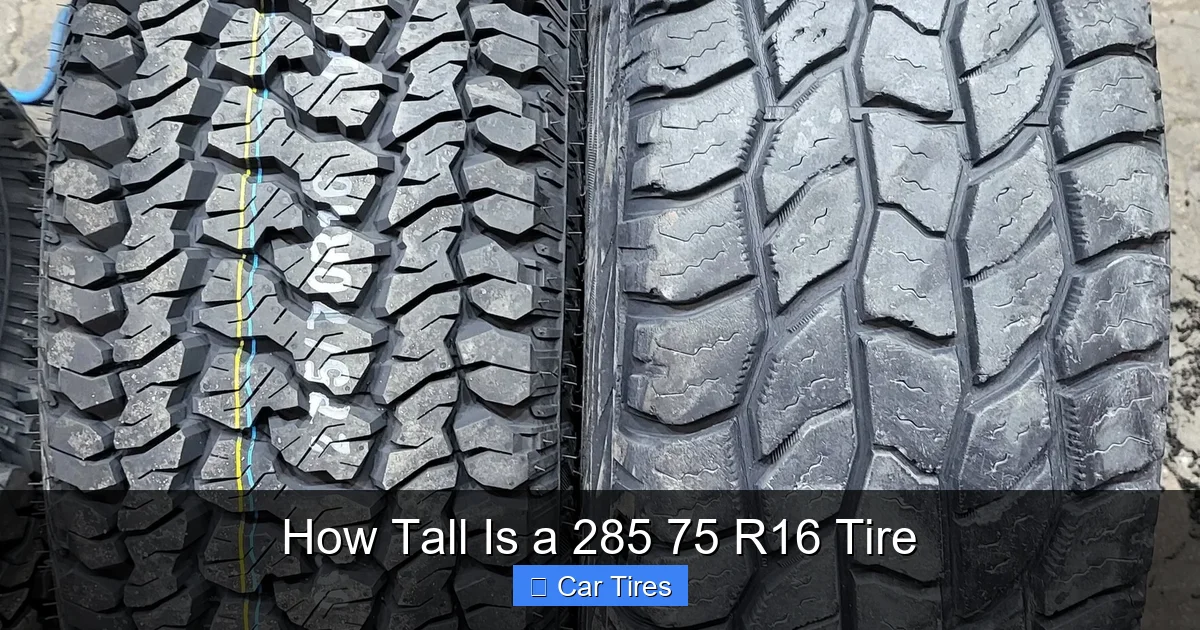
Visual guide about How Tall Is a 285 75 R16 Tire
Image source: forum.ih8mud.com
Not every driver needs a 285/75R16 tire, but for the right vehicle and use case, it’s an excellent choice. Let’s look at who benefits most from this size.
Off-Road Enthusiasts
If you love hitting the trails, rock crawling, or exploring backcountry roads, the 285/75R16 is a natural fit. The extra height gives you more clearance over obstacles, while the wide tread and tall sidewalls provide excellent traction on loose dirt, mud, and rocks.
Many all-terrain and mud-terrain tires come in this size, including popular models like the BFGoodrich All-Terrain T/A KO2, Goodyear Wrangler Duratrac, and Nitto Ridge Grappler. These tires are built to handle abuse while still offering decent on-road manners.
Truck and SUV Owners
Full-size trucks like the Ford F-150, Ram 1500, and Toyota Tundra often come with 16- or 17-inch wheels. Upgrading to 285/75R16 tires can give your truck a more aggressive stance and improved capability—especially if you tow trailers, haul heavy loads, or drive on rough roads.
SUVs like the Chevrolet Tahoe, GMC Yukon, and Toyota 4Runner also benefit from the added height and durability. It’s a great way to enhance both looks and performance without going overboard.
Daily Drivers Seeking a Balance
You don’t have to be a hardcore off-roader to appreciate a 285/75R16 tire. Many drivers choose this size for everyday use because it offers a smoother ride than smaller, stiffer tires. The taller sidewalls absorb bumps and potholes better, making your commute more comfortable.
Just keep in mind that larger tires can make steering feel slightly heavier and may reduce fuel efficiency. But for many, the trade-off is worth it for the improved ride quality and rugged appearance.
Winter and All-Season Performance
Some winter tires and all-season models are available in 285/75R16, making them a solid choice for drivers in snowy or variable climates. The wider footprint can improve grip on snow and ice, while the tall sidewalls help maintain flexibility in cold temperatures.
However, for deep snow or extreme winter conditions, you might want to consider a dedicated winter tire with a more aggressive tread pattern—even if it means stepping down to a slightly smaller size.
Installation, Fitment, and Potential Issues
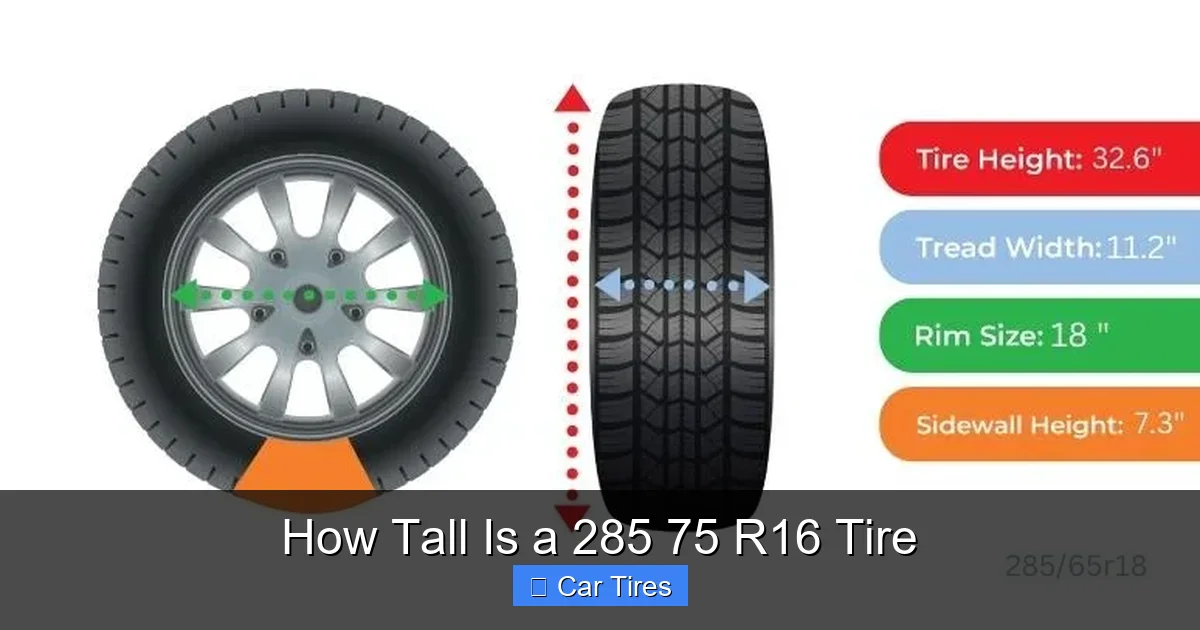
Visual guide about How Tall Is a 285 75 R16 Tire
Image source: tireblogger.com
Switching to 285/75R16 tires isn’t always a simple bolt-on upgrade. There are several factors to consider to ensure they fit properly and don’t cause problems.
Wheel Well Clearance
The first thing to check is whether your vehicle has enough space in the wheel wells. A 32.8-inch tire is significantly larger than many stock sizes, so it might rub against the fenders, suspension components, or bumper during full turns or when the suspension is compressed (like going over a bump).
To test fitment, you can:
– Use a fitment guide from tire retailers like Tire Rack or Discount Tire
– Measure the distance from the hub to the fender and compare it to the tire’s radius (about 16.4 inches)
– Install one tire temporarily and test drive it through full suspension travel
If you find rubbing, you may need to:
– Install a lift kit (2-3 inches is usually sufficient)
– Trim the fender liners or inner wheel well
– Use wheel spacers to push the tire outward slightly
Speedometer and Odometer Accuracy
As mentioned earlier, larger tires cover more ground per revolution. This means your speedometer will read slower than your actual speed. For example, if your speedometer says 60 mph, you might actually be going 62-63 mph.
This can lead to:
– Getting speeding tickets
– Incorrect odometer readings (affecting maintenance schedules and resale value)
– Issues with cruise control and GPS-based systems
To fix this, you’ll need to recalibrate your vehicle’s computer. Many modern trucks and SUVs allow you to adjust the tire size through the onboard menu or with a scan tool. For older vehicles, you may need a programmer like a Hypertech or Superchips tuner.
Load Capacity and Speed Rating
The 285/75R16 size is often available in both P-metric (passenger) and LT (light truck) versions. For trucks and heavy-duty use, always choose LT tires. They’re built with stronger sidewalls and higher load ratings.
Check the sidewall for the load index and speed rating. A typical LT285/75R16 tire might have a load range of E (10-ply) and a speed rating of R (up to 106 mph). This ensures it can handle heavy loads and highway speeds safely.
Fuel Economy and Handling
Larger, heavier tires increase rolling resistance and rotational mass. This means your engine has to work harder to accelerate and maintain speed, which can reduce fuel economy by 1-3 mpg.
Steering may also feel heavier, and the vehicle might not respond as quickly in tight maneuvers. However, many drivers find the improved ride quality and off-road capability outweigh these drawbacks.
Popular 285 75 R16 Tire Models
If you’re ready to upgrade, here are some of the best 285/75R16 tires on the market, based on performance, durability, and user reviews.
BFGoodrich All-Terrain T/A KO2
One of the most popular all-terrain tires, the KO2 offers excellent off-road traction, long tread life, and solid on-road manners. It’s a top choice for Jeep and truck owners who want versatility.
Goodyear Wrangler Duratrac
Known for its aggressive tread and snow performance, the Duratrac is great for winter driving and muddy trails. It has a 3PMSF (Three-Peak Mountain Snowflake) rating, meaning it’s certified for severe snow conditions.
Nitto Ridge Grappler
A hybrid between an all-terrain and mud-terrain, the Ridge Grappler offers excellent rock crawling ability while still being quiet on the highway. It’s a favorite among overlanders and weekend warriors.
Cooper Discoverer STT Pro
A true mud-terrain tire, the STT Pro is built for extreme off-roading. It has large lugs and a tough sidewall, but it’s louder and less comfortable on pavement than all-terrains.
Falken Wildpeak A/T3W
A newer contender, the Wildpeak offers great value with strong performance in rain, snow, and dirt. It’s a solid choice for drivers who want capability without breaking the bank.
Maintenance Tips for 285 75 R16 Tires
To get the most out of your tires, follow these maintenance tips:
– **Check pressure monthly**: Underinflated tires wear unevenly and reduce fuel economy. Use the recommended PSI from the door jamb, not the max pressure on the sidewall.
– **Rotate every 5,000–7,500 miles**: This ensures even wear and extends tread life.
– **Inspect for damage**: Look for cuts, bulges, or embedded objects, especially after off-road trips.
– **Balance and align**: Get a professional alignment after installation to prevent uneven wear.
– **Store properly**: If you switch to winter tires, store summer tires in a cool, dry place away from sunlight.
Conclusion
So, how tall is a 285 75 R16 tire? The answer is **about 32.8 inches**—a size that offers a great blend of height, width, and capability for trucks, SUVs, and off-road vehicles. Whether you’re upgrading for better ground clearance, improved traction, or just a more aggressive look, this tire size delivers.
Understanding the numbers behind the code helps you make informed decisions about fitment, performance, and safety. And with so many high-quality tire options available, you can find the perfect match for your driving style and terrain.
Just remember to check clearance, recalibrate your speedometer, and choose the right tire type for your needs. With proper care, your 285/75R16 tires will serve you well for thousands of miles—on the road, off the beaten path, and everywhere in between.
Frequently Asked Questions
How tall is a 285 75 R16 tire in inches?
A 285 75 R16 tire is approximately 32.8 inches tall from the ground to the top. This includes the 16-inch wheel and two sidewalls, each about 8.4 inches high.
Can I put 285 75 R16 tires on my stock truck?
It depends on your vehicle’s clearance. Many trucks can fit 285/75R16 tires without modification, but some may require a lift kit or fender trimming to prevent rubbing.
Are 285 75 R16 tires good for off-roading?
Yes, this size is excellent for off-roading due to its height, width, and availability in all-terrain and mud-terrain tread patterns. It provides great traction and ground clearance.
Will 285 75 R16 tires affect my fuel economy?
Yes, larger tires can reduce fuel economy by 1-3% due to increased rolling resistance and weight. The impact depends on your vehicle and driving habits.
Do I need to recalibrate my speedometer with 285 75 R16 tires?
Yes, because the tire is taller than many stock sizes, your speedometer will read slower than actual speed. Recalibration ensures accurate readings and prevents speeding tickets.
What’s the difference between P-metric and LT 285 75 R16 tires?
P-metric tires are for passenger vehicles and have lower load ratings. LT (light truck) tires are stronger, with higher load capacities and reinforced sidewalls—ideal for trucks and towing.