
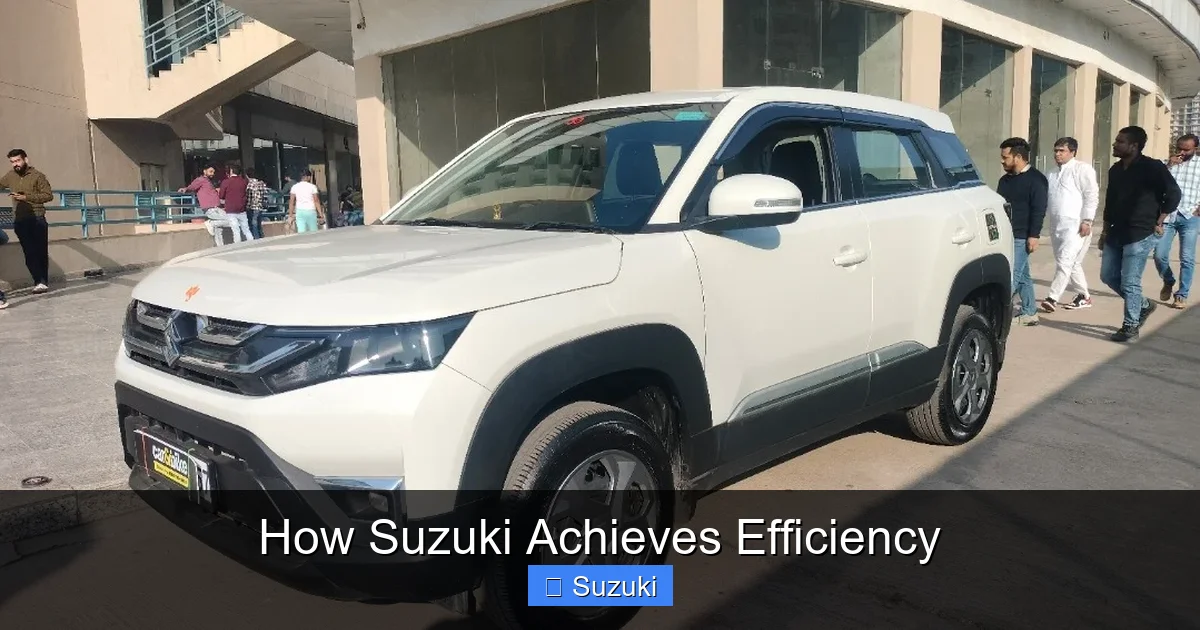
How Suzuki Achieves Efficiency

Contents
- 1 Key Takeaways
- 2 Key Takeaways
- 3 📑 Table of Contents
- 4 Introduction: The Suzuki Efficiency Mindset
- 5 Lightweight Design: Less Weight, More Miles
- 6 Advanced Engine Technology: Power with Purpose
- 7 Lean Manufacturing: Building Efficiently
- 8 Hybrid and Electric Integration: The Future of Efficiency
- 9 Aerodynamic Optimization: Cutting Through the Air
- 10 Sustainable Materials and Processes: Efficiency Beyond the Road
- 11 Driver-Centric Efficiency Features: Helping You Save
- 12 Conclusion: Efficiency as a Core Value
- 13 Frequently Asked Questions

Car Battery Charger

Car Roof Rack Cross Bars

Car MP3 Player

Brake Cleaner Spray
Suzuki achieves efficiency by combining lightweight design, advanced engine technology, and lean manufacturing. From fuel-sipping engines to sustainable production methods, Suzuki focuses on performance without waste.
Key Takeaways
- Lightweight Vehicle Design: Suzuki uses high-tensile steel and compact platforms to reduce weight, improving fuel economy and handling.
- Advanced Engine Technology: Innovations like Dualjet and mild-hybrid systems boost power while cutting fuel use and emissions.
- Lean Manufacturing Principles: Inspired by the Toyota Production System, Suzuki minimizes waste and maximizes productivity on the factory floor.
- Hybrid and Electric Integration: Suzuki offers affordable hybrid models like the Swift Hybrid, making efficient driving accessible.
- Aerodynamic Optimization: Every model is designed with airflow in mind to reduce drag and improve highway efficiency.
- Sustainable Materials and Processes: Recycled materials and energy-efficient plants support Suzuki’s long-term environmental goals.
- Driver-Centric Efficiency Features: Features like idle-stop systems and eco-driving indicators help drivers save fuel in real time.
Key Takeaways
- Understanding How Suzuki Achieves Efficiency: Provides essential knowledge
📑 Table of Contents
- Introduction: The Suzuki Efficiency Mindset
- Lightweight Design: Less Weight, More Miles
- Advanced Engine Technology: Power with Purpose
- Lean Manufacturing: Building Efficiently
- Hybrid and Electric Integration: The Future of Efficiency
- Aerodynamic Optimization: Cutting Through the Air
- Sustainable Materials and Processes: Efficiency Beyond the Road
- Driver-Centric Efficiency Features: Helping You Save
- Conclusion: Efficiency as a Core Value
Introduction: The Suzuki Efficiency Mindset
When you think of efficiency in the automotive world, names like Toyota and Honda often come to mind. But Suzuki has quietly built a reputation for delivering some of the most fuel-efficient, reliable, and affordable vehicles on the market. How does Suzuki achieve efficiency? It’s not just one thing—it’s a combination of smart engineering, forward-thinking design, and a deep commitment to sustainability. From city cars like the Swift to rugged crossovers like the Jimny, Suzuki vehicles are built to go farther on less fuel, last longer, and cost less to own.
What sets Suzuki apart is their focus on the everyday driver. They don’t chase horsepower records or luxury branding. Instead, they ask: How can we make driving easier, cheaper, and kinder to the planet? That question drives every decision, from the drawing board to the assembly line. Whether you’re commuting in a crowded city or exploring rural roads, Suzuki vehicles are engineered to perform efficiently under real-world conditions.
Lightweight Design: Less Weight, More Miles

Visual guide about How Suzuki Achieves Efficiency
Image source: suzuki.com.et
One of the most effective ways to improve fuel efficiency is to reduce vehicle weight. Heavier cars need more energy to move, which means more fuel burned. Suzuki has mastered the art of lightweight construction without sacrificing safety or durability. By using high-tensile steel and optimizing structural design, Suzuki keeps its vehicles light and strong.
High-Tensile Steel and Smart Engineering
Suzuki uses high-tensile steel in critical areas like the chassis and body frame. This material is stronger than regular steel but lighter, allowing the car to maintain rigidity while shedding pounds. For example, the Suzuki Swift uses a lightweight platform called HEARTECT. This platform reduces overall weight by up to 70 kg compared to older models, yet it’s 30% more rigid. That means better handling, improved crash safety, and better fuel economy.
Lightweight doesn’t mean flimsy. Suzuki engineers carefully balance weight reduction with safety. The body structure is designed to absorb and disperse impact energy in a collision, protecting passengers. At the same time, the lighter weight means the engine doesn’t have to work as hard, which translates to fewer trips to the gas station.
Compact Platforms for Maximum Efficiency
Suzuki specializes in small, compact vehicles—perfect for urban driving. Models like the Swift, Baleno, and Ignis are built on compact platforms that maximize interior space while minimizing exterior size. This not only makes parking easier but also reduces aerodynamic drag and rolling resistance.
For instance, the Suzuki Ignis uses a short wheelbase and tall roof design to offer SUV-like space in a hatchback body. Despite its boxy look, it’s surprisingly aerodynamic. The compact size means less material is used in production, which also reduces the vehicle’s carbon footprint.
Real-World Impact: Fuel Savings and Lower Emissions
The benefits of lightweight design are clear on the road. The Suzuki Swift, for example, delivers up to 5.2 L/100km (around 45 mpg) in combined driving. That’s impressive for a non-hybrid car. Over a year of driving, that could save hundreds of dollars in fuel costs compared to heavier vehicles.
Lower weight also means lower emissions. Less fuel burned equals fewer greenhouse gases released into the atmosphere. For eco-conscious drivers, Suzuki’s lightweight approach is a smart choice that supports both personal savings and environmental responsibility.
Advanced Engine Technology: Power with Purpose

Visual guide about How Suzuki Achieves Efficiency
Image source: beamstart.com
Engines are the heart of any vehicle, and Suzuki has invested heavily in developing efficient, responsive powertrains. Their engines are designed to deliver strong performance while using as little fuel as possible. From innovative fuel injection systems to hybrid assistance, Suzuki’s engine tech is a key reason why their cars are so efficient.
Dualjet Technology: Smarter Fuel Injection
One of Suzuki’s standout innovations is Dualjet technology. Found in engines like the 1.0L and 1.2L Boosterjet units, Dualjet uses two fuel injectors per cylinder instead of one. This allows for more precise fuel delivery, better atomization, and cleaner combustion.
Why does that matter? Better combustion means more energy is extracted from each drop of fuel. It also reduces unburned fuel and harmful emissions. The result? Improved fuel economy and smoother engine performance. For example, the Suzuki Swift with a 1.2L Dualjet engine achieves up to 4.8 L/100km (49 mpg) on the highway.
Dualjet also helps reduce engine knocking, which can damage the engine over time. This contributes to longer engine life and lower maintenance costs—another win for efficiency-minded drivers.
Mild-Hybrid Systems: Electric Assist Without the Plug
Suzuki was one of the first automakers to bring mild-hybrid technology to affordable compact cars. The Suzuki SHVS (Smart Hybrid Vehicle by Suzuki) system uses a small electric motor to assist the gasoline engine during acceleration. It also features regenerative braking, which captures energy normally lost during braking and stores it in a small battery.
This system doesn’t require plugging in—like a full hybrid or electric car—but it still delivers real fuel savings. In city driving, where stop-and-go traffic is common, the mild-hybrid system can improve fuel economy by up to 10%. The Swift Hybrid, for instance, achieves around 4.4 L/100km (53 mpg), making it one of the most efficient non-plug-in cars in its class.
The electric motor also helps reduce engine load, which means quieter operation and smoother starts. It’s a simple yet effective way to boost efficiency without increasing complexity or cost.
Boosterjet Turbocharged Engines: Small Size, Big Performance
For drivers who want a bit more power without sacrificing efficiency, Suzuki offers Boosterjet turbocharged engines. These small-displacement engines use turbocharging to deliver the performance of a larger engine while using less fuel.
The 1.4L Boosterjet engine in the Suzuki Vitara, for example, produces 140 horsepower—comparable to a 2.0L naturally aspirated engine—but with better fuel economy. Turbocharging forces more air into the combustion chamber, allowing more fuel to be burned efficiently. This means you get strong acceleration when you need it, but the engine can still sip fuel during cruising.
Turbocharged engines also help reduce emissions by improving combustion efficiency. Suzuki’s Boosterjet engines meet strict Euro 6 emission standards, making them both powerful and clean.
Lean Manufacturing: Building Efficiently

Visual guide about How Suzuki Achieves Efficiency
Image source: imgk.timesnownews.com
Efficiency isn’t just about the car—it’s also about how it’s made. Suzuki applies lean manufacturing principles to its production lines, inspired by the Toyota Production System. The goal is to eliminate waste, reduce costs, and improve quality at every stage.
Just-in-Time Production
One of the core ideas behind lean manufacturing is just-in-time (JIT) production. Instead of stockpiling parts, Suzuki receives components from suppliers exactly when they’re needed on the assembly line. This reduces warehouse space, minimizes inventory costs, and lowers the risk of parts becoming obsolete.
For example, a Suzuki plant in India might receive engine blocks from a local supplier every morning, just before they’re installed. This keeps the production line moving smoothly without delays or excess storage.
JIT also encourages close collaboration with suppliers. Suzuki works with partners to ensure high-quality parts arrive on time, reducing defects and rework. This leads to fewer recalls and higher customer satisfaction.
Continuous Improvement (Kaizen)
Suzuki embraces the Japanese philosophy of kaizen, or continuous improvement. Employees at all levels are encouraged to suggest small, incremental changes that make processes more efficient. These might include rearranging tools for easier access, improving workflow, or reducing motion waste.
For instance, a worker on the assembly line might notice that reaching for a specific bolt takes too long. They could suggest moving the bolt bin closer, saving seconds per vehicle. Over thousands of cars, those seconds add up to significant time and cost savings.
Kaizen also applies to quality control. By identifying and fixing small issues early, Suzuki reduces the chance of major defects. This means fewer warranty claims and happier customers.
Energy-Efficient Plants
Suzuki’s commitment to efficiency extends to its factories. Many of its plants use solar panels, LED lighting, and energy-efficient machinery to reduce electricity consumption. For example, the Suzuki Motor Gujarat plant in India uses rooftop solar panels to generate a portion of its power.
Water recycling systems are also common. Cooling water used in production is treated and reused, reducing waste and conserving resources. These efforts not only lower operating costs but also reduce Suzuki’s environmental impact.
Hybrid and Electric Integration: The Future of Efficiency
As the world shifts toward electrification, Suzuki is adapting with hybrid and electric models that remain affordable and practical. While they haven’t launched a full EV yet, their hybrid technology is already making a difference.
Affordable Hybrid Options
Suzuki’s SHVS mild-hybrid system is available on popular models like the Swift, Baleno, and Vitara. Unlike expensive plug-in hybrids, these systems are integrated into existing gasoline engines, keeping costs low. This makes hybrid technology accessible to a wider audience.
For drivers who want better fuel economy without the high price tag of a full hybrid, Suzuki’s mild-hybrid cars are an excellent choice. They offer real-world savings without requiring charging infrastructure.
Future EV Plans
Suzuki has announced plans to launch electric vehicles in key markets, including Europe and India. The company is developing compact EVs based on its existing platforms, ensuring they remain affordable and efficient.
For example, the Suzuki eVX concept is a small electric SUV designed for urban driving. It features a lightweight body, efficient electric motor, and a range of around 300 km (186 miles) on a single charge. While not yet in production, it shows Suzuki’s commitment to sustainable mobility.
By starting with hybrids and gradually introducing EVs, Suzuki is balancing innovation with practicality. They’re not rushing to electrify everything overnight—instead, they’re building a bridge to a greener future.
Aerodynamic Optimization: Cutting Through the Air
Aerodynamics plays a big role in fuel efficiency, especially at highway speeds. The more air resistance a car faces, the harder the engine has to work. Suzuki designs its vehicles with smooth lines, underbody covers, and active features to reduce drag.
Streamlined Body Design
Models like the Suzuki Swift and Baleno feature sleek, rounded shapes that help air flow smoothly over the body. Wind tunnel testing is used to fine-tune every curve and angle. Even small details—like side mirrors and door handles—are designed to minimize turbulence.
For example, the Swift has a drag coefficient of just 0.32 Cd, which is excellent for a compact car. That means less wind resistance and better fuel economy on the highway.
Active Aerodynamics
Some Suzuki models use active features to improve aerodynamics. The Vitara, for instance, has an active grille shutter that opens and closes automatically. At low speeds, it closes to reduce drag. At high speeds or when the engine needs cooling, it opens to allow airflow.
This smart system helps balance efficiency and performance without driver input. It’s a simple but effective way to optimize aerodynamics in real time.
Sustainable Materials and Processes: Efficiency Beyond the Road
Efficiency isn’t just about fuel economy—it’s also about sustainability. Suzuki uses recycled materials, reduces waste, and supports eco-friendly practices throughout its supply chain.
Recycled and Renewable Materials
Suzuki incorporates recycled plastics, bio-based materials, and natural fibers into its interiors. For example, the dashboard and door panels in some models use recycled PET bottles. Seat fabrics may include plant-based fibers that reduce reliance on petroleum.
These materials are not only better for the environment—they’re also lighter, which contributes to overall vehicle efficiency.
End-of-Life Recycling
Suzuki designs its vehicles with recycling in mind. At the end of a car’s life, up to 95% of its materials can be recovered and reused. This includes metals, plastics, and even batteries from hybrid systems.
By planning for recycling from the start, Suzuki reduces waste and conserves resources. It’s part of their broader commitment to a circular economy.
Driver-Centric Efficiency Features: Helping You Save
Finally, Suzuki helps drivers maximize efficiency through smart features and driver aids. These tools make it easier to drive economically, even for those who aren’t experts in fuel-saving techniques.
Idle-Stop Systems
Many Suzuki models come with an idle-stop system that automatically turns off the engine when the car is stationary—like at a red light. When the driver releases the brake, the engine restarts instantly. This reduces fuel consumption and emissions in city traffic.
The system is seamless and doesn’t affect comfort. Air conditioning and electronics continue to work using battery power.
Eco-Driving Indicators
The instrument cluster in Suzuki cars often includes an eco-driving indicator. It gives real-time feedback on driving habits—like accelerating too quickly or braking hard. By encouraging smoother driving, it helps improve fuel economy.
Over time, drivers learn to adopt more efficient habits, leading to long-term savings.
Conclusion: Efficiency as a Core Value
Suzuki achieves efficiency not through one magic trick, but through a holistic approach that touches every part of the vehicle and its production. From lightweight design and advanced engines to lean manufacturing and sustainable practices, Suzuki proves that efficiency can be affordable, practical, and accessible.
Whether you’re driving a compact Swift in the city or a rugged Jimny on a trail, you’re benefiting from decades of engineering focused on doing more with less. Suzuki’s commitment to efficiency isn’t just about saving fuel—it’s about creating vehicles that are smarter, cleaner, and better for everyone.
As the automotive world evolves, Suzuki continues to adapt, bringing hybrid technology and sustainable design to the masses. Their message is clear: efficiency doesn’t have to be expensive or complicated. With the right approach, it can be built into every car, every day.
Frequently Asked Questions
How does Suzuki achieve better fuel efficiency than other brands?
Suzuki combines lightweight design, advanced engine technology like Dualjet and mild-hybrid systems, and aerodynamic optimization to maximize fuel economy. Their focus on compact, efficient vehicles gives them an edge in real-world driving conditions.
Are Suzuki hybrid cars expensive to maintain?
No, Suzuki’s mild-hybrid SHVS system is designed for reliability and low maintenance. It uses a simple electric motor and small battery, reducing complexity and repair costs compared to full hybrids or EVs.
Does lightweight design compromise safety?
Not at all. Suzuki uses high-tensile steel and smart engineering to maintain strength while reducing weight. Their vehicles meet global safety standards and perform well in crash tests.
Can Suzuki’s efficiency features be turned off?
Some features like idle-stop can be temporarily disabled with a button, but they’re designed to enhance efficiency without inconvenience. Most drivers find them helpful and seamless.
Does Suzuki use sustainable materials in its cars?
Yes, Suzuki incorporates recycled plastics, bio-based fabrics, and renewable materials in interiors. They also design vehicles for high recyclability at end-of-life.
Will Suzuki release fully electric vehicles?
Suzuki has announced plans for electric models, including the eVX concept. They’re focusing on affordable, compact EVs that align with their efficiency philosophy.


