How Often to Change Transmission Fluid Toyota Highlander

Contents
- 1 Key Takeaways
- 2 📑 Table of Contents
- 3 How Often to Change Transmission Fluid Toyota Highlander: A Complete Guide
- 4 Understanding Your Toyota Highlander’s Transmission
- 5 Toyota’s Official Recommendations
- 6 Signs It’s Time for a Transmission Fluid Change
- 7 Choosing the Right Transmission Fluid
- 8 DIY vs. Professional Transmission Fluid Change
- 9 Long-Term Benefits of Regular Fluid Changes
- 10 Conclusion
- 11 Frequently Asked Questions

Digital Tire Pressure Gauge

Windshield Cleaning Tool

Car LED Headlight Bulb

LED Emergency Road Flares
Regular transmission fluid changes are essential for your Toyota Highlander’s performance and longevity. Most models require a change every 30,000 to 60,000 miles, but driving conditions and model year can affect this interval.
Key Takeaways
- Standard Interval: Toyota typically recommends changing transmission fluid every 30,000 to 60,000 miles for most Highlander models.
- Severe Driving Conditions: If you frequently tow, drive in stop-and-go traffic, or operate in extreme temperatures, consider changing the fluid every 15,000 to 30,000 miles.
- Check Your Owner’s Manual: Always refer to your specific model year’s maintenance schedule for the most accurate guidance.
- Use the Right Fluid: Use only Toyota Genuine ATF WS (World Standard) fluid or an equivalent that meets Toyota specifications.
- Look for Warning Signs: Slipping gears, delayed shifting, or burnt-smelling fluid indicate it’s time for a change—don’t wait for the scheduled interval.
- DIY vs. Professional Service: While some owners can perform a drain-and-fill, a full flush is best done by a certified technician with the right equipment.
- Long-Term Benefits: Regular fluid changes prevent wear, improve fuel efficiency, and extend the life of your transmission.
📑 Table of Contents
- How Often to Change Transmission Fluid Toyota Highlander: A Complete Guide
- Understanding Your Toyota Highlander’s Transmission
- Toyota’s Official Recommendations
- Signs It’s Time for a Transmission Fluid Change
- Choosing the Right Transmission Fluid
- DIY vs. Professional Transmission Fluid Change
- Long-Term Benefits of Regular Fluid Changes
- Conclusion
How Often to Change Transmission Fluid Toyota Highlander: A Complete Guide
Owning a Toyota Highlander means enjoying a reliable, comfortable, and versatile SUV—perfect for family road trips, daily commutes, or weekend adventures. But like any vehicle, your Highlander needs regular maintenance to keep running smoothly. One of the most overlooked yet critical aspects of that maintenance is transmission fluid. You might be wondering: How often should I change the transmission fluid in my Toyota Highlander? The answer isn’t one-size-fits-all, but with the right knowledge, you can keep your transmission in top shape for years to come.
Transmission fluid does more than just lubricate moving parts—it cools the transmission, cleans internal components, and helps ensure smooth gear shifts. Over time, this fluid breaks down, collects debris, and loses its effectiveness. If neglected, it can lead to overheating, slipping gears, and even complete transmission failure—repairs that can cost thousands of dollars. That’s why understanding the recommended interval for changing your Highlander’s transmission fluid is so important. In this guide, we’ll break down everything you need to know, from manufacturer recommendations to real-world driving factors, so you can make informed decisions about your vehicle’s care.
Understanding Your Toyota Highlander’s Transmission
Types of Transmissions in the Highlander
The Toyota Highlander has evolved over the years, and so have its transmission systems. Depending on the model year and engine type, your Highlander may have a traditional automatic transmission, a continuously variable transmission (CVT), or an electronically controlled automatic. Most Highlanders from 2001 to 2023 use a conventional automatic transmission, typically a 6-speed or 8-speed unit, while newer hybrid models may use a CVT or e-CVT (electronic CVT) designed for improved fuel efficiency.
Visual guide about How Often to Change Transmission Fluid Toyota Highlander
Image source: i.ytimg.com
Each type of transmission has different fluid requirements and maintenance needs. For example, CVTs often require specialized fluid and more frequent monitoring due to their unique design. However, the core principle remains the same: clean, high-quality fluid is essential for performance and longevity. Whether you drive a gas-powered V6 or a hybrid variant, knowing your transmission type helps you follow the correct maintenance schedule.
Why Transmission Fluid Matters
Think of transmission fluid as the lifeblood of your vehicle’s transmission system. It performs several key functions:
- Lubrication: Reduces friction between moving parts, preventing wear and tear.
- Cooling: Absorbs and dissipates heat generated during operation.
- Hydraulic Function: Transfers power to engage gears smoothly.
- Cleaning: Suspends contaminants and prevents sludge buildup.
When the fluid degrades—due to heat, contamination, or age—it can’t perform these tasks effectively. This leads to increased friction, overheating, and poor shifting performance. In severe cases, it can cause irreversible damage to clutches, bands, and seals. Regular fluid changes help maintain optimal viscosity, thermal stability, and additive effectiveness, ensuring your transmission operates efficiently.
Toyota’s Official Recommendations
Standard Maintenance Schedule
Toyota provides a detailed maintenance schedule in the owner’s manual for each Highlander model year. For most non-hybrid Highlanders, the manufacturer recommends inspecting the transmission fluid every 30,000 miles and replacing it every 60,000 miles under normal driving conditions. However, this can vary slightly depending on the year and transmission type.

Visual guide about How Often to Change Transmission Fluid Toyota Highlander
Image source: carfluidguide.com
For example, the 2020 Toyota Highlander with an 8-speed automatic transmission suggests a fluid change at 60,000 miles, while some earlier models (like the 2008–2013 Highlander with a 5-speed automatic) may recommend a change as early as 30,000 miles. Always check your specific model’s manual—usually found in the glove compartment or available online through Toyota’s official website—to confirm the exact interval.
Severe Driving Conditions: When to Change Sooner
Toyota defines “severe” driving conditions as situations that put extra stress on your vehicle. If you fall into any of these categories, you should consider changing your transmission fluid more frequently—typically every 15,000 to 30,000 miles:
- Frequent towing or hauling heavy loads
- Stop-and-go city driving or short trips (under 10 miles)
- Driving in extreme temperatures (below 32°F or above 90°F)
- Dusty or muddy environments
- Using your Highlander for ride-sharing or delivery services
For instance, if you use your Highlander to tow a camper or boat regularly, the added strain generates more heat in the transmission. This accelerates fluid breakdown. Similarly, if you live in a hot climate like Arizona or a cold one like Minnesota, temperature extremes can degrade fluid faster. In these cases, following the “severe” schedule isn’t just recommended—it’s essential.
Signs It’s Time for a Transmission Fluid Change
Visual and Sensory Indicators
Even if you’re following the recommended schedule, it’s smart to watch for warning signs that your transmission fluid needs attention. Here’s what to look for:
Visual guide about How Often to Change Transmission Fluid Toyota Highlander
Image source: i.ytimg.com
- Dark or Burnt Smell: Fresh transmission fluid is typically red or pink and has a slightly sweet odor. If it’s dark brown or black and smells burnt, it’s overdue for a change.
- Discolored Fluid: Cloudy, milky, or gritty fluid indicates contamination or moisture intrusion.
- Slipping Gears: If your Highlander hesitates, jerks, or unexpectedly shifts out of gear, low or degraded fluid could be the culprit.
- Delayed Engagement: A noticeable lag when shifting from Park to Drive or Reverse suggests fluid pressure issues.
- Transmission Overheating: Some Highlander models have a transmission temperature warning light. If it illuminates, pull over and check the fluid level and condition.
For example, imagine you’re backing out of your driveway and there’s a 2–3 second delay before the car moves. That’s a red flag. Or maybe you notice a whining noise when accelerating—another sign of low or dirty fluid. Ignoring these symptoms can lead to costly repairs down the road.
Checking Fluid Level and Condition
Many Highlander models (especially those from 2001–2013) have a dipstick for checking transmission fluid, similar to engine oil. Here’s how to do it safely:
- Park on a level surface and let the engine idle for 5–10 minutes to warm up the fluid.
- With the engine running and the transmission in Park, pull out the dipstick, wipe it clean, reinsert it fully, then pull it out again.
- Check the fluid level—it should be between the “Full” and “Add” marks.
- Observe the color and smell. Healthy fluid is translucent red; dark or smelly fluid needs replacement.
Note: Some newer Highlanders (2014 and later) have a sealed transmission with no dipstick. In these cases, checking the fluid requires a scan tool and is best left to a professional technician. If you’re unsure, consult your owner’s manual or visit a Toyota service center.
Choosing the Right Transmission Fluid
Toyota Genuine ATF WS: The Gold Standard
Toyota specifies the use of Toyota Genuine ATF WS (World Standard) fluid for most Highlander models. This fluid is formulated to meet exacting standards for viscosity, friction characteristics, and thermal stability. Using the wrong type—such as generic Dexron or Mercon—can cause shifting problems, reduced efficiency, or even transmission damage.
For example, ATF WS has a unique friction profile that ensures smooth engagement of clutch plates in Toyota’s automatic transmissions. Substituting it with a universal fluid may seem like a cost-saving move, but it can void your warranty and lead to premature wear. Always check the fluid specification label under the hood or in the owner’s manual to confirm compatibility.
Aftermarket Alternatives: What to Look For
If you can’t find Toyota Genuine ATF WS, you may consider a high-quality aftermarket alternative—but proceed with caution. Look for fluids that explicitly state they meet or exceed Toyota WS specifications (e.g., “Meets Toyota WS ATF” or “WS-Compliant”). Brands like Valvoline, Mobil 1, and Idemitsu offer WS-compatible options, but always verify compatibility with your model year.
Avoid cheap, unbranded fluids or those labeled “universal.” These often lack the precise additives needed for Toyota transmissions and can cause long-term issues. When in doubt, stick with the OEM recommendation.
DIY vs. Professional Transmission Fluid Change
Can You Change It Yourself?
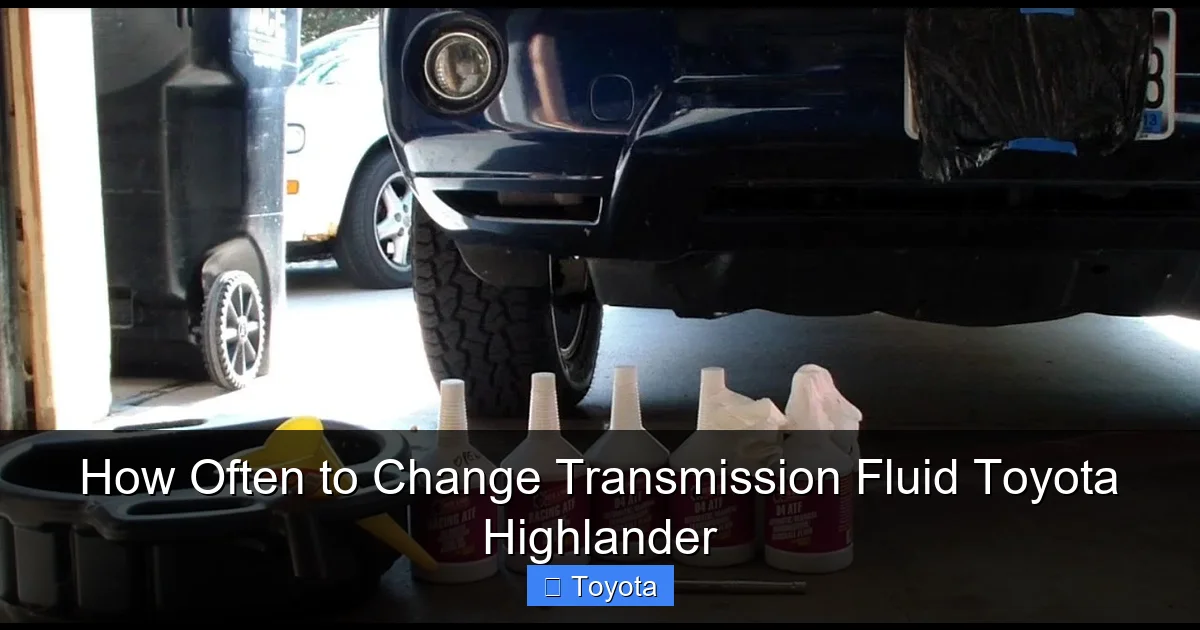
Yes—but with caveats. If your Highlander has a dipstick and a drain plug, you can perform a basic drain-and-fill. This involves:
- Raising the vehicle safely with jack stands.
- Removing the transmission pan drain plug and catching the old fluid.
- Replacing the drain plug and refilling with new ATF WS through the dipstick tube.
- Checking the level and test-driving the vehicle.
However, a drain-and-fill only replaces about 30–50% of the total fluid. The rest remains in the torque converter, cooler lines, and valve body. For a more thorough change, a full flush using a machine is recommended—especially if the fluid is severely degraded.
Why a Professional Flush Is Better
A professional transmission flush uses pressurized equipment to circulate new fluid through the entire system, removing old fluid, sludge, and contaminants more effectively. This is particularly important if your Highlander has high mileage (over 100,000 miles) or shows signs of fluid degradation.
Certified Toyota technicians also have access to diagnostic tools that can check for transmission codes, monitor fluid temperature, and ensure proper fill levels. Plus, they can inspect for leaks, worn seals, or other issues during the service. While a DIY change saves money upfront, a professional flush offers peace of mind and better long-term results.
Long-Term Benefits of Regular Fluid Changes
Extending Transmission Life
The average cost of a transmission rebuild or replacement can range from $2,500 to $5,000—or more. Regular fluid changes are a fraction of that cost and can add tens of thousands of miles to your transmission’s lifespan. Clean fluid reduces wear on internal components, prevents overheating, and maintains optimal hydraulic pressure.
For example, a well-maintained Highlander with regular fluid changes can easily surpass 200,000 miles without major transmission issues. In contrast, one with neglected fluid may require repairs as early as 100,000 miles.
Improving Performance and Fuel Efficiency
Fresh transmission fluid ensures smoother, quicker shifts, enhancing driving comfort and responsiveness. It also reduces parasitic drag on the engine, which can improve fuel economy by 1–3%. Over time, this adds up to significant savings at the pump.
Additionally, a healthy transmission reduces the risk of unexpected breakdowns, giving you confidence on long trips or in remote areas. It’s a small investment that pays big dividends in reliability and performance.
Conclusion
So, how often should you change the transmission fluid in your Toyota Highlander? The short answer: every 30,000 to 60,000 miles under normal conditions, and every 15,000 to 30,000 miles if you drive in severe conditions. But the real answer lies in understanding your vehicle, monitoring fluid condition, and following Toyota’s guidelines.
By staying proactive with maintenance, using the correct fluid, and addressing warning signs early, you’ll keep your Highlander running smoothly for years to come. Whether you choose to do it yourself or visit a trusted technician, regular transmission fluid changes are one of the best ways to protect your investment and enjoy a trouble-free driving experience.
Frequently Asked Questions
How often should I change transmission fluid in a Toyota Highlander hybrid?
Toyota recommends changing the transmission fluid in Highlander hybrids every 60,000 miles under normal conditions. However, if you frequently drive in severe conditions—like extreme heat or stop-and-go traffic—consider changing it every 30,000 miles.
Can I use any transmission fluid in my Highlander?
No. Always use Toyota Genuine ATF WS or a certified equivalent. Using the wrong fluid can cause shifting problems, reduced efficiency, or transmission damage.
What happens if I never change the transmission fluid?
Neglecting fluid changes leads to sludge buildup, overheating, and increased wear. Over time, this can cause slipping gears, delayed shifts, and eventual transmission failure—requiring expensive repairs.
Is a transmission flush necessary?
A flush is recommended for high-mileage vehicles or when the fluid is severely degraded. It removes more old fluid and contaminants than a simple drain-and-fill, offering better long-term protection.
How much does a transmission fluid change cost for a Highlander?
A basic drain-and-fill typically costs $100–$200 at a dealership or independent shop. A full flush may cost $200–$300, depending on location and labor rates.
Can I check the transmission fluid myself?
Yes, if your Highlander has a dipstick (common in 2001–2013 models). For newer models with sealed transmissions, a professional scan tool is required to check the fluid level and condition.