How Often Should I Change the Engine Air Filter on a Toyota Corolla?

Contents
- 1 Key Takeaways
- 2 📑 Table of Contents
- 3 Your Toyota Corolla’s Lungs: Why the Engine Air Filter Matters
- 4 Decoding the Manufacturer’s Recommendation
- 5 How Your Driving Environment Dictates Change Frequency
- 6 Recognizing the Symptoms of a Clogged Air Filter
- 7 How to Check Your Engine Air Filter: A Simple DIY Test
- 8 Step-by-Step: Replacing Your Corolla’s Engine Air Filter Yourself
- 9 Beyond the Engine Air Filter: A Holistic Maintenance Mindset
- 10 Conclusion: Breathe Easy with Proactive Care
- 11 Frequently Asked Questions


Changing your Toyota Corolla’s engine air filter is a simple yet critical maintenance task that directly impacts performance, fuel economy, and engine longevity. Toyota typically recommends replacing it every 15,000 to 30,000 miles, but severe driving conditions can shorten this lifespan. Regular visual inspections are the best practice, as a visibly dirty or clogged filter should be replaced immediately, regardless of mileage.
Key Takeaways
- Standard Interval: Toyota recommends changing the engine air filter every 15,000 to 30,000 miles under normal driving conditions, but always verify in your specific owner’s manual.
- Severe Conditions Shorten Life: Frequent dusty roads, heavy stop-and-go traffic, towing, or extreme temperatures can require changes as often as every 12,000 miles.
- Symptoms of a Failing Filter: Watch for reduced fuel economy, sluggish acceleration, unusual engine sounds, a misfiring engine, or an illuminated check engine light.
- DIY is Straightforward: Replacing the filter on a Corolla is a beginner-friendly task typically requiring no tools and under 15 minutes, making it a perfect first DIY project.
- Never Skip Inspections: A quick visual check during every oil change is the most reliable method; if you can’t see light through the filter material, it’s time for a new one.
- It’s Not the Cabin Filter: The engine air filter protects your motor, while the cabin air filter cleans the air you breathe inside the car; they are different parts with different service intervals.
- Use Quality Filters: Opt for OEM (Toyota) or high-quality aftermarket filters from reputable brands to ensure proper fit and filtration efficiency.
📑 Table of Contents
- Your Toyota Corolla’s Lungs: Why the Engine Air Filter Matters
- Decoding the Manufacturer’s Recommendation
- How Your Driving Environment Dictates Change Frequency
- Recognizing the Symptoms of a Clogged Air Filter
- How to Check Your Engine Air Filter: A Simple DIY Test
- Step-by-Step: Replacing Your Corolla’s Engine Air Filter Yourself
- Beyond the Engine Air Filter: A Holistic Maintenance Mindset
- Conclusion: Breathe Easy with Proactive Care
Your Toyota Corolla’s Lungs: Why the Engine Air Filter Matters
Think of your Toyota Corolla’s engine as a powerful heart that needs a constant, clean supply of air to breathe. The engine air filter is its primary respiratory defense. This simple pleated paper or fabric component sits between the outside world and your engine’s intake system, trapping dust, pollen, dirt, sand, and other airborne contaminants before they can enter the combustion chambers. Without it, these abrasive particles would cause catastrophic internal damage, scoring cylinder walls, and grinding piston rings. For a car known for its reliability like the Corolla, maintaining a clean air filter is one of the easiest and most cost-effective ways to protect that reputation and ensure your daily driver continues to deliver its famed smooth, efficient ride for years to come. A restricted filter doesn’t just hurt the engine; it forces your car’s computer to work harder, often leading to poorer fuel economy and a loss of the peppy acceleration Corolla owners expect.
Understanding this component’s role transforms it from an obscure maintenance item into a cornerstone of your vehicle’s health. It’s the first line of defense in an intricate system where clean airflow equals optimal combustion, which equals power, efficiency, and low emissions. Neglecting it is like asking a marathon runner to breathe through a steadily clogging straw—performance suffers, strain increases, and eventually, the system fails. This guide will walk you through everything you need to know about this vital part for your specific Toyota Corolla, from official recommendations to hands-on replacement.
Decoding the Manufacturer’s Recommendation
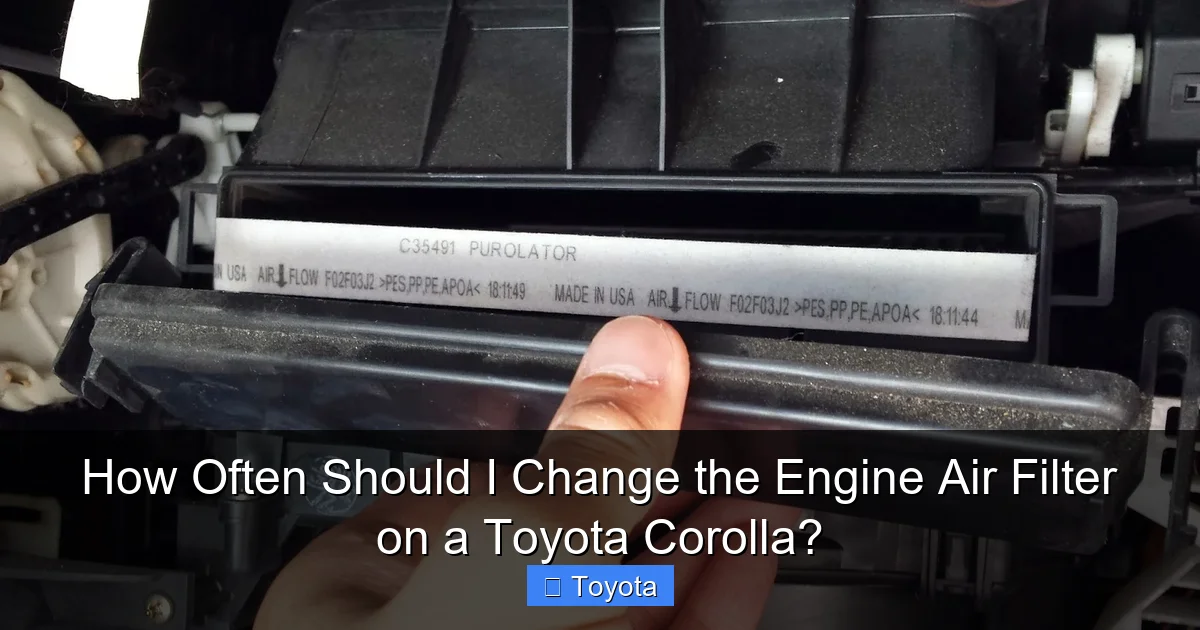
Toyota, in its infinite engineering wisdom, provides baseline guidelines for air filter replacement in your Corolla’s owner’s manual. These are not arbitrary numbers but are derived from extensive testing under “normal” driving conditions. For most modern Toyota Corolla models (spanning the last few generations, from the E120 through the current E210 platform), the standard manufacturer interval is every 30,000 miles or 36 months. However, it’s crucial to note that for earlier models or specific trims, this can be as low as 15,000 miles. The single most important rule is: your owner’s manual is the ultimate authority. You should always cross-reference any general advice with the specific table for your model year and engine type (e.g., the 2.0L Dynamic Force engine in 2020+ models versus the older 1.8L).
Visual guide about How Often Should I Change the Engine Air Filter on a Toyota Corolla?
Image source: 1.bp.blogspot.com
The “Normal” vs. “Severe” Service Schedule
Automakers, including Toyota, define “normal” driving as mostly highway miles in relatively clean, temperate environments. The “severe” service schedule, which shortens many maintenance intervals, applies to the vast majority of real-world driving. Your Corolla’s air filter falls squarely into this category. Severe conditions include:
- Driving in areas with high dust or sand (construction zones, rural dirt roads, desert climates).
- Consistent stop-and-go traffic in major cities, which increases engine load and particulate ingestion.
- Towing a trailer or carrying heavy cargo frequently.
- Extremely cold or hot climates, which can affect filter media and air density.
- Frequent short trips where the engine doesn’t fully warm up, allowing moisture to accumulate in the filter.
If your driving aligns with any of these, you should plan on changing your engine air filter at the lower end of the range, closer to 15,000 to 20,000 miles. It’s a conservative approach that prevents problems before they start.
How Your Driving Environment Dictates Change Frequency
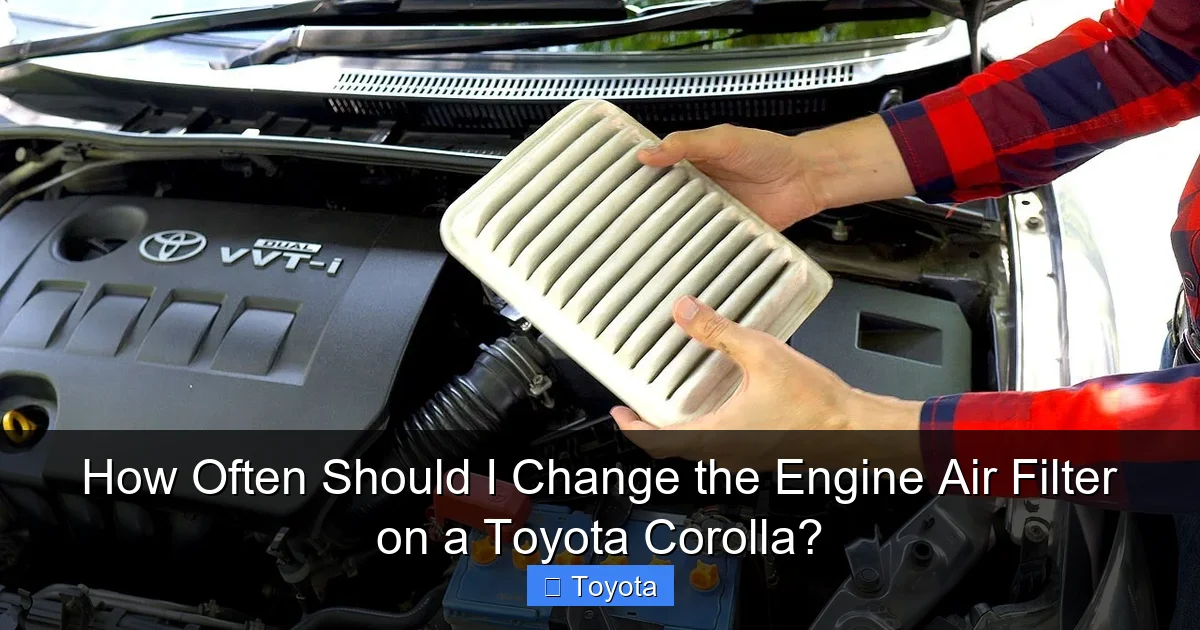
Mileage is a helpful guideline, but it’s a proxy for the real culprit: environmental exposure. The air filter’s job is to catch solids, so the dirtier the air you drive through, the faster the filter loads up. Consider two identical Toyota Corollas: one driven exclusively on clean, paved highways in a coastal region, and another used as a daily commuter in a dusty agricultural valley or a congested urban center with constant idling. The latter’s filter will clog exponentially faster. Pollen season in spring can also dramatically increase the load on your filter, as can driving on gravel roads or behind a large diesel truck that kicks up a plume of soot. Even living in an area with heavy winter road sanding or salting can introduce fine particulates that find their way into the intake. The takeaway? Don’t just look at the odometer. Integrate a quick visual air filter check into your routine every other oil change. This habit, combined with awareness of your driving environment, is far more accurate than a rigid mileage schedule.
Visual guide about How Often Should I Change the Engine Air Filter on a Toyota Corolla?
Image source: i.ytimg.com
Recognizing the Symptoms of a Clogged Air Filter
Your Toyota Corolla will give you subtle (and sometimes not-so-subtle) clues when the air filter is restricting airflow. Being attuned to these signs can save you from a surprise repair bill. The most common indicators include:
Visual guide about How Often Should I Change the Engine Air Filter on a Toyota Corolla?
Image source: i.ytimg.com
Noticeable Drop in Fuel Economy
This is often the first and most economical sign. The engine’s computer (ECU) monitors airflow via the Mass Air Flow (MAF) sensor. When the filter is clogged, less air enters, creating a “lean” condition (too much fuel, not enough air). The ECU tries to compensate by injecting more fuel to maintain the correct air/fuel ratio, wasting gasoline. You might see a 10-15% drop in MPG. If your Corolla suddenly feels thirstier without a change in driving habits, a dirty filter is a prime suspect.
Reduced Power and Hesitant Acceleration
That familiar, zippy feel of your Corolla merging onto the highway might vanish. The engine feels like it’s “labored” or “straining.” You press the accelerator, and the response is delayed or weak. This is because the choked engine cannot ingest enough air to burn fuel efficiently, directly reducing horsepower and torque. It’s particularly noticeable when trying to pass another vehicle or climbing a hill.
Rough Idle or Engine Misfires
An imbalanced air/fuel mixture can cause the engine to idle roughly, with a shaking sensation or fluctuating RPMs. In severe cases, it can cause individual cylinders to misfire, which you might feel as a slight jerk or stumble during acceleration. You may also smell unburned fuel from the exhaust. These symptoms often trigger the dreaded check engine light, which brings us to the next point.
The Illuminated Check Engine Light
A severely restricted filter can set diagnostic trouble codes (DTCs) related to the MAF sensor or fuel trim system (like P0101, P0171). If your check engine light comes on, it’s a serious signal to have the codes read. While the light itself doesn’t mean “change your filter,” it’s a critical clue in the diagnostic process. A clogged filter is a common, inexpensive fix that could resolve the issue.
Visible Dirt or Damage on the Filter
The most straightforward sign is simply looking at the filter. If the pleated paper is caked with dark grime, covered in a thick layer of dust, or you can’t see any light passing through it when holding it up to the sun, it’s long past its prime. Also, inspect for any tears, oil contamination (which can indicate a PCV system issue), or water damage.
How to Check Your Engine Air Filter: A Simple DIY Test
You don’t need to be a mechanic to perform this vital check. It’s one of the easiest pieces of maintenance on your Corolla. First, you’ll need to access the engine bay. If you’re unfamiliar with the process, a step-by-step guide to opening the hood will walk you through the release latch and safety prop. Once the hood is open and secured:
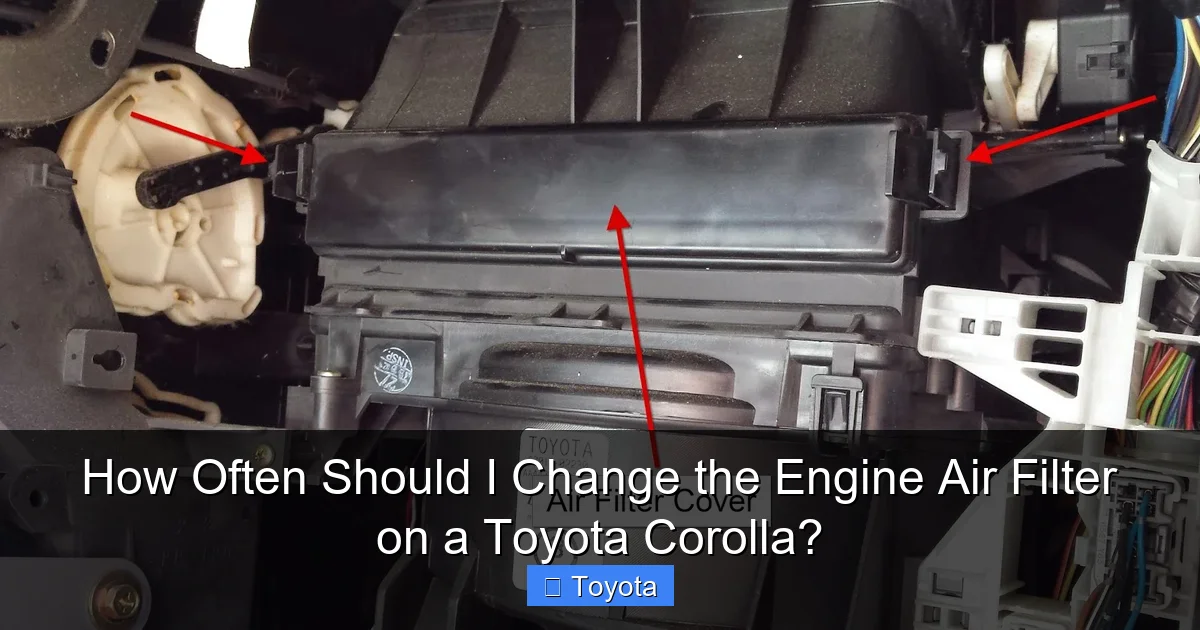
- Locate the Air Filter Housing: On a Corolla, it’s typically a large, black, rectangular plastic box on the driver’s side (left side) of the engine bay. It’s connected to a large ribbed intake hose that runs from the throttle body.
- Open the Housing: Most modern Corolla air filter boxes use simple metal or plastic clips, a wing nut, or a couple of screws. There are no tools required for the clip-style; just press the release tabs. For a wing nut, hand-tighten it counter-clockwise. If it’s screwed, a screwdriver or socket may be needed.
- Remove the Old Filter: Lift the old filter out. Note its orientation so you can place the new one correctly.
- The “Light Test”: Hold the filter up to a bright light source (sunlight or a shop light). If you see a significant amount of light passing through the pleats, it’s still functional. If it’s dark and opaque, it’s time for a replacement. You can also gently tap it over a trash can; if a large cloud of dust falls out, it’s loaded.
- Inspect the Housing: While it’s open, check inside the housing for any accumulated debris, leaves, or water. Wipe it clean with a rag. This prevents old dirt from getting on the new filter.
This entire inspection process takes less than five minutes. Doing this every 5,000 to 10,000 miles will give you a real-world status of your filter, far more reliable than a set mileage interval.
Step-by-Step: Replacing Your Corolla’s Engine Air Filter Yourself
If your inspection reveals a dirty filter, replacement is a refreshingly simple and inexpensive DIY project. Here’s a detailed guide for most Toyota Corolla models (2014-2023). Always consult your owner’s manual for any model-specific nuances.
What You’ll Need
- A new engine air filter. Ensure it’s the correct part number for your specific model year and engine. Your local auto parts store can look this up, or you can use the old filter as a reference. OEM Toyota part numbers are ideal, but brands like Denso, K&N, or Fram are excellent aftermarket choices.
- A clean rag.
- Optional: A socket or screwdriver if your housing uses screws.
The Replacement Process
1. Cool Down: Ensure the engine is cool. A hot engine can cause burns and may warp plastic components.
2. Open the Hood and secure it as described earlier.
3. Access the Filter Housing: Locate the black air box. Release the clips, loosen the wing nut, or remove the screws holding the top half of the housing in place.
4. Remove the Old Filter: Lift the old filter straight up. Be careful not to shake excess dirt into the housing. If you have a performance cotton/oil filter (like K&N), note that it requires cleaning and re-oiling, not replacement.
5. Clean the Housing: Use your rag to wipe out any dust, debris, or leaves from the bottom of the air box. Check the rubber gasket that seals the housing; ensure it’s pliable and not cracked.
6. Install the New Filter: Place the new filter in the housing. It should fit snugly. Pay attention to the orientation; most have a rubber seal edge that must face up and a specific shape that matches the box. The filter should sit flat and level. Never force it.
7. Secure the Housing: Reattach the top of the air box, ensuring all clips are fully engaged, the wing nut is hand-tight (don’t over-tighten), or screws are snug. A poor seal will allow unfiltered air to bypass the filter.
8. Final Check: Start the engine. It may idle a bit rough for a second as the computer adjusts to the new airflow. Listen for any unusual sucking or whistling sounds, which could indicate an air leak from a mis-sealed housing. Double-check that the housing is securely closed.
That’s it! You’ve successfully protected your engine. Dispose of the old filter responsibly. Many auto parts stores accept them for recycling.
Beyond the Engine Air Filter: A Holistic Maintenance Mindset
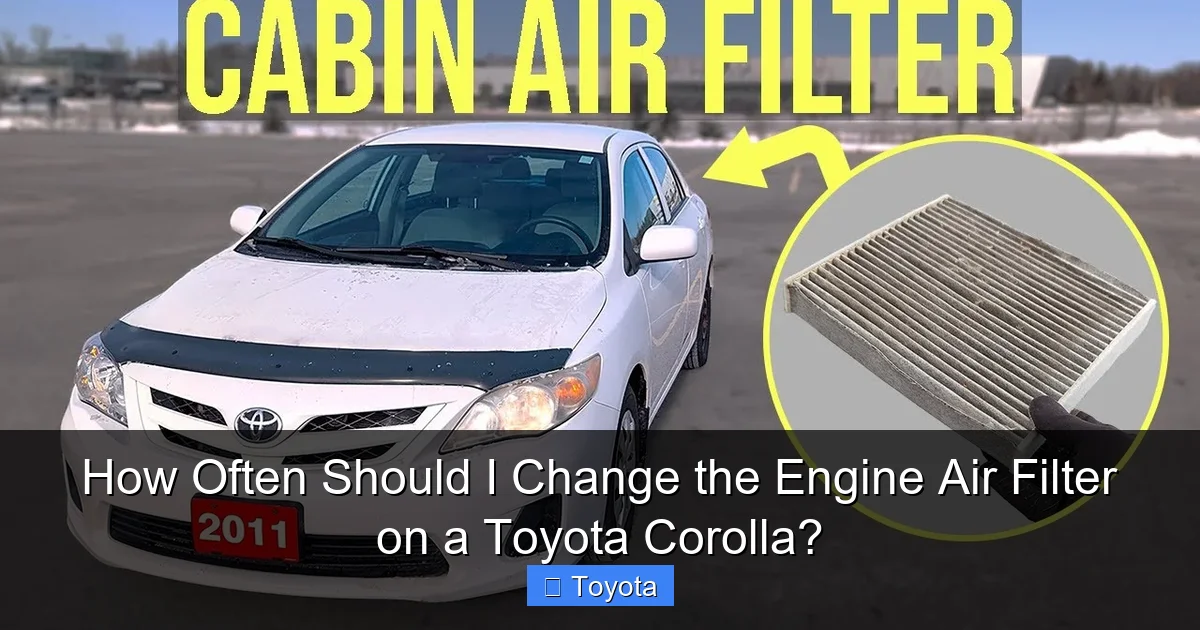
Focusing solely on the engine air filter is like caring only for one organ in your body. True automotive health comes from a systemic approach. Your Toyota Corolla has multiple filters working in concert. The cabin air filter, often confused with the engine filter, is a separate component that cleans the air entering your HVAC system, protecting you from pollen and pollutants. Its service interval is typically similar (15k-30k miles) but can be more frequent in dusty areas. If you’re already checking the engine filter, it’s an ideal time to consider the cabin filter. For a detailed guide on that specific job, even if on a different Toyota model like the RAV4, the principles of access and replacement are nearly identical, giving you a clear comparative understanding.
Furthermore, a clogged air filter puts extra strain on other systems. It can lead to increased combustion byproducts, which can affect coolant quality over the very long term. It also forces the engine to work harder, potentially accelerating wear on components addressed during other services. Always pair your air filter change with other routine maintenance, like oil changes, tire rotations, and spark plug inspections (on older models). This integrated schedule, found in your owner’s manual, is the roadmap to your Corolla’s longevity. Think of the clean air filter as enabling all your other maintenance efforts to be fully effective.
Conclusion: Breathe Easy with Proactive Care
The frequency of your Toyota Corolla’s engine air filter change is not a set-it-and-forget-it number. It’s a dynamic decision based on a blend of manufacturer guidance, your personal driving environment, and, most reliably, regular visual inspection. By adopting the simple habit of checking this filter every few oil changes, you empower yourself with real knowledge about your car’s health. The cost of a new filter is minimal—often less than $20 for a quality unit—but the protection it offers your engine is priceless. It safeguards internal components, preserves fuel efficiency, maintains performance, and helps prevent costly repairs. Armed with the straightforward DIY steps outlined here, you can complete this task in your driveway in under 15 minutes, saving labor costs and gaining invaluable familiarity with your vehicle. Make this small act of preventive care a cornerstone of your Toyota Corolla maintenance routine, and you’ll be rewarded with thousands more miles of reliable, efficient, and enjoyable driving.
Frequently Asked Questions
What is the average cost to replace a Toyota Corolla engine air filter?
If you do it yourself (DIY), a quality replacement filter costs between $15 and $40. Having a dealership or shop do it typically runs $70 to $150 in total, including labor, which is often just a minimal diagnostic or “top-off” fee since it’s such a quick job.
How long does it take to change the engine air filter on a Corolla?
For a beginner, it should take no more than 10 to 15 minutes. An experienced DIYer can do it in under 5 minutes. It involves opening a clip or two, swapping the filter, and closing the housing—no tools are required on most models.
Can a dirty air filter cause a Toyota Corolla to fail an emissions test?
Yes, indirectly. A severely clogged filter can cause a lean air/fuel mixture or incomplete combustion, leading to higher hydrocarbon (HC) and carbon monoxide (CO) emissions. While not the most common cause of a fail, it’s a possible contributor that is very inexpensive to fix.
What’s the difference between the engine air filter and the cabin air filter in my Corolla?
The engine air filter protects the motor by cleaning air entering the intake for combustion. The cabin air filter protects you by cleaning air entering the passenger compartment through the HVAC system. They are located in completely different places (engine bay vs. behind the glovebox) and have different replacement intervals and procedures.
Should I change my air filter more often in the winter?
It’s a good idea. Winter roads are treated with sand and salt, which creates fine, abrasive particulates in the air. Combined with more frequent short trips where the engine doesn’t fully warm up (allowing moisture to saturate the filter), winter can be a “severe” condition that warrants an earlier change, perhaps at the 15,000-mile mark.
Is an aftermarket air filter as good as an OEM Toyota filter?
High-quality aftermarket filters from brands like Denso, WIX, or Fram are excellent and meet or exceed OEM specifications. Performance cotton filters (like K&N) are reusable and offer slightly better airflow but require proper maintenance. For most drivers, a standard OEM or reputable aftermarket paper filter is the perfect balance of cost, filtration, and convenience.