
Will Toyota 6-lug Wheels Fit Chevy?

Many Toyota 6-lug wheels can physically fit certain Chevy trucks, but compatibility depends on bolt pattern, offset, and hub bore. While both brands often use a 6×139.7mm pattern, differences in center bore size and lug nut seat angle can cause fitment issues. Always verify specs before swapping to ensure safety and performance.
Key Takeaways
- Understanding Will Toyota 6-Lug Wheels Fit Chevy?: Provides essential knowledge
📑 Table of Contents
- Will Toyota 6-Lug Wheels Fit Chevy? A Complete Compatibility Guide
- Understanding Bolt Patterns: The Foundation of Wheel Compatibility
- Hub Bore: The Hidden Compatibility Challenge
- Lug Nut Seat Angle: A Small Detail with Big Consequences
- Offset and Backspacing: Handling and Clearance Concerns
- Year, Model, and Trim Matter: Not All 6-Lug Trucks Are Equal
- When to Use Wheel Adapters or Spacers
- Final Tips for a Safe and Successful Wheel Swap
- Conclusion: Yes, But With Conditions
Will Toyota 6-Lug Wheels Fit Chevy? A Complete Compatibility Guide
If you’re a truck enthusiast looking to upgrade your Chevy’s wheels with a set of stylish Toyota rims, you’ve probably asked: *Will Toyota 6-lug wheels fit Chevy?* It’s a common question, especially among DIY modifiers and off-road adventurers who love mixing and matching parts from different brands. The short answer? Maybe. But the long answer involves a few important details about bolt patterns, hub sizes, and lug nut types that can make or break your wheel swap.
At first glance, Toyota and Chevrolet trucks seem like they should play nicely together. Both manufacturers have produced popular 6-lug pickup trucks and SUVs for decades—Toyota with the Tacoma, Tundra, and 4Runner, and Chevy with the Silverado, Colorado, and Tahoe. And yes, many of these vehicles share the same bolt pattern: 6×139.7mm (also written as 6×5.5 inches). That’s a great starting point. But just because the bolts line up doesn’t mean the wheels will fit safely or perform well.
In this guide, we’ll walk you through everything you need to know about fitting Toyota 6-lug wheels on a Chevy truck. We’ll break down the technical specs, highlight common pitfalls, and give you practical tips to ensure your wheel swap is both safe and successful. Whether you’re building a custom off-road rig or just want a fresh look for your daily driver, understanding compatibility is the first step.
Understanding Bolt Patterns: The Foundation of Wheel Compatibility
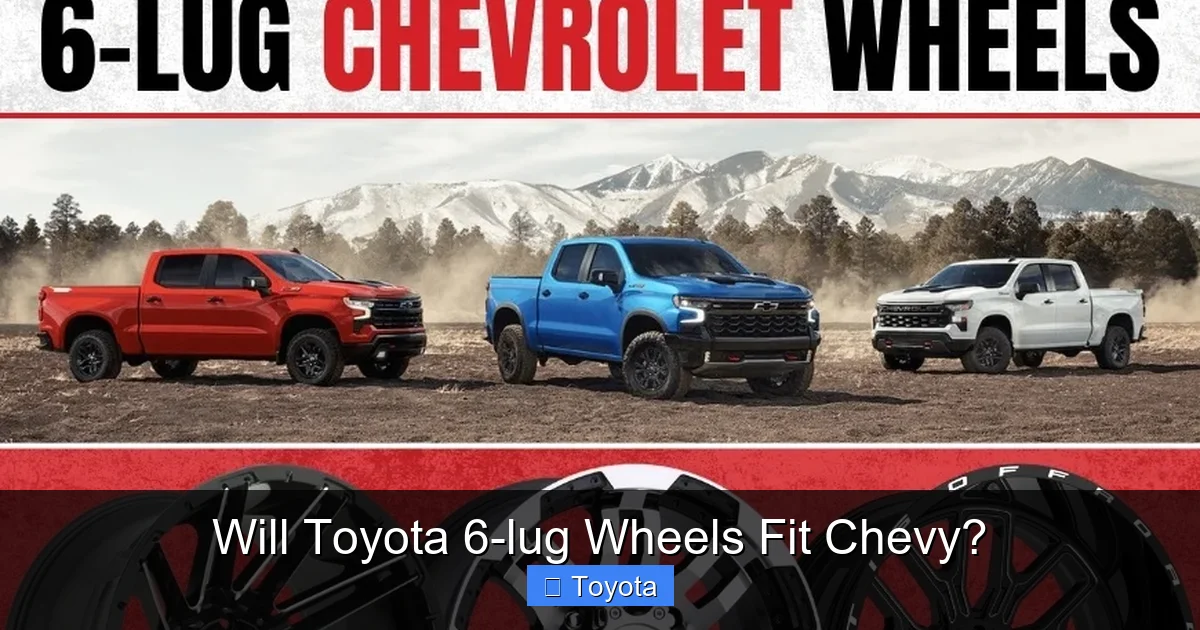
Visual guide about Will Toyota 6-lug Wheels Fit Chevy?
Image source: dww-live-media-perma-cdn.b-cdn.net
When it comes to wheel fitment, the bolt pattern is the most fundamental factor. It refers to the number of lug bolts and the diameter of the circle they form. For example, a 6×139.7mm bolt pattern means there are six lug bolts arranged in a circle with a diameter of 139.7 millimeters (or 5.5 inches).
Why Bolt Pattern Matters
If the bolt pattern doesn’t match, the wheel simply won’t mount to the hub. Even a slight difference—say, 6x135mm instead of 6×139.7mm—means the holes won’t align, and you can’t bolt the wheel on. That’s why it’s the first thing to check.
Toyota and Chevy: A Surprising Match
Here’s the good news: many Toyota and Chevy trucks use the same 6×139.7mm bolt pattern. This includes:
– Toyota Tacoma (1995–present)
– Toyota Tundra (2000–present)
– Toyota 4Runner (1996–present)
– Chevrolet Silverado 1500 (1999–2018)
– Chevrolet Colorado (2004–2012, some later models)
– Chevrolet Tahoe (2000–2023)
Because of this overlap, it’s technically possible to mount Toyota wheels on many Chevy trucks—and vice versa—as long as other factors align.
How to Measure Bolt Pattern
If you’re unsure about your vehicle’s bolt pattern, you can measure it yourself. For a 6-lug wheel:
1. Measure the distance from the center of one lug hole to the center of the hole directly across from it.
2. That measurement should be 139.7mm (5.5 inches) for compatibility.
Alternatively, check your owner’s manual or look up your vehicle’s specs online using the year, make, and model.
Hub Bore: The Hidden Compatibility Challenge
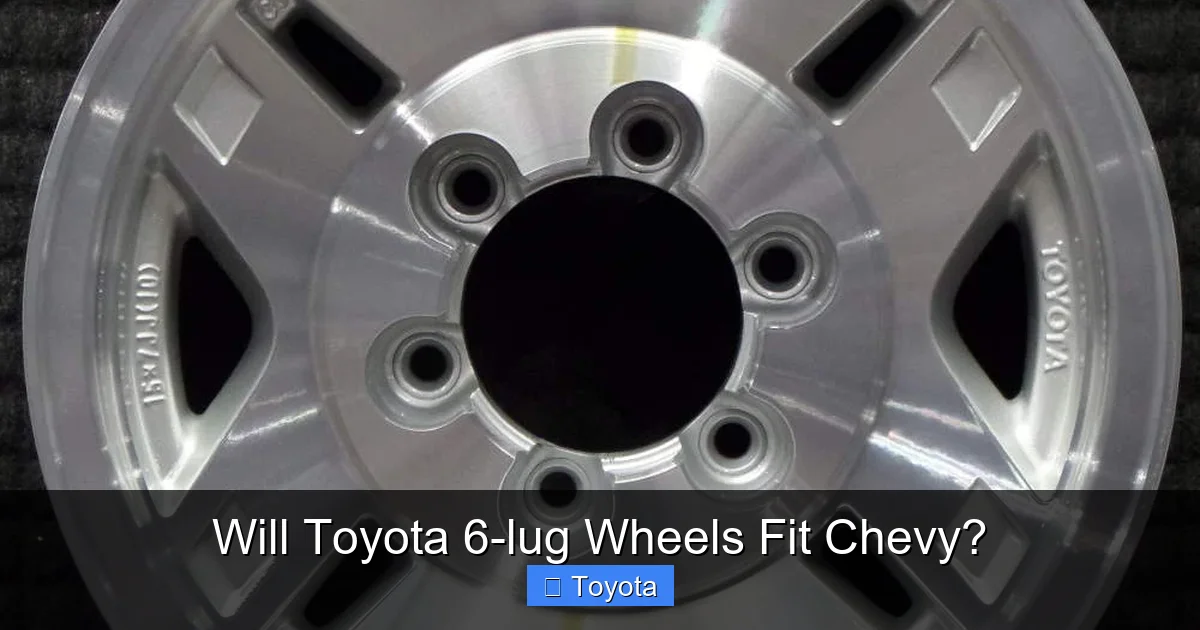
Visual guide about Will Toyota 6-lug Wheels Fit Chevy?
Image source: res.cloudinary.com
Even if the bolt pattern matches, another critical factor often gets overlooked: the hub bore. This is the center hole in the wheel that fits over the vehicle’s hub. If it’s too small, the wheel won’t fit. If it’s too large, the wheel may wobble or vibrate, even if it’s bolted on tightly.
Hub Bore Sizes: Toyota vs. Chevy
Toyota wheels typically have a hub bore of around 106.1mm to 108mm, depending on the model. Chevy trucks, on the other hand, usually have a larger hub bore requirement—often 110mm to 118mm. This means that while a Toyota wheel may bolt onto a Chevy hub, it likely won’t sit centered properly.
The Problem with Mismatched Hub Bores
When the wheel’s hub bore is smaller than the vehicle’s hub, it won’t fit at all. But when it’s larger, the wheel relies solely on the lug bolts to hold it in place. This is called “lug-centric” mounting, and it’s not ideal. Over time, this can lead to:
– Vibration at high speeds
– Uneven lug nut wear
– Premature wheel bearing failure
– Poor handling and steering feel
Solution: Hub-Centric Rings
The fix? Hub-centric rings. These are plastic or metal adapters that fill the gap between the wheel’s hub bore and the vehicle’s hub. They ensure the wheel is centered properly, reducing stress on the lug bolts and improving ride quality.
For example, if your Toyota wheel has a 108mm hub bore and your Chevy hub is 110mm, you’d use a 108mm-to-110mm hub-centric ring. These are inexpensive (usually $10–$20 per set) and widely available online or at auto parts stores.
Pro Tip: Always Use Hub-Centric Rings
Even if your wheel seems to fit snugly without them, using hub-centric rings is a best practice. They improve safety, reduce wear, and give you peace of mind—especially if you’re driving off-road or at highway speeds.
Lug Nut Seat Angle: A Small Detail with Big Consequences
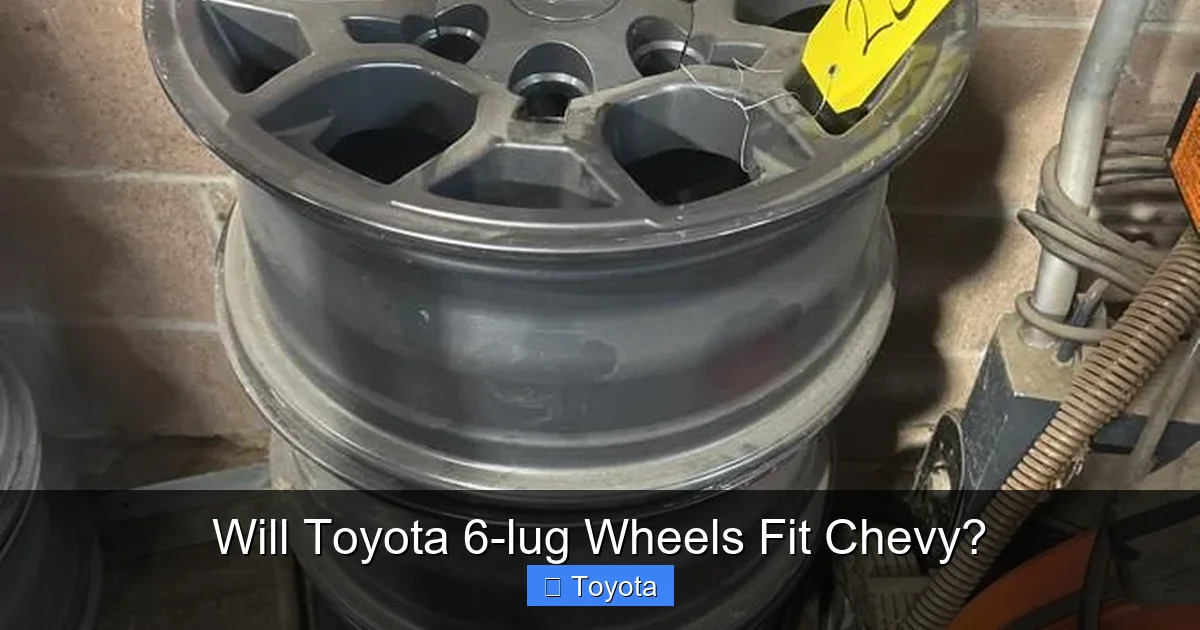
Visual guide about Will Toyota 6-lug Wheels Fit Chevy?
Image source: d278yjzsv5tla9.cloudfront.net
Another often-overlooked factor in wheel compatibility is the lug nut seat angle. This refers to the shape of the surface where the lug nut contacts the wheel. If the seat angle doesn’t match, the lug nut won’t seat properly, which can lead to loose wheels, vibration, or even wheel separation.
Conical vs. Spherical Seat
Most Toyota wheels use a 60-degree conical seat. This means the lug nut has a tapered, cone-like shape that matches the wheel’s lug hole. Many Chevy trucks, especially older models, also use conical seats—but some newer models (like the 2019+ Silverado) have switched to a spherical (ball seat) design.
Why It Matters
If you mount a Toyota wheel with conical lug holes onto a Chevy that uses spherical lug nuts, the nuts won’t seat correctly. This creates a point load instead of a full surface contact, which can:
– Crack the wheel over time
– Cause lug nuts to loosen
– Lead to catastrophic failure
How to Check and Fix
To avoid this issue:
1. Identify your Chevy’s lug nut seat type (check the owner’s manual or existing lug nuts).
2. Confirm the Toyota wheel’s seat angle (usually stamped near the lug hole or listed in the wheel specs).
3. If they don’t match, replace the lug nuts with the correct type for the wheel.
For example, if your Toyota wheel has conical seats, use conical lug nuts—even if your Chevy originally came with spherical ones. Never force mismatched lug nuts.
Pro Tip: Upgrade to Aftermarket Lug Nuts
Consider investing in high-quality aftermarket lug nuts designed for your specific wheel type. Brands like McGard or Gorilla offer durable, corrosion-resistant options that ensure a proper fit.
Offset and Backspacing: Handling and Clearance Concerns
Even if the bolt pattern, hub bore, and lug nuts are compatible, the wheel’s offset and backspacing can still cause problems. These measurements determine how far the wheel sits in or out from the hub, affecting handling, tire clearance, and suspension geometry.
What Is Offset?
Offset is the distance between the wheel’s mounting surface and its centerline. It’s measured in millimeters and can be:
– Positive: Wheel sits inward (common on stock trucks)
– Zero: Wheel is centered
– Negative: Wheel sticks out more (common on lifted or off-road builds)
What Is Backspacing?
Backspacing is the distance from the wheel’s mounting surface to the inner edge (back) of the wheel. It affects how much room the wheel has inside the wheel well.
Toyota vs. Chevy: Typical Differences
Toyota wheels often have a more positive offset than Chevy wheels, especially on stock Tacomas and 4Runners. This means they sit deeper in the wheel well. When mounted on a Chevy, this can lead to:
– Rubbing on suspension components (especially when turning or going over bumps)
– Reduced steering clearance
– Altered handling characteristics
Conversely, if the Toyota wheel has a very negative offset, it may stick out too far, causing:
– Tire rubbing on fenders
– Increased stress on wheel bearings
– Poor aerodynamics and fuel economy
How to Check for Clearance Issues
Before finalizing your wheel swap:
1. Mount the wheel and tire on the truck.
2. Turn the steering wheel fully left and right.
3. Compress the suspension (simulate bumps) to check for rubbing.
4. Inspect clearance between the tire and fender, suspension, and brake components.
Pro Tip: Use a Wheel Fitment Calculator
Online tools like WillTheyFit.com or Wheel-Size.com let you input your current and desired wheel specs to predict clearance issues. They’re not 100% accurate, but they’re a great starting point.
Year, Model, and Trim Matter: Not All 6-Lug Trucks Are Equal
While many Toyota and Chevy trucks share the 6×139.7mm bolt pattern, there are exceptions. Always verify compatibility based on your specific vehicle’s year, model, and trim level.
Toyota Exceptions
– Early Toyota trucks (pre-1995) may have different bolt patterns.
– Some limited-edition or international models may vary.
– Aftermarket wheels may not follow OEM specs.
Chevy Exceptions
– 2019+ Chevrolet Silverado 1500 switched to a 6x135mm bolt pattern (not compatible with 6×139.7mm).
– Some Colorado models (especially 2013+) use a 6×114.3mm pattern.
– Heavy-duty Chevy trucks (2500/3500) often use an 8-lug pattern.
Example: 2015 Toyota Tacoma on a 2010 Chevy Silverado
Let’s say you want to put 2015 Toyota Tacoma wheels on a 2010 Chevy Silverado 1500. Here’s how to check:
– Bolt pattern: Both are 6×139.7mm → ✅
– Hub bore: Tacoma wheels ~106.1mm, Silverado hub ~110mm → Needs hub-centric rings → ✅
– Lug seat: Both use conical → ✅
– Offset: Tacoma wheels may have +30mm offset; Silverado stock is around +20mm → Possible rubbing → Test fit recommended
In this case, the swap is likely feasible with hub-centric rings and a test fit.
Pro Tip: Consult a Fitment Guide
Websites like Tire Rack, Summit Racing, or even forums like Tacoma World or SilveradoSierra.com have detailed fitment guides and user reports. Real-world experiences can save you time and money.
When to Use Wheel Adapters or Spacers
If your Toyota wheels don’t fit your Chevy due to minor differences, wheel adapters or spacers might help—but they come with trade-offs.
What Are Wheel Adapters?
Adapters are thick plates that bolt onto your hub and provide a new mounting surface for the wheel. They can change bolt pattern, offset, or both.
When to Consider Them
– Your bolt pattern is close but not exact (e.g., 6x135mm to 6×139.7mm)
– You need more clearance for larger tires
– You’re building a custom off-road rig
Risks and Drawbacks
– Added stress on wheel bearings and suspension
– Potential for loosening or failure if not installed correctly
– May void warranty or affect insurance
– Can alter handling and increase unsprung weight
Pro Tip: Use High-Quality Adapters
If you go this route, choose forged aluminum or steel adapters from reputable brands (e.g., Bora, Spidertrax). Always torque them to spec and re-torque after 50–100 miles.
Final Tips for a Safe and Successful Wheel Swap
Swapping wheels between brands can be a great way to customize your truck, but safety should always come first. Here are some final tips to ensure your Toyota 6-lug wheels fit your Chevy properly:
1. Double-Check All Specs
Before buying or installing, confirm:
– Bolt pattern
– Hub bore
– Lug seat angle
– Offset and backspacing
– Center cap and valve stem clearance
2. Test Fit Before Driving
Mount the wheel and tire, then test for clearance at full steering lock and suspension compression. Take a short drive and listen for vibrations or noises.
3. Use Proper Torque
Always torque lug nuts to the manufacturer’s specification (usually 100–140 ft-lbs for trucks). Use a torque wrench—never an impact gun alone.
4. Re-Torque After Installation
Lug nuts can settle over time. Re-torque them after 50–100 miles, especially if you’ve used adapters or hub-centric rings.
5. Consider Professional Help
If you’re unsure, consult a mechanic or tire shop. They can verify fitment and ensure everything is installed safely.
6. Keep Records
Document your wheel specs, adapter details, and torque settings. This helps with future maintenance and resale.
Conclusion: Yes, But With Conditions
So, will Toyota 6-lug wheels fit Chevy? The answer is: *often, yes—but not always, and not without careful consideration.* While the shared 6×139.7mm bolt pattern opens the door to compatibility, factors like hub bore, lug seat angle, and offset can turn a simple swap into a complex project.
With the right preparation—hub-centric rings, correct lug nuts, and a thorough test fit—you can successfully mount Toyota wheels on your Chevy truck. Just remember: compatibility isn’t just about bolting on a wheel. It’s about ensuring that wheel performs safely, handles well, and lasts for miles to come.
Whether you’re chasing a rugged off-road look or just want to stand out from the crowd, understanding the nuances of wheel fitment empowers you to make smart, safe choices. So go ahead—explore those Toyota rims. But do your homework first. Your truck (and your safety) will thank you.
Frequently Asked Questions
Can I put Toyota Tacoma wheels on a Chevy Silverado?
Yes, in many cases. Most Toyota Tacomas and older Chevy Silverado 1500s share a 6×139.7mm bolt pattern. However, you may need hub-centric rings due to differences in hub bore size, and you should verify lug seat compatibility.
Do I need special lug nuts for Toyota wheels on a Chevy?
Possibly. Toyota wheels typically use conical seat lug nuts, while some newer Chevys use spherical seats. Use lug nuts that match the wheel’s seat angle, not the vehicle’s original ones.
Will Toyota wheels cause vibration on my Chevy?
They might, if the hub bore is too large and you don’t use hub-centric rings. Proper centering is essential to prevent vibration and ensure smooth operation.
Can I use wheel spacers to fit Toyota wheels on my Chevy?
Yes, but spacers add complexity and stress to your suspension. Use high-quality spacers and torque them properly. They’re best for off-road or custom builds.
Are 2019+ Chevy Silverado wheels compatible with Toyota trucks?
No. The 2019+ Silverado 1500 uses a 6x135mm bolt pattern, which is different from Toyota’s 6×139.7mm. They are not interchangeable without adapters.
How do I know if my Toyota wheels will clear my Chevy’s suspension?
Check the offset and backspacing. Compare them to your current wheels and use a fitment calculator or test fit the wheels with tires to check for rubbing.
