
How Often Do You Change the Cabin Air Filter on a Toyota Camry?

Changing your Toyota Camry’s cabin air filter is a critical, yet often overlooked, maintenance task. Toyota generally recommends replacing it every 15,000 to 30,000 miles, but your driving environment plays a huge role. A clogged filter reduces HVAC efficiency, allows pollutants into your cabin, and can cause foul odors. Fortunately, it’s one of the easiest and most affordable DIY maintenance items you can perform, saving you money and ensuring you breathe clean air.
Have you ever turned on the air conditioning in your Toyota Camry and noticed a weak, dusty breeze? Or perhaps a lingering musty smell that no air freshener can tackle? The culprit is very likely a neglected cabin air filter. This humble component is the unsung hero of your vehicle’s HVAC system, working tirelessly to shield you and your passengers from the outside world’s airborne gunk. But how often should you actually change it? Let’s dive deep into the specifics for your Camry, moving beyond generic advice to give you a clear, actionable plan.
Key Takeaways
- Factory Recommendation: Toyota typically advises a cabin air filter change every 15,000-30,000 miles, but always check your specific owner’s manual for your model year.
- Environment is Key: Driving in dusty, polluted, or high-pollen areas requires more frequent changes, potentially every 10,000-15,000 miles.
- DIY Savings: Replacing the filter yourself is a simple 15-30 minute job that costs $15-$40 for the part, versus $70-$120+ at a shop.
- Filter Types Matter: Your Camry uses either a standard particulate filter or an activated charcoal filter (for odors); ensure you buy the correct type for your model.
- Health & Comfort: A fresh filter blocks pollen, dust, soot, and allergens, directly impacting cabin air quality and HVAC system performance.
- Watch for Symptoms: Reduced airflow from vents, musty smells, or foggy windows that won’t clear are classic signs it’s time for a new filter.
- Maintenance Reset: After replacing the filter, you may need to reset your Camry’s maintenance required light; the process is simple and model-specific.
📑 Table of Contents
- What Exactly Does the Cabin Air Filter Do?
- Toyota’s Official Recommendation & Your Owner’s Manual
- The Real-World Factors That Change Your Schedule
- Warning Signs Your Filter is Long Overdue
- How to Change Your Cabin Air Filter: A Step-by-Step Guide
- Professional Service vs. The DIY Route
- Beyond Replacement: Maintenance and Best Practices
- Conclusion: A Simple Task with Big Benefits
What Exactly Does the Cabin Air Filter Do?
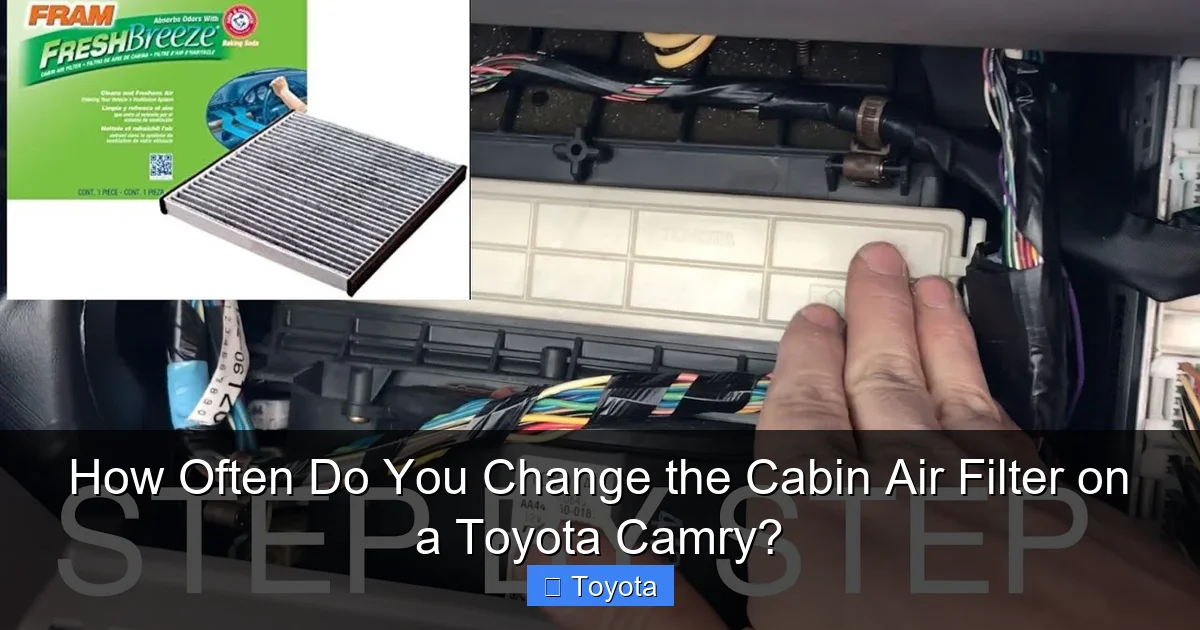
Before we talk schedules, let’s understand the job. The cabin air filter—sometimes called a pollen filter—is typically located behind your glovebox or under the hood near the cowl. Its sole purpose is to filter the air that your HVAC system pulls from outside the vehicle before it enters the cabin.
A Barrier Against the Elements
Think of it as a high-tech sieve for your car’s lungs. It traps:
- Particulates: Dust, dirt, pollen, soot, and brake dust.
- Allergens: The primary defense for allergy sufferers during spring and fall.
- pollutants: Harmful gases and odors in heavy traffic.
Higher-end filters, often standard in newer Camrys, use activated charcoal layers to absorb gaseous pollutants and neutralize odors like exhaust fumes.
Toyota’s Official Recommendation & Your Owner’s Manual
This is your starting point. Toyota provides general maintenance intervals in all Camry owner’s manuals. For most model years from the late 1990s onward, the standard recommendation is to inspect the cabin air filter every 15,000 miles and replace it every 30,000 miles under normal driving conditions.

Visual guide about How Often Do You Change the Cabin Air Filter on a Toyota Camry?
Image source: i.ytimg.com
Finding the Exact Answer for Your Camry
However, “normal conditions” is a key phrase. The manual will often have a separate, more frequent schedule for “severe” or “harsh” driving conditions. What constitutes severe? It’s not just off-roading. It includes:
- Frequent driving in heavy urban traffic with stop-and-go conditions.
- Regular travel on dirt, gravel, or dusty/unpaved roads.
- Operating in areas with high pollen counts or industrial pollution.
- Extremely cold climates where road salt and sand are constantly used.
For these scenarios, Toyota may effectively recommend inspection every 10,000 miles and replacement every 15,000-20,000 miles. Your first step is to locate the “Cabin Air Filter” or “Pollen Filter” section in your vehicle’s maintenance schedule chart.
The Real-World Factors That Change Your Schedule
Factory intervals are a safe baseline, but your personal experience should dictate the final say. Several factors can accelerate filter clogging.
Visual guide about How Often Do You Change the Cabin Air Filter on a Toyota Camry?
Image source: i.ytimg.com
Geography and Season
This is the biggest variable. If you live in the Southwest during monsoon season, in the Midwest during harvest (high pollen), or in a major city with constant construction, your filter is working overtime. A filter in Arizona might need changing in 12,000 miles, while one in a pristine mountain town might last 35,000. Spring and fall are peak pollen times—consider inspecting your filter at the start of each season.
Driving Habits
Do you commute 60 miles daily on a highway with semi-trucks? That’s constant exposure to diesel soot and road debris. Do you often follow other vehicles closely? You’re getting a direct hit of their tire and brake dust. These habits dramatically shorten filter life.
The Filter Itself
Not all filters are created equal. Some aftermarket filters use denser media for better filtration but can restrict airflow faster. OEM (Toyota) filters are designed for a balanced performance. If you’ve upgraded to a premium filter like a K&N or a high-MERV rated filter, check its specific service interval, as it may differ.
Warning Signs Your Filter is Long Overdue
You don’t have to wait for the mileage. Your Camry will give you subtle (and sometimes not-so-subtle) clues. Catching these early can prevent bigger HVAC issues.
Visual guide about How Often Do You Change the Cabin Air Filter on a Toyota Camry?
Image source: i.ytimg.com
Reduced Airflow and Weak Performance
The most common sign. If your fan is on high but the air coming from the vents feels like a faint breeze, especially on the fresh air (outside) setting, the filter is likely choked with debris. This forces your blower motor to work harder and reduces the system’s ability to heat or cool the cabin efficiently, putting extra strain on the engine.
Unpleasant Odors
A musty, mildew-like, or general “old car” smell when the AC is running is a classic symptom. Moisture can get trapped in the clogged filter media, becoming a breeding ground for mold and bacteria. This odor circulates directly into your cabin. If you’ve recently changed the filter and the smell returns quickly, it could indicate a deeper issue in the HVAC housing or drain tube.
Foggy Windows That Won’t Defog
Your defroster/defogger system uses the same outside air intake. A severely clogged filter restricts the volume of air that can be directed to the windshield, making it much harder to clear fog. If your defroster feels weak, check the filter before assuming a problem with the heater core or refrigerant.
Visible Dirt and Debris
If you do inspect the filter (which you should), you’ll see it. A healthy filter has a uniform color—usually white or light gray. A dirty one is dark brown or black, caked with dirt, leaves, and grime. If you can’t see the pleats clearly, it’s time for a change.
How to Change Your Cabin Air Filter: A Step-by-Step Guide
For a Toyota Camry, this is a fantastic DIY project. It requires no tools on most models and takes less time than an oil change. The location is almost always behind the glovebox.
Tools and Preparation
You’ll need:
- A new cabin air filter (OEM part number or a reputable brand like FRAM, Purolator, or WIX). Double-check your year and engine size.
- A small flat-head screwdriver (sometimes).
- A flashlight.
- Gloves (optional, but the filter can be dirty).
Pro Tip: Before you start, turn the ignition to “ON” and adjust the HVAC fan to the lowest setting. This relieves pressure on the system and makes removing the glovebox easier.
The Process (Typical 2012-2024 Camry)
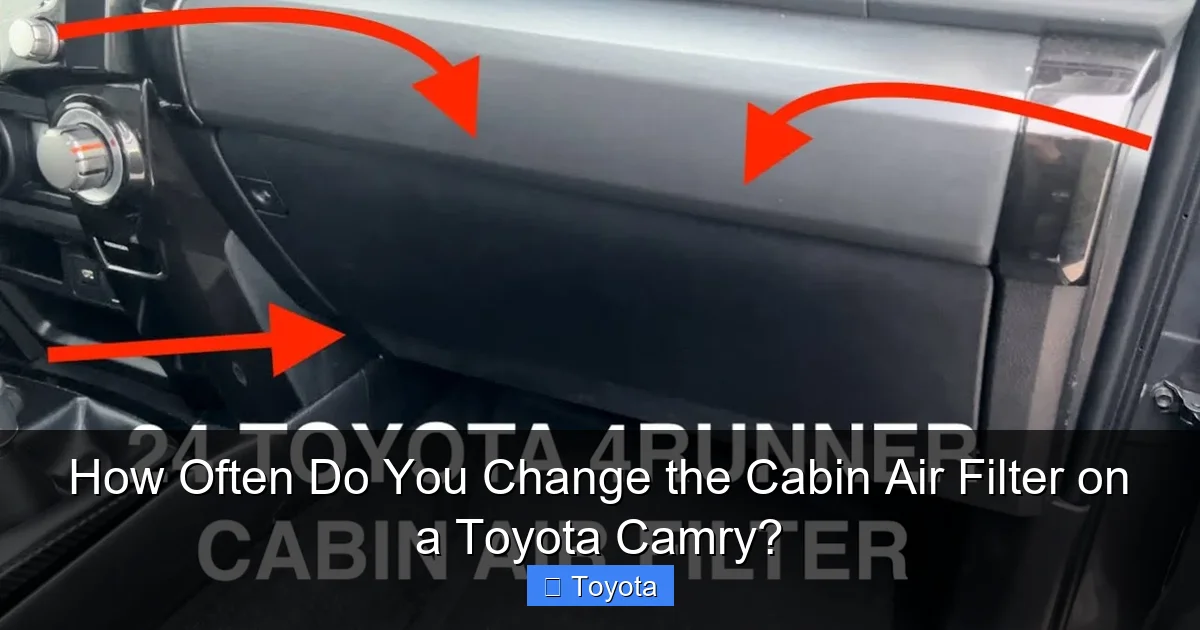
- Open the Glovebox: Fully open it. You’ll see two damper arms or stopper rods on the sides that limit its drop. Gently pull these arms out of their clips. The glovebox will now swing down completely, giving you access to a rectangular plastic cover behind it.
- Remove the Filter Cover: This cover is usually held by two simple plastic clips or a couple of screws. Press the clips to release or unscrew. It may have a small arrow indicating airflow direction.
- Extract the Old Filter: Note the orientation! There will be an arrow on the filter frame showing the direction of airflow (usually pointing toward the cabin/center of the car). Slide the old filter out gently. Expect it to be dirty.
- Install the New Filter: Match the orientation exactly. The arrow on the new filter must point the same way as the old one did. Slide it firmly into the housing. Ensure it sits flat and seals against the edges.
- Reassemble: Snap or screw the cover back on. Swing the glovebox up until you hear the damper arms click back into their clips. Close the glovebox.
Important: For some older models (pre-2012) or specific trims, the filter might be accessed from under the hood, behind the windshield wiper cowl. Consult your manual or a model-specific guide. If you need a visual guide for another Toyota model, a detailed tutorial for the Toyota RAV4 shows a very similar process, as many Toyota vehicles share this design.
Professional Service vs. The DIY Route
Should you pay someone? Here’s the breakdown to help you decide.
The Cost-Benefit Analysis
A professional cabin air filter service at a dealership or quick lube shop typically runs $70 to $120+ for parts and labor. The part itself is $15-$40. The labor is essentially “open glovebox, swap filter, close glovebox”—a 15-minute job. For that price premium, you’re paying for convenience and peace of mind. However, the DIY savings are significant, especially if you own your Camry long-term and will change the filter several times.
When to Consider a Pro
Choose professional service if:
- You are uncomfortable with basic interior panel removal.
- Your filter is located in a more complex spot (under the cowl, which requires wiper removal).
- You want a full HVAC system inspection at the same time.
- You’re already at the shop for another service and want to bundle it.
Bottom Line: For the vast majority of Camry owners, DIY is the smarter financial choice and empowers you with knowledge about your own vehicle. If you can change an air filter in a Honda Civic, you can definitely handle this.
Beyond Replacement: Maintenance and Best Practices
Maximizing filter life and system health involves more than just a swap.
Inspect Regularly
Even if you don’t change it every year, get in the habit of inspecting the filter during other routine checks, like oil changes. A quick glance can tell you if it’s getting dirty. If you have pets that ride in the car, their hair and dander will clog the filter faster.
Choose the Right Replacement
Stick with reputable brands. A cheap, poorly made filter might not seal correctly, allowing unfiltered air to bypass it. If you have severe allergies or live in a polluted area, consider an upgrade to a filter with a higher MERV rating (like 11 or 13) for superior particle capture, but be aware it may slightly reduce airflow.
Don’t Forget the Recirculation Mode
Using the “Recirc” button instead of “Fresh” mode temporarily bypasses the cabin filter by recirculating interior air. This is useful in heavy traffic or extreme odors, but don’t use it exclusively. You need fresh air to prevent cabin humidity buildup and CO2 levels from rising.
Conclusion: A Simple Task with Big Benefits
So, how often do you change the cabin air filter on a Toyota Camry? The rule of thumb is every 15,000 to 30,000 miles, but your environment is the ultimate decider. Think of it not as a rigid schedule, but as a regular health check for your car’s breathing system. By staying proactive—inspecting it twice a year and changing it when it’s visibly dirty or you notice symptoms—you protect your health, maintain your HVAC system’s efficiency, and avoid costly repairs down the road. It’s a 20-minute, under-$40 investment that pays dividends in comfort, air quality, and long-term vehicle care. Pop open that glovebox and take a look. Your lungs (and your Camry) will thank you.
Frequently Asked Questions
Where is the cabin air filter located on a Toyota Camry?
For most model years (2012 and newer), it’s located behind the glovebox. You must open the glovebox fully and release the damper arms on the sides to access the filter cover. Older models may have it under the hood, behind the cowl panel.
How much does a Toyota Camry cabin air filter cost to replace?
The filter part itself typically costs between $15 and $40 for a quality OEM or aftermarket brand. If you do it yourself, that’s the total cost. Having a professional do it usually adds $50-$80 in labor, bringing the total to $70-$120+.
Can I drive without a cabin air filter?
Technically yes, but you absolutely should not. Driving without the filter allows all dust, pollen, and debris to enter your HVAC system, clogging the evaporator and heater cores, and filling your cabin with pollutants. It will lead to expensive repairs and poor air quality.
What happens if I install the cabin air filter backwards?
Installing it with the airflow arrow pointing the wrong way severely restricts airflow and reduces filtration efficiency. The filter media is designed to catch particles in a specific direction. Always check the arrow on the old filter before removing it and replicate that orientation on the new one.
Do I need to reset the maintenance light after changing the filter?
It depends on your Camry’s model year and setup. Some models have a separate “Cabin Air Filter” reminder in the maintenance menu. If your vehicle uses a generic “MAINT REQD” light for all services, you may need to reset it after the change. The procedure is usually found in the owner’s manual under “Maintenance Reset.”
Will a new cabin air filter fix a musty smell in my Camry?
Often, yes. A musty odor is usually caused by mold and mildew growing on a dirty, moisture-clogged filter. Replacing it with a fresh filter will typically eliminate the smell. If the odor persists, the mold may be in the HVAC ducts or evaporator case, requiring a deeper cleaning.
