
How Much Is Tesla Model 3 Registration in California?

Registering a Tesla Model 3 in California involves more than just a base fee—there are taxes, smog checks, and potential rebates to consider. This guide breaks down every cost so you know exactly what to expect before you hit the DMV.
So, you’ve just driven off the lot in your brand-new Tesla Model 3—or maybe you’re seriously considering it. Either way, one question is probably top of mind: *How much is Tesla Model 3 registration in California?* It’s a fair question. After all, California has some of the most complex vehicle registration systems in the U.S., with a mix of state-mandated fees, local taxes, and environmental incentives that can make your head spin.
But don’t worry—we’ve got you covered. In this guide, we’ll walk you through every fee, tax, and potential discount that applies when registering your Tesla Model 3 in the Golden State. Whether you’re buying new, used, or transferring registration from another state, understanding these costs upfront can save you time, stress, and even money. We’ll break down the numbers, explain how they’re calculated, and share insider tips to help you navigate the process like a pro.
Let’s be real: nobody loves dealing with the DMV. But knowing exactly what to expect—and why you’re paying it—can make the experience a lot less frustrating. Plus, with electric vehicles like the Tesla Model 3, there are unique benefits and exemptions that can actually work in your favor. From smog check waivers to HOV lane access, California rewards EV owners in ways gas-powered drivers only dream of.
So grab a coffee, settle in, and let’s dive into everything you need to know about Tesla Model 3 registration costs in California.
Key Takeaways
- Base registration fee: $23 for most Tesla Model 3 vehicles in California.
- Weight fee: Based on vehicle weight, typically $25–$50 for the Model 3.
- County/district fees: Vary by location, adding $20–$100 depending on where you live.
- Smog abatement fee: $20 since EVs are exempt from smog checks but still pay a reduced fee.
- Vehicle license fee (VLF): 0.65% of the vehicle’s value, calculated annually.
- Clean Air Vehicle (CAV) decal: Free for Tesla Model 3 owners, allowing access to HOV lanes.
- Potential savings: Federal and state EV incentives can offset registration and purchase costs.
📑 Table of Contents
- Understanding California Vehicle Registration Basics
- Breakdown of Tesla Model 3 Registration Fees in California
- How to Calculate Your Total Registration Cost
- California Incentives and Benefits for Tesla Model 3 Owners
- The Registration Process: Step by Step
- Renewing Your Tesla Model 3 Registration
- Common Mistakes to Avoid
- Final Thoughts
Understanding California Vehicle Registration Basics
Before we get into the nitty-gritty of Tesla Model 3 registration fees, it helps to understand how California’s vehicle registration system works. Unlike some states where registration is a flat fee, California uses a combination of fixed charges and variable costs based on your vehicle’s value, weight, and location.
When you register a vehicle in California, you’re not just paying to legally drive it—you’re also contributing to road maintenance, public safety programs, and environmental initiatives. The state collects these fees through the Department of Motor Vehicles (DMV), and the total amount you pay depends on several factors.
For electric vehicles like the Tesla Model 3, some fees are reduced or waived entirely. For example, because EVs produce zero emissions, they’re exempt from traditional smog checks. However, the state still charges a small “smog abatement fee” to support air quality programs. This is just one example of how EV ownership comes with unique financial considerations.
Another key component is the Vehicle License Fee (VLF), which is essentially a personal property tax on your vehicle. This fee is calculated as a percentage of your car’s value and is paid annually. For new Teslas, this can be a significant amount, but it decreases each year as the vehicle depreciates.
Who Needs to Register a Vehicle in California?
If you’re a California resident and you’ve purchased a vehicle—whether new or used—you must register it within 20 days of bringing it into the state. This applies even if you’re moving from another state or country. The registration process ensures your vehicle is legally recognized, insured, and compliant with California’s strict emissions and safety standards.
For Tesla Model 3 owners, this means completing the registration process whether you bought the car directly from Tesla, a dealership, or a private seller. If you’re leasing, the leasing company typically handles registration, but you’ll still need to pay applicable fees.
New vs. Used Tesla Model 3 Registration
The registration process differs slightly depending on whether you’re registering a new or used Tesla Model 3. For new vehicles, the dealer usually handles the initial registration and submits the paperwork to the DMV on your behalf. You’ll receive temporary operating permits while your permanent registration is processed.
For used vehicles, especially those purchased from a private seller, you’ll need to handle registration yourself. This includes submitting a completed Application for Title or Registration (REG 343), proof of insurance, and payment of all applicable fees. You’ll also need to pass a VIN verification, which can be done at a DMV office or by a licensed verifier.
One advantage of buying a used Tesla Model 3 is that the Vehicle License Fee will be lower, since it’s based on the car’s current market value rather than its original purchase price. This can result in significant savings over time.
Breakdown of Tesla Model 3 Registration Fees in California
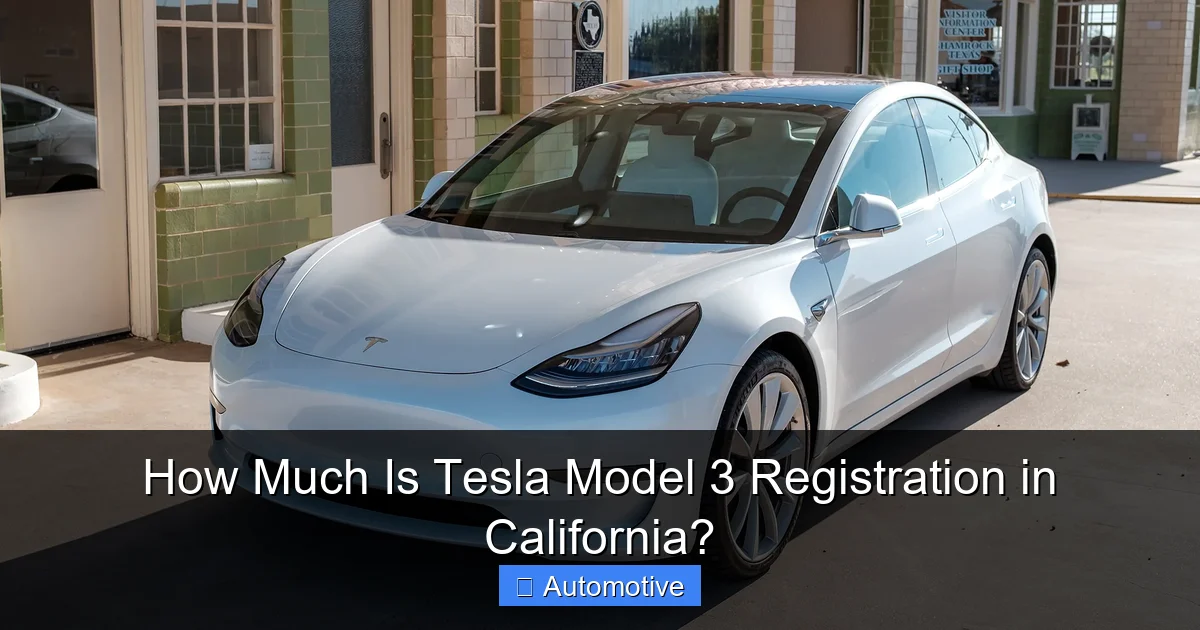
Visual guide about How Much Is Tesla Model 3 Registration in California?
Image source: motortrend.com
Now, let’s get to the heart of the matter: how much does it actually cost to register a Tesla Model 3 in California? The total amount varies depending on several factors, but here’s a detailed breakdown of the most common fees you’ll encounter.
Keep in mind that these fees are subject to change, so it’s always a good idea to check the California DMV website or use their online fee calculator for the most up-to-date estimates. However, as of 2024, here’s what you can generally expect.
Base Registration Fee
The base registration fee is a flat charge that every vehicle owner in California must pay. For most passenger vehicles, including the Tesla Model 3, this fee is $23. This covers the administrative costs of processing your registration and issuing your license plates and registration card.
This fee is the same regardless of whether you’re registering a gas-powered sedan or an electric luxury car. It’s one of the few costs that doesn’t vary based on vehicle type or value.
Weight Fee
California charges a weight fee based on how much your vehicle weighs. The Tesla Model 3 falls into the “light-duty” category, with a curb weight ranging from approximately 3,500 to 4,000 pounds depending on the trim (Standard Range, Long Range, or Performance).
For vehicles weighing between 3,501 and 4,000 pounds, the weight fee is $25. If your Model 3 is slightly heavier—say, due to additional features or battery size—it might push into the next bracket, which is $50 for vehicles up to 4,500 pounds. Most Model 3 owners will pay the $25 fee, but it’s worth confirming your exact weight when calculating costs.
County and District Fees
This is where things get a bit more complicated. In addition to state fees, you’ll also pay local fees that vary by county and air district. These fees support regional transportation projects, air quality programs, and public safety initiatives.
For example, if you live in Los Angeles County, you might pay an additional $30–$50 in local fees. In more rural areas like Humboldt County, the fee could be as low as $20. Some districts also charge extra for environmental programs, especially in areas with poor air quality.
To find out exactly how much you’ll pay, check the DMV’s fee schedule by county. You can also use their online registration cost estimator, which asks for your ZIP code and vehicle details to provide a personalized quote.
Smog Abatement Fee
Here’s a perk of driving an electric vehicle: you don’t need a smog check. But that doesn’t mean you’re off the hook entirely. California still charges a $20 “smog abatement fee” for EVs to support air quality improvement programs.
This fee is significantly lower than the $48–$88 you’d pay for a traditional smog check on a gas-powered car. So while you’re not saving the full amount, you’re still getting a discount for driving clean.
Vehicle License Fee (VLF)
The Vehicle License Fee is one of the largest costs when registering a Tesla Model 3. It’s calculated as 0.65% of your vehicle’s value, assessed annually. For a new Tesla Model 3 priced at $40,000, that’s $260 in the first year.
But here’s the catch: the VLF is based on the vehicle’s depreciated value each year. So in year two, if your Model 3 is worth $35,000, you’ll pay $227.50. This continues to decrease over time, which is good news for long-term owners.
If you’re financing your Tesla, the VLF is typically included in your monthly payment and paid to the DMV by the lender. If you’re paying cash, you’ll need to budget for this fee when registering.
Other Possible Fees
Depending on your situation, you might also encounter additional charges:
– **Late registration fee:** $30 if you miss the 20-day registration window.
– **Duplicate title fee:** $20 if you need a replacement title.
– **Special interest plates:** $50–$100 extra if you want personalized or specialty plates.
– **Electronic filing fee:** $2 if you submit your application online.
These are less common but worth noting, especially if you’re registering a used vehicle or transferring ownership.
How to Calculate Your Total Registration Cost
Visual guide about How Much Is Tesla Model 3 Registration in California?
Image source: classiccarsbay.com
Now that you know the individual fees, let’s put it all together with a real-world example. Say you’ve just bought a new Tesla Model 3 Long Range for $42,000 and you live in San Diego County.
Here’s how your registration cost might break down:
– Base registration fee: $23
– Weight fee (3,800 lbs): $25
– County/district fees (San Diego): $45
– Smog abatement fee: $20
– Vehicle License Fee (0.65% of $42,000): $273
**Total estimated registration cost: $386**
Keep in mind that this doesn’t include sales tax, which is separate and typically paid at the time of purchase. California sales tax rates vary by county, ranging from 7.25% to over 10%. On a $42,000 Tesla, that’s an additional $3,045 to $4,200.
If you’re registering a used Tesla Model 3, the VLF will be lower. For example, a 2021 Model 3 with a current value of $30,000 would have a VLF of $195, bringing the total registration cost down to around $308.
Using the DMV Fee Calculator
The easiest way to get an accurate estimate is to use the California DMV’s online fee calculator. Simply enter your vehicle information, including make, model, year, and purchase price, along with your ZIP code. The tool will generate a detailed breakdown of all applicable fees.
This is especially helpful if you’re comparing registration costs across different counties or considering a move. It can also help you budget for future renewals, since the VLF decreases each year.
Tips to Reduce Registration Costs
While you can’t avoid all fees, there are a few ways to minimize your registration expenses:
1. **Buy used:** As mentioned, the VLF is based on current value, so a used Tesla will cost less to register.
2. **Register in a lower-fee county:** If you have flexibility, consider registering your vehicle in a county with lower local fees.
3. **Apply online:** Some fees are reduced for online submissions, and it’s faster than visiting a DMV office.
4. **Take advantage of rebates:** While not directly related to registration, state and federal EV incentives can offset your overall cost of ownership.
California Incentives and Benefits for Tesla Model 3 Owners
Visual guide about How Much Is Tesla Model 3 Registration in California?
Image source: classiccarsbay.com
One of the biggest advantages of driving a Tesla Model 3 in California is access to a wide range of incentives and benefits. These aren’t just about saving money—they’re designed to encourage the adoption of clean vehicles and reduce greenhouse gas emissions.
Clean Air Vehicle (CAV) Decal
One of the most valuable perks for Tesla Model 3 owners is the Clean Air Vehicle (CAV) decal. This free sticker allows you to drive in High-Occupancy Vehicle (HOV) lanes, even with only one person in the car.
In congested areas like Los Angeles, San Francisco, and San Diego, this can save you significant time during rush hour. The decal is valid for electric vehicles and plug-in hybrids that meet California’s emissions standards.
To apply, you’ll need to submit an application to the DMV along with proof of EV ownership. The process is straightforward, and once approved, the decal is valid for the life of the vehicle—no renewal required.
State and Federal Tax Incentives
While not directly tied to registration, federal and state incentives can significantly reduce the overall cost of owning a Tesla Model 3.
At the federal level, the Inflation Reduction Act offers a tax credit of up to $7,500 for new EVs that meet certain battery and manufacturing requirements. As of 2024, the Tesla Model 3 qualifies for the full credit if purchased new and assembled in North America.
California also offers the Clean Vehicle Rebate Project (CVRP), which provides rebates of up to $2,000 for new EVs. However, as of 2024, the Tesla Model 3 is no longer eligible due to its higher price point. Still, lower-income buyers may qualify for enhanced rebates through the Clean Vehicle Assistance Program.
These incentives can be used to offset the purchase price, financing costs, or even registration fees if you apply the savings strategically.
Utility and Charging Incentives
Many California utilities offer special rates and rebates for EV owners. For example, Southern California Edison and Pacific Gas & Electric provide discounted electricity rates during off-peak hours, making home charging more affordable.
Some utilities also offer rebates for installing Level 2 chargers at home, which can save you $500 or more. These programs vary by region, so check with your local provider to see what’s available.
The Registration Process: Step by Step
Now that you know the costs and benefits, let’s walk through the actual registration process. Whether you’re doing it yourself or working with a dealer, here’s what to expect.
Step 1: Gather Required Documents
Before heading to the DMV (or logging online), make sure you have the following:
– Proof of ownership (title or manufacturer’s certificate of origin)
– Valid California driver’s license
– Proof of insurance (minimum liability coverage required)
– Smog certificate (not needed for EVs, but you’ll still pay the abatement fee)
– Odometer disclosure (for vehicles under 10 years old)
– Payment for all fees
If you’re registering a used vehicle, you’ll also need a completed Application for Title or Registration (REG 343) and a VIN verification.
Step 2: Complete the Application
You can submit your registration application online, by mail, or in person at a DMV office. Online is usually the fastest and most convenient option, especially for new vehicle registrations.
If you’re buying from a dealer, they’ll typically handle the initial registration and provide you with temporary permits. You’ll receive your permanent registration and plates in the mail within a few weeks.
Step 3: Pay the Fees
Payment can be made by credit card, debit card, check, or money order. If you’re financing your Tesla, the lender may pay the fees directly and add them to your loan.
Be sure to keep your receipt as proof of payment. You’ll need it when renewing your registration or if there are any issues with your application.
Step 4: Receive Your Registration and Plates
Once your application is processed, you’ll receive your registration card, license plates, and stickers in the mail. Make sure to affix the stickers to your plates and keep the registration card in your vehicle at all times.
If you applied for a CAV decal, it will be mailed separately and should arrive within a few weeks.
Renewing Your Tesla Model 3 Registration
Registration isn’t a one-time thing—you’ll need to renew it every year. The good news is that the process is much simpler than the initial registration.
Renewal notices are sent by mail about 60 days before your registration expires. You can renew online, by mail, or in person. Most Tesla owners choose the online option for speed and convenience.
The renewal fee is generally lower than the initial registration cost, since you’ve already paid the base and weight fees. You’ll still pay the Vehicle License Fee (based on the current value of your car) and any applicable local fees.
One thing to note: if you move to a new county, you’ll need to update your registration and may be charged additional local fees. Be sure to notify the DMV of your address change within 10 days.
Common Mistakes to Avoid
Even with all this information, it’s easy to make mistakes during the registration process. Here are a few common pitfalls to watch out for:
– **Missing the 20-day deadline:** Late registration incurs a $30 penalty, so don’t delay.
– **Incorrect vehicle value:** Make sure the DMV has the correct purchase price or market value to avoid overpaying the VLF.
– **Forgetting insurance:** You can’t register a vehicle without valid California insurance.
– **Ignoring local fees:** Don’t assume all counties charge the same—check your specific area.
– **Not applying for the CAV decal:** Many new EV owners forget this step and miss out on HOV lane access.
Final Thoughts
So, how much is Tesla Model 3 registration in California? The answer isn’t a single number—it’s a combination of state, local, and vehicle-specific fees that typically range from $300 to $400 for new vehicles. While it may seem like a lot, remember that you’re also gaining access to valuable benefits like HOV lane privileges, environmental incentives, and long-term savings on fuel and maintenance.
By understanding the breakdown of costs and planning ahead, you can make the registration process smooth and stress-free. Whether you’re a first-time EV owner or a seasoned Tesla driver, knowing what to expect helps you focus on what really matters: enjoying the ride.
And let’s be honest—there’s nothing quite like gliding silently down the highway in your Tesla Model 3, knowing you’re doing your part for the planet while saving time and money. That’s the real value of driving electric in California.
Frequently Asked Questions
How much does it cost to register a Tesla Model 3 in California?
The total registration cost typically ranges from $300 to $400 for a new Tesla Model 3, including base fees, weight fees, local charges, and the Vehicle License Fee. Used models may cost less due to lower VLF calculations.
Do I need a smog check for my Tesla Model 3 in California?
No, electric vehicles like the Tesla Model 3 are exempt from smog checks. However, you still pay a $20 smog abatement fee to support air quality programs.
Can I drive in HOV lanes with a Tesla Model 3 in California?
Yes, with a Clean Air Vehicle (CAV) decal, Tesla Model 3 owners can use HOV lanes even with only one person in the car. The decal is free and valid for the life of the vehicle.
Is the Vehicle License Fee the same every year?
No, the VLF is based on your vehicle’s current value and decreases each year as the car depreciates. This means your annual registration cost will go down over time.
Can I register my Tesla Model 3 online in California?
Yes, you can complete the registration process online through the California DMV website. This is often faster and more convenient than visiting a DMV office in person.
Are there any rebates or incentives for Tesla Model 3 registration in California?
While there are no direct rebates for registration fees, federal and state EV incentives can reduce your overall cost of ownership. The federal tax credit and utility rebates are the most common savings opportunities.
