
Does Toyota Platinum Warranty Cover Tires?

The Toyota Platinum Warranty does not typically cover tires under its standard protection plan. Tires are considered wear-and-tear items and are usually excluded unless they’re part of a separate tire protection package or manufacturer defect. Always check your specific warranty terms and consider add-on tire coverage for full protection.
Key Takeaways
- Tires are generally not covered under the standard Toyota Platinum Warranty: They fall under normal wear and tear, which is excluded from factory warranty protection.
- Manufacturer defects may be covered under tire warranty: If a tire fails due to a defect in materials or workmanship, the tire manufacturer—not Toyota—may offer coverage.
- Toyota offers optional tire protection plans: You can purchase additional tire and wheel protection through Toyota Financial Services or dealerships.
- Road hazard damage is not included in the base warranty: Punctures, cuts, or blowouts from potholes are typically not covered unless you have supplemental coverage.
- Proper maintenance extends tire life and reduces out-of-pocket costs: Regular rotations, alignments, and pressure checks help prevent premature wear.
- Check your vehicle’s specific warranty booklet: Coverage details can vary by model year and region, so always refer to your official documentation.
- Third-party extended warranties may include tire coverage: Some aftermarket plans bundle tire protection with mechanical coverage.
📑 Table of Contents
Understanding the Toyota Platinum Warranty
When you drive off the lot in a new Toyota, you’re not just getting a reliable vehicle—you’re also gaining access to one of the most trusted warranty programs in the automotive industry. The Toyota Platinum Warranty, often referred to as the Toyota New Vehicle Limited Warranty, is designed to give owners peace of mind by covering major components and systems for a set period. But when it comes to something as essential—and frequently replaced—as tires, many owners are left wondering: does this warranty actually protect my tires?
Let’s start with the basics. The Toyota Platinum Warranty typically includes a 36-month/36,000-mile basic coverage and a 60-month/60,000-mile powertrain warranty. This means that if your engine, transmission, or other critical components fail due to a manufacturing defect, Toyota will repair or replace them at no cost to you. However, the warranty explicitly excludes items that are subject to normal wear and tear—and that’s where tires come into play.
Tires are considered consumable parts, much like brake pads, wiper blades, or air filters. Over time, they naturally degrade due to friction, weather, road conditions, and usage patterns. Because of this, Toyota does not include tires under the standard Platinum Warranty umbrella. Instead, tire coverage is handled separately—either through the tire manufacturer’s warranty or through optional protection plans you can purchase.
What the Toyota Platinum Warranty Covers
To better understand why tires aren’t included, it helps to know what the warranty *does* cover. The Toyota Platinum Warranty protects against defects in materials or workmanship in nearly every part of the vehicle, including:
– Engine components (pistons, crankshaft, valves, etc.)
– Transmission and drivetrain
– Electrical systems
– Suspension and steering systems
– Air conditioning and heating
– Safety features like airbags and seat belts
If any of these parts fail within the warranty period due to a manufacturing flaw—not misuse or neglect—Toyota will fix the issue. For example, if your alternator stops working because of a faulty internal component, that’s covered. But if your tires wear down after 25,000 miles of normal driving, that’s considered expected wear and not a defect.
This distinction is crucial. The warranty is there to protect you from unexpected failures, not to cover routine maintenance or replacement of parts that naturally degrade over time. Tires fall squarely into the latter category.
What the Warranty Excludes
The Toyota Platinum Warranty comes with a detailed list of exclusions, and tires are prominently featured. According to Toyota’s official documentation, the following are not covered:
– Normal wear and tear items (brake pads, rotors, tires, wiper blades)
– Damage from accidents, misuse, or improper maintenance
– Environmental damage (rust, corrosion from road salt, etc.)
– Modifications or aftermarket parts
– Damage from lack of maintenance (low oil, overheating, etc.)
Tires are specifically listed under “normal wear and tear,” which means even if they fail before reaching their expected lifespan, Toyota won’t cover the replacement unless it’s proven to be due to a manufacturing defect in the vehicle itself—not the tire.
For instance, if your Toyota’s wheel alignment is off due to a faulty suspension component covered under warranty, and that causes uneven tire wear, Toyota might cover the suspension repair—but not the tires. You’d still be responsible for replacing the damaged tires.
Tire Coverage: Who’s Responsible?
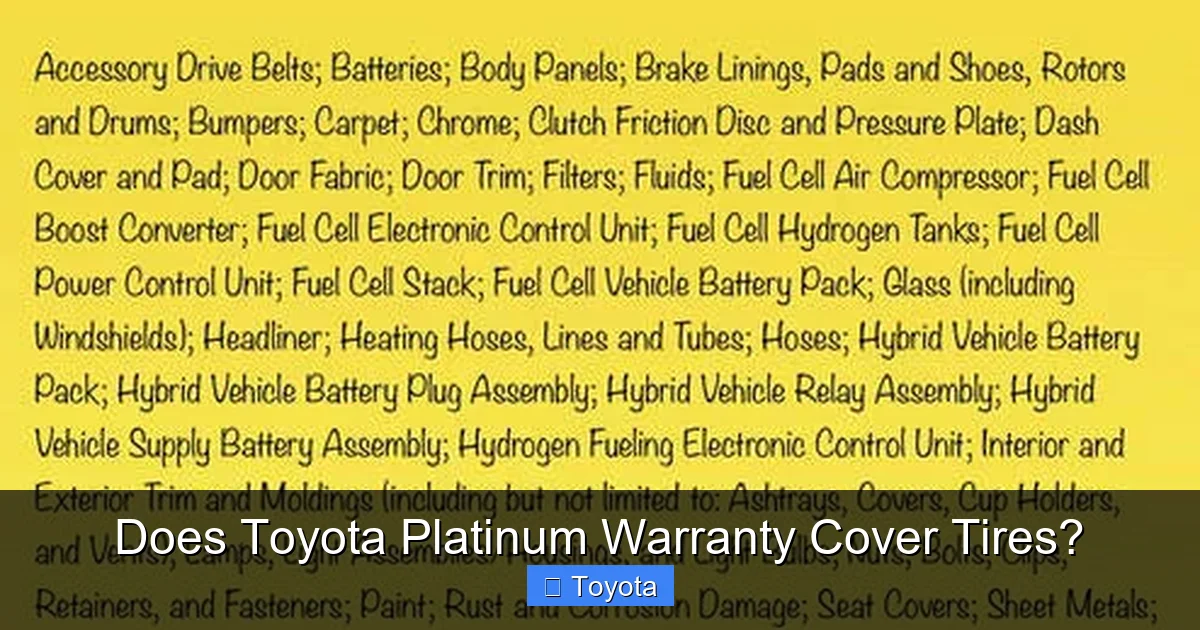
Visual guide about Does Toyota Platinum Warranty Cover Tires?
Image source: factorywarrantylist.com
So if Toyota doesn’t cover tires under the Platinum Warranty, who does? The answer lies with the tire manufacturer and any additional protection plans you’ve purchased.
Most new Toyotas come equipped with name-brand tires from manufacturers like Michelin, Bridgestone, Goodyear, or Dunlop. These companies provide their own warranties, which typically cover defects in materials or workmanship for a certain period or mileage. For example, a tire might be covered for 60,000 miles or five years, whichever comes first—but only if the failure is due to a manufacturing flaw.
Let’s say you notice a bulge in the sidewall of one of your tires after just 10,000 miles. If a tire shop determines it’s due to a defect in the tire’s construction (like a weak spot in the casing), the manufacturer may replace it under warranty. However, if the bulge is caused by hitting a pothole or driving over a curb, that’s considered road hazard damage—and it’s not covered by either Toyota or the tire maker.
This is where many owners get confused. They assume that because the car is under warranty, everything on it is protected. But tires operate under a different set of rules. The vehicle warranty covers the car; the tire warranty covers the tires.
How to Check Your Tire Manufacturer’s Warranty
To find out what your tire warranty includes, start by checking the sidewall of your tires. You’ll see a DOT code and a brand name. Visit the manufacturer’s website and look for their warranty information. Most brands have online tools where you can enter your tire’s details to see coverage terms.
Common elements of tire manufacturer warranties include:
– **Defect coverage:** Free replacement if the tire fails due to a manufacturing issue.
– **Treadwear warranty:** Reimbursement based on how much tread is left when the tire wears out prematurely.
– **Road hazard protection:** Some premium tires include limited coverage for punctures or blowouts (though this is rare and often limited).
Keep in mind that these warranties usually require proof of purchase and proper maintenance records. If you don’t rotate your tires regularly or maintain proper inflation, the manufacturer may deny your claim.
Optional Tire Protection Plans from Toyota
Visual guide about Does Toyota Platinum Warranty Cover Tires?
Image source: factorywarrantylist.com
While the standard Platinum Warranty doesn’t cover tires, Toyota does offer optional protection plans that can help fill the gap. These are typically sold through Toyota dealerships or Toyota Financial Services and are designed to give you extra peace of mind.
One popular option is the **Toyota Tire & Wheel Protection Plan**. This add-on coverage can be purchased at the time of vehicle purchase or within a short window afterward (usually 30 to 60 days). It protects your tires and wheels from a variety of common issues, including:
– Punctures from nails, screws, or debris
– Blowouts from potholes or road hazards
– Curb rash or impact damage to wheels
– Sidewall damage
Depending on the plan, coverage can last up to 5 years or 60,000 miles—matching the length of your powertrain warranty. Some plans even include roadside assistance for tire-related emergencies, like flat tires or blowouts.
For example, imagine you’re driving on a rural road and hit a deep pothole. Your tire blows out, and the wheel is bent. Under the standard warranty, you’d pay out of pocket for both. But with the Tire & Wheel Protection Plan, Toyota would cover the cost of a new tire and wheel repair or replacement—up to the plan’s limits.
Cost and Value of Tire Protection Plans
The cost of a Toyota Tire & Wheel Protection Plan varies based on your vehicle, tire size, and coverage level. On average, you can expect to pay between $200 and $500 for a comprehensive plan. While that might seem steep, consider the cost of replacing a single high-performance tire, which can run $200 to $400 or more—especially on luxury or hybrid models.
If you live in an area with poor road conditions, frequent potholes, or harsh weather, the plan could pay for itself quickly. Even in milder climates, the convenience of not worrying about unexpected tire damage can be worth the investment.
It’s also worth noting that these plans often include **no deductible** and **nationwide service**, meaning you can get repairs at any participating Toyota dealership. That’s a big advantage over third-party plans that may limit where you can get service.
Third-Party Extended Warranties and Tire Coverage
Visual guide about Does Toyota Platinum Warranty Cover Tires?
Image source: roadsumo.com
If you didn’t purchase a tire protection plan from Toyota, you might still have options. Some third-party extended warranty providers offer plans that include tire coverage as part of a broader mechanical protection package.
Companies like Endurance, CarShield, or Protect My Car often bundle tire and wheel protection with their extended service contracts. These plans can be more flexible than Toyota’s offerings and may cover older vehicles or those with higher mileage.
However, it’s important to read the fine print. Third-party plans may have limitations on coverage, such as:
– Excluding certain tire brands or sizes
– Requiring pre-approval for repairs
– Limiting reimbursement amounts
– Excluding damage from neglect or improper maintenance
Additionally, some plans only cover tires if they fail due to a mechanical issue—like a suspension problem causing uneven wear—not from direct tire damage.
Before purchasing a third-party plan, compare it carefully with Toyota’s official offerings. Toyota’s plans are often more straightforward, with clearer terms and direct service through certified technicians.
Real-World Example: When Tire Coverage Matters
Let’s look at a real-world scenario to illustrate how tire coverage works.
Sarah buys a new Toyota RAV4 Hybrid and opts for the Platinum Warranty. She drives 15,000 miles in her first year, mostly on city streets with occasional highway trips. After 18 months, she notices a slow leak in one of her tires. She takes it to a tire shop, where they find a nail embedded in the tread.
Under the standard Toyota Platinum Warranty, this isn’t covered—it’s a puncture from road debris. The tire manufacturer’s warranty also won’t help, because punctures are considered road hazards, not defects.
But Sarah had purchased the Toyota Tire & Wheel Protection Plan. The shop contacts Toyota, and within a day, her tire is replaced at no cost. She’s back on the road without paying a dime.
Now imagine Sarah hadn’t bought the plan. She’d be looking at a $250 bill for a new tire—plus the hassle of finding a matching replacement. Over time, that kind of expense can add up, especially if she experiences multiple flats or blowouts.
This example shows why optional tire protection can be a smart investment, especially for drivers in high-risk areas.
Maintaining Your Tires to Avoid Issues
Even with the best warranty or protection plan, the most effective way to avoid tire problems is through proper maintenance. Taking care of your tires not only extends their life but also reduces the risk of unexpected failures.
Here are some practical tips to keep your tires in top shape:
– **Check tire pressure monthly:** Underinflated tires wear faster and are more prone to blowouts. Use a reliable gauge and follow the recommended PSI listed in your owner’s manual or door jamb.
– **Rotate tires every 5,000 to 7,000 miles:** This ensures even wear across all four tires. Front tires typically wear faster due to steering and braking forces.
– **Align wheels annually or after hitting a pothole:** Misaligned wheels cause uneven wear and can lead to premature tire failure.
– **Inspect tires regularly:** Look for cuts, bulges, cracks, or embedded objects. Address any issues immediately.
– **Avoid overloading your vehicle:** Excess weight puts extra stress on tires and can lead to overheating and blowouts.
By following these steps, you can maximize the lifespan of your tires and reduce the likelihood of needing a warranty claim—whether from Toyota, the tire maker, or a protection plan.
When to Replace Tires
Even with perfect maintenance, tires don’t last forever. Most tires are designed to last between 40,000 and 60,000 miles, depending on driving habits, climate, and tire quality.
You should consider replacing your tires if:
– The tread depth is below 2/32 of an inch (use the penny test: if Lincoln’s head is fully visible, it’s time to replace)
– You see visible cracks or dry rot on the sidewalls
– The tire has sustained damage that can’t be repaired (e.g., a large cut or bulge)
– You experience frequent flats or air leaks
Replacing tires proactively is safer and often cheaper than waiting for a blowout, which can cause accidents or damage to your vehicle.
Conclusion: Should You Worry About Tire Coverage?
So, does the Toyota Platinum Warranty cover tires? The short answer is no—not under the standard plan. Tires are considered wear-and-tear items and are excluded from factory warranty protection. However, that doesn’t mean you’re left unprotected.
Tire manufacturers offer their own warranties for defects, and Toyota provides optional tire and wheel protection plans that can cover damage from road hazards, punctures, and impacts. For drivers in areas with rough roads or high traffic, these add-ons can provide valuable peace of mind.
Ultimately, the decision to purchase tire protection depends on your driving habits, location, and budget. If you’re someone who drives frequently on poorly maintained roads or lives in a region with extreme weather, the extra coverage could save you hundreds—or even thousands—over the life of your vehicle.
The key is to understand your options and make an informed choice. Read your warranty documents carefully, ask your dealer about available protection plans, and maintain your tires properly to get the most out of them.
At the end of the day, your tires are the only part of your car that touches the road. Keeping them in good condition isn’t just about warranty coverage—it’s about safety, performance, and peace of mind.
Frequently Asked Questions
Does the Toyota Platinum Warranty cover tire damage from potholes?
No, the Toyota Platinum Warranty does not cover tire damage caused by potholes or road hazards. This type of damage is considered accidental wear and tear, which is excluded from the standard warranty.
Can I get a free tire replacement if my tire has a defect?
Possibly. If the tire fails due to a manufacturing defect, the tire manufacturer—not Toyota—may cover the replacement under their warranty. You’ll need to contact the tire brand and provide proof of purchase and inspection.
How much does Toyota’s Tire & Wheel Protection Plan cost?
The cost typically ranges from $200 to $500, depending on your vehicle and coverage level. It’s often available for purchase at the time of vehicle delivery or within 30 to 60 days.
Will my tire warranty cover a flat tire from a nail?
No, most tire warranties do not cover punctures from nails or other road debris. This is considered road hazard damage and is only covered if you have a supplemental protection plan.
Can I add tire protection after buying my Toyota?
Yes, but only within a limited time frame—usually 30 to 60 days after purchase. After that, you may need to explore third-party extended warranty options.
Do I need to maintain my tires to keep warranty coverage valid?
Yes. Most tire warranties require proof of regular maintenance, including rotations, alignments, and proper inflation. Neglecting maintenance can void your coverage.
