
How Much Is Maintenance on an Alfa Romeo Giulia?

Maintaining an Alfa Romeo Giulia costs more than average due to its performance engineering and premium parts. Owners can expect annual maintenance expenses between $800 and $1,500, depending on driving habits and service location.
[FEATURED_IMAGE_PLACEOLDER]
Key Takeaways
- Higher-than-average maintenance costs: The Alfa Romeo Giulia is a luxury performance sedan, and its maintenance reflects that with premium parts and specialized labor.
- Annual costs range from $800 to $1,500: Routine services like oil changes, brakes, and inspections add up, especially after the warranty expires.
- Extended warranty and prepaid plans help: These can reduce out-of-pocket expenses and provide peace of mind for major repairs.
- DIY and independent shops can save money: Not all services require a dealership—qualified independent mechanics can perform many tasks at lower rates.
- Common issues include electrical glitches and suspension wear: Staying proactive with diagnostics and fluid checks can prevent costly repairs.
- Regular maintenance extends lifespan: Following the manufacturer’s schedule helps avoid breakdowns and keeps resale value high.
- Fuel and tire costs add to ownership expenses: High-performance engines and low-profile tires contribute to overall cost of ownership.
📑 Table of Contents
- How Much Is Maintenance on an Alfa Romeo Giulia? A Complete Guide
- Average Annual Maintenance Costs for the Alfa Romeo Giulia
- Routine Maintenance Schedule and Costs
- Common Repairs and Their Costs
- Warranty Coverage and Extended Plans
- Tips to Reduce Maintenance Costs
- Long-Term Ownership and Resale Value
- Conclusion: Is the Giulia Worth the Maintenance Cost?
How Much Is Maintenance on an Alfa Romeo Giulia? A Complete Guide
So, you’ve fallen in love with the sleek Italian design, the throaty engine note, and the razor-sharp handling of the Alfa Romeo Giulia. It’s a head-turner, no doubt—but now you’re wondering: how much is maintenance on an Alfa Romeo Giulia, really? After all, owning a performance luxury sedan isn’t just about style and speed. It’s also about understanding the long-term costs of keeping that beauty on the road.
Let’s be honest—Alfa Romeo has a bit of a reputation. Once known for passionate engineering and occasional reliability quirks, the brand has made significant strides in recent years. The Giulia, launched in 2016, was a bold statement: a direct competitor to the BMW 3 Series and Mercedes C-Class. But with that performance pedigree comes a higher price tag—not just at the dealership, but over time. Maintenance on an Alfa Romeo Giulia isn’t cheap, but it’s manageable if you plan ahead and stay informed.
In this guide, we’ll break down everything you need to know about Giulia maintenance costs. From routine oil changes to unexpected repairs, we’ll cover what to expect, when to expect it, and how to keep those costs under control. Whether you’re a current owner or thinking about buying one, this article will help you make smart, informed decisions.
Average Annual Maintenance Costs for the Alfa Romeo Giulia
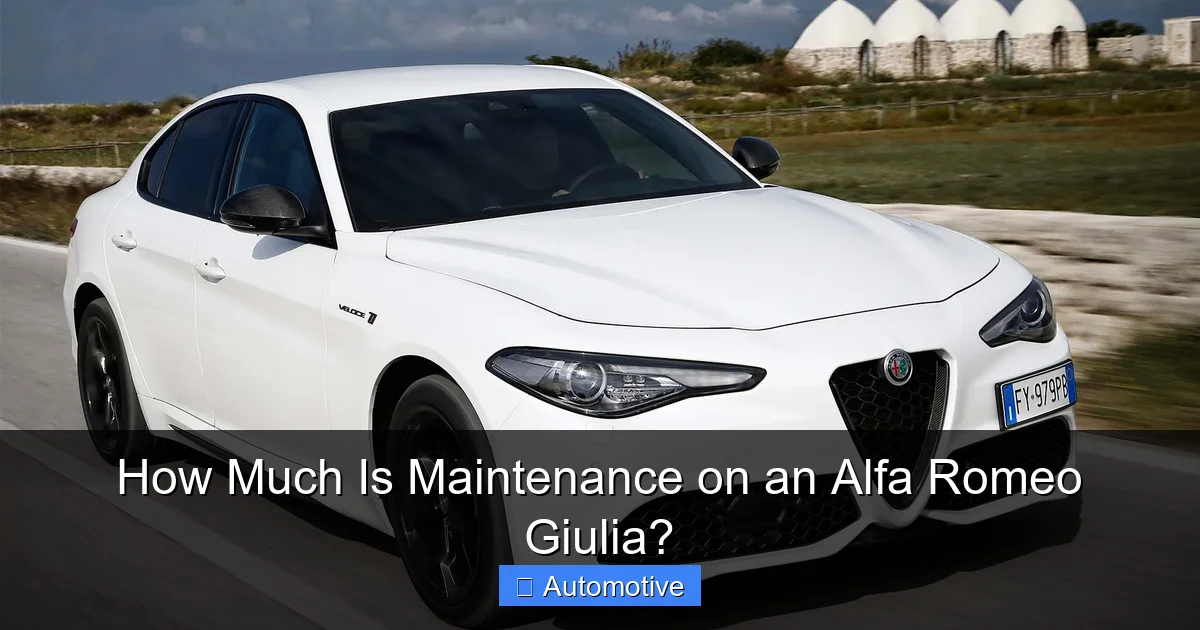
Visual guide about How Much Is Maintenance on an Alfa Romeo Giulia?
Image source: compararcoche.com
So, how much is maintenance on an Alfa Romeo Giulia per year? According to industry data and owner reports, the average annual maintenance cost for a Giulia ranges from $800 to $1,500. That’s significantly higher than the national average for all vehicles, which hovers around $600–$700 per year.
Why the difference? Several factors come into play. First, the Giulia is a performance-oriented luxury car. It uses high-quality synthetic oil, premium brake components, and advanced suspension systems—all of which cost more to maintain. Second, labor rates at Alfa Romeo dealerships tend to be higher than at independent shops, especially for diagnostics and software updates.
Let’s look at a typical year for a Giulia owner. Say you drive about 12,000 miles annually. You’ll likely need:
– Two oil changes (every 7,500–10,000 miles)
– One brake inspection and possible pad replacement
– One tire rotation and alignment check
– One cabin and engine air filter replacement
– One battery test and fluid top-off
Add in the occasional software update or sensor recalibration, and you’re easily looking at $1,000 or more in routine services. And that’s before any unexpected repairs.
Now, compare that to a mainstream sedan like a Honda Accord or Toyota Camry. Those cars are built for reliability and cost-efficiency. Their parts are widely available, labor is cheaper, and they don’t require premium fluids. The Giulia, by contrast, is a driver’s car—engineered for performance, not frugality.
But here’s the good news: many of these costs are predictable. If you follow the maintenance schedule and stay on top of small issues, you can avoid major expenses down the road. And with a little planning, you can even reduce your annual outlay.
Routine Maintenance Schedule and Costs
Visual guide about How Much Is Maintenance on an Alfa Romeo Giulia?
Image source: i.pinimg.com
Understanding the Alfa Romeo Giulia’s maintenance schedule is key to managing costs. The manufacturer recommends a service every 10,000 miles or 12 months, whichever comes first. This is more frequent than some competitors, but it helps keep the car in top condition.
Let’s break down the typical services and their average costs:
Oil Changes
The Giulia requires full synthetic oil, which is more expensive than conventional oil. Expect to pay $100 to $150 per oil change at a dealership. Independent shops may charge $80–$120, especially if you bring your own oil. The oil filter is also a premium part, adding to the cost.
Tip: Some owners opt for a 7,500-mile interval instead of 10,000, especially if they drive aggressively or in hot climates. This can add an extra oil change per year but may extend engine life.
Brake Service
The Giulia’s Brembo brakes are high-performance and look stunning behind the wheels—but they wear faster than standard brakes. Brake pads typically last 30,000 to 40,000 miles, depending on driving style.
A full brake job (pads and rotors) can cost $600 to $1,000 per axle at a dealership. Rotors often need resurfacing or replacement due to warping from heat. Independent shops may offer better rates, especially if you source parts yourself.
Pro tip: Avoid “performance” driving in stop-and-go traffic. Aggressive braking wears pads faster and increases maintenance costs.
Tire Rotations and Alignments
The Giulia’s low-profile tires and sport suspension mean alignment is critical. Misalignment can cause uneven tire wear and affect handling.
A tire rotation costs about $50 to $80, while a four-wheel alignment runs $100 to $150. Do this every 6,000–8,000 miles to maximize tire life.
Note: The Giulia’s tires are expensive—often $200–$300 each for high-performance models. Replacing all four can cost over $1,000, so regular rotations are a smart investment.
Air Filters and Fluids
The engine air filter should be replaced every 15,000–30,000 miles, depending on driving conditions. Cost: $50 to $80.
The cabin air filter (for the HVAC system) should be changed annually. Cost: $40 to $70.
Other fluids—brake fluid, transmission fluid, coolant—should be checked and replaced as needed. Brake fluid flush: $120 to $180. Coolant replacement: $150 to $250.
Software Updates and Diagnostics
Modern Alfas rely heavily on software. The infotainment system, engine management, and safety features all require periodic updates.
Dealerships often charge $100 to $200 for a diagnostic scan and software update. Some updates are free during warranty, but out-of-warranty visits can add up.
Tip: Ask if the update is necessary. Not every software patch requires a paid visit—some can be done remotely or during routine service.
Common Repairs and Their Costs

Visual guide about How Much Is Maintenance on an Alfa Romeo Giulia?
Image source: motorbiscuit.com
Even with regular maintenance, the Giulia can develop issues. Some are minor annoyances; others can be costly. Here are the most common repairs and what they typically cost.
Electrical and Sensor Issues
The Giulia has a complex electrical system with numerous sensors. Problems like faulty door sensors, malfunctioning infotainment screens, or glitchy driver-assist features are not uncommon.
A diagnostic scan alone can cost $100 to $150. Replacing a sensor or module might run $200 to $600, depending on the part.
Example: A failing proximity sensor for the keyless entry system might cost $350 for the part plus labor. While not catastrophic, it’s an unexpected expense.
Suspension and Steering Components
The Giulia’s sport-tuned suspension delivers excellent handling but wears faster than a standard setup. Control arms, bushings, and struts can degrade over time.
Replacing a front control arm: $400 to $700 per side. Strut replacement: $600 to $1,000 per corner.
Tip: Listen for clunking noises over bumps or uneven steering. Early detection can prevent more damage.
Transmission and Drivetrain
The Giulia’s 8-speed automatic transmission is generally reliable, but fluid changes are essential. The manufacturer recommends a transmission fluid change every 60,000 miles.
Cost: $250 to $400 at a dealership. Skipping this can lead to shifting problems or premature wear.
All-wheel-drive (AWD) models may also require differential fluid changes, adding another $150 to $250.
Engine and Cooling System
The 2.0L turbocharged engine is robust, but like any turbo engine, it needs proper care. Overheating or low coolant can cause serious damage.
A water pump replacement: $800 to $1,200. Radiator replacement: $600 to $1,000.
Tip: Check coolant levels monthly and watch for leaks. A small drip can turn into a major repair.
Infotainment and Display Problems
The 8.8-inch touchscreen is central to the Giulia’s tech experience. But it’s prone to freezing, lagging, or losing connection to smartphones.
A software reset is free, but a hardware replacement can cost $1,500 to $2,500—and that’s just for the screen. Labor adds another $200–$400.
Workaround: Use Apple CarPlay or Android Auto via USB to reduce reliance on the built-in system.
Warranty Coverage and Extended Plans
One of the best ways to manage maintenance costs is through warranty coverage. The Alfa Romeo Giulia comes with a 4-year/50,000-mile basic warranty and a 6-year/75,000-mile powertrain warranty. This covers most repairs during the early years of ownership.
But once the warranty expires, costs can spike. That’s where extended warranty plans come in.
Alfa Romeo Certified Pre-Owned (CPO) Warranty
If you’re buying a used Giulia, look for CPO certification. It extends the basic warranty to 6 years/100,000 miles and includes a 12-month/unlimited-mile comprehensive warranty.
Cost: Typically included in the purchase price, but adds value and peace of mind.
Third-Party Extended Warranties
Companies like Endurance, CarShield, and Olive offer extended coverage for out-of-warranty vehicles. Plans can cover everything from engine and transmission to electronics and suspension.
Cost: $1,500 to $3,500 for 3–5 years of coverage. Monthly payments available.
Tip: Read the fine print. Some plans exclude wear items like brakes and tires. Others have high deductibles or claim limits.
Prepaid Maintenance Plans
Alfa Romeo offers prepaid maintenance plans that lock in service costs for 3 or 5 years. You pay upfront, then get free or discounted oil changes, inspections, and fluid top-offs.
Cost: Around $1,200 for 3 years of basic service.
Pros: Predictable budgeting, no surprise bills.
Cons: You pay even if you don’t use all services.
Best for: Owners who plan to keep the car long-term and use dealership services.
Tips to Reduce Maintenance Costs
Yes, the Giulia costs more to maintain—but you can still save money with smart habits and choices.
Use Independent Shops for Routine Service
Not every service requires a dealership. Independent shops with Alfa experience can perform oil changes, brake jobs, and alignments at lower rates.
Look for shops certified by the ASE (Automotive Service Excellence) or those specializing in European cars.
Savings: 20–40% compared to dealerships.
Buy Parts Online
Sites like FCP Euro, ECS Tuning, and Amazon sell OEM and aftermarket parts at discounted prices. You can save $50–$100 on filters, fluids, and sensors.
Tip: Always verify compatibility. Some aftermarket parts may not meet Alfa’s specifications.
Learn Basic DIY Maintenance
Simple tasks like changing air filters, checking fluids, and rotating tires can be done at home with basic tools.
YouTube tutorials and forums like AlfaBB are great resources.
Savings: $50–$150 per service.
Drive Responsibly
Aggressive driving increases wear on brakes, tires, and suspension. Smooth acceleration and braking can extend component life.
Bonus: Better fuel economy and less stress on the engine.
Keep Detailed Records
Maintain a log of all services and repairs. This helps track patterns, prove maintenance history, and increase resale value.
Use apps like CarFax Service History or a simple notebook.
Join Owner Communities
Forums and Facebook groups are full of tips, warnings, and deals. Other owners share where to get parts, which shops to trust, and how to fix common issues.
Example: A group member might alert you to a known issue with the Giulia’s battery drain, helping you catch it early.
Long-Term Ownership and Resale Value
Owning a Giulia is a long-term commitment. But with proper care, it can remain reliable and enjoyable for 100,000+ miles.
Depreciation and Resale
Alfa Romeos depreciate faster than German rivals. A 3-year-old Giulia may lose 40–50% of its value.
But well-maintained examples with full service records can fetch higher prices. Buyers appreciate documented care.
Tip: Keep all receipts and service records. A clean history can boost resale by $1,000–$2,000.
Fuel and Insurance Costs
The Giulia’s turbo engine gets decent fuel economy—around 24 mpg combined—but requires premium gas. That adds $50–$100 per month compared to regular fuel.
Insurance is also higher due to the car’s performance classification. Expect to pay 15–25% more than for a mainstream sedan.
Tire Replacement Costs
As mentioned, the Giulia’s tires are expensive. High-performance summer tires can cost $250–$350 each. All-season options are slightly cheaper.
Tip: Rotate tires regularly and avoid potholes to extend life.
Conclusion: Is the Giulia Worth the Maintenance Cost?
So, how much is maintenance on an Alfa Romeo Giulia? The answer is: more than average, but manageable with planning.
You’ll spend $800 to $1,500 per year on routine care, plus occasional repairs. But for many owners, the driving experience, style, and emotional connection outweigh the costs.
The key is to stay proactive. Follow the maintenance schedule, use trusted shops, and consider warranty options. Avoid neglecting small issues—they can grow into big bills.
And remember: the Giulia isn’t just a car. It’s a statement. It’s Italian passion on wheels. If you’re willing to invest in that passion, the rewards—thrilling drives, admiring glances, and a sense of pride—are well worth it.
Frequently Asked Questions
How often does an Alfa Romeo Giulia need maintenance?
The Giulia should be serviced every 10,000 miles or 12 months, whichever comes first. This includes oil changes, inspections, and fluid checks to keep the car running smoothly.
Are Alfa Romeo Giulia repairs expensive?
Yes, repairs can be costly due to premium parts and specialized labor. Common issues like electrical glitches or suspension wear may cost $500–$1,000 to fix, especially after the warranty expires.
Can I perform maintenance on my Giulia myself?
Basic tasks like oil changes, air filter replacements, and tire rotations can be done at home with the right tools and knowledge. However, complex diagnostics and software updates are best left to professionals.
Does the Giulia require premium gas?
Yes, the Alfa Romeo Giulia requires premium unleaded gasoline (91 octane or higher) for optimal performance and engine longevity. Using regular gas can reduce power and efficiency.
Is an extended warranty worth it for the Giulia?
For many owners, yes—especially if keeping the car beyond the factory warranty. Extended plans can cover major repairs and reduce out-of-pocket costs, providing peace of mind.
How long do Alfa Romeo Giulia brakes last?
Brake pads typically last 30,000 to 40,000 miles, depending on driving style. Aggressive braking or city driving can shorten their lifespan, so regular inspections are recommended.