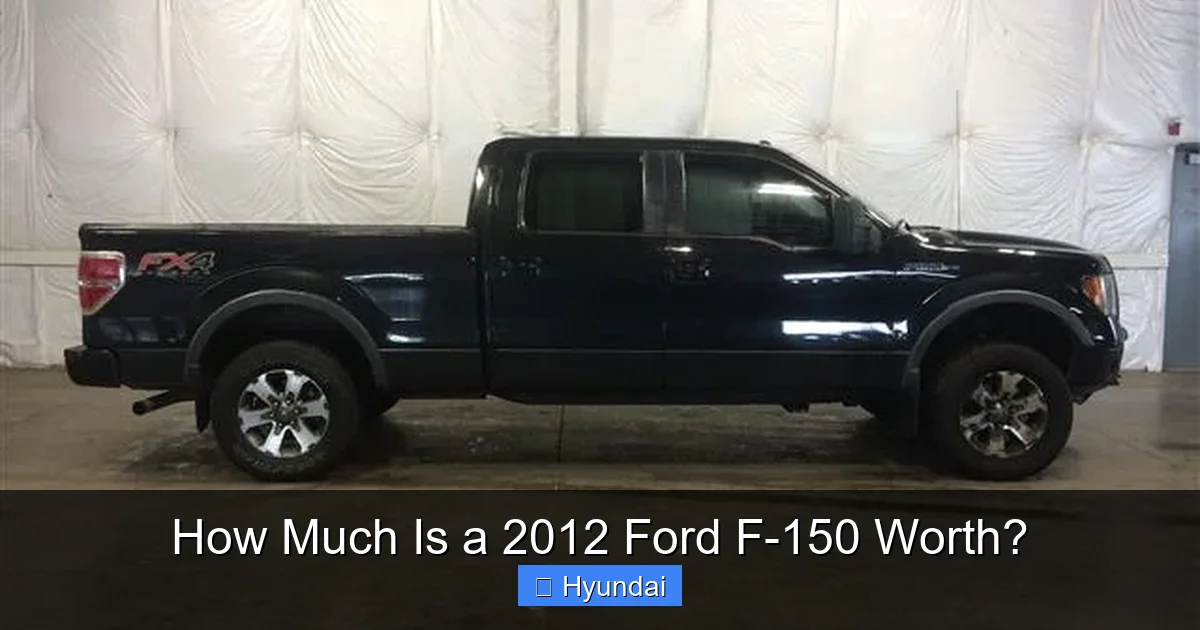
How Much Is a 2012 Ford F-150 Worth?

Contents
- 1 Key Takeaways
- 2 📑 Table of Contents
- 3 So, You Wanna Know What a 2012 Ford F-150 Is Really Worth?
- 4 The Great Divide: How Trim Levels Skyrocket (or Plateau) Value
- 5 Under the Hood: Engine and Drivetrain Decisions That Affect Your Wallet
- 6 The Real Truth: Condition, History, and the “Story” of Your Truck
- 7 Reading the Tea Leaves: Market Trends and Regional Pricing
- 8 Your Action Plan: How to Get the *Actual* Value
- 9 Final Thoughts: It’s All About the Narrative
- 10 Frequently Asked Questions


The value of a 2012 Ford F-150 ranges widely, from about $8,000 for a high-mileage base model to over $18,000 for a pristine, low-mileage King Ranch or Platinum. Its final price hinges on three critical factors: the specific trim level and engine, its overall mechanical and cosmetic condition, and local market demand. To get an accurate figure, you must compare recent sales of *similar* trucks in your area using trusted valuation tools. Whether buying or selling, understanding these variables is key to getting a fair deal on this iconic, durable pickup.
Key Takeaways
- Trim Level is King: The difference between a base XL and a top-tier Platinum can be $5,000-$10,000 or more. Options like the 6.2L V8, 4×4, and luxury packages add significant value.
- Condition Trumps All: A well-maintained truck with a clean history report and no rust or accidents will command a premium of 15-30% over a neglected counterpart with the same miles.
- Mileage Matters, But Context is Key: While lower miles are better, the type of miles (highway vs. city, towing vs. commuting) and the truck’s service history are equally important.
- Location Drives Price: Trucks sell for more in rural and southern regions where they are essential work tools. Urban areas and regions with harsh winters (and rust) see lower prices.
- Seasonal and Economic Swings: Prices peak in spring/summer and during strong economic times. Fuel prices also impact value, with higher gas prices sometimes lowering demand for V8 models.
- Do Your Homework: Always check multiple sources (KBB, NADA, Edmunds) and, most importantly, *actual local sold listings* on sites like Autotrader or Facebook Marketplace to gauge real-world pricing.
- Selling Requires Transparency: Disclosing flaws and having maintenance records builds buyer trust and can lead to a faster sale at a better price than hiding issues.
📑 Table of Contents
- So, You Wanna Know What a 2012 Ford F-150 Is Really Worth?
- The Great Divide: How Trim Levels Skyrocket (or Plateau) Value
- Under the Hood: Engine and Drivetrain Decisions That Affect Your Wallet
- The Real Truth: Condition, History, and the “Story” of Your Truck
- Reading the Tea Leaves: Market Trends and Regional Pricing
- Your Action Plan: How to Get the *Actual* Value
- Final Thoughts: It’s All About the Narrative
So, You Wanna Know What a 2012 Ford F-150 Is Really Worth?
Let’s be honest. The Ford F-150 isn’t just a truck; it’s an American icon. For decades, it’s been the best-selling vehicle in the country, a trusted partner for work, family, and adventure. That 2012 model sitting in your driveway or on the lot? It’s a piece of that legacy. But legacy doesn’t pay the bills. You need a number. A real, concrete figure for what that 2012 F-150 is worth today.
Here’s the deal: there’s no single answer. “How much is a 2012 Ford F-150 worth?” is like asking “How much is a house worth?” The answer depends entirely on its specifics, its story, and where you are. A basic, beat-up work truck with 250,000 miles in northern Minnesota is a different animal than a pristine, garage-kept King Ranch with 80,000 miles in Texas. We’re going to break down every single factor that twists and turns that price tag. By the end, you’ll have a clear, educated estimate and the tools to find the exact value for the specific truck you’re looking at.
The Great Divide: How Trim Levels Skyrocket (or Plateau) Value
This is the single biggest lever on the price of a 2012 F-150. Ford offered a dizzying array of trims that year, each targeting a different buyer and packing a different punch to the resale value. Think of it as climbing a ladder: every rung up adds cost and features.
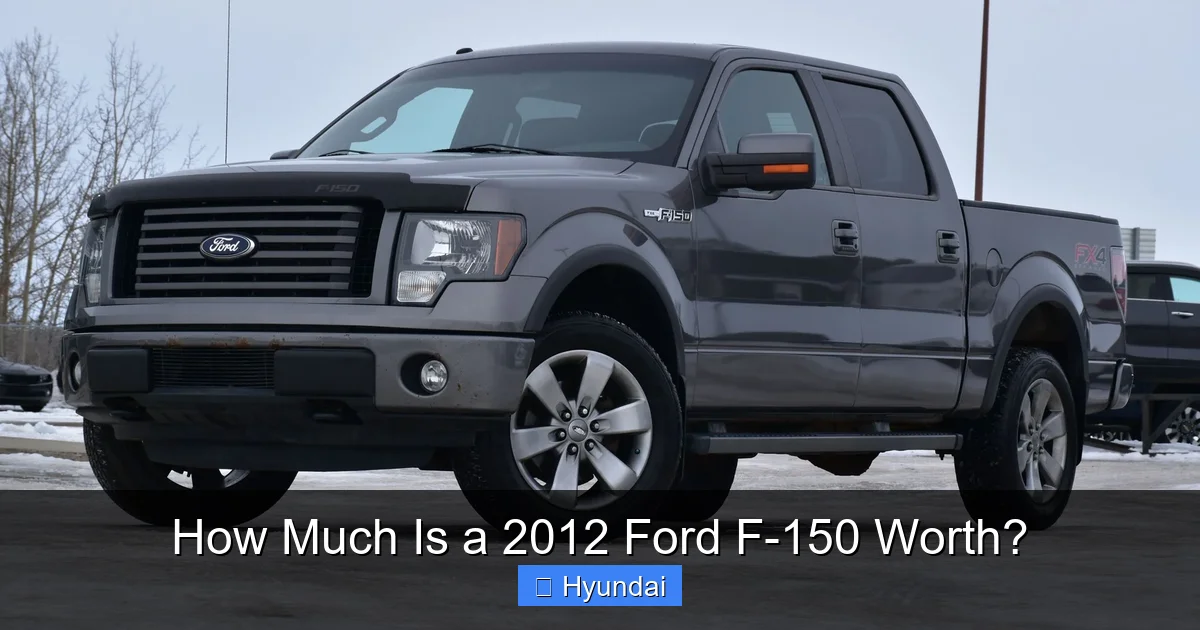
Visual guide about How Much Is a 2012 Ford F-150 Worth?
Image source: cdn.dealeraccelerate.com
The Workhorses: XL and STX
At the bottom, you have the XL and STX. These are no-frills, get-the-job-done trucks. They might have vinyl seats, a basic AM/FM radio, and steel wheels. They are the most common and the most affordable on the used market. A well-optioned 4×4 XL with the popular 5.0L V8 might start around $10,000-$12,000 in average condition. The STX added some cosmetic upgrades like alloy wheels and a sportier look, but the value difference is usually minimal.
If you’re on a tight budget and need a capable truck, these are your starting point. But remember, their simplicity also means they depreciate at a slightly slower rate because there’s less expensive tech to go obsolete. For a comparison of how basic trims hold up on other models, you can see our analysis of a 2012 Honda Civic’s value, which shows a similar principle of base models holding steady.
The Sweet Spot: XLT and Lariat
Move up to the XLT, and you enter the mainstream sweet spot for most buyers. This is where you get cloth seats, a better audio system, keyless entry, and more comfort features. A large percentage of used 2012 F-150s you’ll find are XLTs, and they offer a great balance of features and value. Expect to pay $12,000 to $16,000 for a clean example.
The Lariat is where things get plush. Leather seats, heated and cooled front seats, a premium audio system, and wood-grain trim become standard. This trim is aimed at the buyer who uses their truck for both work and as a daily driver and wants comfort. The jump from XLT to Lariat is one of the steepest in terms of added original MSRP and retained value. A nice Lariat can easily run $15,000 to $20,000+.
The Kings of the Hill: King Ranch, Platinum, and Harley-Davidson
At the top of the mountain sit the King Ranch, Platinum, and the special edition Harley-Davidson. These are not just trucks; they are rolling luxury lounges or tribute machines. They feature premium leather (often with unique King Ranch or Platinum badging), advanced infotainment systems (for the time), panoramic sunroofs, and every conceivable convenience feature.
These models hold their value remarkably well because they appeal to a niche, affluent buyer who wants the absolute best and is willing to pay for it. A low-mileage, well-cared-for Platinum or King Ranch from 2012 can still fetch $18,000 to $25,000. The Harley-Davidson edition, with its unique blacked-out styling and badging, has a cult following and can command a premium over a similarly equipped Platinum.
Under the Hood: Engine and Drivetrain Decisions That Affect Your Wallet
Ford gave 2012 F-150 buyers a powerful menu of engine choices. Your choice here directly impacts both the truck’s capability and its dollar value.

Visual guide about How Much Is a 2012 Ford F-150 Worth?
Image source: exoticmotorsportsok.com
The V8 Lineup: 5.0L “Coyote” and 6.2L “Boss”
The headline act was the new 5.0L 4-valve V8, nicknamed the “Coyote.” It was a massive upgrade over the old 5.4L, offering 360 horsepower and 380 lb-ft of torque. It’s powerful, reliable, and highly sought-after. A 2012 F-150 with the 5.0L is almost always worth more than the same truck with the base V6.
But the king of the hill was the 6.2L 2-valve V8, the “Boss” engine borrowed from the Super Duty. With 411 hp and 434 lb-ft, it was a monster, standard in the Platinum and King Ranch and optional in others. Trucks with this engine are highly desirable and carry a significant premium, often $2,000-$4,000 more than a comparable 5.0L truck. Its legendary durability also helps its long-term value.
The V6 Options: Economy and the EcoBoost Disruptor
Ford also offered two V6s. The base 3.7L V6 was adequate but unremarkable, and trucks with it are the least valuable of the gas-powered bunch. However, the star of the show—and a game-changer for the industry—was the 3.5L EcoBoost V6. With twin turbos, it delivered 365 hp and 420 lb-ft, matching or beating the 5.0L V8 in torque while promising better fuel economy.
EcoBoost trucks have a complicated value story. Initially, there were concerns about long-term reliability (mostly assuaged now). In the current market, they are very popular because they offer massive power and decent gas mileage. A clean EcoBoost truck can be worth nearly as much as a 5.0L V8 model, sometimes more if it’s a higher-trim level. When comparing to sedans, the value proposition of a turbo V6 truck versus a standard V6 car is stark; our look at a used 2012 Nissan Altima shows how different vehicle types depreciate.
4×4 vs. 2WD: The Essential Equation
In the world of trucks, 4×4 is a massive value adder. A factory 4×4 system on a 2012 F-150 will typically add $1,500 to $3,000 to the value over an identical 2-wheel-drive model. The demand is simply higher, especially in regions with snow, mud, or off-road needs. It’s one of the most consistent and predictable value increases you can find on the options sheet.
The Real Truth: Condition, History, and the “Story” of Your Truck
You can have the rarest trim with the biggest engine, but if the truck’s history is a mess, its value plummets. This is where the rubber meets the road.
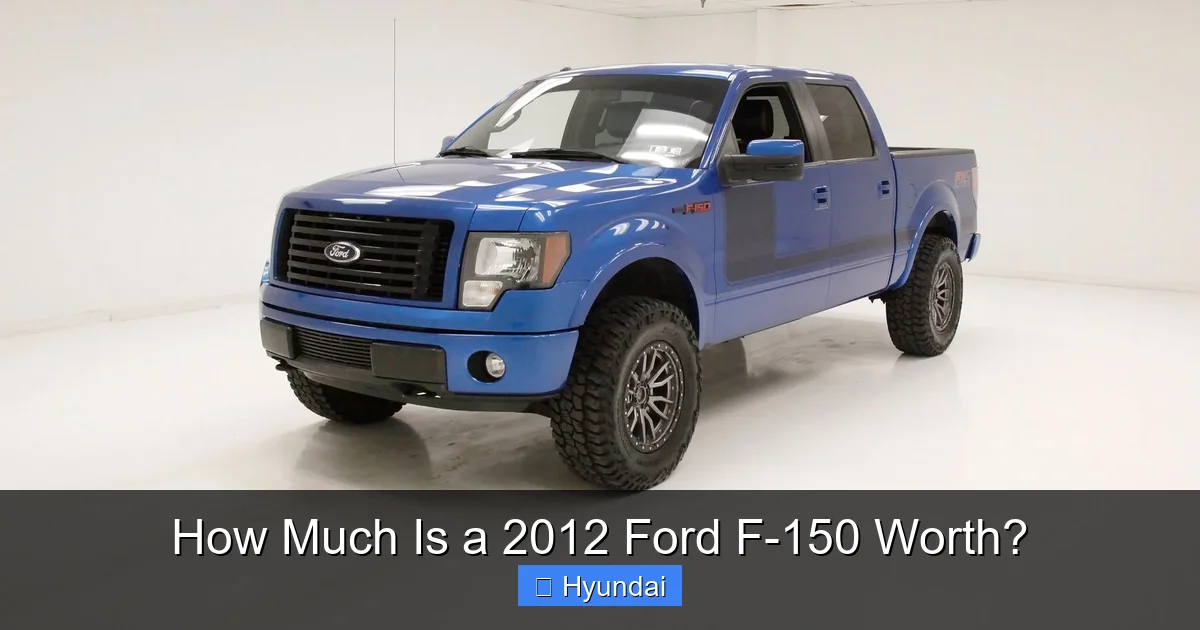
Visual guide about How Much Is a 2012 Ford F-150 Worth?
Image source: cdn.dealeraccelerate.com
The Non-Negotiable: A Clean Title and Vehicle History
A truck with a salvage title, flood damage, or a major accident on its record is worth drastically less. We’re talking 30-50% less than a comparable clean-title truck. Always, always run a Vehicle History Report using the VIN (through Carfax or AutoCheck). It’s a small investment that tells you if the truck has been in a wreck, had title issues, or been a rental. A clean report is a huge selling point and a must for a buyer.
The Rust Monster: The #1 Enemy of Northern Trucks
If the truck has ever lived in the “Salt Belt” (the Northeast, Midwest, etc.), you must inspect it for rust. Rust on the frame, cab mounts, or rocker panels is a serious structural and safety concern. It can decimate a truck’s value and make it nearly unsellable to a savvy buyer. A southern or western truck with no rust will always command a premium over a northern truck with surface rust, all else being equal.
The Maintenance Paper Trail
A stack of receipts for regular oil changes, transmission services, and tire rotations is worth its weight in gold. It proves the owner cared. A lack of any service history makes a buyer nervous and forces them to discount the price to account for unknown risk. Major services done on time—like the timing chain (on the 5.0L and 6.2L) or the turbochargers (on the EcoBoost)—are huge pluses.
Cosmetic Condition: The “Feel” Factor
Is the interior ripped, stained, or smelly? Is the bed full of dents and rust? Is the paint faded or peeling? These cosmetic flaws hurt value. A truck that feels clean, smells good, and looks well-kept inside and out will sell faster and for more money. A small investment in a professional detail can yield a big return when selling.
Reading the Tea Leaves: Market Trends and Regional Pricing
The used truck market is not static. It breathes with the economy, seasons, and geography.
Regional Price Hotspots
You will often pay 10-20% more for a used full-size truck in Texas, Oklahoma, or the rural Midwest than you will in New York City or San Francisco. Why? Demand. In truck country, a pickup is a necessity for work and life. In dense urban areas, it’s often an unnecessary luxury with high fuel and parking costs. Always, always check the “sold” listings on major auto sites for your specific zip code. That is your true local market price.
The Economic and Seasonal Cycle
Prices tend to rise in the spring and summer (tax refund season, good weather for shopping) and dip slightly in the winter. During economic booms, demand for big-ticket items like trucks soars. During recessions or uncertainty, prices can soften. Also, watch fuel prices. When gas spikes, the fuel-thirsty V8s can see a temporary dip in demand compared to the more efficient (on paper) EcoBoost or V6 models.
The 2012 Model Year: A Sweet Spot in the F-150 Timeline
The 2012 F-150 was part of the 2009-2014 generation. It’s old enough to be affordable but not so old that it’s a classic. It predates the massive 2015 redesign, so it lacks some of the latest tech and safety features. However, it’s known for being incredibly robust and reliable, especially the powertrains. This generation has a strong reputation, which supports its value. For context on how a similar-aged vehicle from a different brand holds up, our piece on a 2007 Ford F-150 shows how Ford trucks from this era are prized for their longevity.
Your Action Plan: How to Get the *Actual* Value
Theoretical numbers are nice, but you need a real number. Here’s your step-by-step guide.
Step 1: Use the Big Three Valuation Tools
Go to Kelley Blue Book (KBB), NADA Guides, and Edmunds. Input the exact details: 2012, Ford, F-150, your specific trim (XL, XLT, etc.), engine (5.0L, 6.2L, etc.), drivetrain (4×4/2WD), mileage, and your zip code. Be brutally honest about the condition. These tools give you a “Trade-In Value” (what a dealer will pay) and a “Private Party Value” (what you can sell it for). The private party range is your most relevant target for selling or buying from an individual.
Step 2: Do the “Real World” Check on Sold Listings
This is the most important step. Go to Autotrader, Cars.com, and Facebook Marketplace. Filter for “Sold” or “Archived” listings in your area for 2012 F-150s with your same trim, engine, and mileage. See what they actually sold for, not what they are listed for. List prices are often aspirational. Sold prices are reality. This will give you the most accurate, local-market price.
Step 3: Factor in Your Specifics
Now, adjust from the baseline. Add $1,500 if it’s a 4×4. Add $2,000 if it’s a King Ranch. Subtract $1,000 if the bed is dented. Subtract $2,000 if the title is branded. This is how you arrive at your precise number.
Final Thoughts: It’s All About the Narrative
In the end, a 2012 Ford F-150 is worth what someone is willing to pay for its specific story. A truck with a clean history, good maintenance, and desirable options in a truck-loving region will sell quickly at the top of its price range. A neglected, rusty, high-mileage truck with a checkered past will sit and eventually sell at the bottom.
For buyers, patience and diligence are your best tools. Don’t fall for the first listing. Find the truck that matches your needs and budget, verify its history, inspect it thoroughly (or pay a mechanic), and then make a fair offer based on the real-world sold data you’ve gathered.
For sellers, honesty and presentation are everything. Disclose everything, have your records ready, clean the truck inside and out, and price it competitively based on sold comps. You’ll find a buyer who appreciates a well-cared-for, capable truck—because that’s exactly what a good 2012 F-150 is.
Whether you’re dealing with a humble XL or a luxurious Platinum, this truck represents a huge chunk of American automotive culture. Understanding its true worth isn’t just about money; it’s about respecting the machine and the market that surrounds it.
Frequently Asked Questions
What is the average price range for a 2012 Ford F-150?
The average private party price for a 2012 Ford F-150 typically falls between $9,000 and $15,000. However, this is a broad range. Base model, high-mileage trucks can be found under $8,000, while low-mileage, top-trim (King Ranch/Platinum) models with the 6.2L V8 can exceed $18,000-$20,000.
Which 2012 F-150 engine holds its value best?
The 6.2L “Boss” V8 holds its value exceptionally well due to its immense power, durability, and desirability among enthusiasts. The 5.0L “Coyote” V8 is also very strong. The 3.5L EcoBoost V8 can be a close third, but its value can be more volatile based on perceptions of long-term turbo reliability, though these concerns have largely been proven unfounded.
Is a 2012 Ford F-150 a reliable truck?
Yes, the 2012 F-150 is generally considered reliable, especially the V8 engines (5.0L and 6.2L). The 5.0L has a timing chain that can be a known wear item past 150,000 miles, so maintenance history is crucial. The EcoBoost V6 is also reliable when properly maintained with regular oil changes. Always get a pre-purchase inspection for any used vehicle.
How many miles is too many for a 2012 F-150?
With proper maintenance, these trucks can easily surpass 250,000 miles. However, value drops significantly past 150,000 miles. A 2012 F-150 with 200,000+ miles will be worth substantially less, regardless of trim, unless it has impeccable, documented service history and a rust-free body.
When is the best time to buy a used 2012 F-150?
The best time is typically late fall and winter (October through February). Demand is lower, and sellers are often motivated. Also, towards the end of the month or quarter, dealerships may be more willing to negotiate on trade-in values if you’re buying from them.
Should I buy a 2012 F-150 with over 200,000 miles?
It can be a wise purchase if the price is right (usually under $7,000) and you have a comprehensive pre-purchase inspection by a trusted mechanic. Look for signs of major maintenance (timing chains, transmission service, turbos if EcoBoost). Budget immediately for any upcoming major services. These trucks can be great values at high mileage if they’re clean and well-maintained.